Multicellular Protists algae Primary producers Plantlike seaweeds Lack

- Slides: 5
Multicellular Protists (algae) • Primary producers • “ Plant-like” seaweeds – Lack true leaves, stems & roots – May be filamentous, grow in mats or crusts, sheets, or kelp • Phaeophyta (browns) • Rhodophyta (reds) • Chlorophyta (greens)
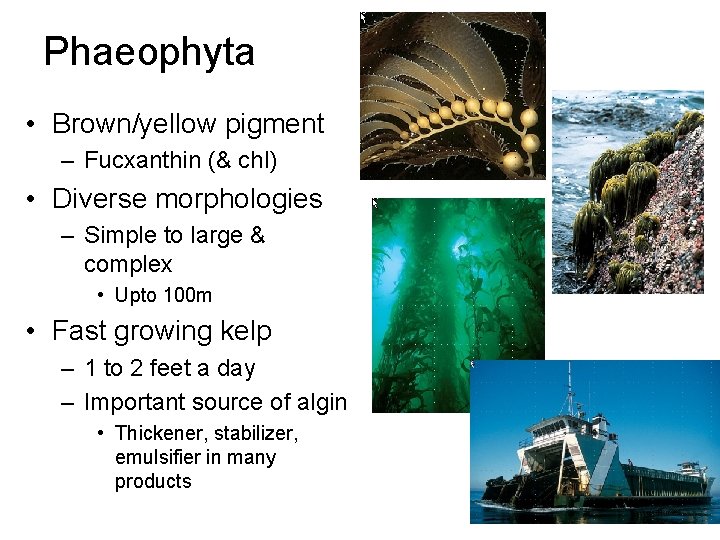
Phaeophyta • Brown/yellow pigment – Fucxanthin (& chl) • Diverse morphologies – Simple to large & complex • Upto 100 m • Fast growing kelp – 1 to 2 feet a day – Important source of algin • Thickener, stabilizer, emulsifier in many products
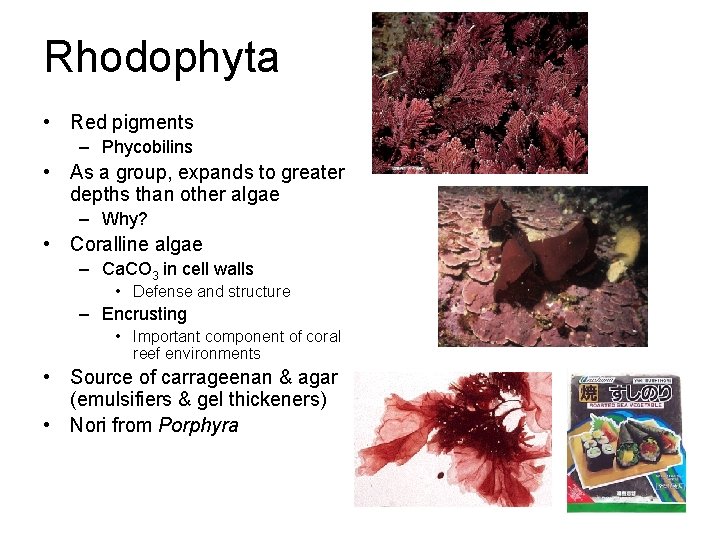
Rhodophyta • Red pigments – Phycobilins • As a group, expands to greater depths than other algae – Why? • Coralline algae – Ca. CO 3 in cell walls • Defense and structure – Encrusting • Important component of coral reef environments • Source of carrageenan & agar (emulsifiers & gel thickeners) • Nori from Porphyra
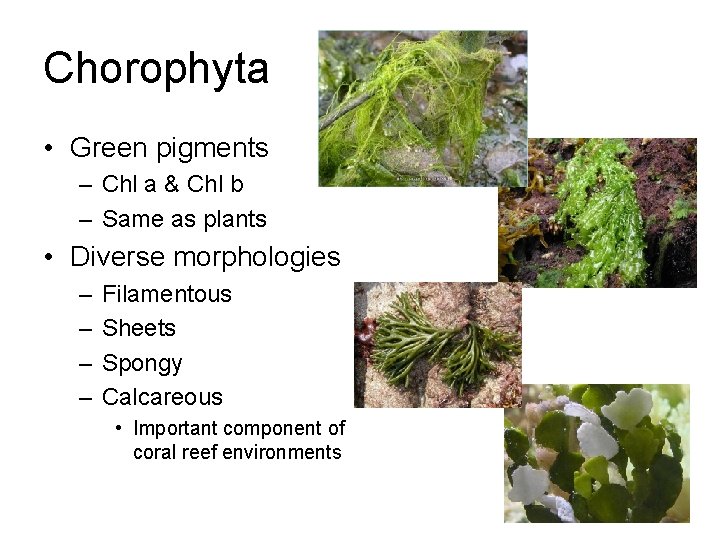
Chorophyta • Green pigments – Chl a & Chl b – Same as plants • Diverse morphologies – – Filamentous Sheets Spongy Calcareous • Important component of coral reef environments
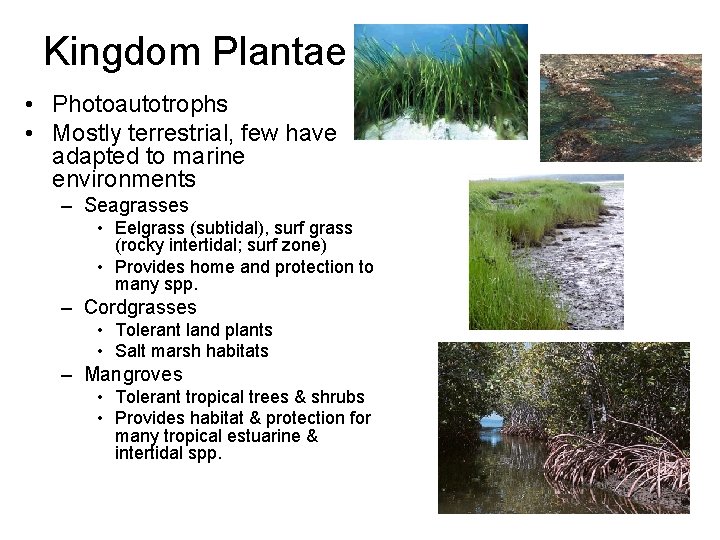
Kingdom Plantae • Photoautotrophs • Mostly terrestrial, few have adapted to marine environments – Seagrasses • Eelgrass (subtidal), surf grass (rocky intertidal; surf zone) • Provides home and protection to many spp. – Cordgrasses • Tolerant land plants • Salt marsh habitats – Mangroves • Tolerant tropical trees & shrubs • Provides habitat & protection for many tropical estuarine & intertidal spp.