
Multicellular Primary Producers Seaweeds Marine Biology and Plants
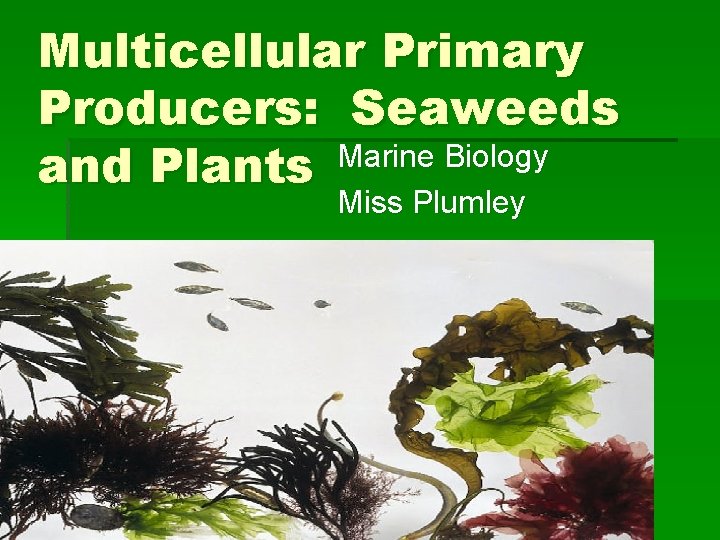
Multicellular Primary Producers: Seaweeds Marine Biology and Plants Miss Plumley
Multicellular Algae: The Seaweeds § A. General Structure § Seaweeds lack true leaves, stems and roots of plants § Instead they have…… § Thallus § Complete body § Blades § Leaf-like (no veins) flattened portions of the thallus § Pneumatocysts § Gas-filled bladders that keep the blades close to the sea surface. § Stipe § Location where blades originate from § Holdfast § Attaches the thallus to the bottom
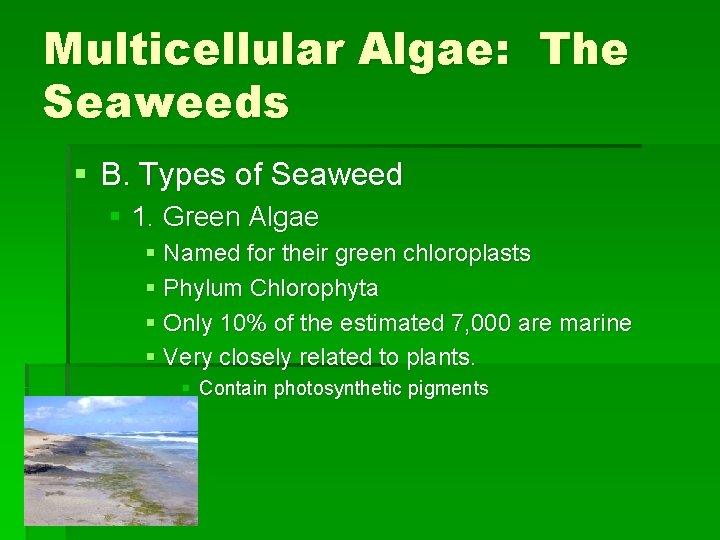
Multicellular Algae: The Seaweeds § B. Types of Seaweed § 1. Green Algae § Named for their green chloroplasts § Phylum Chlorophyta § Only 10% of the estimated 7, 000 are marine § Very closely related to plants. § Contain photosynthetic pigments

Multicellular Algae: The Seaweeds § B. Types of Seaweed § 1. Green Algae (continued) § Examples: § Volvox- colonial green algae shaped like a hollow ball. Contains hundreds and thousands of cells connected by bridges of cytoplasm. § Ulva- large and complex enough to qualify as seaweeds along with Brown algae.
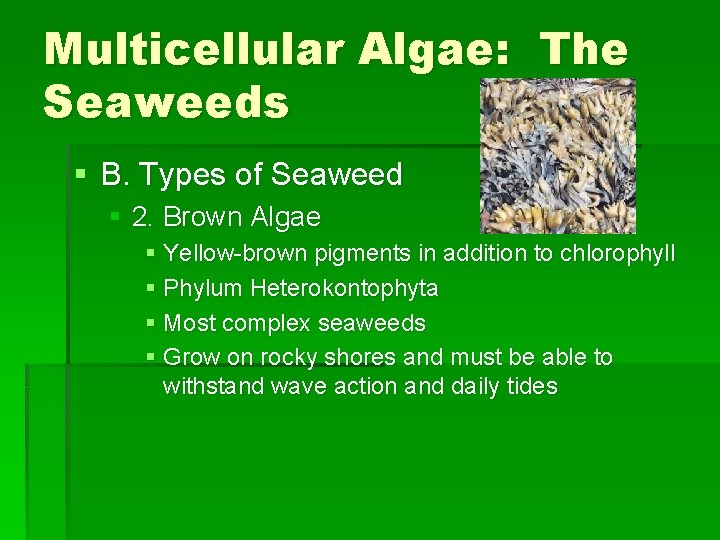
Multicellular Algae: The Seaweeds § B. Types of Seaweed § 2. Brown Algae § Yellow-brown pigments in addition to chlorophyll § Phylum Heterokontophyta § Most complex seaweeds § Grow on rocky shores and must be able to withstand wave action and daily tides
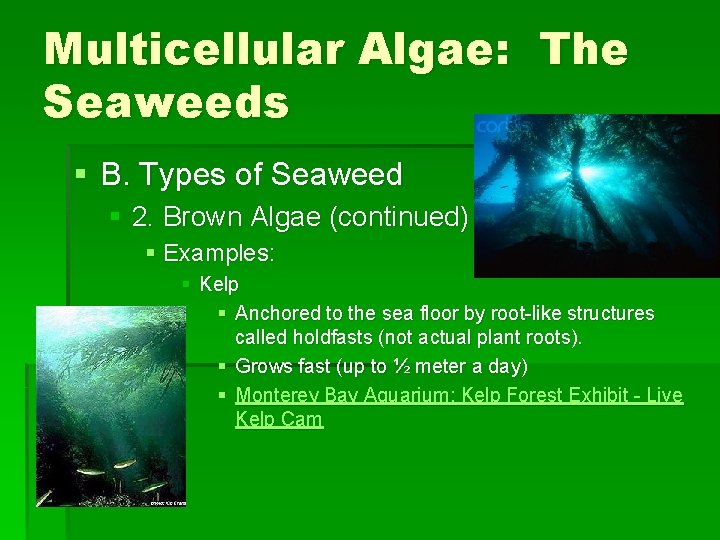
Multicellular Algae: The Seaweeds § B. Types of Seaweed § 2. Brown Algae (continued) § Examples: § Kelp § Anchored to the sea floor by root-like structures called holdfasts (not actual plant roots). § Grows fast (up to ½ meter a day) § Monterey Bay Aquarium: Kelp Forest Exhibit - Live Kelp Cam

Multicellular Algae: The Seaweeds § B. Types of Seaweed § 2. Brown Algae (continued) § Examples: § Sargassum § Sargassa Sea § Rockweed § Common on Rocky shores on the Atlantic coasts of temperate North America and Europe
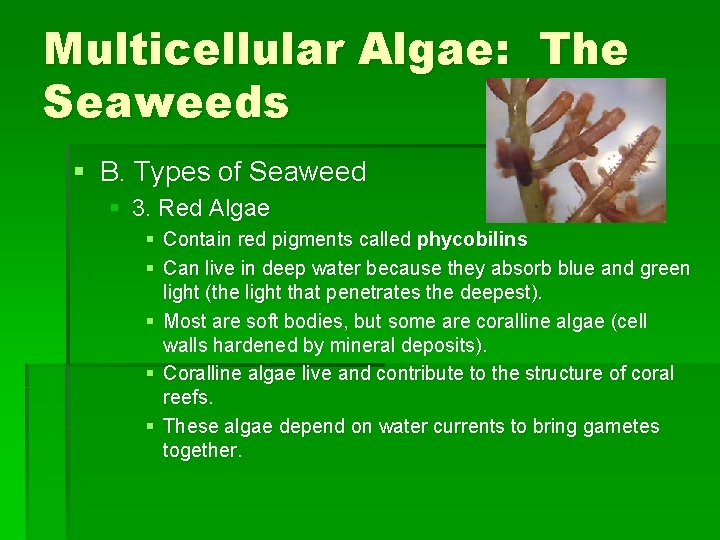
Multicellular Algae: The Seaweeds § B. Types of Seaweed § 3. Red Algae § Contain red pigments called phycobilins § Can live in deep water because they absorb blue and green light (the light that penetrates the deepest). § Most are soft bodies, but some are coralline algae (cell walls hardened by mineral deposits). § Coralline algae live and contribute to the structure of coral reefs. § These algae depend on water currents to bring gametes together.
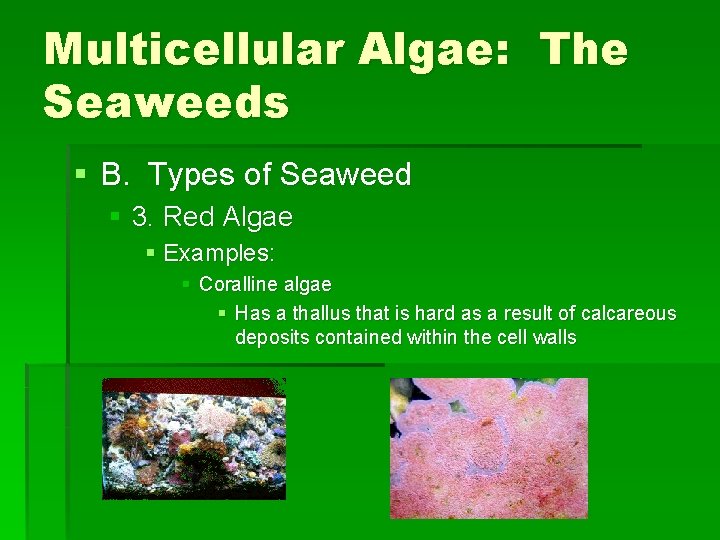
Multicellular Algae: The Seaweeds § B. Types of Seaweed § 3. Red Algae § Examples: § Coralline algae § Has a thallus that is hard as a result of calcareous deposits contained within the cell walls
Multicellular Algae: The Seaweeds § C. Life History § Reproduction § A. Asexual § Fragments of thallus often grow into new individuals § Spores § Cells specialized for dispersal § Zoospores-spores that have flagella for movement § B. Sexual § Gametes from two individuals fuse so that the new generation contains genetic info from both parents § Sporophyte-produces haploid spores through meiosis § Gametophyte-produces haploid gametes
Multicellular Algae: The Seaweeds § D. Economic Importance § Mariculture § Farming of seaweeds § Phycocolloids § Chemicals used in food processing and in manufacture of different products § Examples: § Algin-used as stabilizer for ice cream, cheese and toppings. Also prevents frostings from becoming dry. Used in making rubber products, paper, paints and cosmetics. § Carrageenan-obtained from Red Algae. Used in dairy products and puddings § Agar-used to protect ham, fish and meats during canning

Multicellular Algae: The Seaweeds § E. Other Importances § Shelter for juvenile fish, sea turtles, and inverts. § Food for juvenile fish, sea turtles, and inverts.
Multicellular Algae: The Seaweeds § Algae Paper § At least one page (you can do more) § Double spaced § Times New Roman § Heading is NOT double spaced § Find one economic importance of a specific species of seaweed (Food, medicine, ect)
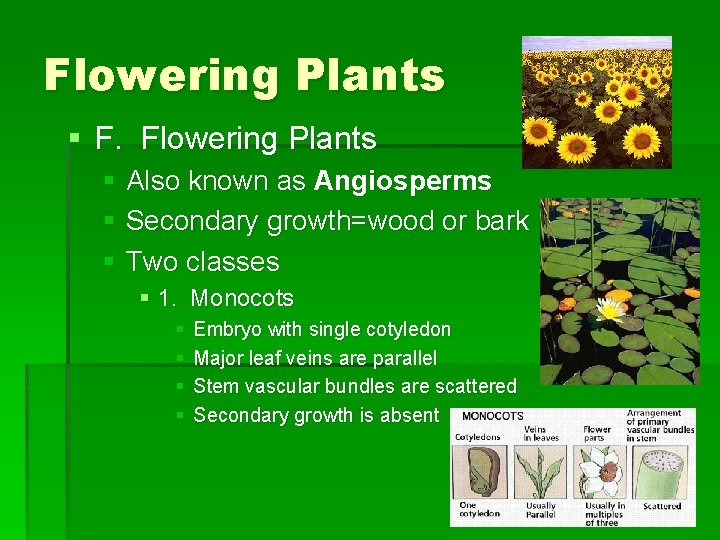
Flowering Plants § F. Flowering Plants § Also known as Angiosperms § Secondary growth=wood or bark § Two classes § 1. Monocots § § Embryo with single cotyledon Major leaf veins are parallel Stem vascular bundles are scattered Secondary growth is absent
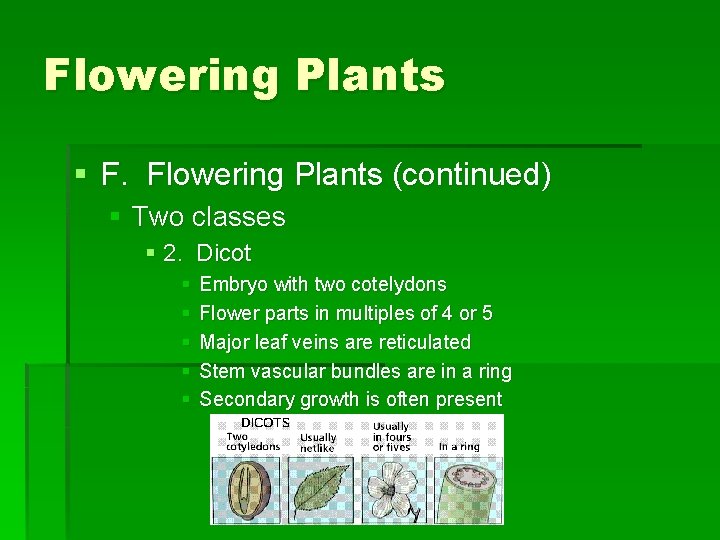
Flowering Plants § F. Flowering Plants (continued) § Two classes § 2. Dicot § § § Embryo with two cotelydons Flower parts in multiples of 4 or 5 Major leaf veins are reticulated Stem vascular bundles are in a ring Secondary growth is often present
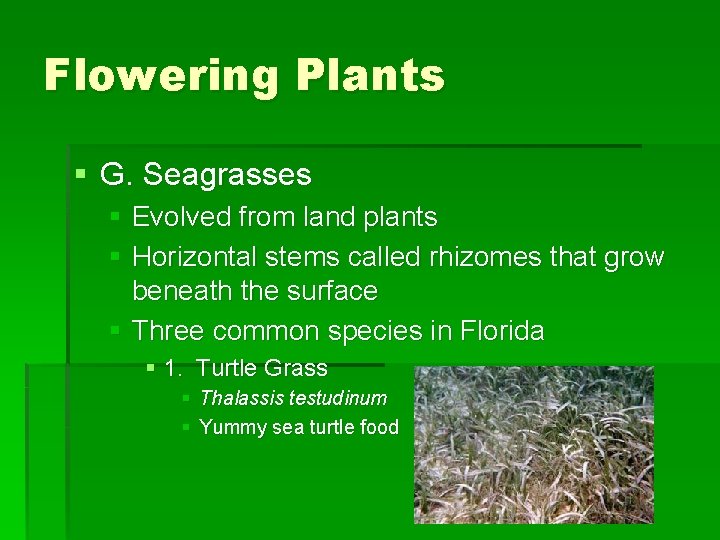
Flowering Plants § G. Seagrasses § Evolved from land plants § Horizontal stems called rhizomes that grow beneath the surface § Three common species in Florida § 1. Turtle Grass § Thalassis testudinum § Yummy sea turtle food
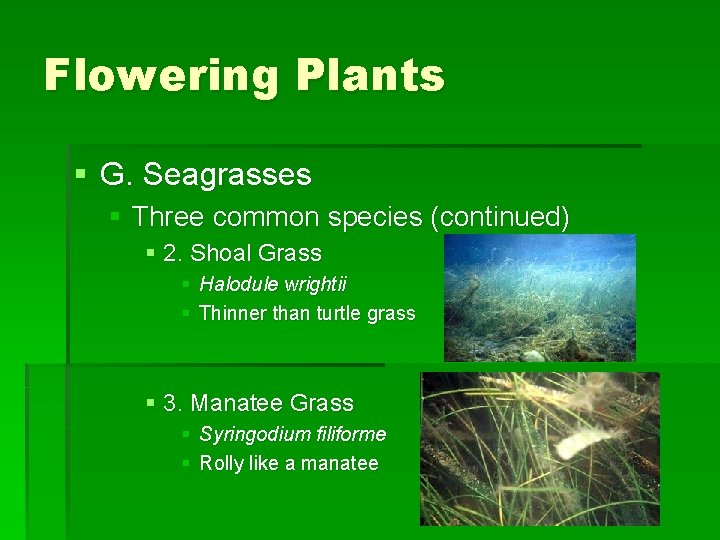
Flowering Plants § G. Seagrasses § Three common species (continued) § 2. Shoal Grass § Halodule wrightii § Thinner than turtle grass § 3. Manatee Grass § Syringodium filiforme § Rolly like a manatee
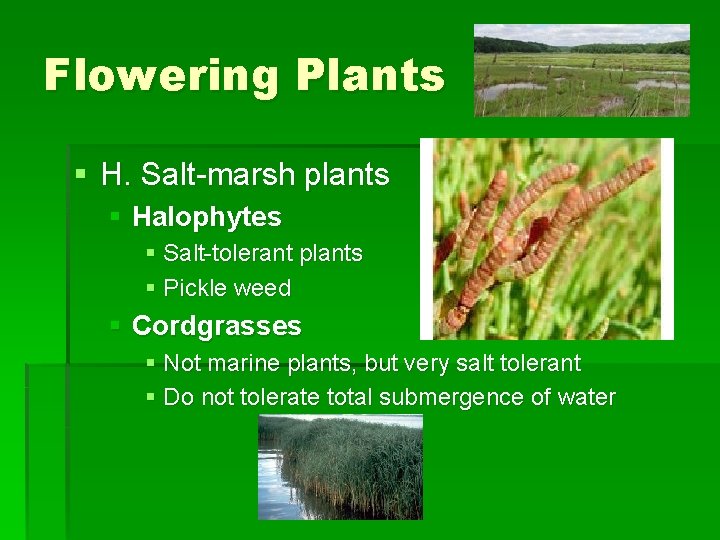
Flowering Plants § H. Salt-marsh plants § Halophytes § Salt-tolerant plants § Pickle weed § Cordgrasses § Not marine plants, but very salt tolerant § Do not tolerate total submergence of water
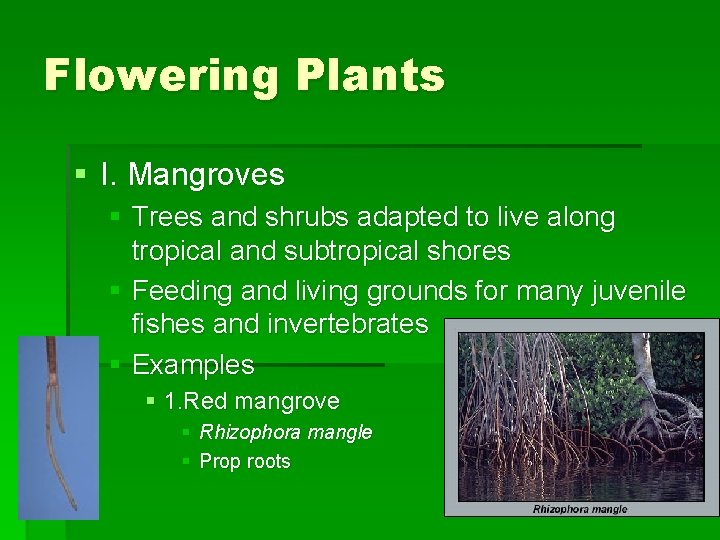
Flowering Plants § I. Mangroves § Trees and shrubs adapted to live along tropical and subtropical shores § Feeding and living grounds for many juvenile fishes and invertebrates § Examples § 1. Red mangrove § Rhizophora mangle § Prop roots
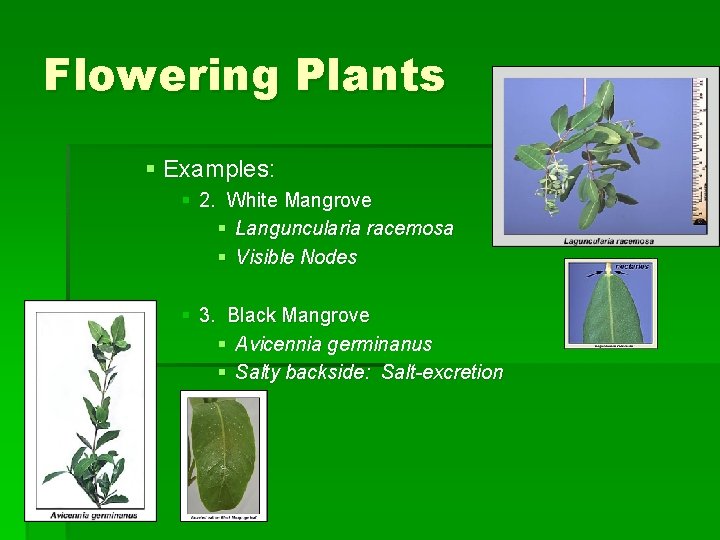
Flowering Plants § Examples: § 2. White Mangrove § Languncularia racemosa § Visible Nodes § 3. Black Mangrove § Avicennia germinanus § Salty backside: Salt-excretion
- Slides: 20