
Multicellular Organisms Cells tissues and organs Cell Specialisations





- Slides: 42
Multicellular Organisms Cells, tissues and organs
Cell Specialisations Learning Intention: • To learn about multicellular organisms by viewing cells and tissues using a microscope Success Criteria: • Be able to define the term “multicellular organism” • Describe the organisation of cells, tissues and organs in a multicellular organism
Starter Activity • In your pair, discuss the structures found in a typical animal cell and their functions • Discuss the structures found in a typical plant cell and their functions • Name three other types of cell that you have studied so far Twig: What is a cell?
Think, Pair, Share • What is a unicellular organism? • What is a multicellular organism? • Give two examples of each
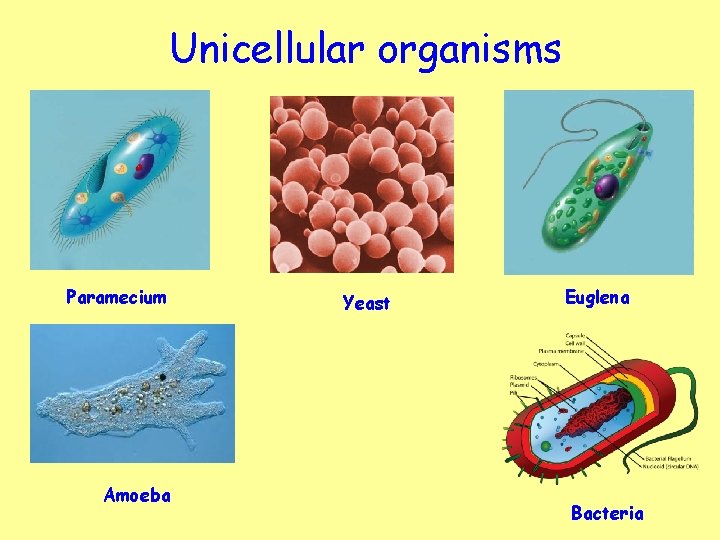
Unicellular organisms Paramecium Amoeba Yeast Euglena Bacteria
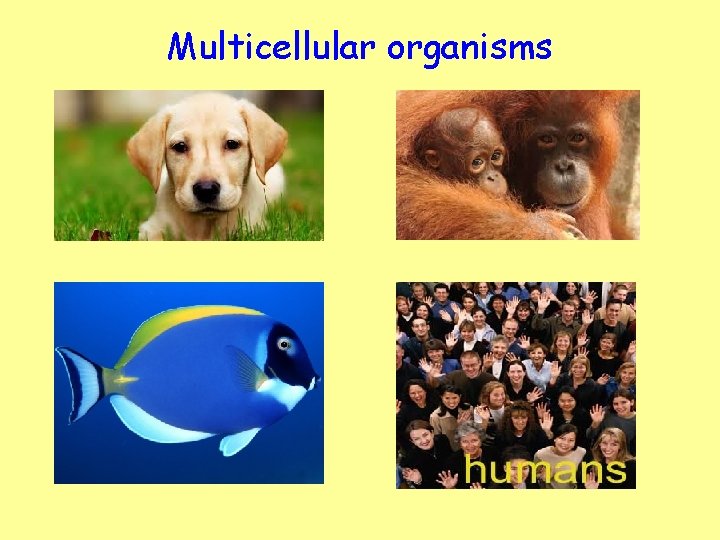
Multicellular organisms
Multicellular organisms • Multicellular organisms are made up of more than one cell. • These cells can be organised into tissues and organs. Twig: Tissues
What do all of these cells have in common?
Cell specialisations The cells on the previous slide all have typical structures such as: – – – cytoplasm cell membrane cell wall nucleus chloroplasts However, the structure each type of cell is different so that it can carry out a particular function.
What is a specialised cell? • Plants and animals consist of many cells and so are known as multicellular. • They contain many different types of cell. • Each type of cell is designed to carry out a particular job or function. • This is known as cell specialisation. Twig: Different types of cell
Did You Know? • There are over 100 different types of cell in the human body! • These are just a few examples………. .
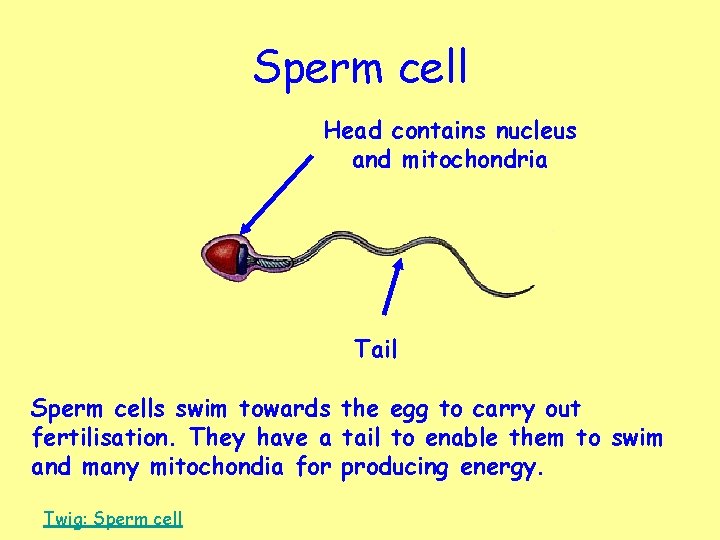
Sperm cell Head contains nucleus and mitochondria Tail Sperm cells swim towards the egg to carry out fertilisation. They have a tail to enable them to swim and many mitochondia for producing energy. Twig: Sperm cell
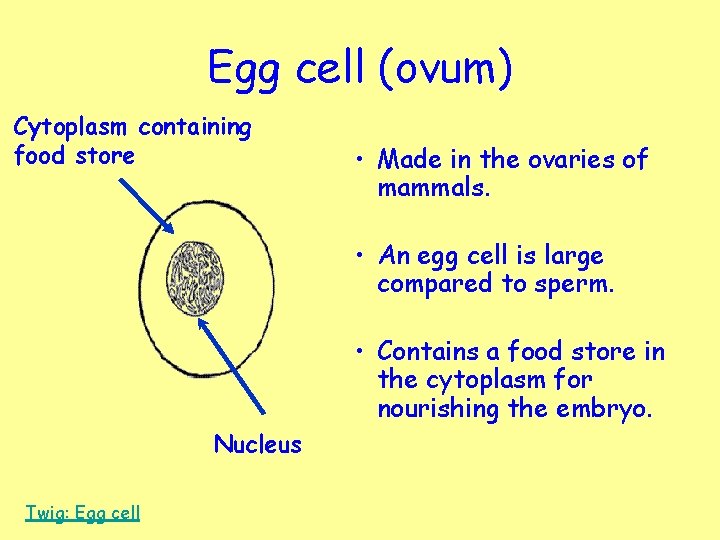
Egg cell (ovum) Cytoplasm containing food store • Made in the ovaries of mammals. • An egg cell is large compared to sperm. • Contains a food store in the cytoplasm for nourishing the embryo. Nucleus Twig: Egg cell
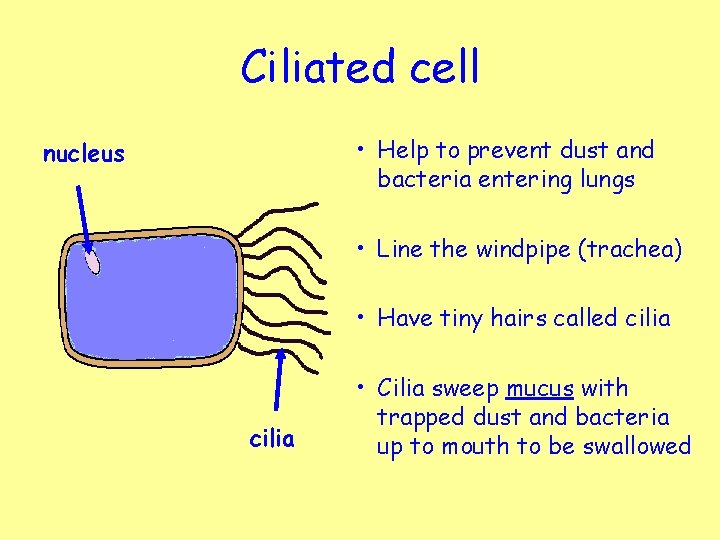
Ciliated cell • Help to prevent dust and bacteria entering lungs nucleus • Line the windpipe (trachea) • Have tiny hairs called cilia • Cilia sweep mucus with trapped dust and bacteria up to mouth to be swallowed
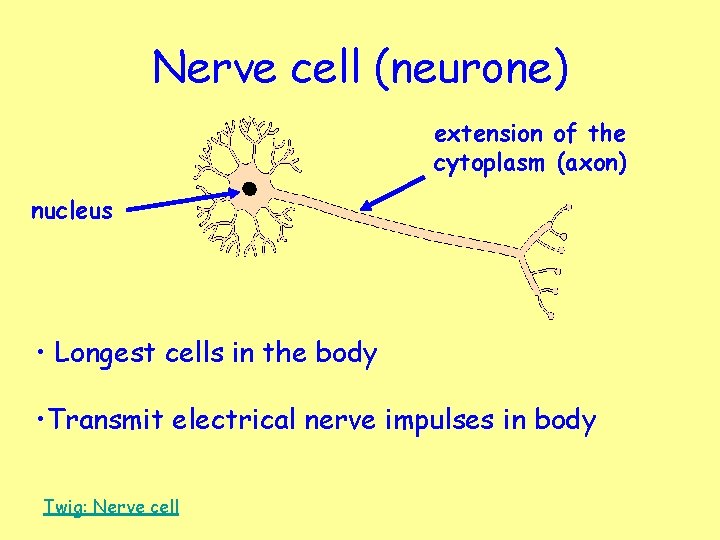
Nerve cell (neurone) extension of the cytoplasm (axon) nucleus • Longest cells in the body • Transmit electrical nerve impulses in body Twig: Nerve cell
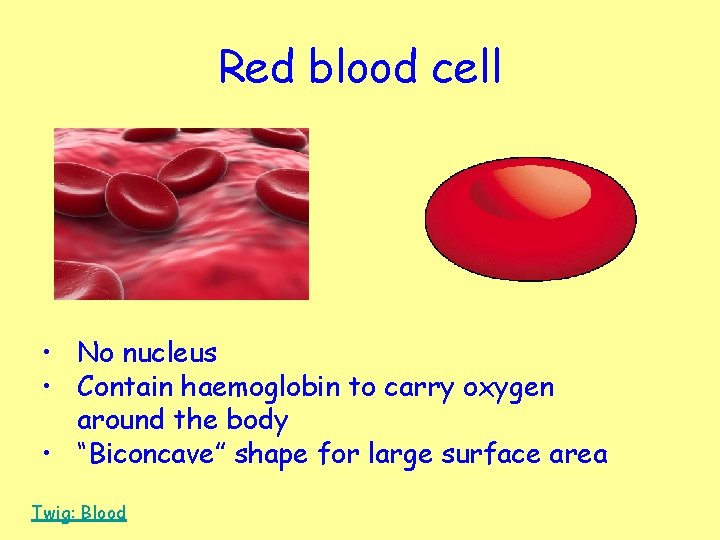
Red blood cell • No nucleus • Contain haemoglobin to carry oxygen around the body • “Biconcave” shape for large surface area Twig: Blood
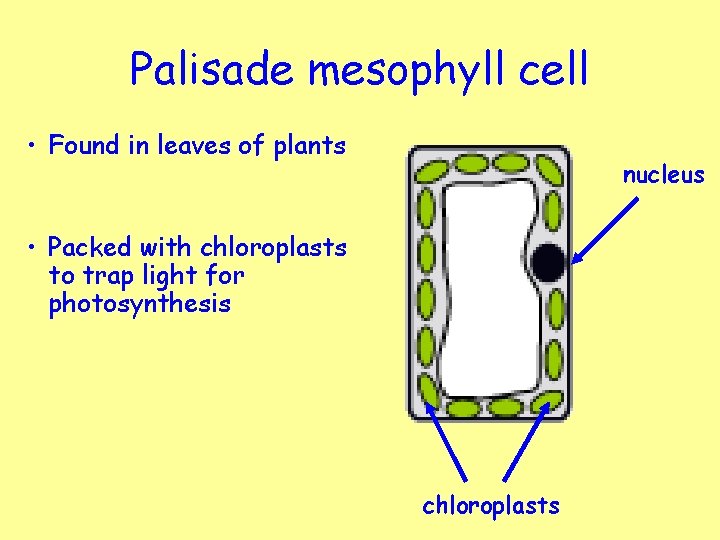
Palisade mesophyll cell • Found in leaves of plants nucleus • Packed with chloroplasts to trap light for photosynthesis chloroplasts
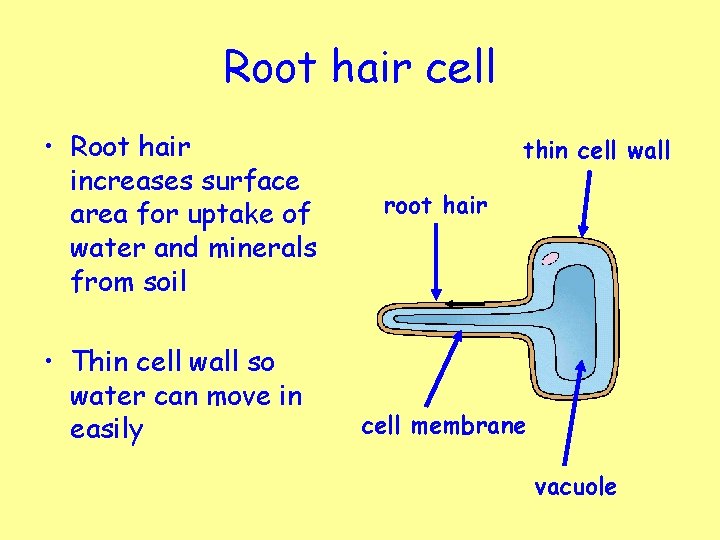
Root hair cell • Root hair increases surface area for uptake of water and minerals from soil • Thin cell wall so water can move in easily thin cell wall root hair cell membrane vacuole
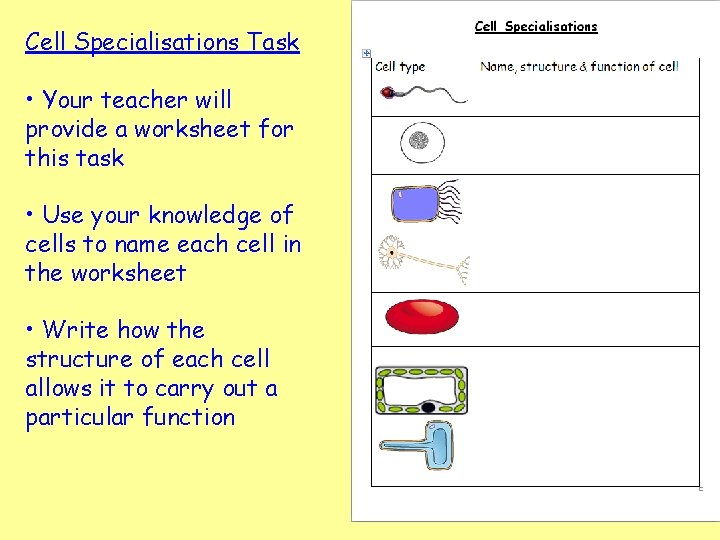
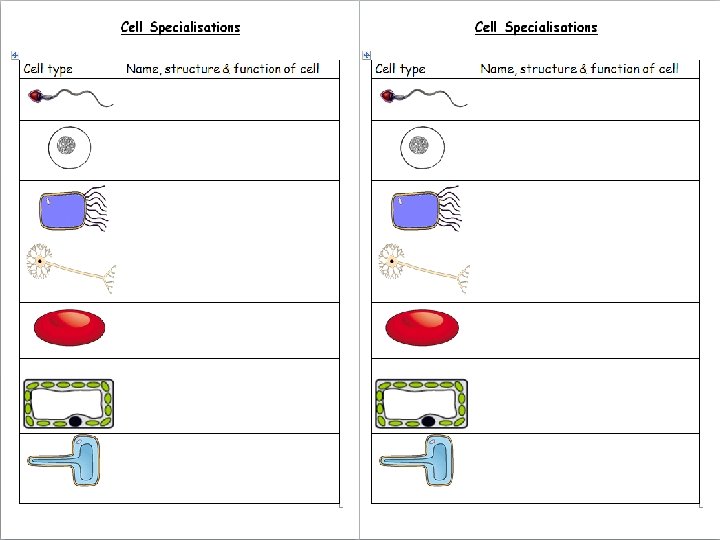
Cell Specialisations Task • Your teacher will provide a worksheet for this task • Use your knowledge of cells to name each cell in the worksheet • Write how the structure of each cell allows it to carry out a particular function
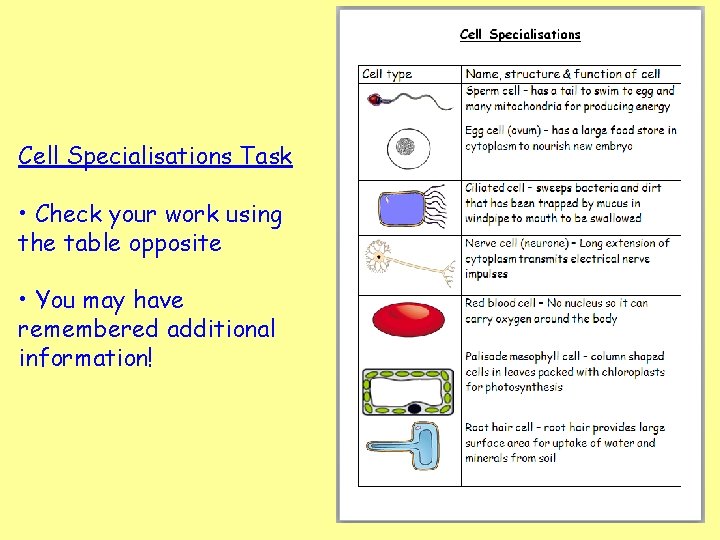
Cell Specialisations Task • Check your work using the table opposite • You may have remembered additional information!
Tissues Learning Intention: To learn about different tissues in animals and plants Success Criteria: View tissues using a light microscope Be able to identify and name different types of tissue
Tissues 1. What are tissues? 2. Can you give some examples of tissues in the human body? 3. Can you give some examples of tissues in plants? 4. What is the difference between tissues and organs?
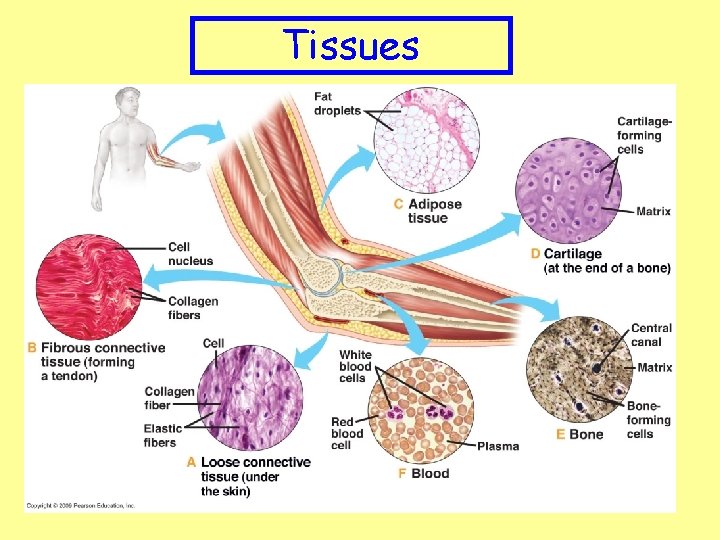
Tissues • Tissues are groups of cells that perform the same function. • Examples of human tissues include epithelial tissue and muscle tissue. • The study of tissue is known as histology or, in connection with disease, histopathology.
Tissues
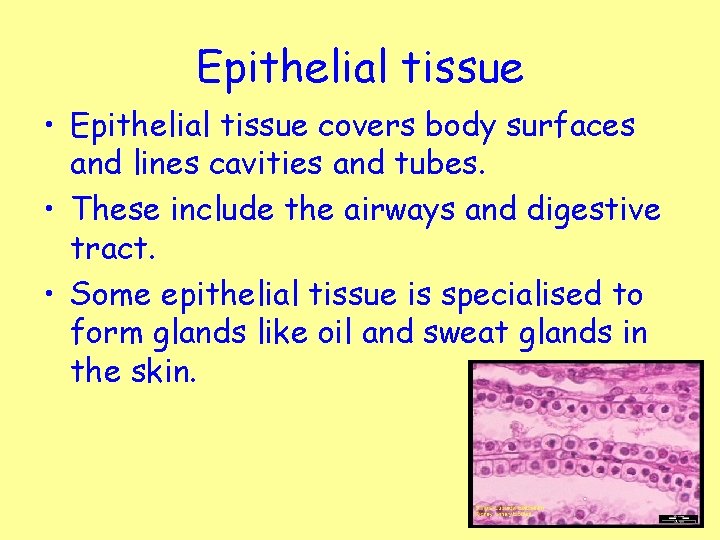
Epithelial tissue • Epithelial tissue covers body surfaces and lines cavities and tubes. • These include the airways and digestive tract. • Some epithelial tissue is specialised to form glands like oil and sweat glands in the skin.
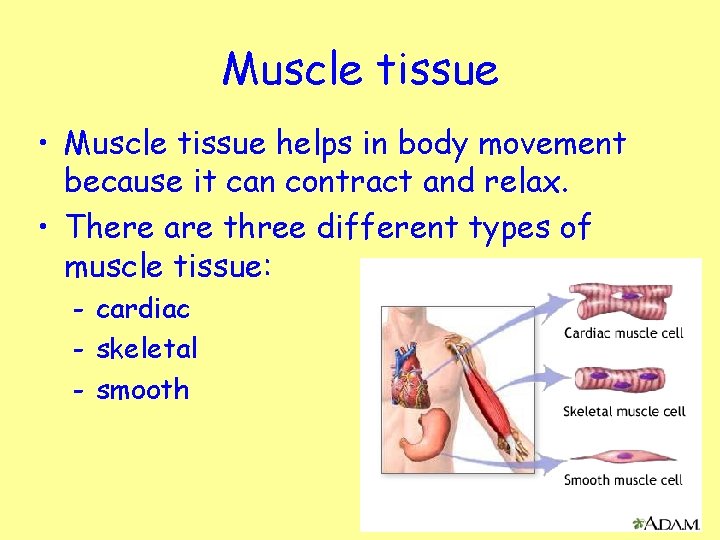
Muscle tissue • Muscle tissue helps in body movement because it can contract and relax. • There are three different types of muscle tissue: - cardiac - skeletal - smooth
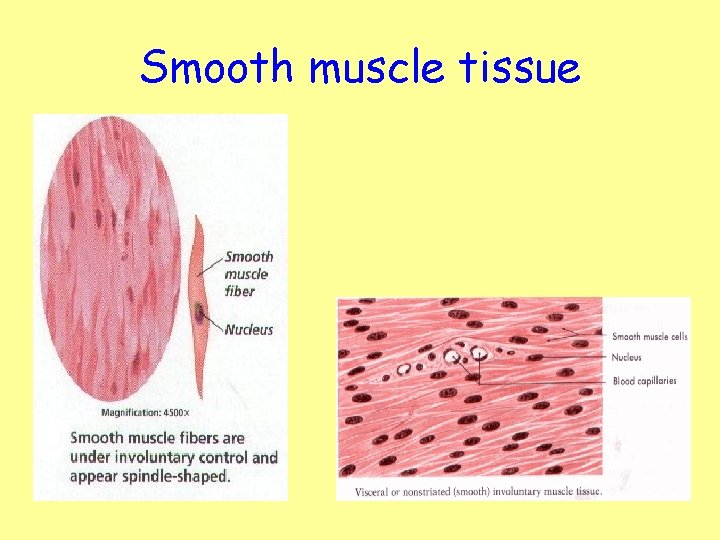
Smooth muscle tissue • The structure of these cells allows them to perform a specific function • Are spindle shaped • Can contract and relax • This allows the cells to slide easily across one another
Smooth muscle tissue
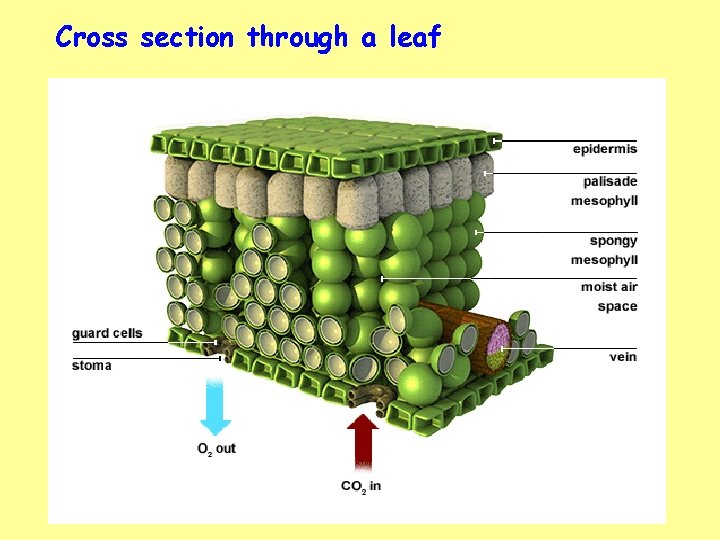
Plant tissues • Plants also have different types of cells that are grouped together into tissues. • In each case, the structure of each cell is related to its function. • Plant tissues include epidermal, palisade mesophyll and spongy mesophyll.
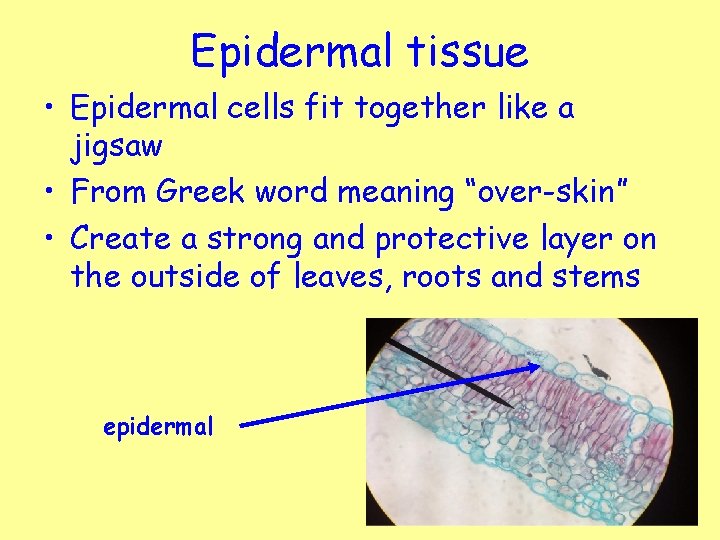
Epidermal tissue • Epidermal cells fit together like a jigsaw • From Greek word meaning “over-skin” • Create a strong and protective layer on the outside of leaves, roots and stems epidermal
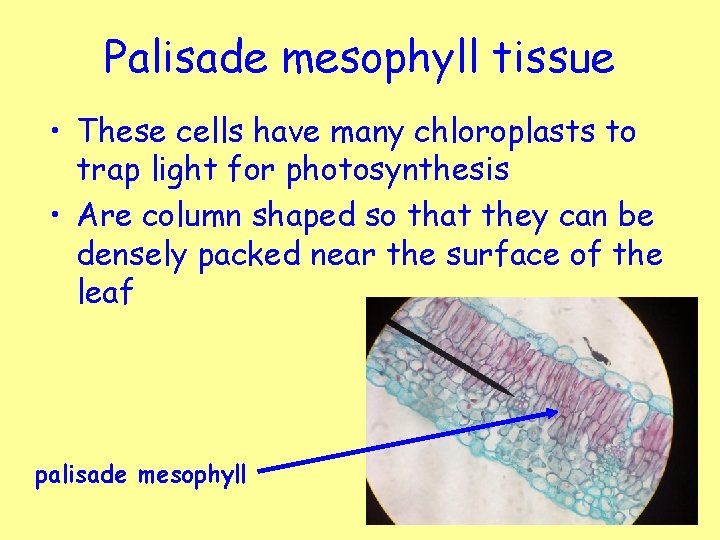
Palisade mesophyll tissue • These cells have many chloroplasts to trap light for photosynthesis • Are column shaped so that they can be densely packed near the surface of the leaf palisade mesophyll
Spongy mesophyll tissue • These cells have a rounded shape • This allows them to be loosely arranged so that they can take up carbon dioxide by diffusion • Carbon dioxide can then be used for photosynthesis spongy mesophyll
Cross section through a leaf
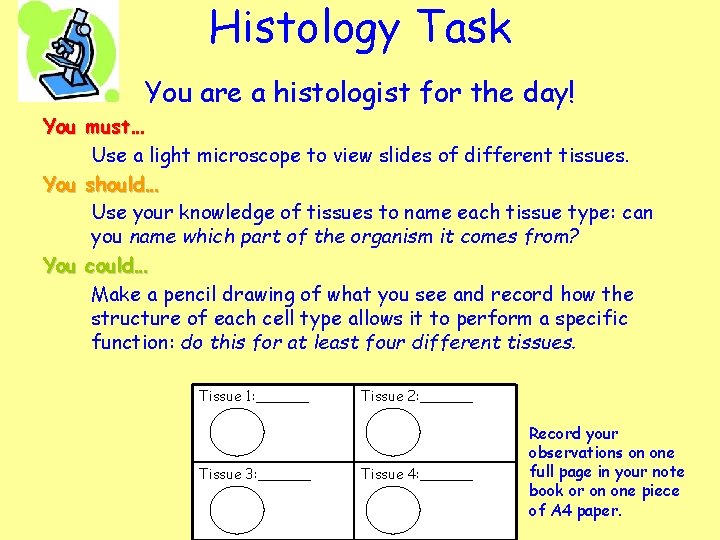
Histology Task You are a histologist for the day! You must… Use a light microscope to view slides of different tissues. You should… Use your knowledge of tissues to name each tissue type: can you name which part of the organism it comes from? You could… Make a pencil drawing of what you see and record how the structure of each cell type allows it to perform a specific function: do this for at least four different tissues. Tissue 1: ______ Tissue 3: ______ Tissue 2: ______ Tissue 4: ______ Record your observations on one full page in your note book or on one piece of A 4 paper.
Organs • A group of tissues working together form an organ. • Examples of animal organs include the heart, lungs, brain and kidneys. • Examples of plant organs include roots, stems, flowers, seeds and fruits.
Systems • A group of related tissues and organs eg. blood, heart, arteries, capillaries and veins make up a system. • The tissues an organs above make up the circulatory system.
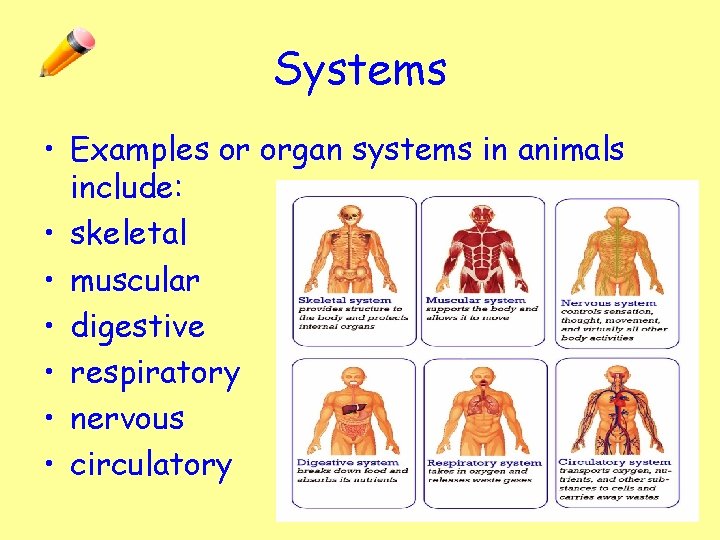
Systems • Examples or organ systems in animals include: • skeletal • muscular • digestive • respiratory • nervous • circulatory
Systems • Examples of organ systems in plants include the vascular system in the roots and shoots. • This includes xylem and phloem. You will learn about these specialised cells later.
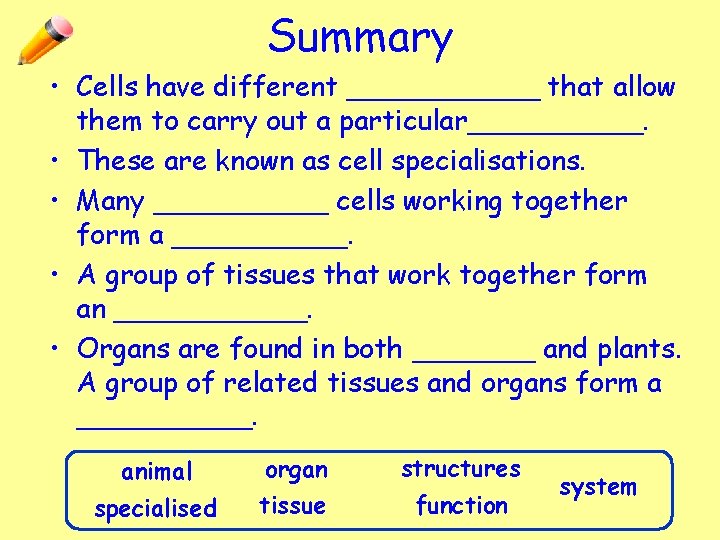
Summary • Cells have different ______ that allow them to carry out a particular_____. • These are known as cell specialisations. • Many _____ cells working together form a _____. • A group of tissues that work together form an ______. • Organs are found in both _______ and plants. A group of related tissues and organs form a _____. animal specialised organ tissue structures function system
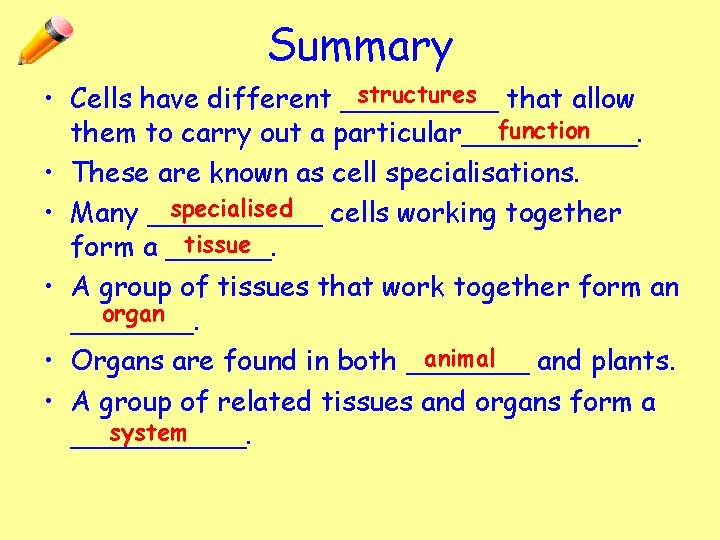
Summary structures that allow • Cells have different _____ function them to carry out a particular_____. • These are known as cell specialisations. specialised • Many _____ cells working together tissue form a ______. • A group of tissues that work together form an organ _______. animal • Organs are found in both _______ and plants. • A group of related tissues and organs form a system _____.
Key Area 2. 1 Consolidation Tasks… You must complete… In the back of your notebook: Exercise 1 & 2 from the new unit 2 homework booklet. Review your KA 2. 1 cells, tissue & organs key words. Review your KA 2. 1 cells, tissues & organs learning outcomes. You should complete… N 5 Text book: Read page 114 – 118 In the back of your notebook: complete Activity 2. 1. 1 (p 116) & Activity 2. 1. 3 (p 118) You could complete… On plain A 4 paper: Activity 2. 1. 2 (p 116) & Activity 2. 1. 4 (p 118) Collect 4 study cards and create quiz cards (questions & answers) about cells, tissues & organs.