
Multi Hazard Impact Based forecasting and warning services
Multi Hazard, Impact Based forecasting and warning services © Crown copyright Met
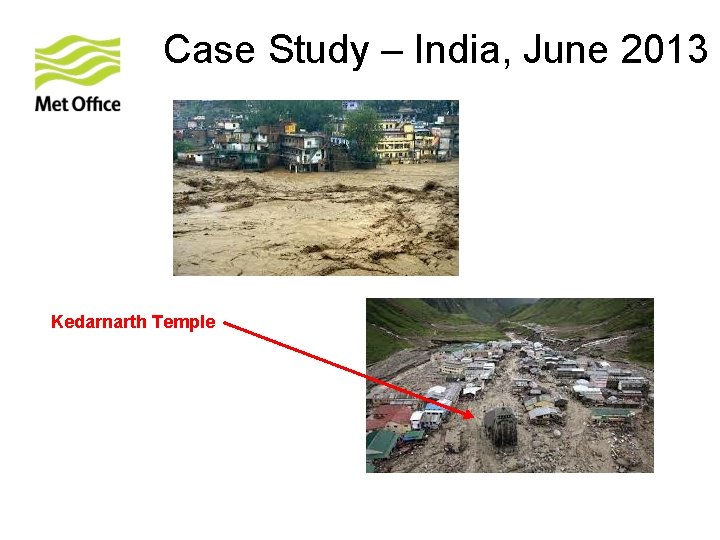
Case Study – India, June 2013 Kedarnarth Temple
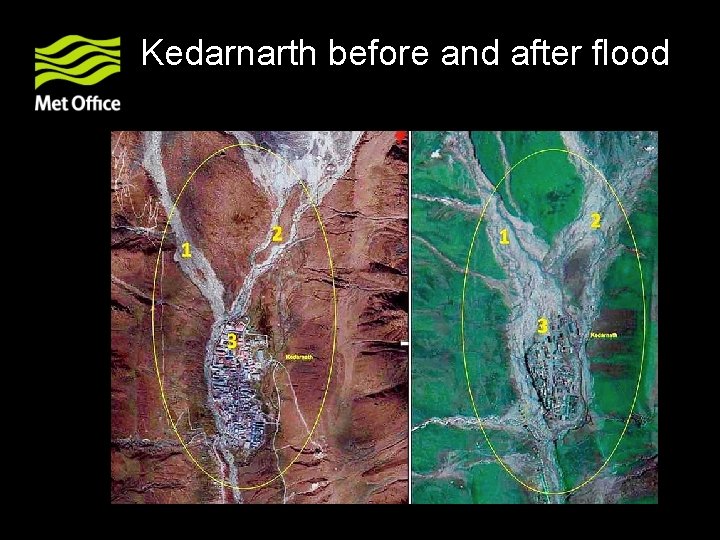
Kedarnarth before and after flood

What worked well 1. Good Weather forecasts of heavy rainfall three days ahead of event 2. Weather warnings issued by Indian Met Department 3. Media coverage of threat 4. Satellite remote sensing information available
What didn’t? • Warning information was not fully understood by Government of Uttarakhand Disaster Manager – Unable to interpret “heavy rainfall for entire state” into effective impacts • Local preparedness for this magnitude of hazard inadequate • Late response resulting in additional hazards to responders during rescue operations • Poor communication between central government, IMD and State Disaster Manager
What didn’t? • Weather models and other hazard models not coupled • Lack of scientific and technical capacity to translate hazard information into impacts – therefore, impacts underestimated • Inadequate communication channels, which failed during the event • Lack of appreciation and utilization of available hazard maps at local level • Inadequate observations to forecast events on scale required by Gov. of Uttarakhand
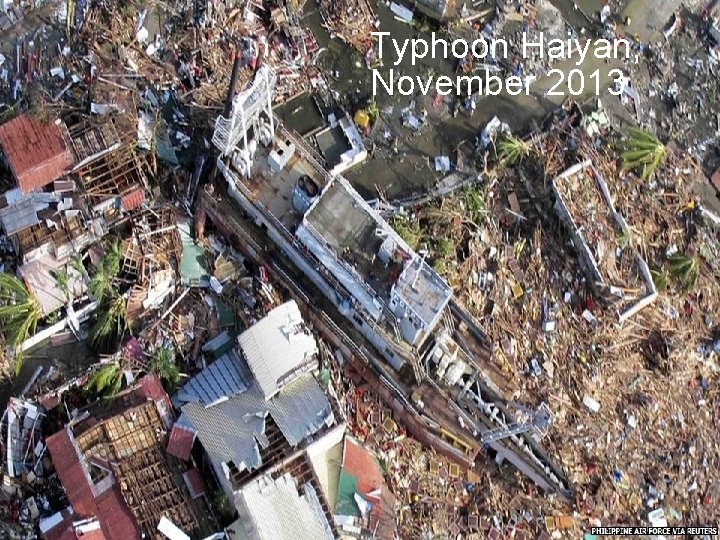
Typhoon Haiyan, November 2013
WMO Fact Finding Mission : summary and conclusions Going the extra mile – can science deliver? ? “I would rather die with my refrigerator than let it be taken by a storm surge” STAKEHOLDER MEETING, MANILA 2014 © Crown copyright Met
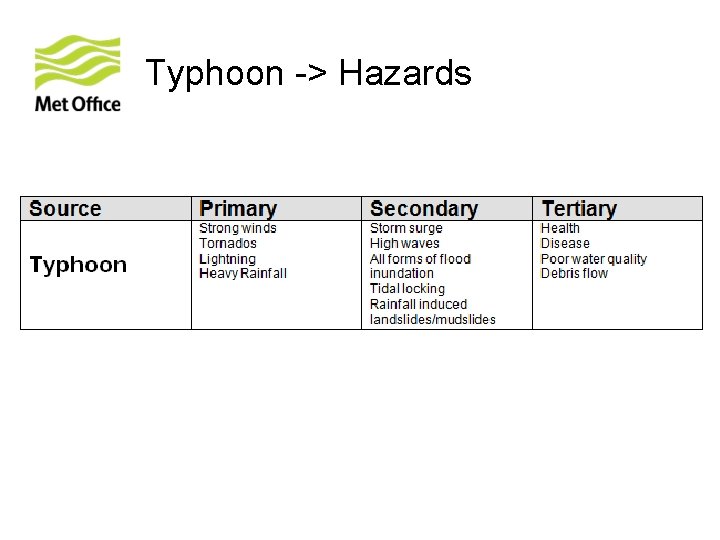
Typhoon -> Hazards
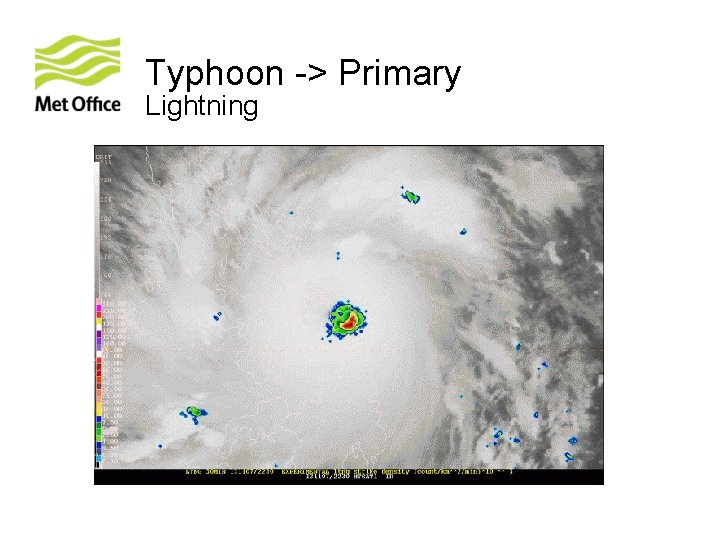
Typhoon -> Primary Lightning
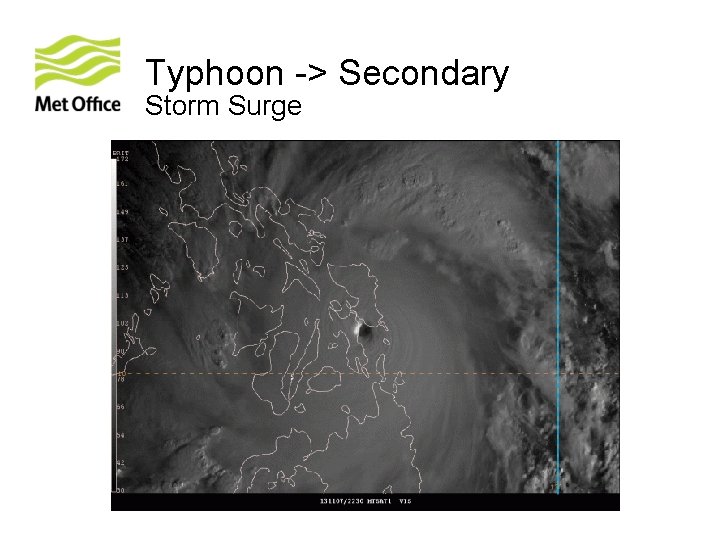
Typhoon -> Secondary Storm Surge
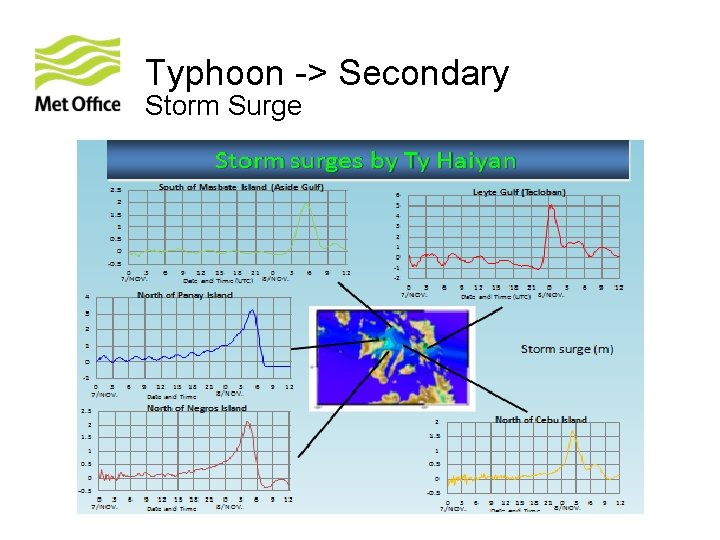
Typhoon -> Secondary Storm Surge
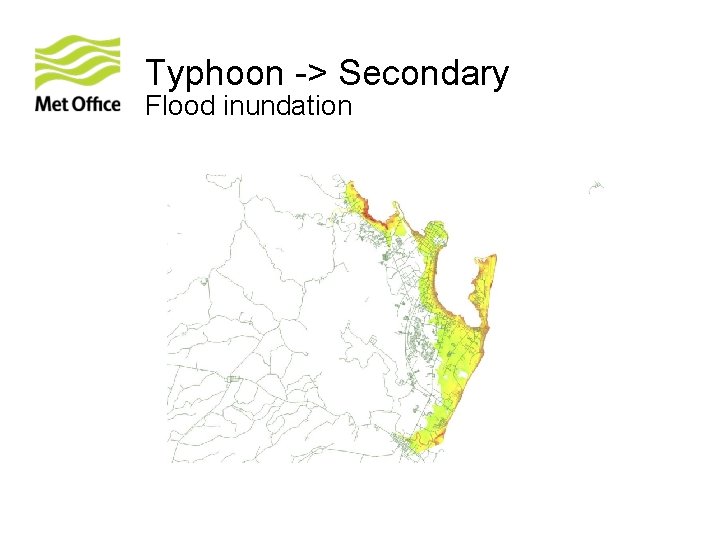
Typhoon -> Secondary Flood inundation
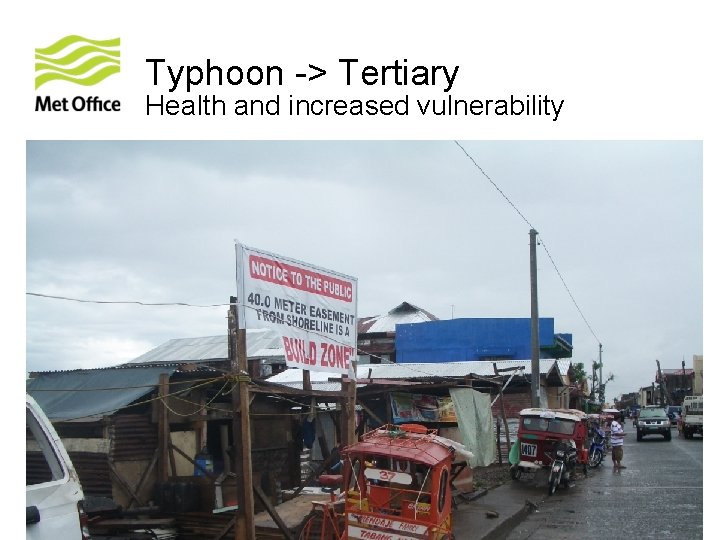
Typhoon -> Tertiary Health and increased vulnerability
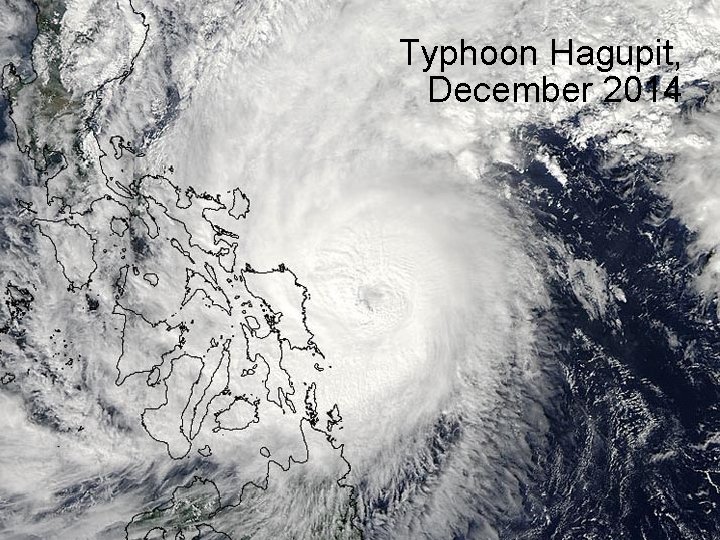
Typhoon Hagupit, December 2014 © Crown copyright Met
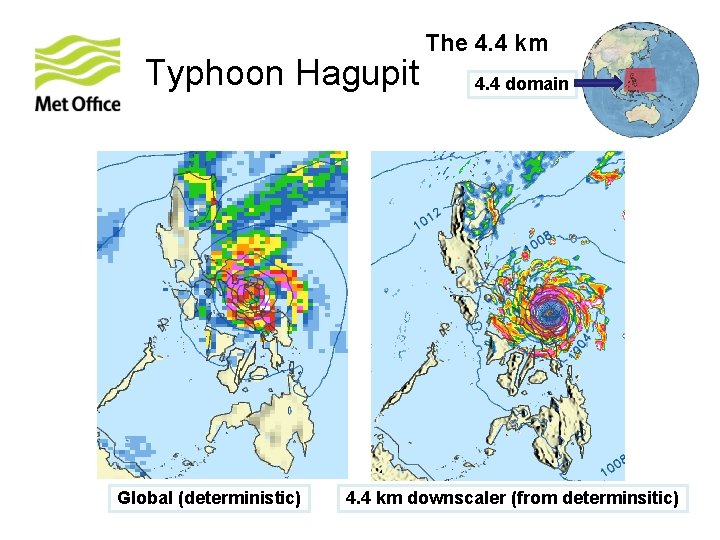
Typhoon Hagupit Global (deterministic) The 4. 4 km 4. 4 domain 4. 4 km downscaler (from determinsitic)
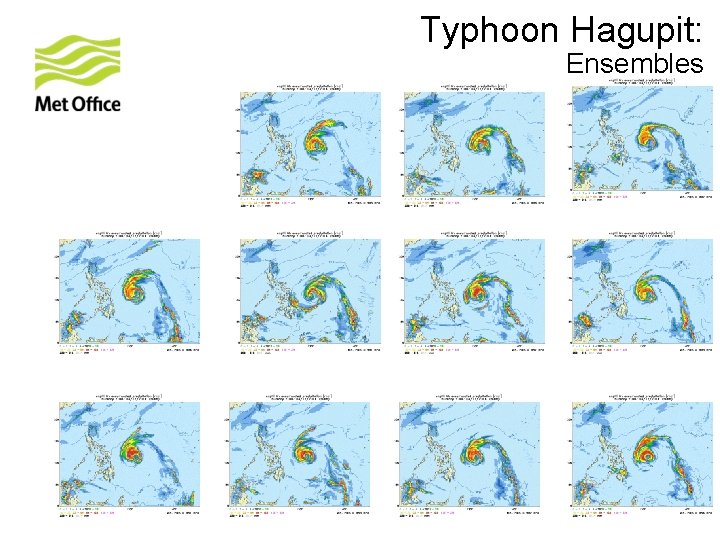
Typhoon Hagupit: Ensembles
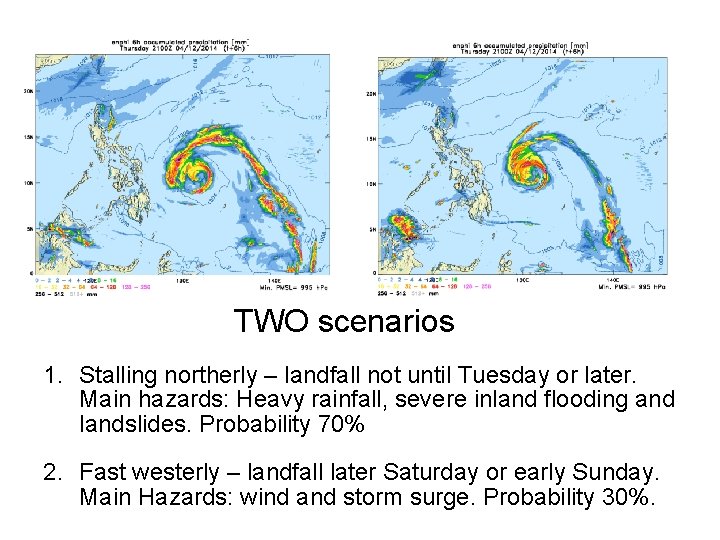
TWO scenarios 1. Stalling northerly – landfall not until Tuesday or later. Main hazards: Heavy rainfall, severe inland flooding and landslides. Probability 70% 2. Fast westerly – landfall later Saturday or early Sunday. Main Hazards: wind and storm surge. Probability 30%.
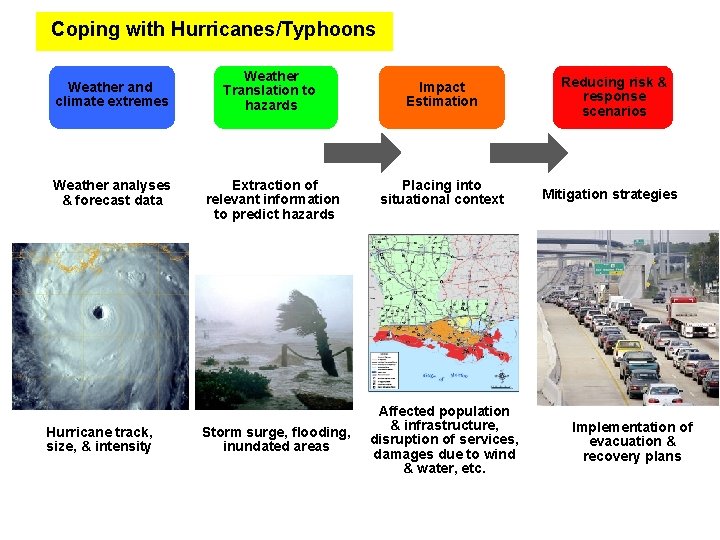
Coping with Hurricanes/Typhoons Weather and climate extremes Weather analyses & forecast data Hurricane track, size, & intensity Weather Translation to hazards Extraction of relevant information to predict hazards Storm surge, flooding, inundated areas Impact Estimation Placing into situational context Affected population & infrastructure, disruption of services, damages due to wind & water, etc. Reducing risk & response scenarios Mitigation strategies Implementation of evacuation & recovery plans
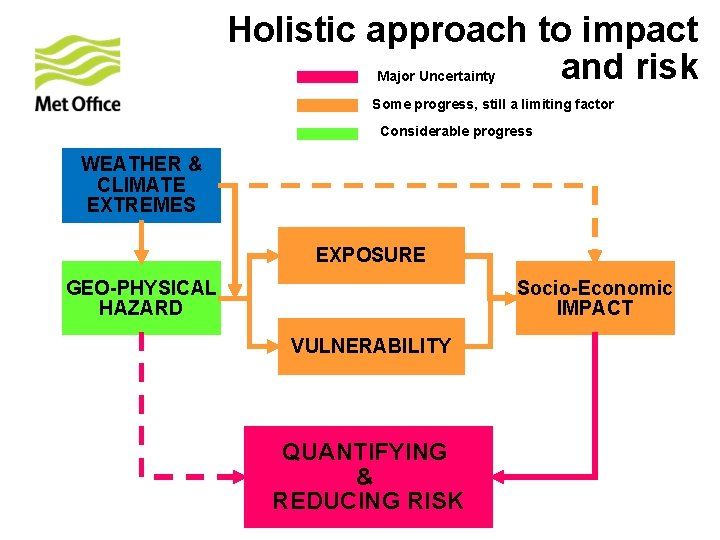
Holistic approach to impact and risk Major Uncertainty Some progress, still a limiting factor Considerable progress WEATHER & CLIMATE EXTREMES EXPOSURE GEO-PHYSICAL HAZARD Socio-Economic IMPACT VULNERABILITY QUANTIFYING & REDUCING RISK
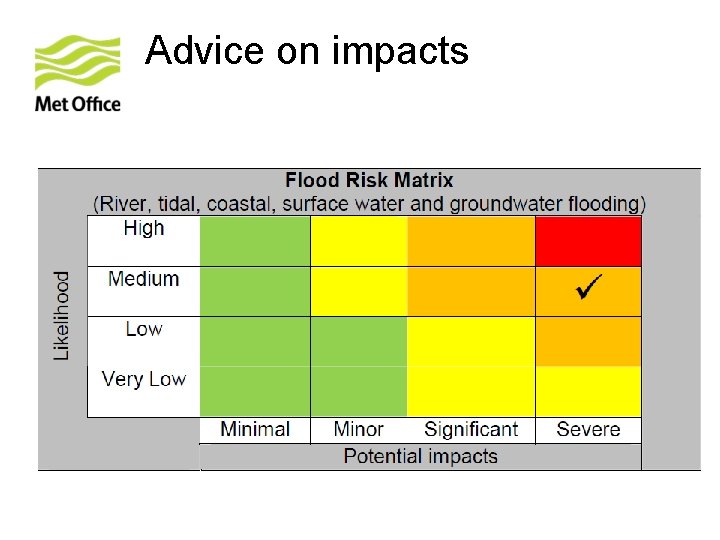
Advice on impacts
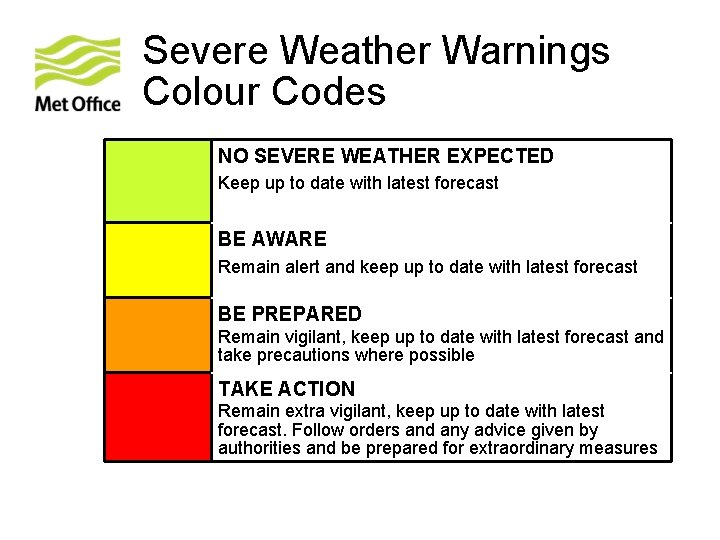
Severe Weather Warnings Colour Codes NO SEVERE WEATHER EXPECTED Keep up to date with latest forecast BE AWARE Remain alert and keep up to date with latest forecast BE PREPARED Remain vigilant, keep up to date with latest forecast and take precautions where possible TAKE ACTION Remain extra vigilant, keep up to date with latest forecast. Follow orders and any advice given by authorities and be prepared for extraordinary measures
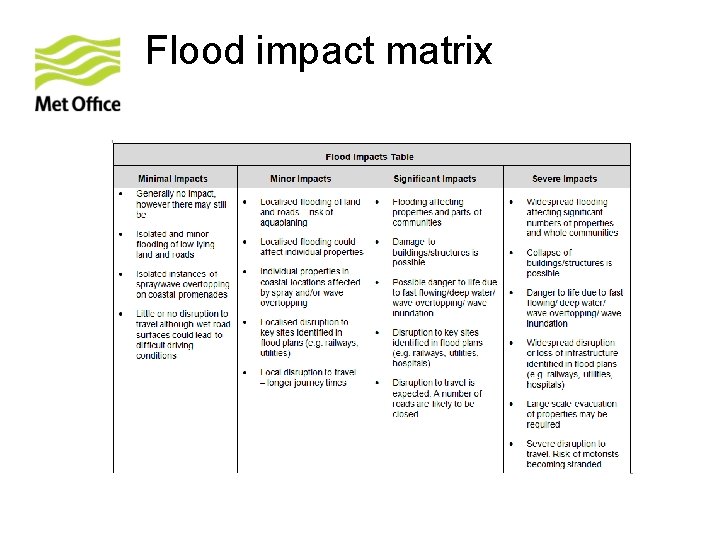
Flood impact matrix
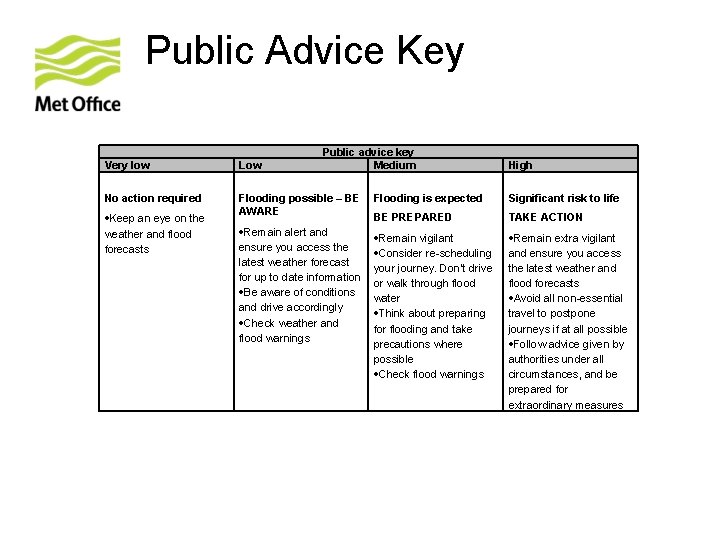
Public Advice Key Public advice key Medium Very low Low No action required Flooding possible – BE AWARE Keep an eye on the weather and flood forecasts Remain alert and ensure you access the latest weather forecast for up to date information Be aware of conditions and drive accordingly Check weather and flood warnings High Flooding is expected Significant risk to life BE PREPARED TAKE ACTION Remain vigilant Consider re-scheduling your journey. Don’t drive or walk through flood water Think about preparing for flooding and take precautions where possible Check flood warnings Remain extra vigilant and ensure you access the latest weather and flood forecasts Avoid all non-essential travel to postpone journeys if at all possible Follow advice given by authorities under all circumstances, and be prepared for extraordinary measures
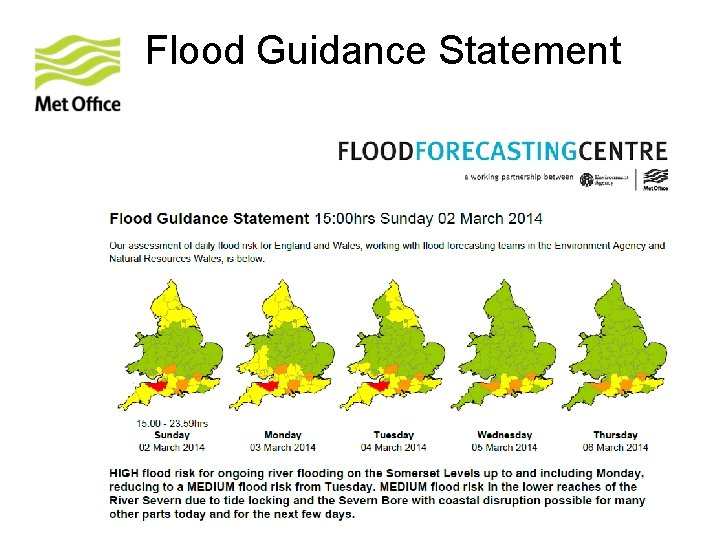
Flood Guidance Statement
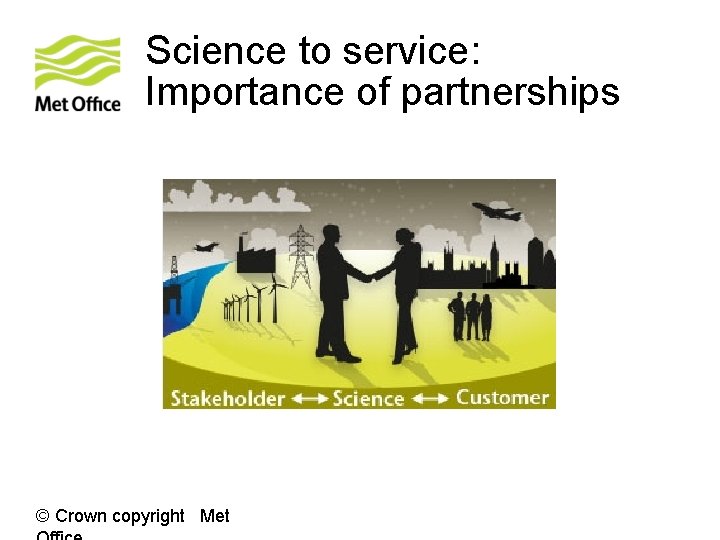
Science to service: Importance of partnerships © Crown copyright Met
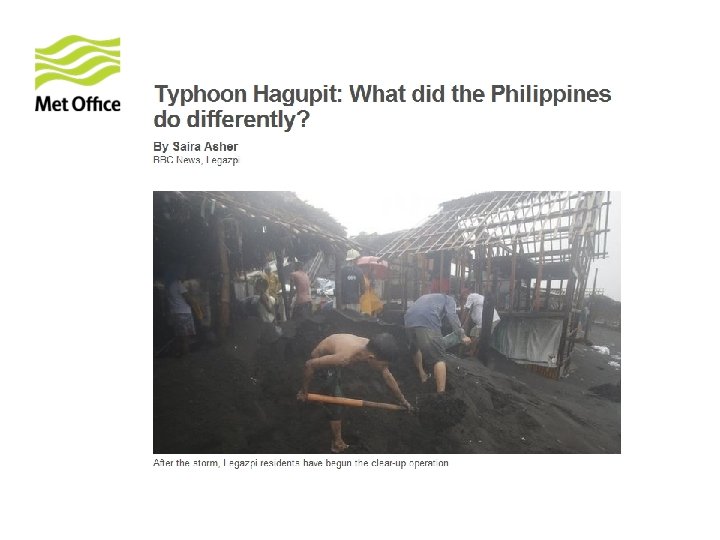

‘If you have a perfect system it will drive behaviours which will mitigate all impacts’
- Slides: 28