
Mucus Permeating Nanocarriers for Oral Delivery of Biomelecules
Mucus Permeating Nanocarriers for Oral Delivery of Biomelecules E. Samaridou 1, V. Bourganis 1, T. Karamanidou 1, K. Karidi 2, O. Kammona 2, C. Kiparissides 1, 2 1 Department of Chemical Engineering, AUTh 2 Chemical Process & Energy Resources Institute, CERTH Pharmaceutics and Novel Drug Delivery Systems 7 -9 March, 2016, Madrid CPERI/AUTH
Outline • The Mucus Gel Barrier Problem • Computational Issues of NP Transport in the GIT • Strategies to Overcome the Mucus Gel Barrier ü The “Slippery Surface” Strategy ü The SNEDDS Strategy ü The Proteolytic Enzyme Strategy ü The “Disulfide Breaking” Strategy ü Systems with Changing Zeta Potential • Experimental Measurement of NPs Permeability • Conclusions High-throughput synthesis techniques, in vitro and in vivo assays, and predictive mathematical models, have to be integrated for the selection of the optimal NP transport characteristics leading to a rational design of nanocarrier-based systems for oral delivery of biomolecules. CPERI/AUTH
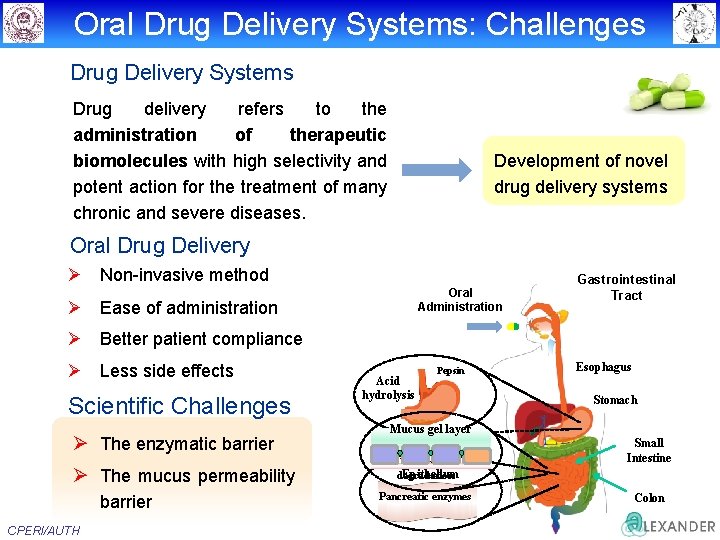
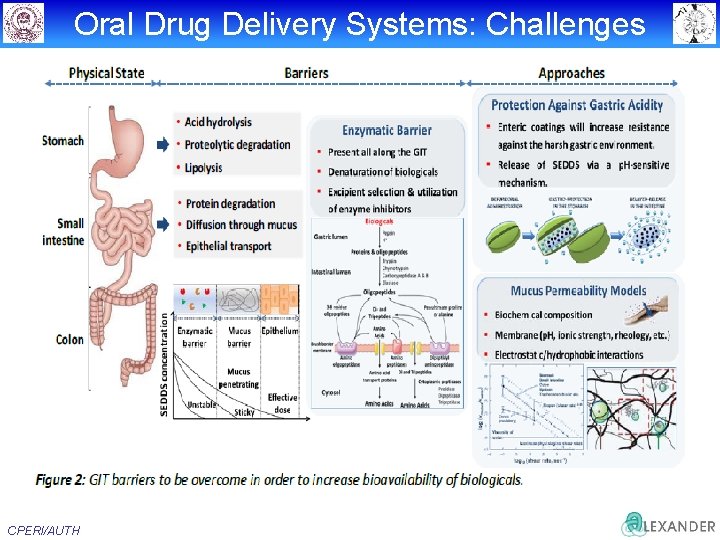
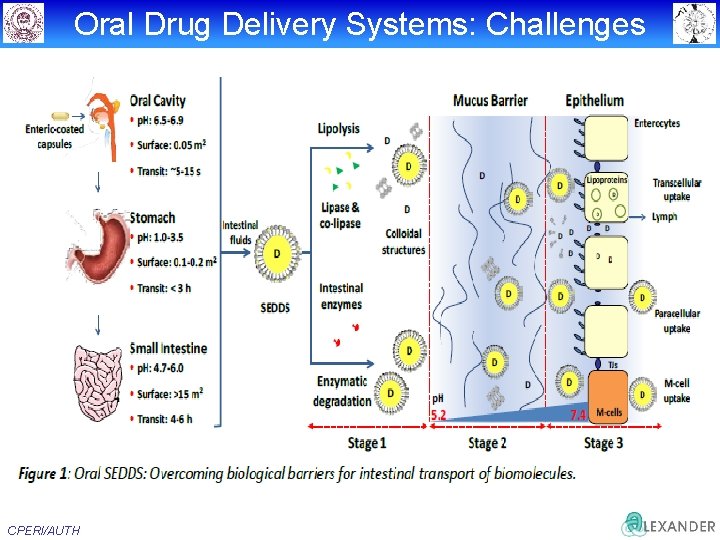
Oral Drug Delivery Systems: Challenges Drug Delivery Systems Drug delivery refers to the administration of therapeutic biomolecules with high selectivity and potent action for the treatment of many chronic and severe diseases. Development of novel drug delivery systems Oral Drug Delivery Ø Non-invasive method Oral Administration Ø Ease of administration Gastrointestinal Tract Ø Better patient compliance Ø Less side effects Scientific Challenges Ø The enzymatic barrier Ø The mucus permeability barrier CPERI/AUTH Acid hydrolysis Pepsin Esophagus Stomach Mucus gel layer Enzymatic Epithelium degradation Pancreatic enzymes Small Intestine Colon
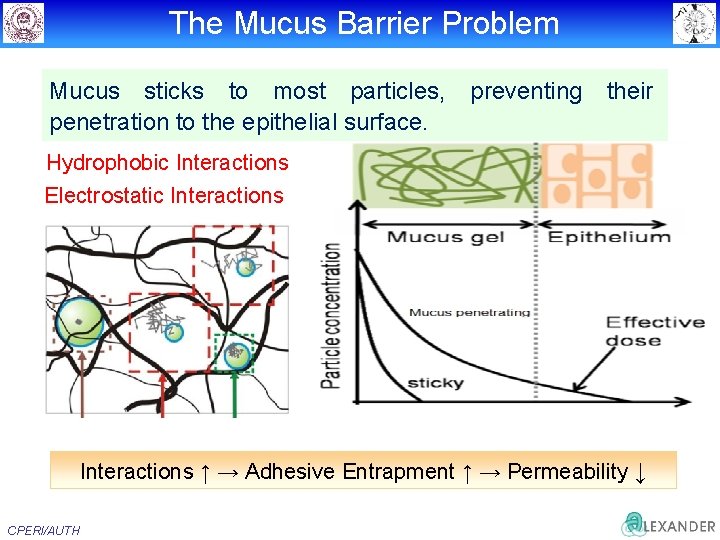
The Mucus Barrier Problem Mucus sticks to most particles, penetration to the epithelial surface. preventing their Hydrophobic Interactions Electrostatic Interactions ↑ → Adhesive Entrapment ↑ → Permeability ↓ CPERI/AUTH
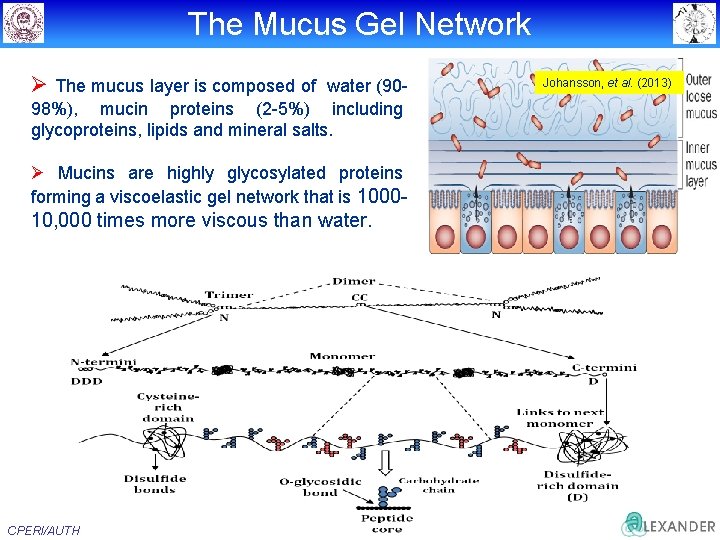
The Mucus Gel Network Ø The mucus layer is composed of water (9098%), mucin proteins (2 -5%) including glycoproteins, lipids and mineral salts. Ø Mucins are highly glycosylated proteins forming a viscoelastic gel network that is 1000 - 10, 000 times more viscous than water. CPERI/AUTH Johansson, et al. (2013)
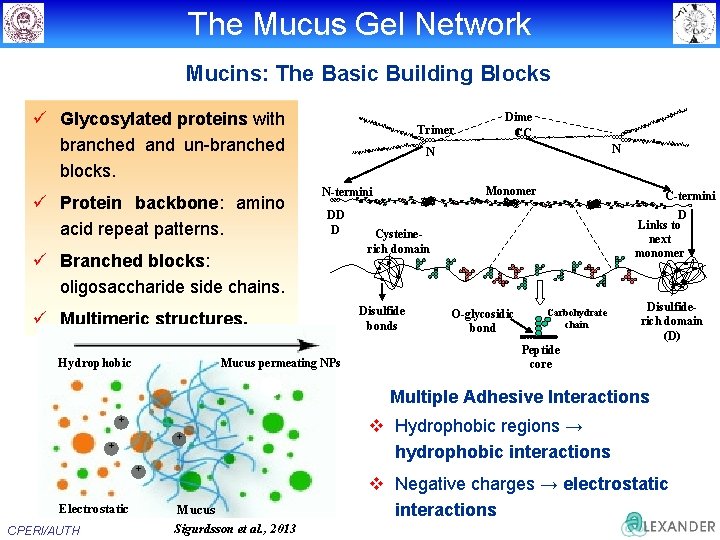
The Mucus Gel Network Mucins: The Basic Building Blocks ü Glycosylated proteins with branched and un-branched blocks. ü Protein backbone: amino acid repeat patterns. Trimer N N Monomer N-termini DD D ü Branched blocks: oligosaccharide side chains. ü Multimeric structures. Hydrophobic Dime r CC Mucus permeating NPs C-termini D Links to next monomer Cysteinerich domain Disulfide bonds O-glycosidic bond Carbohydrate chain Disulfiderich domain (D) Peptide core Multiple Adhesive Interactions + + Electrostatic CPERI/AUTH Mucus Sigurdsson et al. , 2013 v Hydrophobic regions → hydrophobic interactions v Negative charges → electrostatic interactions
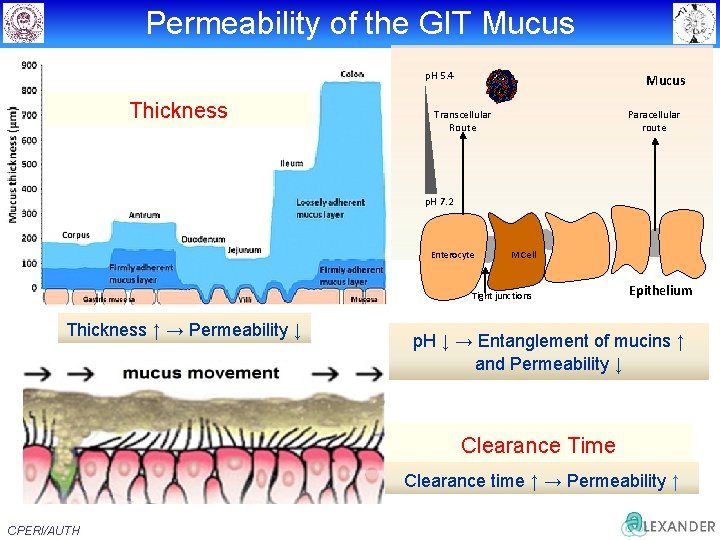
Permeability of the GIT Mucus p. H 5. 4 Thickness Mucus Transcellular Route Paracellular route p. H 7. 2 Enterocyte M Cell Tight junctions Thickness ↑ → Permeability ↓ Epithelium p. H ↓ → Entanglement of mucins ↑ and Permeability ↓ Clearance Time Clearance time ↑ → Permeability ↑ CPERI/AUTH
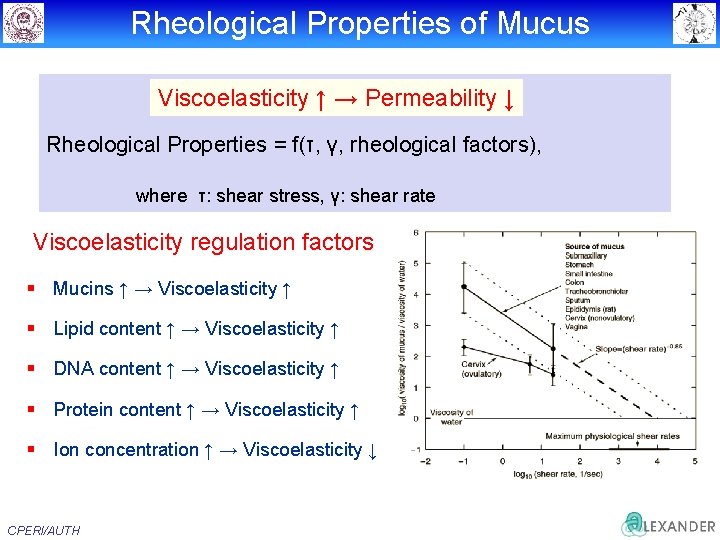
Rheological Properties of Mucus Viscoelasticity ↑ → Permeability ↓ Rheological Properties = f(τ, γ, rheological factors), where τ: shear stress, γ: shear rate Viscoelasticity regulation factors § Mucins ↑ → Viscoelasticity ↑ § Lipid content ↑ → Viscoelasticity ↑ § DNA content ↑ → Viscoelasticity ↑ § Protein content ↑ → Viscoelasticity ↑ § Ion concentration ↑ → Viscoelasticity ↓ CPERI/AUTH
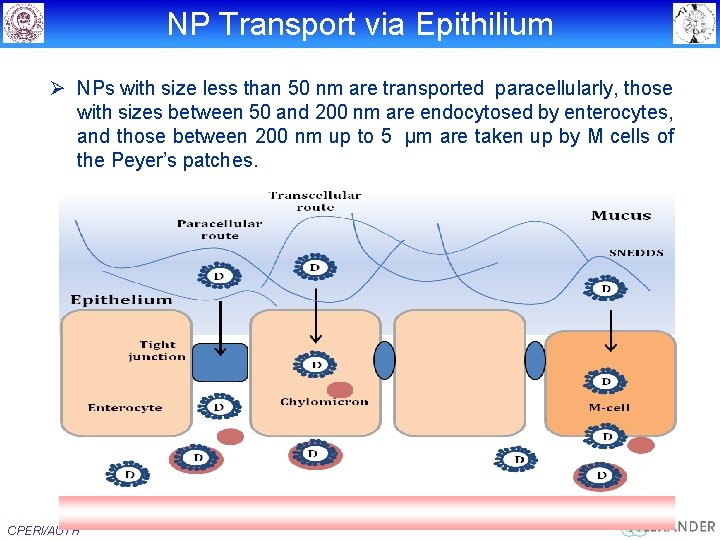
NP Transport via Epithilium Ø NPs with size less than 50 nm are transported paracellularly, those with sizes between 50 and 200 nm are endocytosed by enterocytes, and those between 200 nm up to 5 μm are taken up by M cells of the Peyer’s patches. CPERI/AUTH
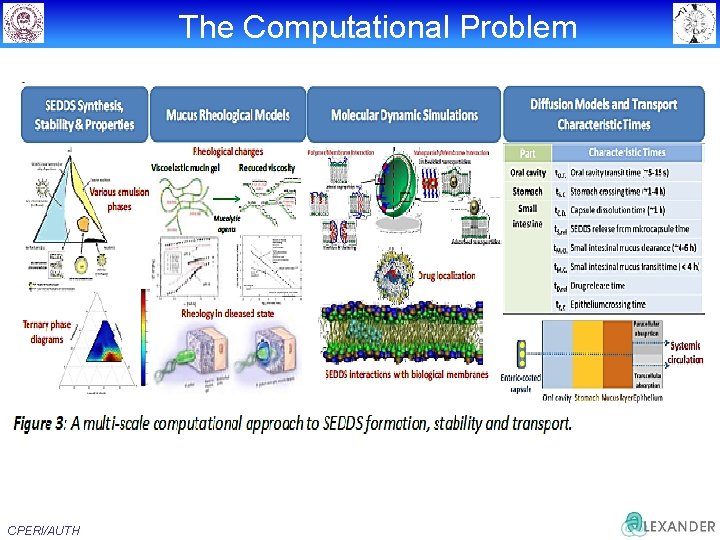
CPERI/AUTH The Computational Problem
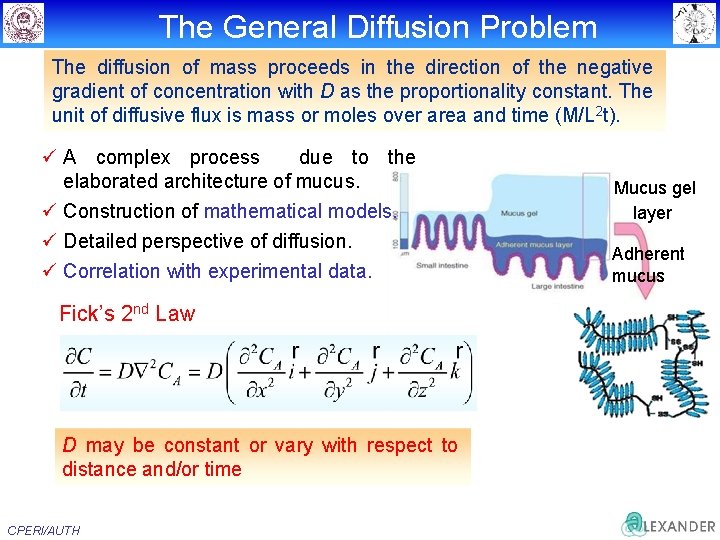
The General Diffusion Problem The diffusion of mass proceeds in the direction of the negative gradient of concentration with D as the proportionality constant. The unit of diffusive flux is mass or moles over area and time (M/L 2 t). ü A complex process due to the elaborated architecture of mucus. ü Construction of mathematical models. ü Detailed perspective of diffusion. ü Correlation with experimental data. Fick’s 2 nd Law D may be constant or vary with respect to distance and/or time CPERI/AUTH Mucus gel layer Adherent mucus
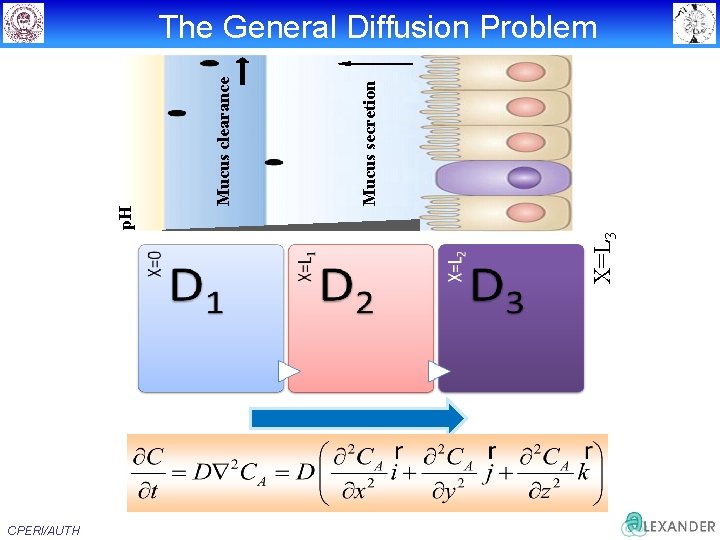
X=L 3 Mucus secretion The General Diffusion Problem Mucus clearance p. H CPERI/AUTH
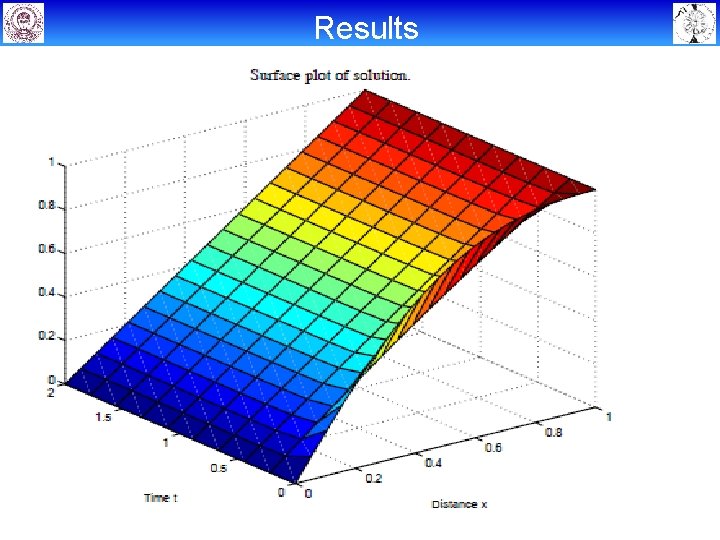
Results CPERI/AUTH
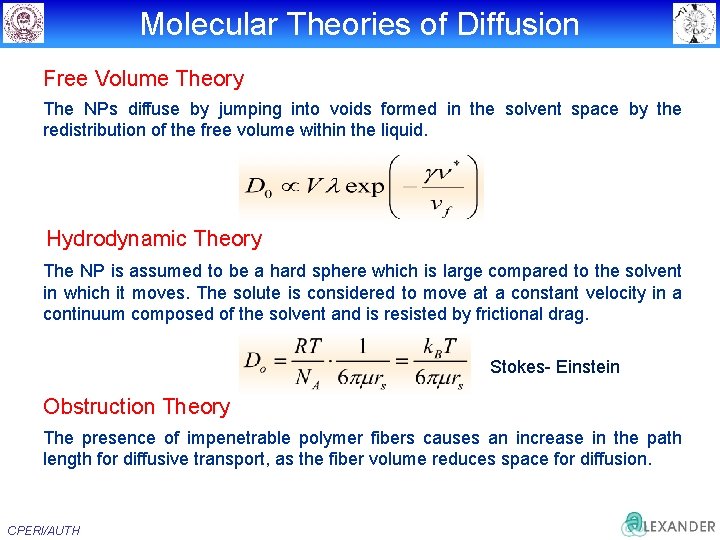
Molecular Theories of Diffusion Free Volume Theory The NPs diffuse by jumping into voids formed in the solvent space by the redistribution of the free volume within the liquid. Hydrodynamic Theory The NP is assumed to be a hard sphere which is large compared to the solvent in which it moves. The solute is considered to move at a constant velocity in a continuum composed of the solvent and is resisted by frictional drag. Stokes- Einstein Obstruction Theory The presence of impenetrable polymer fibers causes an increase in the path length for diffusive transport, as the fiber volume reduces space for diffusion. CPERI/AUTH
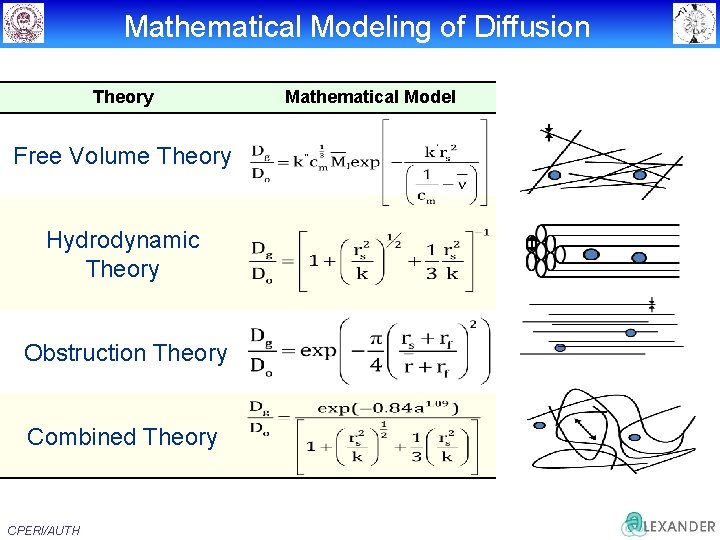
Mathematical Modeling of Diffusion Theory Free Volume Theory Hydrodynamic Theory Obstruction Theory Combined Theory CPERI/AUTH Mathematical Model
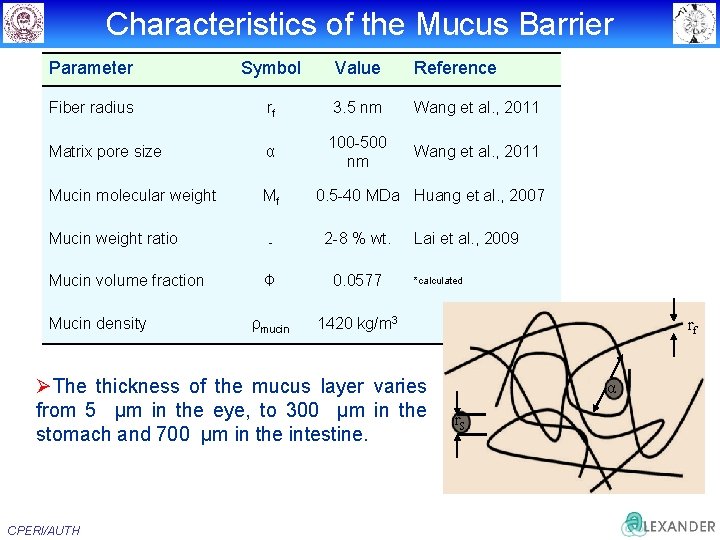
Characteristics of the Mucus Barrier Parameter Symbol Value Reference Fiber radius rf 3. 5 nm Wang et al. , 2011 Matrix pore size α 100 -500 nm Wang et al. , 2011 Mucin molecular weight Mf Mucin weight ratio Mucin volume fraction Mucin density 0. 5 -40 MDa Huang et al. , 2007 - 2 -8 % wt. Φ 0. 0577 ρmucin 1420 kg/m 3 Lai et al. , 2009 *calculated ØThe thickness of the mucus layer varies from 5 μm in the eye, to 300 μm in the stomach and 700 μm in the intestine. CPERI/AUTH rf α r. S
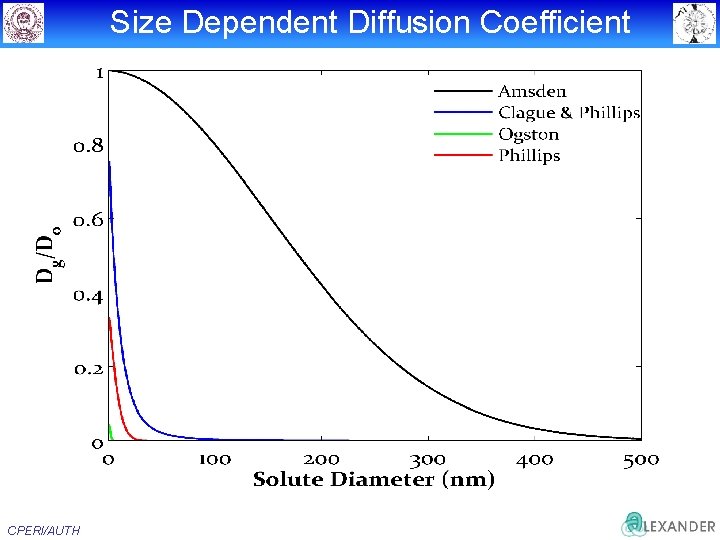
Size Dependent Diffusion Coefficient CPERI/AUTH
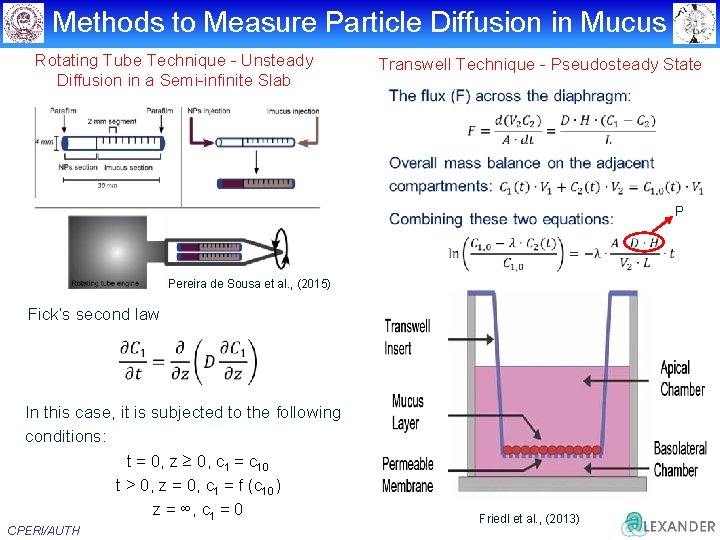
Methods to Measure Particle Diffusion in Mucus Rotating Tube Technique - Unsteady Diffusion in a Semi-infinite Slab Transwell Technique - Pseudosteady State P Pereira de Sousa et al. , (2015) Fick’s second law In this case, it is subjected to the following conditions: t = 0, z ≥ 0, c 1 = c 10 t > 0, z = 0, c 1 = f (c 10) z = ∞, c 1 = 0 CPERI/AUTH Friedl et al. , (2013)
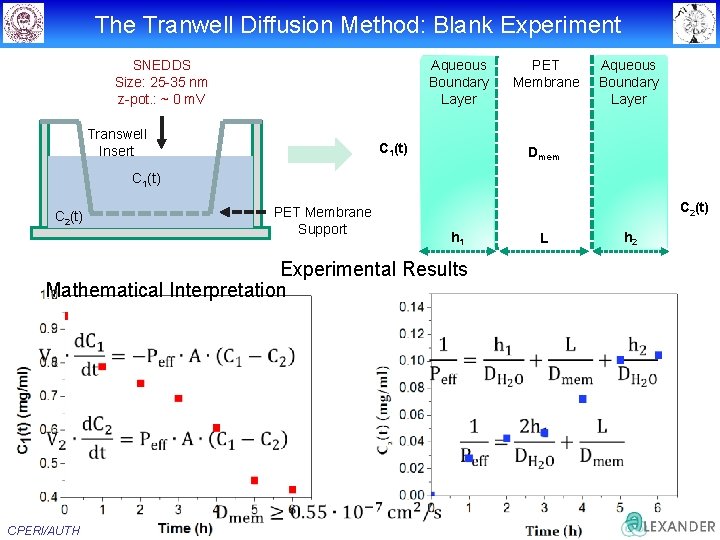
The Tranwell Diffusion Method: Blank Experiment Aqueous Boundary Layer SNEDDS Size: 25 -35 nm z-pot. : ~ 0 m. V Transwell Insert C 1(t) PET Membrane Aqueous Boundary Layer Dmem C 1(t) C 2(t) PET Membrane Support C 2(t) h 1 Experimental Results Mathematical Interpretation CPERI/AUTH L h 2
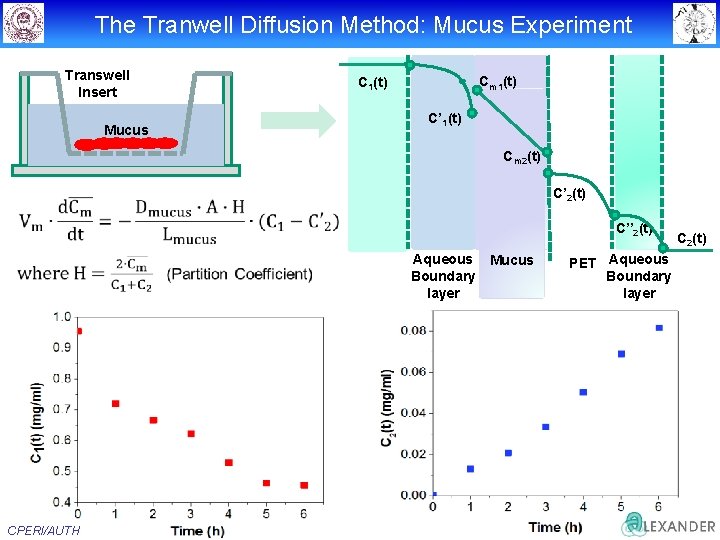
The Tranwell Diffusion Method: Mucus Experiment Transwell Insert Mucus Cm 1(t) C’ 1(t) Cm 2(t) CPERI/AUTH Aqueous Mucus Boundary layer C’ 2(t) C’’ 2(t) PET Aqueous Boundary layer C 2(t)
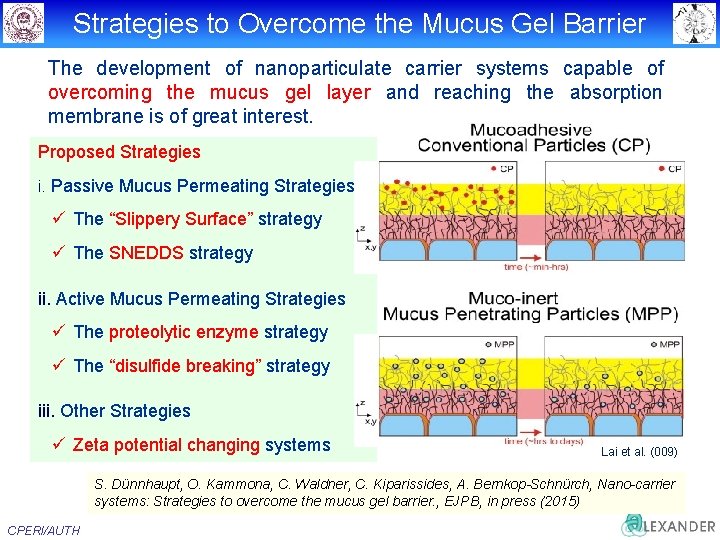
Strategies to Overcome the Mucus Gel Barrier The development of nanoparticulate carrier systems capable of overcoming the mucus gel layer and reaching the absorption membrane is of great interest. Proposed Strategies i. Passive Mucus Permeating Strategies ü The “Slippery Surface” strategy ü The SNEDDS strategy ii. Active Mucus Permeating Strategies ü The proteolytic enzyme strategy ü The “disulfide breaking” strategy iii. Other Strategies ü Zeta potential changing systems Lai et al. (009) S. Dünnhaupt, O. Kammona, C. Waldner, C. Kiparissides, A. Bernkop-Schnürch, Nano-carrier systems: Strategies to overcome the mucus gel barrier. , EJPB, in press (2015) CPERI/AUTH
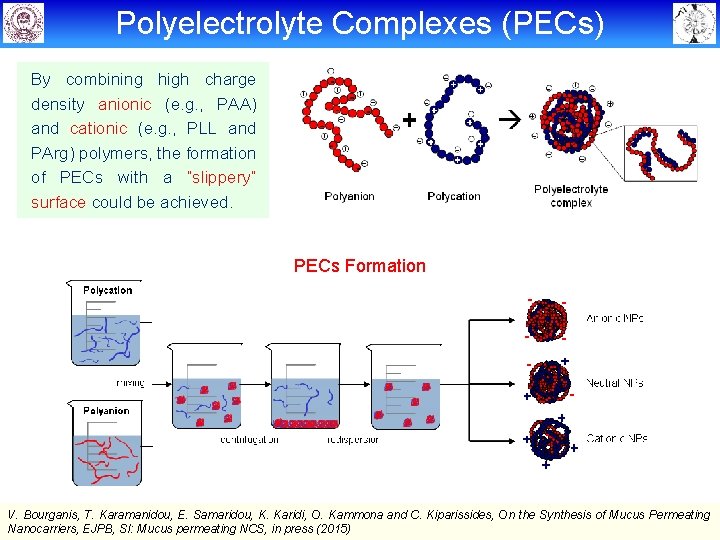
Polyelectrolyte Complexes (PECs) By combining high charge density anionic (e. g. , PAA) and cationic (e. g. , PLL and PArg) polymers, the formation of PECs with a “slippery” surface could be achieved. PECs Formation V. Bourganis, T. Karamanidou, E. Samaridou, K. Karidi, O. Kammona and C. Kiparissides, On the Synthesis of Mucus Permeating Nanocarriers, EJPB, SI: Mucus permeating NCS, in press (2015) CPERI/AUTH
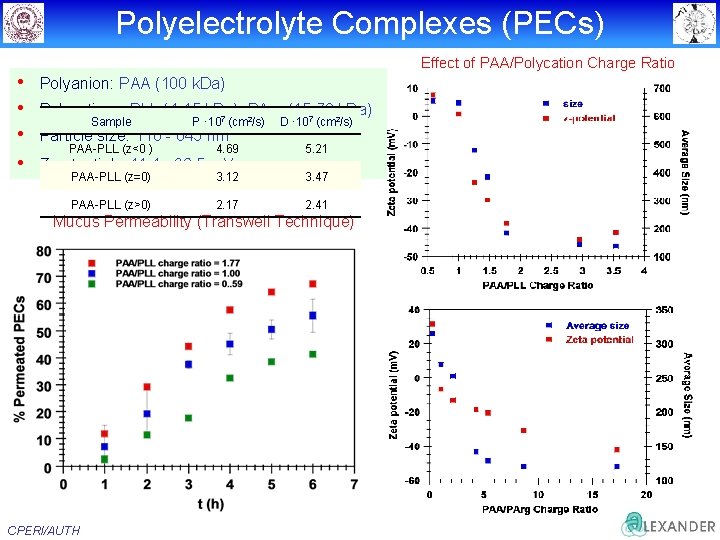
Polyelectrolyte Complexes (PECs) • • Effect of PAA/Polycation Charge Ratio Polyanion: PAA (100 k. Da) Polycations: PLL (4 -15 k. Da), PArg (15 -70 k. Da) 7 2 Sample P · 10 (cm /s) D · 10 (cm /s) PAA-PLL (z<0 ) 4. 69 5. 21 PAA-PLL (z=0) 3. 12 3. 47 PAA-PLL (z>0) 2. 17 2. 41 Particle size: 116 - 645 nm Z potential: -41. 4 - 32. 5 m. V Mucus Permeability (Transwell Technique) CPERI/AUTH
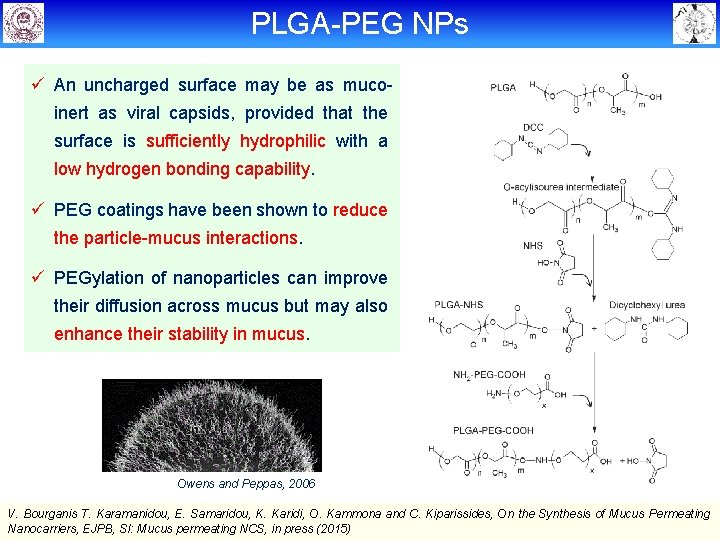
PLGA-PEG NPs ü An uncharged surface may be as mucoinert as viral capsids, provided that the surface is sufficiently hydrophilic with a low hydrogen bonding capability. ü PEG coatings have been shown to reduce the particle-mucus interactions. ü PEGylation of nanoparticles can improve their diffusion across mucus but may also enhance their stability in mucus. Owens and Peppas, 2006 V. Bourganis T. Karamanidou, E. Samaridou, K. Karidi, O. Kammona and C. Kiparissides, On the Synthesis of Mucus Permeating Nanocarriers, EJPB, SI: Mucus permeating NCS, in press (2015) CPERI/AUTH
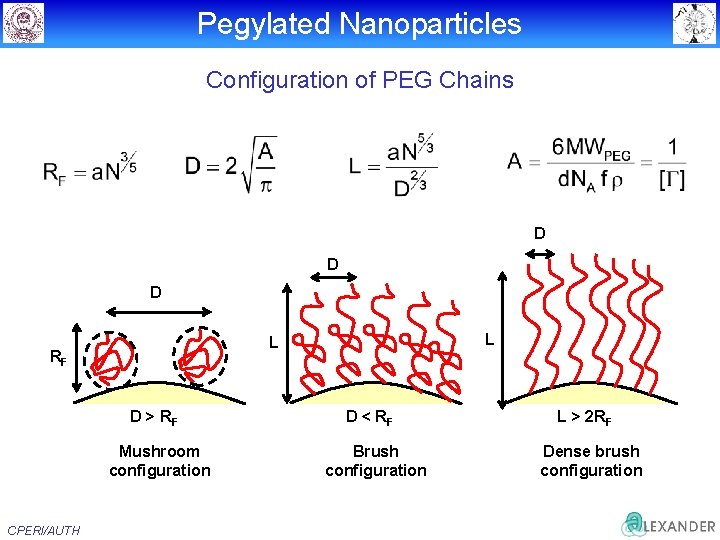
Pegylated Nanoparticles Configuration of PEG Chains D D D RF D > RF Mushroom configuration CPERI/AUTH L L D < RF Brush configuration L > 2 RF Dense brush configuration
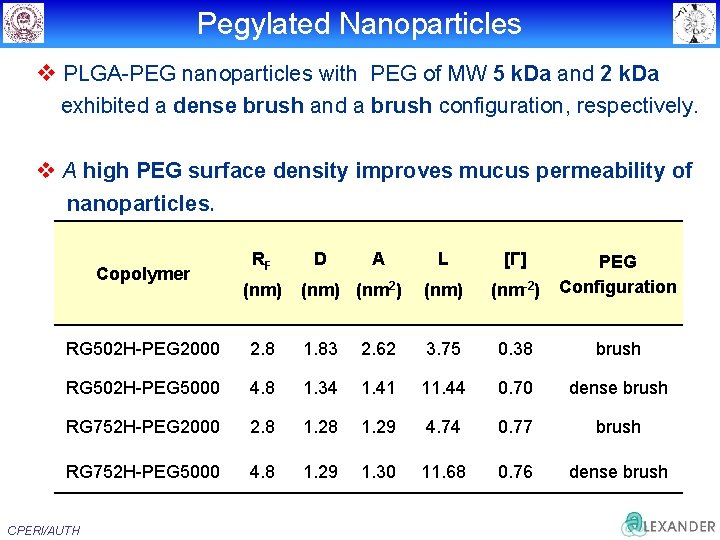
Pegylated Nanoparticles v PLGA-PEG nanoparticles with PEG of MW 5 k. Da and 2 k. Da exhibited a dense brush and a brush configuration, respectively. v A high PEG surface density improves mucus permeability of nanoparticles. Copolymer RF (nm) D A L [Γ] (nm) (nm 2) (nm-2) PEG Configuration RG 502 H-PEG 2000 2. 8 1. 83 2. 62 3. 75 0. 38 brush RG 502 H-PEG 5000 4. 8 1. 34 1. 41 11. 44 0. 70 dense brush RG 752 H-PEG 2000 2. 8 1. 29 4. 74 0. 77 brush RG 752 H-PEG 5000 4. 8 1. 29 1. 30 11. 68 0. 76 dense brush CPERI/AUTH
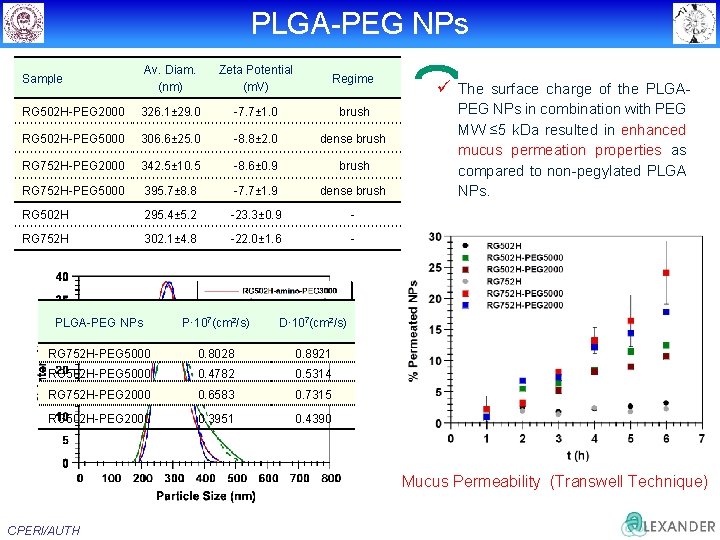
PLGA-PEG NPs Av. Diam. (nm) Zeta Potential (m. V) Regime RG 502 H-PEG 2000 326. 1± 29. 0 -7. 7± 1. 0 brush RG 502 H-PEG 5000 306. 6± 25. 0 -8. 8± 2. 0 dense brush RG 752 H-PEG 2000 342. 5± 10. 5 -8. 6± 0. 9 brush RG 752 H-PEG 5000 395. 7± 8. 8 -7. 7± 1. 9 dense brush RG 502 H 295. 4± 5. 2 -23. 3± 0. 9 - RG 752 H 302. 1± 4. 8 -22. 0± 1. 6 - Sample PLGA-PEG NPs P· 107(cm 2/s) D· 107(cm 2/s) RG 752 H-PEG 5000 0. 8028 0. 8921 RG 502 H-PEG 5000 0. 4782 0. 5314 RG 752 H-PEG 2000 0. 6583 0. 7315 RG 502 H-PEG 2000 0. 3951 0. 4390 ü The surface charge of the PLGAPEG NPs in combination with PEG MW ≤ 5 k. Da resulted in enhanced mucus permeation properties as compared to non-pegylated PLGA NPs. Mucus Permeability (Transwell Technique) CPERI/AUTH
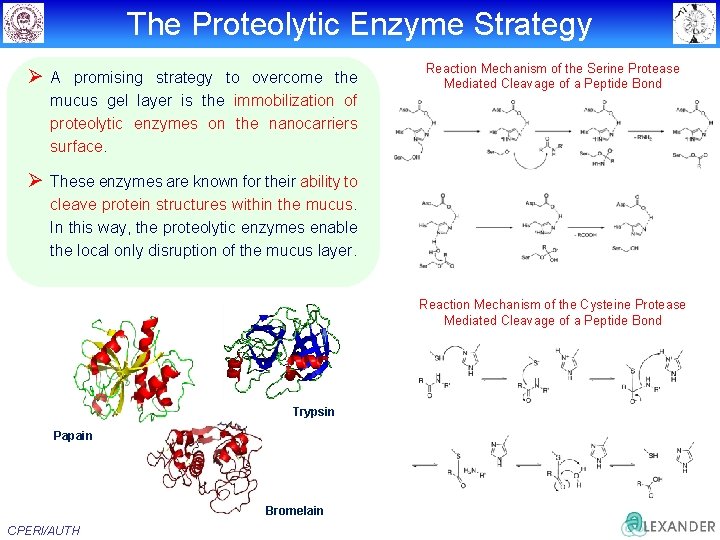
The Proteolytic Enzyme Strategy Ø A promising strategy to overcome the mucus gel layer is the immobilization of proteolytic enzymes on the nanocarriers surface. Reaction Mechanism of the Serine Protease Mediated Cleavage of a Peptide Bond Ø These enzymes are known for their ability to cleave protein structures within the mucus. In this way, the proteolytic enzymes enable the local only disruption of the mucus layer. Reaction Mechanism of the Cysteine Protease Mediated Cleavage of a Peptide Bond Trypsin Papain Bromelain CPERI/AUTH
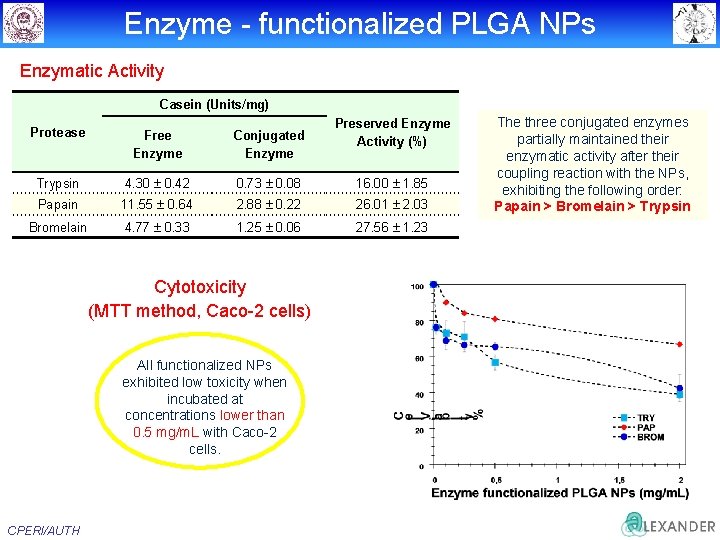
Enzyme - functionalized PLGA NPs Enzymatic Activity Casein (Units/mg) Preserved Enzyme Activity (%) Protease Free Enzyme Conjugated Enzyme Trypsin 4. 30 0. 42 0. 73 0. 08 16. 00 1. 85 Papain 11. 55 0. 64 2. 88 0. 22 26. 01 2. 03 Bromelain 4. 77 0. 33 1. 25 0. 06 27. 56 1. 23 Cytotoxicity (MTT method, Caco-2 cells) All functionalized NPs exhibited low toxicity when incubated at concentrations lower than 0. 5 mg/m. L with Caco-2 cells. CPERI/AUTH The three conjugated enzymes partially maintained their enzymatic activity after their coupling reaction with the NPs, exhibiting the following order: Papain > Bromelain > Trypsin
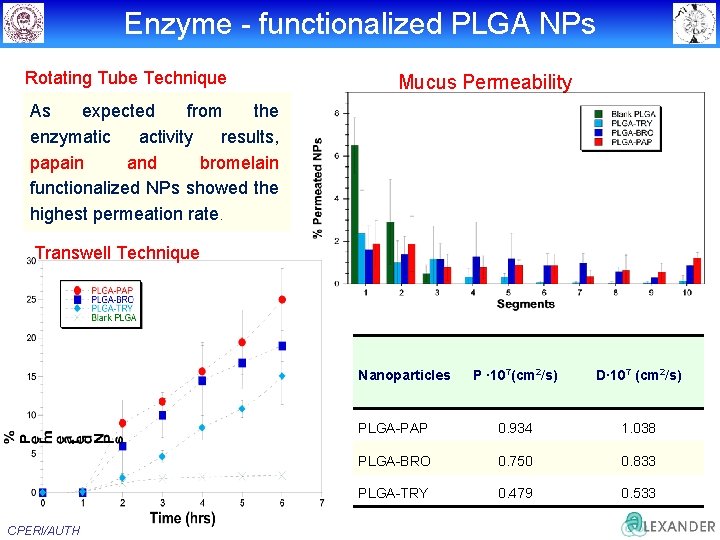
Enzyme - functionalized PLGA NPs Rotating Tube Technique Mucus Permeability As expected from the enzymatic activity results, papain and bromelain functionalized NPs showed the highest permeation rate. Transwell Technique Nanoparticles CPERI/AUTH P ∙ 107(cm 2/s) D∙ 107 (cm 2/s) PLGA-PAP 0. 934 1. 038 PLGA-BRO 0. 750 0. 833 PLGA-TRY 0. 479 0. 533
CPERI/AUTH
Thank you for your attention! CPERI/AUTH
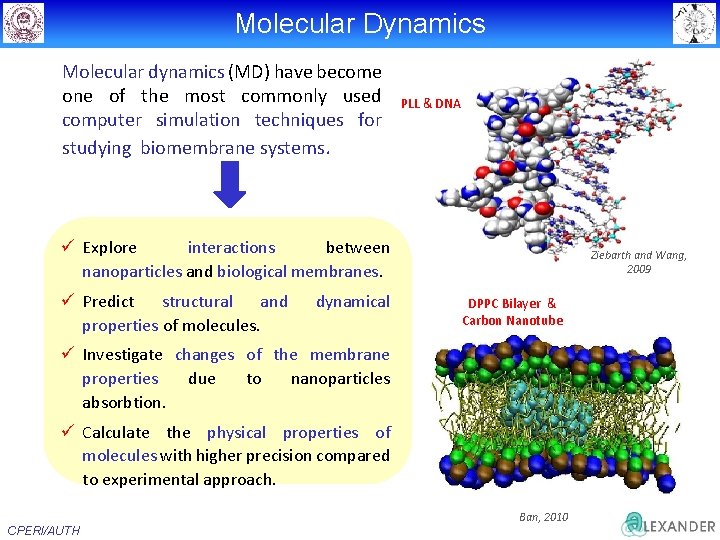
Molecular Dynamics Molecular dynamics (MD) have become one of the most commonly used computer simulation techniques for studying biomembrane systems. PLL & DNA ü Explore interactions between nanoparticles and biological membranes. ü Predict structural and properties of molecules. dynamical Ziebarth and Wang, 2009 DPPC Bilayer & Carbon Nanotube ü Investigate changes of the membrane properties due to nanoparticles absorbtion. ü Calculate the physical properties of molecules with higher precision compared to experimental approach. CPERI/AUTH Ban, 2010
Conclusions State-of-the-art mucus permeating nanocarrier-based systems for the controlled delivery of biopharmaceutics were developed and critically assessed with respect to their permeation characteristics. ü Nanoparticles with “slippery” surface (e. g, PLGA-PEG NPs, PECs) were prepared. Further understanding of the mechanisms related to the crossing of the mucosal barriers (e. g. , mucus gel layer, epithelium) and correlation of these mechanisms with the characteristics of the NPs via the development of fundamental predictive mathematical models could result in improved drug delivery systems, tailor-made for specific applications. CPERI/AUTH
Consortium Universities / Research Institutes ü ü ü ü DECHEMA Society for Chemical Engineering and Biotechnology, Germany Universität Innsbruck, Austria Aristotle University of Thessaloniki, Greece University of Newcastle upon Tyne, United Kingdom Cardiff University, United Kingdom Universidad de Navarra, Spain Institut Jozef Stefan, Slovenia SMEs / Industries ü ü ü ü Nanomi BV, Netherlands Thiomatrix, Austria Sagetis Biotech, Spain Evonik Industries AG, Germany LEK, Slovenia Croma-Pharma GMBH, Austria Merck Serono SPA, Italy CPERI/AUTH Mucus Permeating Nanoparticulate Drug Delivery Systems (ALEXANDER)
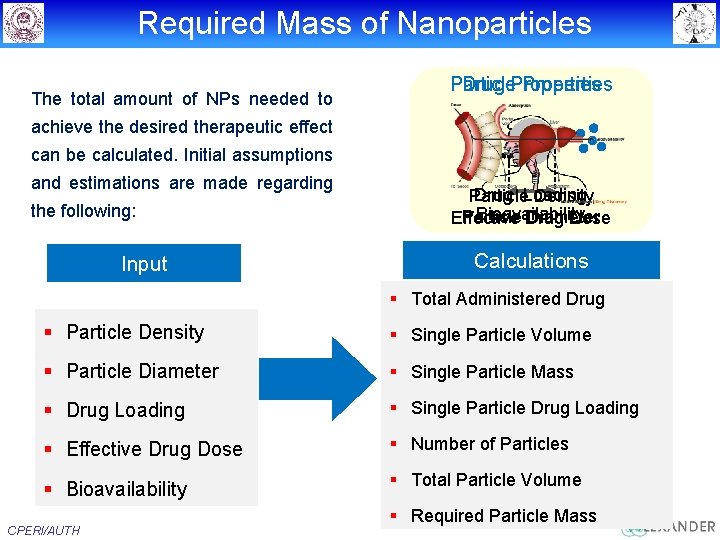
Required Mass of Nanoparticles The total amount of NPs needed to Drug Properties Particle Properties achieve the desired therapeutic effect can be calculated. Initial assumptions and estimations are made regarding the following: Input Drug Loading Particle Density Bioavailability Particle Diameter Effective Drug Dose Calculations § Total Administered Drug § Particle Density § Single Particle Volume § Particle Diameter § Single Particle Mass § Drug Loading § Single Particle Drug Loading § Effective Drug Dose § Number of Particles § Bioavailability § Total Particle Volume CPERI/AUTH § Required Particle Mass
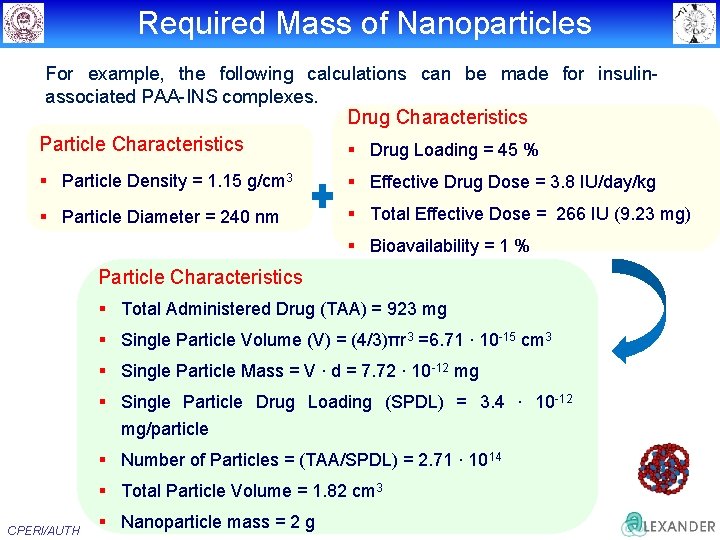
Required Mass of Nanoparticles For example, the following calculations can be made for insulinassociated PAA-INS complexes. Drug Characteristics Particle Characteristics § Drug Loading = 45 % § Particle Density = 1. 15 g/cm 3 § Effective Drug Dose = 3. 8 IU/day/kg § Particle Diameter = 240 nm § Total Effective Dose = 266 IU (9. 23 mg) § Bioavailability = 1 % Particle Characteristics § Total Administered Drug (TAA) = 923 mg § Single Particle Volume (V) = (4/3)πr 3 =6. 71 ∙ 10 -15 cm 3 § Single Particle Mass = V ∙ d = 7. 72 ∙ 10 -12 mg § Single Particle Drug Loading (SPDL) = 3. 4 ∙ 10 -12 mg/particle § Number of Particles = (TAA/SPDL) = 2. 71 ∙ 1014 § Total Particle Volume = 1. 82 cm 3 CPERI/AUTH § Nanoparticle mass = 2 g
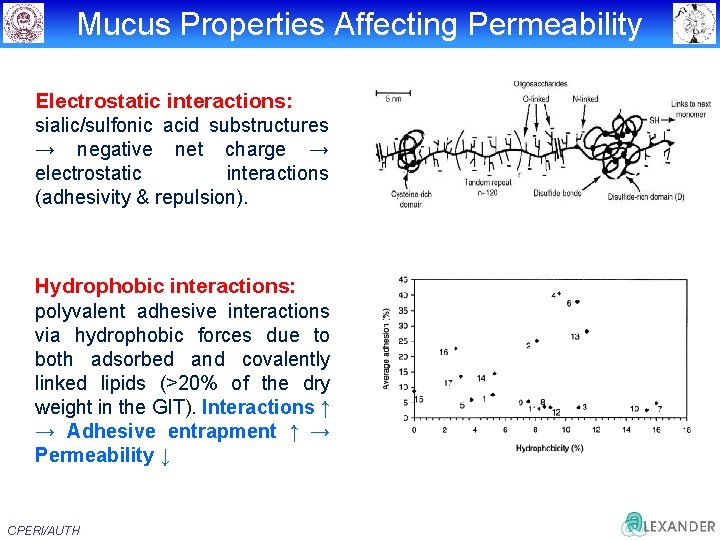
Mucus Properties Affecting Permeability Electrostatic interactions: sialic/sulfonic acid substructures → negative net charge → electrostatic interactions (adhesivity & repulsion). Hydrophobic interactions: polyvalent adhesive interactions via hydrophobic forces due to both adsorbed and covalently linked lipids (>20% of the dry weight in the GIT). Interactions ↑ → Adhesive entrapment ↑ → Permeability ↓ CPERI/AUTH
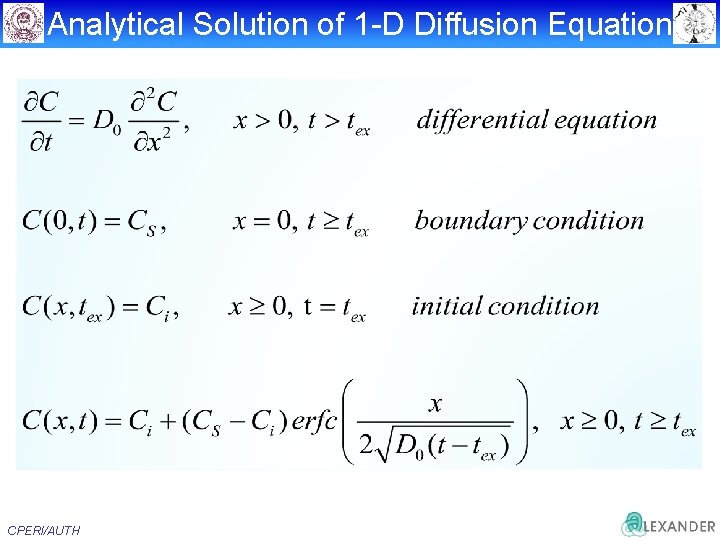
Analytical Solution of 1 -D Diffusion Equation CPERI/AUTH
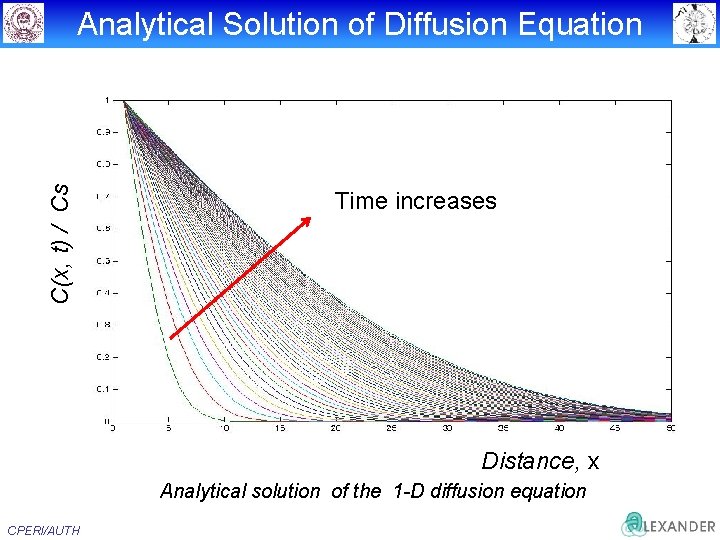
C(x, t) / Cs Analytical Solution of Diffusion Equation Time increases Distance, x Analytical solution of the 1 -D diffusion equation CPERI/AUTH
Oral Drug Delivery Systems: Challenges CPERI/AUTH
Oral Drug Delivery Systems: Challenges CPERI/AUTH
- Slides: 42