
Muchmany a lot of lots of Much vs
- Slides: 17
Much/many – a lot of / lots of
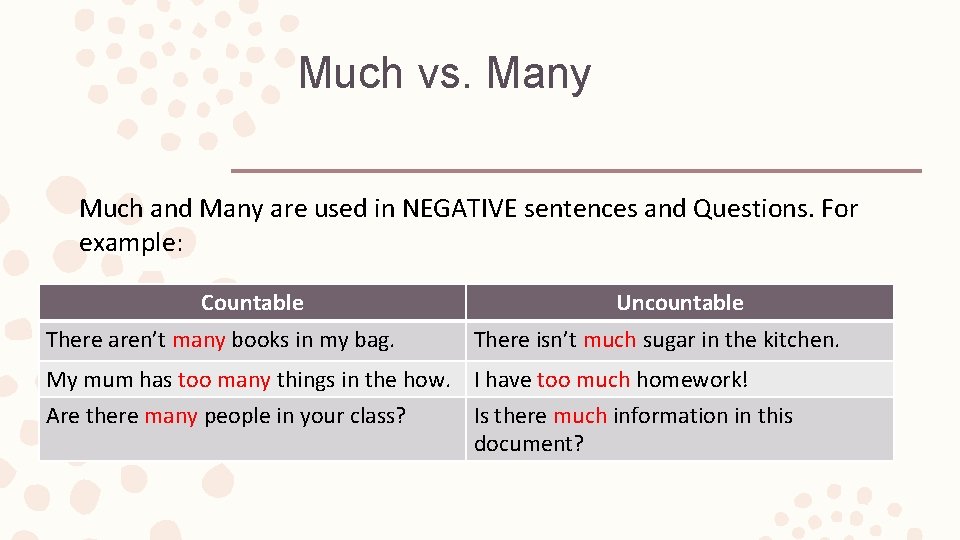
Much vs. Many Much and Many are used in NEGATIVE sentences and Questions. For example: Countable There aren’t many books in my bag. Uncountable There isn’t much sugar in the kitchen. My mum has too many things in the how. I have too much homework! Are there many people in your class? Is there much information in this document?
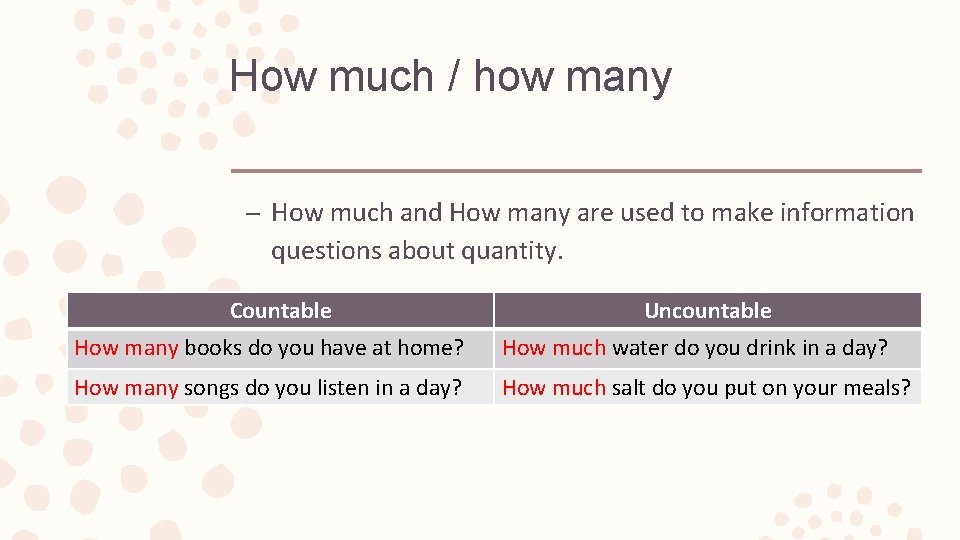
How much / how many – How much and How many are used to make information questions about quantity. Countable Uncountable How many books do you have at home? How much water do you drink in a day? How many songs do you listen in a day? How much salt do you put on your meals?
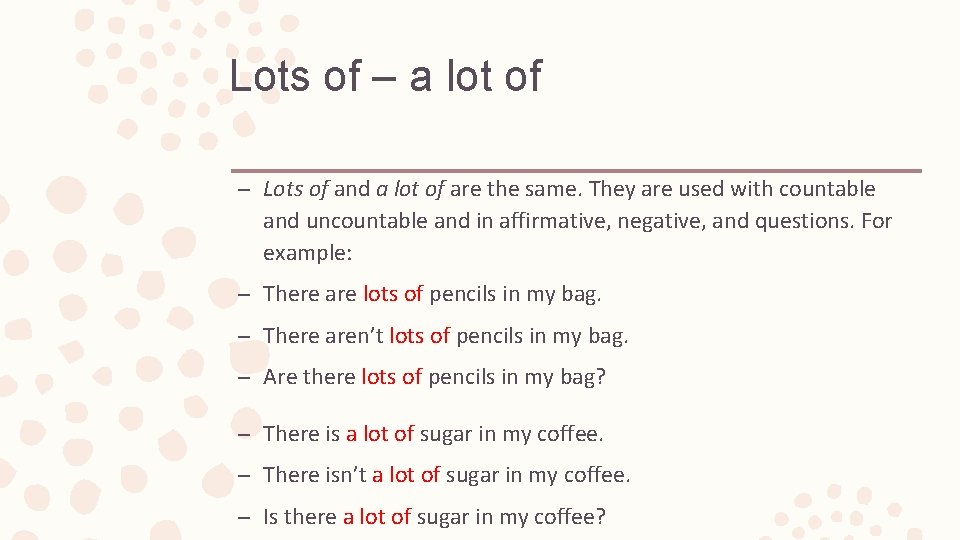
Lots of – a lot of – Lots of and a lot of are the same. They are used with countable and uncountable and in affirmative, negative, and questions. For example: – There are lots of pencils in my bag. – There aren’t lots of pencils in my bag. – Are there lots of pencils in my bag? – There is a lot of sugar in my coffee. – There isn’t a lot of sugar in my coffee. – Is there a lot of sugar in my coffee?
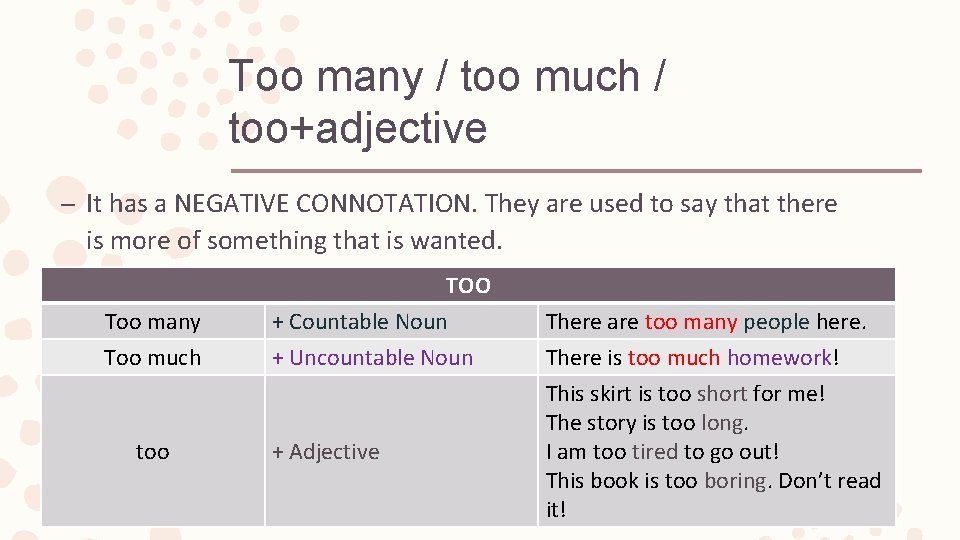
Too many / too much / too+adjective – It has a NEGATIVE CONNOTATION. They are used to say that there is more of something that is wanted. Too many Too much too TOO + Countable Noun + Uncountable Noun + Adjective There are too many people here. There is too much homework! This skirt is too short for me! The story is too long. I am too tired to go out! This book is too boring. Don’t read it!
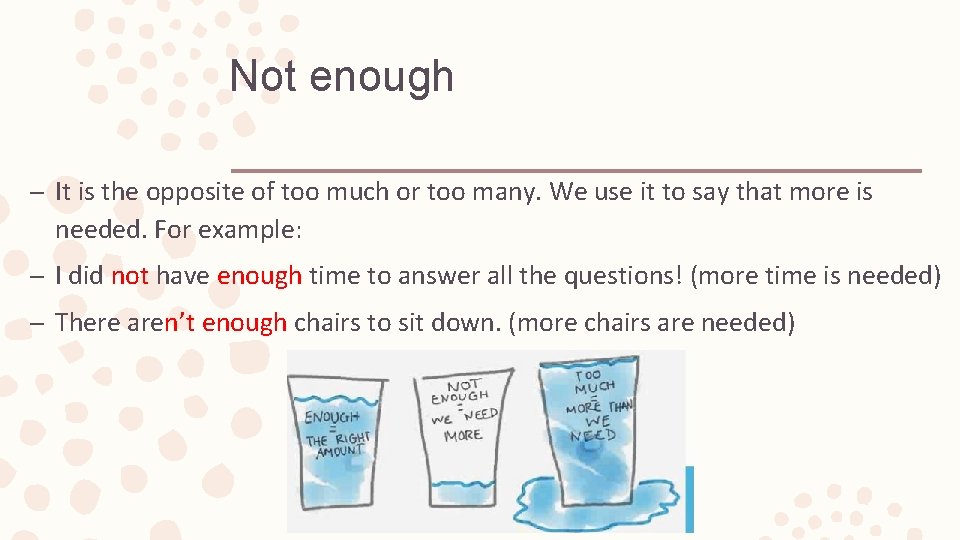
Not enough – It is the opposite of too much or too many. We use it to say that more is needed. For example: – I did not have enough time to answer all the questions! (more time is needed) – There aren’t enough chairs to sit down. (more chairs are needed)
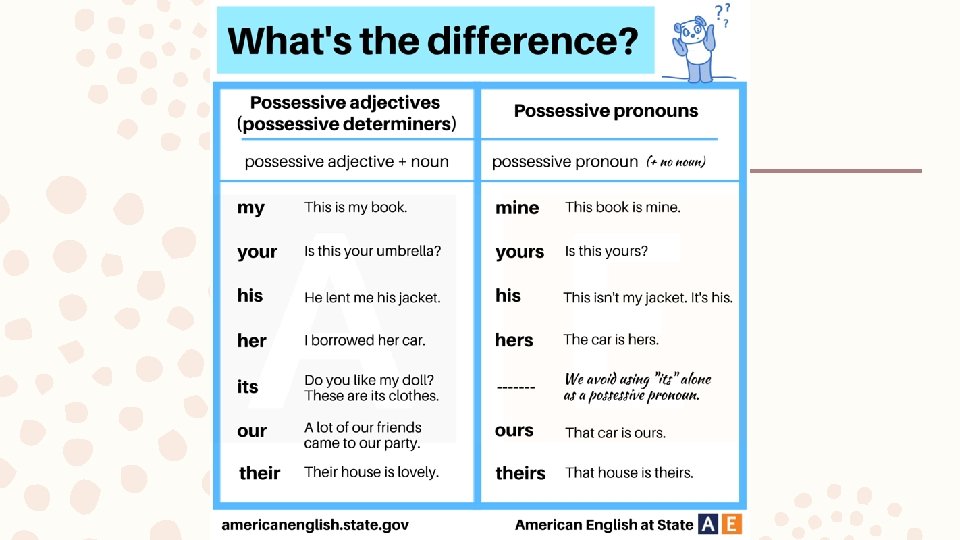
Possessive adjectives vs. possessive pronouns
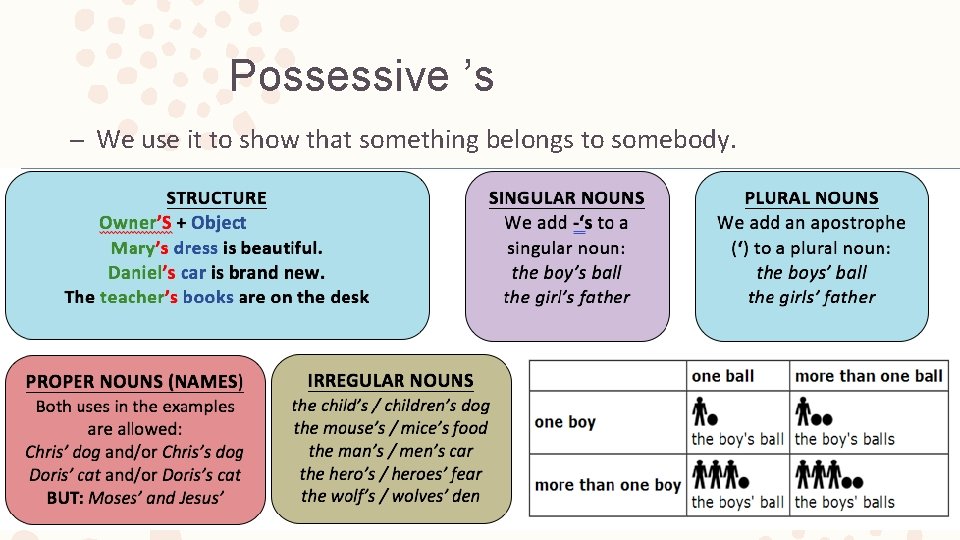
Possessive ’s – We use it to show that something belongs to somebody.
Simple past verb “to be”
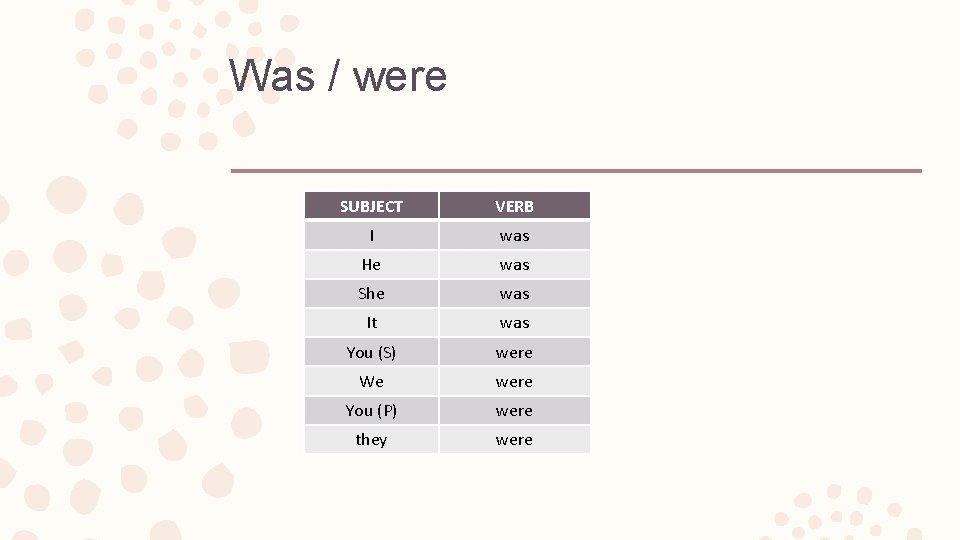
Was / were SUBJECT VERB I was He was She was It was You (S) were We were You (P) were they were
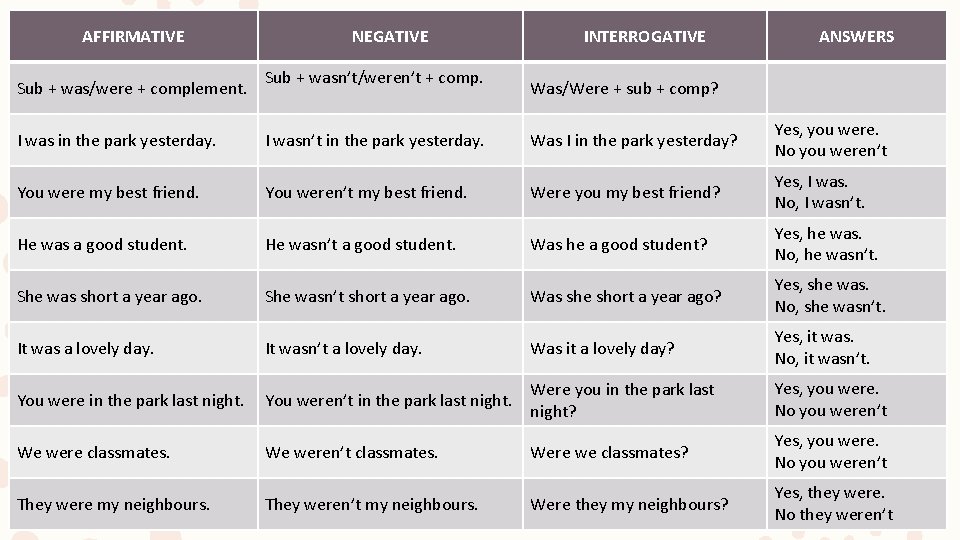
AFFIRMATIVE Sub + was/were + complement. NEGATIVE Sub + wasn’t/weren’t + comp. INTERROGATIVE ANSWERS Was/Were + sub + comp? I was in the park yesterday. I wasn’t in the park yesterday. Was I in the park yesterday? Yes, you were. No you weren’t You were my best friend. You weren’t my best friend. Were you my best friend? Yes, I was. No, I wasn’t. He was a good student. He wasn’t a good student. Was he a good student? Yes, he was. No, he wasn’t. She was short a year ago. She wasn’t short a year ago. Was she short a year ago? Yes, she was. No, she wasn’t. It was a lovely day. It wasn’t a lovely day. Was it a lovely day? Yes, it was. No, it wasn’t. You were in the park last night. You weren’t in the park last night. Were you in the park last night? Yes, you were. No you weren’t We were classmates. We weren’t classmates. Were we classmates? Yes, you were. No you weren’t They were my neighbours. They weren’t my neighbours. Were they my neighbours? Yes, they were. No they weren’t
Simple past Regular verbs
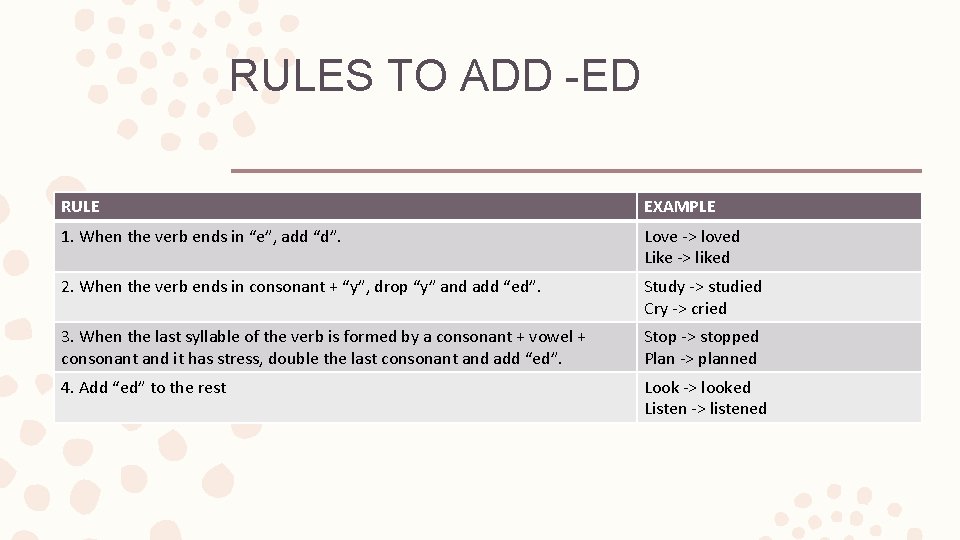
RULES TO ADD -ED RULE EXAMPLE 1. When the verb ends in “e”, add “d”. Love -> loved Like -> liked 2. When the verb ends in consonant + “y”, drop “y” and add “ed”. Study -> studied Cry -> cried 3. When the last syllable of the verb is formed by a consonant + vowel + consonant and it has stress, double the last consonant and add “ed”. Stop -> stopped Plan -> planned 4. Add “ed” to the rest Look -> looked Listen -> listened
Simple past Regular and irregular verbs
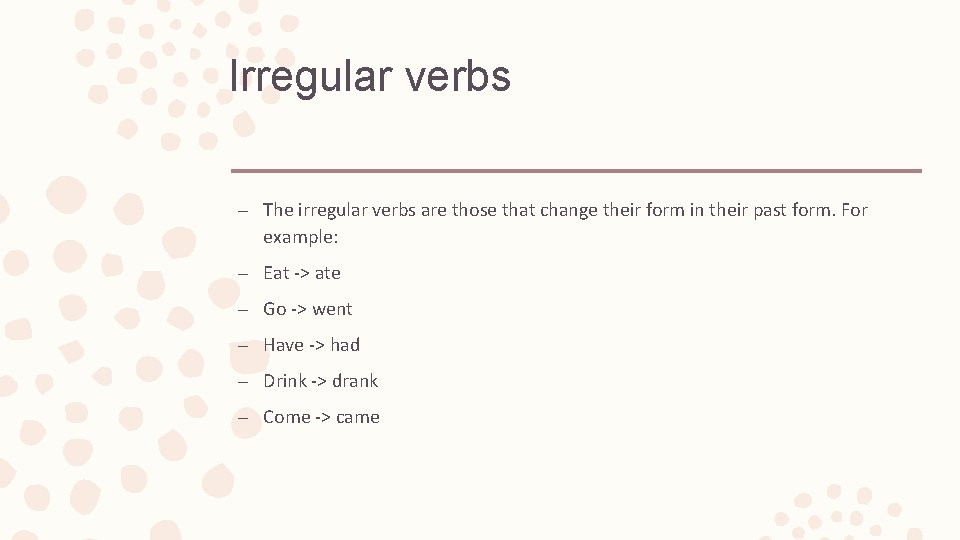
Irregular verbs – The irregular verbs are those that change their form in their past form. For example: – Eat -> ate – Go -> went – Have -> had – Drink -> drank – Come -> came
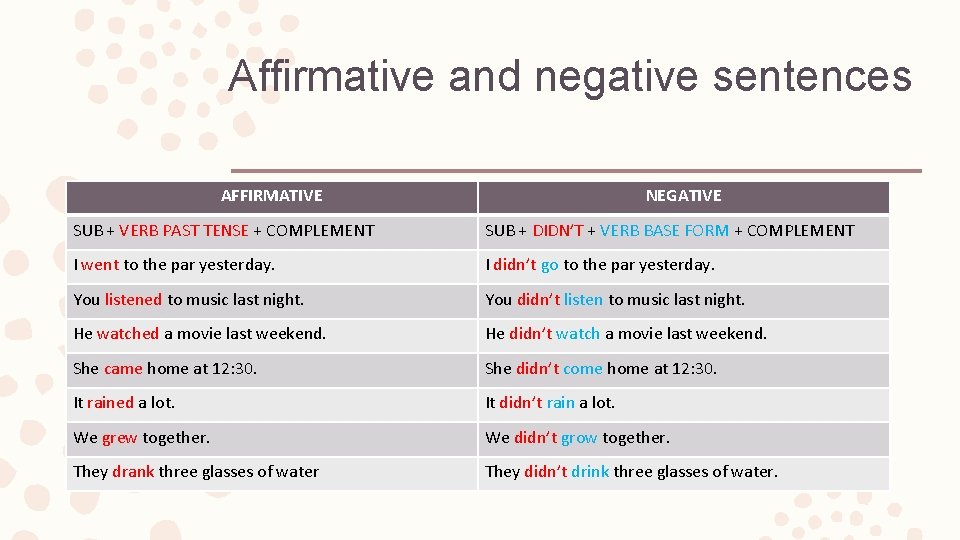
Affirmative and negative sentences AFFIRMATIVE NEGATIVE SUB + VERB PAST TENSE + COMPLEMENT SUB + DIDN’T + VERB BASE FORM + COMPLEMENT I went to the par yesterday. I didn’t go to the par yesterday. You listened to music last night. You didn’t listen to music last night. He watched a movie last weekend. He didn’t watch a movie last weekend. She came home at 12: 30. She didn’t come home at 12: 30. It rained a lot. It didn’t rain a lot. We grew together. We didn’t grow together. They drank three glasses of water They didn’t drink three glasses of water.