
Much like handbooks deal with very specific subject

Much like handbooks, deal with very specific subject matter and are narrow in scope.
It’s generally covers a limited area of knowledge and can be used by people interested in gaining in-depth knowledge about a specific topic.

HANDBOOK and MANUAL Lanceta, Danica H. BLIS - II
HANDBOOK • generally covers a limited area of knowledge and can be used by people interested in gaining in-depth knowledge about a specific topic. • generally pertain to a specific subject, such as chemistry or physics, and contain quick facts, charts, formulas, tables, statistical information, historical background, and perhaps lists of organizations connected to the subject. • handbook can serve as a handy guide to a particular subject, with all of the critical information that one might need for a particular field in one book.
• Handbooks organize bits of important data that will enable the reader to do something. For instance, the CRC Handbooks (the most important in the physical sciences) provide the data needed for the equations necessary for doing scientific experiments. • Handbook is almost always within reach of reference librarians for the quick statistical information it provides.
What are the uses of a Handbook? • CORPORATE DOCUMENTATION Businesses need handbooks and manuals to keep employees, suppliers, customers, shareholders, and anyone else who has an interest in their business apprised of policies, procedures, and regulations.
TUTORIALS AND INSTRUCTION. • Handbooks and manuals are also used in training programs, often in the form of tutorial or instructional guides. Here the object is not merely to document a process or procedure, but to actively teach something.

That famous trivia book, Guinness World Records (formerly The Guinness Book of Records ), is also a useful reference work. The first American edition of Guinness was published in 1956, and it has appeared annually since that time. With sales of more than 100 million copies in 100 different countries and 37 languages, Guinness World Records is the world’s best-selling copyrighted book ever. A hurdle to using Guinness as a reference tool is in understanding what a record means. The records in the book are for every type of extreme: largest and smallest, worst and best, widest and narrowest, oldest and newest, and the like. The reference librarian will find the subject index essential when using Guinness. The subject index, which does not include personal names, lists many specific terms in boldface type, in some cases also subdividing the term using normal typeface. In addition there is a superlatives index, with entries such as first , heaviest , deepest , and youngest. The Web-based version features only a selection of the records in the Guinness World Records database. Visitors can browse world records by category (such as “Natural World” or “Travel & Transport”) or search by keyword.
Another record book, Joseph Nathan Kane’s Famous First Facts , is an alphabetical subject list of “first happenings, discoveries, and inventions in American history. ” 6 Firsts included are quite diverse, from the invention of the tape measure to the first appearance of billiards in the United States. Five indexes, by subject, years, days of the month, personal names, and geographical areas, expand the usefulness of the work. Famous First Facts , now in its sixth edition, can be used to establish historical fact, to identify anniversaries, and to gather information about a specific place or time. The index to days of the month serves as a “book of days” for the United States. It is available online through Wilson Web. Notable Last Facts includes an eclectic selection of the last of something (event, person, place, or thing), such as the last game played by Red Sox legend Ted Williams or the last works of some major author. The volume has broad topic areas and includes both individual lasts as well as those that can be grouped together.
American Decades is a set of 11 volumes spanning the period 1900– 2009. Each volume begins with a chronology of the decade, and the subject chapters concentrate on the important aspects of the period under consideration by providing biographies of prominent individuals; statistics; and information on arts, music, literature, government and politics, business, science and technology, and more. The set includes bibliographies and indexes. Chase’s Calendar of Events lists birthdays of famous people (living and dead), festivals, historical anniversaries, presidential proclamations, special events, and the like for every day of the year. It contains more than 12, 500 entries and is 752 pages long. Brief biographical information is included with each name, and the name and telephone numbers of event organizers are given where applicable. Chase’s also lists the winners of many popular awards, such as television’s Emmy Awards. Aside from the detailed index, the accompanying CD-ROM offers enhanced searching capabilities, as well as scheduling and grouping features. The Folklore of World Holidays , also arranged by the Gregorian calendar, describes customs and folklore surrounding 340 holidays in more than 150 countries, excluding the United States. Today in History, a Web site from the Library of Congress, highlights an event from American history with digitized items from the American Memory historical collections.
Another useful resource that serves as a type of handbook is The New York Public Library Desk Reference. It is a compilation of information frequently requested at library reference desks. “Religions, ” “Etiquette, ” “Personal Finances, ” and “Libraries and Museums” are a few of the chapter headings in this single-volume work. An important feature of The New York Public Library Desk Reference is a listing of additional sources of information at the end of each chapter. The source list consists of a directory of related organizations and a bibliography of reference works. A standard handbook in almost all reference collections is the style manual. A style manual is consulted by writers, students, and librarians to help determine the format of papers, bibliographies, footnotes, and endnotes. Such a manual may also include helpful information of interest to authors and others concerned with publishing, such as information on the bookmaking process and copyright law and the rules of spelling and grammar.
Many publishers, organizations, and faculty prescribe a particular bibliographic style. One of the most common is that described in The Chicago Manual of Style. The manual is subdivided into numbered paragraphs. The paragraph numbers appear on the left-hand margin of a page. References in the index, except for tables and figures, are to paragraph numbers rather than page numbers. The volume has a glossary of technical terms, a bibliography, and an index. Since 2006, users have been able to subscribe online to The Chicago Manual of Style Online, which provides a searchable interface to the popular Chicago Style Q&A, updated advice on style issues from the editorial staff, and the content of The Chicago Manual of Style. Although the full online version requires a subscription, nonsubscribers can use the search function to identify a specific paragraph number and then refer to a hard copy of the manual. A Manual for Writers of Research Papers, Theses and Dissertations , by Kate L. Turabian, is adapted from The Chicago Manual of Style and is aimed primarily at students. Although there is generally a style guide for each discipline, the other commonly required style manuals are the MLA Handbook for Writers of Research Papers and the Publication Manual of the American Psychological Association.
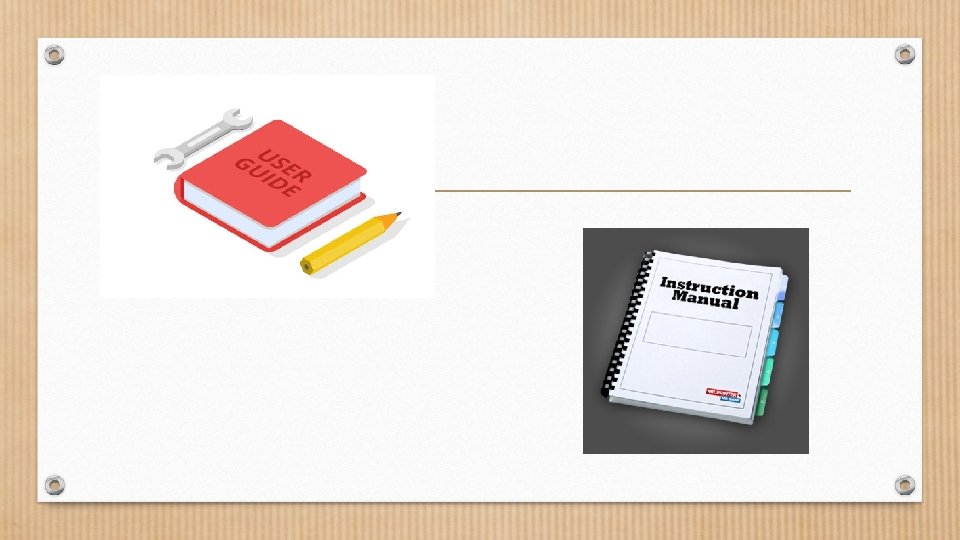
MANUAL • much like handbooks, deal with very specific subject matter and are narrow in scope. • They are often used when one needs information dealing with a topic or procedure on a much more focused, detail-oriented level. • provide step-by-step instructions on how to do specific tasks. • They can show one how to rebuild a carburetor, conduct a scientific experiment, apply for f inancial aid, correctly format papers or cite information in a bibliography, and so on.
• One example of a manual frequently found in public libraries or linked from their web pages is Chilton’s automotive repair guides. There are more than 40, 000 from 1910 onward of these types of manuals on how to repair automobiles. Handbooks and manuals provide answers to questions such as the following: • Are there any adverse side effects to this drug? • What happened in history on November 23, my birthday? • Is the Willis Tower the world’s tallest building? • How do I format a bibliography? • What do I wear to a formal evening wedding?
SEARCH STRATEGIES The first step in developing a search strategy is to determine the nature of the question. The sources described in this chapter provide simple, factual answers and in some cases lead users to more complex or detailed sources. If an almanac, yearbook, or handbook is an appropriate choice to answer a user’s question, the librarian draws on a thorough personal knowledge of the collection to choose a source. Wise decisions depend on knowledge gained from previous use and continual reexamination of these reference works.
EVALUATION • It is imperative for librarians to carefully evaluate the sources available and to work diligently to direct users to those sources deemed to be of the highest quality. • Whether adding a print source to the traditional reference collection or an electronic source to the Web-based collection, librarians should strive to ensure that users are consulting sources that are current, accurate, comprehensive, and easy to use.
Currency • When evaluating the currency of a work, it is important to consider how quickly, how often, and how thoroughly the work is updated. • The entries in retrospective sources generally do not need regular updating and will be updated only if significant new information about a historical figure is discovered
Accuracy and Authority • Issues of accuracy and authority can be considered on several levels. When evaluating any reference work, it is important to investigate what kinds of reviews the source received upon publication and whether the work has been included in the standard guides to reference works. • The reputation of the publisher of the work can also serve as a good indicator of the overall quality
Scope and Comprehensiveness • The scope statement of the source will indicate which individuals are eligible for inclusion. • A clearly worded and well-defined statement of scope will help to lend legitimacy to the source and its entries
Format § The usefulness of information, even information of the highest quality, can be greatly diminished if the source of that information is difficult to access. § Information can be rendered useless if it is inaccessible as a result of poor organization or lack of access points.
- Slides: 23