
Mu Scat plans and results Birmingham University BNL
Mu. Scat: plans and results Birmingham University BNL BBC CERN GIRAG Imperial College Jefferson Lab Oxford University RIKEN Rutherford Appleton Laboratory Tohoku University TRIUMF University California - LA 1
Status of Mu. Scat (E 875) l Reminder: motivation l Mu. Scat in 2000 – Targets – Results l Mu. Scat in 2003 – Liquid Hydrogen target – Scintillating Fibre trackers l Conclusions
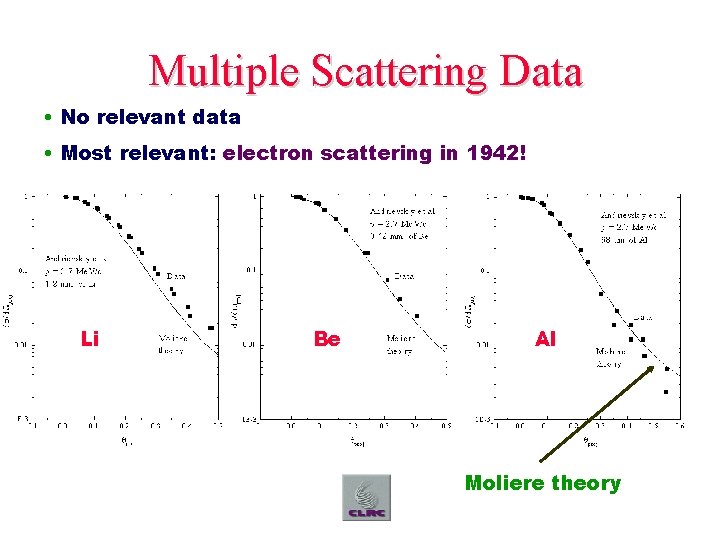
Multiple Scattering Data • No relevant data • Most relevant: electron scattering in 1942! Li Be Al Moliere theory
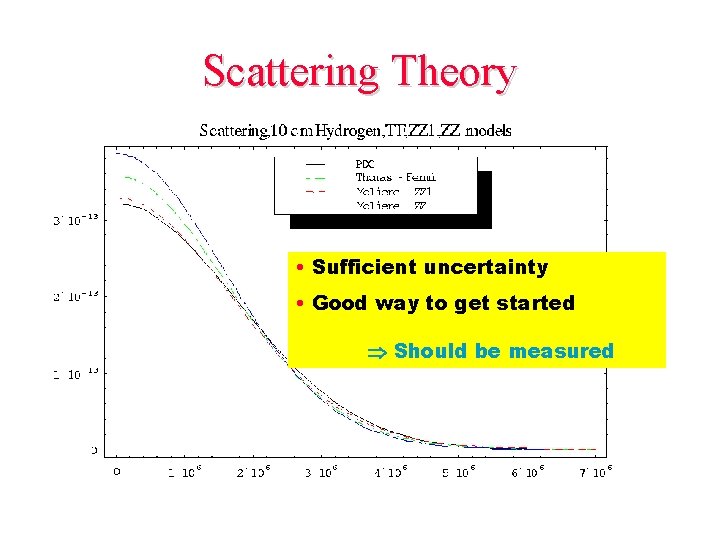
Scattering Theory • Sufficient uncertainty • Good way to get started Should be measured
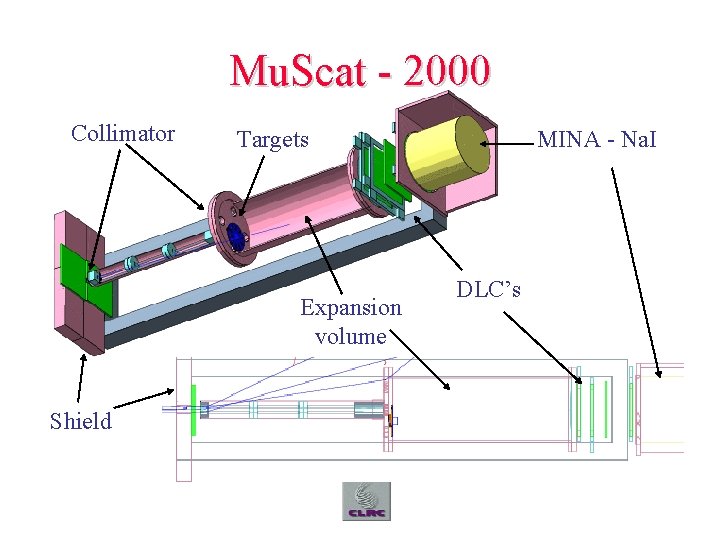
Mu. Scat - 2000 Collimator Targets Expansion volume Shield MINA - Na. I DLC’s
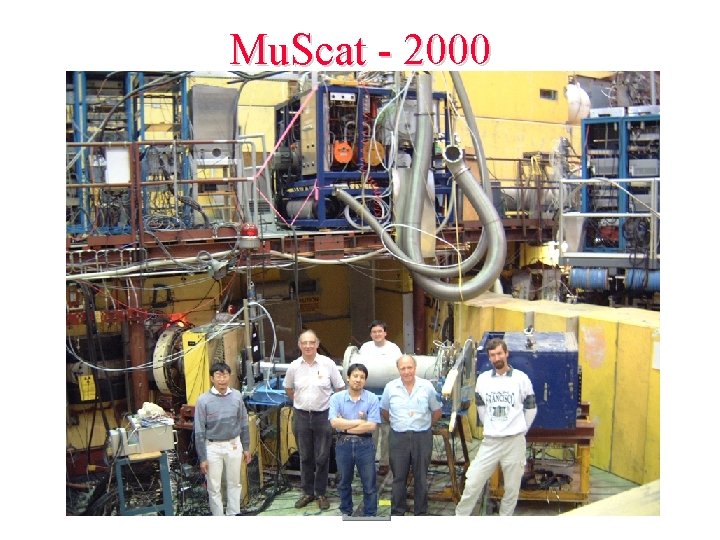
Mu. Scat - 2000
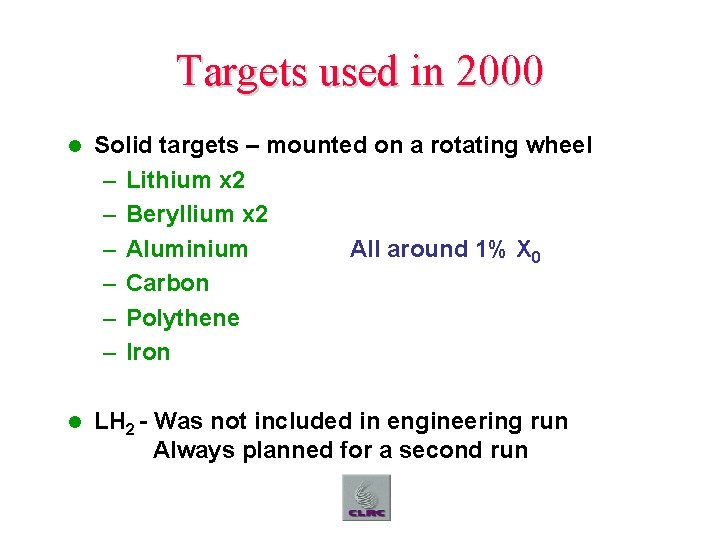
Targets used in 2000 l Solid targets – mounted on a rotating wheel – Lithium x 2 – Beryllium x 2 – Aluminium All around 1% X 0 – Carbon – Polythene – Iron l LH 2 - Was not included in engineering run Always planned for a second run
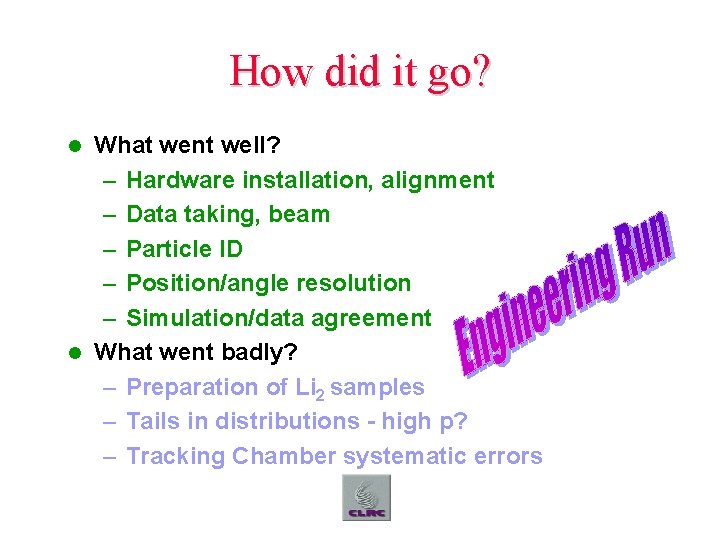
How did it go? What went well? – Hardware installation, alignment – Data taking, beam – Particle ID – Position/angle resolution – Simulation/data agreement l What went badly? – Preparation of Li 2 samples – Tails in distributions - high p? – Tracking Chamber systematic errors l
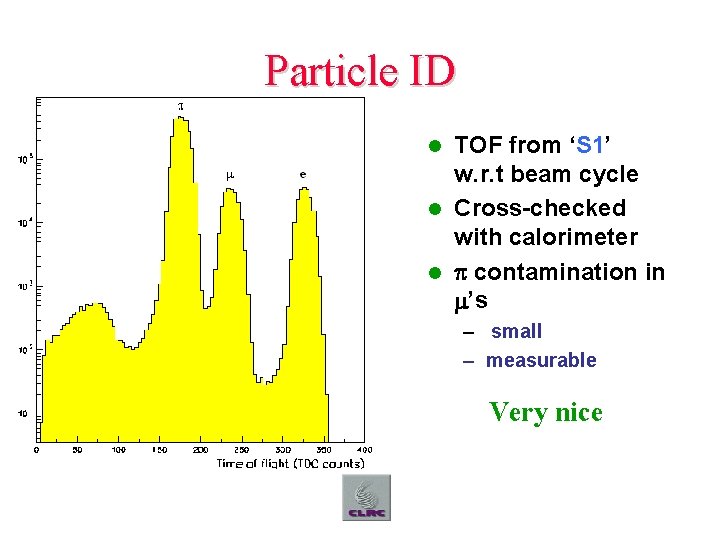
Particle ID TOF from ‘S 1’ w. r. t beam cycle l Cross-checked with calorimeter l p contamination in ’s l – small – measurable Very nice
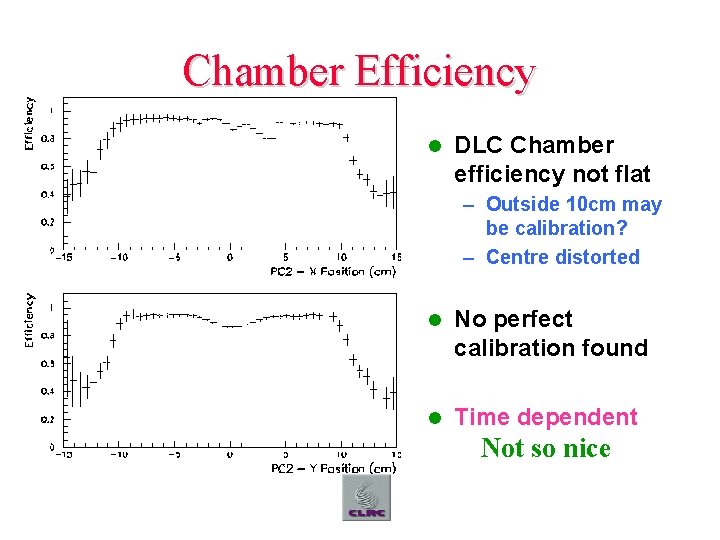
Chamber Efficiency l DLC Chamber efficiency not flat – Outside 10 cm may be calibration? – Centre distorted l No perfect calibration found l Time dependent Not so nice
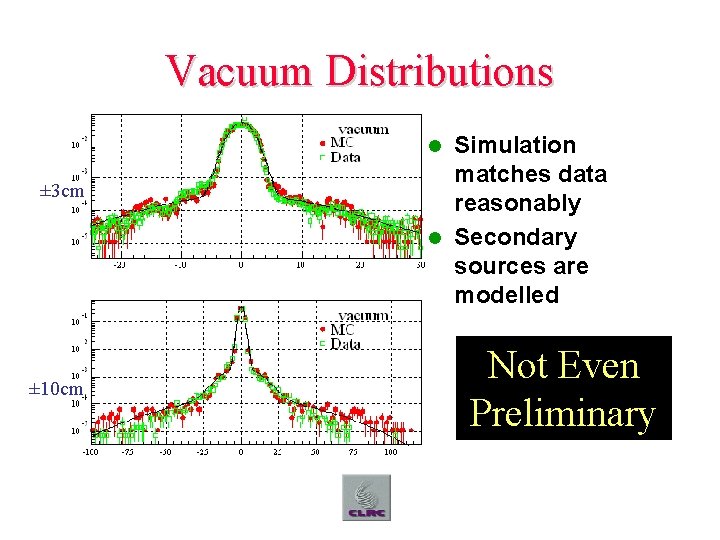
Vacuum Distributions Simulation matches data reasonably l Secondary sources are modelled l ± 3 cm ± 10 cm Not Even Preliminary
What was changed for Run II? New beamline l Liquid Hydrogen target – The most important target (correct, Z=1) – Required improved vacuum specs. l New Chambers – Scintillating Fibre detectors – Accurate, more efficient l Improved Collimator system – New active collimation – Tuning of passive collimator positions l
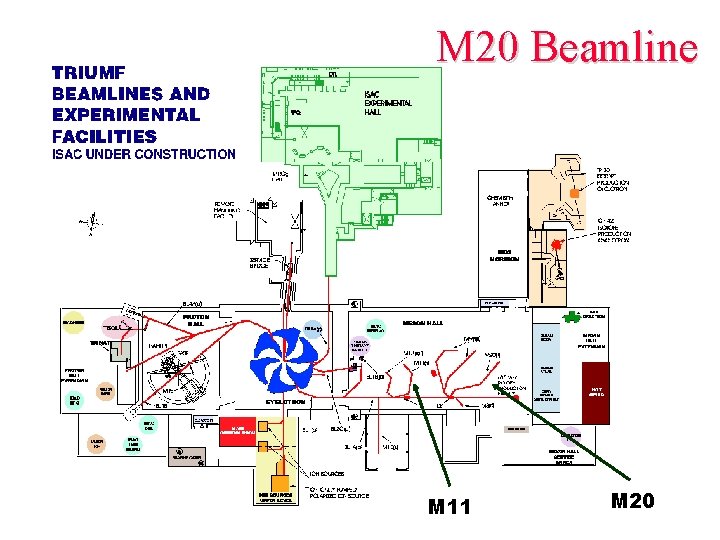
M 20 Beamline M 11 M 20
New Beamline M 11 – Pion beamline – High momentum (~450 Me. V/c) – Narrow momentum bite (1%) – Big background l M 20 – Quadrupole decay channel – Mainly surface muons – Forward muon decays: 175 Me. V/c – Not used for 20 years! l
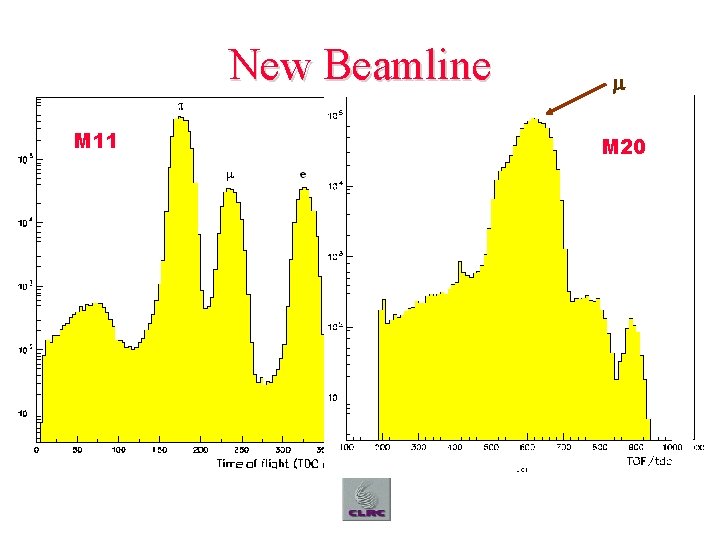
New Beamline M 11 M 20
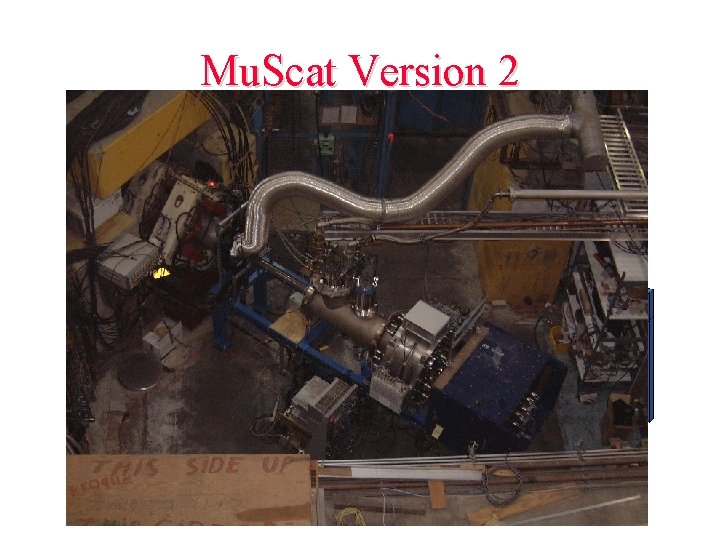
Mu. Scat Version 2
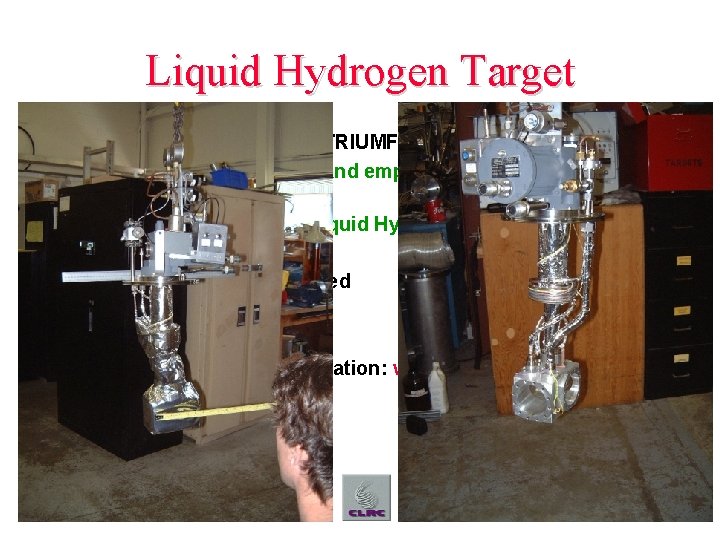
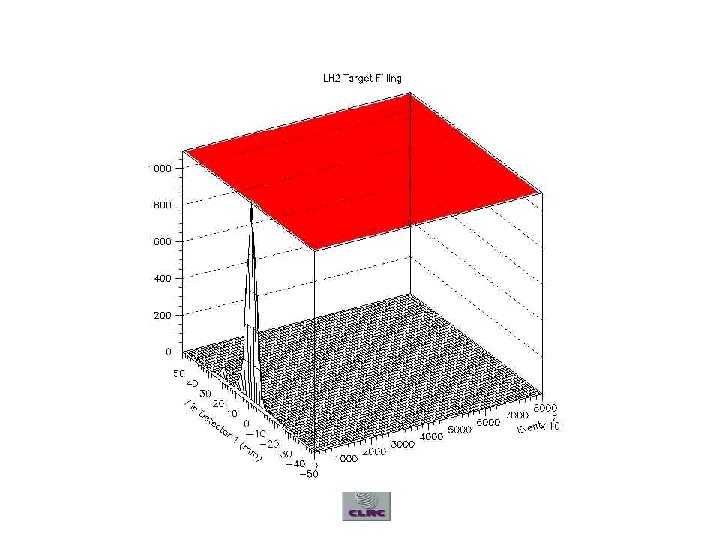
Liquid Hydrogen Target l Target volume made by TRIUMF group – Operated with liquid and empty separately to measure effect of walls – Two thicknesses of liquid Hydrogen used: 10 & 15 cm l Improved vacuum required – New vessel used l Safety approval and operation: walk in the park!
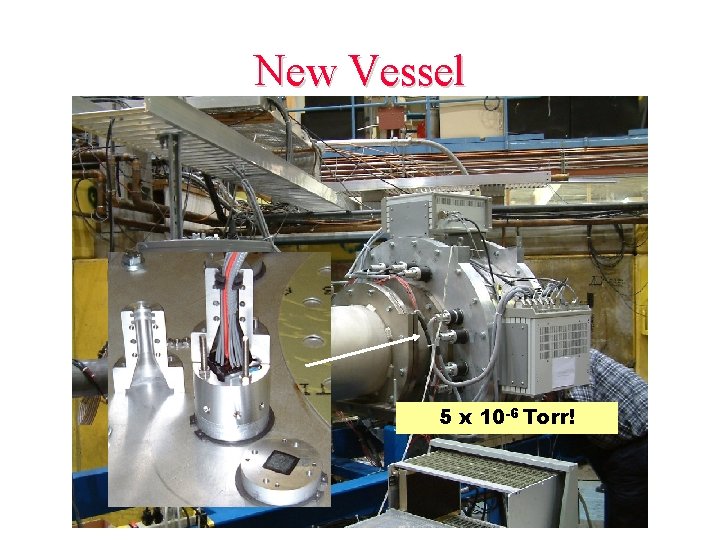
New Vessel 5 x 10 -6 Torr!
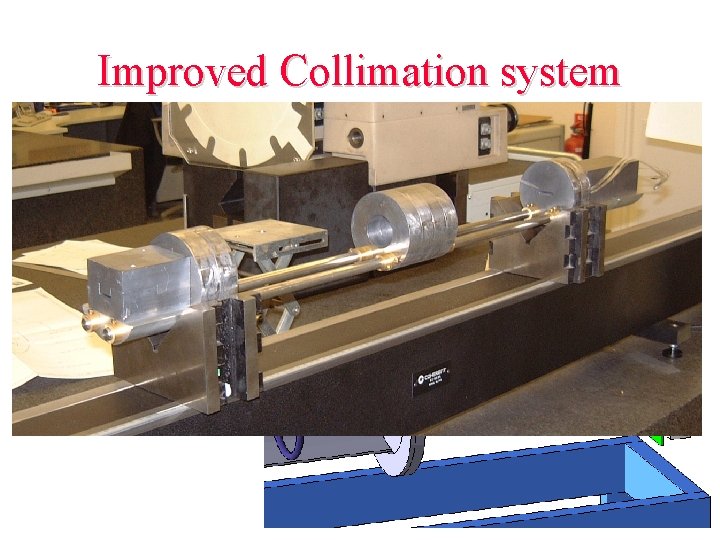
Improved Collimation system In 2000, tails from – Penetration of second collimator – Secondary sources, particularly intermediate disks l In 2003: – Intermediate disks moved to ends – New disks, bigger aperture, active collimator – Additional lead and steel l
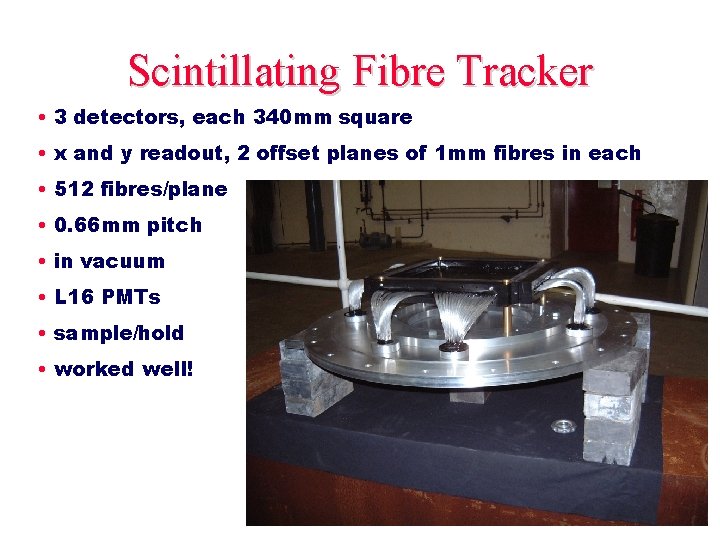
Scintillating Fibre Tracker • 3 detectors, each 340 mm square • x and y readout, 2 offset planes of 1 mm fibres in each • 512 fibres/plane • 0. 66 mm pitch • in vacuum • L 16 PMTs • sample/hold • worked well!
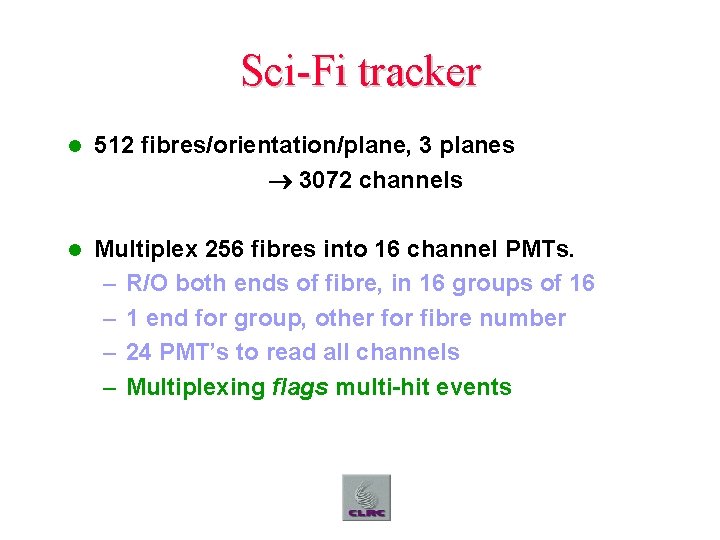
Sci-Fi tracker l 512 fibres/orientation/plane, 3 planes 3072 channels l Multiplex 256 fibres into 16 channel PMTs. – R/O both ends of fibre, in 16 groups of 16 – 1 end for group, other for fibre number – 24 PMT’s to read all channels – Multiplexing flags multi-hit events
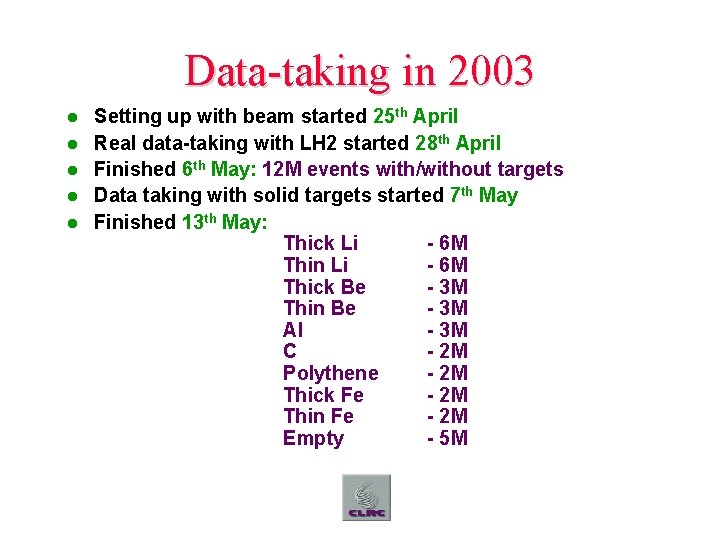
Data-taking in 2003 l l l Setting up with beam started 25 th April Real data-taking with LH 2 started 28 th April Finished 6 th May: 12 M events with/without targets Data taking with solid targets started 7 th May Finished 13 th May: Thick Li - 6 M Thin Li - 6 M Thick Be - 3 M Thin Be - 3 M Al - 3 M C - 2 M Polythene - 2 M Thick Fe - 2 M Thin Fe - 2 M Empty - 5 M
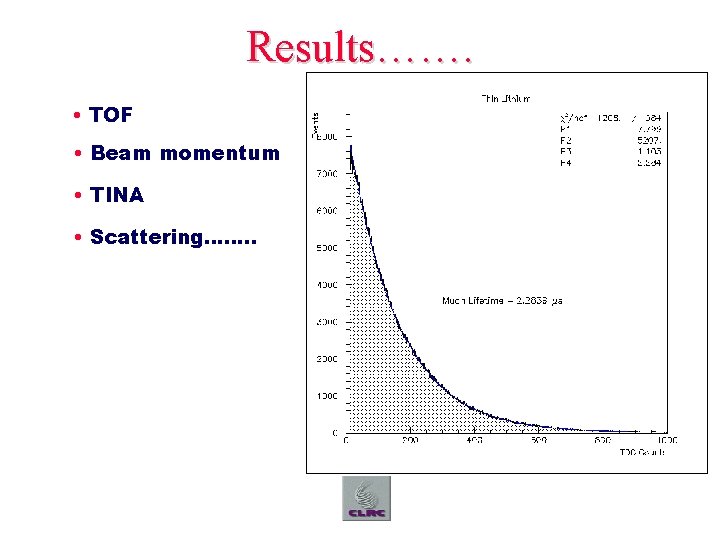
Results……. • TOF • Beam momentum • TINA • Scattering……. .
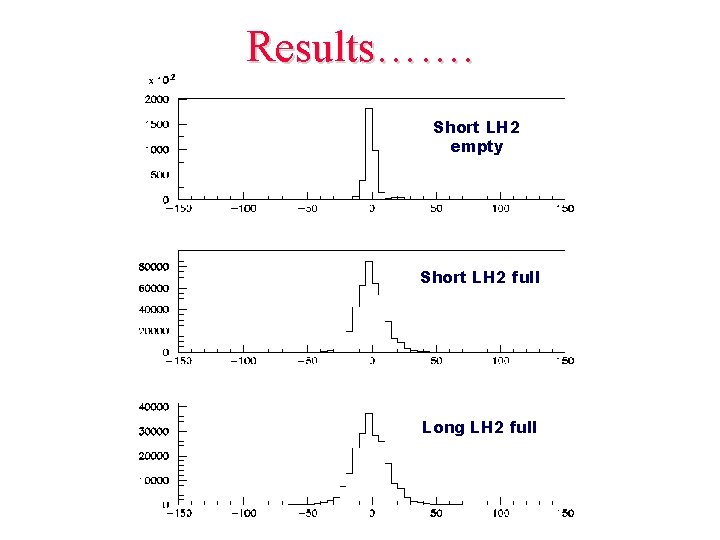
Results……. Short LH 2 empty Short LH 2 full Long LH 2 full
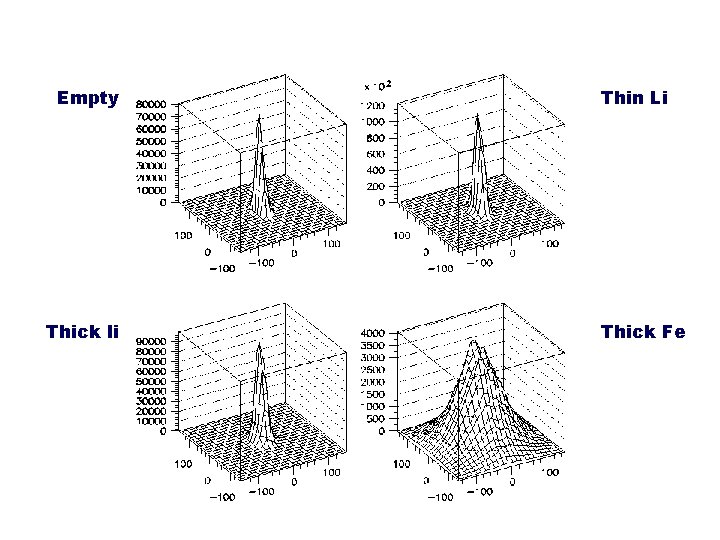
Empty Thick li Thin Li Thick Fe
Conclusions l Mu. Scat engineering in 2000 run went well – Some lessons learned – Used for an improved version l 2003 Physics run all went very well – – 46 M events taken LH 2 as well as solid targets First look at data: very good Analysis just starting First results: ENG meeting 9 th July l Final results: by end of year l
- Slides: 27