
MSS Module Physiology Lectures Muscles L 3 Prof
- Slides: 28
MSS Module Physiology Lectures Muscles (L 3) Prof. Fakhir S. Al-ani fakeralani 2000@yahoo. com
Objectives What to study in mechanics of muscles. ü To define isometric & isotonic contraction. ü To describe length tension relationship. ü To describe load velocity relationship. To apply the above principles to cardiac muscle in health and disease.
Apply the above principles to cardiac muscles in health & disease: - Length tension relationship - Load Velocity relationship - Effect of refractory period
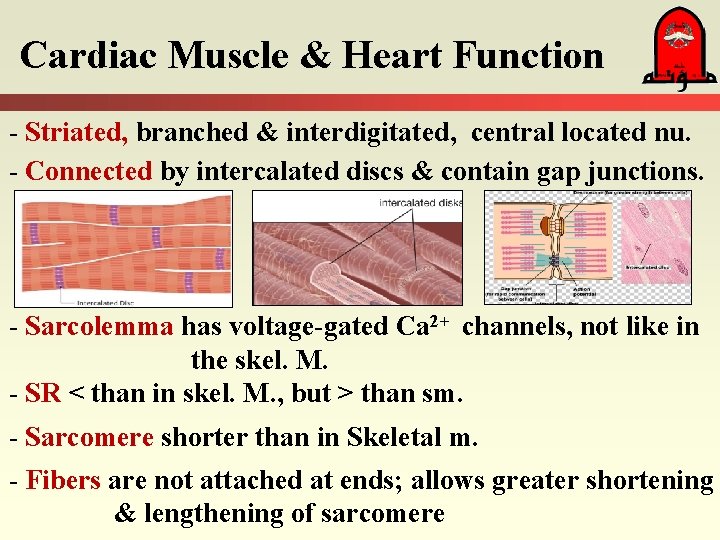
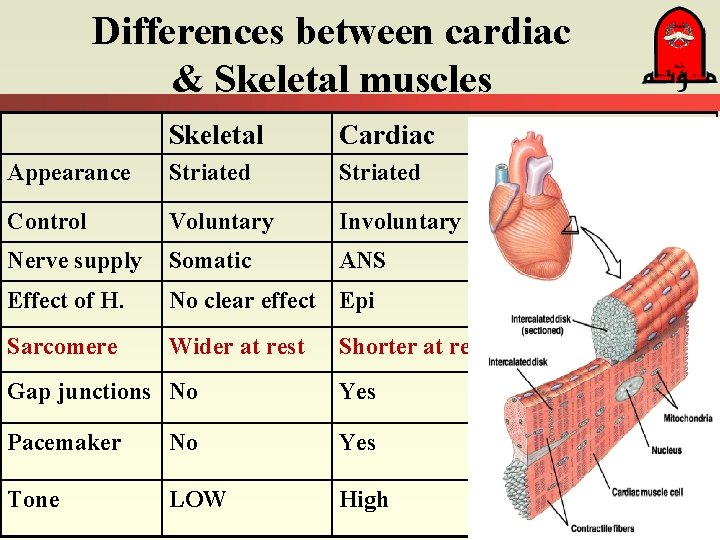
Cardiac Muscle & Heart Function - Striated, branched & interdigitated, central located nu. - Connected by intercalated discs & contain gap junctions. - Sarcolemma has voltage-gated Ca 2+ channels, not like in the skel. M. - SR < than in skel. M. , but > than sm. - Sarcomere shorter than in Skeletal m. - Fibers are not attached at ends; allows greater shortening & lengthening of sarcomere
Differences between cardiac & Skeletal muscles Skeletal Cardiac Appearance Striated Control Voluntary Involuntary Nerve supply Somatic ANS Effect of H. No clear effect Epi Sarcomere Wider at rest Shorter at rest Gap junctions No Yes Pacemaker No Yes Tone LOW High
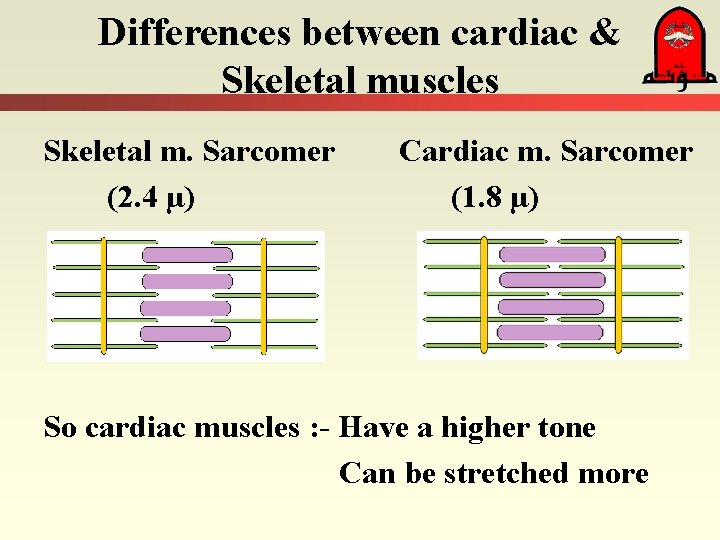
Differences between cardiac & Skeletal muscles Skeletal m. Sarcomer (2. 4 µ) Cardiac m. Sarcomer (1. 8 µ) So cardiac muscles : - Have a higher tone Can be stretched more
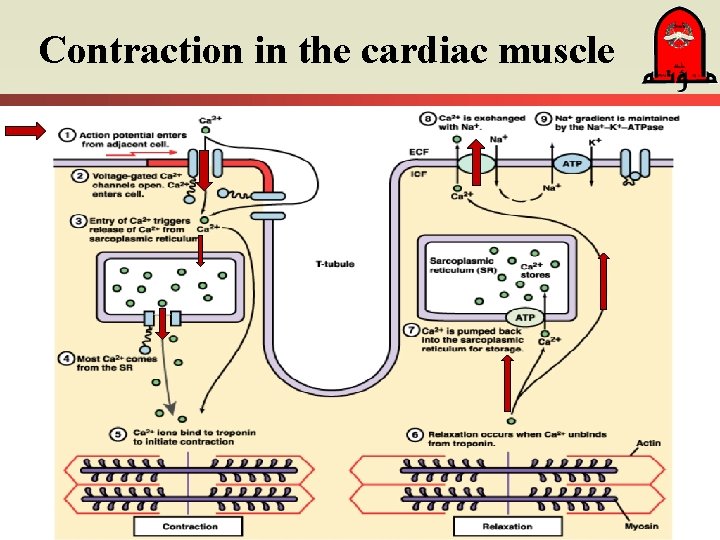
Contraction in the cardiac muscle
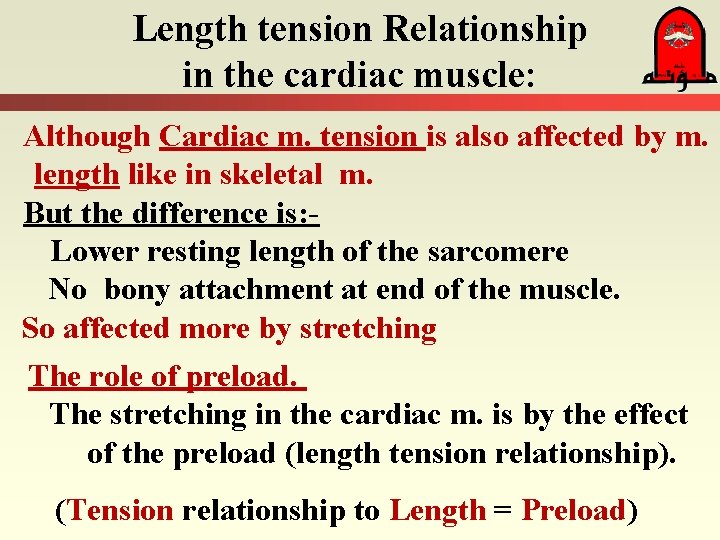
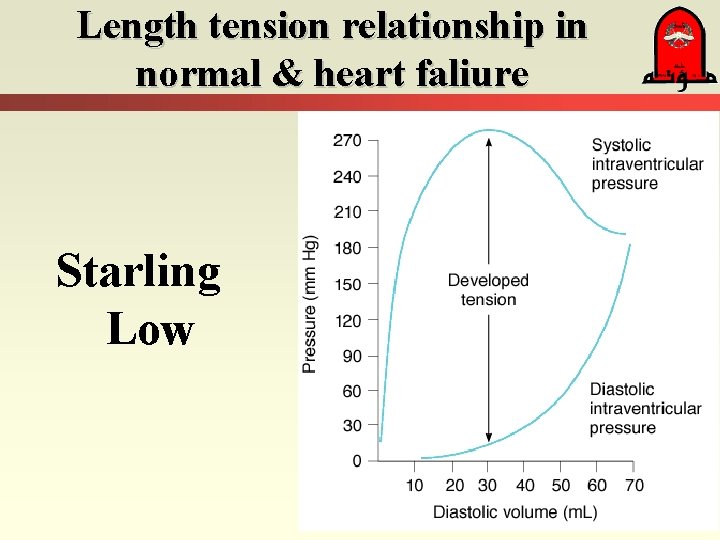
Length tension Relationship in the cardiac muscle: Although Cardiac m. tension is also affected by m. length like in skeletal m. But the difference is: Lower resting length of the sarcomere No bony attachment at end of the muscle. So affected more by stretching The role of preload. The stretching in the cardiac m. is by the effect of the preload (length tension relationship). (Tension relationship to Length = Preload)
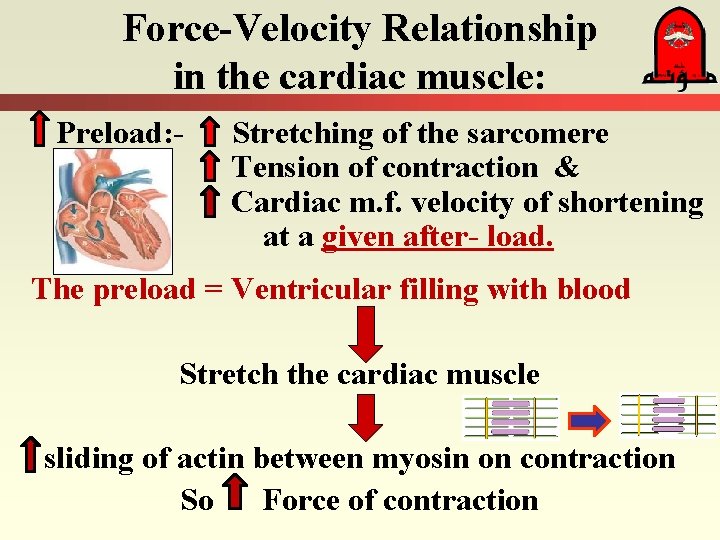
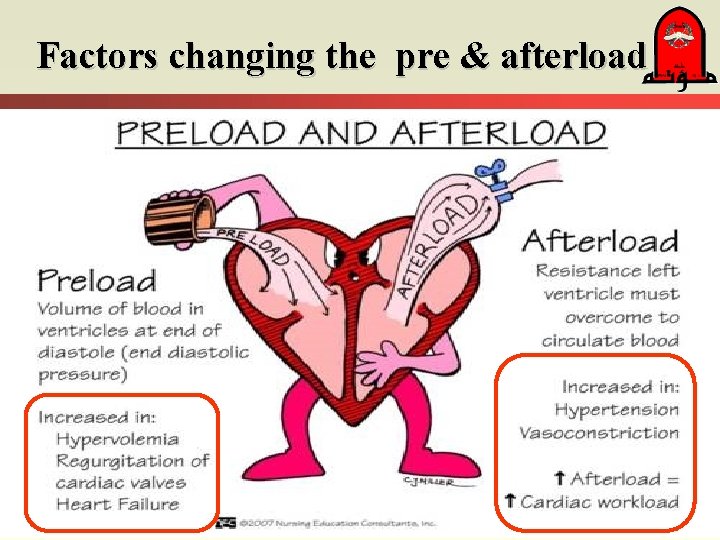
Force-Velocity Relationship in the cardiac muscle: Preload: - Stretching of the sarcomere Tension of contraction & Cardiac m. f. velocity of shortening at a given after- load. The preload = Ventricular filling with blood Stretch the cardiac muscle sliding of actin between myosin on contraction So Force of contraction
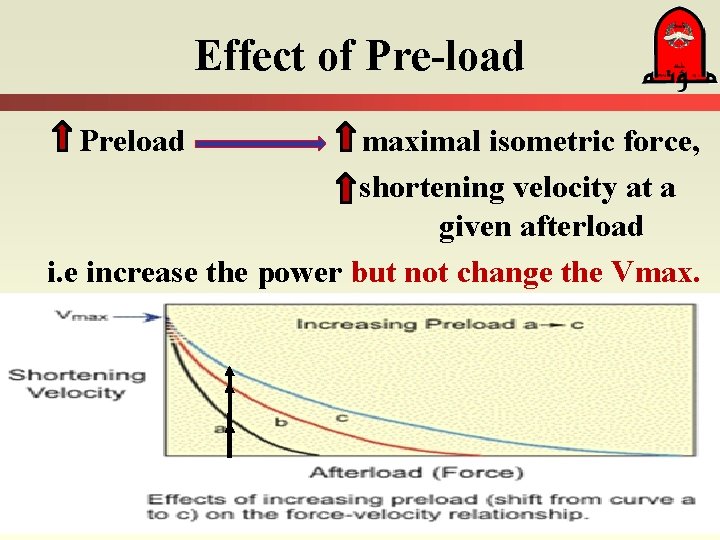
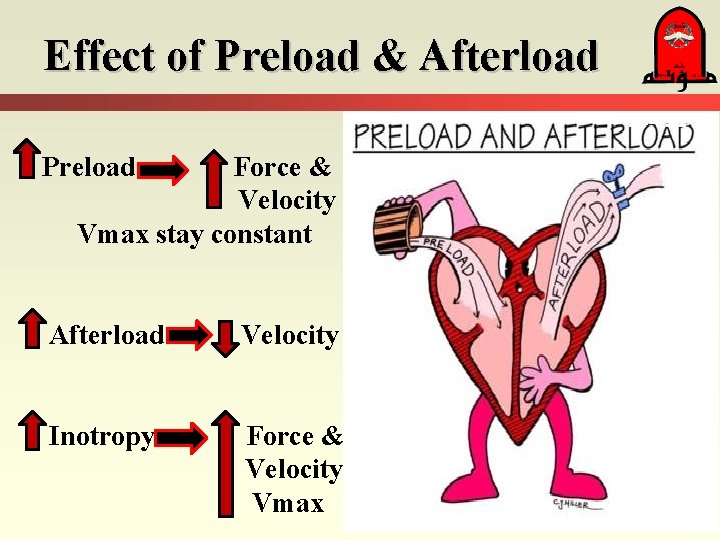
Effect of Pre-load Preload maximal isometric force, shortening velocity at a given afterload i. e increase the power but not change the Vmax.
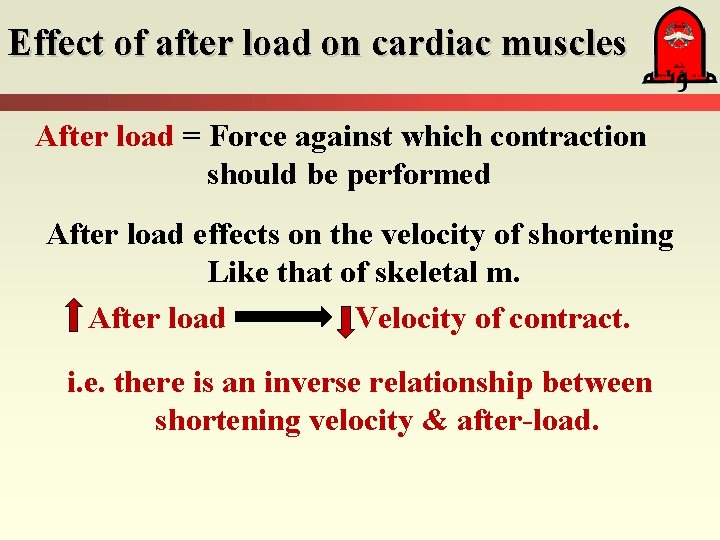
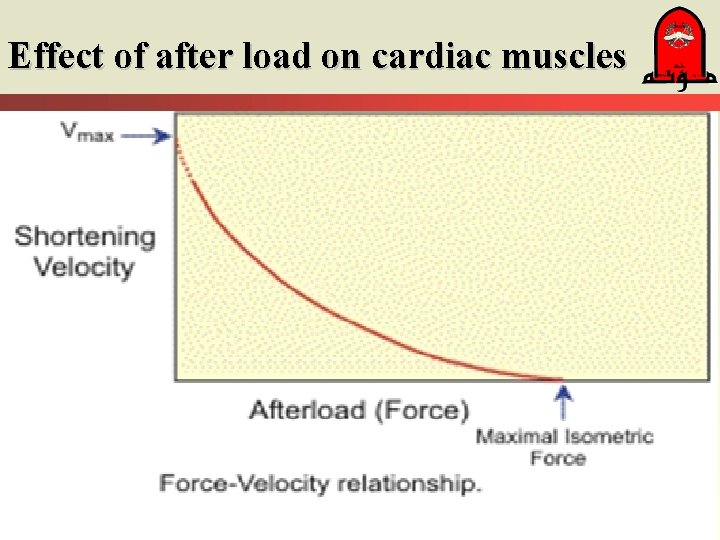
Effect of after load on cardiac muscles After load = Force against which contraction should be performed After load effects on the velocity of shortening Like that of skeletal m. After load Velocity of contract. i. e. there is an inverse relationship between shortening velocity & after-load.
Effect of after load on cardiac muscles
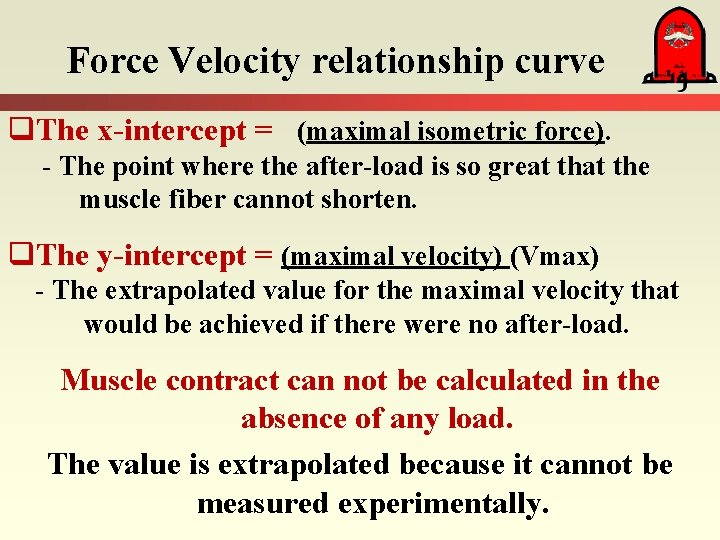
Force Velocity relationship curve q. The x-intercept = (maximal isometric force). - The point where the after-load is so great the muscle fiber cannot shorten. q. The y-intercept = (maximal velocity) (Vmax) - The extrapolated value for the maximal velocity that would be achieved if there were no after-load. Muscle contract can not be calculated in the absence of any load. The value is extrapolated because it cannot be measured experimentally.
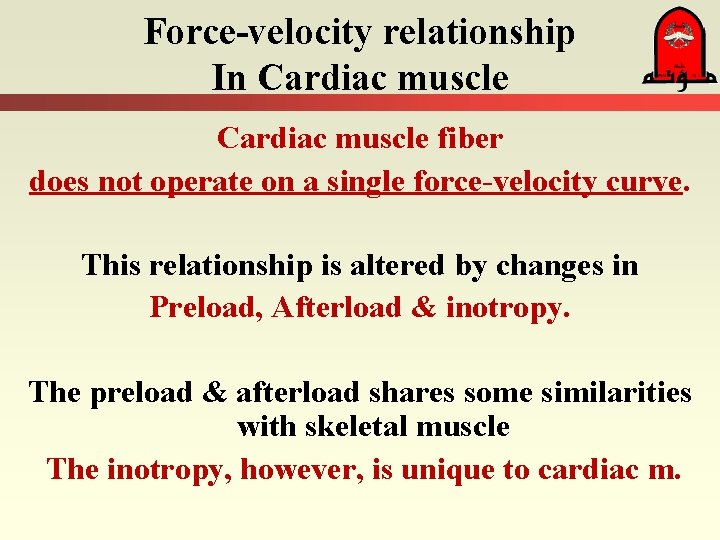
Force-velocity relationship In Cardiac muscle fiber does not operate on a single force-velocity curve. This relationship is altered by changes in Preload, Afterload & inotropy. The preload & afterload shares some similarities with skeletal muscle The inotropy, however, is unique to cardiac m.
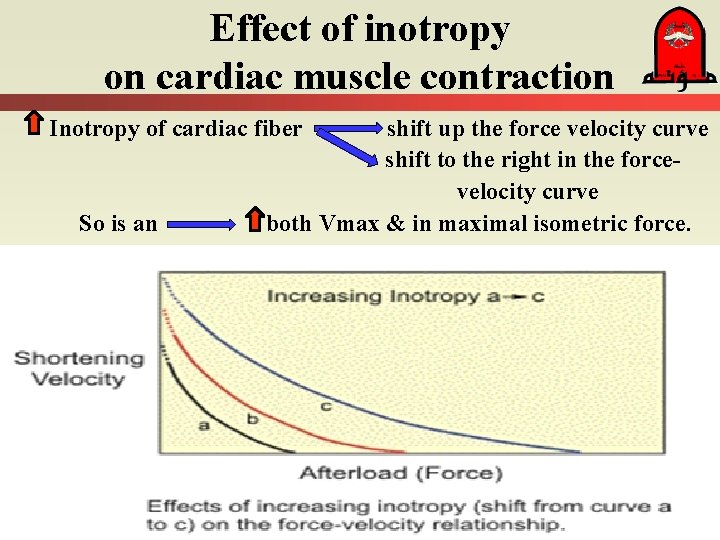
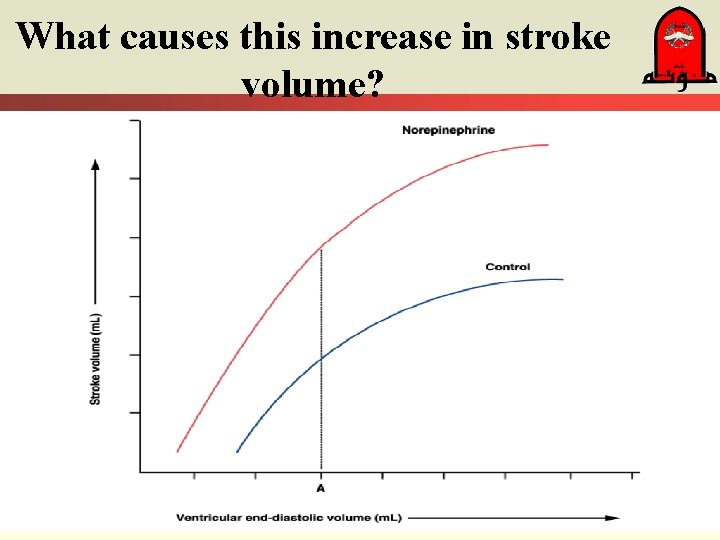
Effect of inotropy on cardiac muscle contraction Inotropy of cardiac fiber So is an shift up the force velocity curve shift to the right in the forcevelocity curve both Vmax & in maximal isometric force.
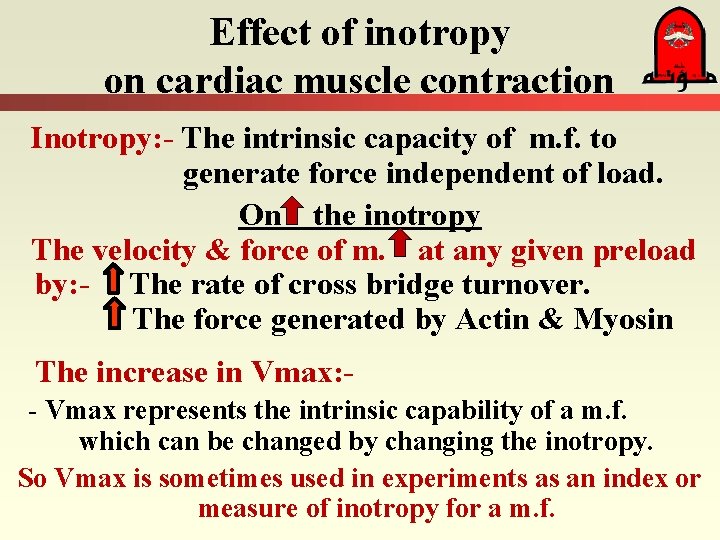
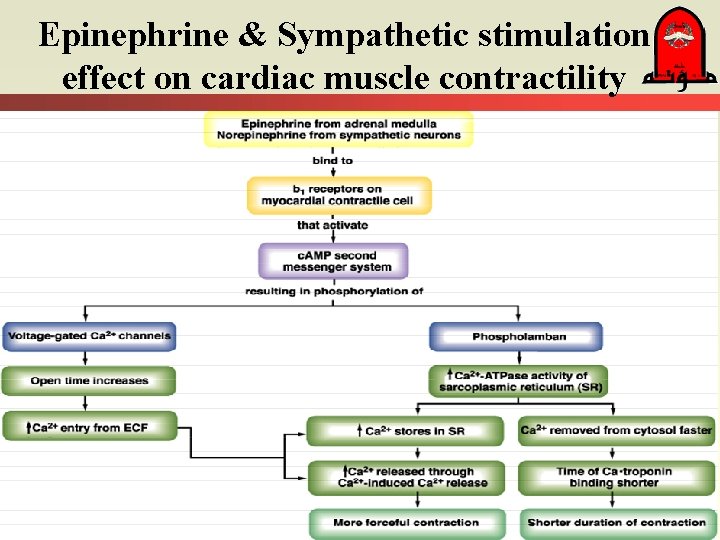
Effect of inotropy on cardiac muscle contraction Inotropy: - The intrinsic capacity of m. f. to generate force independent of load. On the inotropy The velocity & force of m. at any given preload by: - The rate of cross bridge turnover. The force generated by Actin & Myosin The increase in Vmax: - Vmax represents the intrinsic capability of a m. f. which can be changed by changing the inotropy. So Vmax is sometimes used in experiments as an index or measure of inotropy for a m. f.
Effect of Preload & Afterload Preload Force & Velocity Vmax stay constant Afterload Velocity Inotropy Force & Velocity Vmax
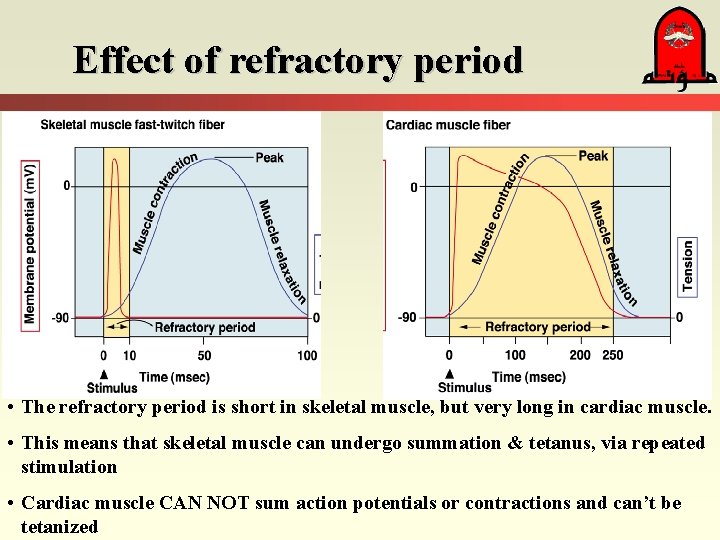
Effect of refractory period • The refractory period is short in skeletal muscle, but very long in cardiac muscle. • This means that skeletal muscle can undergo summation & tetanus, via repeated stimulation • Cardiac muscle CAN NOT sum action potentials or contractions and can’t be tetanized
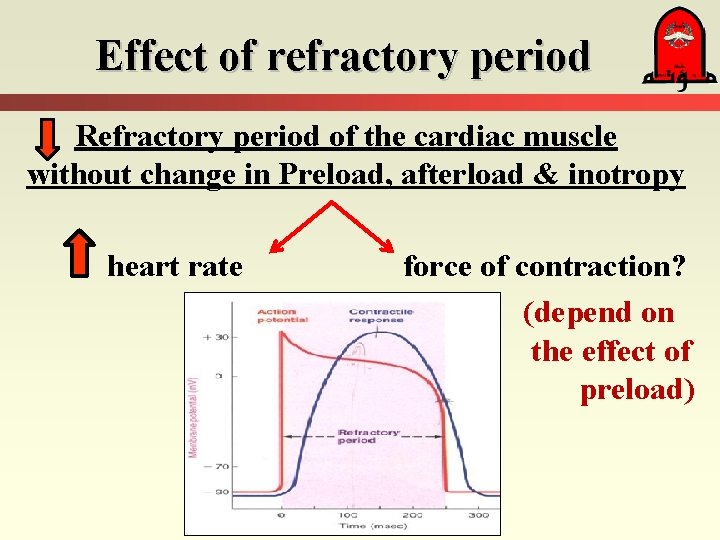
Effect of refractory period Refractory period of the cardiac muscle without change in Preload, afterload & inotropy heart rate force of contraction? (depend on the effect of preload)
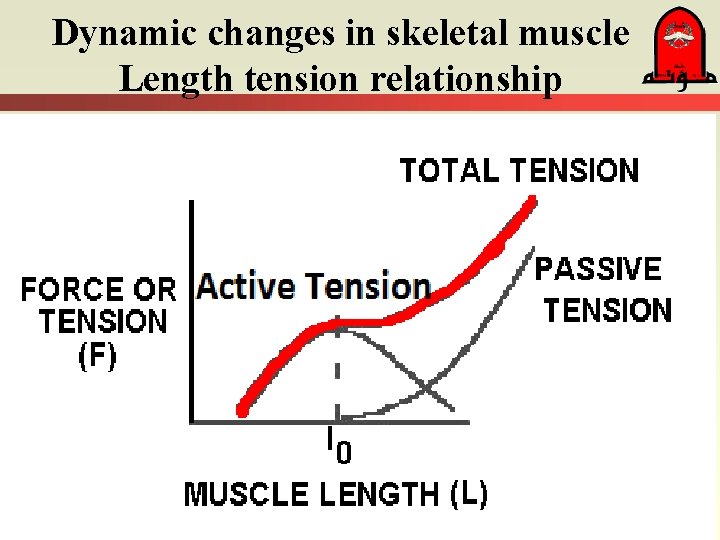
Dynamic changes in skeletal muscle Length tension relationship
Length tension relationship in normal & heart faliure Starling Low
Factors changing the pre & afterload
Epinephrine & Sympathetic stimulation effect on cardiac muscle contractility
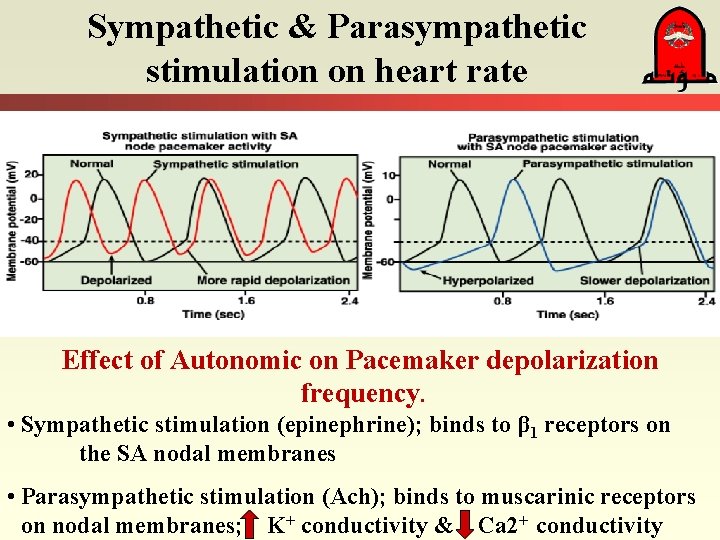
Sympathetic & Parasympathetic stimulation on heart rate Effect of Autonomic on Pacemaker depolarization frequency. • Sympathetic stimulation (epinephrine); binds to β 1 receptors on the SA nodal membranes • Parasympathetic stimulation (Ach); binds to muscarinic receptors on nodal membranes; K+ conductivity & Ca 2+ conductivity
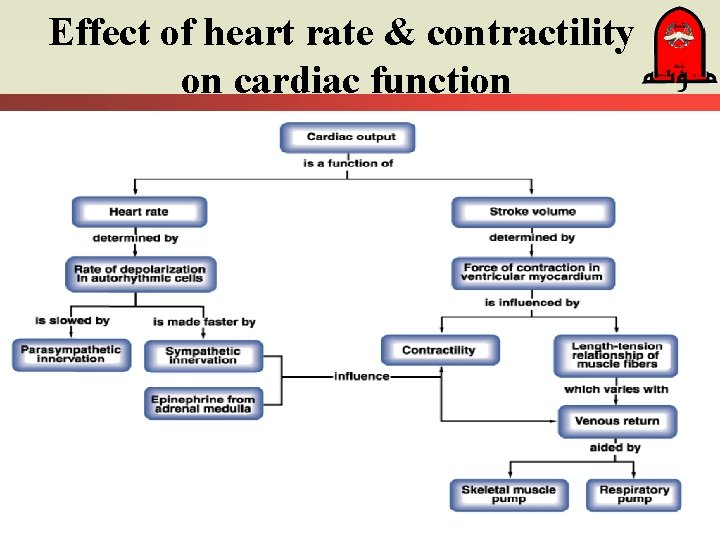
Effect of heart rate & contractility on cardiac function
What causes this increase in stroke volume?
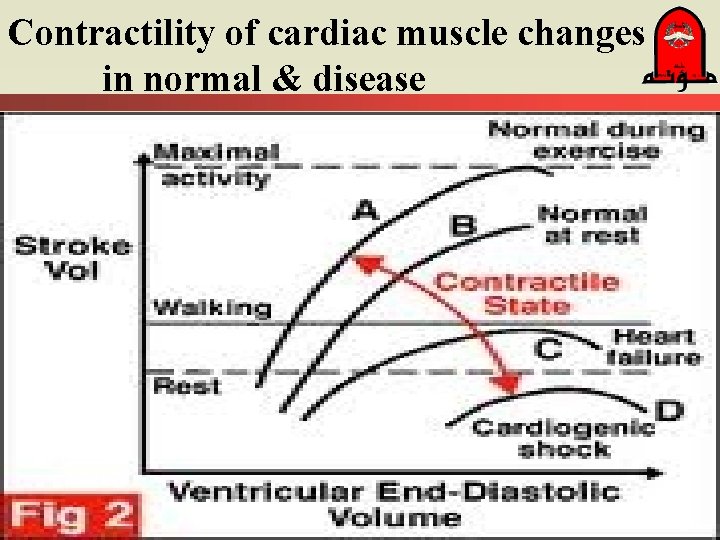
Contractility of cardiac muscle changes in normal & disease
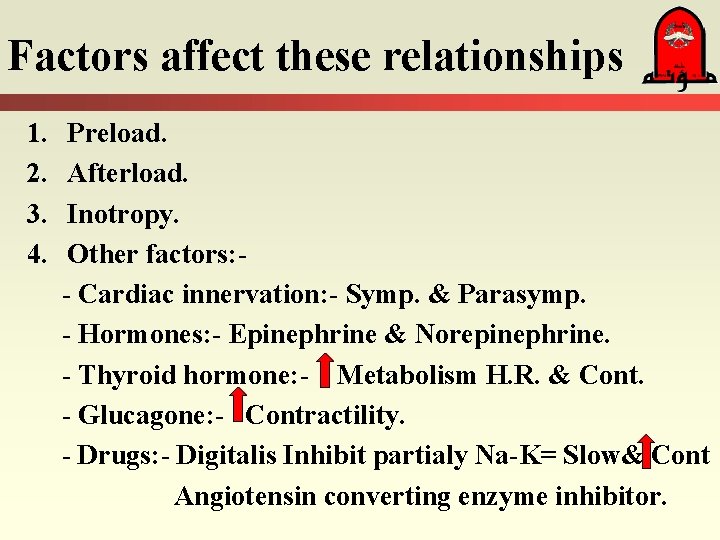
Factors affect these relationships 1. 2. 3. 4. Preload. Afterload. Inotropy. Other factors: - Cardiac innervation: - Symp. & Parasymp. - Hormones: - Epinephrine & Norepinephrine. - Thyroid hormone: - Metabolism H. R. & Cont. - Glucagone: - Contractility. - Drugs: - Digitalis Inhibit partialy Na-K= Slow& Cont Angiotensin converting enzyme inhibitor.