
MSP 430 Motor Controller Applications LT Thomas TJ

- Slides: 24
MSP 430 Motor Controller Applications LT Thomas TJ Volinski Pat O’Hara Kole Reece
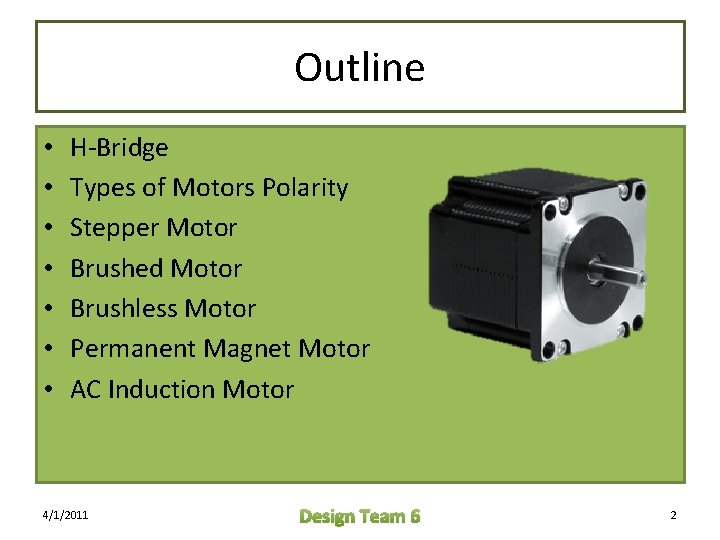
Outline • • H-Bridge Types of Motors Polarity Stepper Motor Brushed Motor Brushless Motor Permanent Magnet Motor AC Induction Motor 4/1/2011 Design Team 6 2
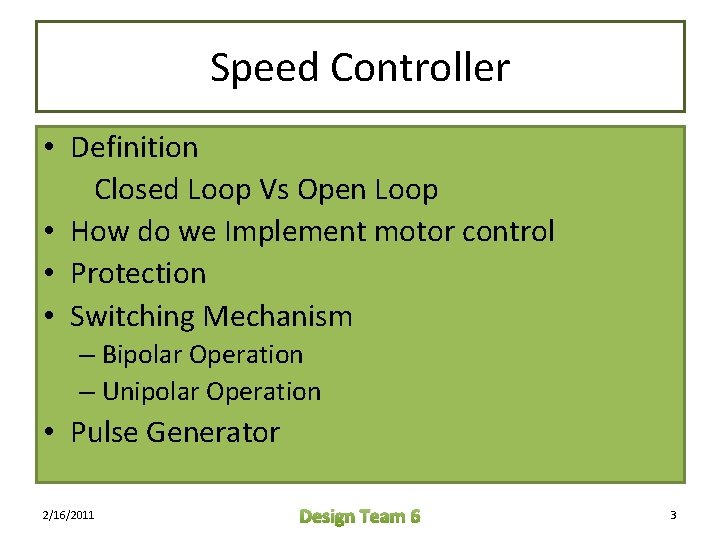
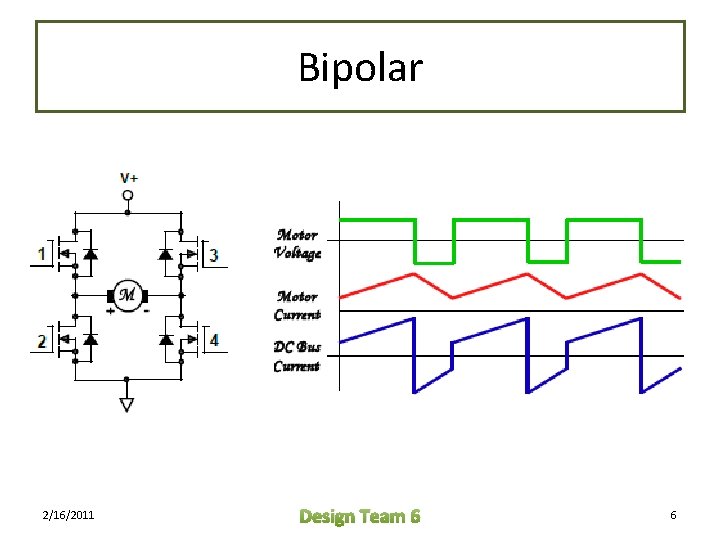
Speed Controller • Definition Closed Loop Vs Open Loop • How do we Implement motor control • Protection • Switching Mechanism – Bipolar Operation – Unipolar Operation • Pulse Generator 2/16/2011 Design Team 6 3
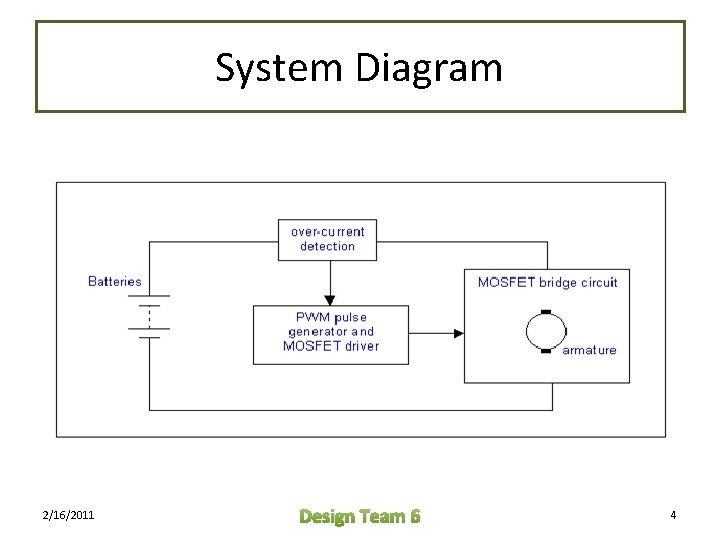
System Diagram 2/16/2011 Design Team 6 4
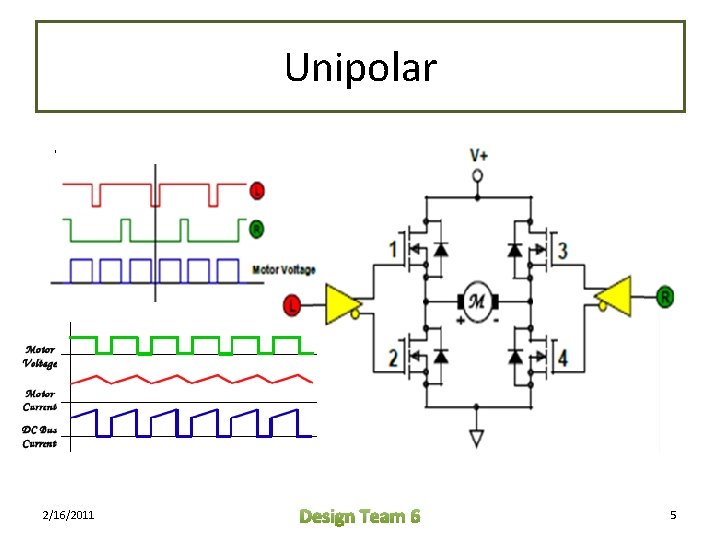
Unipolar 2/16/2011 Design Team 6 5
Bipolar 2/16/2011 Design Team 6 6
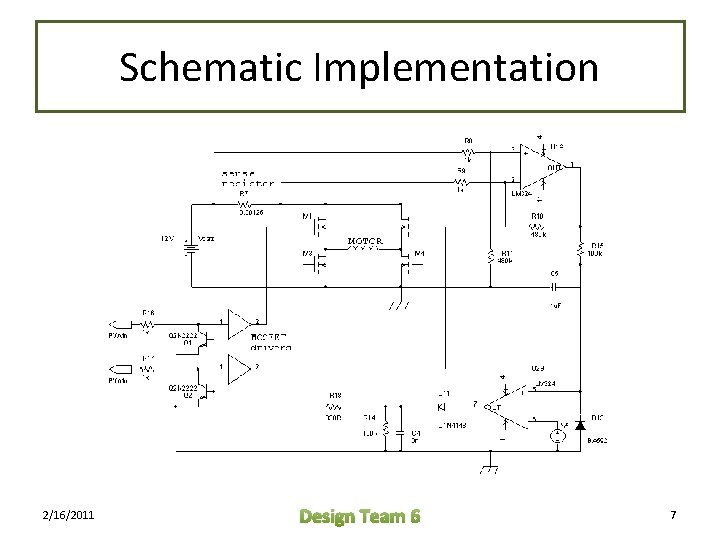
Schematic Implementation 2/16/2011 Design Team 6 7
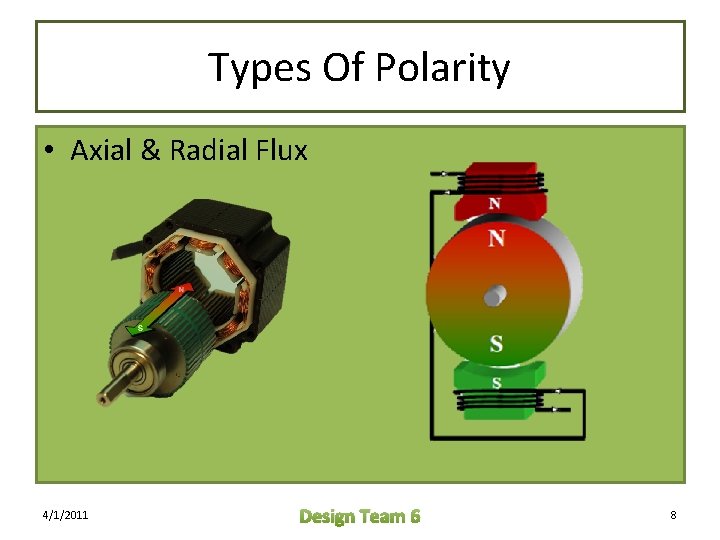
Types Of Polarity • Axial & Radial Flux 4/1/2011 Design Team 6 8
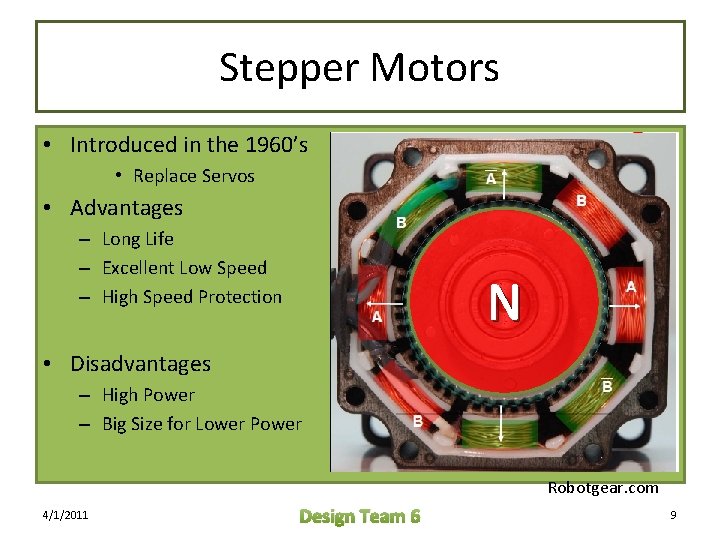
Stepper Motors • Introduced in the 1960’s • Replace Servos • Advantages – Long Life – Excellent Low Speed – High Speed Protection N • Disadvantages – High Power – Big Size for Lower Power Robotgear. com 4/1/2011 Design Team 6 9
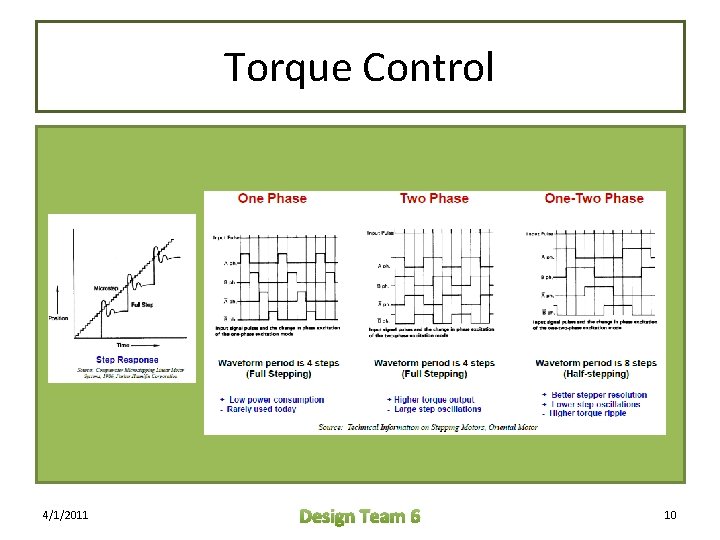
Torque Control 4/1/2011 Design Team 6 10
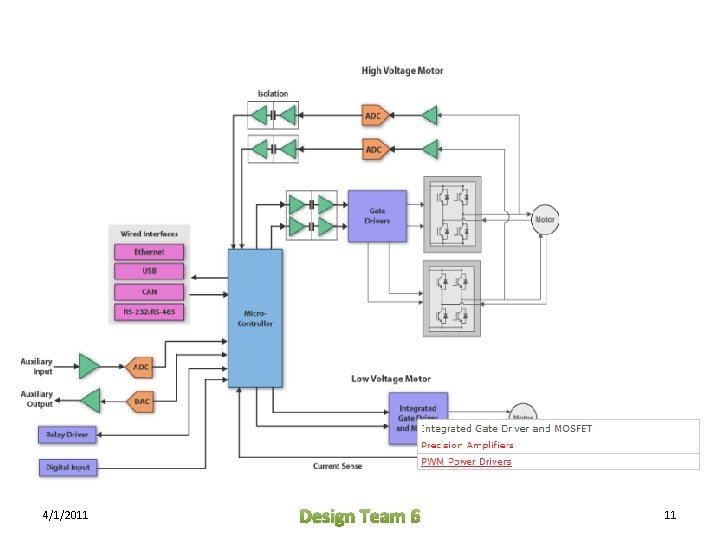
4/1/2011 Design Team 6 11
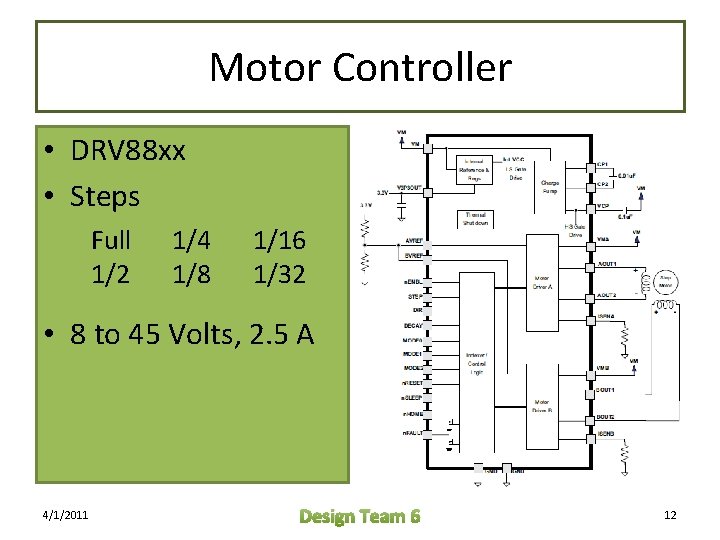
Motor Controller • DRV 88 xx • Steps Full 1/2 1/4 1/8 1/16 1/32 • 8 to 45 Volts, 2. 5 A 4/1/2011 Design Team 6 12
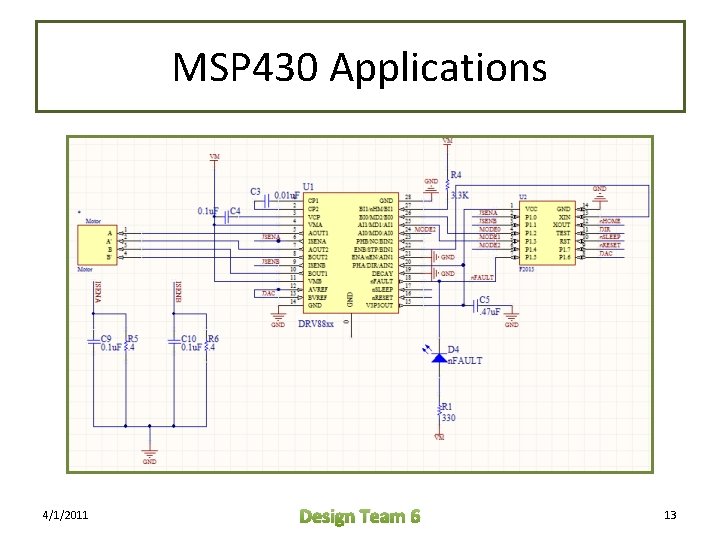
MSP 430 Applications 4/1/2011 Design Team 6 13
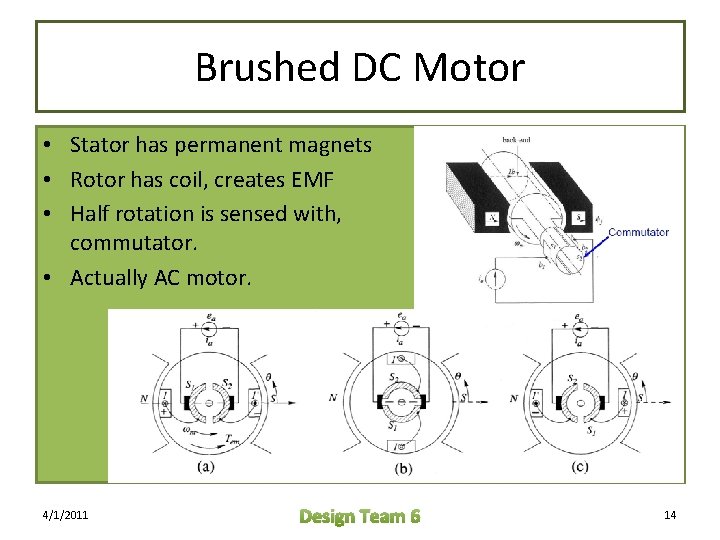
Brushed DC Motor • Stator has permanent magnets • Rotor has coil, creates EMF • Half rotation is sensed with, commutator. • Actually AC motor. 4/1/2011 Design Team 6 14
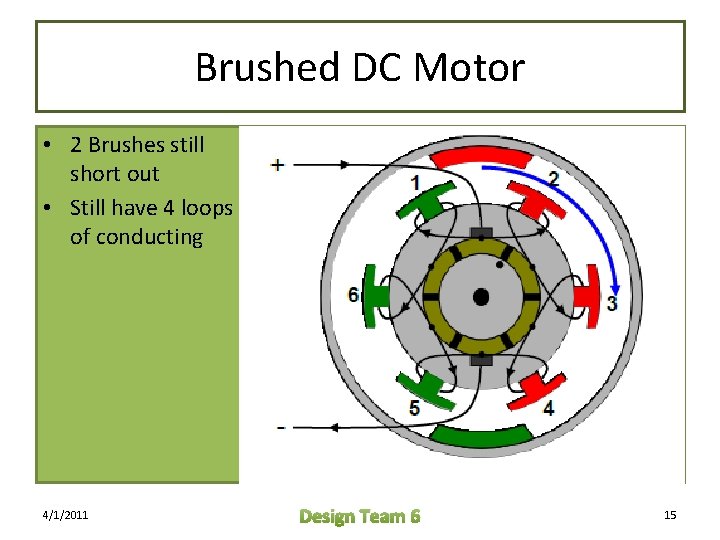
Brushed DC Motor • 2 Brushes still short out • Still have 4 loops of conducting 4/1/2011 Design Team 6 15
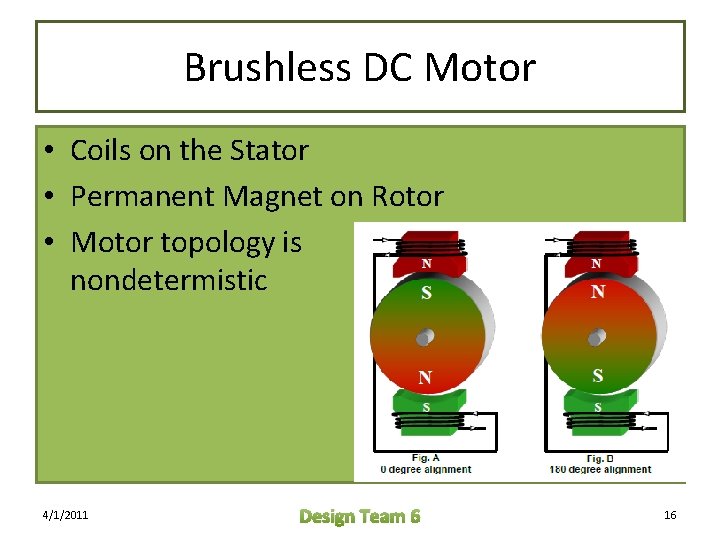
Brushless DC Motor • Coils on the Stator • Permanent Magnet on Rotor • Motor topology is nondetermistic 4/1/2011 Design Team 6 16
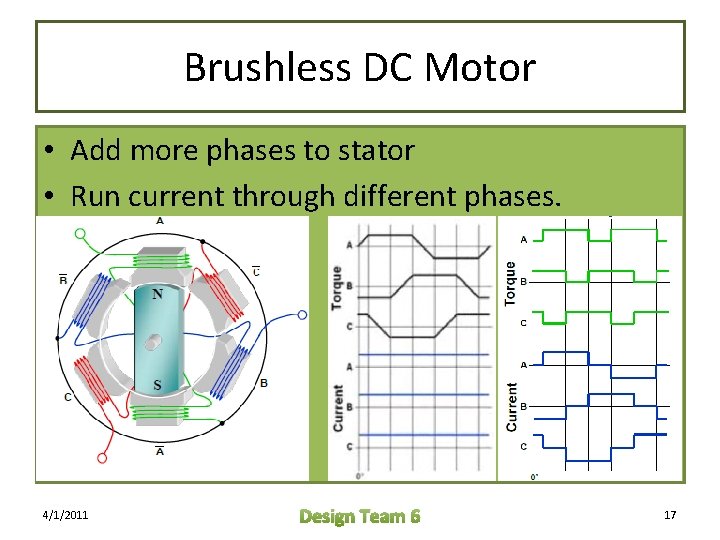
Brushless DC Motor • Add more phases to stator • Run current through different phases. 4/1/2011 Design Team 6 17
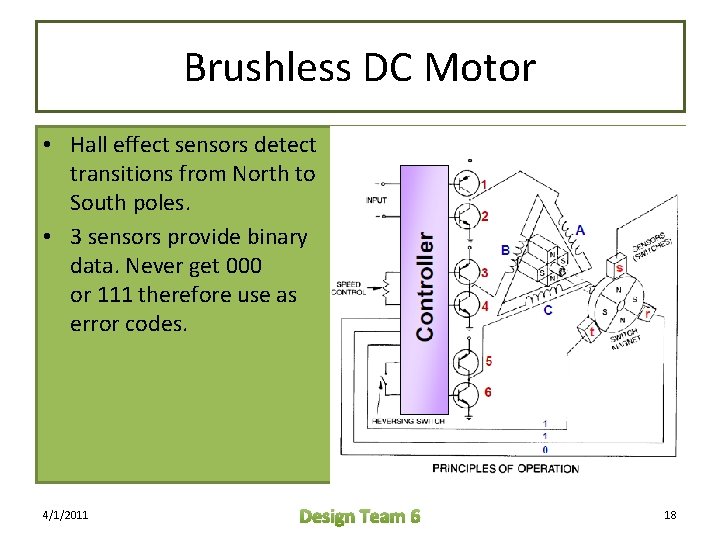
Brushless DC Motor • Hall effect sensors detect transitions from North to South poles. • 3 sensors provide binary data. Never get 000 or 111 therefore use as error codes. 4/1/2011 Design Team 6 18
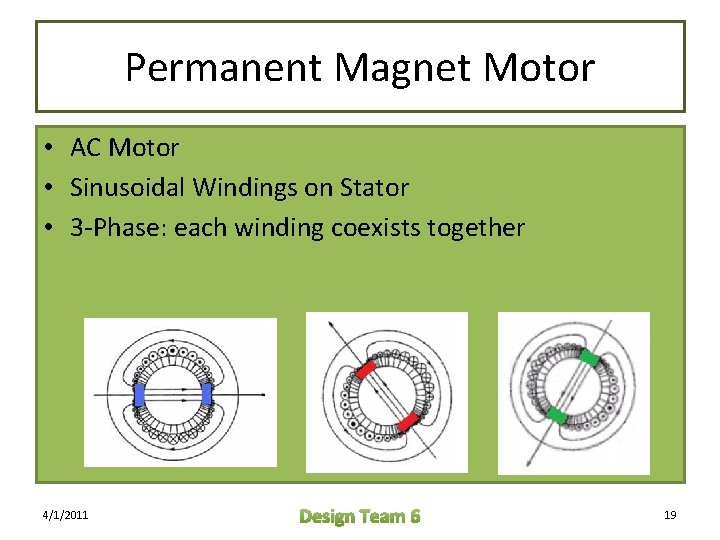
Permanent Magnet Motor • AC Motor • Sinusoidal Windings on Stator • 3 -Phase: each winding coexists together 4/1/2011 Design Team 6 19
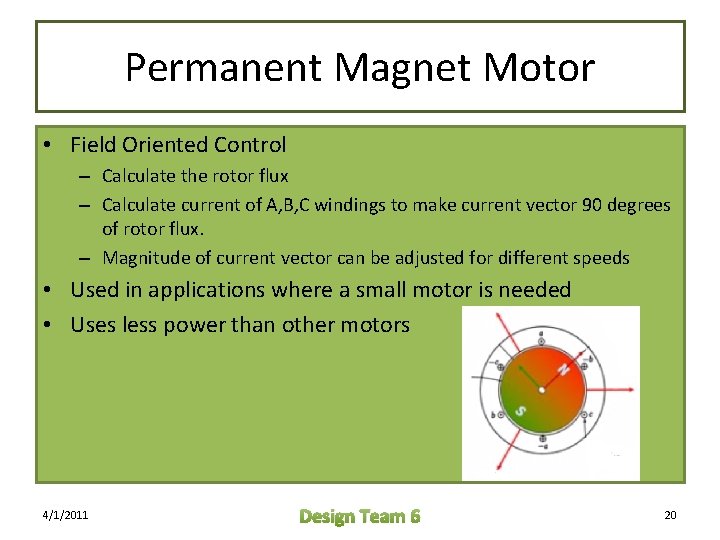
Permanent Magnet Motor • Field Oriented Control – Calculate the rotor flux – Calculate current of A, B, C windings to make current vector 90 degrees of rotor flux. – Magnitude of current vector can be adjusted for different speeds • Used in applications where a small motor is needed • Uses less power than other motors 4/1/2011 Design Team 6 20
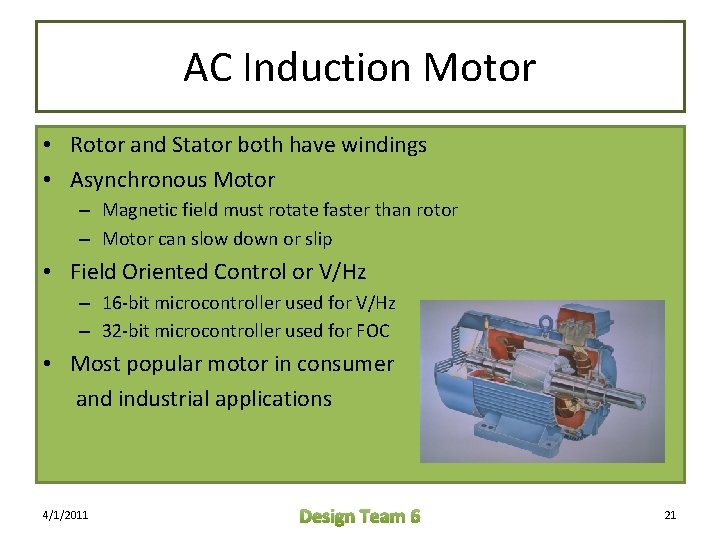
AC Induction Motor • Rotor and Stator both have windings • Asynchronous Motor – Magnetic field must rotate faster than rotor – Motor can slow down or slip • Field Oriented Control or V/Hz – 16 -bit microcontroller used for V/Hz – 32 -bit microcontroller used for FOC • Most popular motor in consumer and industrial applications 4/1/2011 Design Team 6 21
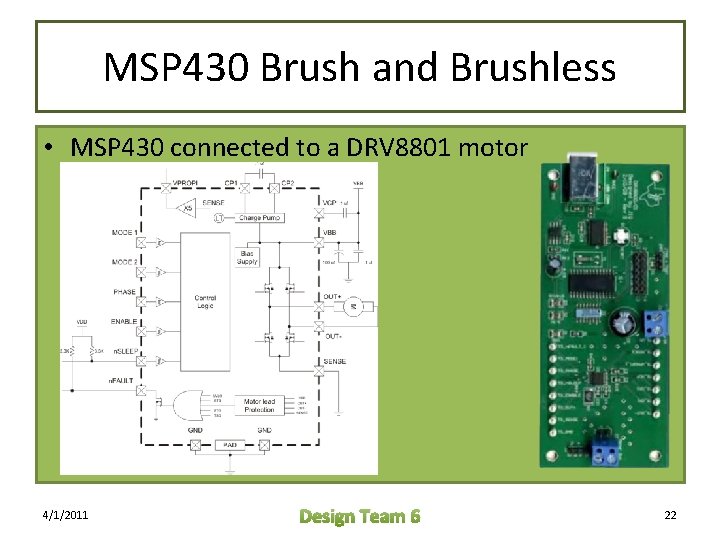
MSP 430 Brush and Brushless • MSP 430 connected to a DRV 8801 motor controller. 4/1/2011 Design Team 6 22
Summary • Low Speed with High accuracy – Stepper motor • Long life – AC Induction, Stepper motor, & Brushless • High Torque – AC Induction • No Feedback – Stepper & Brushed • Less Power – Permanent magnet 4/1/2011 Design Team 6 23
QUESTIONS 4/1/2011 Design Team 6 24