
MSL 202 Lesson 10 a Leadership Analysis Revision


- Slides: 11
MSL 202 , Lesson 10 a: Leadership Analysis Revision Date: 15 November 2012 1
MSL 202 , Lesson 10 a: Leadership Analysis Objectives o Analyze a leader’s capabilities, style and strengths and development areas o Prepare an information brief on a leadership topic Revision Date: 15 November 2012 2
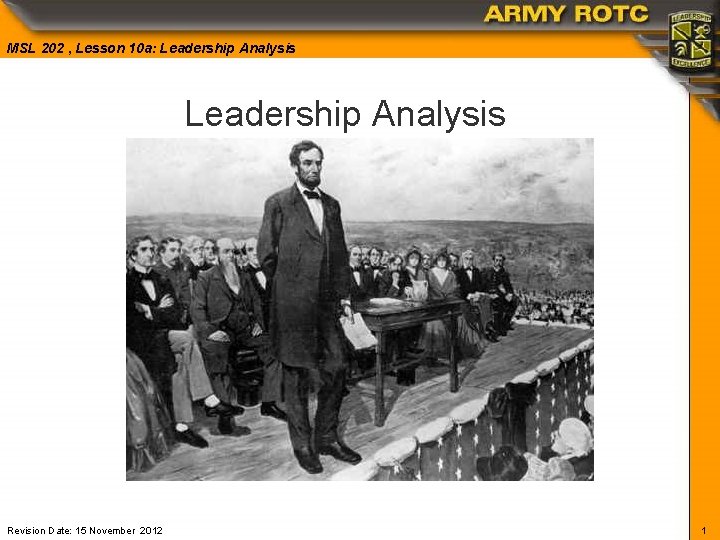
MSL 202 , Lesson 10 a: Leadership Analysis Profile: Abraham Lincoln o o Born: February 12, 1809, Kentucky Nickname: ‘Honest Abe’, ‘Illinois Rail-Splitter’ Married: Mary Todd, 1842 Children: Robert Todd (1843 – 1926), Edward Baker (1846 – 1850), William Wallace (1850 – 1862), Thomas ‘Tad’ (1853 – 1871) o 16 th President of the United States 1861 -1865 o Died: April 15, 1865 – killed by John Wilkes Booth at Ford’s Theater Revision Date: 15 November 2012 3
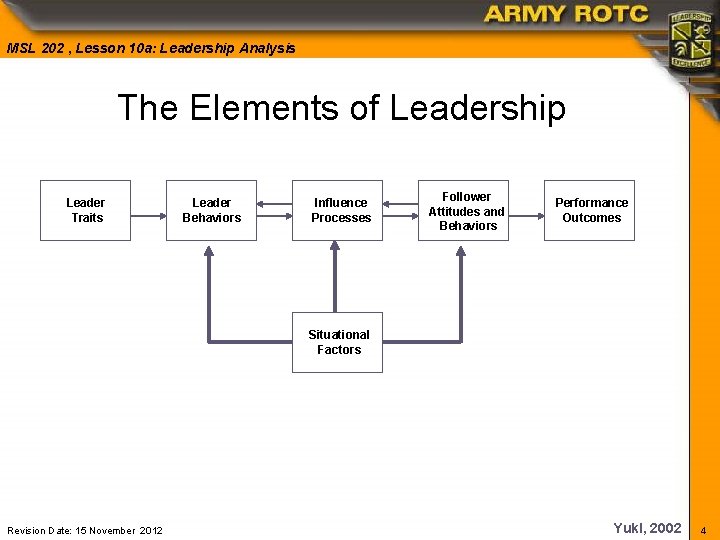
MSL 202 , Lesson 10 a: Leadership Analysis The Elements of Leadership Leader Traits Leader Behaviors Influence Processes Follower Attitudes and Behaviors Performance Outcomes Situational Factors Revision Date: 15 November 2012 Yukl, 2002 4
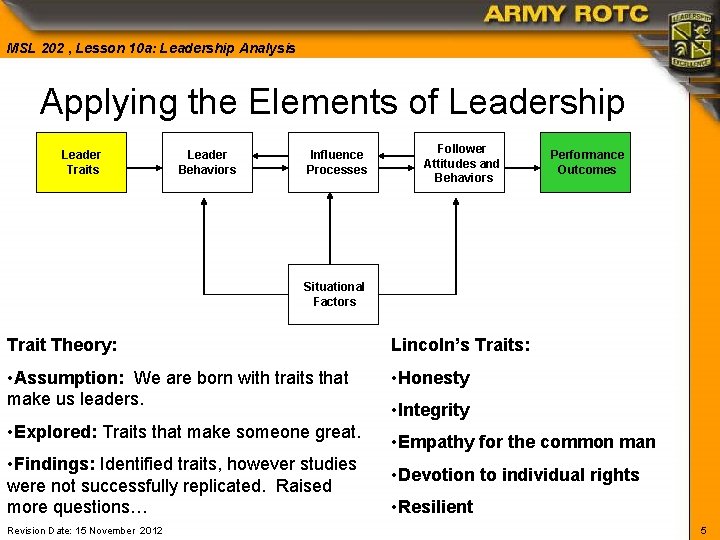
MSL 202 , Lesson 10 a: Leadership Analysis Applying the Elements of Leadership Leader Traits Leader Behaviors Influence Processes Follower Attitudes and Behaviors Performance Outcomes Situational Factors Trait Theory: Lincoln’s Traits: • Assumption: We are born with traits that make us leaders. • Honesty • Explored: Traits that make someone great. • Findings: Identified traits, however studies were not successfully replicated. Raised more questions… Revision Date: 15 November 2012 • Integrity • Empathy for the common man • Devotion to individual rights • Resilient 5
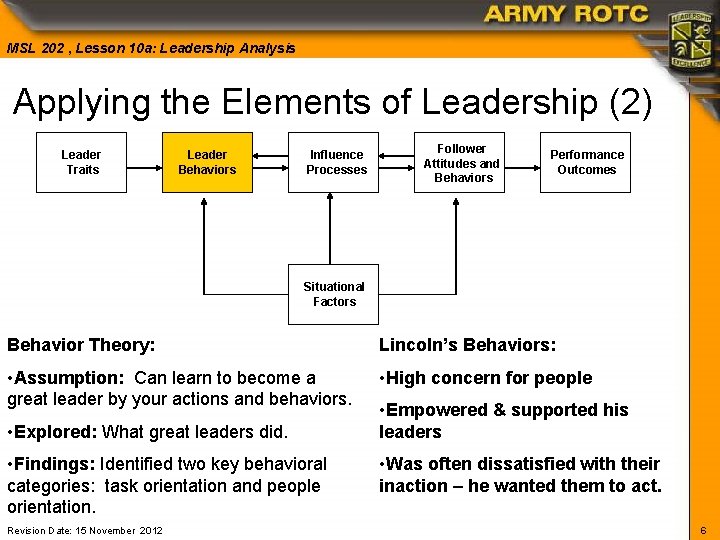
MSL 202 , Lesson 10 a: Leadership Analysis Applying the Elements of Leadership (2) Leader Traits Leader Behaviors Influence Processes Follower Attitudes and Behaviors Performance Outcomes Situational Factors Behavior Theory: Lincoln’s Behaviors: • Assumption: Can learn to become a great leader by your actions and behaviors. • High concern for people • Explored: What great leaders did. • Findings: Identified two key behavioral categories: task orientation and people orientation. Revision Date: 15 November 2012 • Empowered & supported his leaders • Was often dissatisfied with their inaction – he wanted them to act. 6
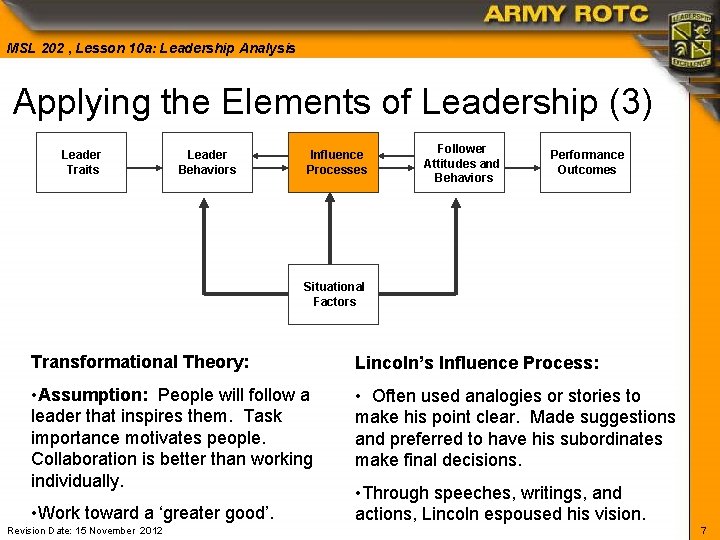
MSL 202 , Lesson 10 a: Leadership Analysis Applying the Elements of Leadership (3) Leader Traits Leader Behaviors Influence Processes Follower Attitudes and Behaviors Performance Outcomes Situational Factors Transformational Theory: Lincoln’s Influence Process: • Assumption: People will follow a leader that inspires them. Task importance motivates people. Collaboration is better than working individually. • Often used analogies or stories to make his point clear. Made suggestions and preferred to have his subordinates make final decisions. • Work toward a ‘greater good’. Revision Date: 15 November 2012 • Through speeches, writings, and actions, Lincoln espoused his vision. 7
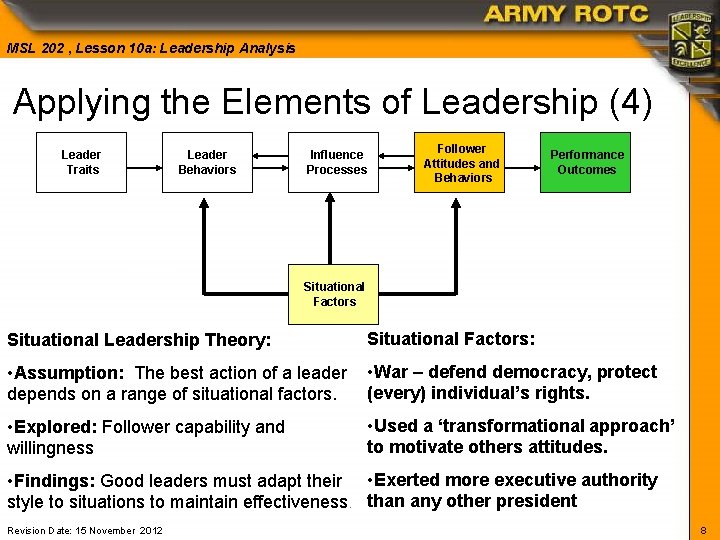
MSL 202 , Lesson 10 a: Leadership Analysis Applying the Elements of Leadership (4) Leader Traits Leader Behaviors Influence Processes Follower Attitudes and Behaviors Performance Outcomes Situational Factors Situational Leadership Theory: Situational Factors: • Assumption: The best action of a leader depends on a range of situational factors. • War – defend democracy, protect (every) individual’s rights. • Explored: Follower capability and willingness • Used a ‘transformational approach’ to motivate others attitudes. • Findings: Good leaders must adapt their • Exerted more executive authority style to situations to maintain effectiveness. than any other president Revision Date: 15 November 2012 8
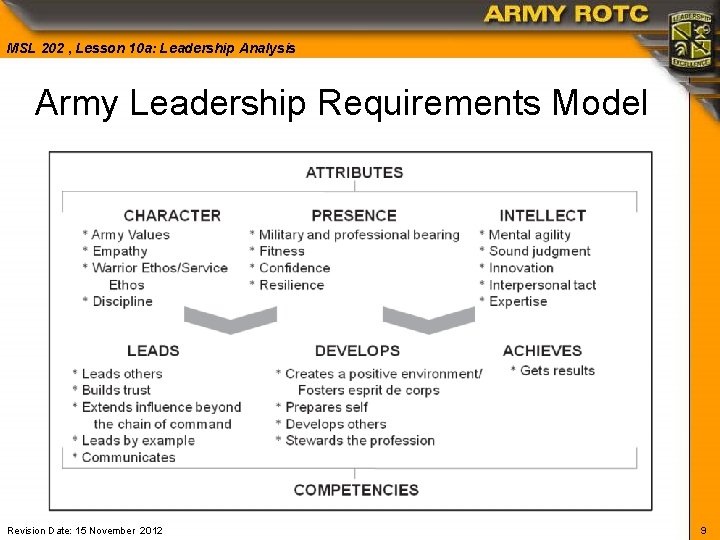
MSL 202 , Lesson 10 a: Leadership Analysis Army Leadership Requirements Model Revision Date: 15 November 2012 9
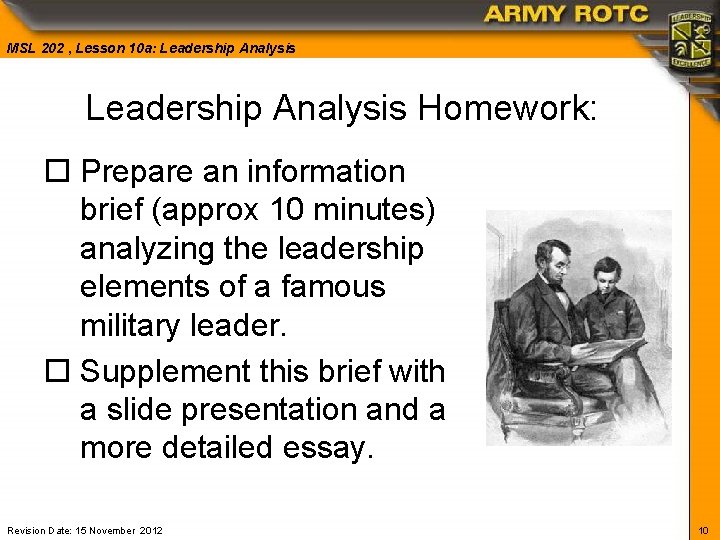
MSL 202 , Lesson 10 a: Leadership Analysis Homework: o Prepare an information brief (approx 10 minutes) analyzing the leadership elements of a famous military leader. o Supplement this brief with a slide presentation and a more detailed essay. Revision Date: 15 November 2012 10
MSL 202 , Lesson 10 a: Leadership Analysis Closing o Summary o Review-Lesson Objectives o Questions o Next Lesson: 10 b, Leadership Capstone Presentations § Complete a short essay on the leadership style of a selected military leader and be prepared to provide a presentation of the leader in Lesson 10 b Revision Date: 15 November 2012 11