
MSA Security Introduction Microservices Architecture Upsides and downsides

- Slides: 26
MSA Security Introduction
Microservices Architecture Upsides and downsides Characteristics and patterns Vulnerabilities Security
Microservices “The term "Microservice Architecture" has sprung up over the last few years to describe a particular way of designing software applications as suites of independently deployable services. […] there are certain common characteristics around organization around business capability, automated deployment, intelligence in the endpoints, and decentralized control of languages and data. ” – Martin Fowler
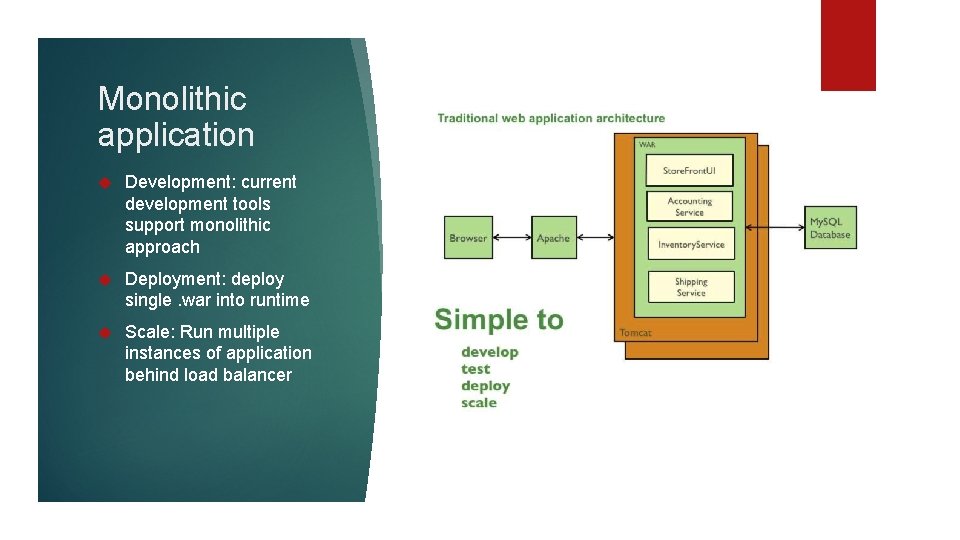
Monolithic application Development: current development tools support monolithic approach Deployment: deploy single. war into runtime Scale: Run multiple instances of application behind load balancer
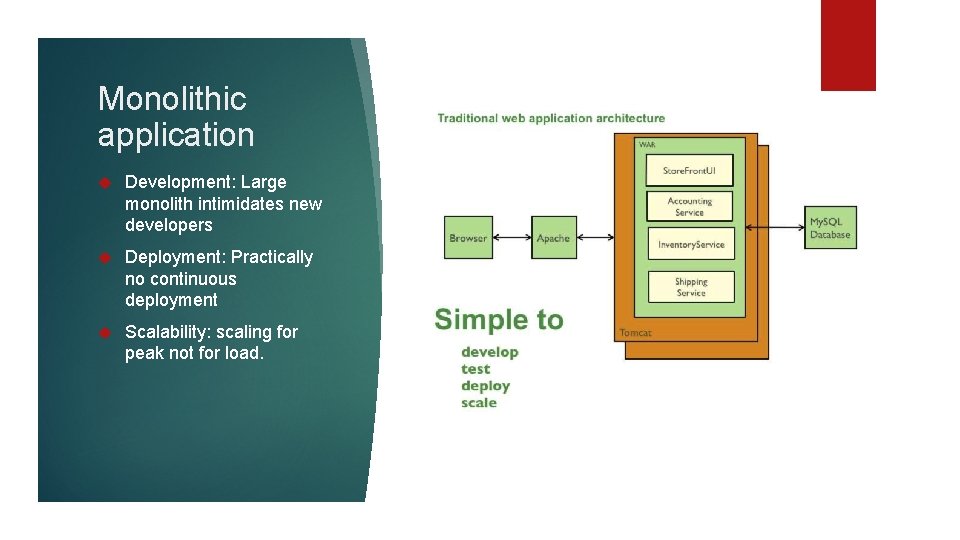
Monolithic application Development: Large monolith intimidates new developers Deployment: Practically no continuous deployment Scalability: scaling for peak not for load.
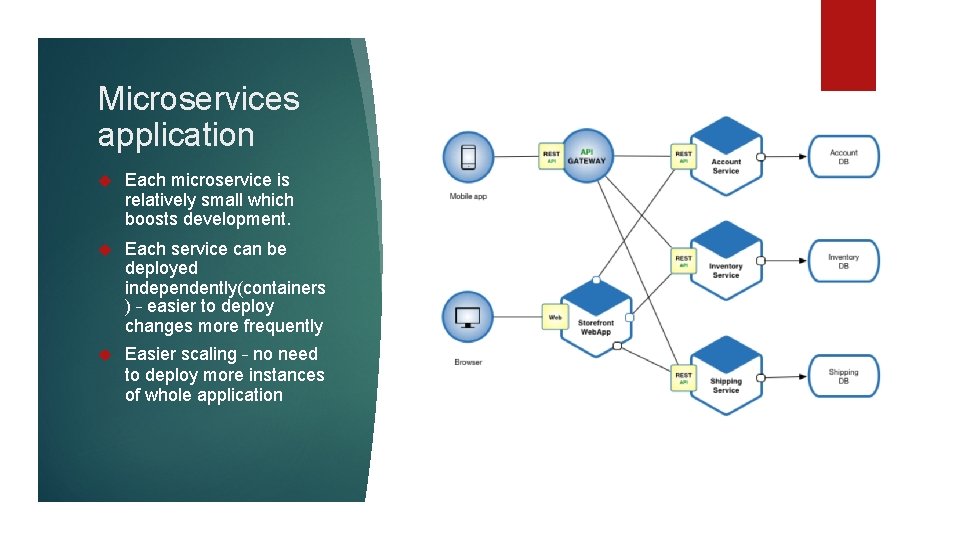
Microservices application Each microservice is relatively small which boosts development. Each service can be deployed independently(containers ) – easier to deploy changes more frequently Easier scaling – no need to deploy more instances of whole application
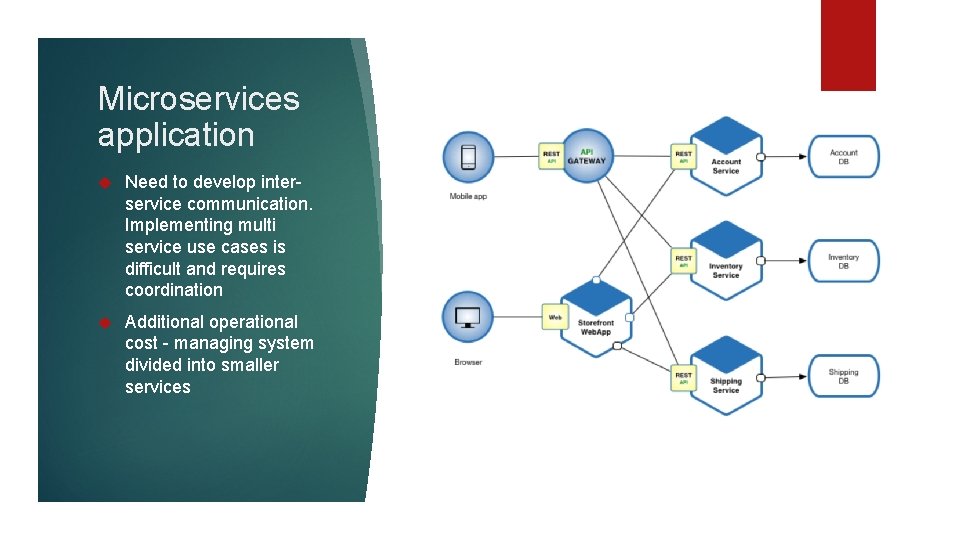
Microservices application Need to develop interservice communication. Implementing multi service use cases is difficult and requires coordination Additional operational cost - managing system divided into smaller services
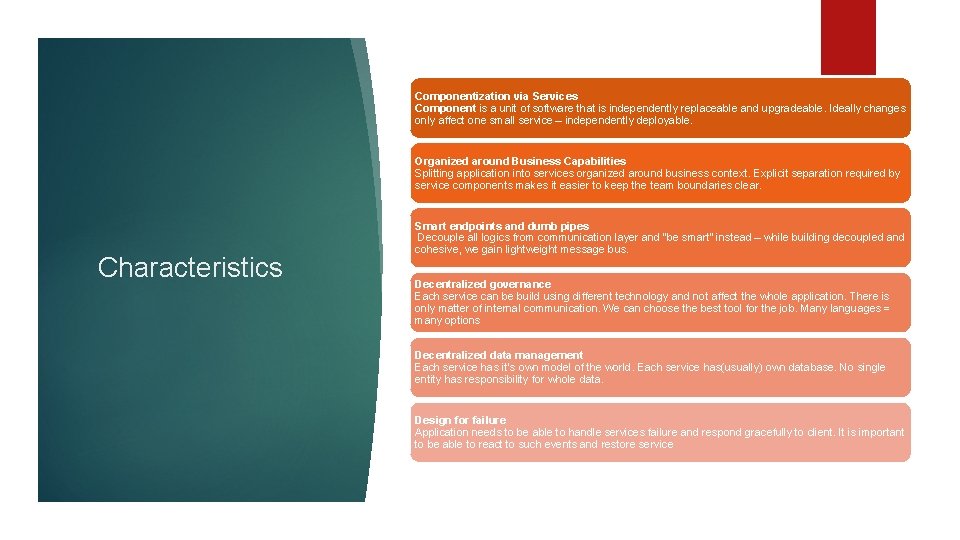
Componentization via Services Component is a unit of software that is independently replaceable and upgradeable. Ideally changes only affect one small service – independently deployable. Organized around Business Capabilities Splitting application into services organized around business context. Explicit separation required by service components makes it easier to keep the team boundaries clear. Characteristics Smart endpoints and dumb pipes Decouple all logics from communication layer and “be smart” instead – while building decoupled and cohesive, we gain lightweight message bus. Decentralized governance Each service can be build using different technology and not affect the whole application. There is only matter of internal communication. We can choose the best tool for the job. Many languages = many options Decentralized data management Each service has it’s own model of the world. Each service has(usually) own database. No single entity has responsibility for whole data. Design for failure Application needs to be able to handle services failure and respond gracefully to client. It is important to be able to react to such events and restore service
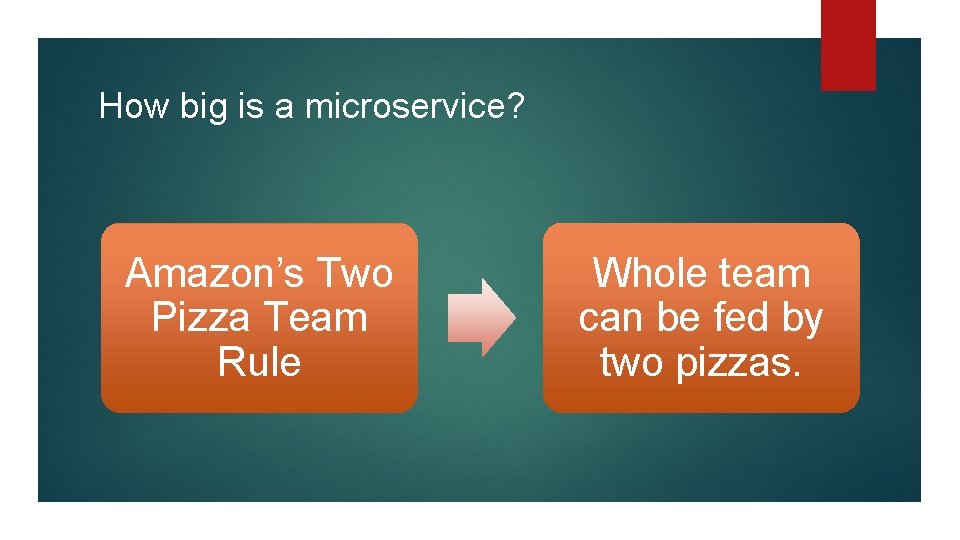
How big is a microservice? Amazon’s Two Pizza Team Rule Whole team can be fed by two pizzas.
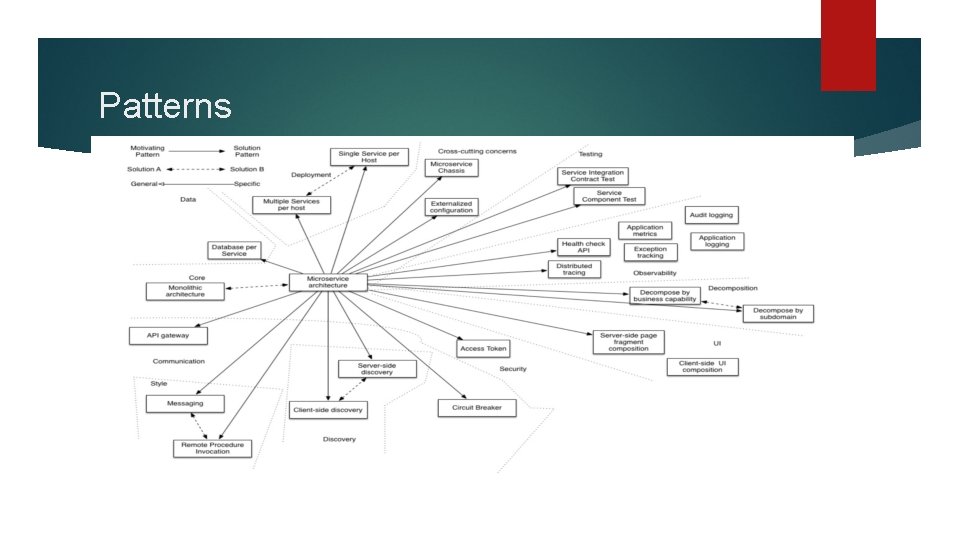
Patterns
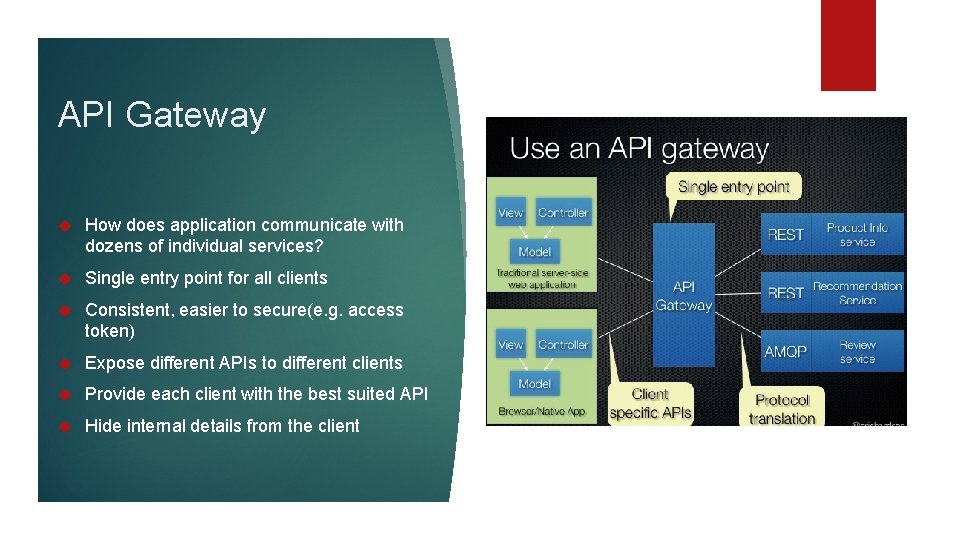
API Gateway How does application communicate with dozens of individual services? Single entry point for all clients Consistent, easier to secure(e. g. access token) Expose different APIs to different clients Provide each client with the best suited API Hide internal details from the client
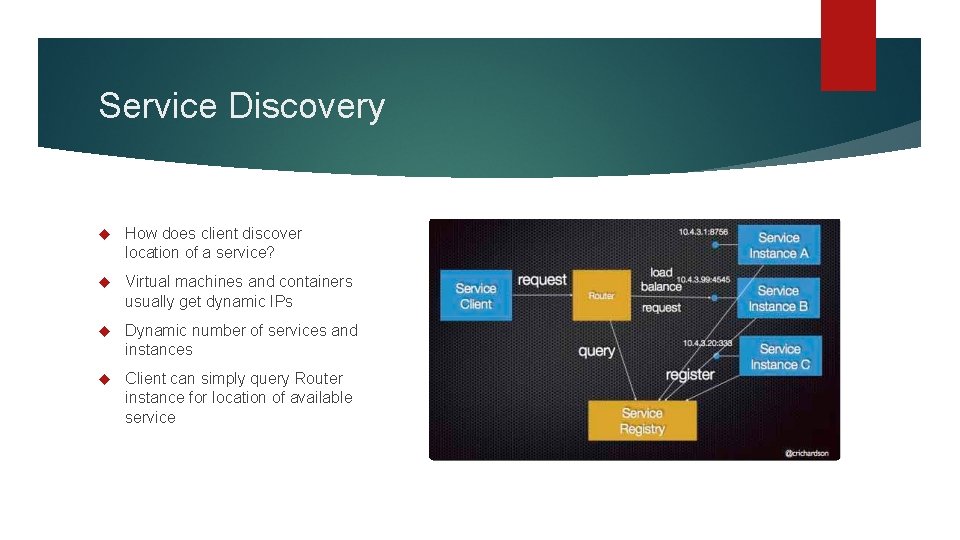
Service Discovery How does client discover location of a service? Virtual machines and containers usually get dynamic IPs Dynamic number of services and instances Client can simply query Router instance for location of available service
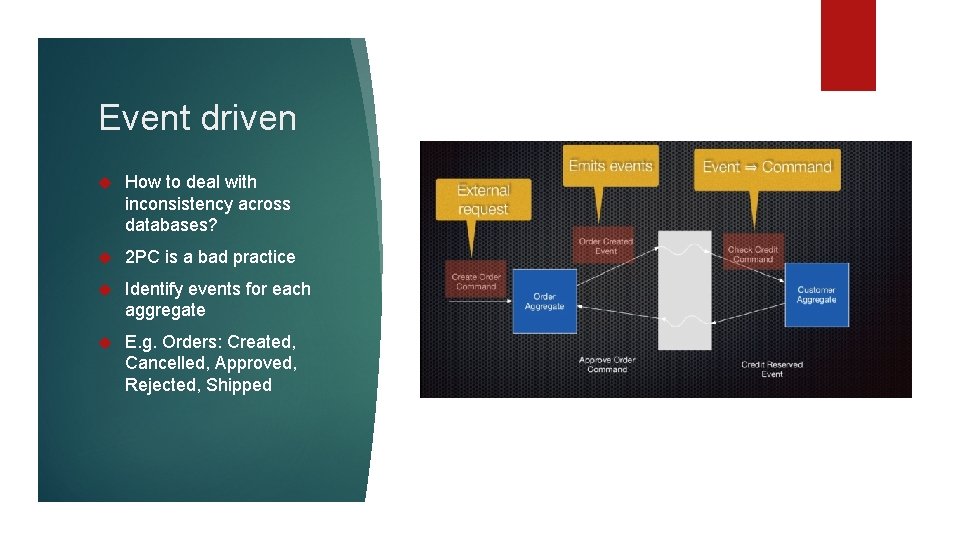
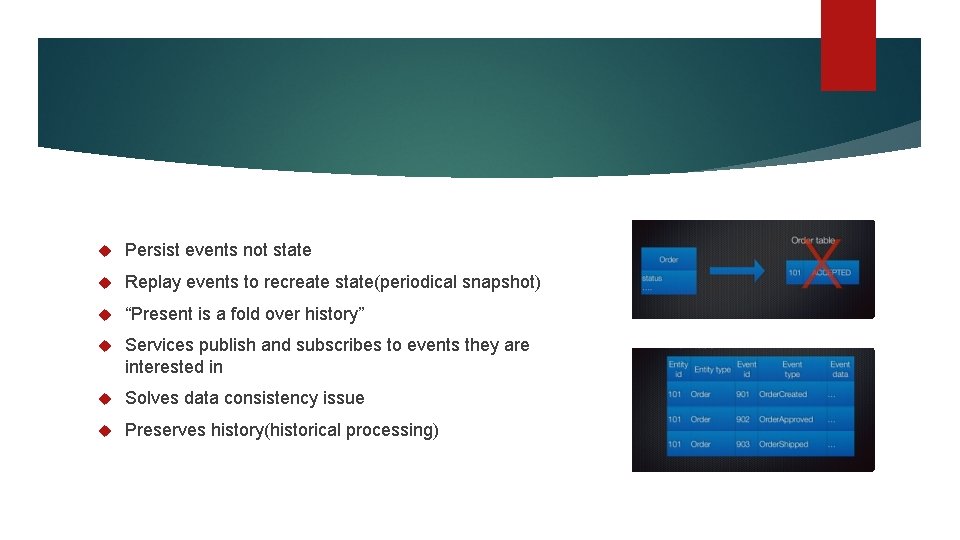
Event driven How to deal with inconsistency across databases? 2 PC is a bad practice Identify events for each aggregate E. g. Orders: Created, Cancelled, Approved, Rejected, Shipped
Persist events not state Replay events to recreate state(periodical snapshot) “Present is a fold over history” Services publish and subscribes to events they are interested in Solves data consistency issue Preserves history(historical processing)
Security in MSA Due to the architectural pattern microservices overall security is better in microservices On the other side they introduce new vectors of attacks Speed vs secure factor
Upsides and downsides Increased isolation - decoupling services adds boundaries between services in a system One breach might not expose your whole application/data/stack API can be well designed with rate limiting and throttling New attack vectors and surfaces Internal traffic goes through network or Internet instead of internal calls Traditional app security still matters - data injection, cross-site scripting, etc
More possibilities Granularity: You can apply service-specific rules everywhere Diversity: You can apply different rules to different services and components Distributed responsibility: Each microservice can specify how and by who it should be used(easier to enforce) Tailored access: “Least privilege” model on service-service basis
Databases Database per service – more db’s to secure Do you use the same credentials everywhere? How do you protect this credentials? Do you restrict application’s movement across database?
Messaging layer Does every system see every message? Can your system send message anywhere? Do you validate message body?
Edge/Web Do you check what you expose to the web? No accidental admin url/panels leaks. No access to internal API. Validate and sanitize requests. What data are you storing on the client side? Do you cache data? Is it protected? Do you secure all your APIs? API Gateway with token, role based security
People Are your team aware of security challenges? One unaware developer can destroy whole application Do you have some security ground rules or practices? Everyone should be able to perform them. Does the management know why you need this? This is not wasted money with no result.
Containers Do you use trusted images? If you assemble built images be sure to check them. Do you manage your secrets? Environment variables aren’t the best idea. Don’t put secrets inside containers and don’t expose them to host. Secret should live as long as container leaves and disappear. You are replacing hundreds of VMs with thousand of containers. Are you able to audit and control them?
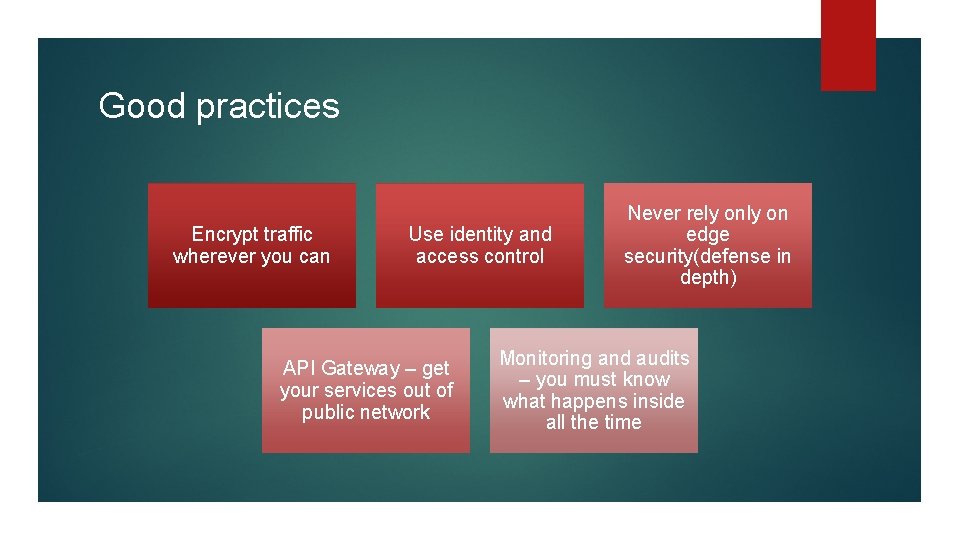
Good practices Encrypt traffic wherever you can Use identity and access control API Gateway – get your services out of public network Never rely on edge security(defense in depth) Monitoring and audits – you must know what happens inside all the time
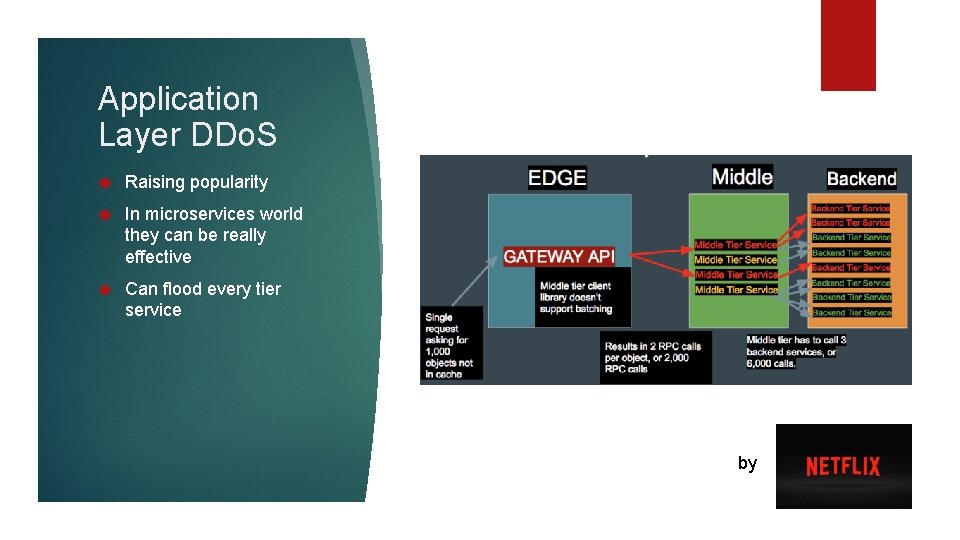
Application Layer DDo. S Raising popularity In microservices world they can be really effective Can flood every tier service by
Summary Must deal with increased complexity, but with more possibilities of securing application Easier to lose control over microservices than monoliths if you don’t step in fast enough It’s imperative for everyone(from development to management) to have awareness about risks and security
Literature www. martinfowler. com www. microservices. io “Security in A Microservice World” - Jack Mannino (https: //www. owasp. org/images/2/20/Microservice_Security. pdf) “Mastering Chaos – A Netflix guide to Microservices” (https: //www. youtube. com/watch? v=CZ 3 w. Iuvm. He. M) “ 10 Tips for failing badly at Microservices” – David Shmitz (https: //www. youtube. com/watch? v=X 0 tjzi. AQf. NQ) “Microservices Security: All The Questions You Should Be Asking” (http: //www. grahamlea. com/2015/07/microservices-security-questions/) “Tips for Securing a Modernized Service-Based Architecture” (https: //www. upwork. com/hiring/development/microservices-security/) Nice to watch: https: //www. youtube. com/watch? v=gfh-VCTw. Mw 8