
MS 1 3 Explaining the Periodic Table Chemistry
MS 1. 3 Explaining the Periodic Table Chemistry 30 Goller
• Electron configuration can help explain the structure of the periodic table and periodic trends. • For example: • Why is the atomic radius of potassium larger than that of sodium? • Why is the first ionization energy higher in beryllium than in lithium?

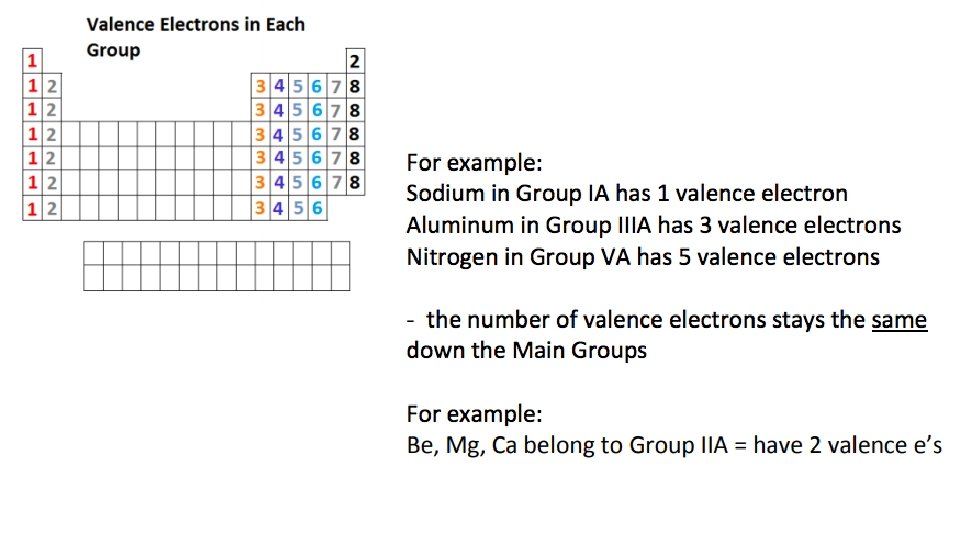
Valence Electrons These are the electrons in the outermost shell (now what we call the outermost principal quantum level) of an atom. v are the most exposed of all electrons = the electrons gained or lost in a chemical reaction v show a repeating pattern or ‘periodic trend’ in the Periodic Table • valence electrons increase across a period • for the main groups the number of valence electrons a particular atom has is the same as it Group number using the Classical Numbering System
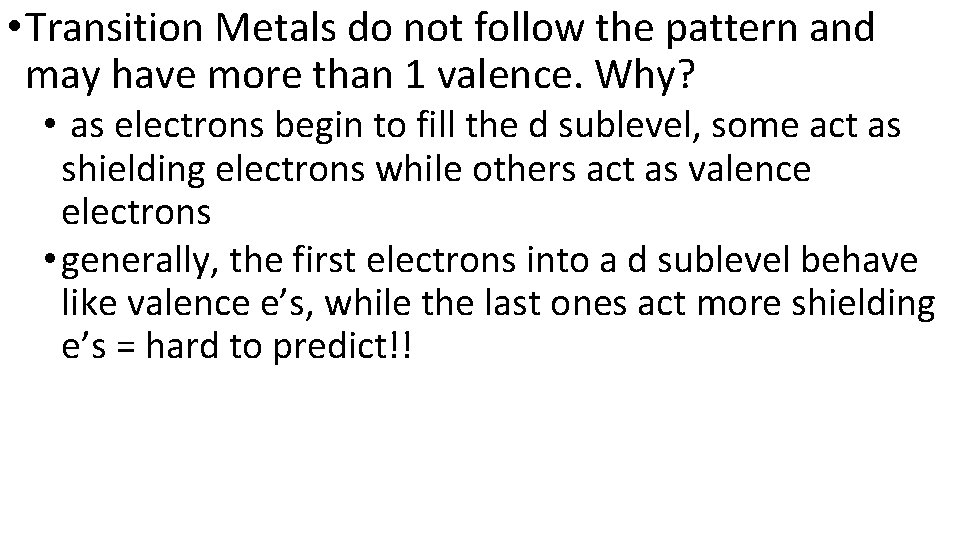
• Transition Metals do not follow the pattern and may have more than 1 valence. Why? • as electrons begin to fill the d sublevel, some act as shielding electrons while others act as valence electrons • generally, the first electrons into a d sublevel behave like valence e’s, while the last ones act more shielding e’s = hard to predict!!
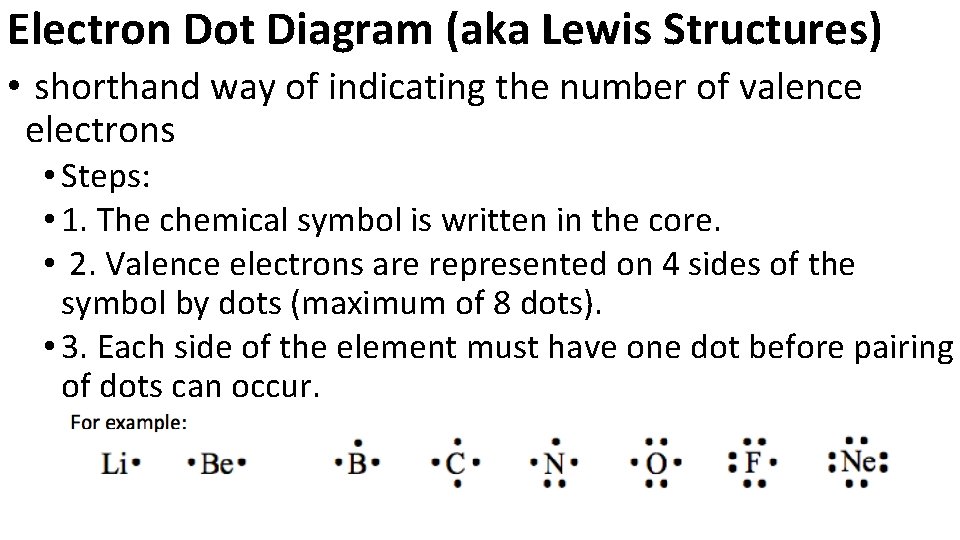
Electron Dot Diagram (aka Lewis Structures) • shorthand way of indicating the number of valence electrons • Steps: • 1. The chemical symbol is written in the core. • 2. Valence electrons are represented on 4 sides of the symbol by dots (maximum of 8 dots). • 3. Each side of the element must have one dot before pairing of dots can occur.
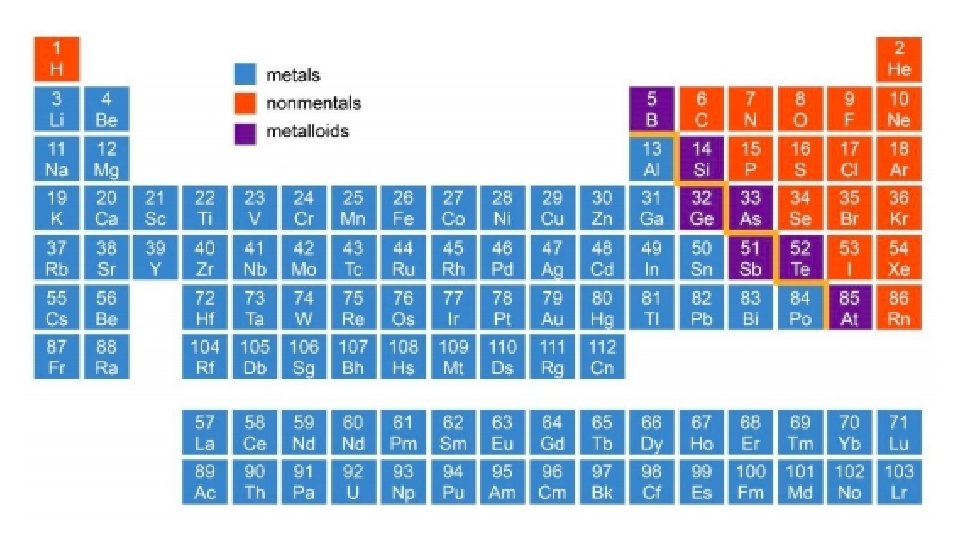
Periodic Trends and Patterns • Elements with the same valence electron configuration show similar chemical behaviour and form the basis for the periodic trends. 1. Metallic Characteristics • shiny, malleable, ductile, conduct electricity and heat • decrease across the period but increase down the group • These characteristics are related to their ability to lose electrons willingly.
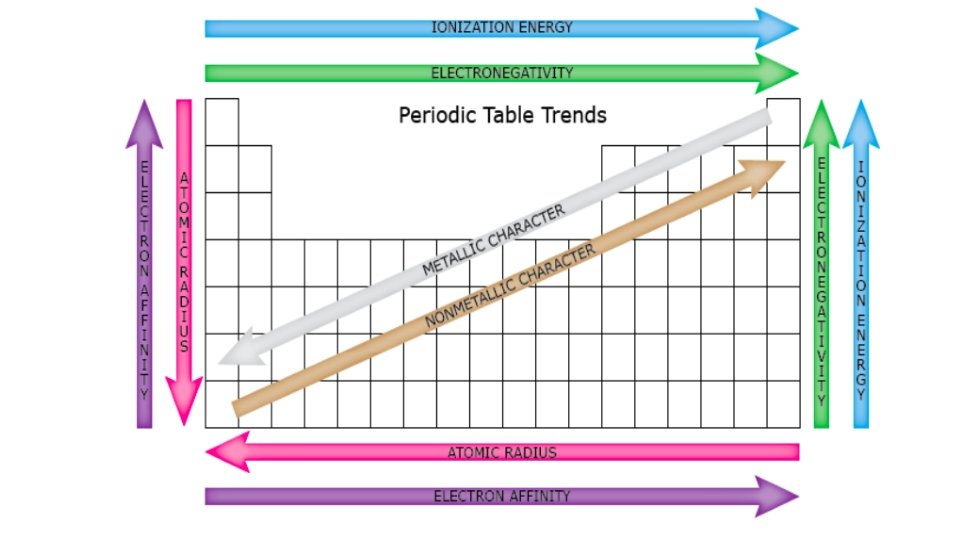
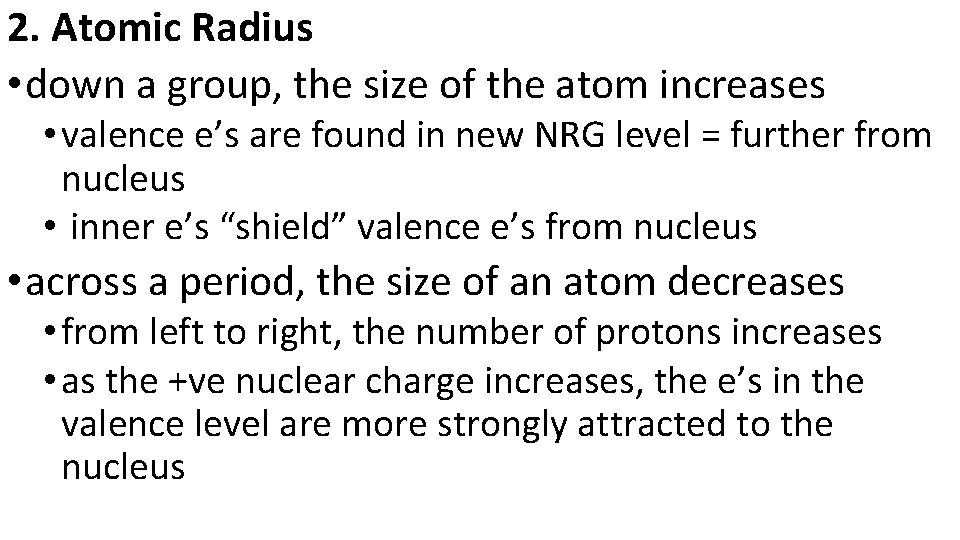
2. Atomic Radius • down a group, the size of the atom increases • valence e’s are found in new NRG level = further from nucleus • inner e’s “shield” valence e’s from nucleus • across a period, the size of an atom decreases • from left to right, the number of protons increases • as the +ve nuclear charge increases, the e’s in the valence level are more strongly attracted to the nucleus
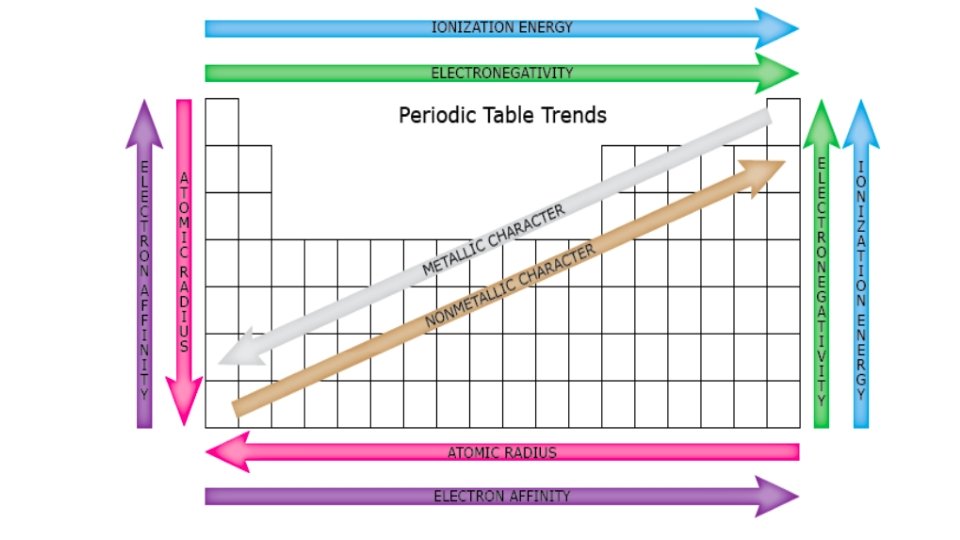
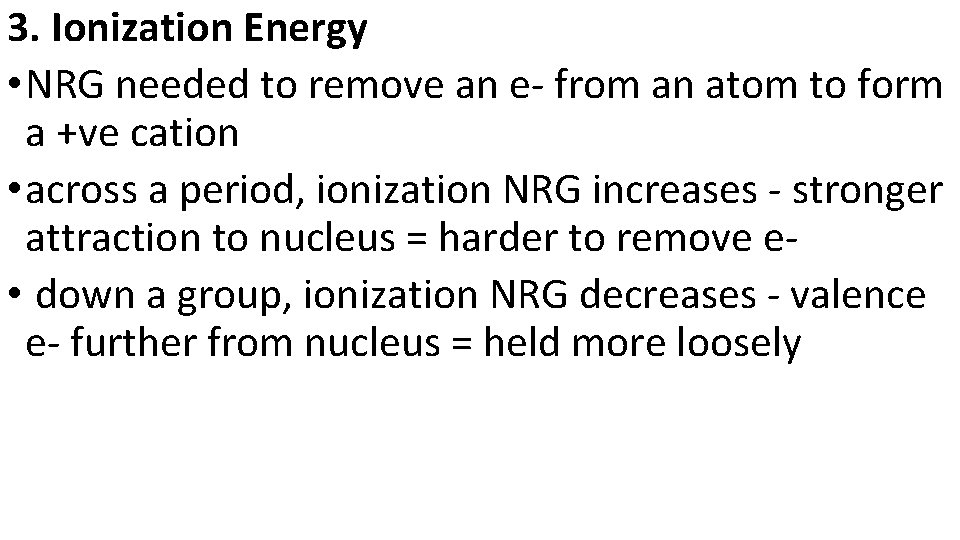
3. Ionization Energy • NRG needed to remove an e- from an atom to form a +ve cation • across a period, ionization NRG increases - stronger attraction to nucleus = harder to remove e • down a group, ionization NRG decreases - valence e- further from nucleus = held more loosely
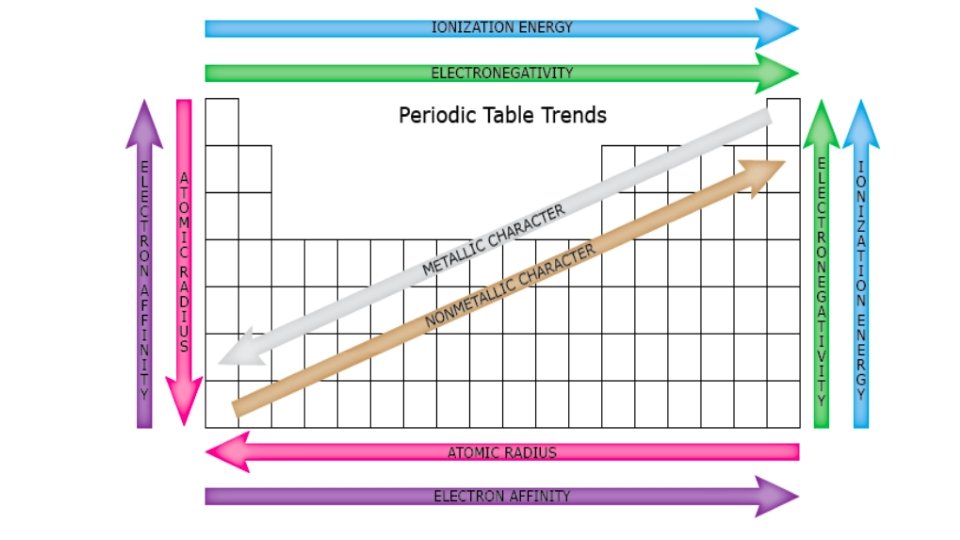
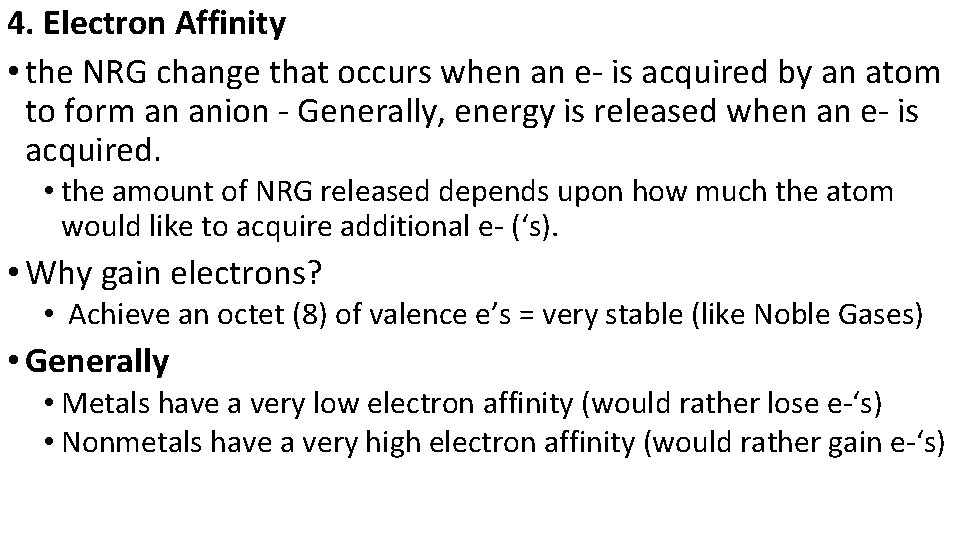
4. Electron Affinity • the NRG change that occurs when an e- is acquired by an atom to form an anion - Generally, energy is released when an e- is acquired. • the amount of NRG released depends upon how much the atom would like to acquire additional e- (‘s). • Why gain electrons? • Achieve an octet (8) of valence e’s = very stable (like Noble Gases) • Generally • Metals have a very low electron affinity (would rather lose e-‘s) • Nonmetals have a very high electron affinity (would rather gain e-‘s)
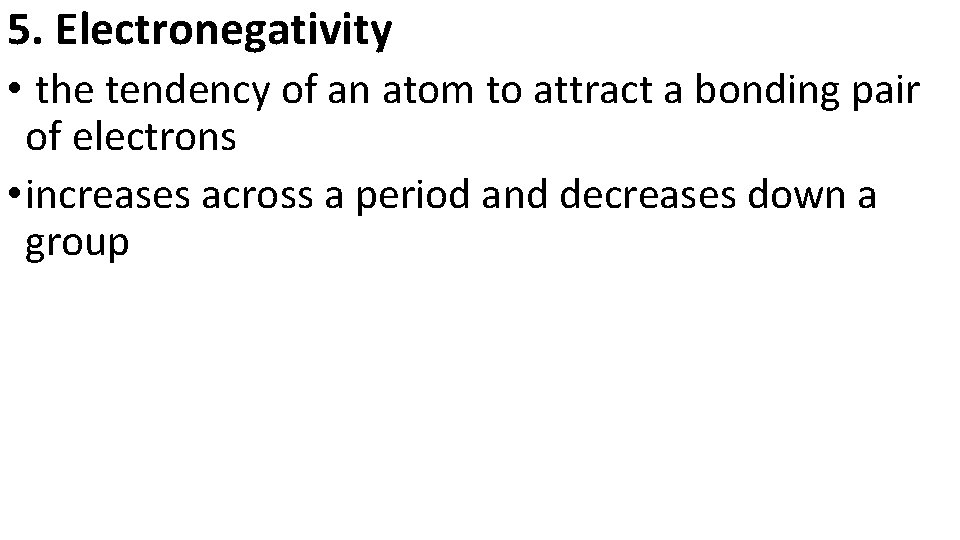
5. Electronegativity • the tendency of an atom to attract a bonding pair of electrons • increases across a period and decreases down a group
- Slides: 16