
MRSA What is It MRSA Methicillinresistant staphaureus MRSA





- Slides: 24
MRSA What is It?
MRSA Ø Methicillin-resistant staphaureus (MRSA) Ø Caused more than 94, 000 life-threatening infections and nearly 19, 000 deaths in 2005 Ø Most associated with healthcare settings Ø Most frequent among people with weakened immune systems
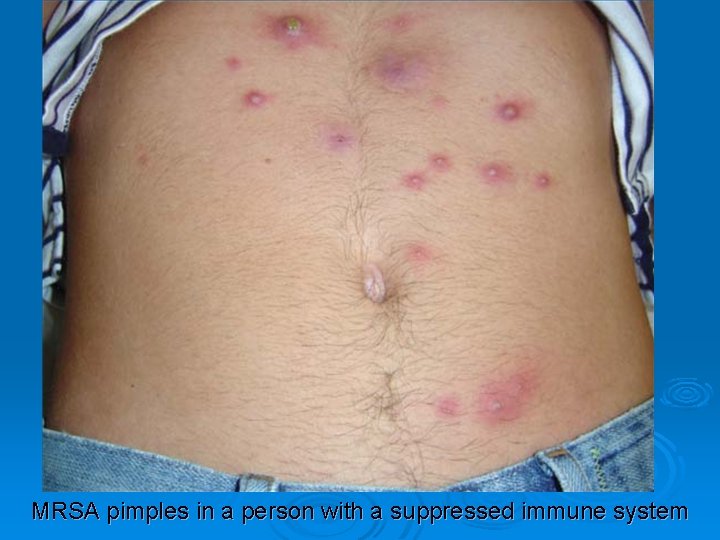
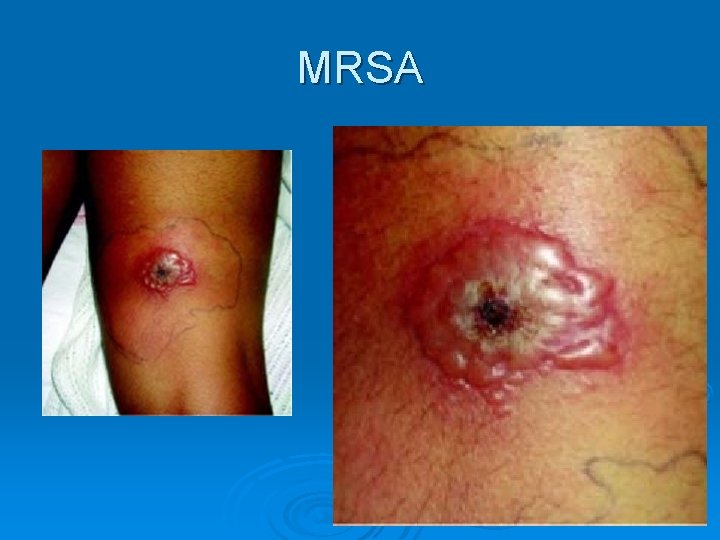
MRSA (Methicillin-Resistant Staph Aureus) Ø Staph” infections have been around since the beginning of history. l l Ø “Because so many antibiotics have been used in recent years, the bacteria are now starting to become resistant, and this created MRSA infections have been a problem in hospitals for several years Has surfaced in community l l Such infections are generally mild Pimples or boils • Red, Painful, swollen, drain pus • Typically single not multiple l Ø Occurs in otherwise healthy people Staph is common on most people l Can commonly live on the skin or in their nose
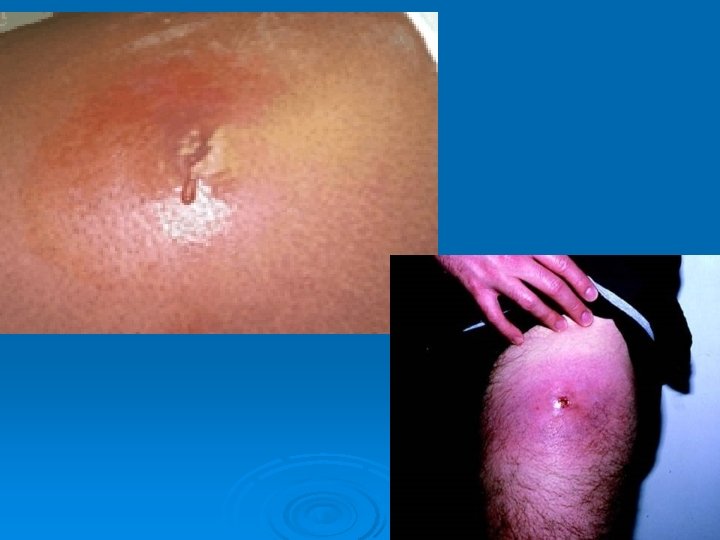
MRSA pimples in a person with a suppressed immune system
MRSA
MRSA Ø Clusters among athletes, military recruits, children, prisoners Ø May live on surfaces contaminated with body fluids containing MRSA Ø Treated with antibiotic and/or having your doctor drain the infection
Primary Means of Transmission Skin-to-skin contact Ø Crowded conditions Ø Poor hygiene Ø Sharing of Personal Items Ø
Reduce the Risks of Disease Transmission through…. PREVENTION
The Prevention Program Includes… Ø Education on Infection Control Ø Encouraging good hygiene practices Ø Eat a healthy diet Ø Proper cleaning & disinfection of athletic equipment Ø Proper handling of blood and OPIM
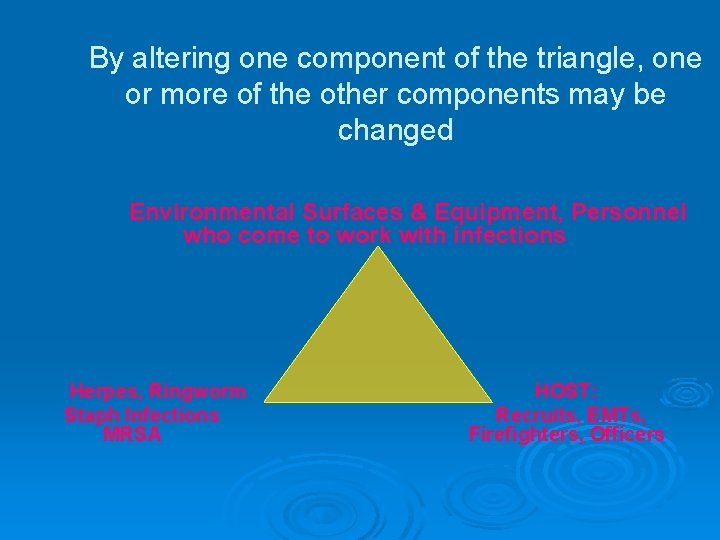
By altering one component of the triangle, one or more of the other components may be changed Environmental Surfaces & Equipment, Personnel who come to work with infections Herpes, Ringworm Staph Infections MRSA HOST: Recruits, EMTs, Firefighters, Officers
Boost the Host
Host (Personnel) Ø Healthy Habits l l l Diet rich in green, yellow, and orange vegetables can bolster natural immunity. Doctor or nutritionist may recommend vitamins or mineral supplements to compensate for specific dietary deficiencies. Drinking 8 to 10 glasses of water a day can help flush disease causing organisms from the body.
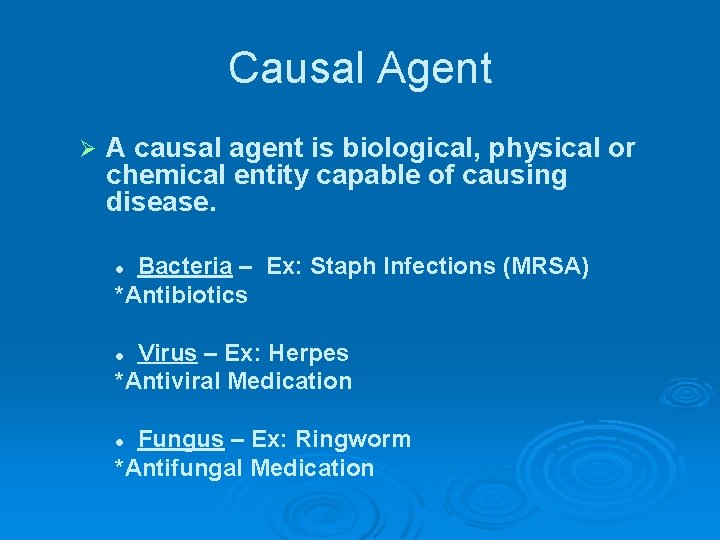
Causal Agent Ø A causal agent is biological, physical or chemical entity capable of causing disease. Bacteria – Ex: Staph Infections (MRSA) *Antibiotics l Virus – Ex: Herpes *Antiviral Medication l Fungus – Ex: Ringworm *Antifungal Medication l
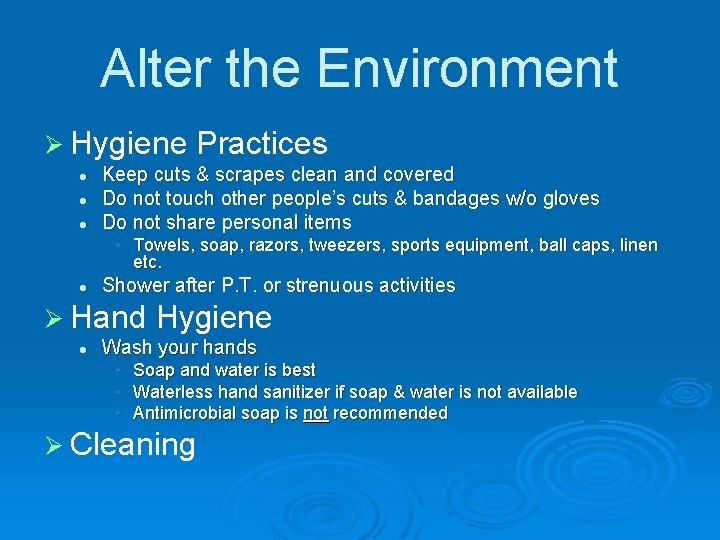
Alter the Environment Ø Hygiene l l l Practices Keep cuts & scrapes clean and covered Do not touch other people’s cuts & bandages w/o gloves Do not share personal items • Towels, soap, razors, tweezers, sports equipment, ball caps, linen etc. l Shower after P. T. or strenuous activities Ø Hand l Hygiene Wash your hands • • • Soap and water is best Waterless hand sanitizer if soap & water is not available Antimicrobial soap is not recommended Ø Cleaning
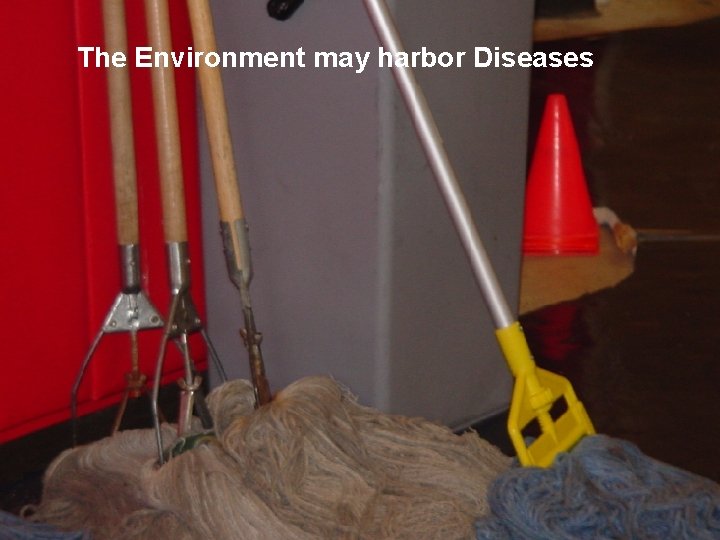
The Environment may harbor Diseases
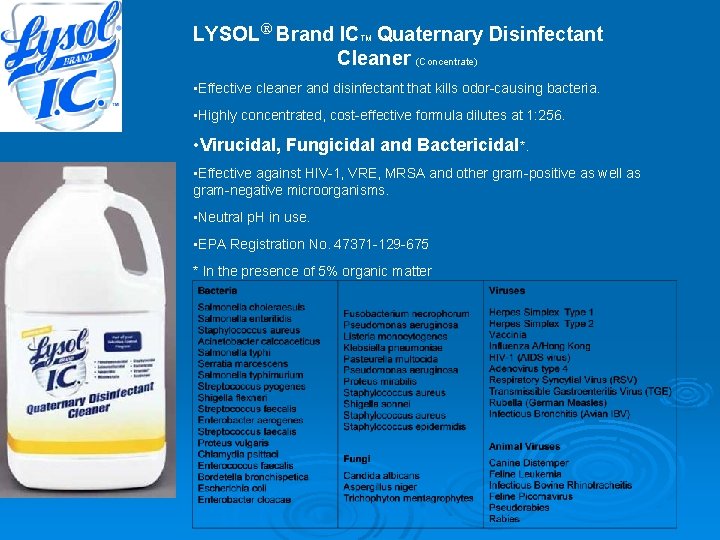
Follow Instructions for Chemical Use Ø All Chemical Germicides and Bleach Solutions (1: 100) Ø MIX Appropriately Ø USE Appropriately Ø READ and FOLLOW LABELS
LYSOL Brand IC Quaternary Disinfectant Cleaner (Concentrate) TM • Effective cleaner and disinfectant that kills odor-causing bacteria. • Highly concentrated, cost-effective formula dilutes at 1: 256. • Virucidal, Fungicidal and Bactericidal*. • Effective against HIV-1, VRE, MRSA and other gram-positive as well as gram-negative microorganisms. • Neutral p. H in use. • EPA Registration No. 47371 -129 -675 * In the presence of 5% organic matter
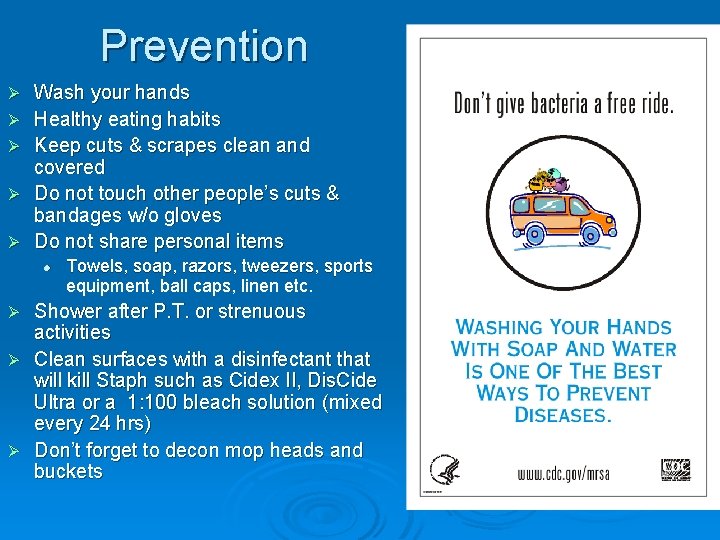
Prevention Ø Ø Ø Wash your hands Healthy eating habits Keep cuts & scrapes clean and covered Do not touch other people’s cuts & bandages w/o gloves Do not share personal items l Towels, soap, razors, tweezers, sports equipment, ball caps, linen etc. Shower after P. T. or strenuous activities Ø Clean surfaces with a disinfectant that will kill Staph such as Cidex II, Dis. Cide Ultra or a 1: 100 bleach solution (mixed every 24 hrs) Ø Don’t forget to decon mop heads and buckets Ø
What to Do if You Have a Boil Ø If you get a boil have it evaluated by your PCP l The only way to tell is for a doctor or nurse to collect some of the drainage (pus) and send it to the lab for “culture”. The lab grows the bacteria on a culture plate so that they can be identified. This process usually takes 2 to 4 days. The lab can also test to see which antibiotics will work best to treat the infection. If you are diagnosed with MRSA contact the designated infection control officer Ø Work Restrictions may be implemented for an active abscess. Ø