
MRSA reservoirs in Poland Dorota abicka Joanna Empel
MRSA reservoirs in Poland Dorota Żabicka, Joanna Empel National Medicines Institute, Warsaw, Poland
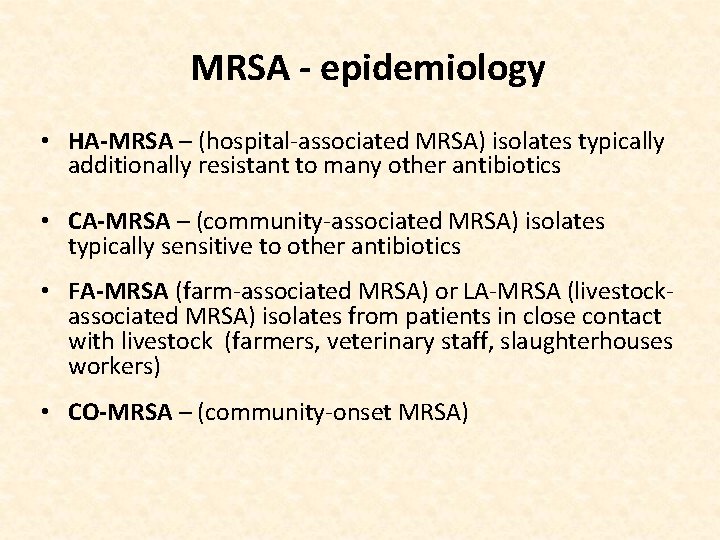
MRSA - epidemiology • HA-MRSA – (hospital-associated MRSA) isolates typically additionally resistant to many other antibiotics • CA-MRSA – (community-associated MRSA) isolates typically sensitive to other antibiotics • FA-MRSA (farm-associated MRSA) or LA-MRSA (livestockassociated MRSA) isolates from patients in close contact with livestock (farmers, veterinary staff, slaughterhouses workers) • CO-MRSA – (community-onset MRSA)
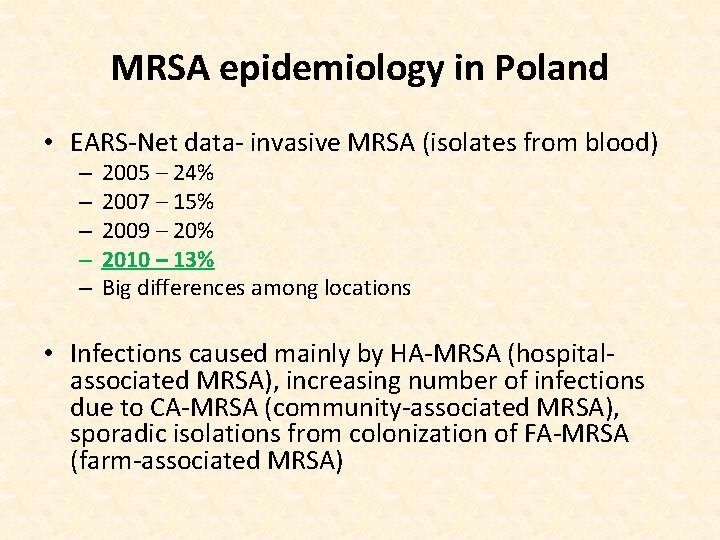
MRSA epidemiology in Poland • EARS-Net data- invasive MRSA (isolates from blood) – – – 2005 – 24% 2007 – 15% 2009 – 20% 2010 – 13% Big differences among locations • Infections caused mainly by HA-MRSA (hospitalassociated MRSA), increasing number of infections due to CA-MRSA (community-associated MRSA), sporadic isolations from colonization of FA-MRSA (farm-associated MRSA)
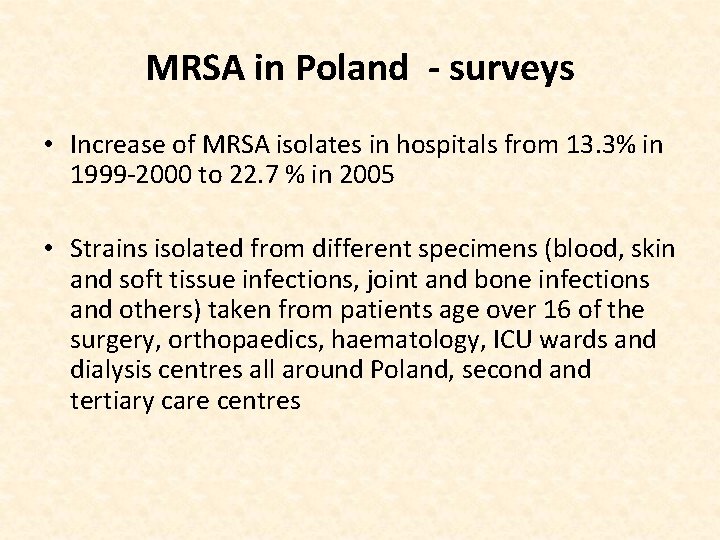
MRSA in Poland - surveys • Increase of MRSA isolates in hospitals from 13. 3% in 1999 -2000 to 22. 7 % in 2005 • Strains isolated from different specimens (blood, skin and soft tissue infections, joint and bone infections and others) taken from patients age over 16 of the surgery, orthopaedics, haematology, ICU wards and dialysis centres all around Poland, second and tertiary care centres
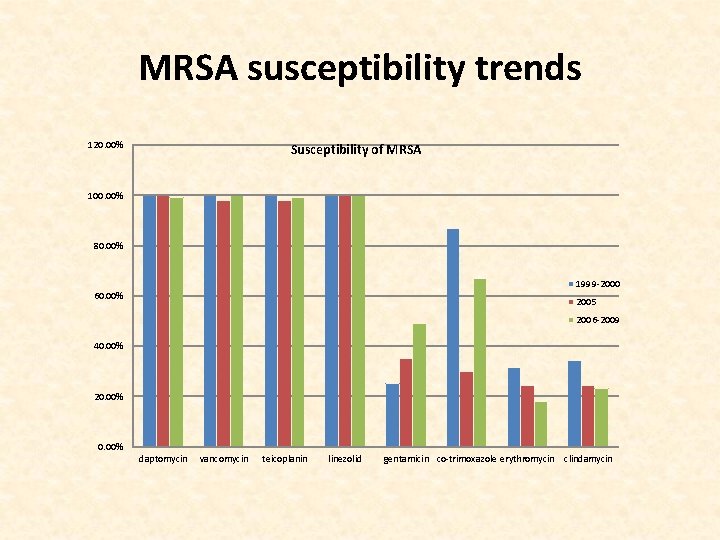
MRSA susceptibility trends 120. 00% Susceptibility of MRSA 100. 00% 80. 00% 1999 -2000 60. 00% 2005 2006 -2009 40. 00% 20. 00% daptomycin vancomycin teicoplanin linezolid gentamicin co-trimoxazole erythromycin clindamycin
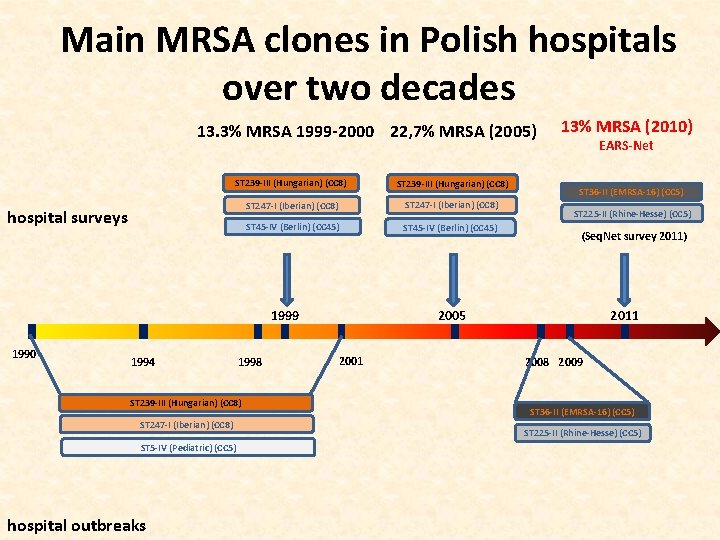
Main MRSA clones in Polish hospitals over two decades 13. 3% MRSA 1999 -2000 22, 7% MRSA (2005) ST 239 -III (Hungarian) (CC 8) ST 247 -I (Iberian) (CC 8) ST 45 -IV (Berlin) (CC 45) hospital surveys 1999 1990 1994 1998 ST 239 -III (Hungarian) (CC 8) ST 247 -I (Iberian) (CC 8) ST 5 -IV (Pediatric) (CC 5) hospital outbreaks 13% MRSA (2010) EARS-Net ST 36 -II (EMRSA-16) (CC 5) ST 225 -II (Rhine-Hesse) (CC 5) (Seq. Net survey 2011) 2005 2001 2011 2008 2009 ST 36 -II (EMRSA-16) (CC 5) ST 225 -II (Rhine-Hesse) (CC 5)
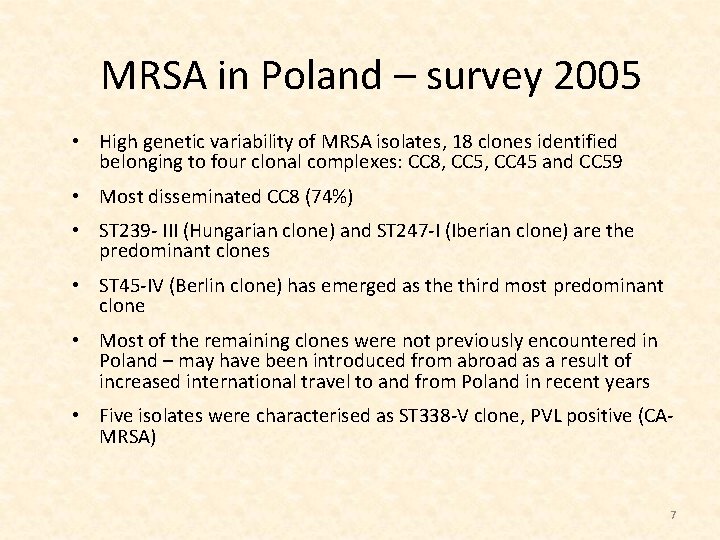
MRSA in Poland – survey 2005 • High genetic variability of MRSA isolates, 18 clones identified belonging to four clonal complexes: CC 8, CC 5, CC 45 and CC 59 • Most disseminated CC 8 (74%) • ST 239 - III (Hungarian clone) and ST 247 -I (Iberian clone) are the predominant clones • ST 45 -IV (Berlin clone) has emerged as the third most predominant clone • Most of the remaining clones were not previously encountered in Poland – may have been introduced from abroad as a result of increased international travel to and from Poland in recent years • Five isolates were characterised as ST 338 -V clone, PVL positive (CAMRSA) 7
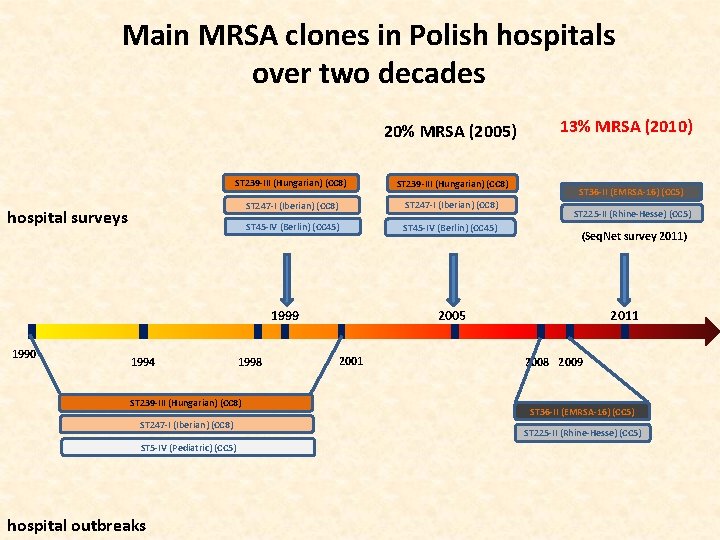
Main MRSA clones in Polish hospitals over two decades 20% MRSA (2005) ST 239 -III (Hungarian) (CC 8) ST 247 -I (Iberian) (CC 8) ST 45 -IV (Berlin) (CC 45) hospital surveys 1999 1990 1994 1998 ST 239 -III (Hungarian) (CC 8) ST 247 -I (Iberian) (CC 8) ST 5 -IV (Pediatric) (CC 5) hospital outbreaks 13% MRSA (2010) ST 36 -II (EMRSA-16) (CC 5) ST 225 -II (Rhine-Hesse) (CC 5) (Seq. Net survey 2011) 2005 2001 2011 2008 2009 ST 36 -II (EMRSA-16) (CC 5) ST 225 -II (Rhine-Hesse) (CC 5)
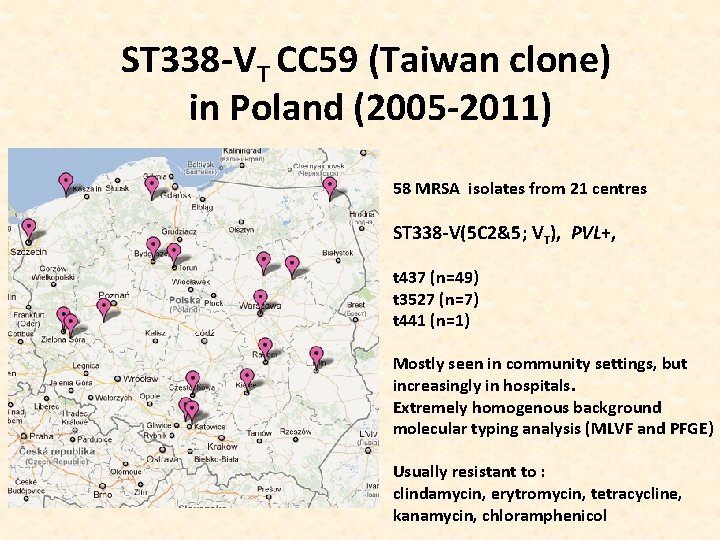
ST 338 -VT CC 59 (Taiwan clone) in Poland (2005 -2011) 58 MRSA isolates from 21 centres ST 338 -V(5 C 2&5; VT), PVL+, t 437 (n=49) t 3527 (n=7) t 441 (n=1) Mostly seen in community settings, but increasingly in hospitals. Extremely homogenous background molecular typing analysis (MLVF and PFGE) Usually resistant to : clindamycin, erytromycin, tetracycline, kanamycin, chloramphenicol
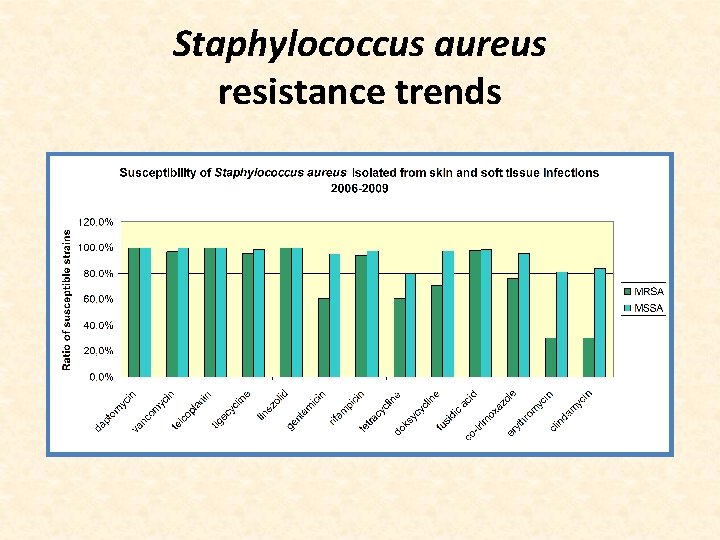
Staphylococcus aureus resistance trends
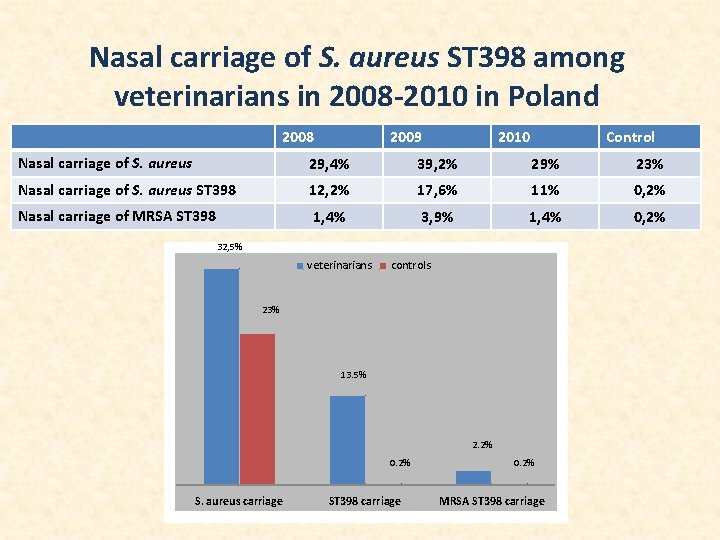
Nasal carriage of S. aureus ST 398 among veterinarians in 2008 -2010 in Poland 2008 2009 2010 Control Nasal carriage of S. aureus 29, 4% 39, 2% 29% 23% Nasal carriage of S. aureus ST 398 12, 2% 17, 6% 11% 0, 2% Nasal carriage of MRSA ST 398 1, 4% 3, 9% 1, 4% 0, 2% 32, 5% veterinarians controls 23% 13. 5% 2. 2% 0. 2% S. aureus carriage ST 398 carriage 0. 2% MRSA ST 398 carriage
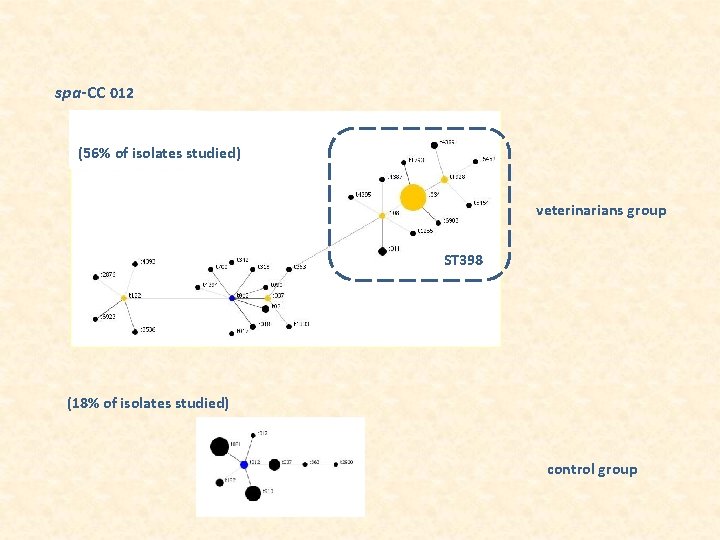
spa-CC 012 (56% of isolates studied) veterinarians group ST 398 (18% of isolates studied) control group
• • Waleria Hryniewicz Katarzyna Bojarska Aleksandra Kozińska Natalia Marszałek Ewa Młodzińska Monika Orczykowska - Kotyna Aneta Wysmolińska
- Slides: 13