
Mrs Green Bell Work What does your immune
Mrs. Green
Bell Work What does your immune system do for your body? Why is it so important for all the systems in the Human Body to work together & work properly? Name 3 system we covered during the unit on the Human Body?
Immune System To be immune means to be protected. The body system that helps fight off sickness is called the immune system. The immune system is made up of a network of cells, tissues, and organs that work together to protect the body. Immune System Movie • • • Identify the invaders Call for help Tag the invaders Destroy the invaders Remember the invaders Quiz Matching Activity Review the Lymphatic System

Pathogen A pathogen is an organism, virus, or particle that can make you sick. Fungal Meningitis Can you name some pathogens? Flu virus Trichinella Parasite Bacteria blood infection
External Defenses What are your external defenses against pathogens? • Tears and saliva • tears and saliva both contain enzymes that destroy invaders. • Skin provides both a physical and a chemical barrier against the outside world. • Mucus membranes produce mucus in the nose. Structures called cilia line the body's airways and constantly wave foreign particles and mucus away from the lungs to where they can be swallowed safely.
Imagine! Think-Pair-Share If you were a pathogen, what external defenses of the host’s body would you have to get past? Choose one external defense and describe your journey into the body.
Internal Defenses Inflammation • Blood rushes to the cut where the pathogen entered. Platelets seal the open wound to prevent more invaders from entering. Fever • The body increases its internal temperature which slows down the growth of bacteria and some other pathogens. White Blood cells • Specialized cells made in the bone marrow that fight disease are produced to fight diseases.
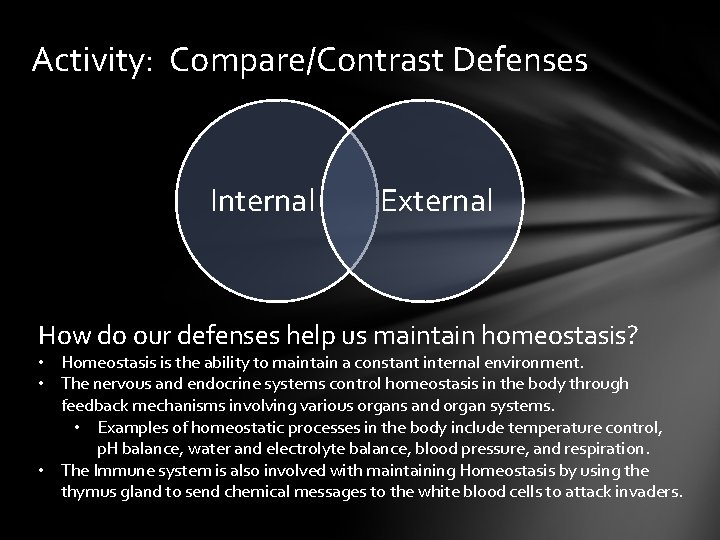
Activity: Compare/Contrast Defenses Internal External How do our defenses help us maintain homeostasis? • Homeostasis is the ability to maintain a constant internal environment. • The nervous and endocrine systems control homeostasis in the body through feedback mechanisms involving various organs and organ systems. • Examples of homeostatic processes in the body include temperature control, p. H balance, water and electrolyte balance, blood pressure, and respiration. • The Immune system is also involved with maintaining Homeostasis by using the thymus gland to send chemical messages to the white blood cells to attack invaders.
Do you remember? (Bell Work) 1. Name 4 types of pathogens. 2. Where are white blood cells produced? 3. How does having a Fever help your body defend against pathogens?
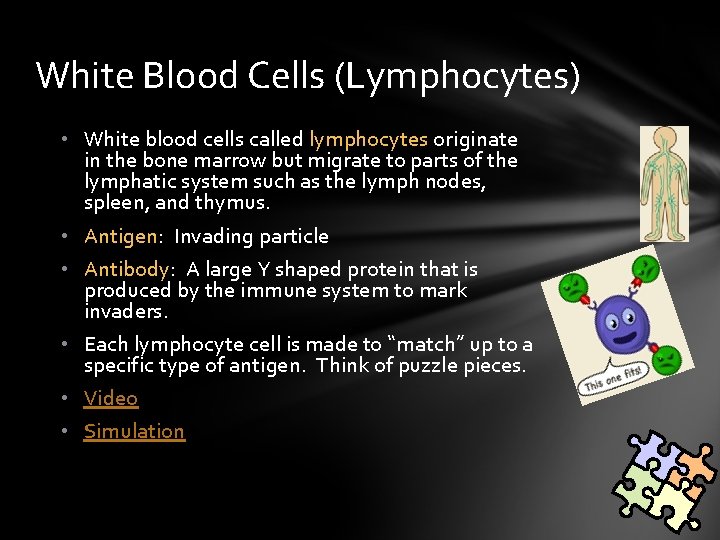
White Blood Cells (Lymphocytes) • White blood cells called lymphocytes originate in the bone marrow but migrate to parts of the lymphatic system such as the lymph nodes, spleen, and thymus. • Antigen: Invading particle • Antibody: A large Y shaped protein that is produced by the immune system to mark invaders. • Each lymphocyte cell is made to “match” up to a specific type of antigen. Think of puzzle pieces. • Video • Simulation
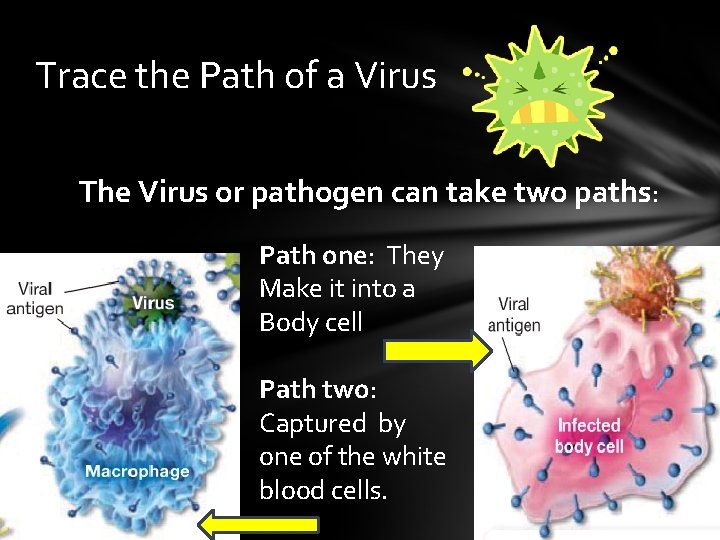
Trace the Path of a Virus The Virus or pathogen can take two paths: Path one: They Make it into a Body cell Path two: Captured by one of the white blood cells.
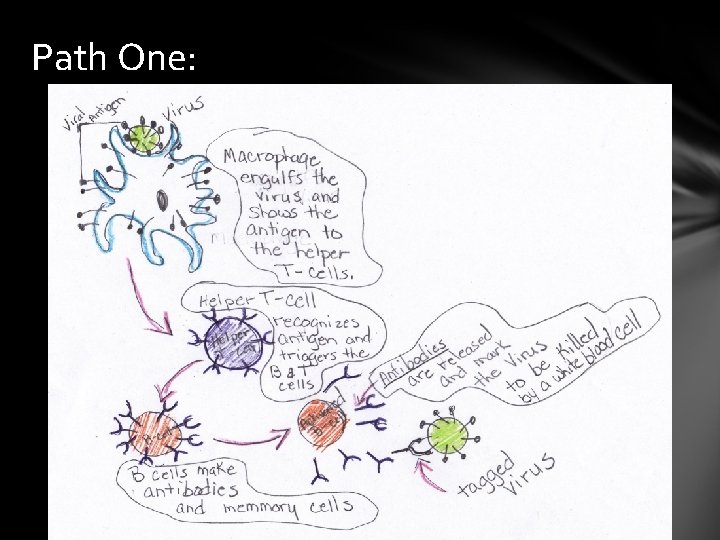
Path One:
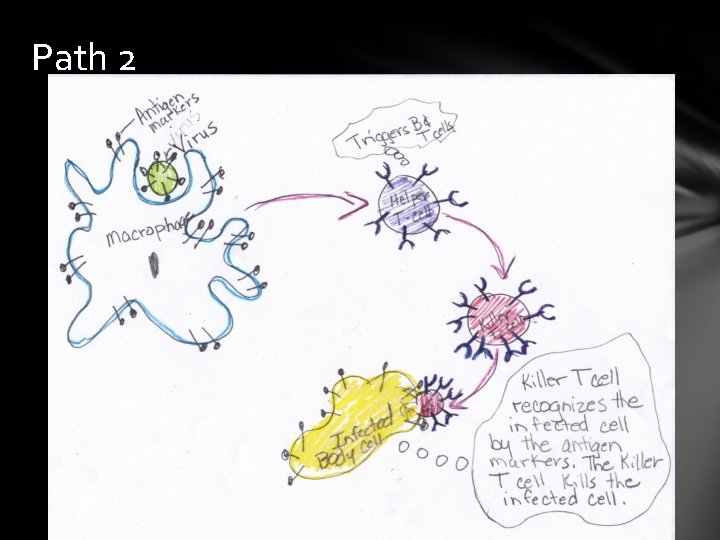
Path 2
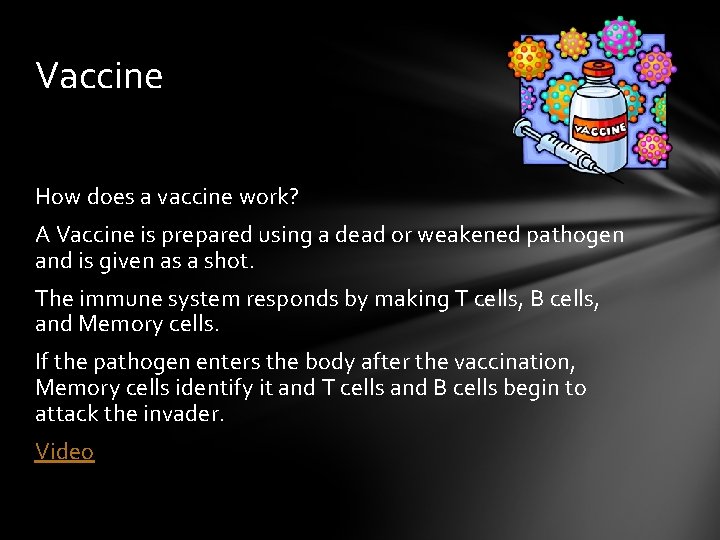
Vaccine How does a vaccine work? A Vaccine is prepared using a dead or weakened pathogen and is given as a shot. The immune system responds by making T cells, B cells, and Memory cells. If the pathogen enters the body after the vaccination, Memory cells identify it and T cells and B cells begin to attack the invader. Video
- Slides: 14