
Mrs Fahey Equine Science Wheels began to appear

Mrs. Fahey Equine Science
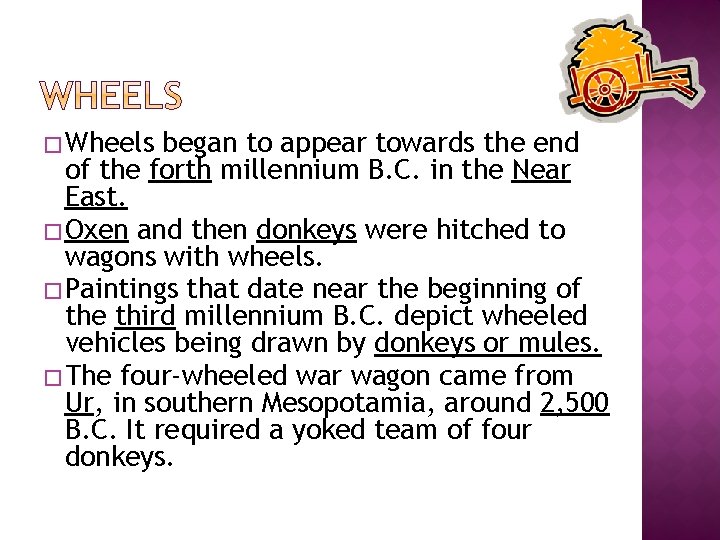
� Wheels began to appear towards the end of the forth millennium B. C. in the Near East. � Oxen and then donkeys were hitched to wagons with wheels. � Paintings that date near the beginning of the third millennium B. C. depict wheeled vehicles being drawn by donkeys or mules. � The four-wheeled war wagon came from Ur, in southern Mesopotamia, around 2, 500 B. C. It required a yoked team of four donkeys.
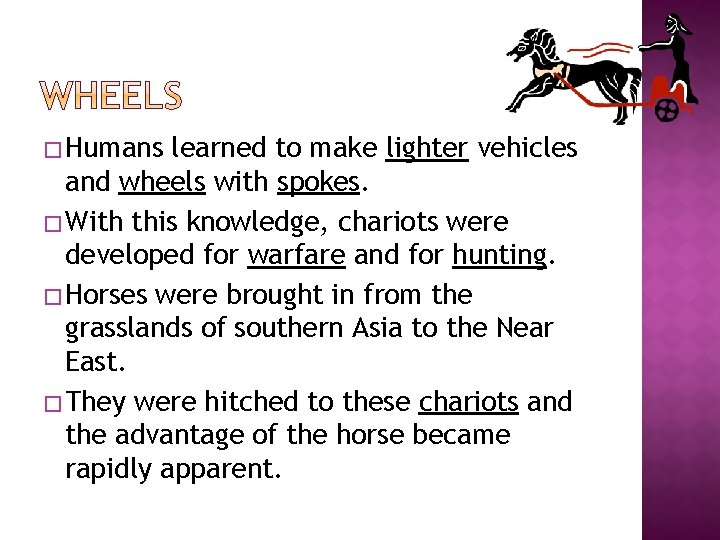
� Humans learned to make lighter vehicles and wheels with spokes. � With this knowledge, chariots were developed for warfare and for hunting. � Horses were brought in from the grasslands of southern Asia to the Near East. � They were hitched to these chariots and the advantage of the horse became rapidly apparent.
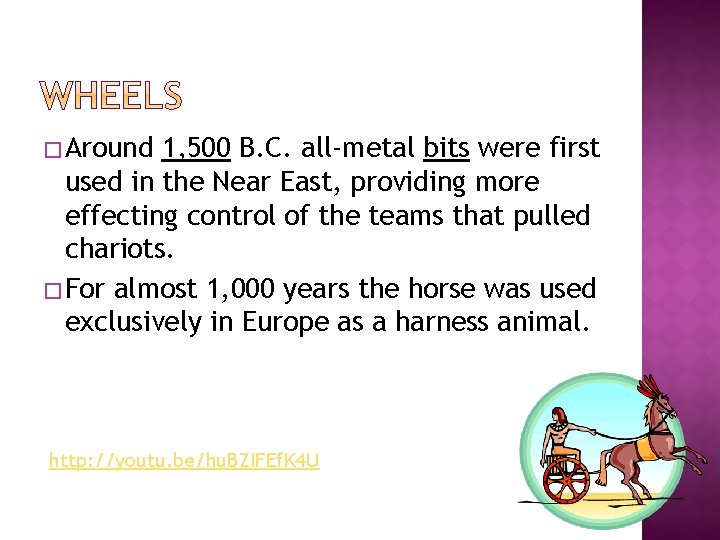
� Around 1, 500 B. C. all-metal bits were first used in the Near East, providing more effecting control of the teams that pulled chariots. � For almost 1, 000 years the horse was used exclusively in Europe as a harness animal. http: //youtu. be/hu. BZIFEf. K 4 U

� The Roman Empire lasted from about 27 B. C. to 476 A. D. � Warfare by the Roman army moved riding of the horse from a casual pursuit to the development of trained riders and horses. � The Roman army was essentially an infantry. � Enemies of the Romans such as the Persians to the East, Germanic tribes to the North and West, and the eventually nomadic tribes used horses as well.

� Romans converted to a predominantly cavalry-led force. � A cavalry is an army component mounted on horseback. � In current times the "cavalry" component of an army moves in motor vehicles or helicopters and is assigned to combat missions requiring great mobility.
� With the fall of the Roman Empire, the Middle Ages began, lasting about 700 years. � The early portion of the Middle Ages is called the Dark Ages. The Dark Ages were called such because they were a time of stagnation in learning and progress.
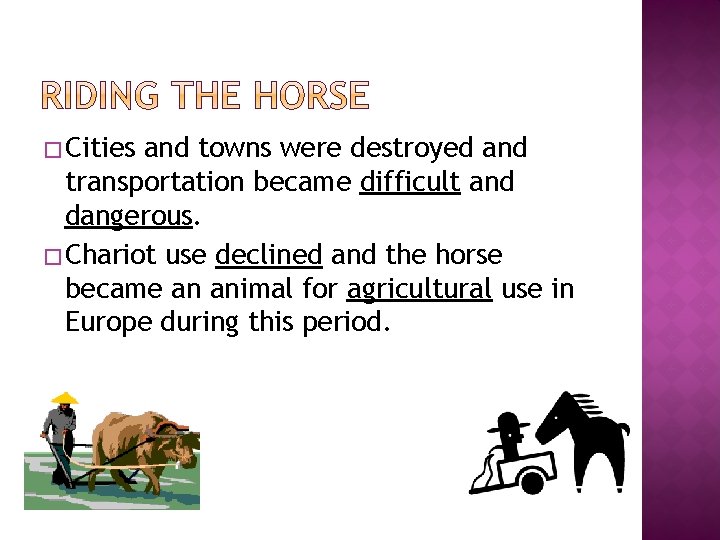
� Cities and towns were destroyed and transportation became difficult and dangerous. � Chariot use declined and the horse became an animal for agricultural use in Europe during this period.

�The Renaissance occurred between 1450 and 1650. It was a transition from medieval to modern in Europe. �During this time people had a renewed interest in art, literature and science. Renewed interest in the horse increased too.
� The anatomy of humans, horses and other animals became subject to scientific study. Horse training became an art. � Carts and wagons of the Middle Ages were redesigned and refined carriages were developed. The horse assumed a more important role in transportation. http: //youtu. be/Tfbeuh. BBg. Iw

� About 800 B. C. the Scythians were nomadic horsemen with common customs and interests. � Scythians were archers skilled at using a powerful bow from horseback. � The Scythians' nomadic and destructive way of life was made possible by their vast herds of horses. � Scythians were the first known to geld horses. The Scythians left no written record and much of what is known about them comes from the study of burial sites.

� The Chinese began using horse-drawn chariots slightly later than the Europeans. � Horse-drawn war chariots were introduced to China during the Shang Dynasty (about 1, 450 to 1, 050 B. C. ). � Repeated invasions and plunder by the Huns forced the Chinese to develop a cavalry which proved to be a more effective defense against the Huns. � As clashes with the Huns continued, the Chinese refined their riding and began using saddles.
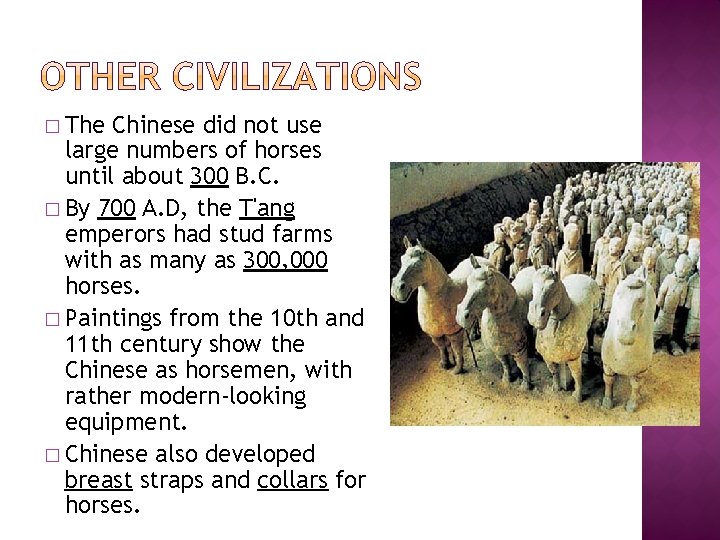
� The Chinese did not use large numbers of horses until about 300 B. C. � By 700 A. D, the T'ang emperors had stud farms with as many as 300, 000 horses. � Paintings from the 10 th and 11 th century show the Chinese as horsemen, with rather modern-looking equipment. � Chinese also developed breast straps and collars for horses.
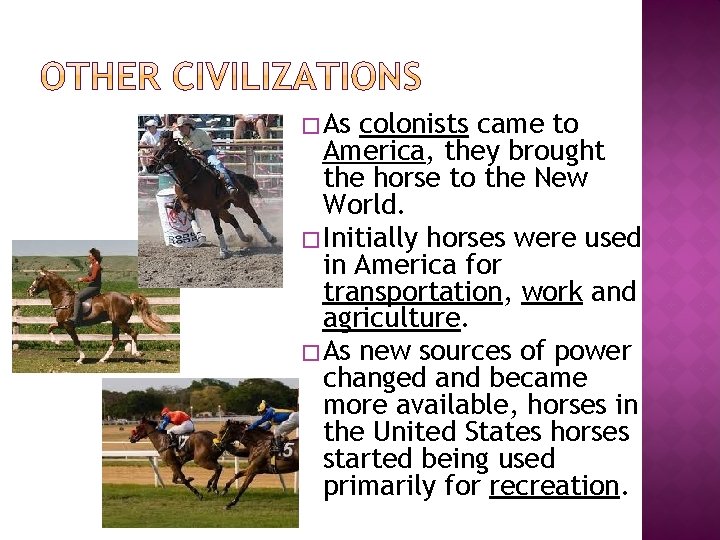
� As colonists came to America, they brought the horse to the New World. � Initially horses were used in America for transportation, work and agriculture. � As new sources of power changed and became more available, horses in the United States horses started being used primarily for recreation.
- Slides: 14