
MRI MRI tips T 1 scanshort numbers 1
MRI
MRI ‘tips’ • T 1 scan-short numbers (1); ‘short black coffee’; fluid is dark • T 2 scan-long numbers-fluid is bright • Medial tib plateau like a golf tee; • lateral like a ‘rifle handle’
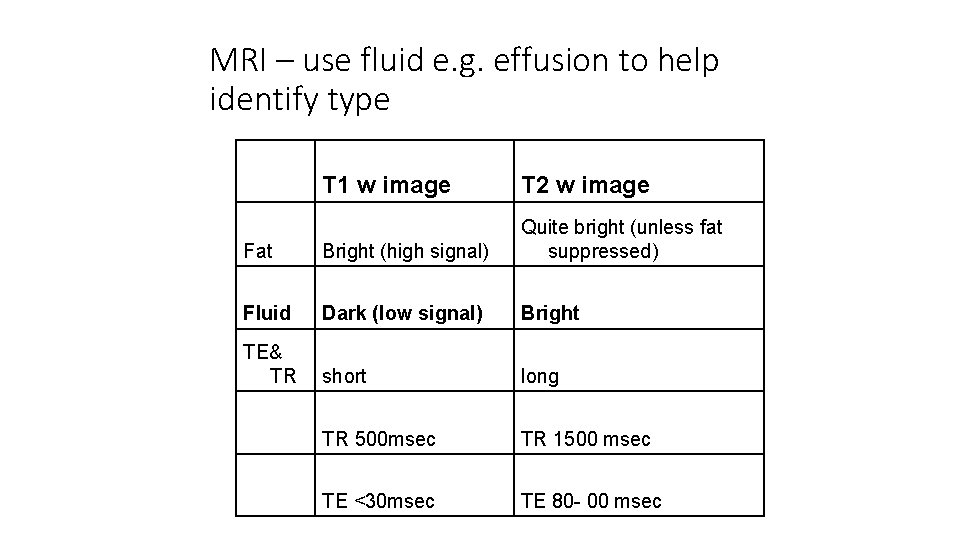
MRI – use fluid e. g. effusion to help identify type T 1 w image T 2 w image Fat Bright (high signal) Quite bright (unless fat suppressed) Fluid Dark (low signal) Bright TE& TR short long TR 500 msec TR 1500 msec TE <30 msec TE 80 - 00 msec
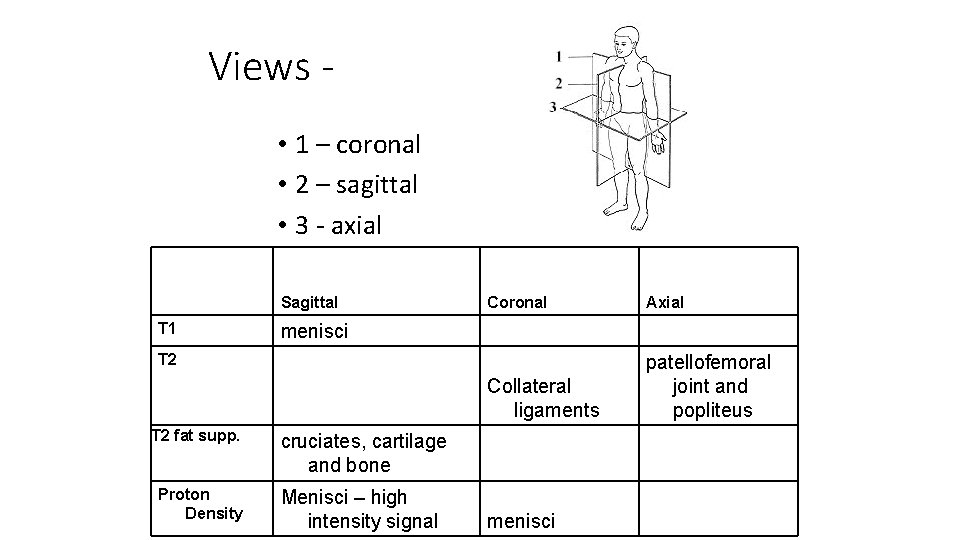
Views - • 1 – coronal • 2 – sagittal • 3 - axial T 1 Sagittal Coronal Axial menisci Collateral ligaments patellofemoral joint and popliteus cruciates, cartilage and bone Menisci – high intensity signal menisci T 2 fat supp. Proton Density
Normal meniscus • C shaped with thicker periphery • With 4 mm slice expect 2 ‘bowtie’ slices through ant & post horns • Medial meniscus – Post horn > ant horn • Lateral meniscus – PH = AH • PH should never be small than AH
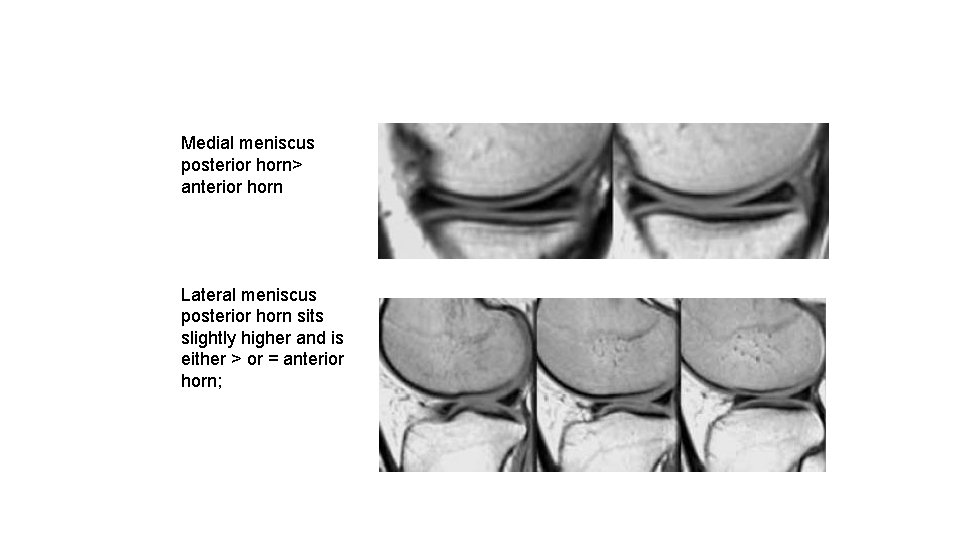
Medial meniscus posterior horn> anterior horn Lateral meniscus posterior horn sits slightly higher and is either > or = anterior horn;
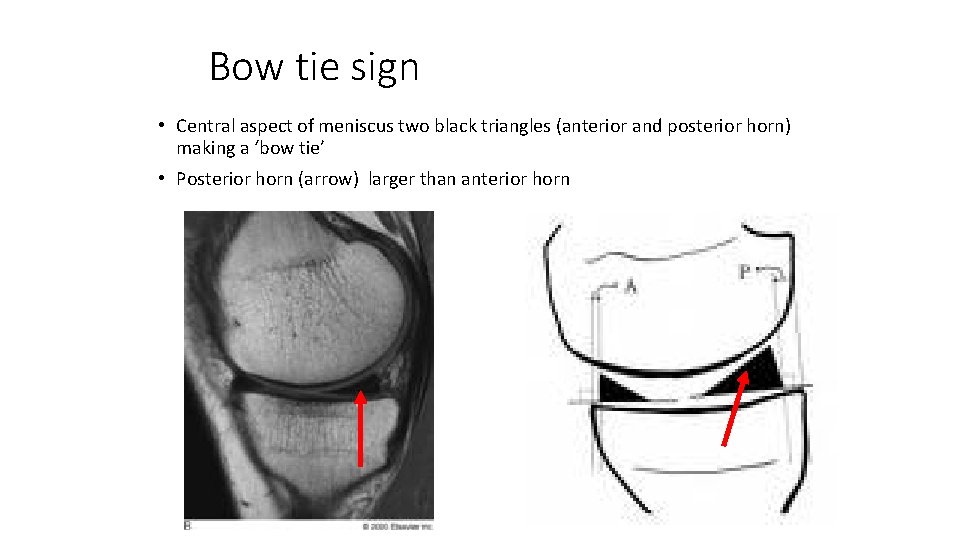
Bow tie sign • Central aspect of meniscus two black triangles (anterior and posterior horn) making a ‘bow tie’ • Posterior horn (arrow) larger than anterior horn

Most common shapes of tears (complex =combination) Longitudinal Horizontal Radial divides into inner and outer Think of pitta bread
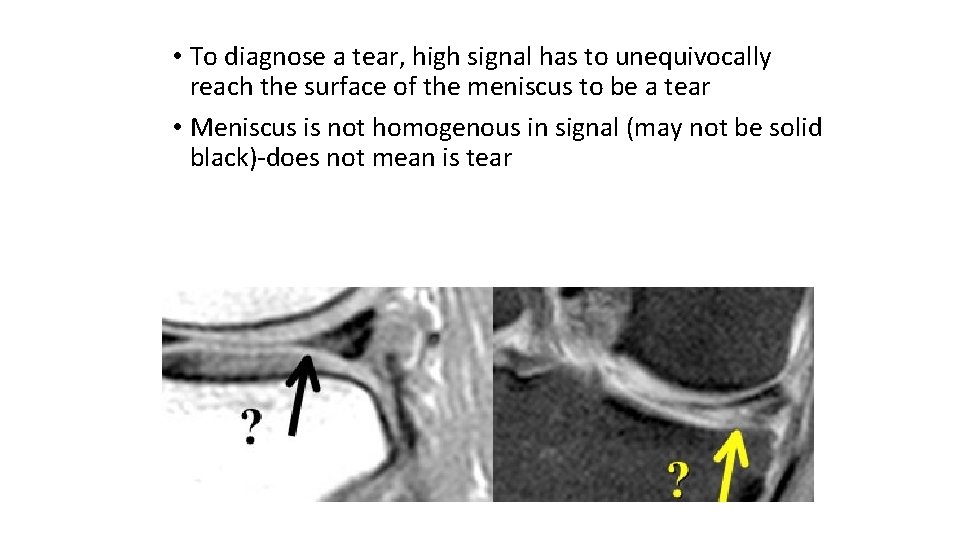
• To diagnose a tear, high signal has to unequivocally reach the surface of the meniscus to be a tear • Meniscus is not homogenous in signal (may not be solid black)-does not mean is tear

Displaced tears Bucket-handle tear = displaced longitudinal tear-normally managed surgically. Flap tear = displaced horizontal tear. Parrot beak = displaced radial tear.
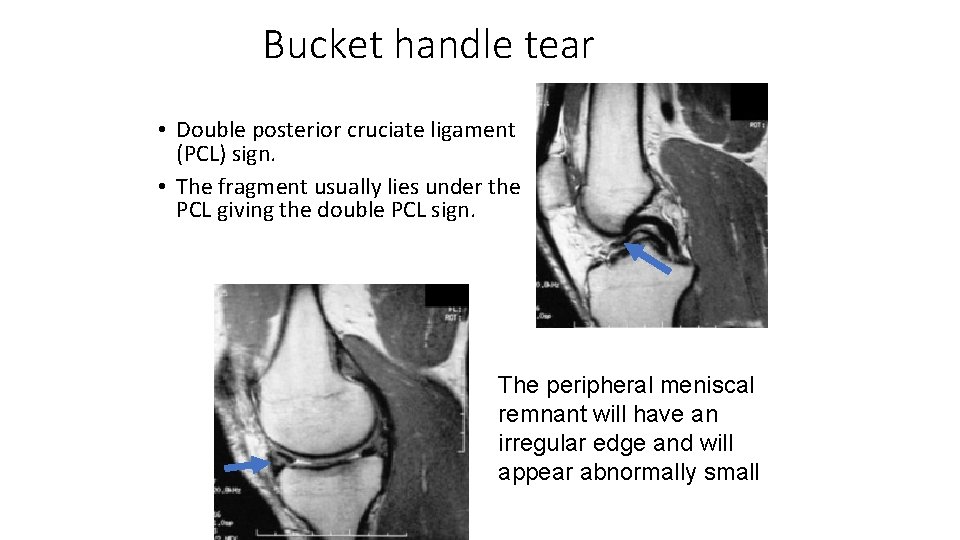
Bucket handle tear • Double posterior cruciate ligament (PCL) sign. • The fragment usually lies under the PCL giving the double PCL sign. The peripheral meniscal remnant will have an irregular edge and will appear abnormally small
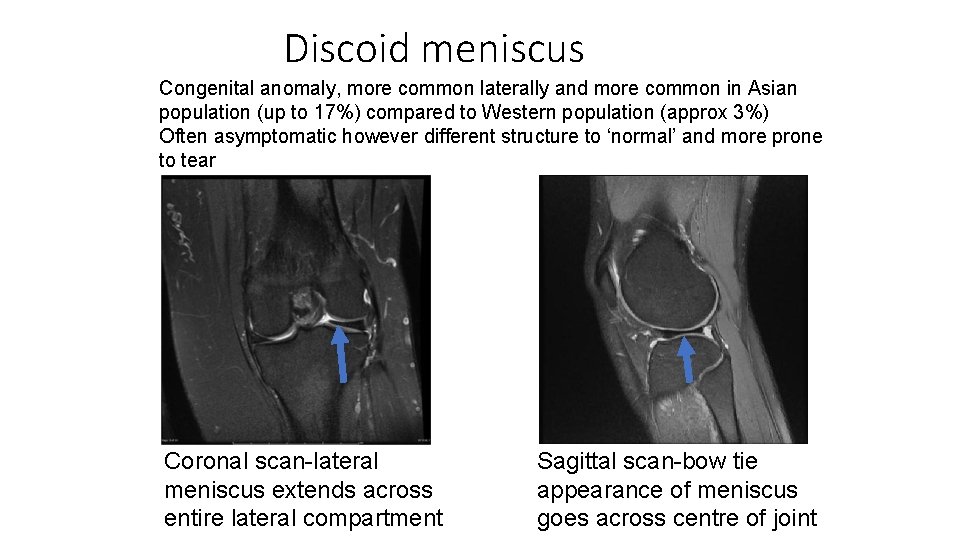
Discoid meniscus Congenital anomaly, more common laterally and more common in Asian population (up to 17%) compared to Western population (approx 3%) Often asymptomatic however different structure to ‘normal’ and more prone to tear Coronal scan-lateral meniscus extends across entire lateral compartment Sagittal scan-bow tie appearance of meniscus goes across centre of joint

ACL • Acute ACL tear. (a) Well defined straight fibres of the normal ACL (arrows). (b) In the acute ACL tear the normal ligament is replaced by a high signal heterogeneous mass (arrow). B A
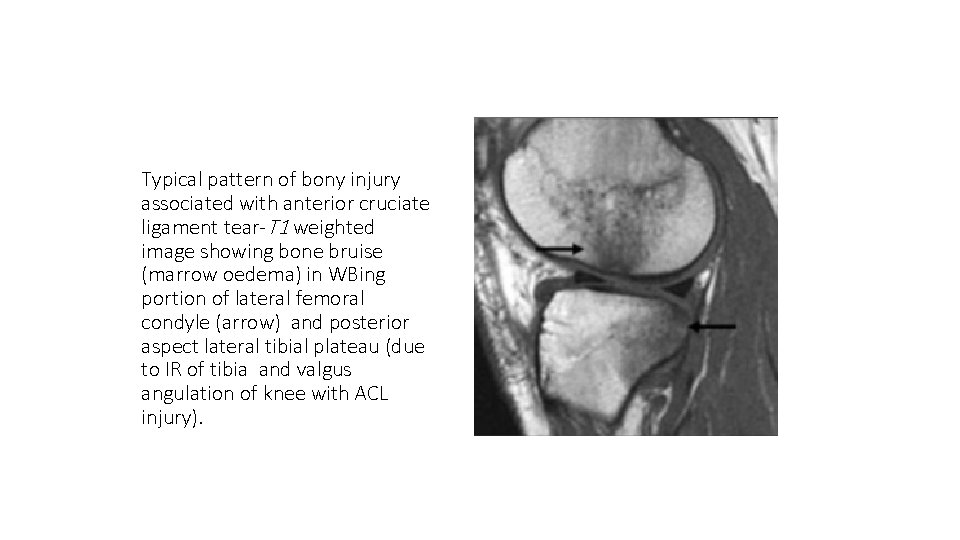
Typical pattern of bony injury associated with anterior cruciate ligament tear-T 1 weighted image showing bone bruise (marrow oedema) in WBing portion of lateral femoral condyle (arrow) and posterior aspect lateral tibial plateau (due to IR of tibia and valgus angulation of knee with ACL injury).
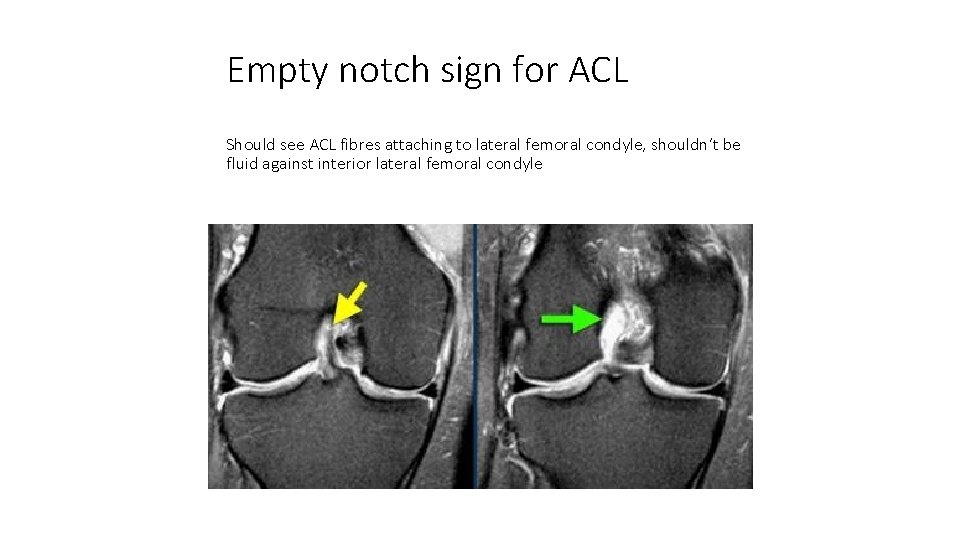
Empty notch sign for ACL Should see ACL fibres attaching to lateral femoral condyle, shouldn’t be fluid against interior lateral femoral condyle

MRI showing normal articular cartilage
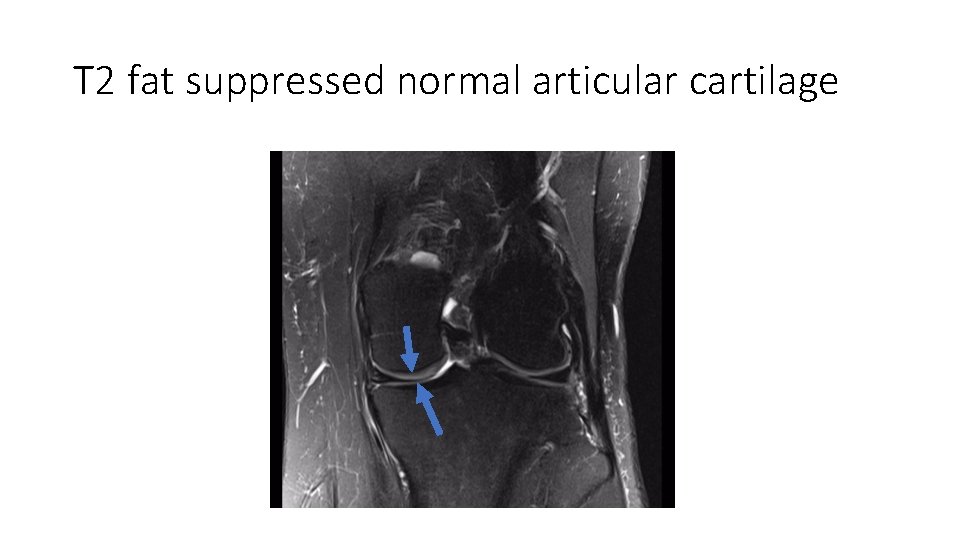
T 2 fat suppressed normal articular cartilage

Chondral flap (with bone marrow oedema)

OA-Subchondral cyst
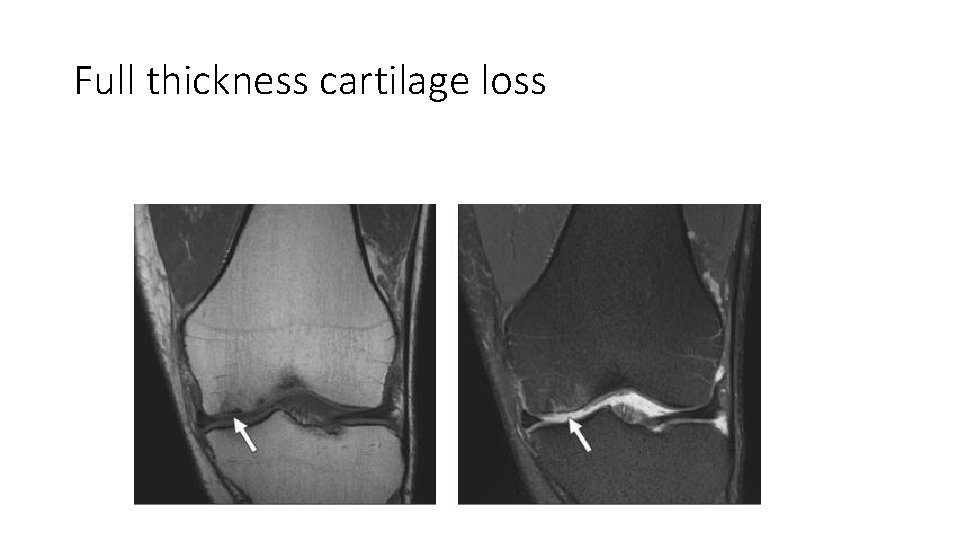
Full thickness cartilage loss
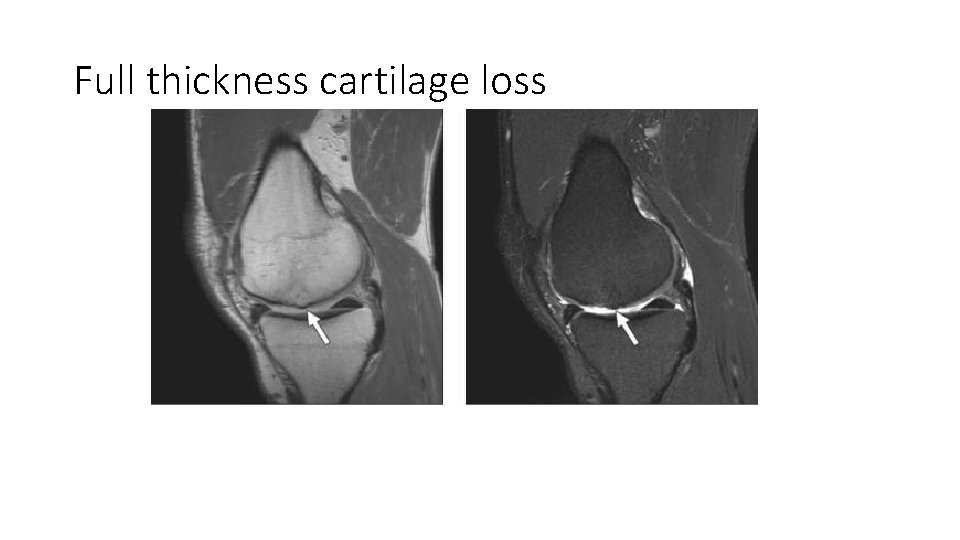
Full thickness cartilage loss

Grade 4 chondral thinning to bone of the medial tibial plateau (arrows) greater than to adjacent medial femoral condyle

Advanced OA

Insufficency fracture • Similar to stress #, ortho often not concerned however confer with them
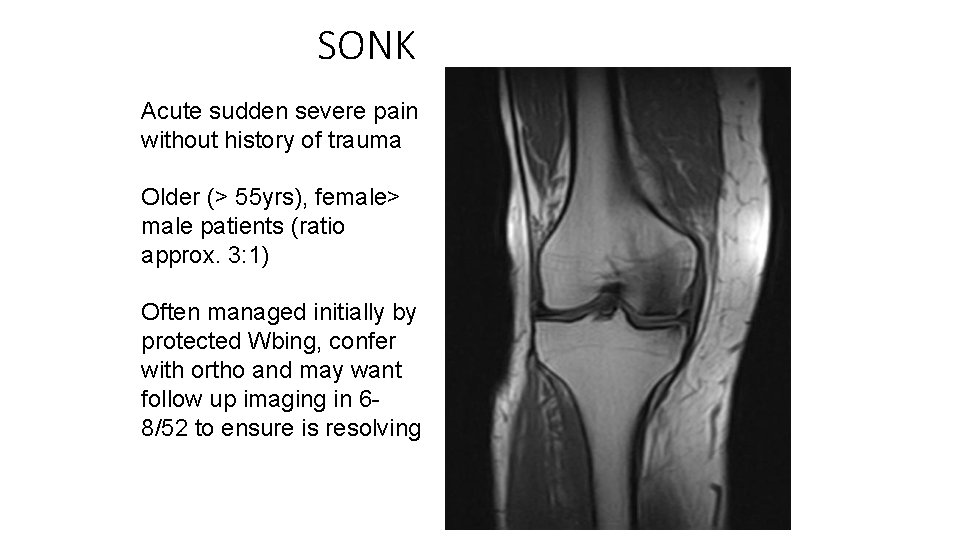
SONK Acute sudden severe pain without history of trauma Older (> 55 yrs), female> male patients (ratio approx. 3: 1) Often managed initially by protected Wbing, confer with ortho and may want follow up imaging in 68/52 to ensure is resolving
- Slides: 25