
MRI History and Hardware Basic Safety Issues Introduction
MRI History and Hardware Basic Safety Issues Introduction to f. MRI John Van. Meter, Ph. D. Center for Functional and Molecular Imaging
Terms Used for MRI NMR (Nuclear Magnetic Resonance) MR (Magnetic Resonance) MRI (Magnetic Resonance Imaging)
Pauli, Stern and Gerlach 1920’s n n n Pauli postulated that atomic nuclei (e. g. H, C, etc) have two properties: spin and magnetic moment Further, the rate of spin occurs at a given frequency depending on the nuclei Stern & Gerlach demonstrate this in pure gases n n Shot beam of gas through a static magnetic Produced multiple smaller beamlets
Rabi - 1937 n n n Rabi showed that nuclei absorb energy if the frequency matched the “resonant frequency” of the nuclei Showed resonance frequency is dependent on static magnetic field strength Measured resonance frequency of the lithium nucleus
Edward Purcell - 1945 n n n Detected resonance frequency in bulk matter Used current passing through paraffin wax in a strong magnetic field Changed strength of magnetic field over time At first did not see any change in current but hypothesized it would take some time for relaxation of the spins to occur Repeated experiment after leaving wax in magnetic field overnight and had success Basis of Nuclear Magnetic Resonance Spectroscopy and MRI
Felix Bloch - 1945 n n n Similar experiment to Purcell’s except using water in a brass box inside a magnetic field Used a transmitter coil to send electromagnetic energy into the box and receiver coil to measure changes in energy absorbed by the water Was also able to measure magnetic resonance effect This basic setup is the basis of NMR spectrometers used in biochemistry With some additional refinements it is also the basis modern MRI scanners
Raymond Damadian - 1971 Discovery: Rat Tumor has a relaxation time longer than normal tissue Differences in relaxation time provides one form of tissue contrast - T 1
Paul Lauterbur - 1973 • • Used GRADIENTS to distinguish spatially localized signals PHASE ENCODING Also, used GRADIENTS to manipulate the frequency of the spins to localize signals. He referred to this as Zeumatography FREQUENCY ENCODING Both techniques needed to encode spatial location of signals
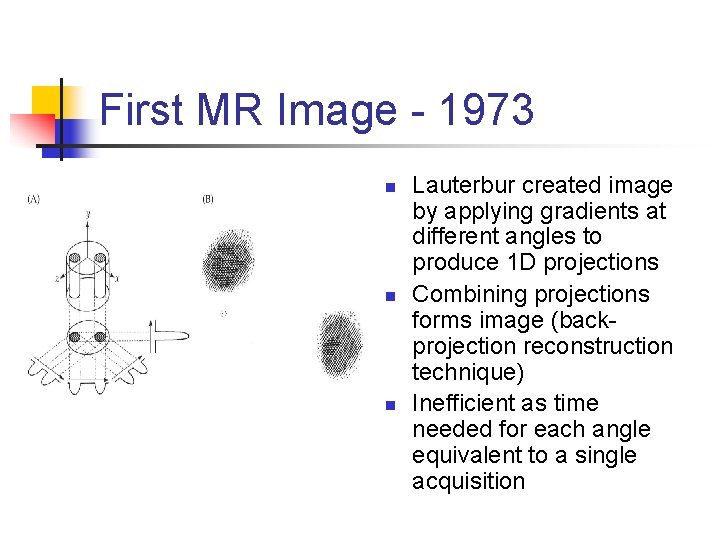
First MR Image - 1973 n n n Lauterbur created image by applying gradients at different angles to produce 1 D projections Combining projections forms image (backprojection reconstruction technique) Inefficient as time needed for each angle equivalent to a single acquisition
Sir Peter Mansfield - 1974 Devised selective excitation of a slice again using gradients Slice Select Identifies where in a 3 D object to collect signal from
Richard Ernst - 1975 Used 2 D-FT Two-Dimensional Fourier Transformation Needed to reconstruct images, which are encoded with frequency and phase Faster alternative to back-projection technique
Sir Peter Mansfield - 1976 n n Developed very efficient way to collect data using technique called echo planar imaging (EPI) Transmits 1 RF pulse per slice Rapidly switches gradients and records EPI used today in f. MRI!
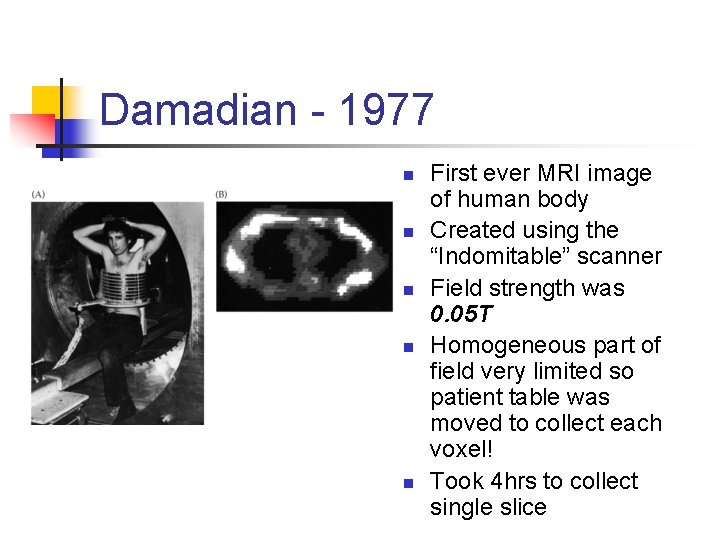
Damadian - 1977 n n n First ever MRI image of human body Created using the “Indomitable” scanner Field strength was 0. 05 T Homogeneous part of field very limited so patient table was moved to collect each voxel! Took 4 hrs to collect single slice
FDA Clears First MRI Scanner - 1985 n n n Minicomputers such as the PDP-11 and VAX become widely available GE develops first “highfield” (1. 5 T) commercial MRI scanner (1982) Medicare starts paying for MRI scans (1985) VAX 11/750 (1982)
1990’s FUNCTIONAL IMAGING
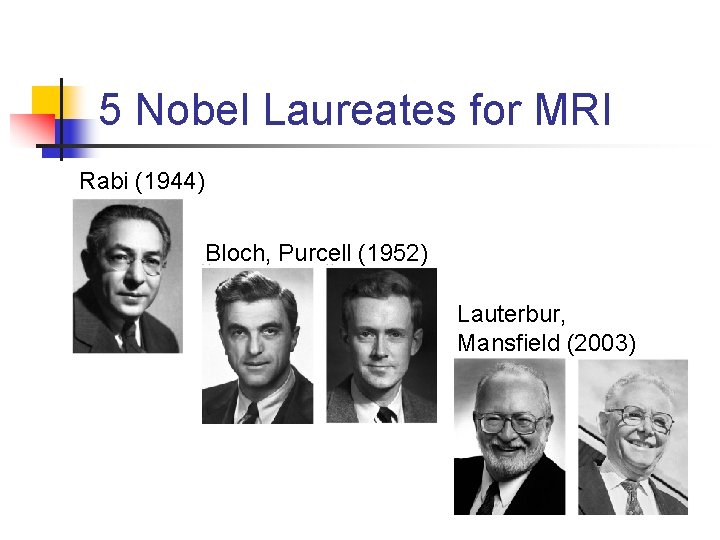
5 Nobel Laureates for MRI Rabi (1944) Bloch, Purcell (1952) Lauterbur, Mansfield (2003)
Nobel Controversy - 2003 n Damadian took out full page ads in NY Times and Washington Post protesting award to Lauterbur and Mansfield “This Year’s Nobel Prize in Medicine. The Shameful Wrong That Must Be Righted” “The Nobel Prize Committee for Physiology or Medicine chose to award the prize, not to the medical doctor/research scientist who made the breakthrough discovery on which all MRI technology is based, but to two scientists who later made technological improvements based on his discovery” "I know that had I never been born, there would be no MRI today"
MRI Hardware
Basic MRI Hardware n Magnet n n n Radiofrequency (RF) coils n n Transmit and Receive RF energy into and from the body Gradients n n Large magnetic field that is homogeneous over a large area Aligns protons in the body Induce linear change in magnetic field Spatial encoding Computer System and Console Patient Handling System
Types of Magnets n Permanent Iron Core n n Resistive Electromagnet n n Low Field “Open” Up to 0. 2 T Superconducting Magnet n n Cools wire coil with cryogens 0. 5 T to 35 T
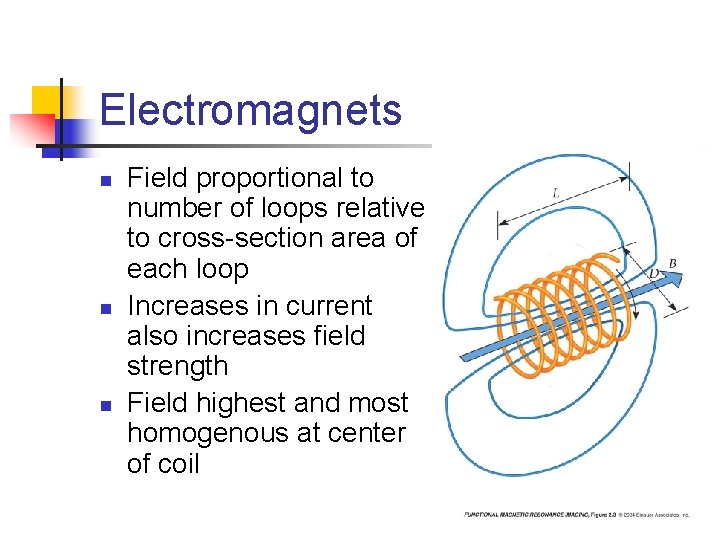
Electromagnets n n n Field proportional to number of loops relative to cross-section area of each loop Increases in current also increases field strength Field highest and most homogenous at center of coil
Properties of Superconducting Magnets n n n Very high field strengths generated n Cool magnet’s wire coil using cryogens (liquid helium and possibly nitrogen) to near absolute zero n Reduces resistance to zero for certain metals Provides stable and homogeneous magnetic field over a relatively large area Once ramped up no electricity used (relatively cheap) MAGNET ALWAYS ON! New dangers specific to these types of magnets
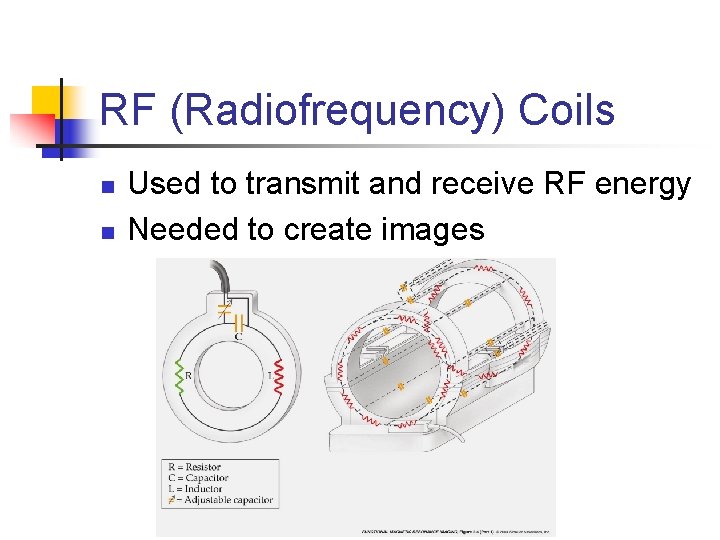
RF (Radiofrequency) Coils n n Used to transmit and receive RF energy Needed to create images
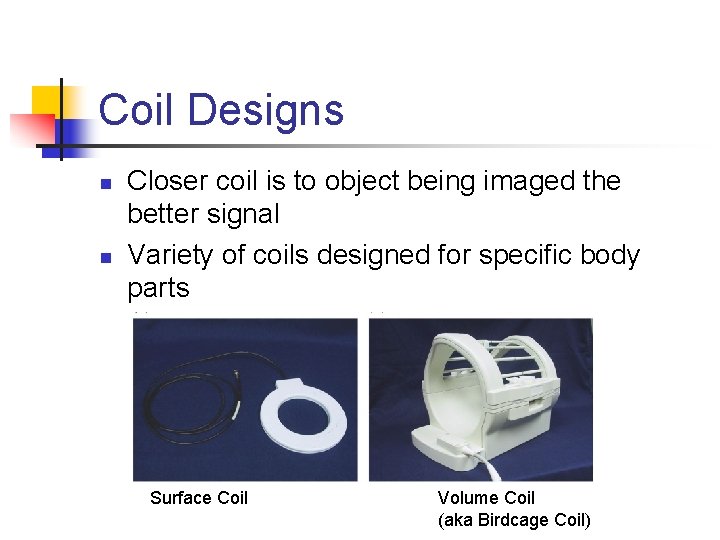
Coil Designs n n Closer coil is to object being imaged the better signal Variety of coils designed for specific body parts Surface Coil Volume Coil (aka Birdcage Coil)
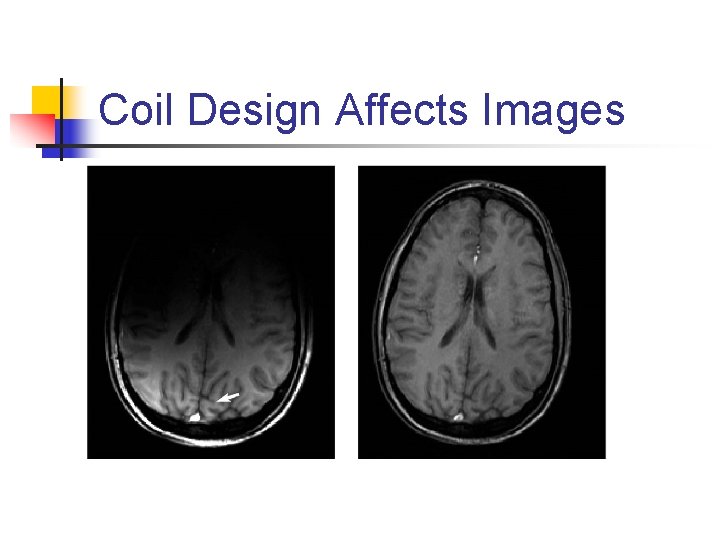
Coil Design Affects Images
Gradient Coils n n Induce small linear changes in magnetic field along one or more dimensions Produces two types of spatial encoding referred to as Frequency and Phase Encoding
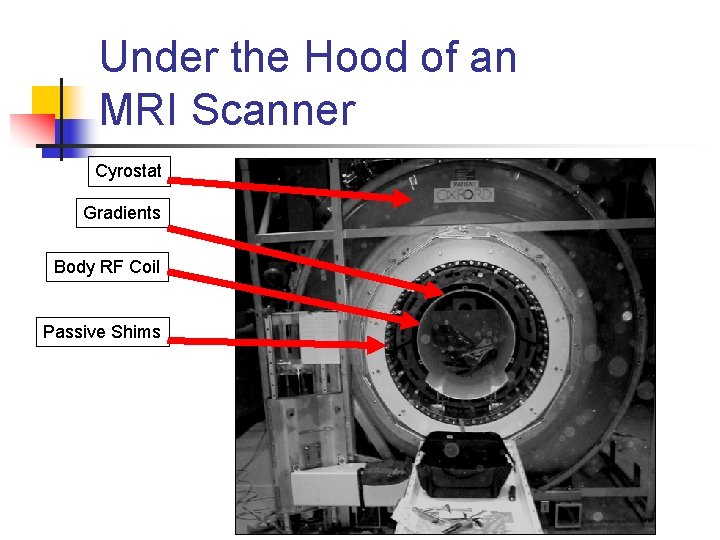
Under the Hood of an MRI Scanner Cyrostat Gradients Body RF Coil Passive Shims
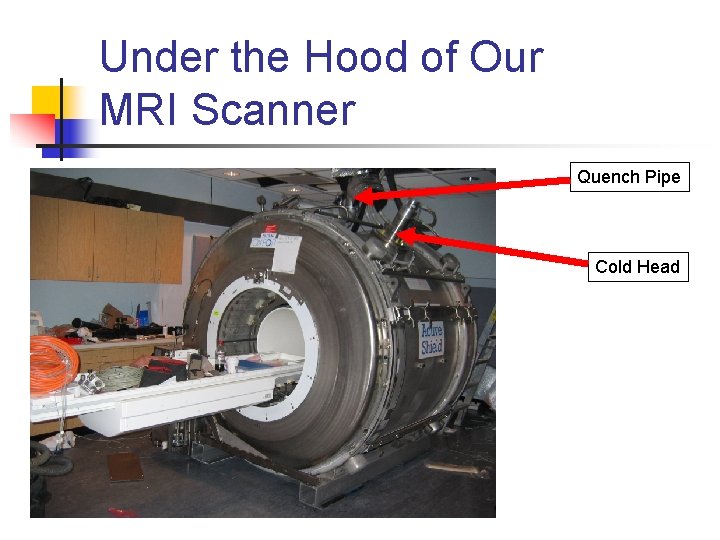
Under the Hood of Our MRI Scanner Quench Pipe Cold Head
Computer System and Console n n Image reconstruction and post processing is computationally intensive Standard workstation sufficient for basic clinical MRI system Multi-processor systems with gigabytes of memory needed for functional MRI and DTI (Diffusion Tensor Imaging) scanning Console computer coordinates everything
Patient Handling System n n n Methods to get patient in and out of the scanner Alignment of the body part to be scanned with isocenter of the scanner Labeling of scans with appropriate identifiers and anatomic labels
MRI Safety

MRI Safety n Static B 0 Field Projectiles n. Implants/other materials in the body n n RF Field n n tissue heating Gradient fields peripheral nerve stimulation nacoustic noise n
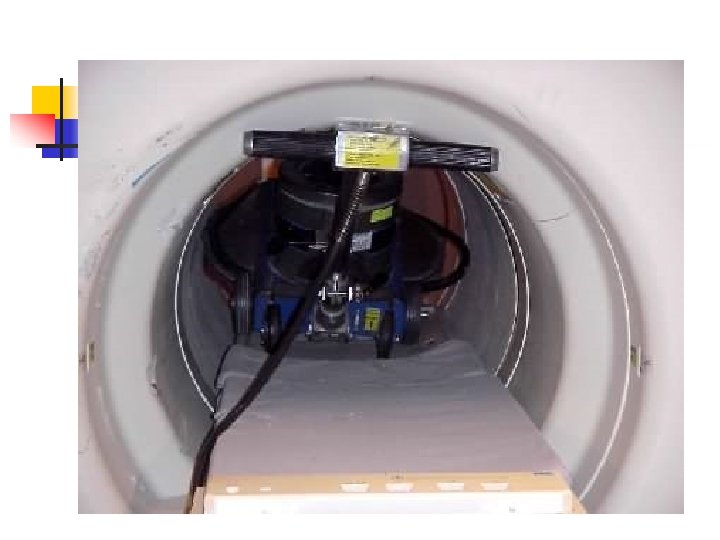
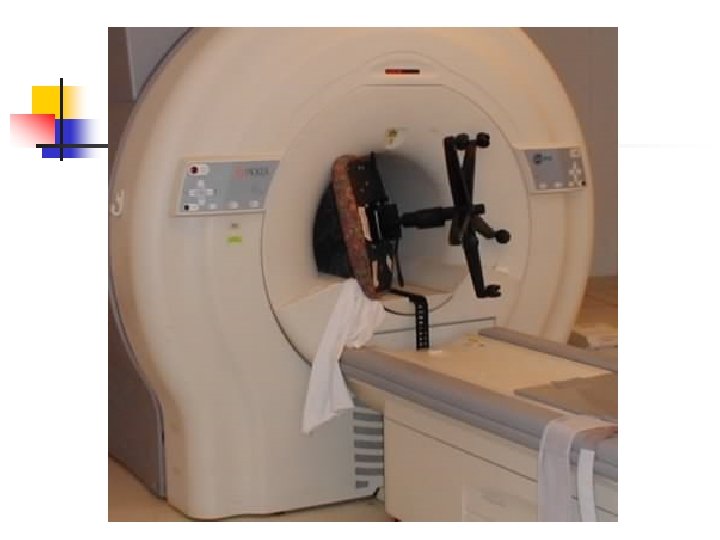
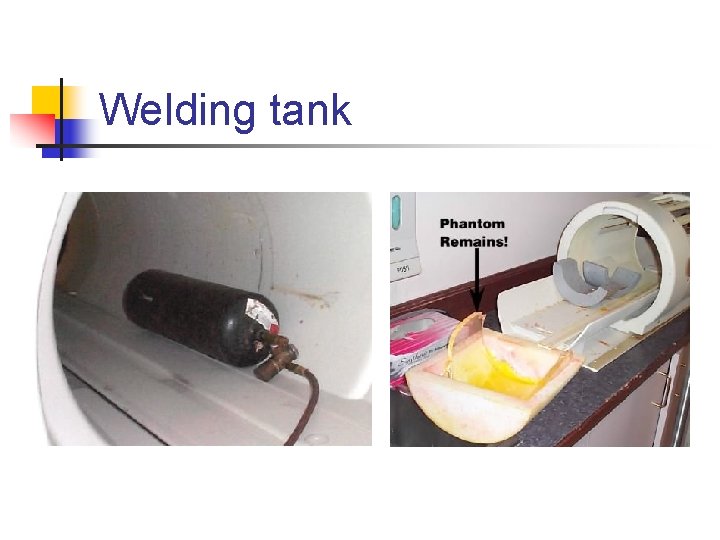
Forces on Ferrous Objects Crash cart meets a 1. 5 T magnet
Welding tank
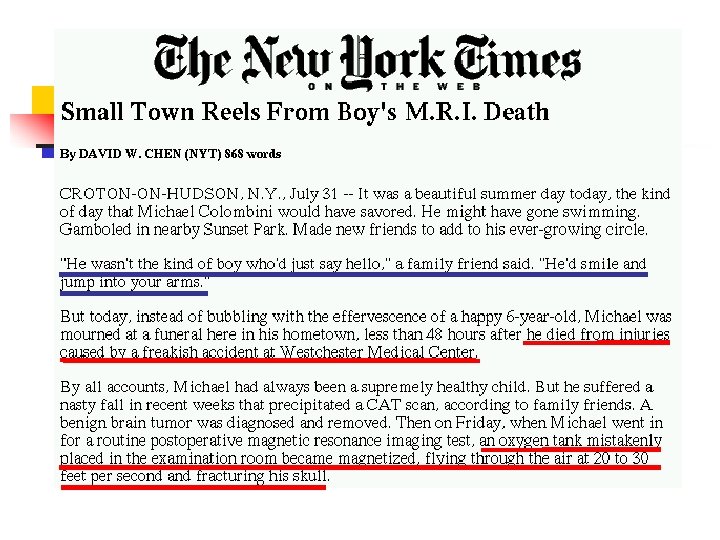
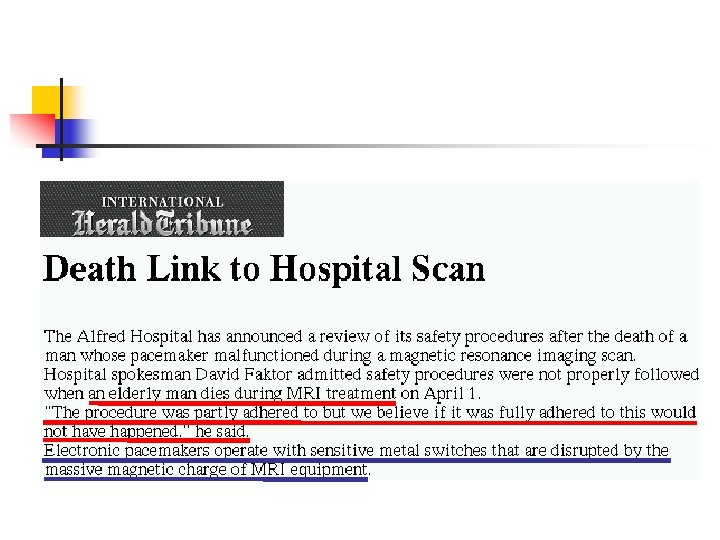
Preventing Accidents Due to Ferrous Metallic Objects n n Train ALL personnel who work in the facility Perform MRI safety screening on everyone prior their entering the MRI scanner room Limit access to the scanner facility based on training and need ACR guidelines establish 4 MRI Safety Zones and limit access to each zone
MRI Safety n Static B 0 Field n n RF Field n n projectiles tissue heating Gradient fields peripheral nerve stimulation nacoustic noise n
RF Exposure Standards n The FDA limits RF exposure to less than a 1 degree C rise in core body temperature
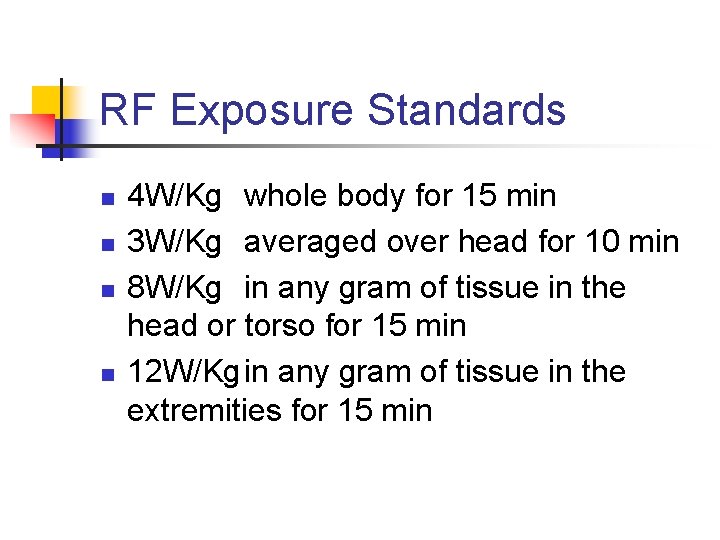
RF Exposure Standards n n 4 W/Kg whole body for 15 min 3 W/Kg averaged over head for 10 min 8 W/Kg in any gram of tissue in the head or torso for 15 min 12 W/Kg in any gram of tissue in the extremities for 15 min
MRI Safety n Static B 0 Field n n RF Field n n projectiles tissue heating Gradient fields peripheral nerve stimulation nacoustic noise n
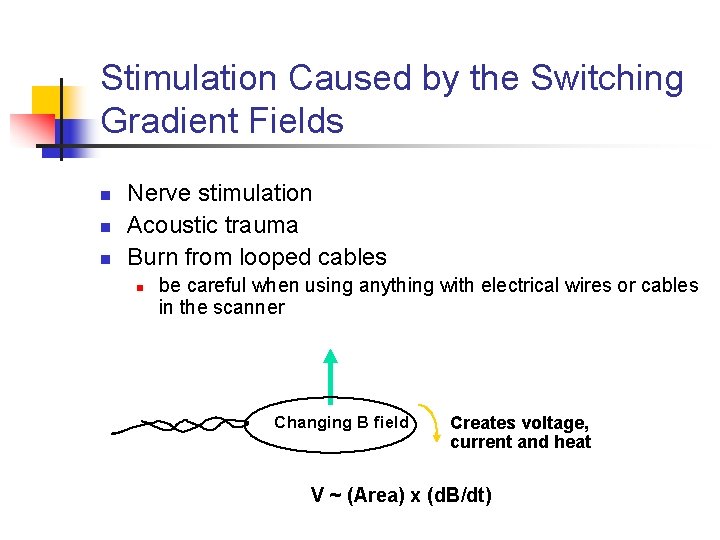
Stimulation Caused by the Switching Gradient Fields n n n Nerve stimulation Acoustic trauma Burn from looped cables n be careful when using anything with electrical wires or cables in the scanner Changing B field Creates voltage, current and heat V ~ (Area) x (d. B/dt)
Introduction to Functional MRI
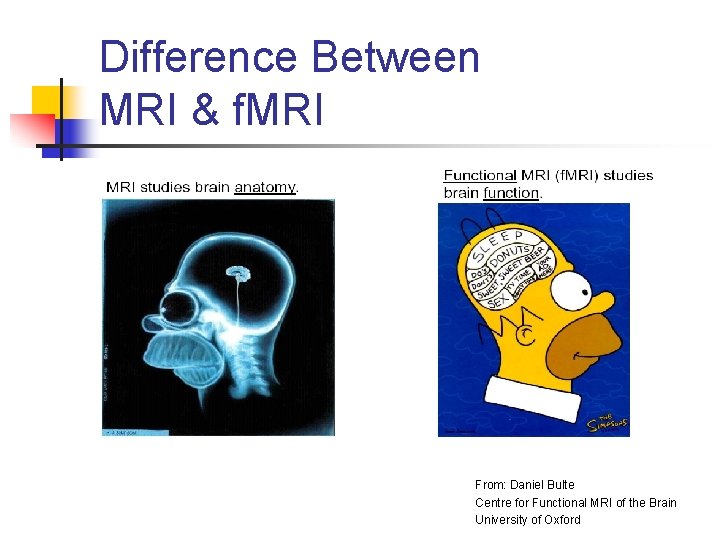
Difference Between MRI & f. MRI From: Daniel Bulte Centre for Functional MRI of the Brain University of Oxford
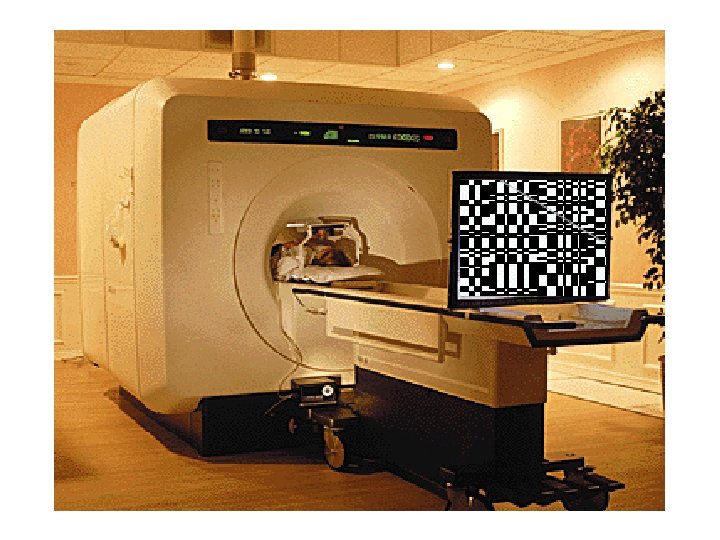
Tools Necessary for f. MRI n High-field MRI (1. 5 T or greater) scanner n n Fast imaging sequence n n BOLD effect (f. MRI signal) increases with field strength Echo Planar Imaging (EPI) Stimulus presentation equipment n n n Projector to show visual stimuli Response devices such as button box to record subject’s response Headphones for auditory stimuli (and hearing protection)
Functional Brain Mapping with MRI n n Basic concept - changes in neuronal activity produces a measurable change in MR signal Collect 100 -500 MRI scans continuously (1 every 2 -3 s each typically cover 30 -50 slices) Experimenter induces changes in activity at known points in time by having subject perform some cognitive or motoric task Analyses statistically tests for MR signal changes that corresponding to experimental task
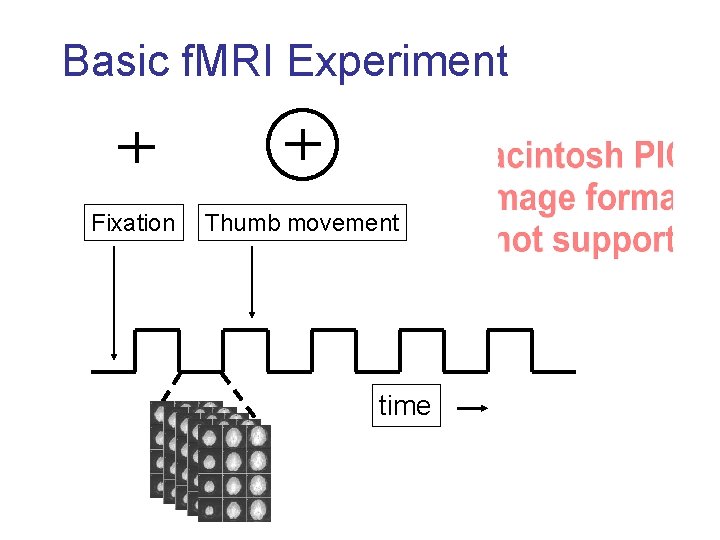
Basic f. MRI Experiment Fixation Thumb movement time
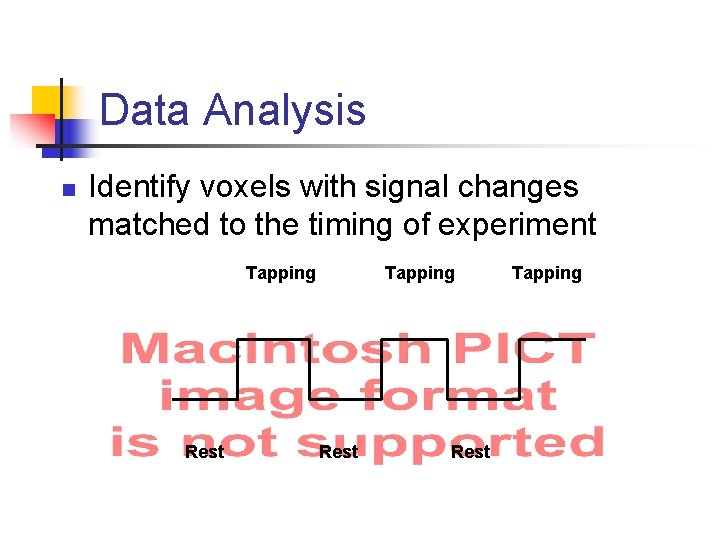
Data Analysis n Identify voxels with signal changes matched to the timing of experiment Tapping Rest Tapping
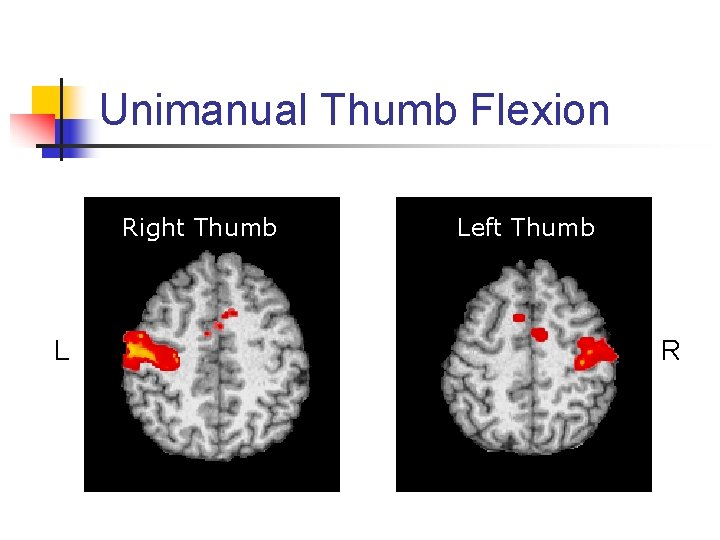
Unimanual Thumb Flexion Right Thumb L Left Thumb R
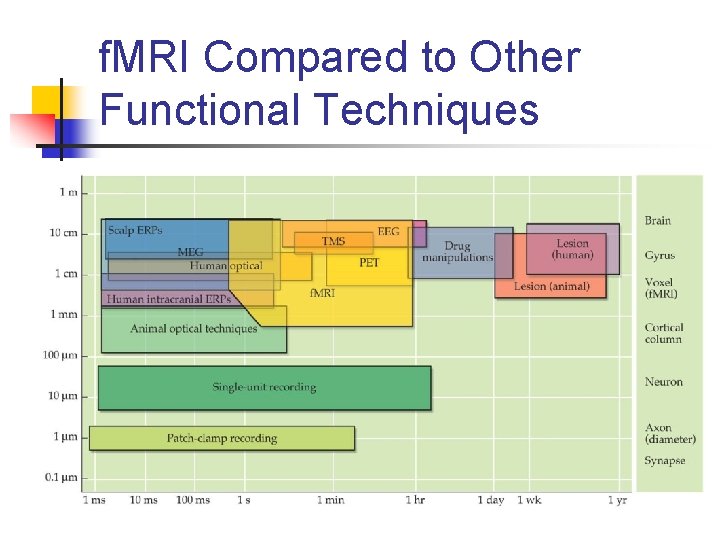
f. MRI Compared to Other Functional Techniques
Examples of f. MRI
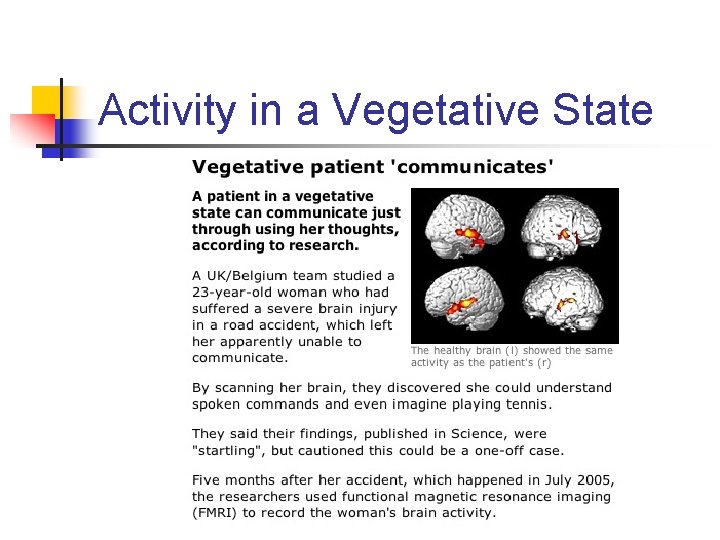
Activity in a Vegetative State
Super Bowl Ads n n n Marco Iacoboni at UCLA used f. MRI to examine the brain’s response to different super bowl ads Ranked ads based on brain responses Found differences in the ads that stimulated the brain most and those people reported as liking the most
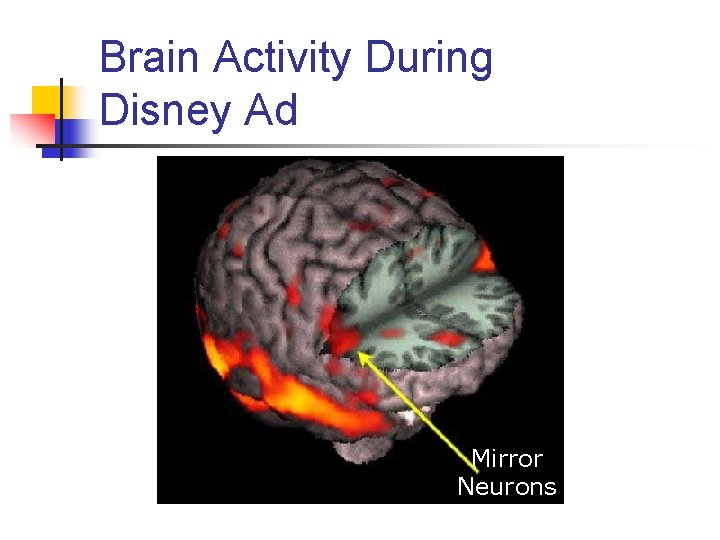
Brain Activity During Disney Ad Mirror Neurons
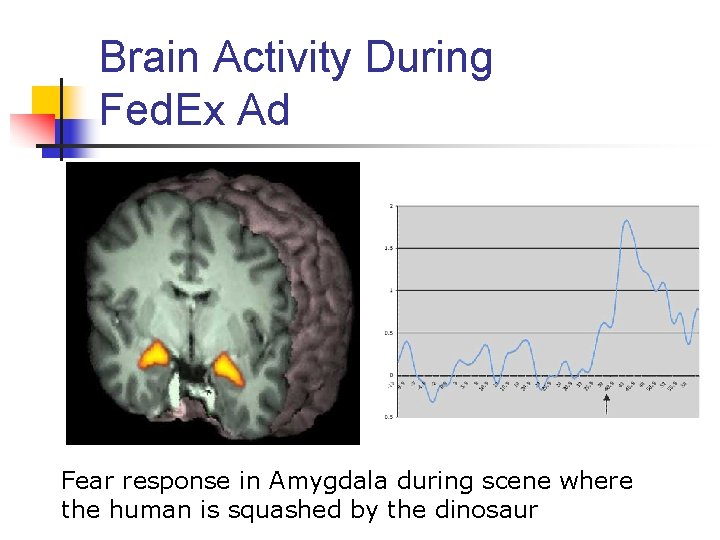
Brain Activity During Fed. Ex Ad Fear response in Amygdala during scene where the human is squashed by the dinosaur
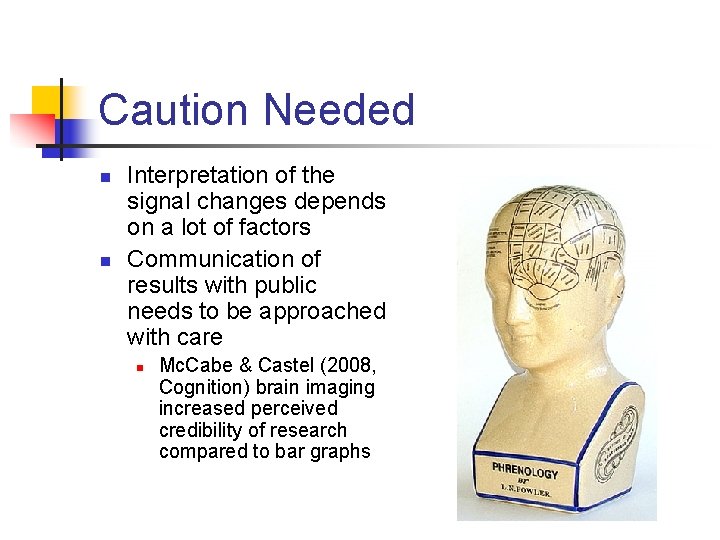
Caution Needed n n Interpretation of the signal changes depends on a lot of factors Communication of results with public needs to be approached with care n Mc. Cabe & Castel (2008, Cognition) brain imaging increased perceived credibility of research compared to bar graphs
- Slides: 59