
Mr Potato Head A LEAN Mean Quality Improvement





- Slides: 46
Mr. Potato Head: A LEAN, Mean Quality Improvement Teaching Machine! Beth Murphy, MD Ambulatory Block QI Session #2 2013 -2014
Mr. Potato Head Facts • Created by George Lerner in Brooklyn, NY – Jumble of accessories meant to pierce a real potato – Sold idea for $5000 to a cereal maker in 1951 • 1952 - Rights acquired by “Hasbro” • 1952 -First toy advertised on TV and the first marketed directly to kids • 1987 -“Spokes spud” for ACS Great American Smokeout • Resurgence in 1990’s with Toy Story Movies/Disney • 2000 -RI State Family Travel Ambassador & License Plate • > 100 million have sold over past 60 years Source: Yankee Magazine, Dec 2012
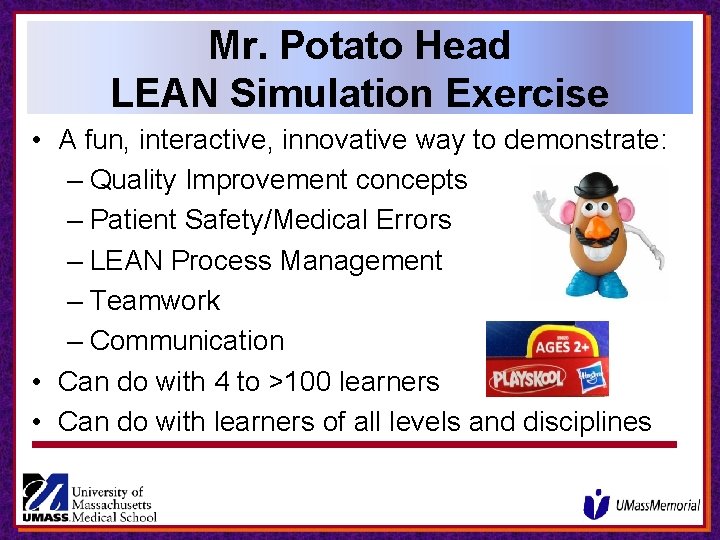
Mr. Potato Head LEAN Simulation Exercise • A fun, interactive, innovative way to demonstrate: – Quality Improvement concepts – Patient Safety/Medical Errors – LEAN Process Management – Teamwork – Communication • Can do with 4 to >100 learners • Can do with learners of all levels and disciplines
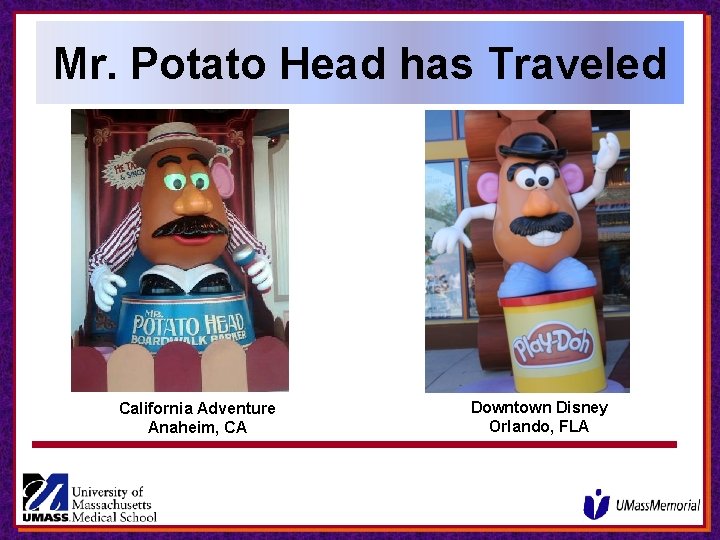
Mr. Potato Head has Traveled California Adventure Anaheim, CA Downtown Disney Orlando, FLA
Mr. Potato Head • • • Created by Eric Dickson, MD UMMHC President and CEO ER physician Professor of Emergency Medicine Institute for Healthcare Improvement
Lean Process Management • • • Derived from Toyota Production System Efficiency and Quality are both important Every step in process should add “VALUE” Eliminate all “WASTE” from the system EVERY member of the team is valued for their contributions to the process AND their ideas for improving the system/insuring safety
“At Toyota we get brilliant results from average people managing a brilliant process. Others get average results from brilliant people managing broken processes. ” --The Toyota Motor Company
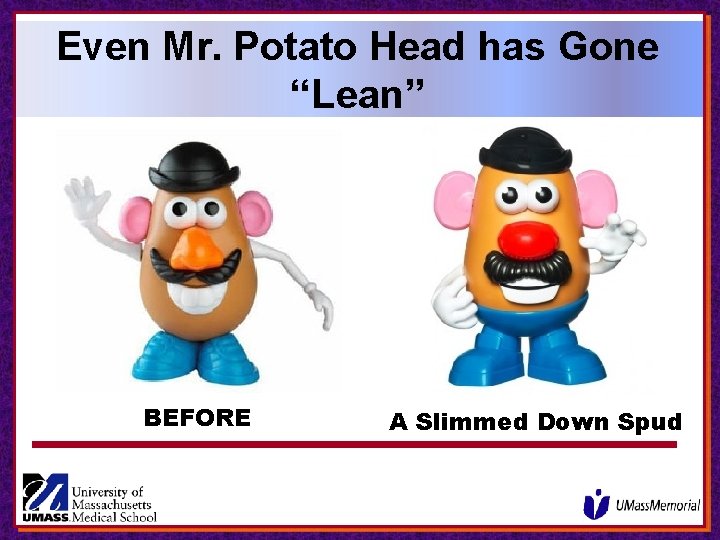
Even Mr. Potato Head has Gone “Lean” BEFORE A Slimmed Down Spud
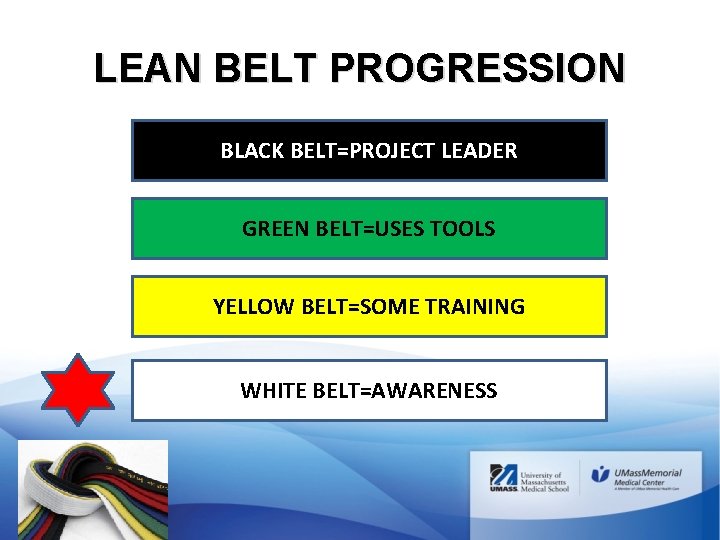
LEAN BELT PROGRESSION BLACK BELT=PROJECT LEADER GREEN BELT=USES TOOLS YELLOW BELT=SOME TRAINING WHITE BELT=AWARENESS
Value • What do your patients value? • What do you value as an employee?
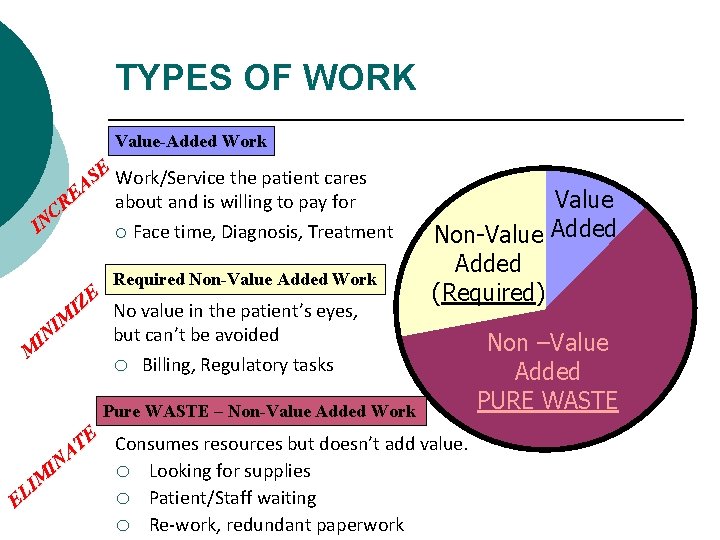
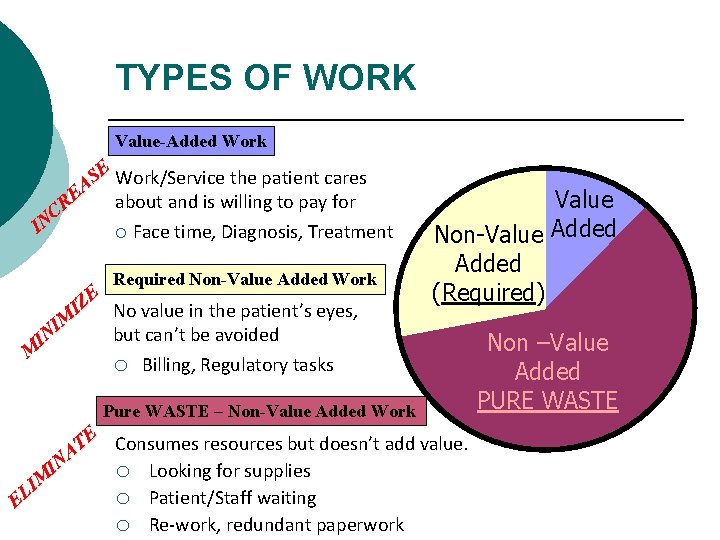
TYPES OF WORK Value-Added Work E Work/Service the patient cares S A E about and is willing to pay for R C IN ¡ Face time, Diagnosis, Treatment Required Non-Value Added Work E IZ No value in the patient’s eyes, M I but can’t be avoided IN M o Billing, Regulatory tasks Value Non-Value Added (Required) Pure WASTE – Non-Value Added Work E Consumes resources but doesn’t add value. T A N I o Looking for supplies M I o Patient/Staff waiting EL o Re-work, redundant paperwork Non –Value Added PURE WASTE
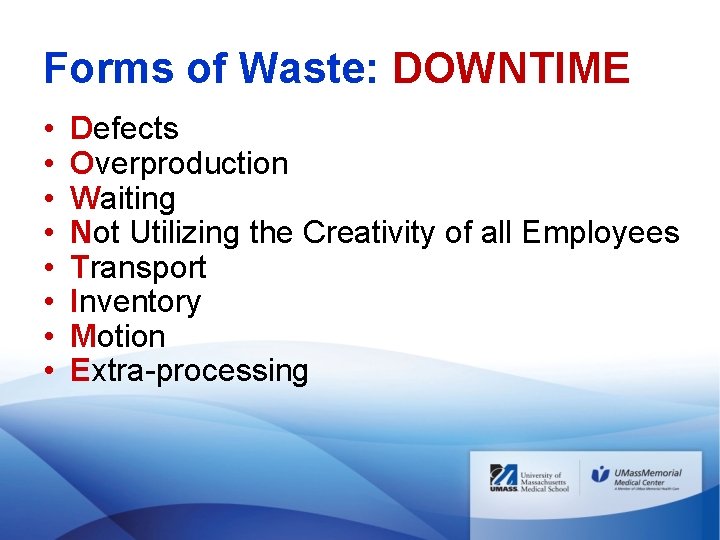
Forms of Waste: DOWNTIME • • Defects Overproduction Waiting Not Utilizing the Creativity of all Employees Transport Inventory Motion Extra-processing
There’s been a terrible accident!
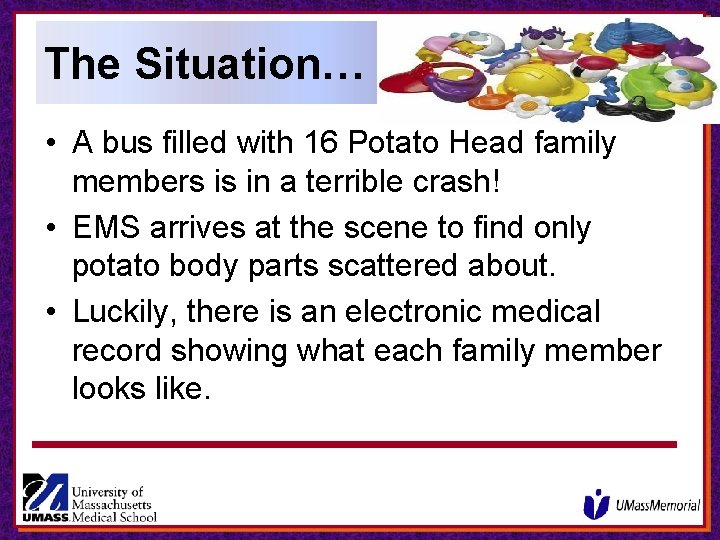
The Situation… • A bus filled with 16 Potato Head family members is in a terrible crash! • EMS arrives at the scene to find only potato body parts scattered about. • Luckily, there is an electronic medical record showing what each family member looks like.
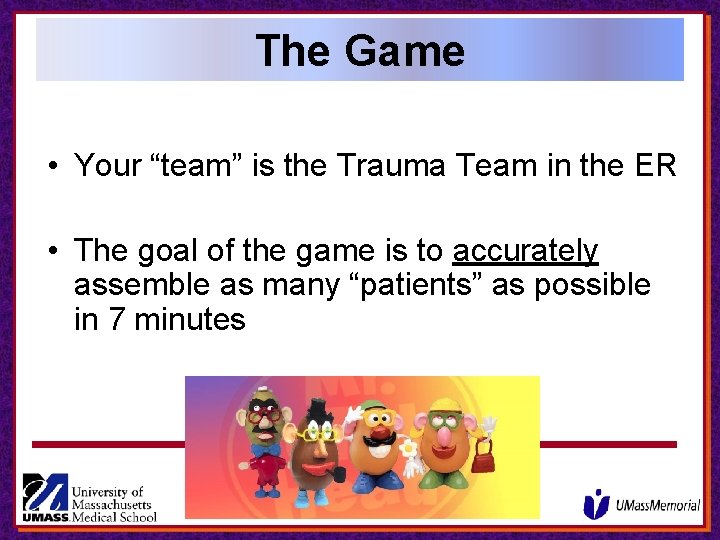
The Game • Your “team” is the Trauma Team in the ER • The goal of the game is to accurately assemble as many “patients” as possible in 7 minutes
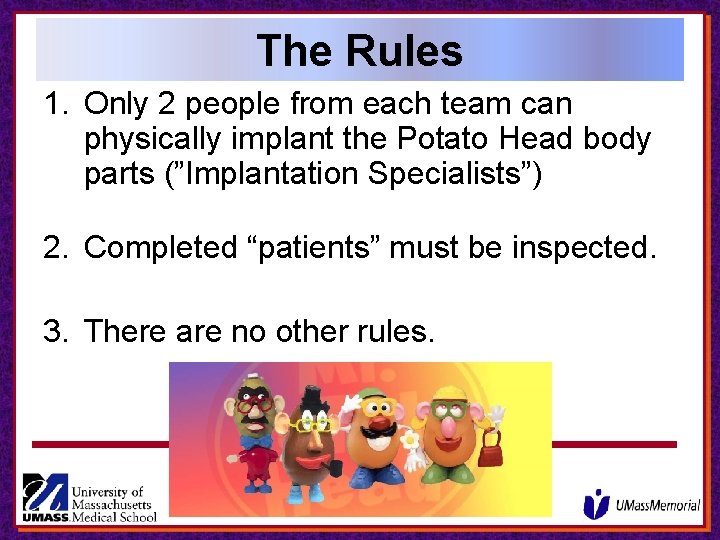
The Rules 1. Only 2 people from each team can physically implant the Potato Head body parts (”Implantation Specialists”) 2. Completed “patients” must be inspected. 3. There are no other rules.
Before we start… We need 3 brave volunteers
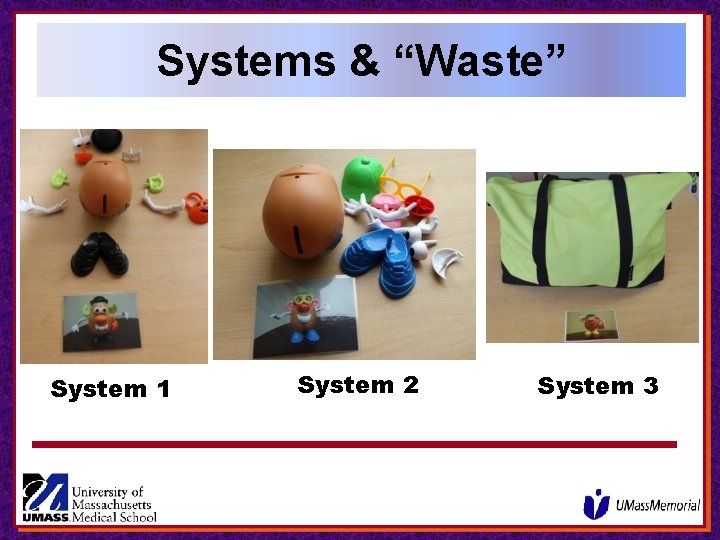
Systems & “Waste” System 1 System 2 System 3
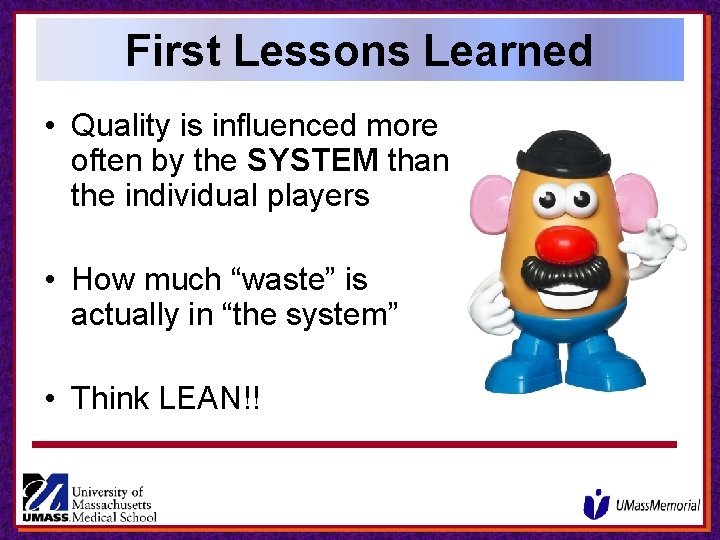
First Lessons Learned • Quality is influenced more often by the SYSTEM than the individual players • How much “waste” is actually in “the system” • Think LEAN!!
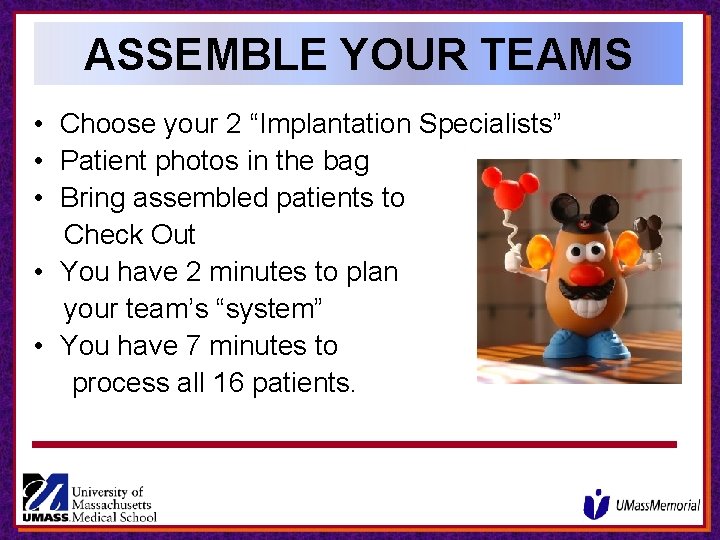
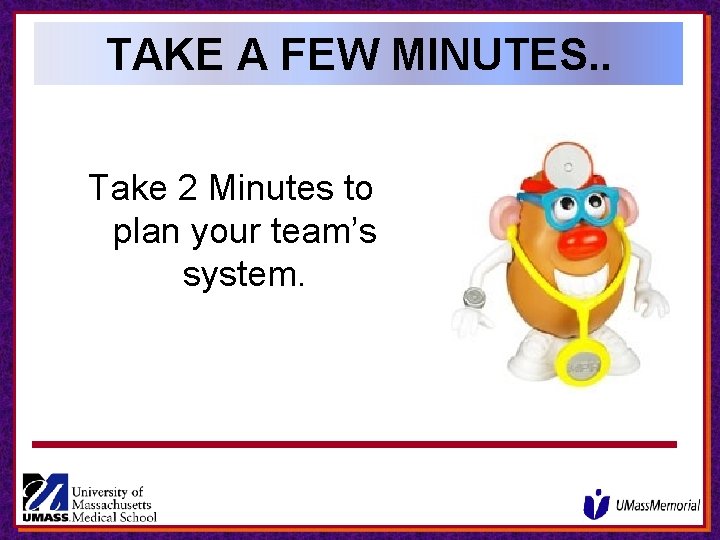
ASSEMBLE YOUR TEAMS • Choose your 2 “Implantation Specialists” • Patient photos in the bag • Bring assembled patients to Check Out • You have 2 minutes to plan your team’s “system” • You have 7 minutes to process all 16 patients.
TAKE A FEW MINUTES. . Take 2 Minutes to plan your team’s system.
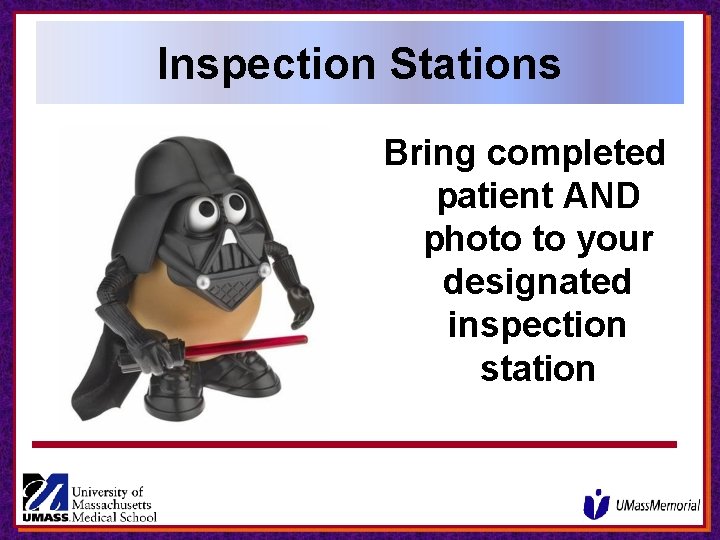
Inspection Stations Bring completed patient AND photo to your designated inspection station
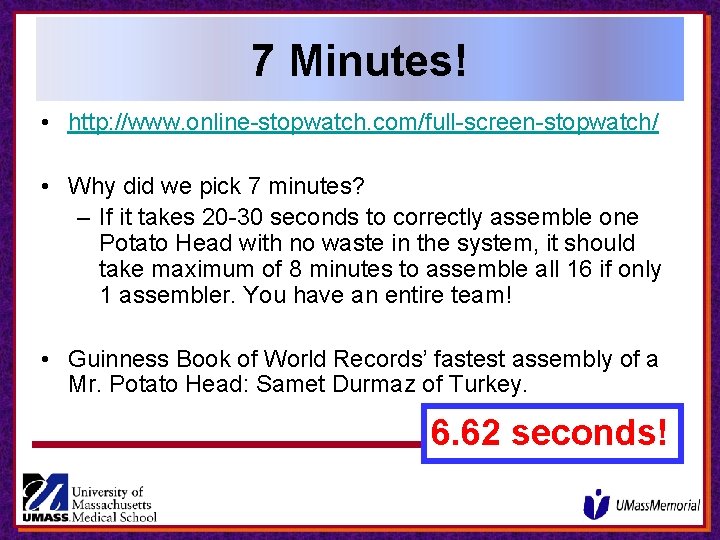
7 Minutes! • http: //www. online-stopwatch. com/full-screen-stopwatch/ • Why did we pick 7 minutes? – If it takes 20 -30 seconds to correctly assemble one Potato Head with no waste in the system, it should take maximum of 8 minutes to assemble all 16 if only 1 assembler. You have an entire team! • Guinness Book of World Records’ fastest assembly of a Mr. Potato Head: Samet Durmaz of Turkey. 6. 62 seconds!
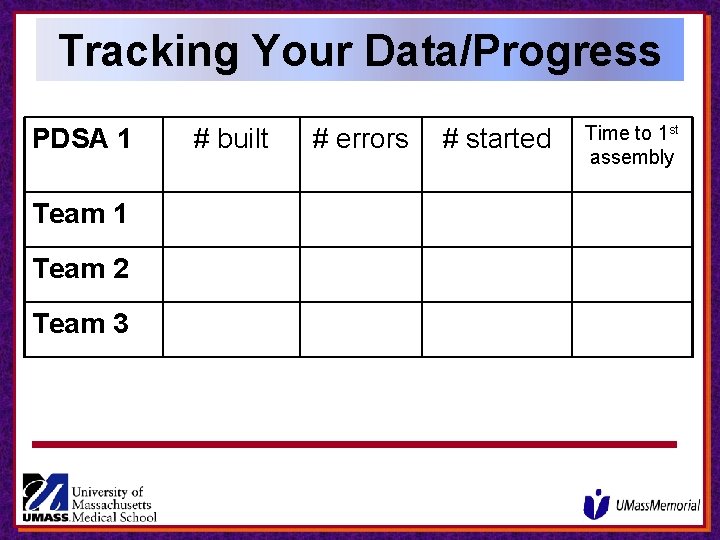
Tracking Your Data/Progress PDSA 1 Team 2 Team 3 # built # errors # started Time to 1 st assembly
PDSA Cycle #1 • How many patients did you treat correctly during this cycle? • How many errors did your team make? • How long did it take you to complete first one? • What changes will your team make for next cycle to eliminate waste and improve both quality and efficiency?
Sharing Best Practices • Team with Most # Patients Seen • Team with Least # Errors
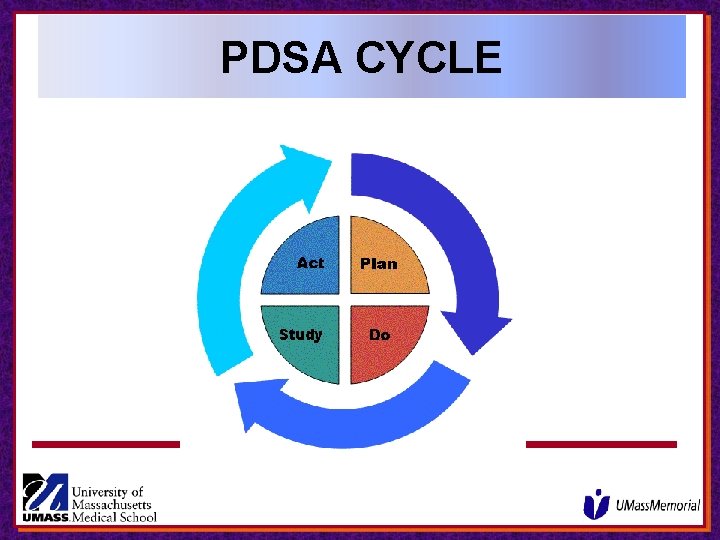
PDSA CYCLE
TYPES OF WORK Value-Added Work E Work/Service the patient cares S A E about and is willing to pay for R C IN ¡ Face time, Diagnosis, Treatment Required Non-Value Added Work E IZ No value in the patient’s eyes, M I but can’t be avoided IN M o Billing, Regulatory tasks Value Non-Value Added (Required) Pure WASTE – Non-Value Added Work E Consumes resources but doesn’t add value. T A N I o Looking for supplies M I o Patient/Staff waiting EL o Re-work, redundant paperwork Non –Value Added PURE WASTE
Forms of Waste: DOWNTIME • • Defects (Medical Errors) Overproduction (Unnecessary testing) Waiting (Patients and Employees) Not Utilizing the Creativity of all Employees Transport (Moving patients) Inventory (Equipment, Discharge delays) Motion (Physical Plant/Flow) Extra-processing (Retesting, Readmissions)
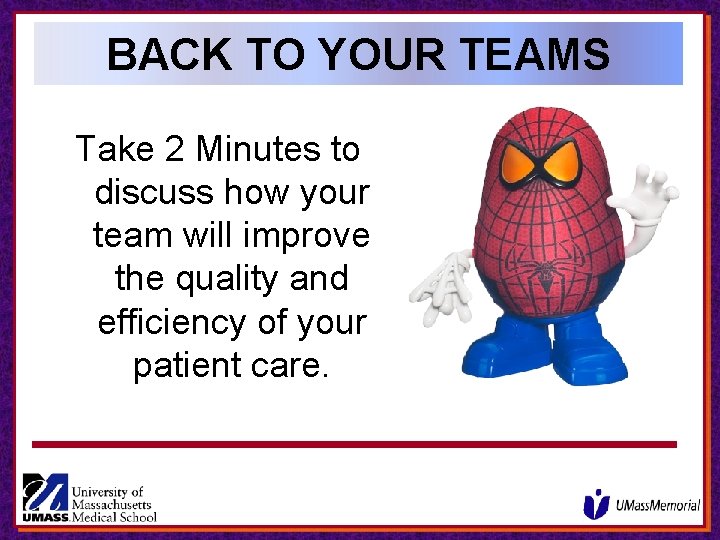
BACK TO YOUR TEAMS Take 2 Minutes to discuss how your team will improve the quality and efficiency of your patient care.
Start PDSA CYCLE #2 • Switch Bags! – You don’t see the same patients every day! • Notice there are many differences in each body part (i. e. ears, eyes, mouths) – Demonstrates how each patient is unique! • You have 7 Minutes!
7 Minutes! • http: //www. online-stopwatch. com/fullscreen-stopwatch/
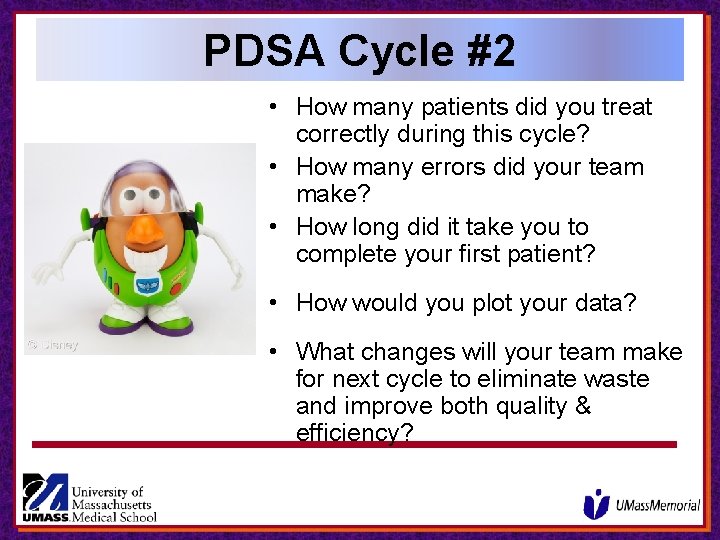
PDSA Cycle #2 • How many patients did you treat correctly during this cycle? • How many errors did your team make? • How long did it take you to complete your first patient? • How would you plot your data? • What changes will your team make for next cycle to eliminate waste and improve both quality & efficiency?
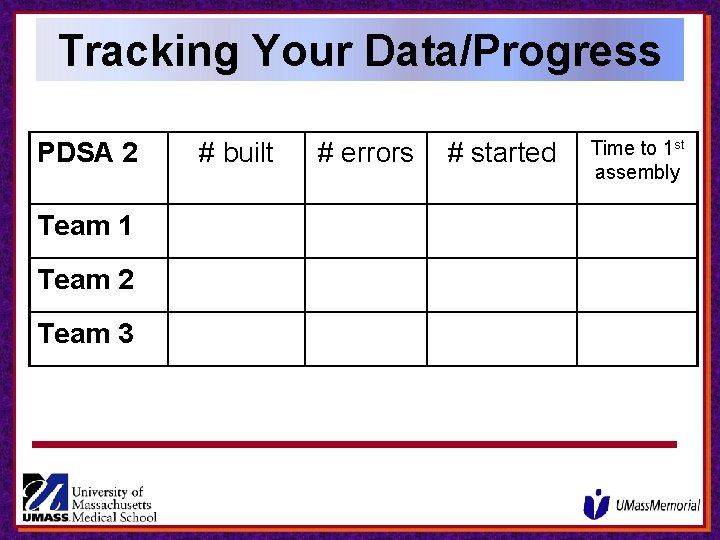
Tracking Your Data/Progress PDSA 2 Team 1 Team 2 Team 3 # built # errors # started Time to 1 st assembly
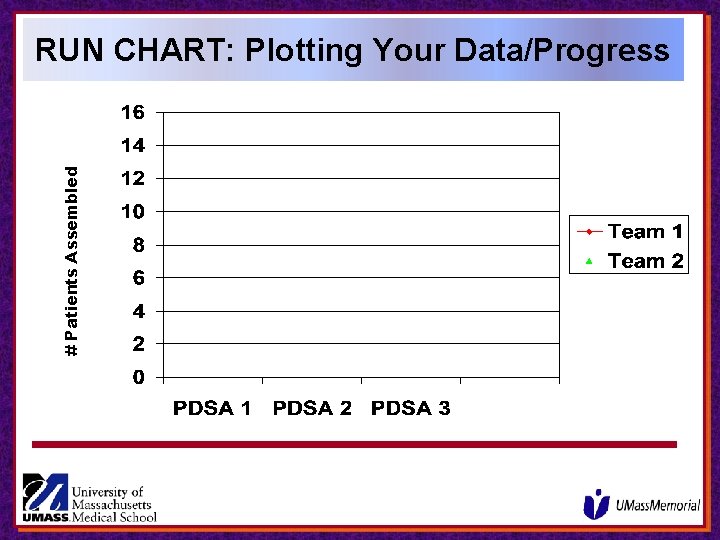
# Patients Assembled RUN CHART: Plotting Your Data/Progress
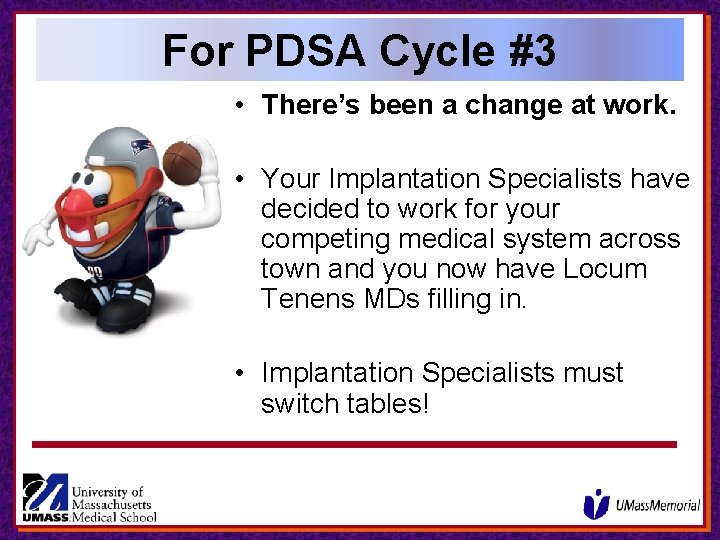
For PDSA Cycle #3 • There’s been a change at work. • Your Implantation Specialists have decided to work for your competing medical system across town and you now have Locum Tenens MDs filling in. • Implantation Specialists must switch tables!
BACK TO YOUR TEAMS Take 2 Minutes to discuss how your team will improve the quality and efficiency of your patient care with NEW TEAM MEMBERS!
Start CYCLE #3 • Switch Bags Again! • You Have 7 Minutes! • http: //www. online-stopwatch. com/full-screenstopwatch/
Review PDSA Cycle #3 • How did your new team do? • How did having new team members effect your quality and/or efficiency? • Did you change your system?
If we did PDSA Cycle #4… • Unfortunately, Federal Budget cuts continue and reimbursements from Medicare and Medicaid are down substantially. • We have to lay off one team member from each team… • The tallest person on the team has to step away from the table and observe
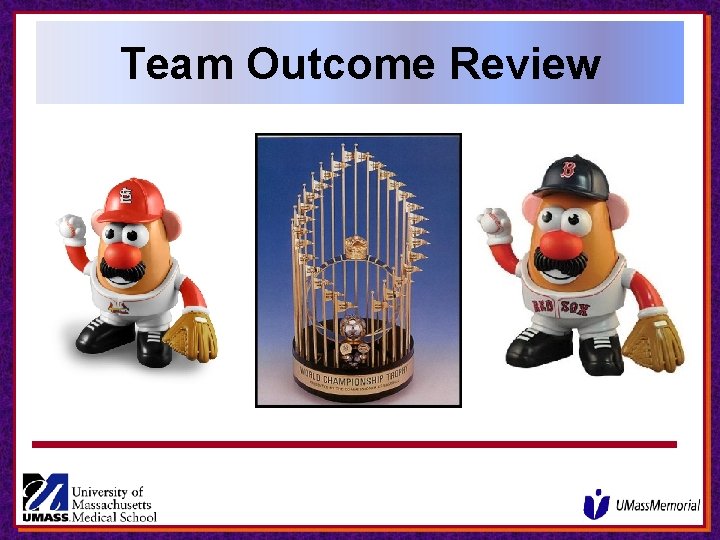
Team Outcome Review
What I learned from Mr. Potato Head: 1. 2. 3. 4. 5. 6. 7. 8. The system is the critical determinant of performance. Good communication is essential for a high-functioning team. Good ideas for improvement can come from anyone on the team. Data is essential to drive improvement efforts. Repeating PDSA cycles is a valuable process. Efficiency is enhanced when value-added work is increased and waste is reduced. (LEAN) With very simple changes in system, you can improve quality, efficiency, and safety! QUALITY IMPROVEMENT CAN BE FUN!
MEDICINE IS A TEAM SPORT!
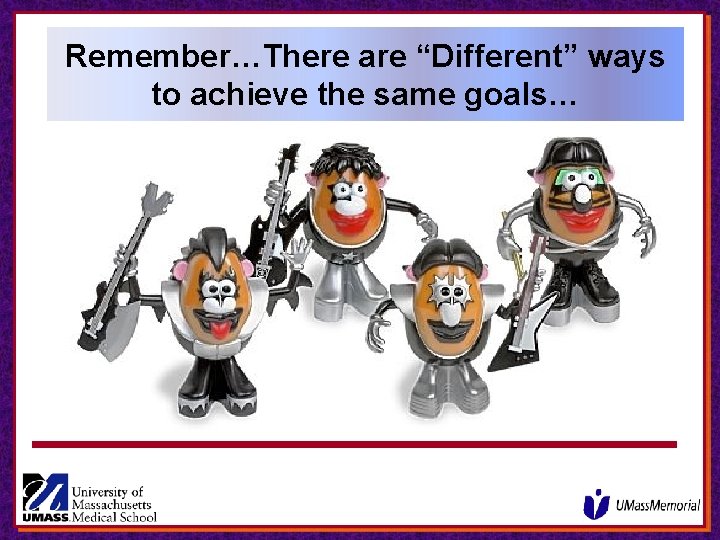
Remember…There are “Different” ways to achieve the same goals…
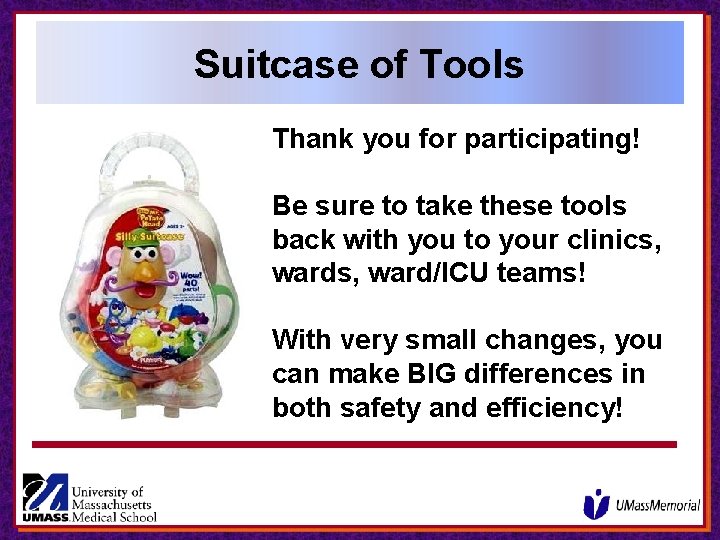
Suitcase of Tools Thank you for participating! Be sure to take these tools back with you to your clinics, ward/ICU teams! With very small changes, you can make BIG differences in both safety and efficiency!
Questions/Comments?