
MR PORTERS APUSH POWERPOINT FOR CHAPTER 8 The
- Slides: 33
MR. PORTER’S APUSH POWERPOINT FOR CHAPTER 8 The Revolutionary War
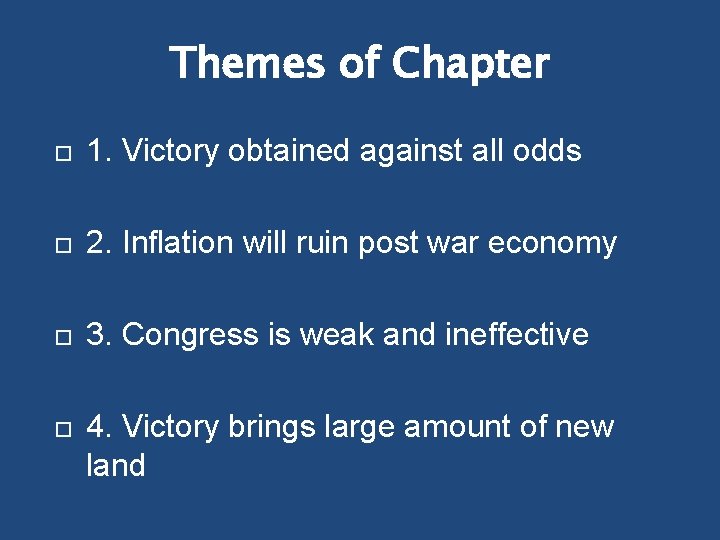
Themes of Chapter 1. Victory obtained against all odds 2. Inflation will ruin post war economy 3. Congress is weak and ineffective 4. Victory brings large amount of new land
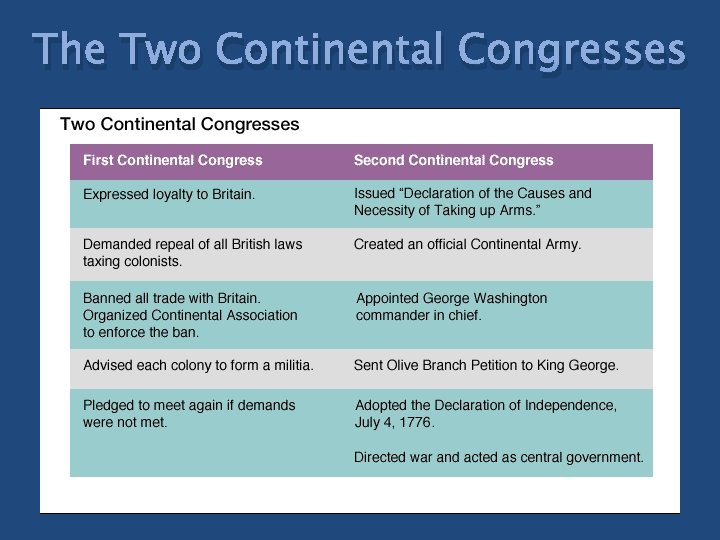
The Two Continental Congresses
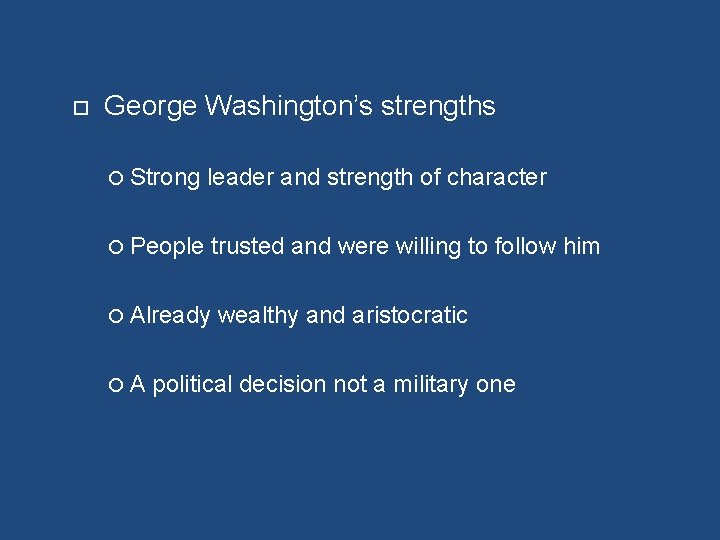
George Washington’s strengths Strong leader and strength of character People trusted and were willing to follow him Already A wealthy and aristocratic political decision not a military one
April 75 To July of 76 An Inconsistent War Americans claimed loyalty to king while also raising armies and fighting British soldiers May 1775 Ft. Ticonderoga (NY) victory by Ethan Allen June 1775 Bunker (Breed’s) Hill in Boston (a loss but also a win)
July 1775 – Olive Branch Petition Sent by Continental Congress to the king Americans professed loyalty to crown and asked for an end of fighting After Bunker Hill, the London government refused to consider peace
September 1775 – King hires German mercenaries ( Hessians) to fight colonists Colonists shocked because the king was bringing in foreign troops to a “family” disagreement Hessians good soldiers, although many deserted to stay in America and get land Fall 1775 Colonists attack Canada, led by Arnold and Montgomery, but the plan fails (wanted 14 th colony)
January 1776 – Common Sense published Thomas Paine, had just come from England One of the most influential pamphlets ever written Sold 120, 000 copies in only few months Called separation from Britain “common sense” “How can a smaller body (like Britain) control a larger body (like America)”
Continental Congress: towards independence On June 7, 1776 Richard Henry Lee of Virginia pushed resolution calling for independence On July 2, 1776 resolution passed after much debate Declared Spoke “all men are created equal” of “natural rights” that all had Because King George III had violated the colonists’ natural rights, they were justified in rebelling
Jefferson writes declaration as part of committee of 5 Abigail Adams wants women’s rights included but they are not Argument for freedom of slaves is dropped Formally adopted on July 4 th
Impact of the Declaration of Independence Established colonists as independents, not British subjects seeking reconciliation Allowed America to realistically request foreign aid (THIS IS KEY TO ANY CHANCE OF VICTORY) Influenced many other struggles for freedom in the future
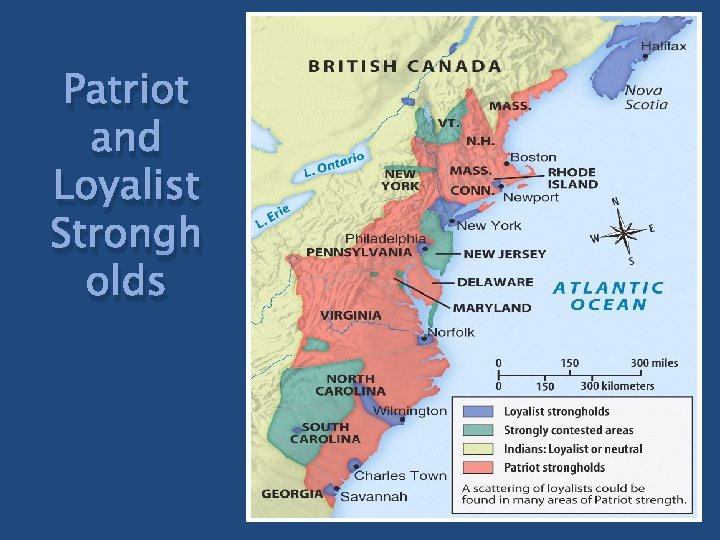
Loyalists (“Tories”) People in America loyal to the crown Patriots People who fought for the revolution Revolution only supported by a minority of the population; many stayed neutral
Patriot and Loyalist Strongh olds
Military disasters for Americans during the summer and fall of 1776 At the Battle of Long Island (NY) Americans retreated in panic (aka Battle of Brooklyn) Washington escaped to Manhattan Island, then to White Plains, then crossed the Hudson and Delaware Rivers with the British close behind
Two Victories in NJ Give Hope Washington sneaks into New Jersey, across the Delaware River From Pennsylvania, on two different occasions On December 26, 1776 Americans captured 1, 000 Hessians sleeping (Battle of Trenton) Eight Days later, Jan. 1777 the Americans defeated British at Princeton and again retreat back across the river
Burgoyne’s invasion in 1777 at Saratoga 7, 000 British troops moved slowly south from Canada because of heavy baggage and many women Instead of moving north Gen. Howe goes to Philadelphia and camps there while Washington freezes at Valley Forge and his troops train under Baron Von Stueben
Burgoyne was forced to surrender at Saratoga in Oct. 1777 to American General Gates The importance of Saratoga, N. Y. Allowed France to enter the war on the side of the Americans because now they could believe America would win (before were hedging their bets)……Treaty of Alliances negotiated by Franklin and signed Feb. 1778
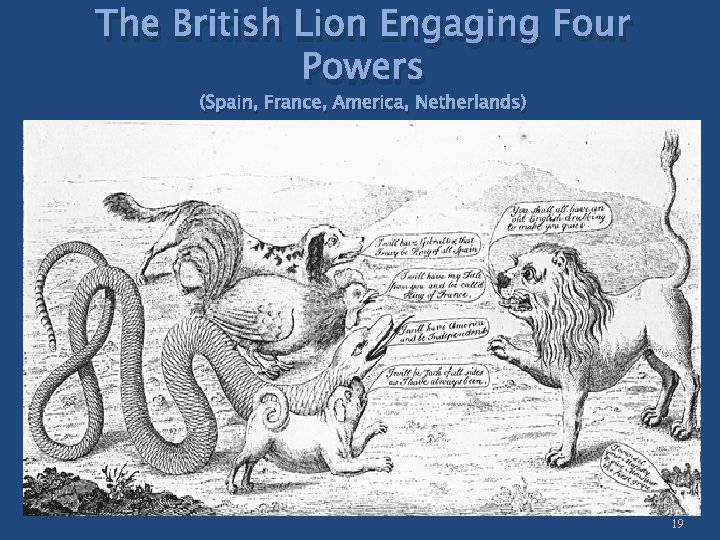
War starts to involve many world powers In 1778 France declared war on Britain In 1779 Spain and Holland entered the war against Britain War spread from just North America to Europe, South America, the Caribbean, and Asia
The British Lion Engaging Four Powers (Spain, France, America, Netherlands) 19
Importance of France America by itself would not have achieved independence The fighting in America became secondary for Britain to fighting the European powers after 1778 From 1778 to 1783 France provided Americans guns, money, equipment, 1/2 of all troops and basically all of the navy
Before 1778 Britain’s basic strategy had been to blockade and control the coast with navy After 1778 the French navy threatened the blockade The British evacuated Philadelphia and concentrated on base in New York From mid 1778 until Yorktown (in 1781), Washington used the American army to hold the British in New York
June 1778 – Monmouth (New Jersey) Washington attacked British troops retreating from Philadelphia Heat of the day led to many soldiers collapsing The battle was indecisive, but about 1/3 of the British Hessians deserted Molly Pitcher helps out
The westward pioneer movement continued during the war For example, in Kentucky: Lexington named for the Massachusetts town where the fighting began Louisville Louis XVI was named for the French king
War is Important but Money Matter More Privately owned ships (basically pirates) are Authorized by Congress to attack English merchant shipping They brought in gold, hurt the enemy, and raised American morale with victories Insurance rates and losses of ships led to British merchants pressuring Parliament to end the war
1780 to 1781 was the darkest period of the war for America Inflation was very high The government was bankrupt; would only repay debts at 2. 5 cents on the dollar Many end colonists begin to feel the war would never
In 1780, General Benedict Arnold turned traitor Felt unappreciated by the Americans Promised to sell out West Point The plan detected when messenger captured Arnold fled to British and became an officer in the British army
Cornwallis marched into a trap at Yorktown, Virginia French sailed to the Chesapeake, fought off the British fleet, and trapped Cornwallis from the sea Washington On trapped Cornwallis from land October 19, 1781 Cornwallis and 7, 000 men were forced to surrender
After Yorktown British public was sick of the war and wanted it to end Tory government collapsed and was temporarily replaced by Whigs (who where anti-king and antiwar) 3 Americans in Paris negotiated peace Benjamin Franklin, John Adams, John Jay
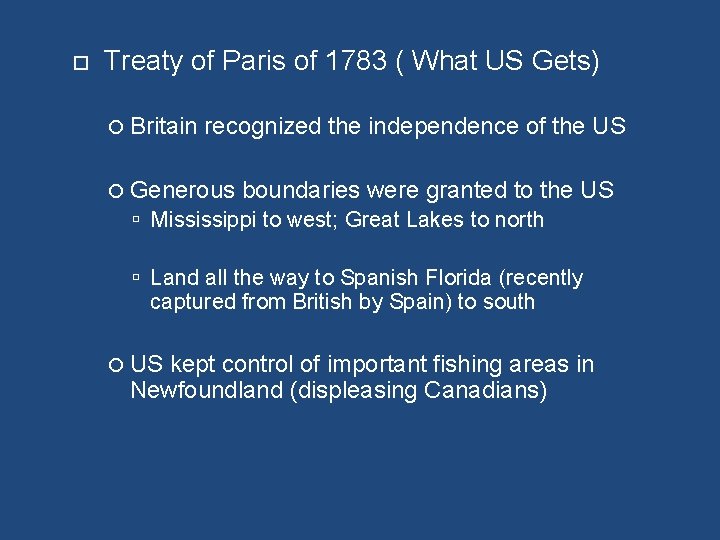
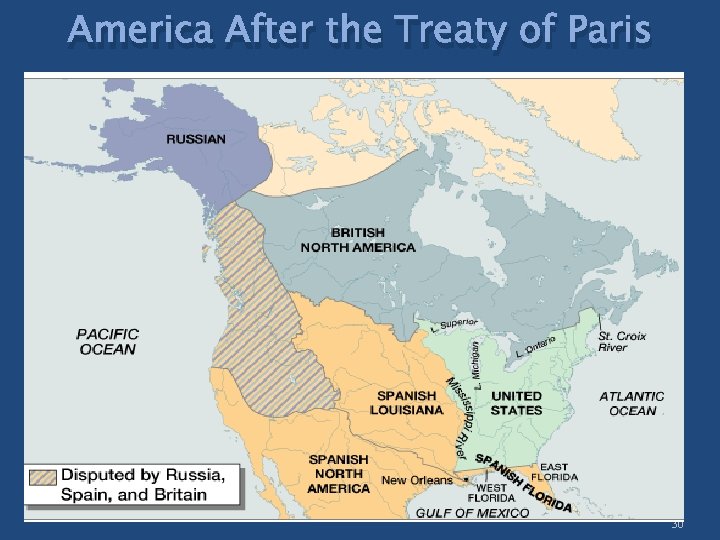
Treaty of Paris of 1783 ( What US Gets) Britain recognized the independence of the US Generous boundaries were granted to the US Mississippi to west; Great Lakes to north Land all the way to Spanish Florida (recently captured from British by Spain) to south US kept control of important fishing areas in Newfoundland (displeasing Canadians)
America After the Treaty of Paris 30
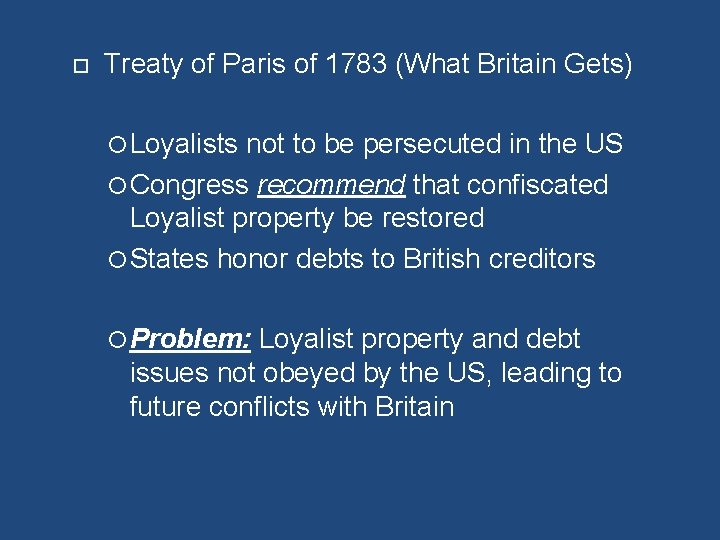
Treaty of Paris of 1783 (What Britain Gets) Loyalists not to be persecuted in the US Congress recommend that confiscated Loyalist property be restored States honor debts to British creditors Problem: Loyalist property and debt issues not obeyed by the US, leading to future conflicts with Britain
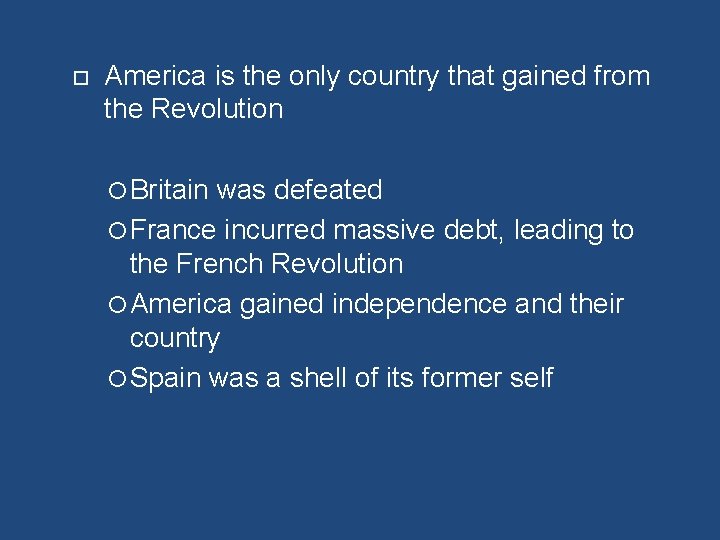
America is the only country that gained from the Revolution Britain was defeated France incurred massive debt, leading to the French Revolution America gained independence and their country Spain was a shell of its former self
KEYS TO THE CHAPTER Colonists Achieve Victory but now face the problem of “What’s Next”. Inflation is very high Articles of Confederation are weak and unsustainable Victory brings land desire for expansion but no rules/law about how to do so