
Mr KNN Soft Relevance for Multilabel Classification CIKM

Mr. KNN: Soft Relevance for Multi-label Classification (CIKM’ 10) Date: 2011/1/11 Advisor: Dr. Koh. Jia-Ling Speaker: Lin, Yi-Jhen 1
Preview • Introduction • Related Work • Problem Transformation Methods • Algorithm Adaptation Methods • The ML-KNN (Multi-Label K Nearest Neighbor) Method • Mr. KNN: Method Description • Experimental Results • Conclusion 2
Introduction • Multi-label learning refers to learning tasks where each instance is assigned to one or more classes(labels). • Multi-label classification is drawing increasing interest and emerging as a fast-growing research field. 3
Preview • Introduction • Related Work • Problem Transformation Methods • Algorithm Adaptation Methods • The ML-KNN (Multi-Label K Nearest Neighbor) Method • Mr. KNN: Method Description • Experimental Results • Conclusion 4
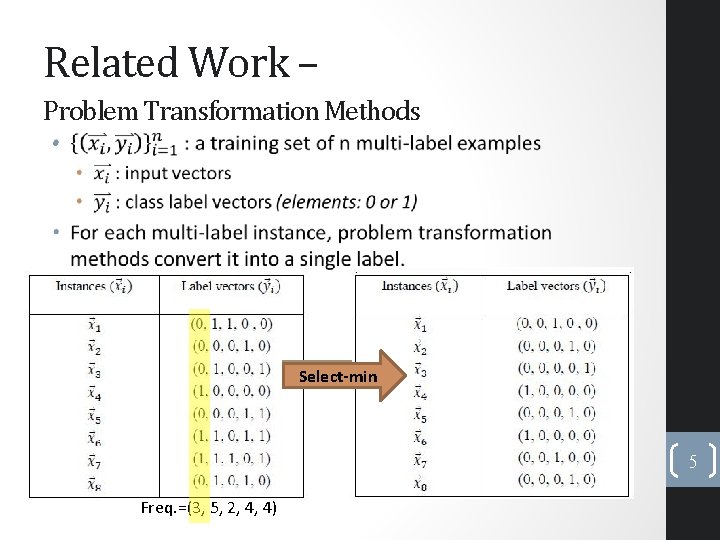
Related Work – Problem Transformation Methods • Select-max Select-min 5 Freq. =(3, 5, 2, 4, 4)

Related Work – Problem Transformation Methods • Another popular strategy is so-called binary relevance, which converts the problem into multiple single-label binary classification problems. • Multi-label instances are forced into one single category without considering distribution. 6
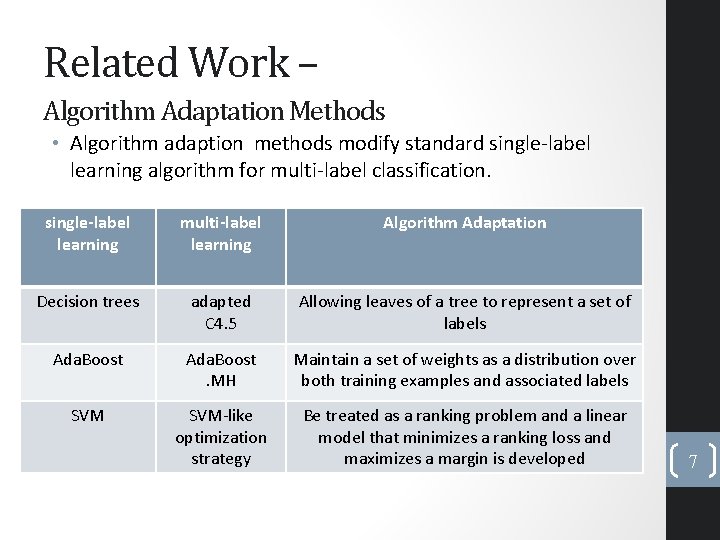
Related Work – Algorithm Adaptation Methods • Algorithm adaption methods modify standard single-label learning algorithm for multi-label classification. single-label learning multi-label learning Algorithm Adaptation Decision trees adapted C 4. 5 Allowing leaves of a tree to represent a set of labels Ada. Boost. MH Maintain a set of weights as a distribution over both training examples and associated labels SVM-like optimization strategy Be treated as a ranking problem and a linear model that minimizes a ranking loss and maximizes a margin is developed 7
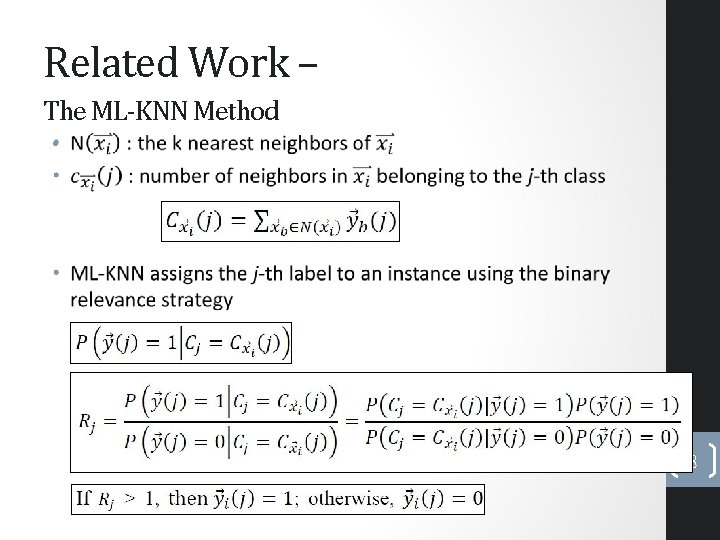
Related Work – The ML-KNN Method • 8
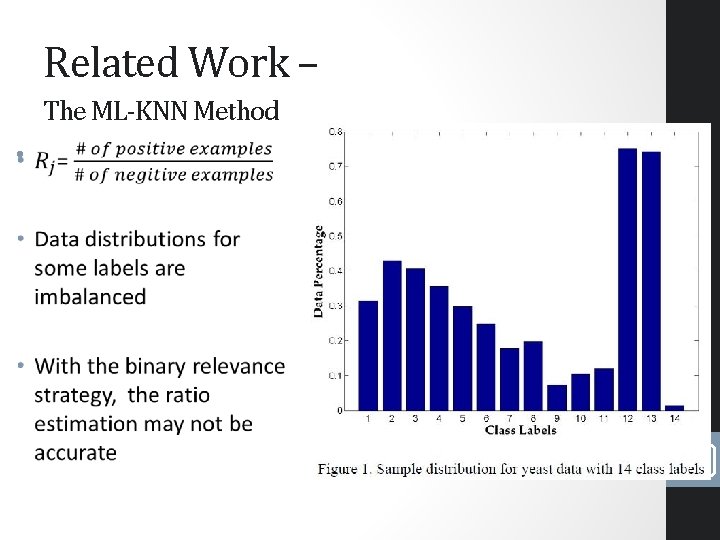
Related Work – The ML-KNN Method • 9
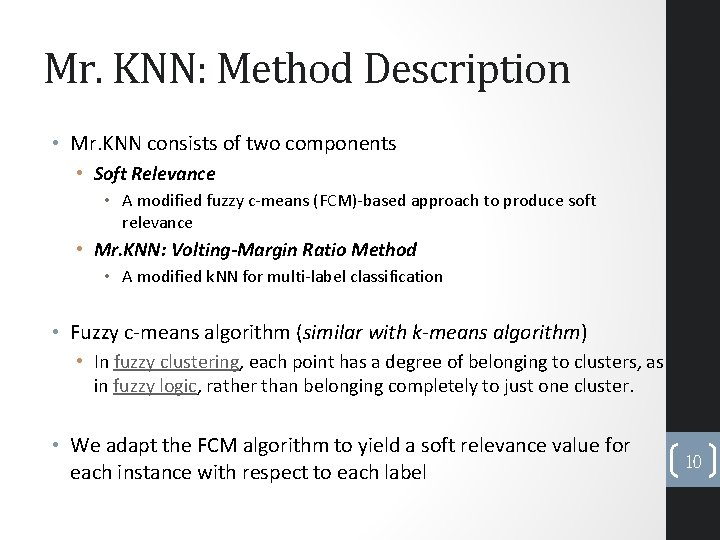
Mr. KNN: Method Description • Mr. KNN consists of two components • Soft Relevance • A modified fuzzy c-means (FCM)-based approach to produce soft relevance • Mr. KNN: Volting-Margin Ratio Method • A modified k. NN for multi-label classification • Fuzzy c-means algorithm (similar with k-means algorithm) • In fuzzy clustering, each point has a degree of belonging to clusters, as in fuzzy logic, rather than belonging completely to just one cluster. • We adapt the FCM algorithm to yield a soft relevance value for each instance with respect to each label 10
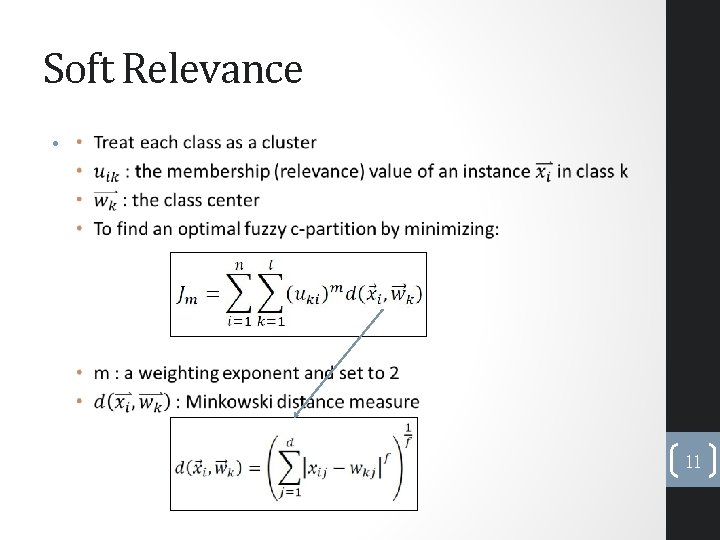
Soft Relevance • 11
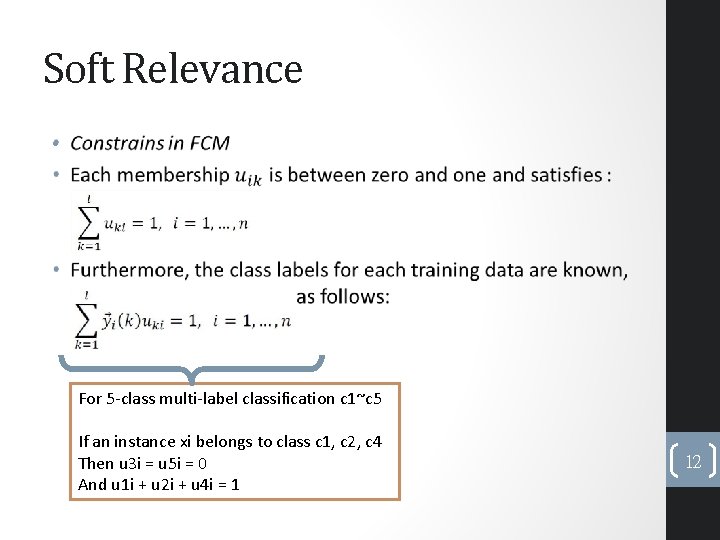
Soft Relevance • For 5 -class multi-label classification c 1~c 5 If an instance xi belongs to class c 1, c 2, c 4 Then u 3 i = u 5 i = 0 And u 1 i + u 2 i + u 4 i = 1 12
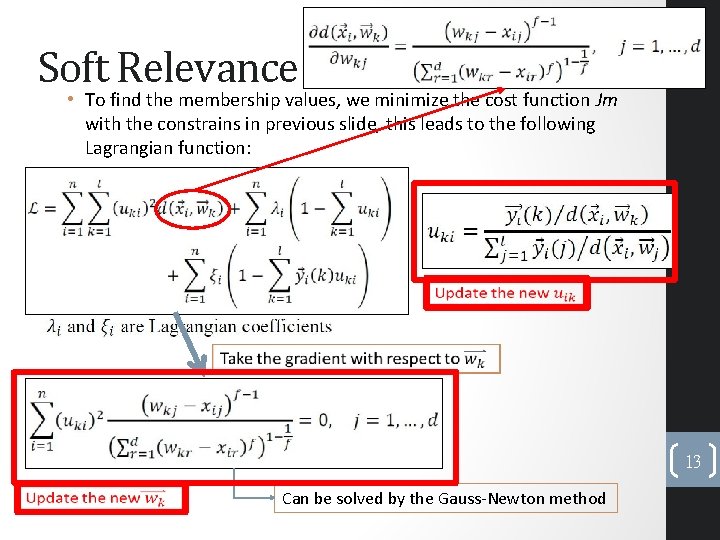
Soft Relevance • To find the membership values, we minimize the cost function Jm with the constrains in previous slide, this leads to the following Lagrangian function: 13 Can be solved by the Gauss-Newton method
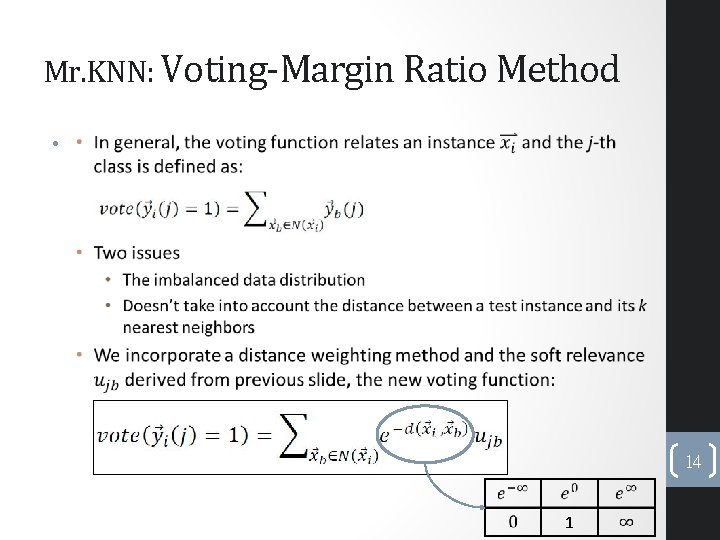
Mr. KNN: Voting-Margin Ratio Method • 14 1
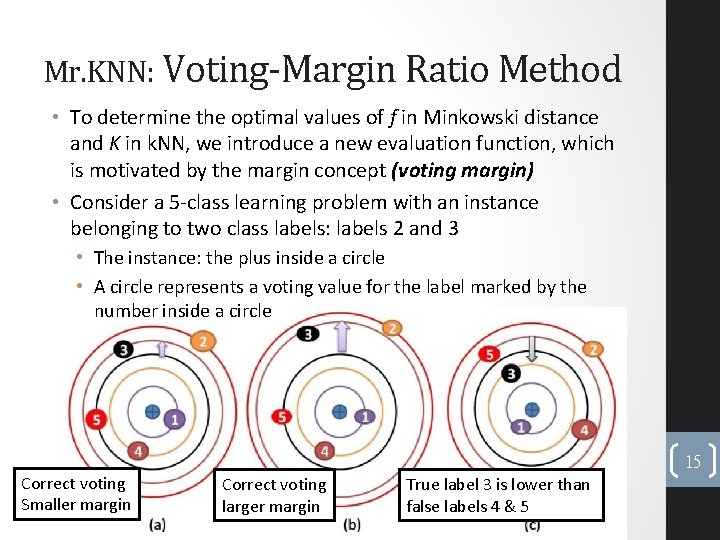
Mr. KNN: Voting-Margin Ratio Method • To determine the optimal values of f in Minkowski distance and K in k. NN, we introduce a new evaluation function, which is motivated by the margin concept (voting margin) • Consider a 5 -class learning problem with an instance belonging to two class labels: labels 2 and 3 • The instance: the plus inside a circle • A circle represents a voting value for the label marked by the number inside a circle 15 Correct voting Smaller margin Correct voting larger margin True label 3 is lower than false labels 4 & 5
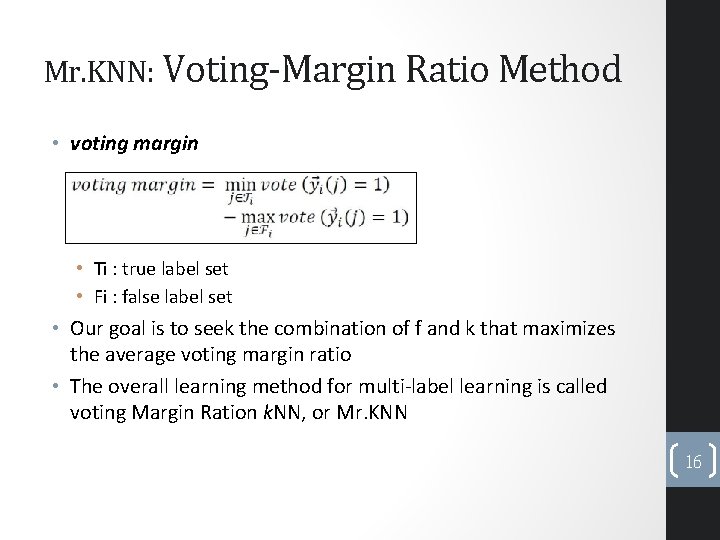
Mr. KNN: Voting-Margin Ratio Method • voting margin • Ti : true label set • Fi : false label set • Our goal is to seek the combination of f and k that maximizes the average voting margin ratio • The overall learning method for multi-label learning is called voting Margin Ration k. NN, or Mr. KNN 16
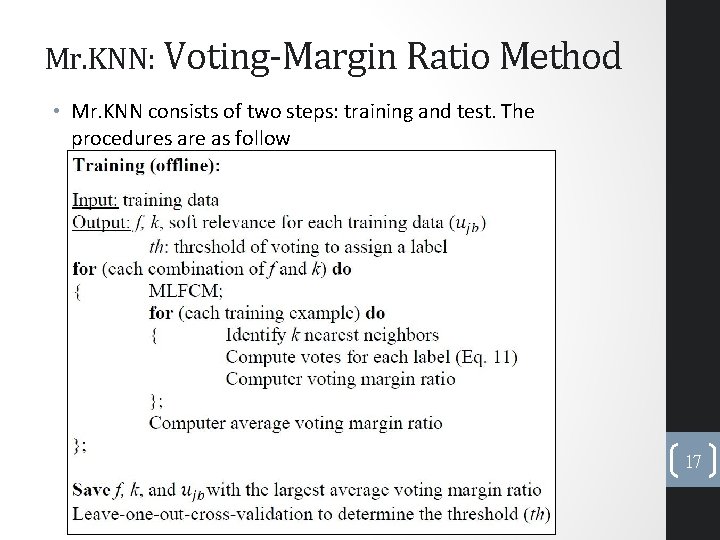
Mr. KNN: Voting-Margin Ratio Method • Mr. KNN consists of two steps: training and test. The procedures are as follow 17
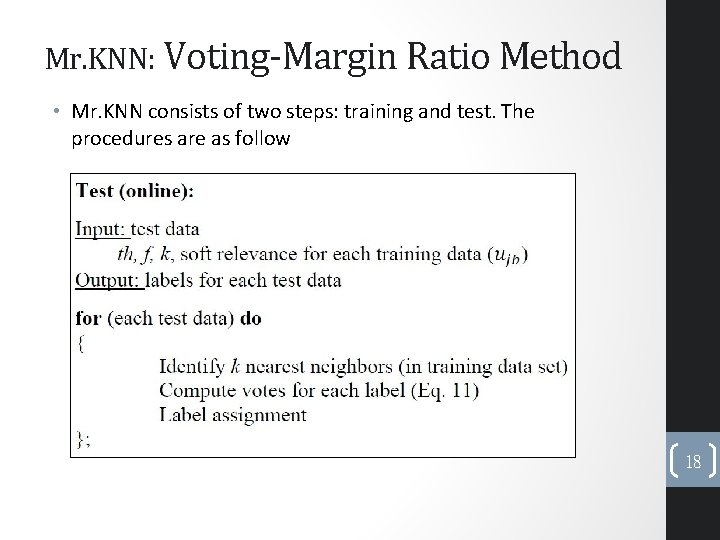
Mr. KNN: Voting-Margin Ratio Method • Mr. KNN consists of two steps: training and test. The procedures are as follow 18
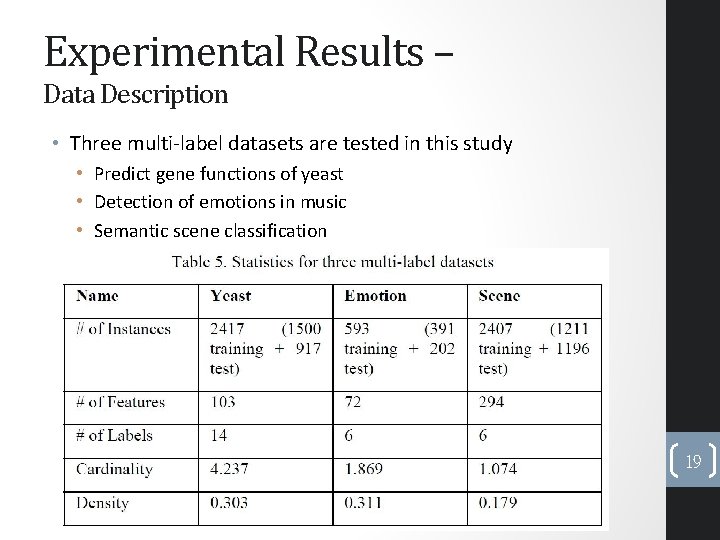
Experimental Results – Data Description • Three multi-label datasets are tested in this study • Predict gene functions of yeast • Detection of emotions in music • Semantic scene classification 19
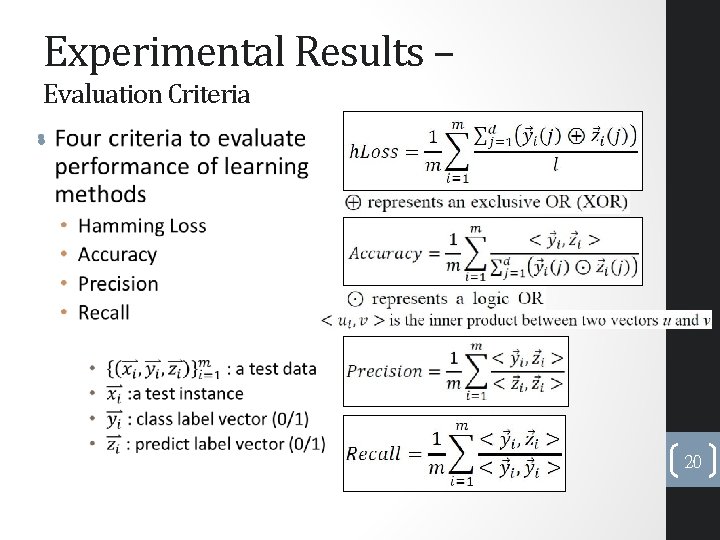
Experimental Results – Evaluation Criteria • 20
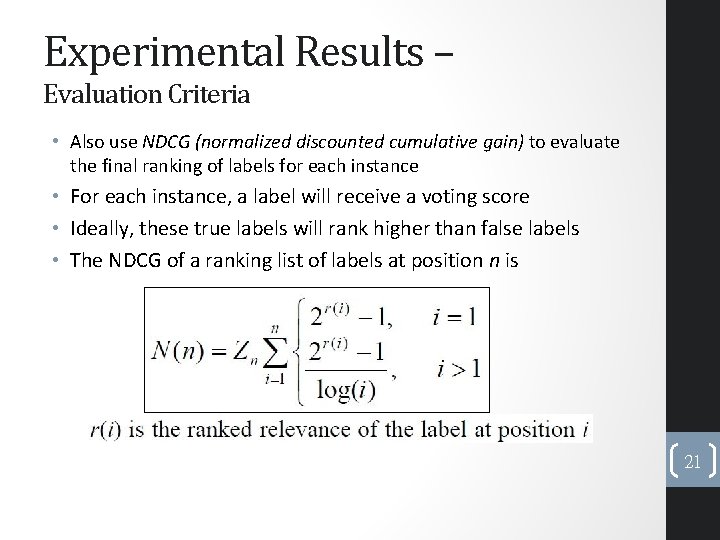
Experimental Results – Evaluation Criteria • Also use NDCG (normalized discounted cumulative gain) to evaluate the final ranking of labels for each instance • For each instance, a label will receive a voting score • Ideally, these true labels will rank higher than false labels • The NDCG of a ranking list of labels at position n is 21
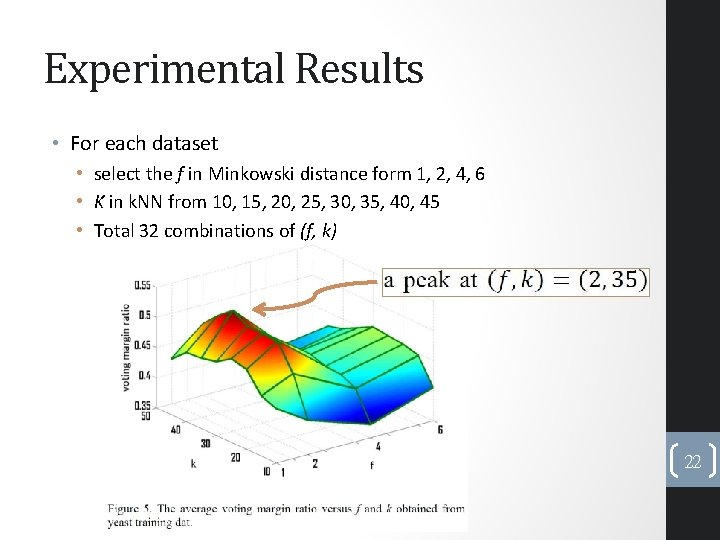
Experimental Results • For each dataset • select the f in Minkowski distance form 1, 2, 4, 6 • K in k. NN from 10, 15, 20, 25, 30, 35, 40, 45 • Total 32 combinations of (f, k) 22
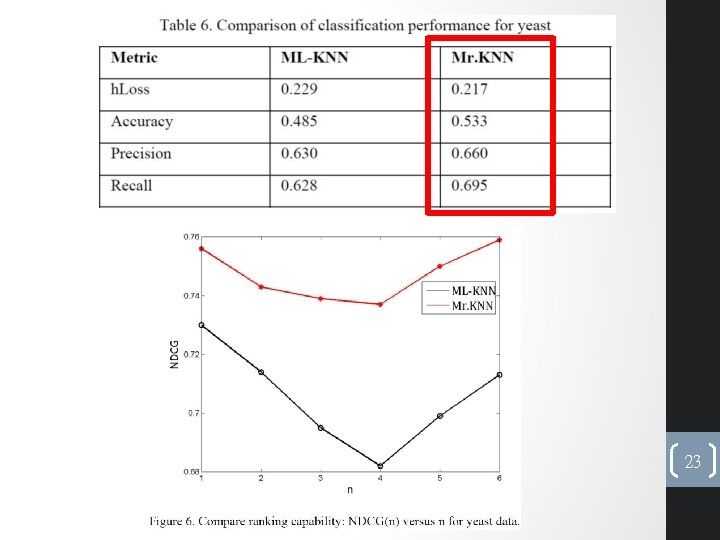
23
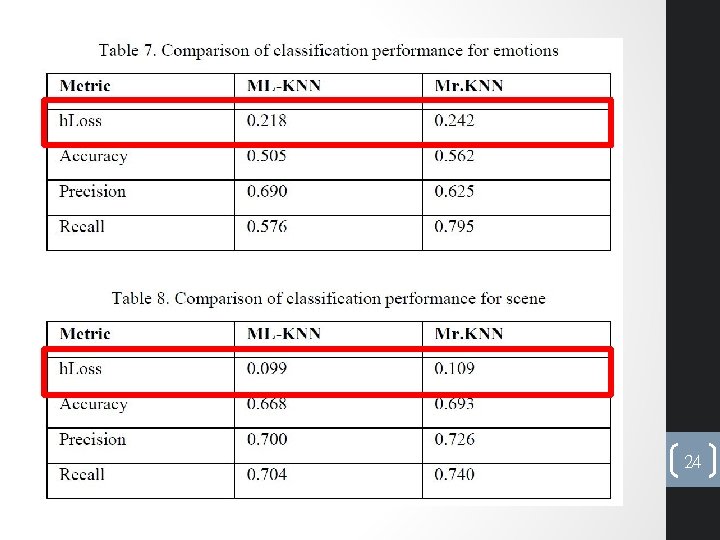
24
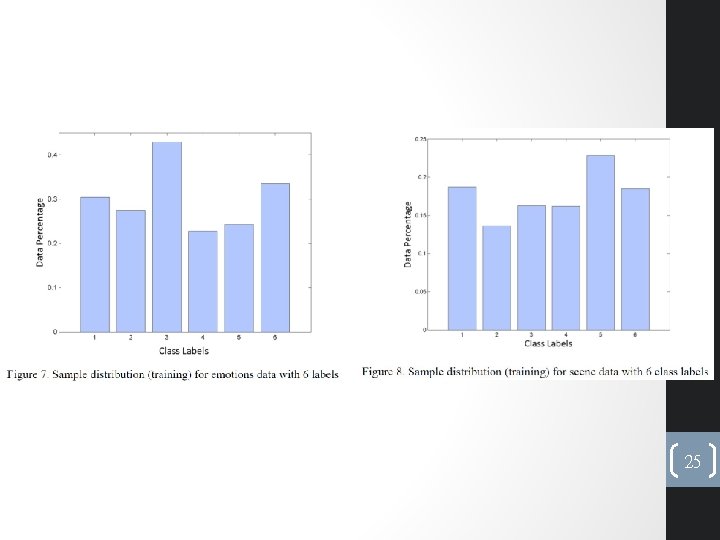
25
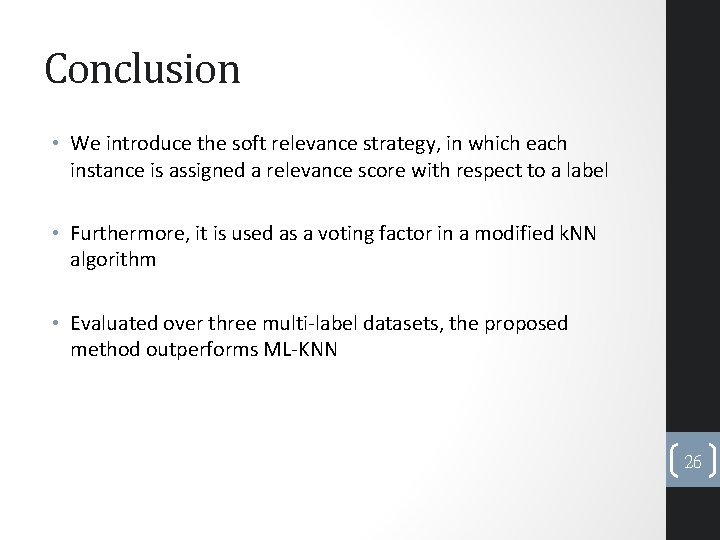
Conclusion • We introduce the soft relevance strategy, in which each instance is assigned a relevance score with respect to a label • Furthermore, it is used as a voting factor in a modified k. NN algorithm • Evaluated over three multi-label datasets, the proposed method outperforms ML-KNN 26
- Slides: 26