
MR Imaging of the Rotator Cuff Timothy G
- Slides: 53
MR Imaging of the Rotator Cuff Timothy G. Sanders, M. D.
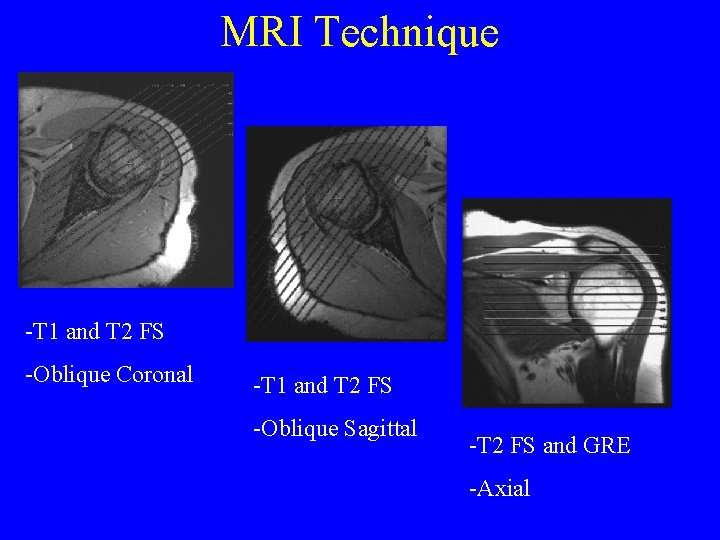
MRI Technique -T 1 and T 2 FS -Oblique Coronal -T 1 and T 2 FS -Oblique Sagittal -T 2 FS and GRE -Axial
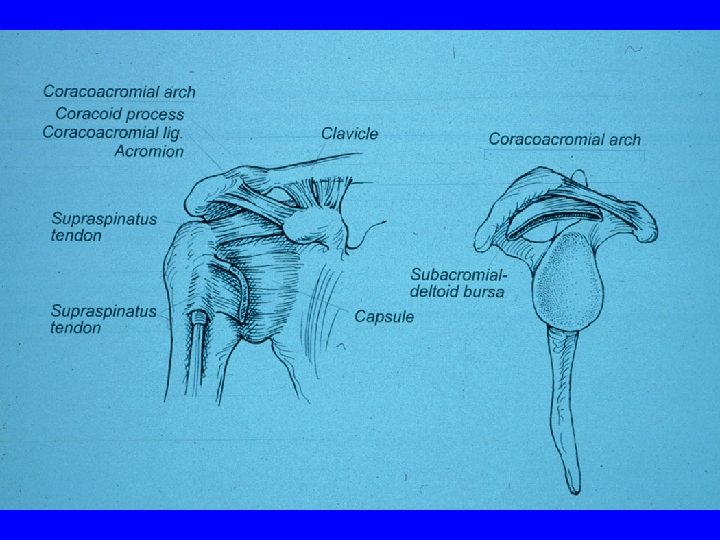
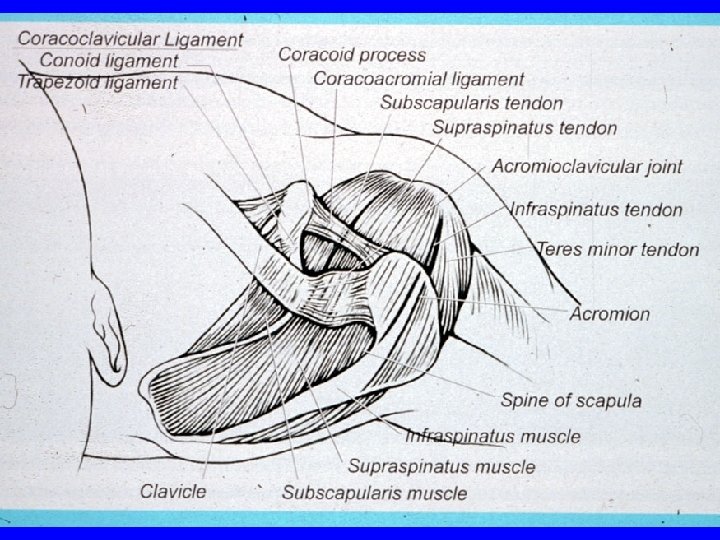
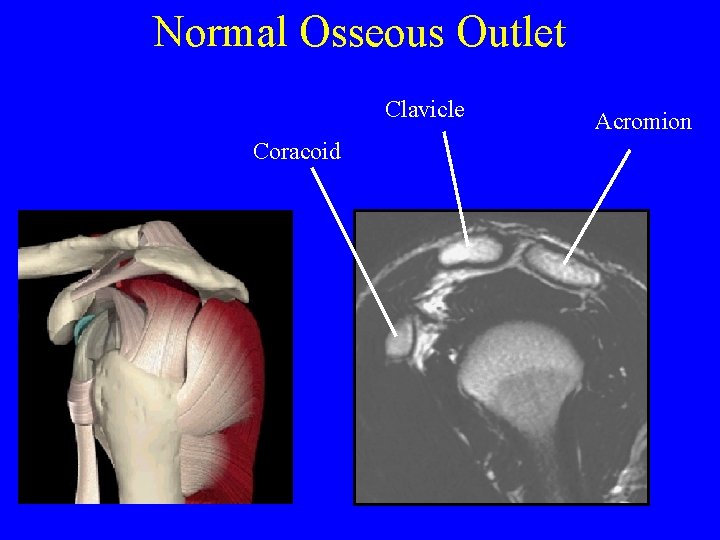
Osseous Outlet and Acromion • Rotator Cuff Surrounded by a Bony Arch • Mechanical Impingement leads to degeneration of the cuff • Anterior Acromion Most Important Structure Leading to Impingement
Normal Osseous Outlet Clavicle Coracoid Acromion
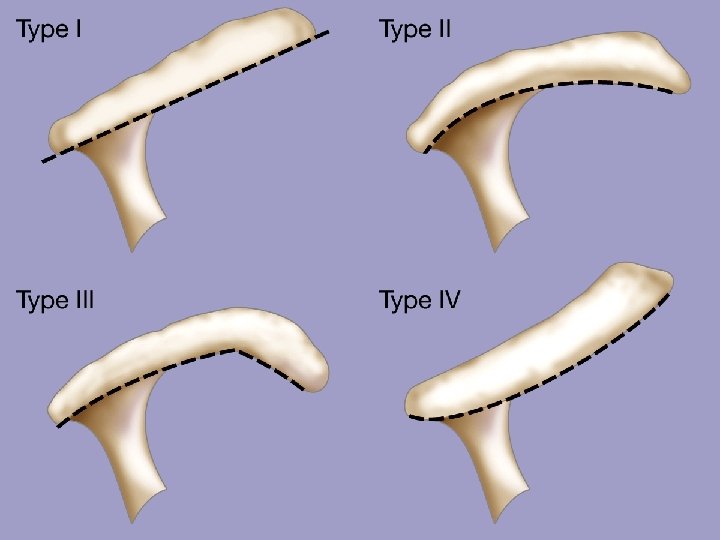
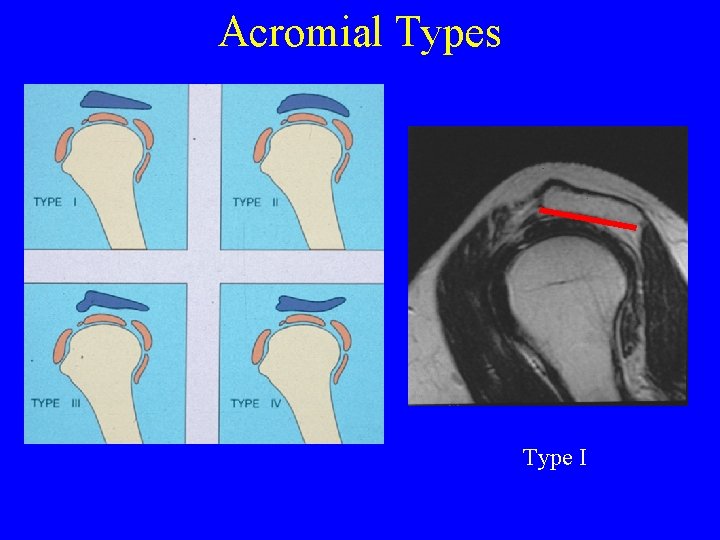
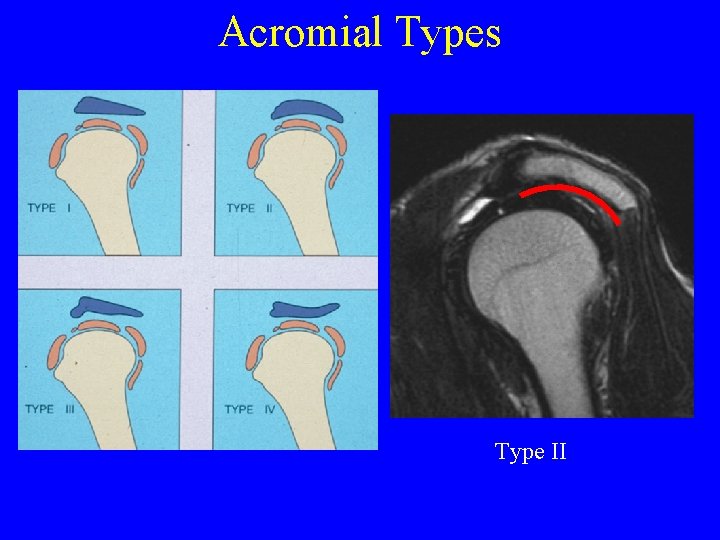
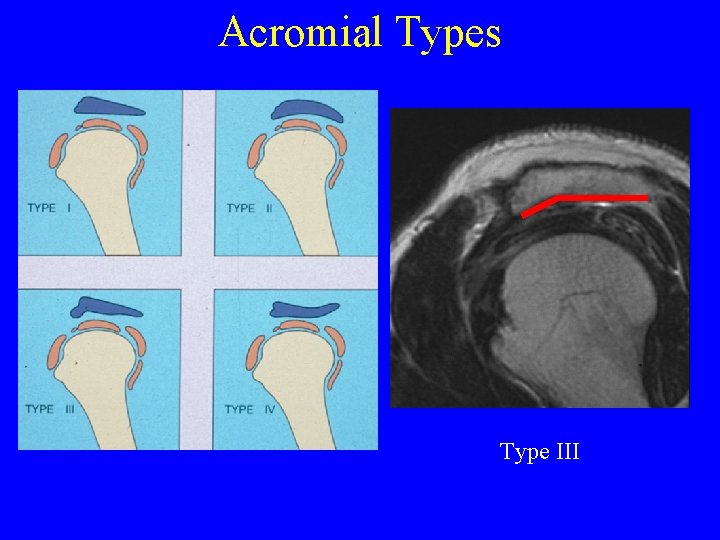
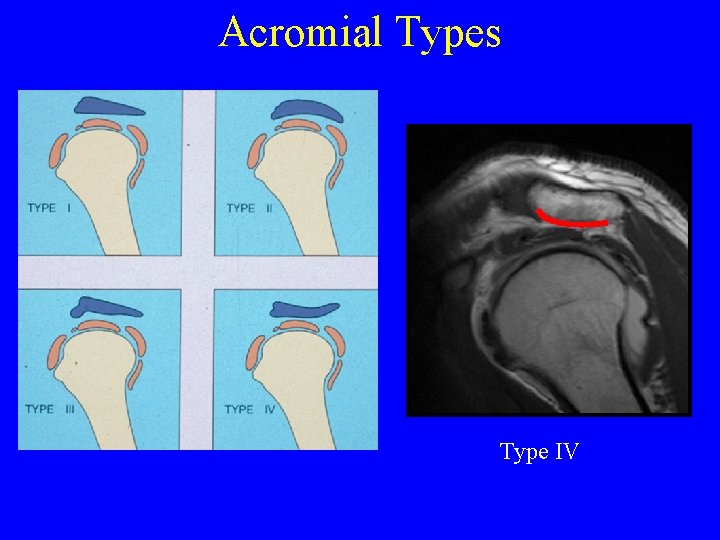
Acromial Types Type I
Acromial Types Type II
Acromial Types Type III
Acromial Types Type IV
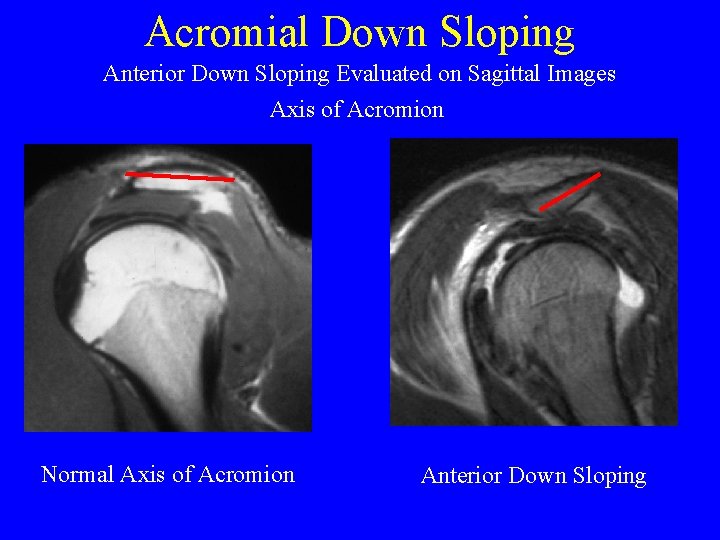
Acromial Down Sloping Anterior Down Sloping Evaluated on Sagittal Images Axis of Acromion Normal Axis of Acromion Anterior Down Sloping
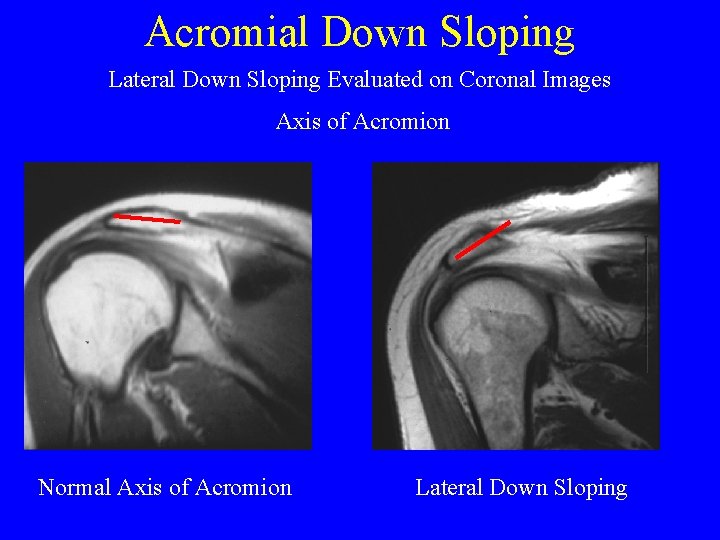
Acromial Down Sloping Lateral Down Sloping Evaluated on Coronal Images Axis of Acromion Normal Axis of Acromion Lateral Down Sloping
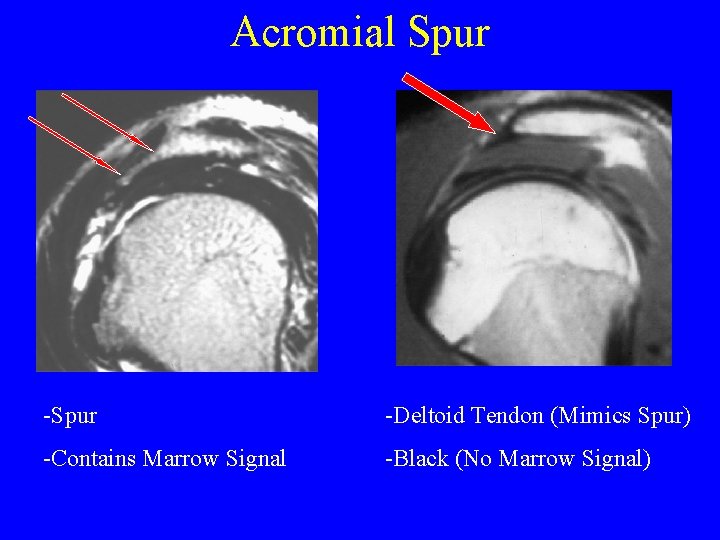
Acromial Spur -Deltoid Tendon (Mimics Spur) -Contains Marrow Signal -Black (No Marrow Signal)
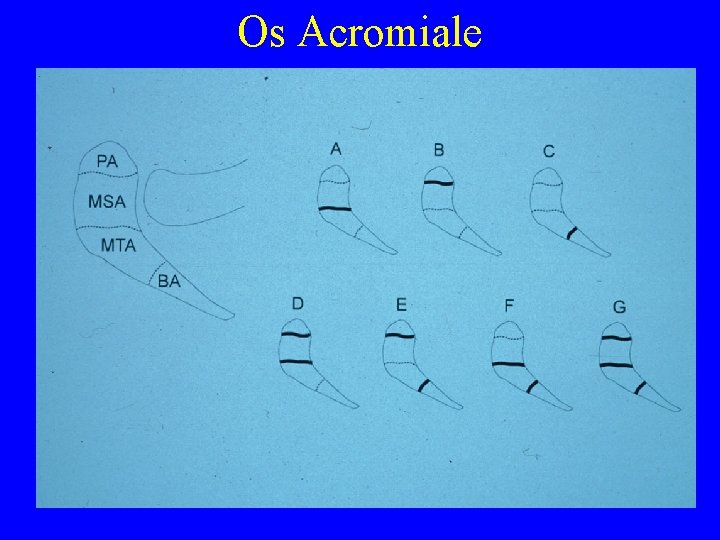
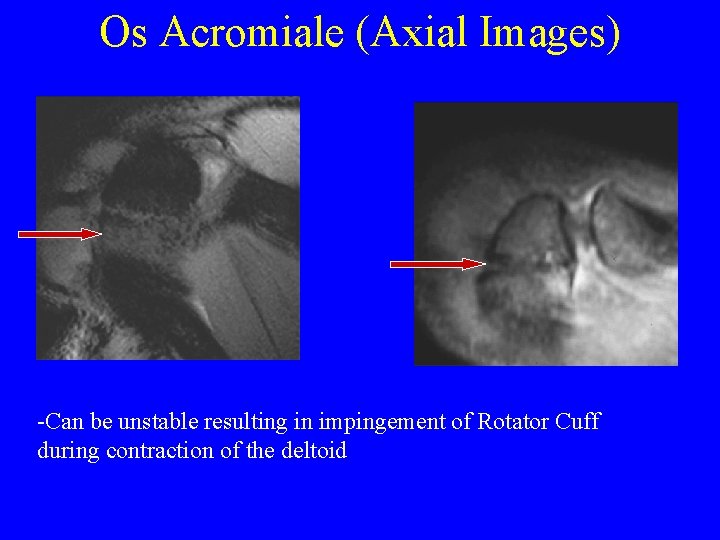
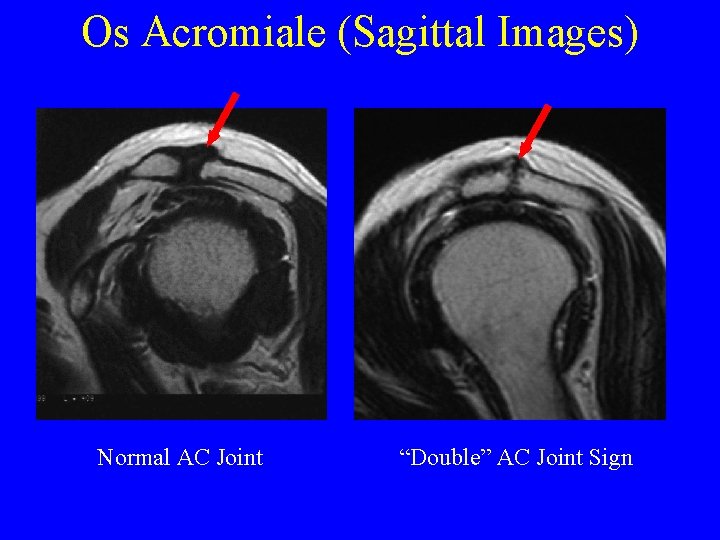
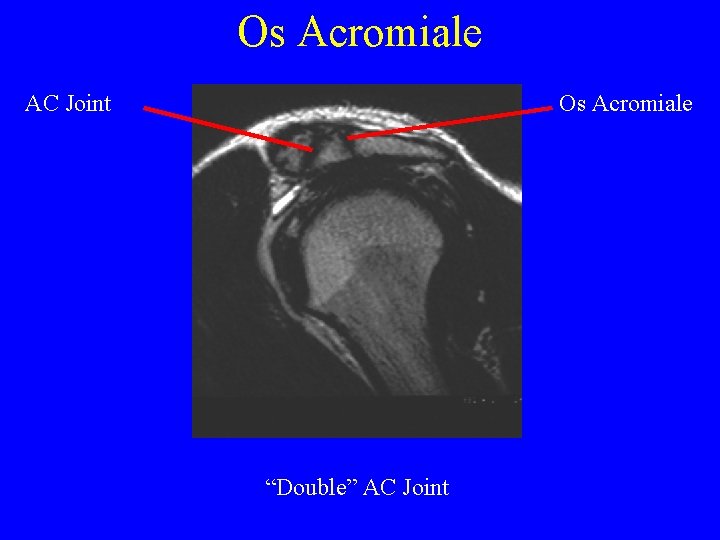
Os Acromiale
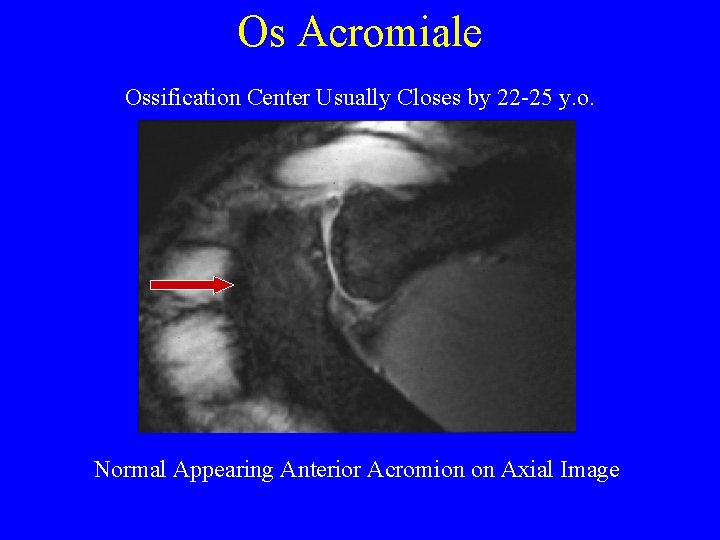
Os Acromiale Ossification Center Usually Closes by 22 -25 y. o. Normal Appearing Anterior Acromion on Axial Image
Os Acromiale (Axial Images) -Can be unstable resulting in impingement of Rotator Cuff during contraction of the deltoid
Os Acromiale (Sagittal Images) Normal AC Joint “Double” AC Joint Sign
Os Acromiale AC Joint Os Acromiale “Double” AC Joint
Acromion • • Type (I, III) Anterior/ Lateral Down Sloping Inferior Spur Os Acromiale
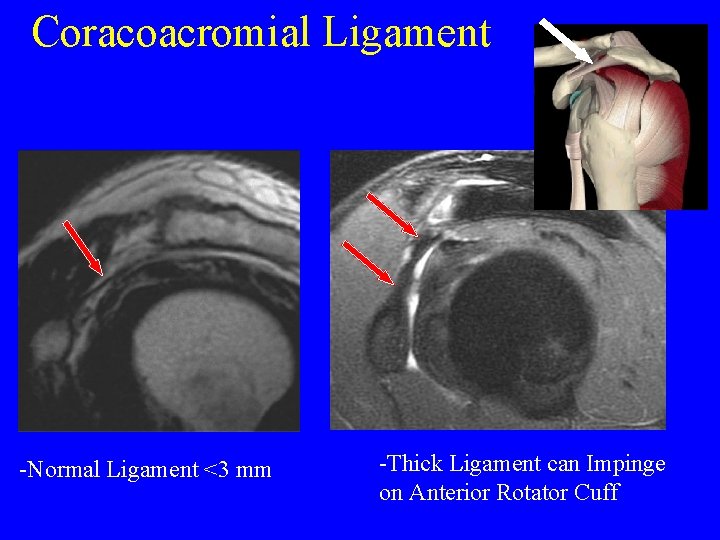
Coracoacromial Ligament -Normal Ligament <3 mm -Thick Ligament can Impinge on Anterior Rotator Cuff
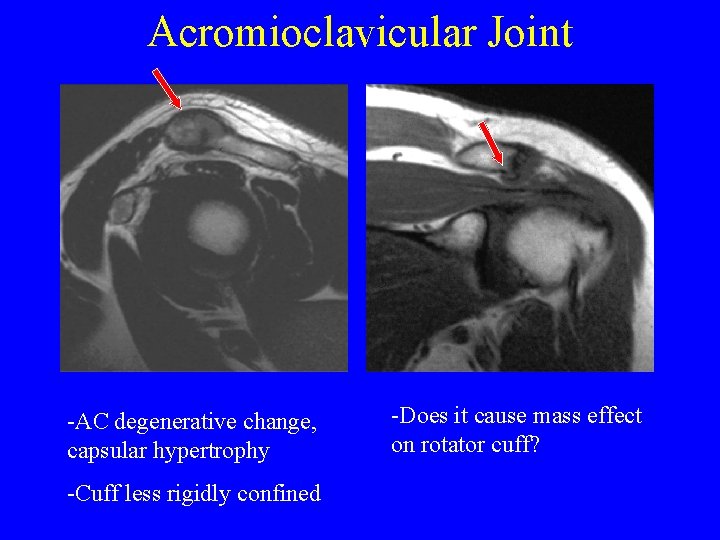
Acromioclavicular Joint -AC degenerative change, capsular hypertrophy -Cuff less rigidly confined -Does it cause mass effect on rotator cuff?
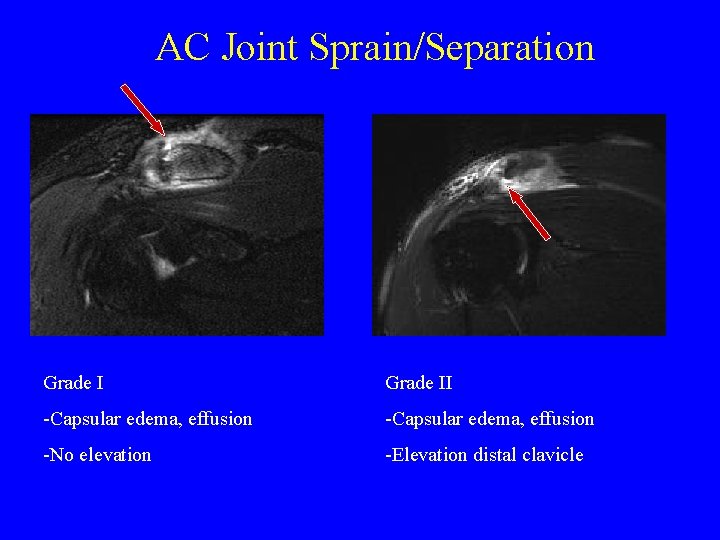
AC Joint Sprain/Separation Grade II -Capsular edema, effusion -No elevation -Elevation distal clavicle
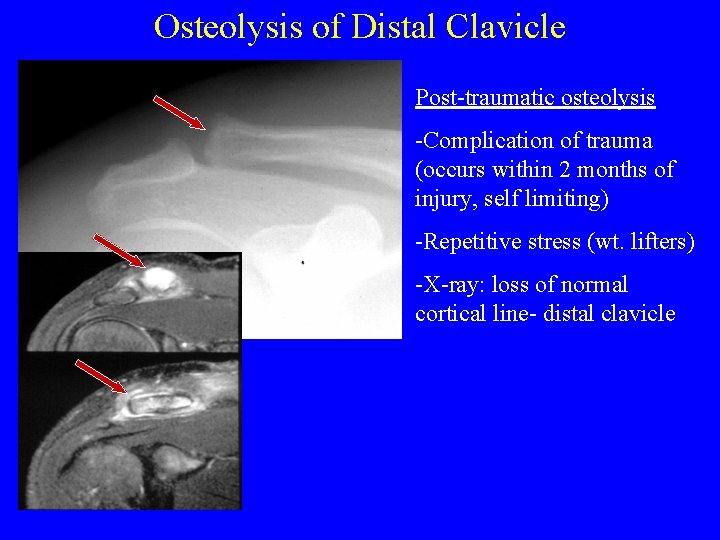
Osteolysis of Distal Clavicle Post-traumatic osteolysis -Complication of trauma (occurs within 2 months of injury, self limiting) -Repetitive stress (wt. lifters) -X-ray: loss of normal cortical line- distal clavicle
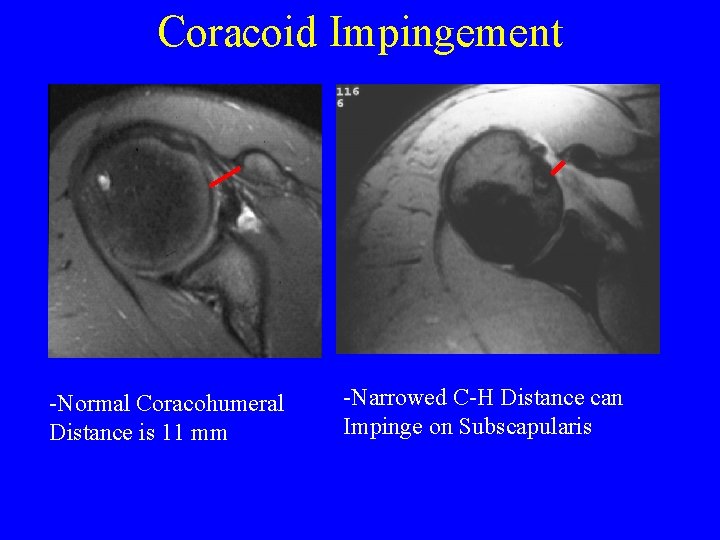
Coracoid Impingement -Normal Coracohumeral Distance is 11 mm -Narrowed C-H Distance can Impinge on Subscapularis
Osseous Outlet and Acromion • Acromion – Type, Down Sloping, Spur, Os Acromiale • AC Joint – Deg. Change, Hypertrophy (mass effect? ) • Coracoacromial Ligament (thickened? ) • Coracohumeral Impingement (subscap? )
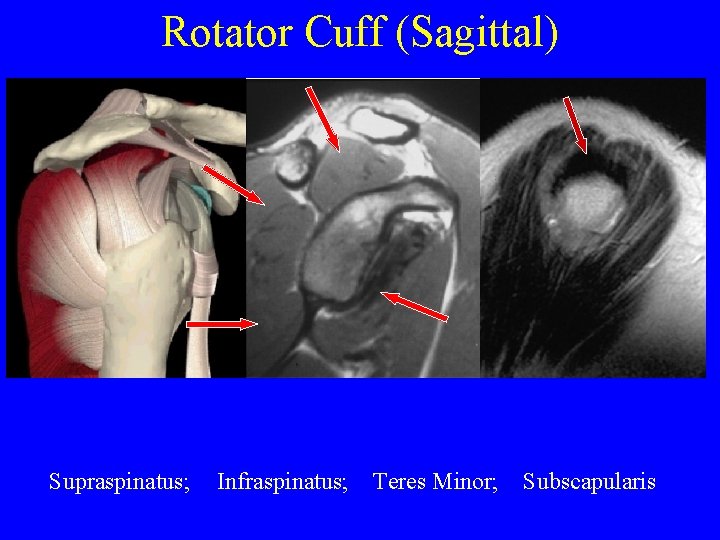
Rotator Cuff (Sagittal) Supraspinatus; Infraspinatus; Teres Minor; Subscapularis
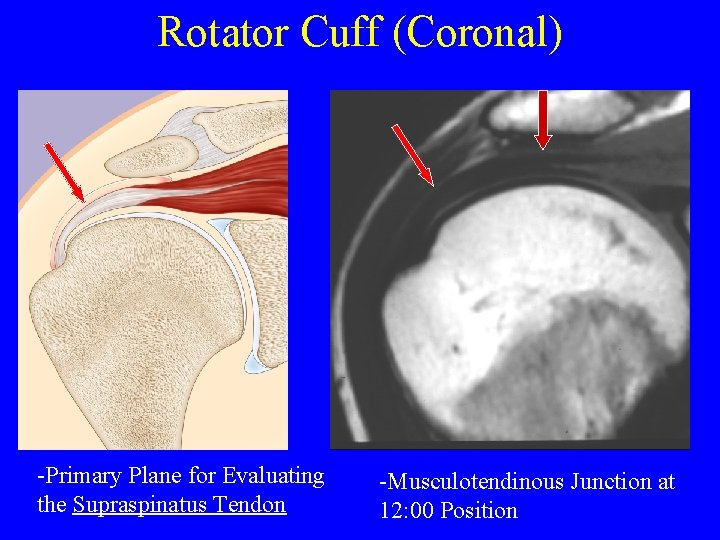
Rotator Cuff (Coronal) -Primary Plane for Evaluating the Supraspinatus Tendon -Musculotendinous Junction at 12: 00 Position
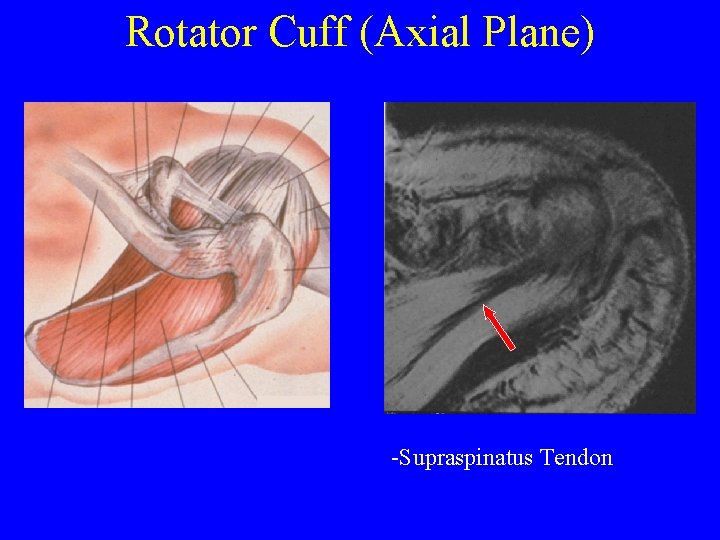
Rotator Cuff (Axial Plane) -Supraspinatus Tendon
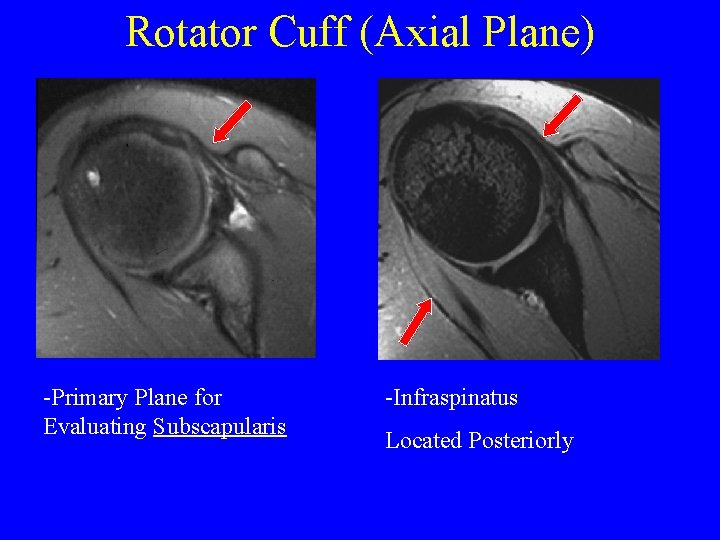
Rotator Cuff (Axial Plane) -Primary Plane for Evaluating Subscapularis -Infraspinatus Located Posteriorly
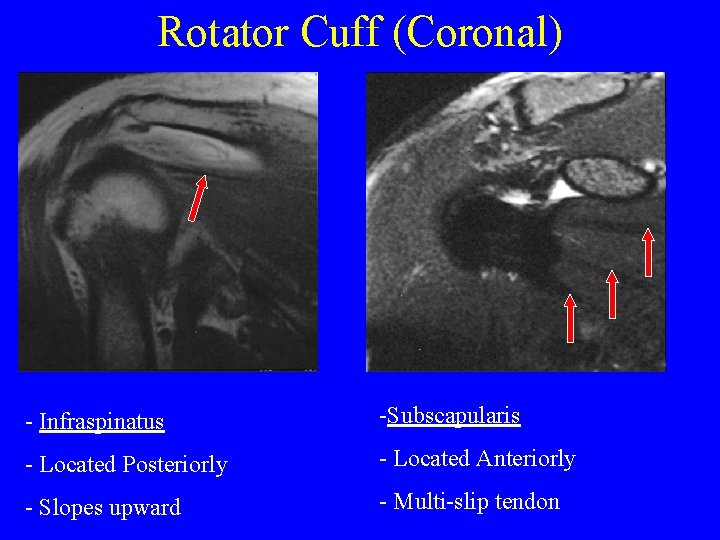
Rotator Cuff (Coronal) - Infraspinatus -Subscapularis - Located Posteriorly - Located Anteriorly - Slopes upward - Multi-slip tendon
Rotator Cuff Pathology • Tendonopathy • Tear – Partial Thickness, Full Thickness, Complete • Musculotendinous Retraction • Fatty Atrophy • HADD/ Calcific Tendonitis
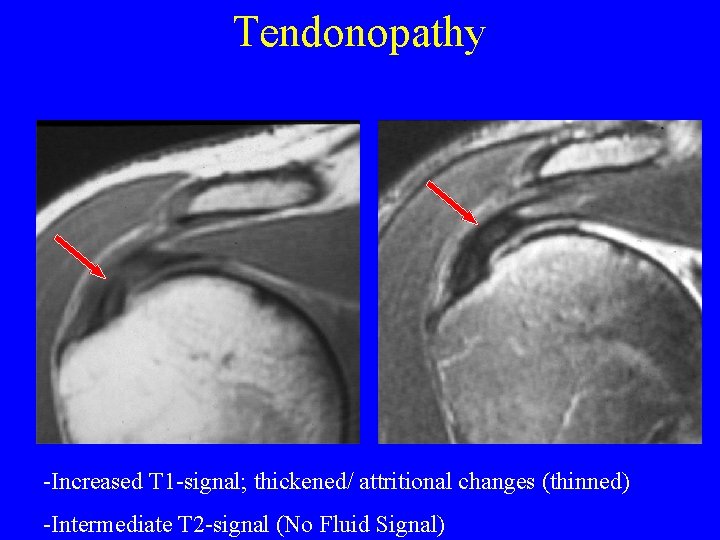
Tendonopathy -Increased T 1 -signal; thickened/ attritional changes (thinned) -Intermediate T 2 -signal (No Fluid Signal)
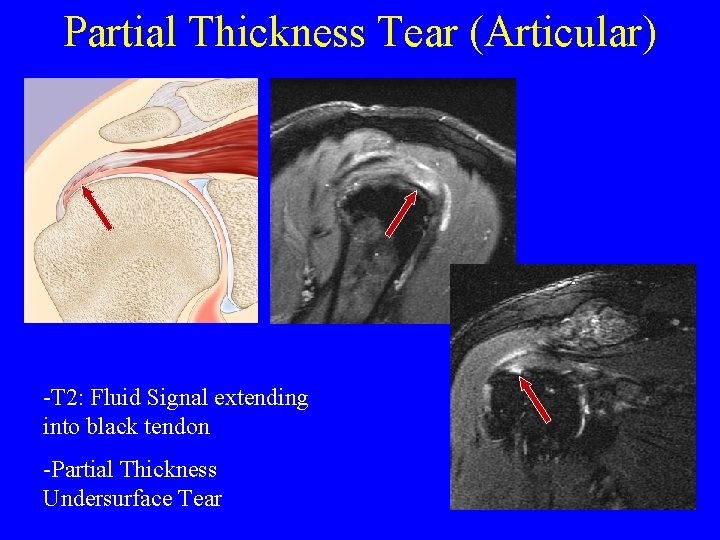
Partial Thickness Tear (Articular) -T 2: Fluid Signal extending into black tendon -Partial Thickness Undersurface Tear
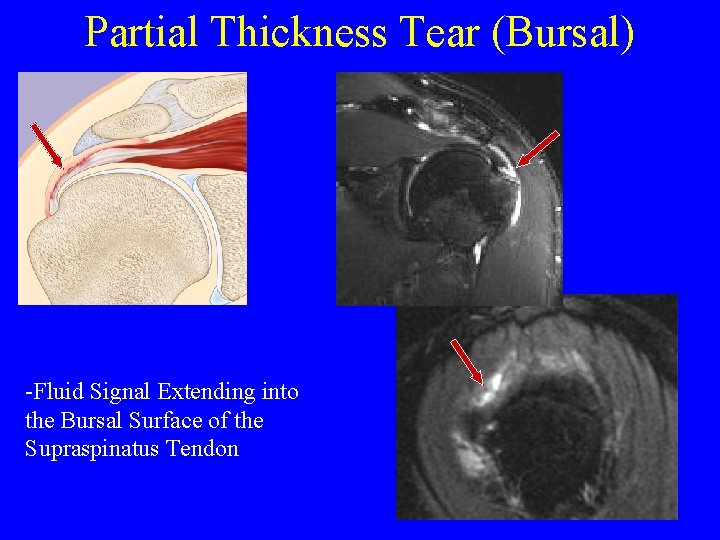
Partial Thickness Tear (Bursal) -Fluid Signal Extending into the Bursal Surface of the Supraspinatus Tendon
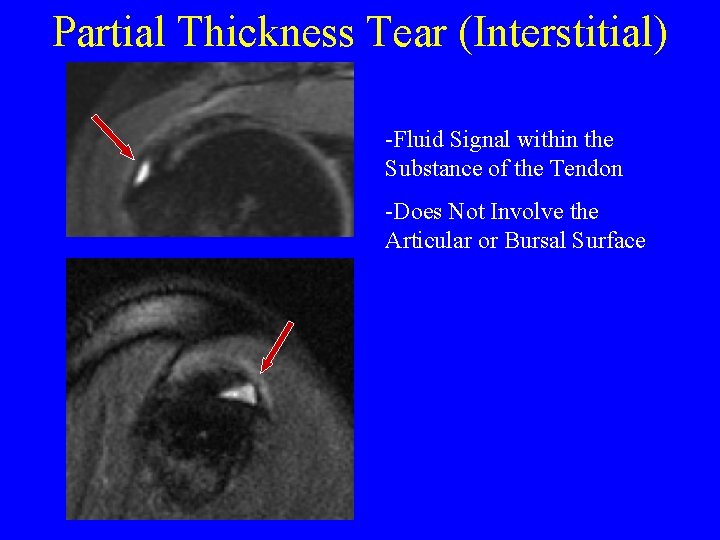
Partial Thickness Tear (Interstitial) -Fluid Signal within the Substance of the Tendon -Does Not Involve the Articular or Bursal Surface
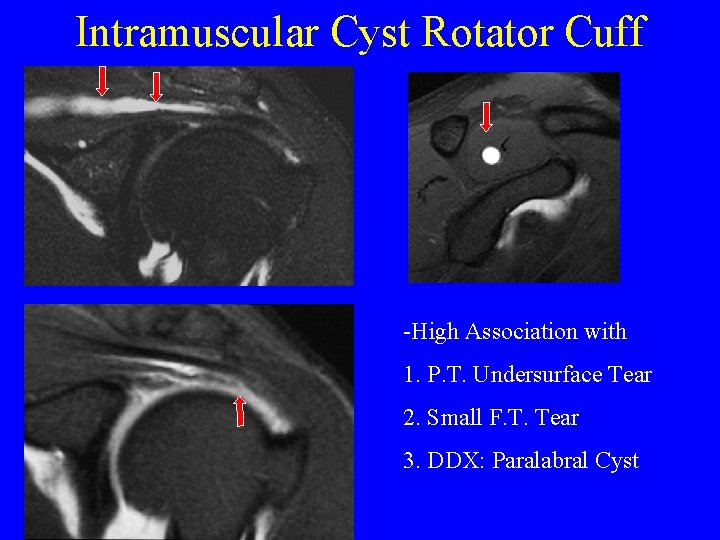
Intramuscular Cyst Rotator Cuff -High Association with 1. P. T. Undersurface Tear 2. Small F. T. Tear 3. DDX: Paralabral Cyst
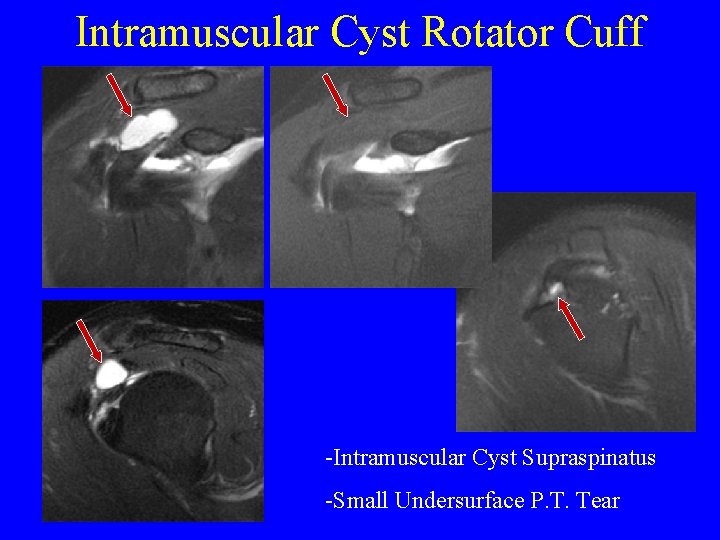
Intramuscular Cyst Rotator Cuff -Intramuscular Cyst Supraspinatus -Small Undersurface P. T. Tear
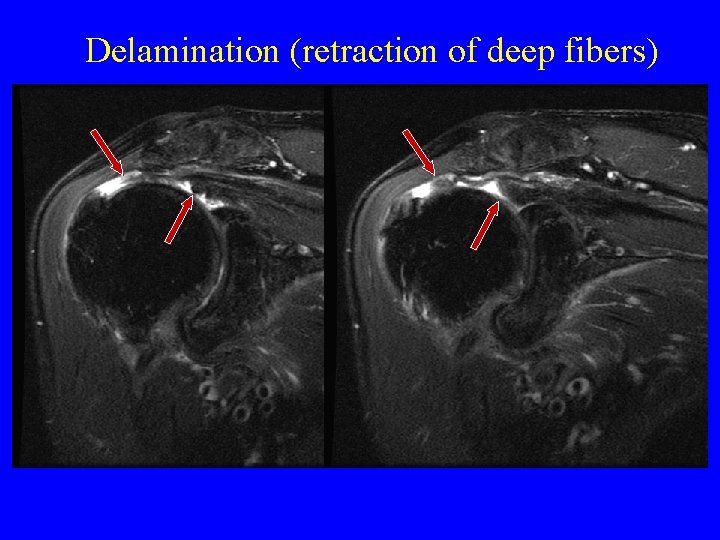
Delamination (retraction of deep fibers)
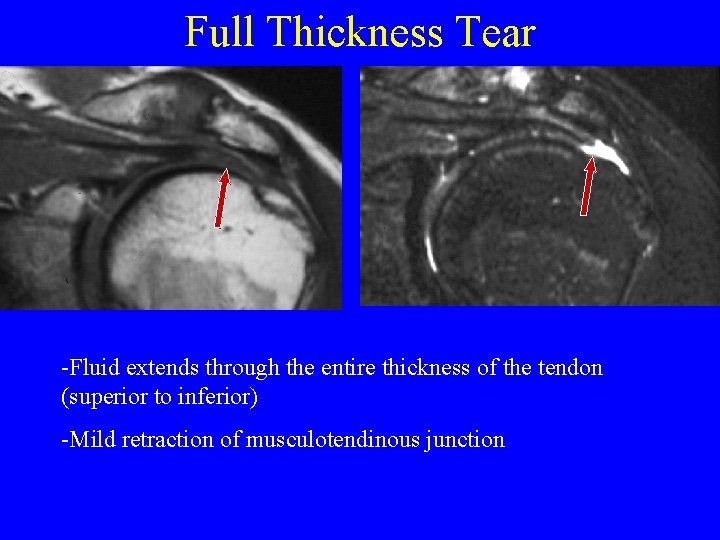
Full Thickness Tear -Fluid extends through the entire thickness of the tendon (superior to inferior) -Mild retraction of musculotendinous junction
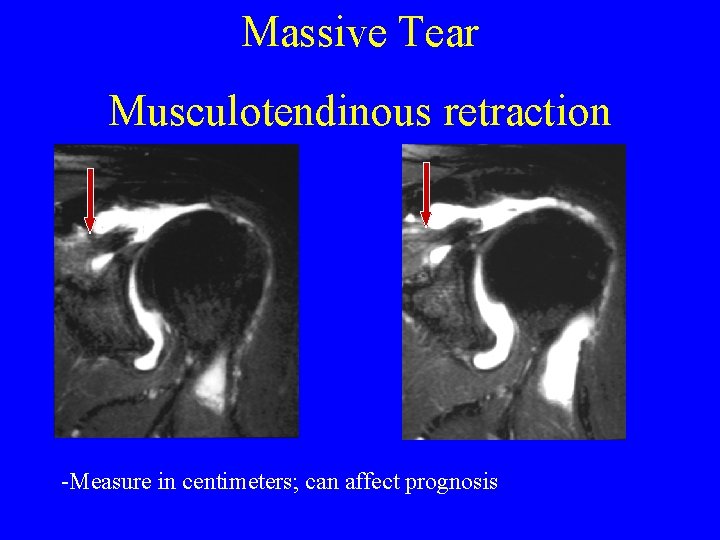
Massive Tear Musculotendinous retraction -Measure in centimeters; can affect prognosis
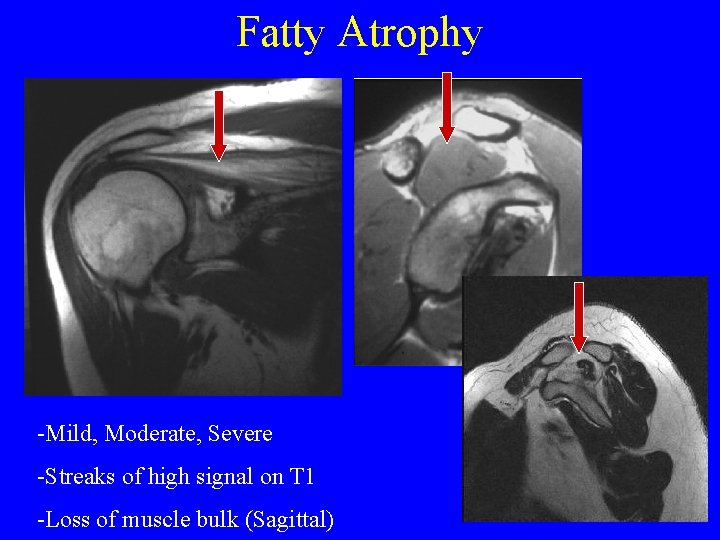
Fatty Atrophy -Mild, Moderate, Severe -Streaks of high signal on T 1 -Loss of muscle bulk (Sagittal)
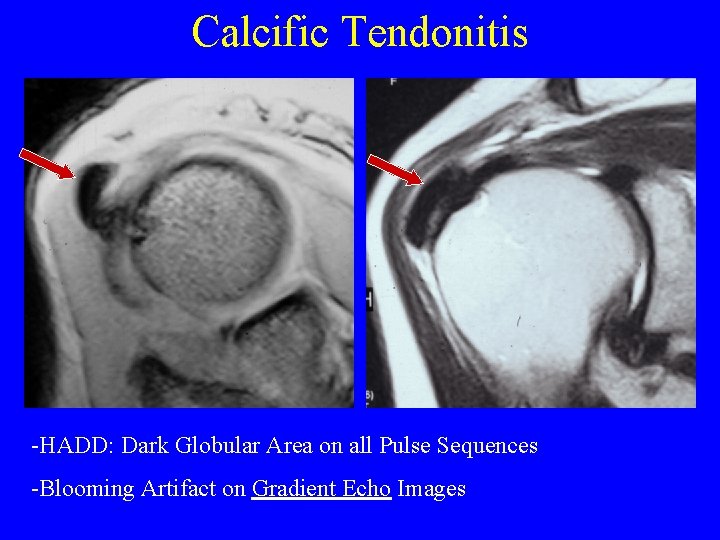
Calcific Tendonitis -HADD: Dark Globular Area on all Pulse Sequences -Blooming Artifact on Gradient Echo Images
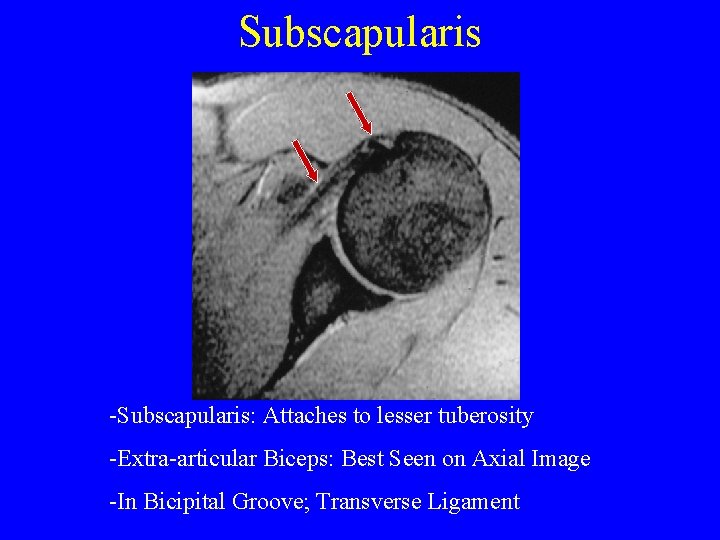
Subscapularis -Subscapularis: Attaches to lesser tuberosity -Extra-articular Biceps: Best Seen on Axial Image -In Bicipital Groove; Transverse Ligament
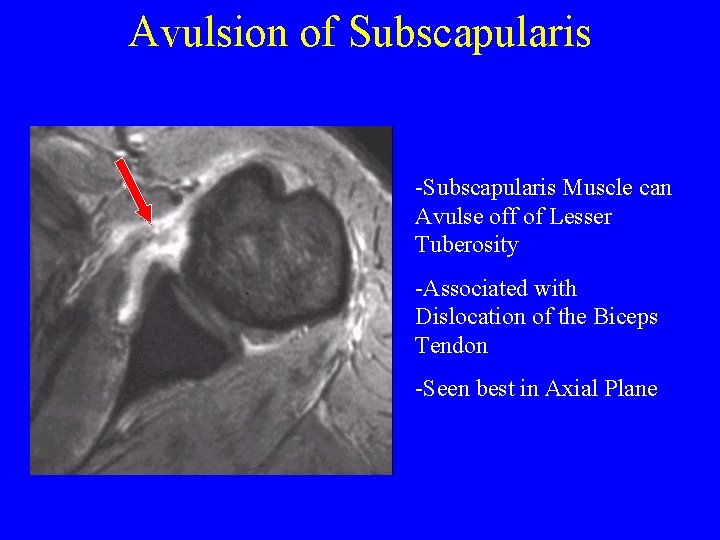
Avulsion of Subscapularis -Subscapularis Muscle can Avulse off of Lesser Tuberosity -Associated with Dislocation of the Biceps Tendon -Seen best in Axial Plane
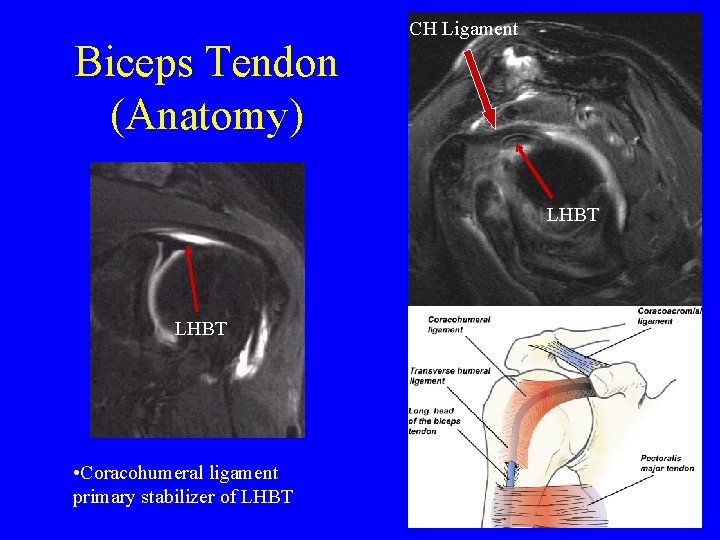
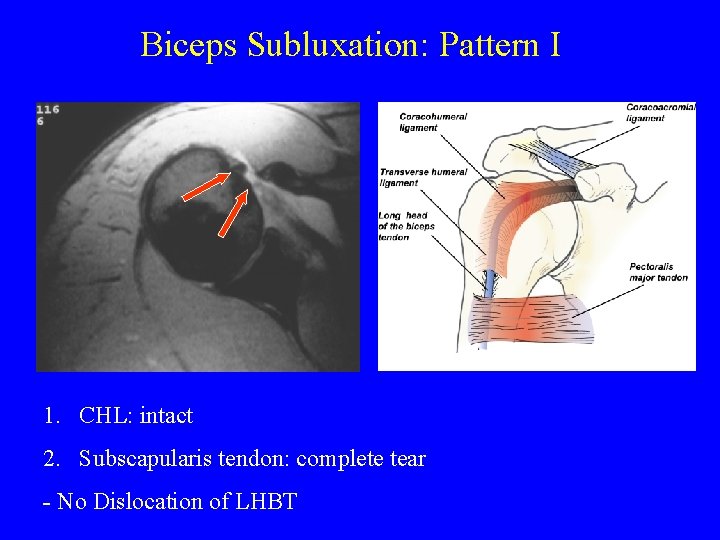
Biceps Tendon (Anatomy) CH Ligament LHBT • Coracohumeral ligament primary stabilizer of LHBT
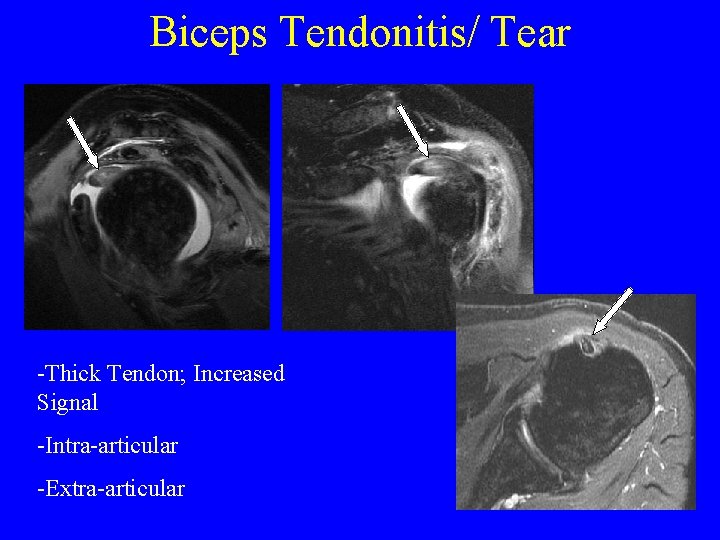
Biceps Tendonitis/ Tear -Thick Tendon; Increased Signal -Intra-articular -Extra-articular
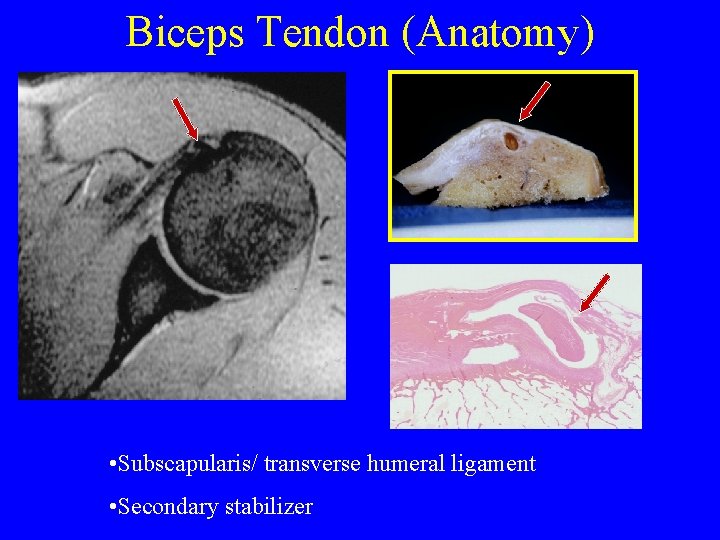
Biceps Tendon (Anatomy) • Subscapularis/ transverse humeral ligament • Secondary stabilizer
Biceps Subluxation: Pattern I 1. CHL: intact 2. Subscapularis tendon: complete tear - No Dislocation of LHBT
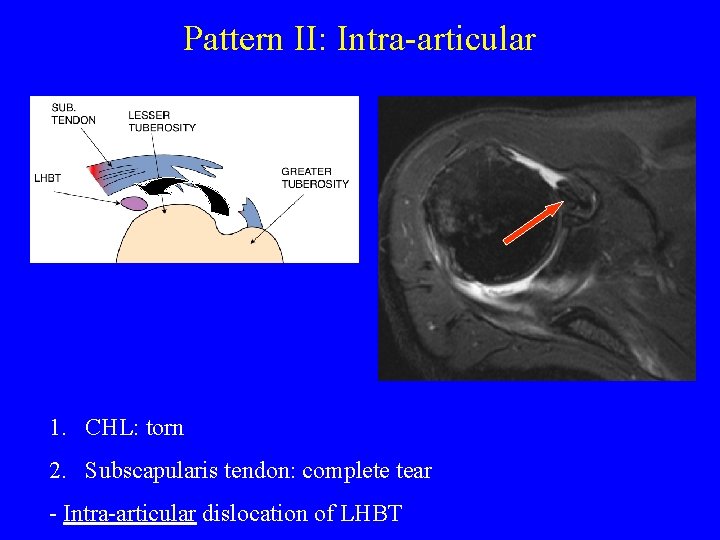
Pattern II: Intra-articular 1. CHL: torn 2. Subscapularis tendon: complete tear - Intra-articular dislocation of LHBT
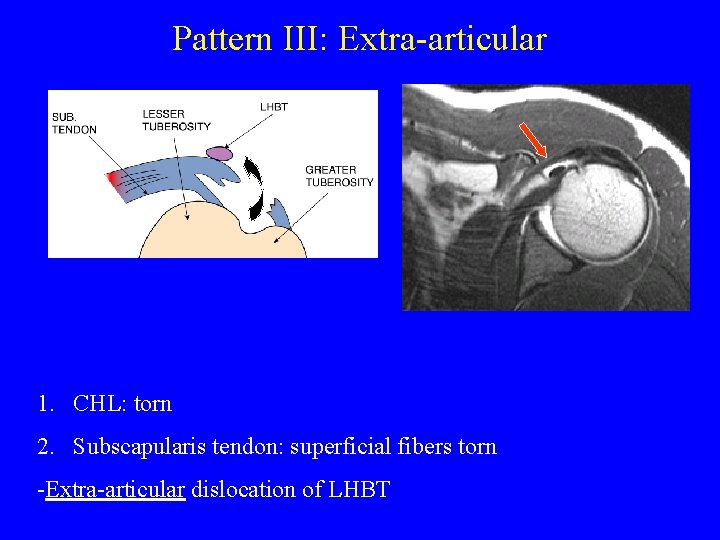
Pattern III: Extra-articular 1. CHL: torn 2. Subscapularis tendon: superficial fibers torn -Extra-articular dislocation of LHBT
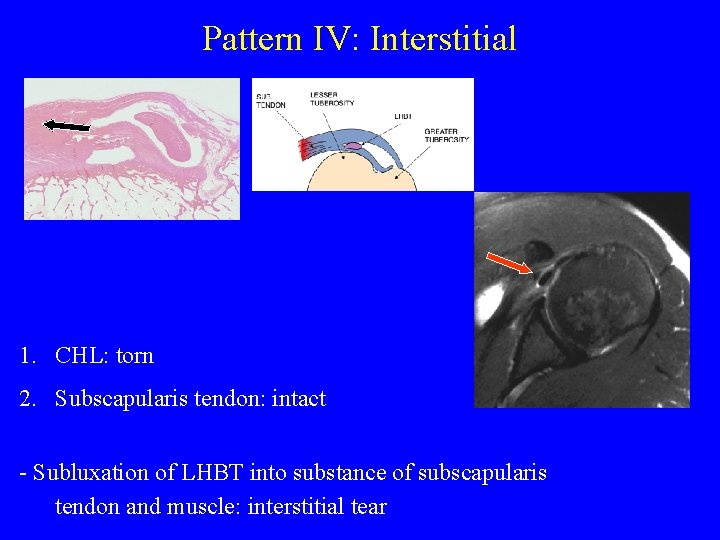
Pattern IV: Interstitial 1. CHL: torn 2. Subscapularis tendon: intact - Subluxation of LHBT into substance of subscapularis tendon and muscle: interstitial tear
Rotator Cuff Pathology • Tendonopathy • Tear – Partial Thickness, Full Thickness, Complete • • Musculotendinous Retraction Fatty Atrophy HADD/ Calcific Tendonitis Nerve Entrapment Syndromes