
Moving up in Math Grade 2 to Grade

- Slides: 26
Moving up in Math Grade 2 to Grade 3 Presented by Julie Stone and Kelly Ruffler
What’s the Same
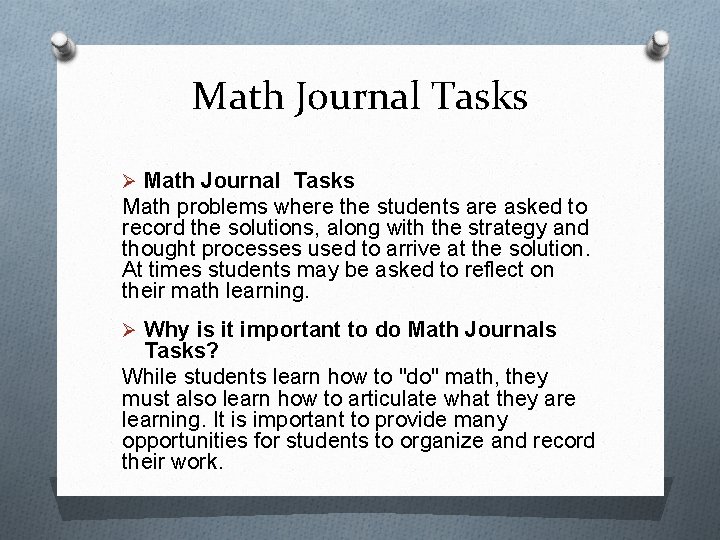
Math Journal Tasks Ø Math Journal Tasks Math problems where the students are asked to record the solutions, along with the strategy and thought processes used to arrive at the solution. At times students may be asked to reflect on their math learning. Ø Why is it important to do Math Journals Tasks? While students learn how to "do" math, they must also learn how to articulate what they are learning. It is important to provide many opportunities for students to organize and record their work.
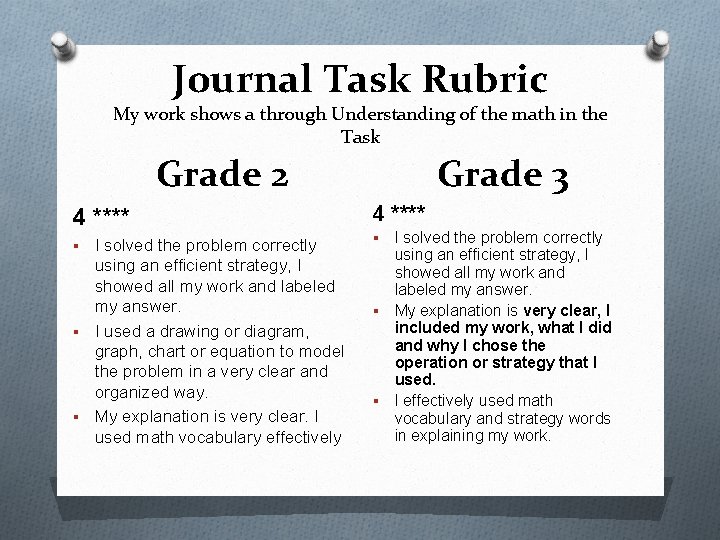
Journal Task Rubric My work shows a through Understanding of the math in the Task Grade 2 Grade 3 4 **** § I solved the problem correctly § using an efficient strategy, I showed all my work and labeled my answer. § I used a drawing or diagram, graph, chart or equation to model the problem in a very clear and organized way. § My explanation is very clear. I used math vocabulary effectively I solved the problem correctly using an efficient strategy, I showed all my work and labeled my answer. § My explanation is very clear, I included my work, what I did and why I chose the operation or strategy that I used. § I effectively used math vocabulary and strategy words in explaining my work.
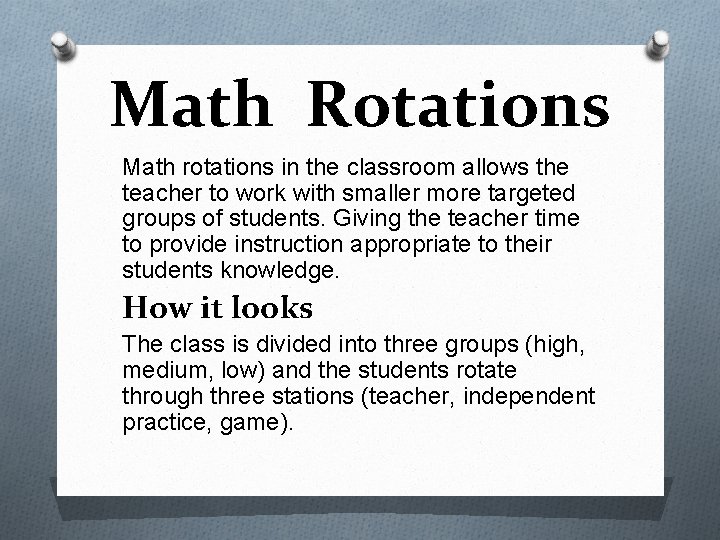
Math Rotations Math rotations in the classroom allows the teacher to work with smaller more targeted groups of students. Giving the teacher time to provide instruction appropriate to their students knowledge. How it looks The class is divided into three groups (high, medium, low) and the students rotate through three stations (teacher, independent practice, game).
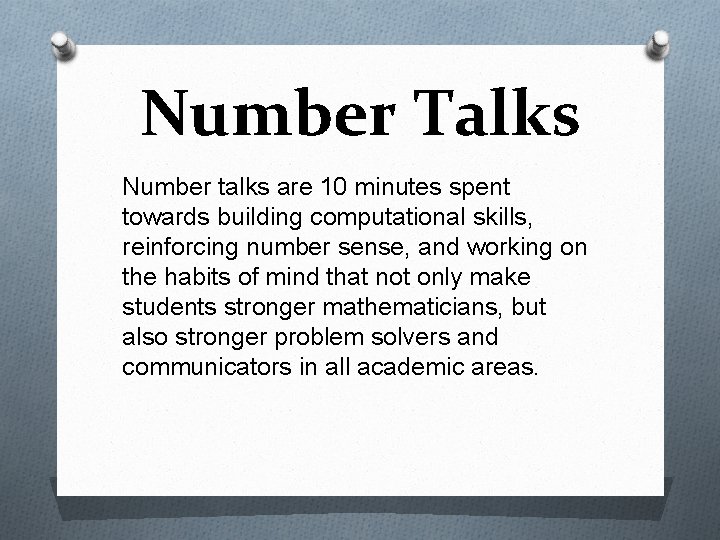
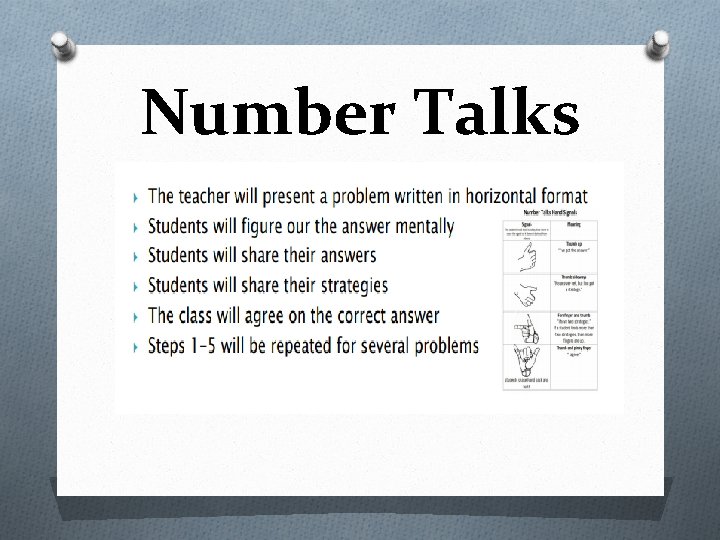
Number Talks Number talks are 10 minutes spent towards building computational skills, reinforcing number sense, and working on the habits of mind that not only make students stronger mathematicians, but also stronger problem solvers and communicators in all academic areas.
Number Talks
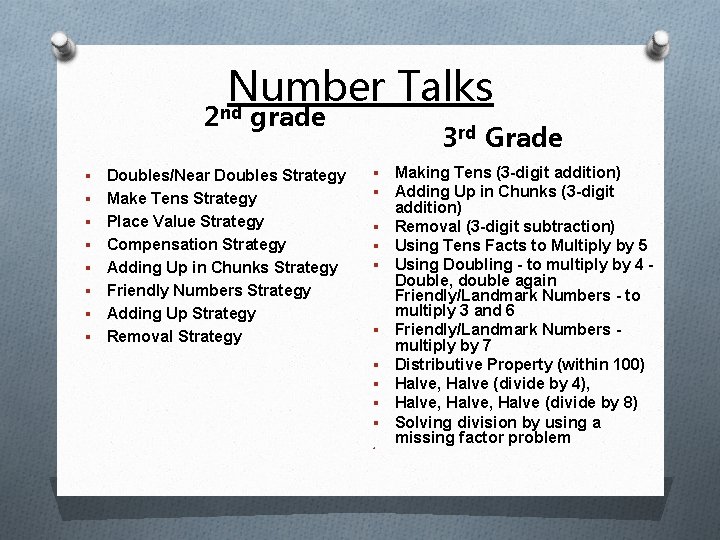
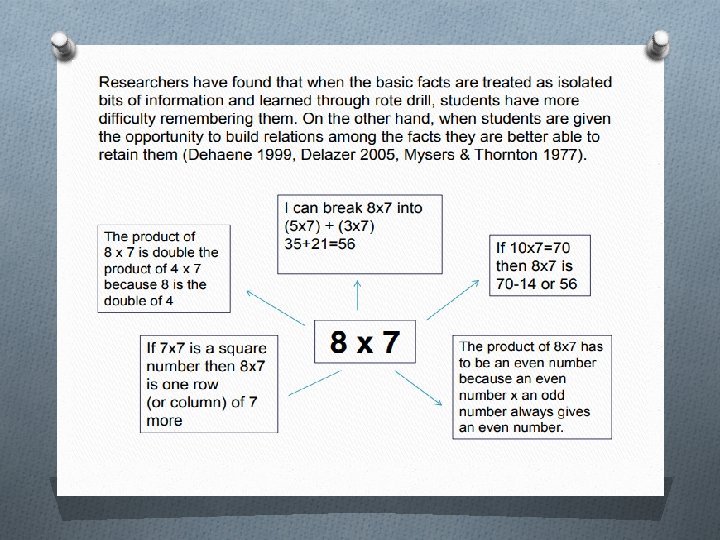
2 § § § § Number Talks nd grade Doubles/Near Doubles Strategy Make Tens Strategy Place Value Strategy Compensation Strategy Adding Up in Chunks Strategy Friendly Numbers Strategy Adding Up Strategy Removal Strategy 3 rd Grade § § § § § O Making Tens (3 -digit addition) Adding Up in Chunks (3 -digit addition) Removal (3 -digit subtraction) Using Tens Facts to Multiply by 5 Using Doubling - to multiply by 4 Double, double again Friendly/Landmark Numbers - to multiply 3 and 6 Friendly/Landmark Numbers multiply by 7 Distributive Property (within 100) Halve, Halve (divide by 4), Halve, Halve (divide by 8) Solving division by using a missing factor problem
What’s Different
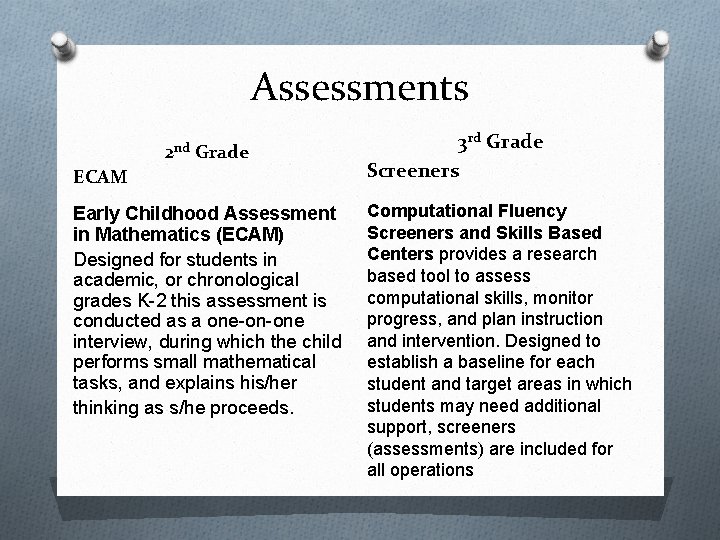
Assessments 2 nd Grade ECAM Early Childhood Assessment in Mathematics (ECAM) Designed for students in academic, or chronological grades K-2 this assessment is conducted as a one-on-one interview, during which the child performs small mathematical tasks, and explains his/her thinking as s/he proceeds. 3 rd Grade Screeners Computational Fluency Screeners and Skills Based Centers provides a research based tool to assess computational skills, monitor progress, and plan instruction and intervention. Designed to establish a baseline for each student and target areas in which students may need additional support, screeners (assessments) are included for all operations
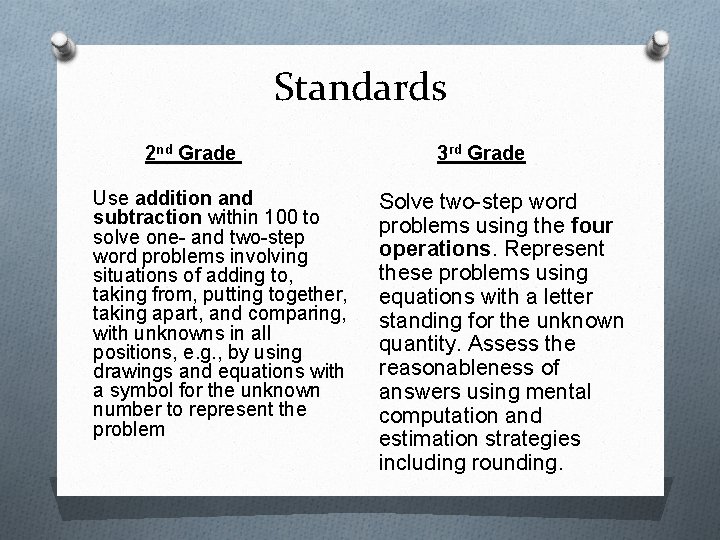
Standards 2 nd Grade Use addition and subtraction within 100 to solve one- and two-step word problems involving situations of adding to, taking from, putting together, taking apart, and comparing, with unknowns in all positions, e. g. , by using drawings and equations with a symbol for the unknown number to represent the problem 3 rd Grade Solve two-step word problems using the four operations. Represent these problems using equations with a letter standing for the unknown quantity. Assess the reasonableness of answers using mental computation and estimation strategies including rounding.
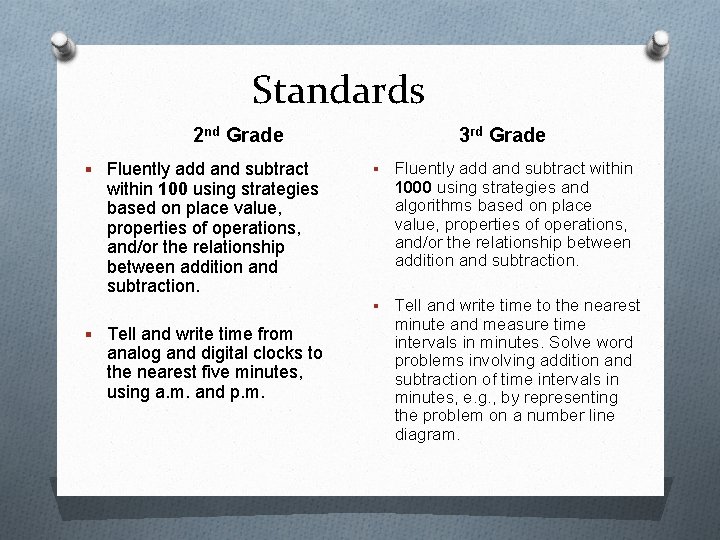
Standards 2 nd Grade § Fluently add and subtract within 100 using strategies based on place value, properties of operations, and/or the relationship between addition and subtraction. § Tell and write time from analog and digital clocks to the nearest five minutes, using a. m. and p. m. 3 rd Grade § Fluently add and subtract within 1000 using strategies and algorithms based on place value, properties of operations, and/or the relationship between addition and subtraction. § Tell and write time to the nearest minute and measure time intervals in minutes. Solve word problems involving addition and subtraction of time intervals in minutes, e. g. , by representing the problem on a number line diagram.
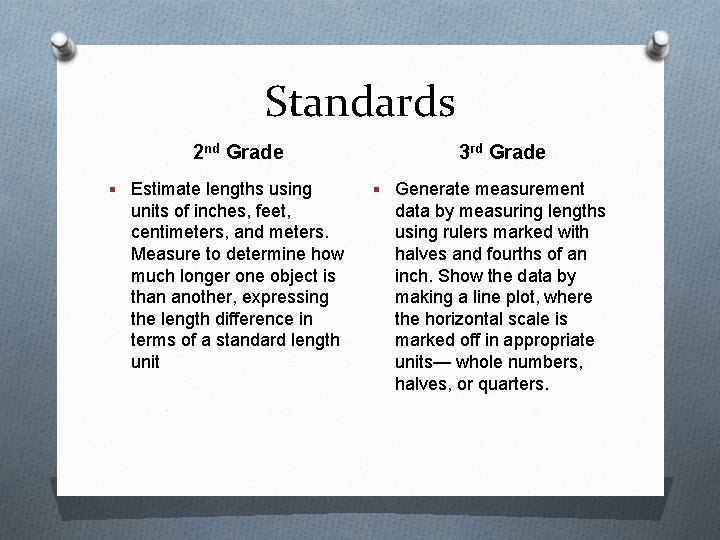
Standards 2 nd Grade § Estimate lengths using units of inches, feet, centimeters, and meters. Measure to determine how much longer one object is than another, expressing the length difference in terms of a standard length unit 3 rd Grade § Generate measurement data by measuring lengths using rulers marked with halves and fourths of an inch. Show the data by making a line plot, where the horizontal scale is marked off in appropriate units— whole numbers, halves, or quarters.
What to expect rd in 3 Grade
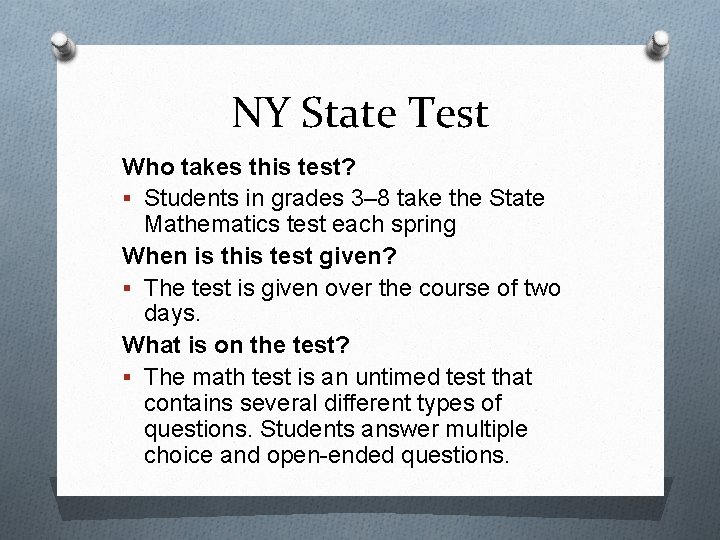
NY State Test Who takes this test? § Students in grades 3– 8 take the State Mathematics test each spring When is this test given? § The test is given over the course of two days. What is on the test? § The math test is an untimed test that contains several different types of questions. Students answer multiple choice and open-ended questions.
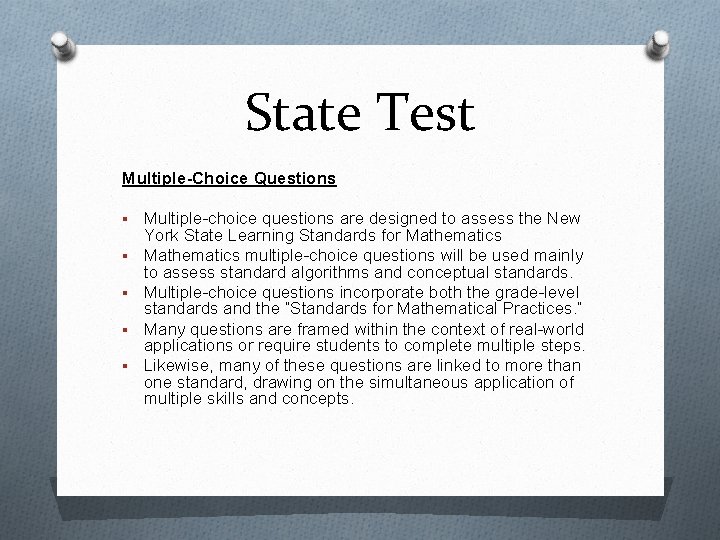
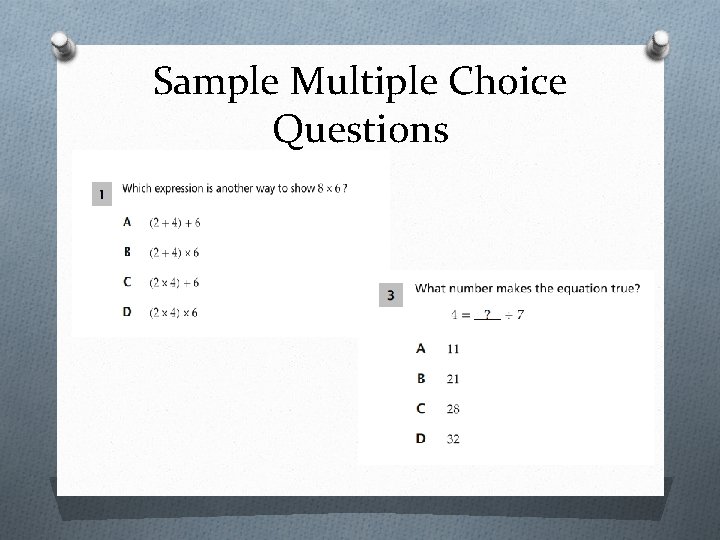
State Test Multiple-Choice Questions § Multiple-choice questions are designed to assess the New § § York State Learning Standards for Mathematics multiple-choice questions will be used mainly to assess standard algorithms and conceptual standards. Multiple-choice questions incorporate both the grade-level standards and the “Standards for Mathematical Practices. ” Many questions are framed within the context of real-world applications or require students to complete multiple steps. Likewise, many of these questions are linked to more than one standard, drawing on the simultaneous application of multiple skills and concepts.
Sample Multiple Choice Questions
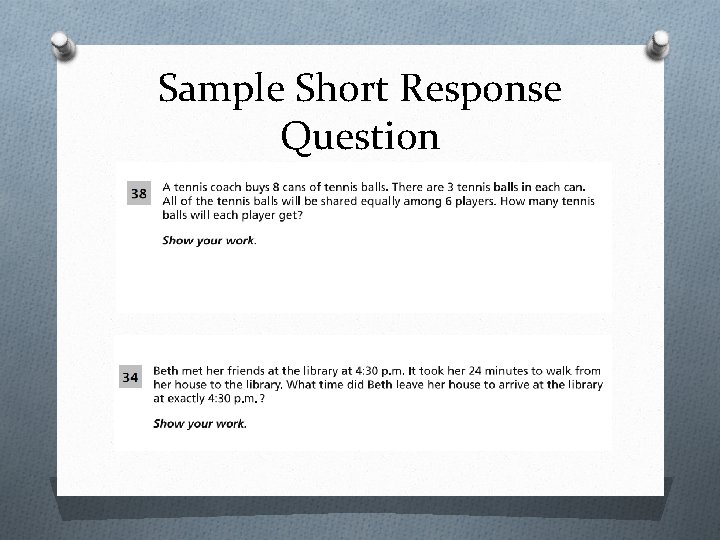
State Test Short-Response Questions § Short response questions require students to complete tasks and show their work. § Like multiple-choice questions, short-response questions will often require multiple steps, the application of multiple mathematics skills, and real-world applications. § Many of the short-response questions will cover conceptual and application of the standards.
Sample Short Response Question
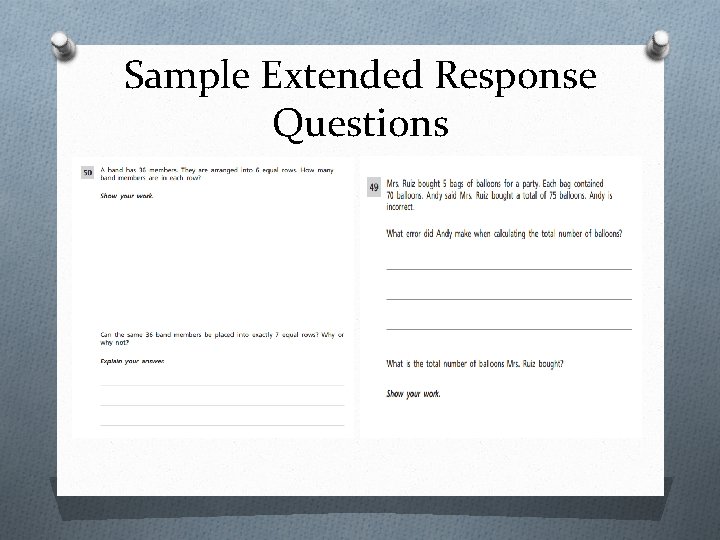
State Test Extended-Response Questions § Extended-response questions ask students to show their work in completing two or more tasks or a more extensive problem. § Extended-response questions allow students to show their understanding of mathematical procedures, conceptual understanding, and application. § Extended-response questions may also assess student reasoning and the ability to critique the arguments of others.
Sample Extended Response Questions