
Moving Towards Information Literacy Through Data Governance Scott

- Slides: 25
Moving Towards Information Literacy Through Data Governance Scott Owczarek • Jason Fishbain
Introductions Scott Owczarek University Registrar Division of Enrollment Management scott. owczarek@wisc. edu Jason Fishbain Chief Data Officer jason. fishbain@wisc. edu This presentation leaves copyright of the content to the presenter. Unless otherwise noted in the materials, uploaded content carries the Creative Commons Attribution-Non. Commercial-Share. Alike license, which grants usage to the general public with the stipulated criteria
Outline • Historical timeline • Task force formed • Charge, findings, challenges, and strategic gaps • Vision for the future • Presentation to the Provost • Recommendations and proposed solutions • The investment in a CDO • Creation of a Data Governance Program and Framework • Next Steps
2013 Provost Forms a Task Force
Our Charge The overall goal is to develop a comprehensive data governance framework. . balance the institution’s need for data with compliance, privacy and security requirements… it should also: • honor stewardship of the data • eliminate barriers to legitimate use of data • encompass responsible means for access to, use of, and of storage of data
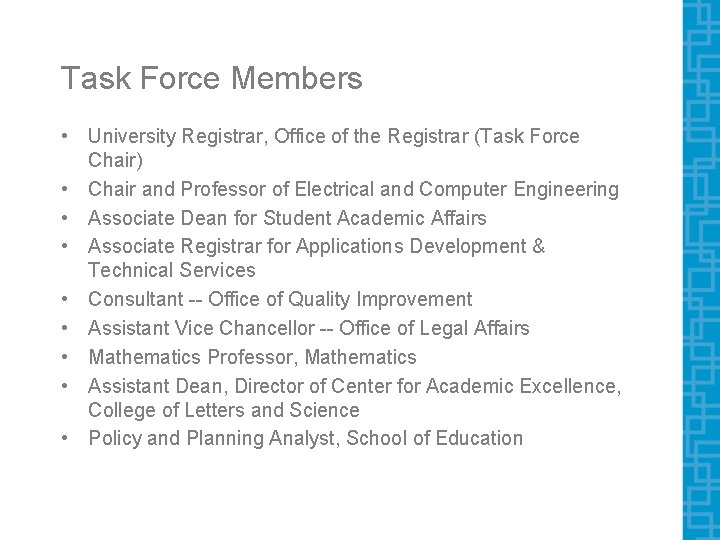
Task Force Members • University Registrar, Office of the Registrar (Task Force Chair) • Chair and Professor of Electrical and Computer Engineering • Associate Dean for Student Academic Affairs • Associate Registrar for Applications Development & Technical Services • Consultant -- Office of Quality Improvement • Assistant Vice Chancellor -- Office of Legal Affairs • Mathematics Professor, Mathematics • Assistant Dean, Director of Center for Academic Excellence, College of Letters and Science • Policy and Planning Analyst, School of Education
Findings
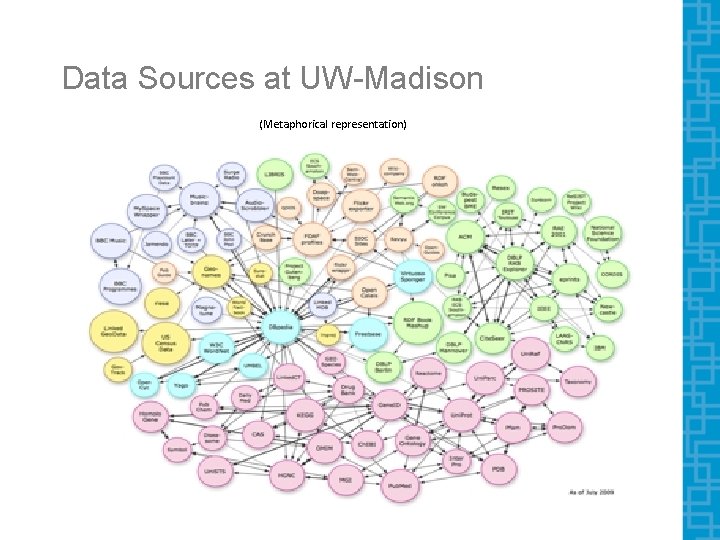
Data Sources at UW-Madison (Metaphorical representation)
Challenges • Complex landscape of data and technology tools • Expertise and knowledge in small pockets on campus • Diversity of users • Increased vulnerability for security concerns (i. e. breach) • Duplication of data, efforts, services, systems, and tools
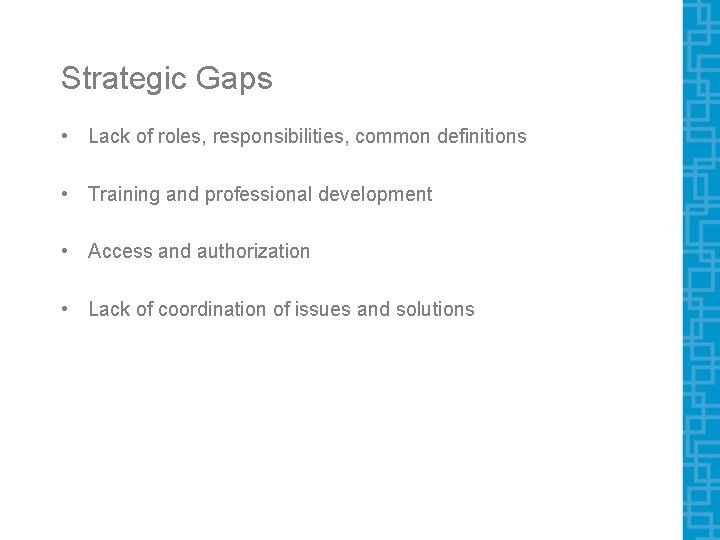
Strategic Gaps • Lack of roles, responsibilities, common definitions • Training and professional development • Access and authorization • Lack of coordination of issues and solutions
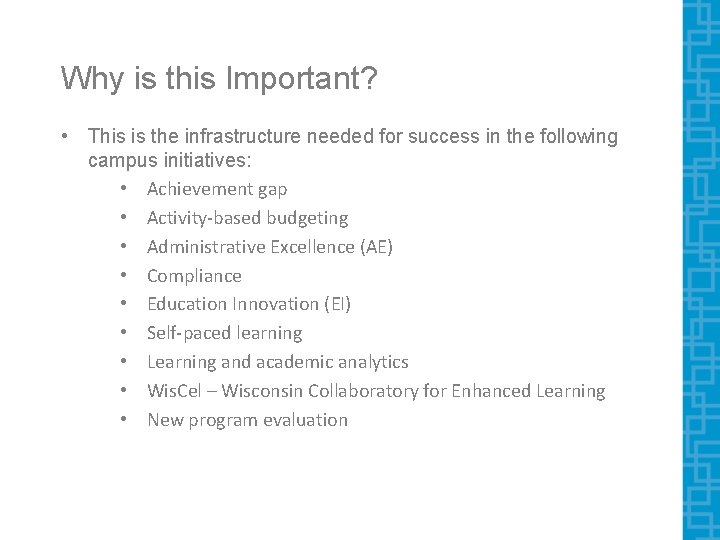
Why is this Important? • This is the infrastructure needed for success in the following campus initiatives: • Achievement gap • Activity-based budgeting • Administrative Excellence (AE) • Compliance • Education Innovation (EI) • Self-paced learning • Learning and academic analytics • Wis. Cel – Wisconsin Collaboratory for Enhanced Learning • New program evaluation
Our Vision Create a data governance system to support the evidenced-based mission of the great University of Wisconsin-Madison
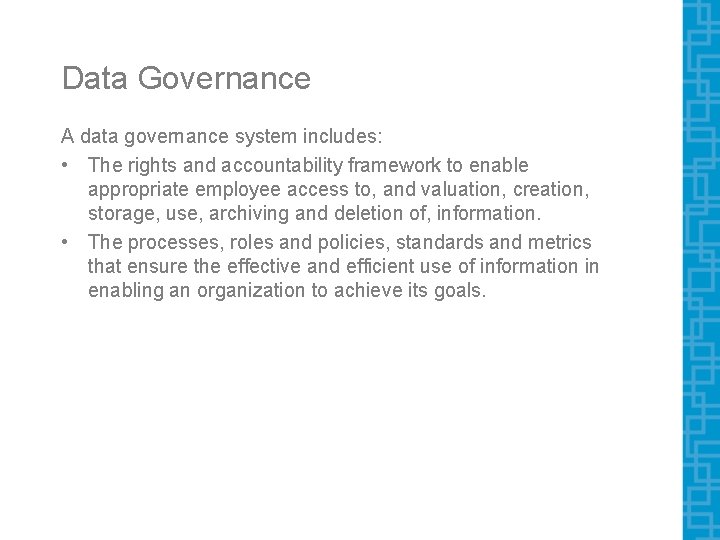
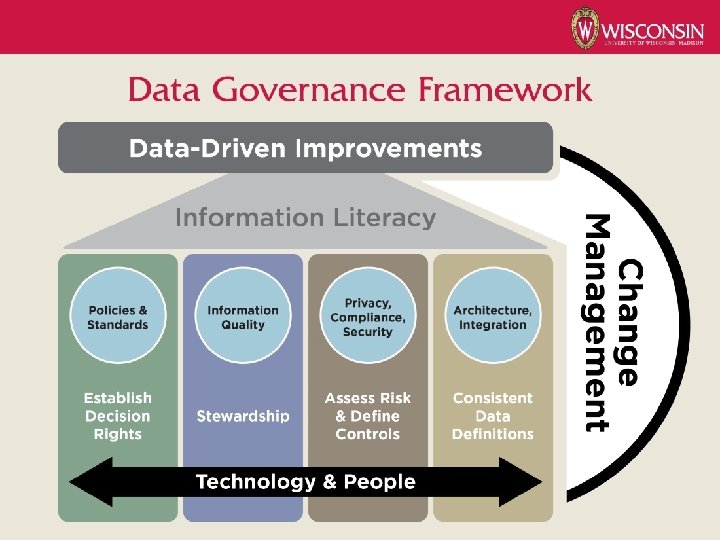
Data Governance A data governance system includes: • The rights and accountability framework to enable appropriate employee access to, and valuation, creation, storage, use, archiving and deletion of, information. • The processes, roles and policies, standards and metrics that ensure the effective and efficient use of information in enabling an organization to achieve its goals.
Task Force Recommendations
Recommendations Chancellor should charge the campus leadership to authorize and commit resources to the CIO to: • Build a sustained campus data governance and management effort that meets the data needs of all employees while maintaining security and privacy of data. • Integrate and develop campus data infrastructure to facilitate streamlined access and use across the enterprise. • Ensure, develop, and coordinate the training and staff core competencies required to translate data into meaningful and mission relevant information.
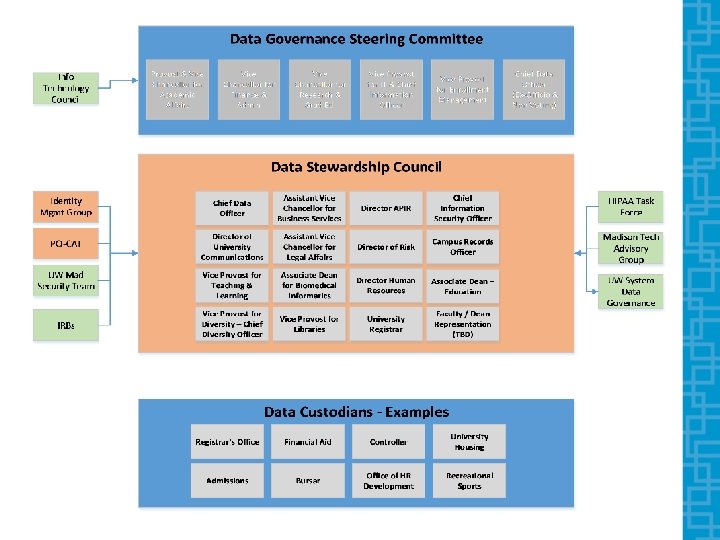
Detailed Recommendations • Create an Office of Information Affairs • Accountable for the coordination and progress to implement and scale data governance and management • Establish a Data Governance and Management Structure • Develop guidelines, policies, procedures, and standards for campus • Create Data Support Teams • Community of practitioners, to build expertise and intellectual sharing
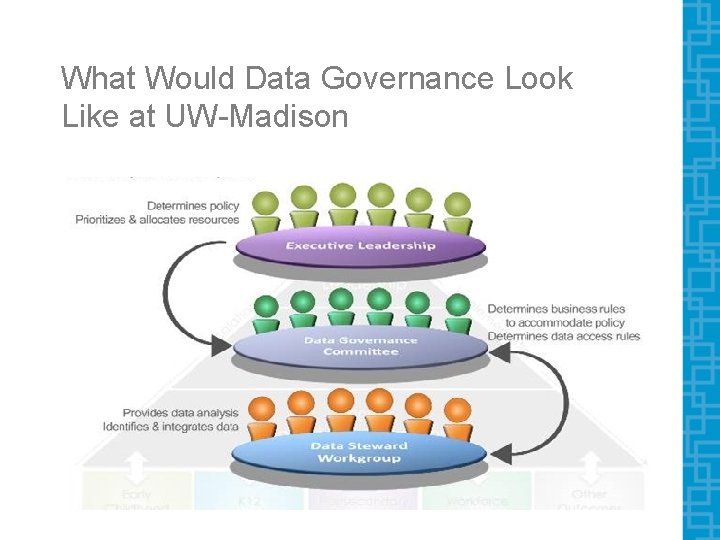
What Would Data Governance Look Like at UW-Madison
Risks of Maintaining the Status Quo • Lose a competitive edge amongst peers • Inability to deliver effectively on either campus initiatives • Long-term and increased distributed costs • Security and Privacy Issues • Reporting inaccurate metrics
Implementation of the First Task Force Recommendation
Why a CDO • Executive level role to organize, champion and otherwise direct efforts relating to institutional data management • Key skills: • • • Negotiation Communication Ability to think both strategically and operationally
Program Goals • • • Establish a ‘data-quality culture’ that drives data informed decision making Create Structured Accountability, with defined roles and responsibilities Facilitate Collaboration & Education related to data-related policies and use of data Facilitate standard, consistent data definitions where appropriate Align with campus shared governance
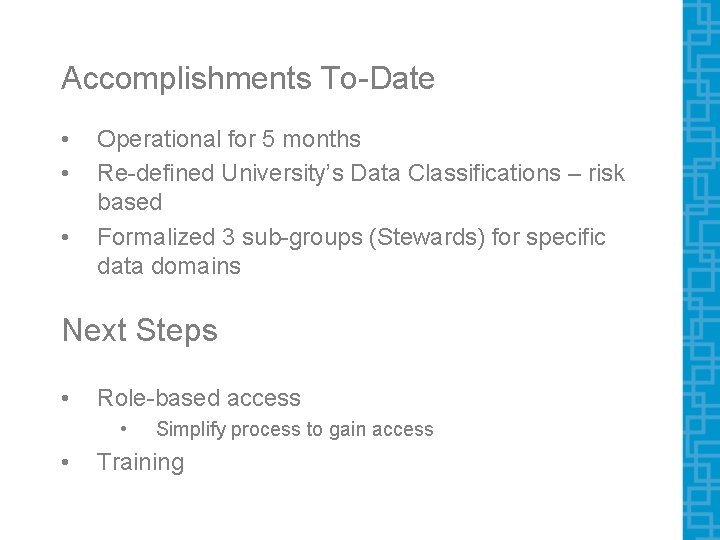
Accomplishments To-Date • • • Operational for 5 months Re-defined University’s Data Classifications – risk based Formalized 3 sub-groups (Stewards) for specific data domains Next Steps • Role-based access • • Simplify process to gain access Training
Help Us Improve and Grow Thank you for participating in today’s session. We’re very interested in your feedback. Please take a minute to fill out the session evaluation found within the conference mobile app, or the online agenda.