
MOVING TO TTESS Texas Teacher Evaluation and Support
- Slides: 38
MOVING TO T-TESS Texas Teacher Evaluation and Support System Copyright 2016
THE WHY OF T-TESS
Where were you in 1997? © 2016 TEPSA
What about PDAS? ? © 2016 TEPSA
- George Couros © 2016 TEPSA
OVERVIEW OF T-TESS
Texas Teacher Evaluation and Support System © 2016 TEPSA
Objectives Today you will: • become familiar with T-TESS process • begin to move from procedural to conceptual in understanding how the domains, dimensions, descriptors, and performance levels of the T-TESS rubric apply to their roles and responsibilities • Learn about the observation cycle • understand that the T-TESS process is based on best practices and an ongoing system of feedback and support © 2016 TEPSA
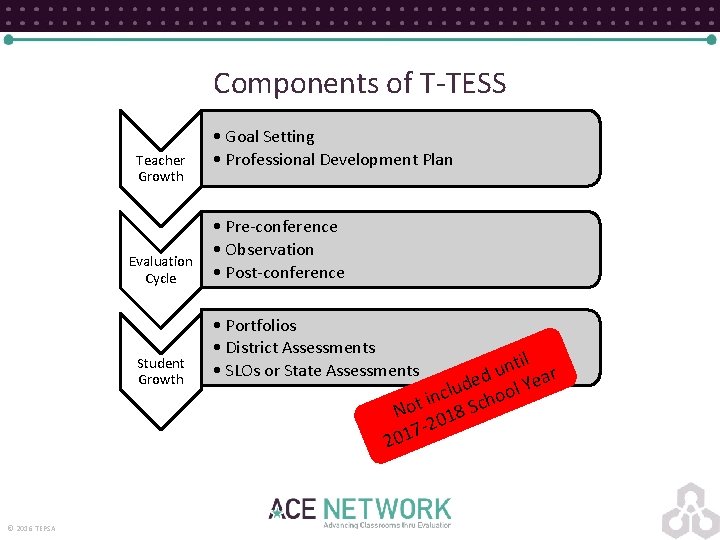
Components of T-TESS Teacher Growth Evaluation Cycle Student Growth • Goal Setting • Professional Development Plan • Pre-conference • Observation • Post-conference • Portfolios • District Assessments • SLOs or State Assessments 2 til n u d ar e e d Y u l cl oo n i h t c No 018 S -2 7 1 0 © 2016 TEPSA
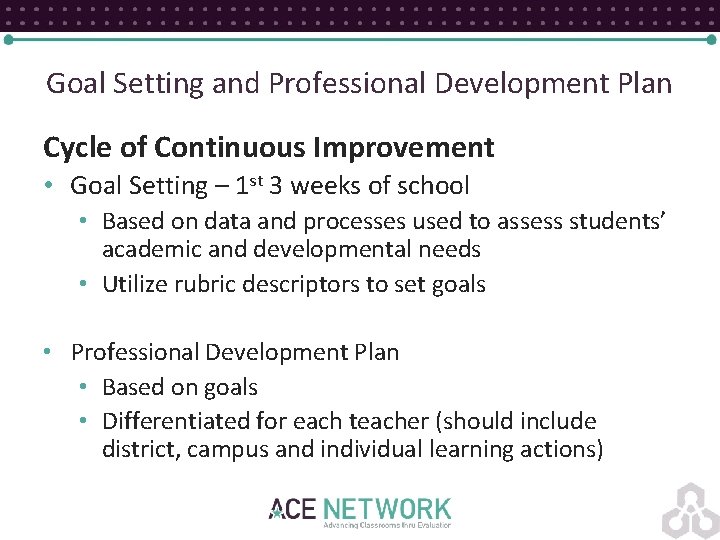
Goal Setting and Professional Development Plan Cycle of Continuous Improvement • Goal Setting – 1 st 3 weeks of school • Based on data and processes used to assess students’ academic and developmental needs • Utilize rubric descriptors to set goals • Professional Development Plan • Based on goals • Differentiated for each teacher (should include district, campus and individual learning actions)
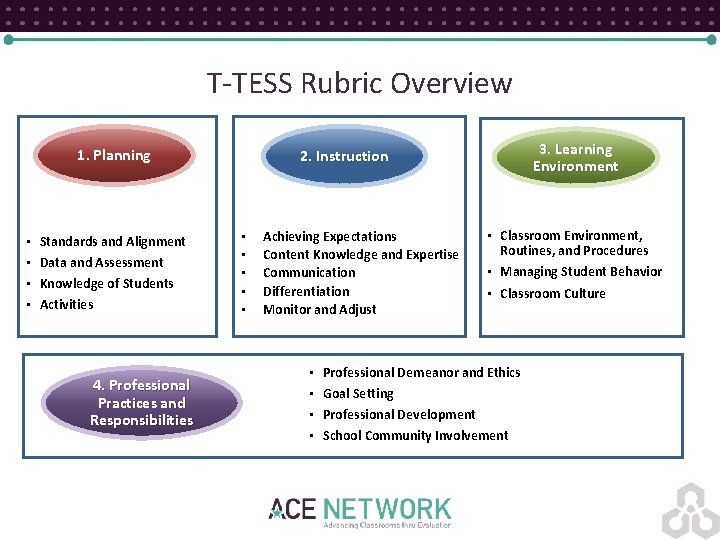
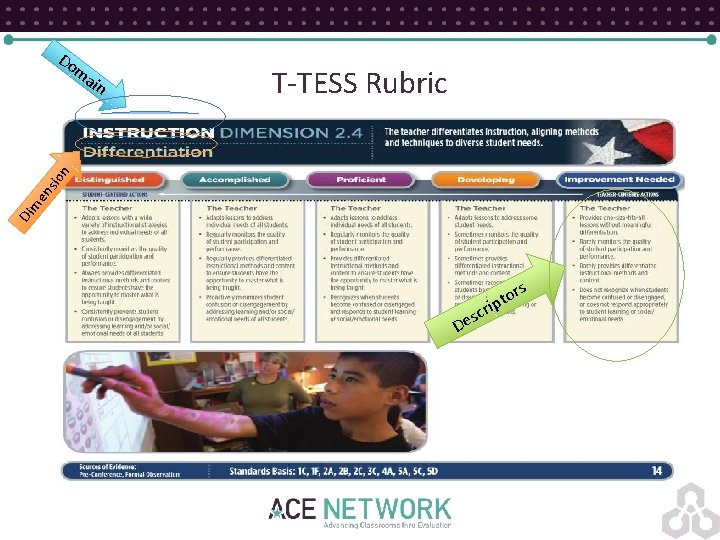
T-TESS Rubric Overview 1. Planning • • Standards and Alignment Data and Assessment Knowledge of Students Activities 4. Professional Practices and Responsibilities 3. Learning Environment 2. Instruction • • • Achieving Expectations Content Knowledge and Expertise Communication Differentiation Monitor and Adjust • • • Classroom Environment, Routines, and Procedures • Managing Student Behavior • Classroom Culture Professional Demeanor and Ethics Goal Setting Professional Development School Community Involvement
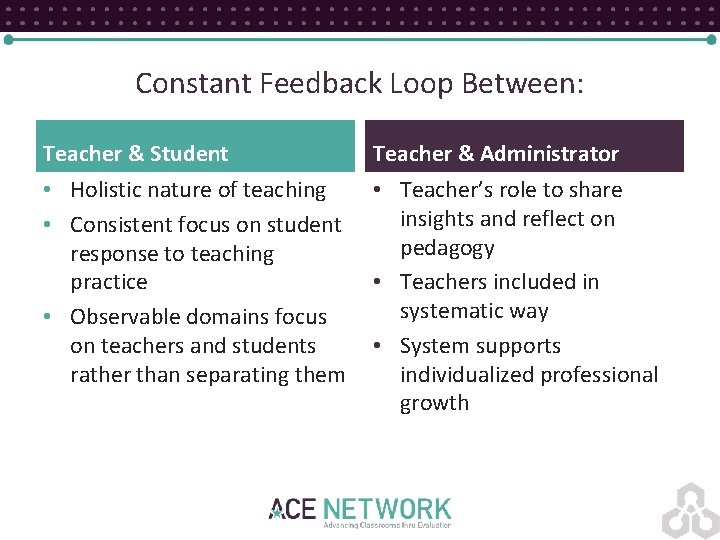
Constant Feedback Loop Between: Teacher & Student Teacher & Administrator • Holistic nature of teaching • Consistent focus on student response to teaching practice • Observable domains focus on teachers and students rather than separating them • Teacher’s role to share insights and reflect on pedagogy • Teachers included in systematic way • System supports individualized professional growth
Do T-TESS Rubric Di m en sio n ma in sc e D r rs o t ip
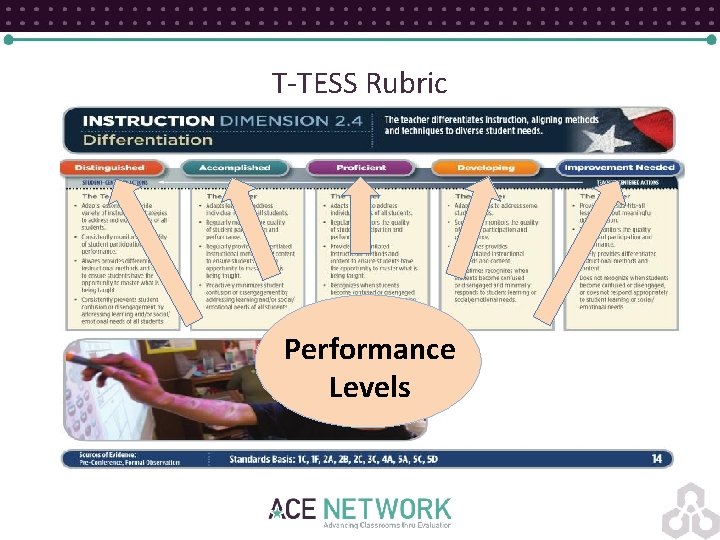
T-TESS Rubric Performance Levels
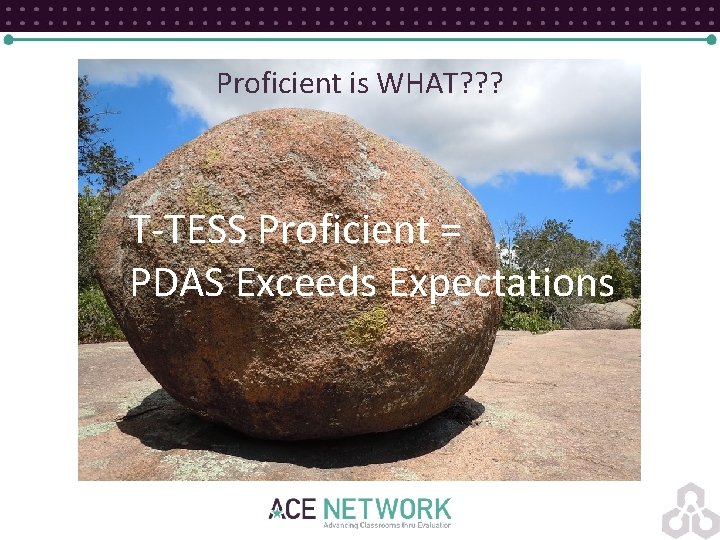
Proficient is WHAT? ? ? T-TESS Proficient = PDAS Exceeds Expectations
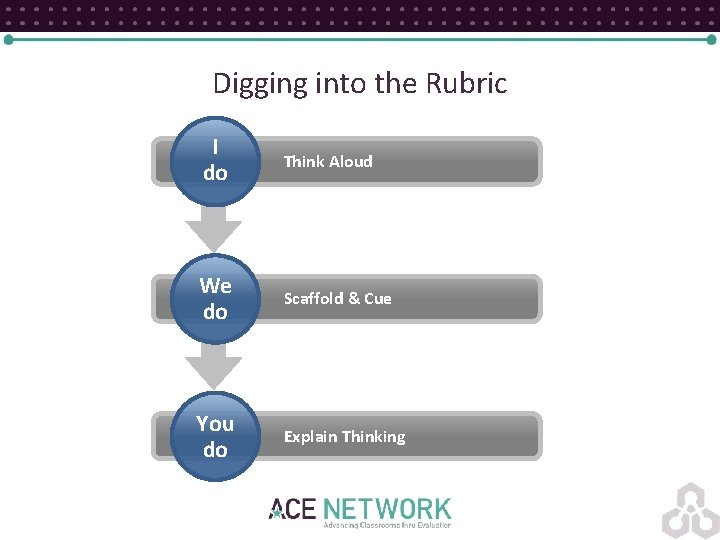
Digging into the Rubric I do Think Aloud We do Scaffold & Cue You do Explain Thinking
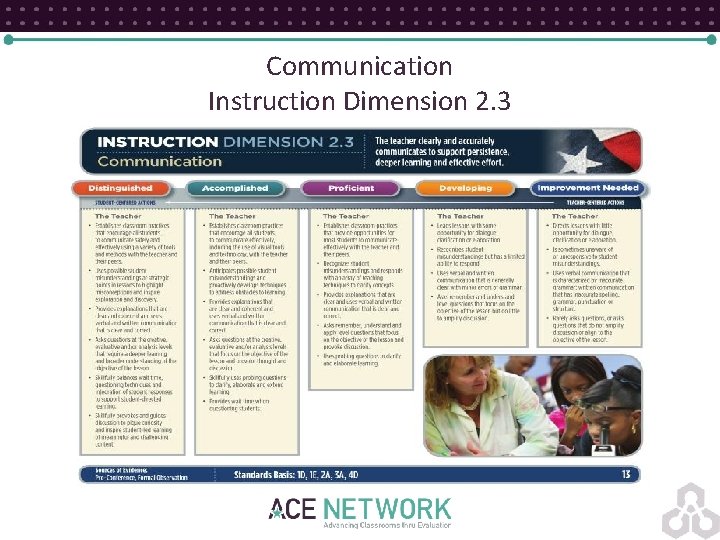
Communication Instruction Dimension 2. 3
Rubric Activity • Directions: • Modeled metacognition for Communication 2. 3 • Each group will use the same process to deconstruct the rubric for the following dimensions: • Standards and Alignment (1. 1) • Content Knowledge and Expertise (2. 2) • Classroom Environment, Routines and Procedures (3. 2) • You will have 5 minutes per dimension.
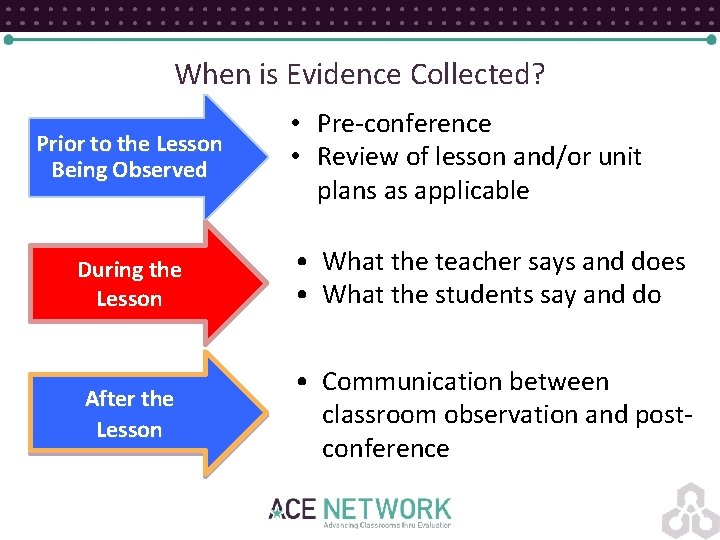
When is Evidence Collected? Prior to the Lesson Being Observed • Pre-conference • Review of lesson and/or unit plans as applicable During the Lesson • What the teacher says and does • What the students say and do After the Lesson • Communication between classroom observation and postconference
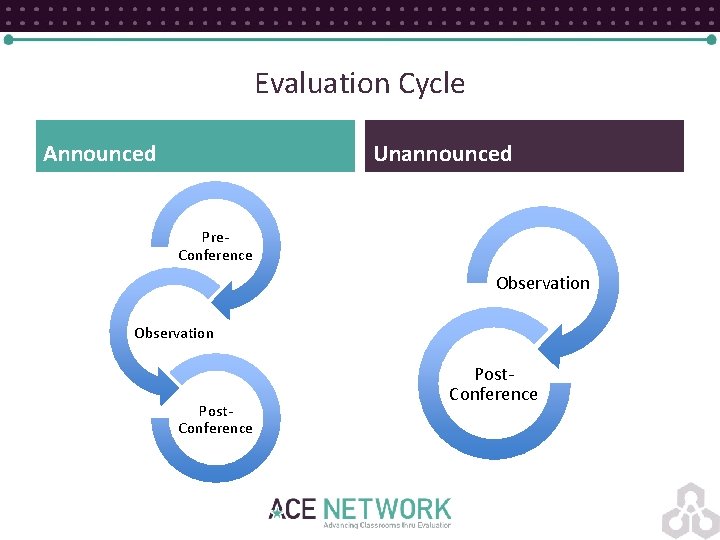
Evaluation Cycle Announced Unannounced Pre. Conference Observation Post. Conference
The Pre-conference Purpose Benefits • ? • ?
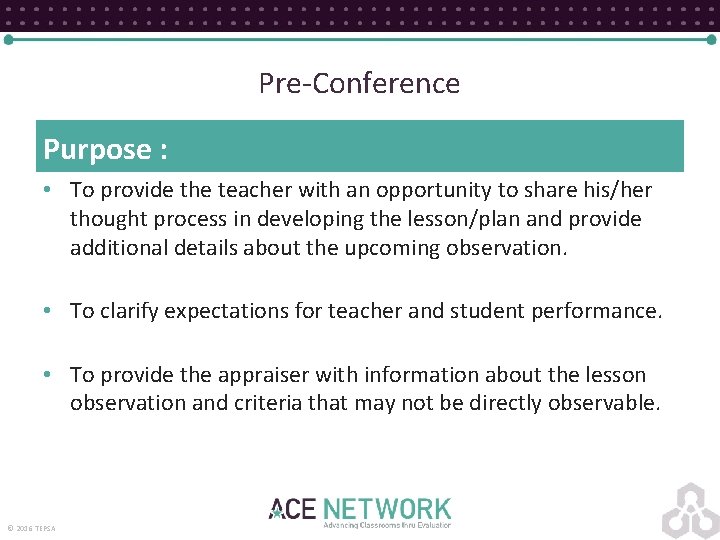
Pre-Conference Purpose : • To provide the teacher with an opportunity to share his/her thought process in developing the lesson/plan and provide additional details about the upcoming observation. • To clarify expectations for teacher and student performance. • To provide the appraiser with information about the lesson observation and criteria that may not be directly observable. © 2016 TEPSA
Congratulations – You are now the Appraiser!
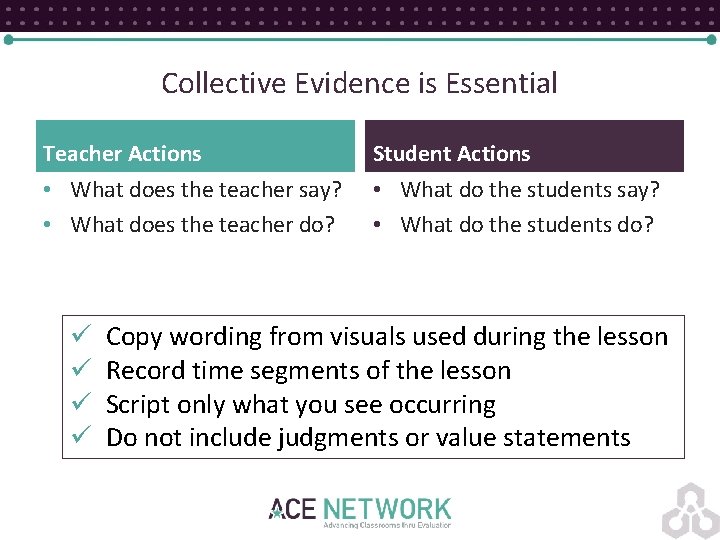
Collective Evidence is Essential Teacher Actions Student Actions • What does the teacher say? • What does the teacher do? • What do the students say? • What do the students do? ü ü Copy wording from visuals used during the lesson Record time segments of the lesson Script only what you see occurring Do not include judgments or value statements
Lesson
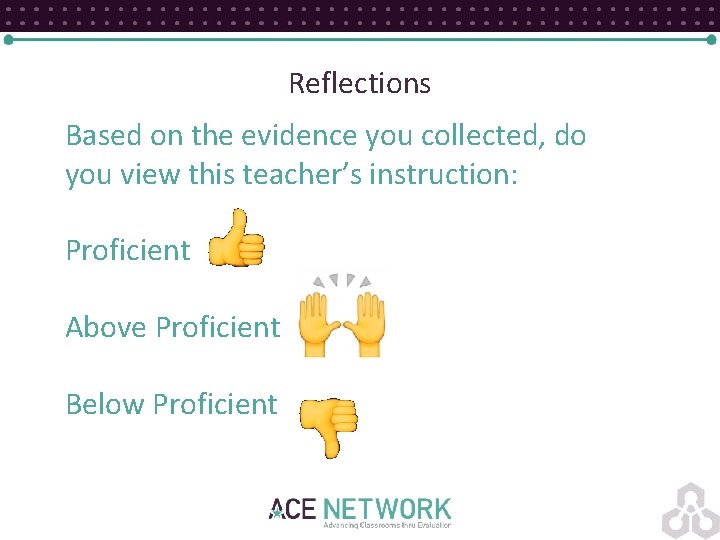
Reflections Based on the evidence you collected, do you view this teacher’s instruction: Proficient Above Proficient Below Proficient
WHAT EVIDENCE DO YOU HAVE?
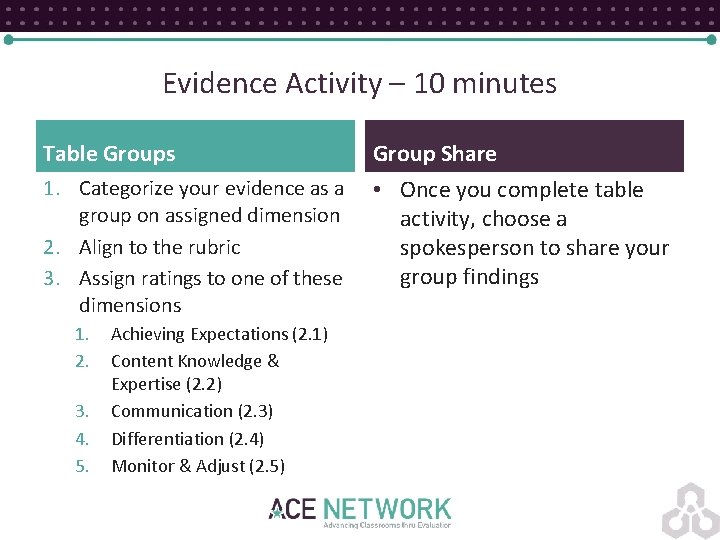
Evidence Activity – 10 minutes Table Groups Group Share 1. Categorize your evidence as a group on assigned dimension 2. Align to the rubric 3. Assign ratings to one of these dimensions • Once you complete table activity, choose a spokesperson to share your group findings 1. 2. 3. 4. 5. Achieving Expectations (2. 1) Content Knowledge & Expertise (2. 2) Communication (2. 3) Differentiation (2. 4) Monitor & Adjust (2. 5)
As the teacher, what do you want from a Post-Conference? Wants Don’t Want • ? • ?
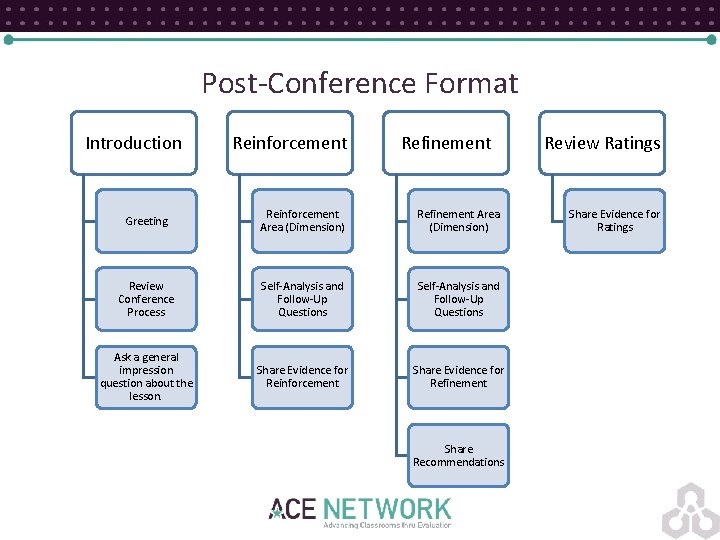
Post-Conference Format Introduction Reinforcement Refinement Greeting Reinforcement Area (Dimension) Refinement Area (Dimension) Review Conference Process Self-Analysis and Follow-Up Questions Ask a general impression question about the lesson. Share Evidence for Reinforcement Share Evidence for Refinement Share Recommendations Review Ratings Share Evidence for Ratings
OBJECTIVES © 2016 TEPSA
How Did We Do? • become familiar with T-TESS process • begin to move from procedural to conceptual in understanding how the domains, dimensions, descriptors, and performance levels of the T-TESS rubric apply to their roles and responsibilities • learn about the observation cycle • understand that the T-TESS process is based on best practices and an ongoing system of feedback and support
Remember… © 2016 TEPSA
T-TESS Thoughts… ü Great teaching is at the core of every quality education system. ü Research shows that there is no greater in-school factor than having an outstanding education in the classroom. ü T-TESS was developed by educators for educators. ü T-TESS is aligned to research-based, best practices for teaching and learning. ü The T-TESS process provides for actionable, timely feedback, allowing teachers set goals and identify professional development that will lead to refinement in knowledge and skills.
T-TESS Thoughts… ü The 'Proficient' performance level is representative of a 'Rock Solid' teacher. ü Trust is key to establish a new mindset for the relationship with appraisals and supporting teachers. ü Everyone in the school community is a public learner. ü The ultimate outcome is improved student achievement.
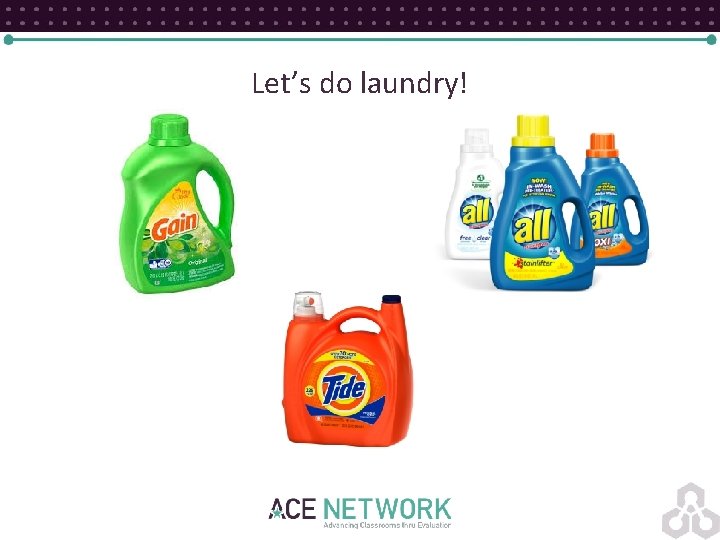
Let’s do laundry!
Learn more and register at tepsa. org/Ace. Network. © 2016 TEPSA