
Moving to the New Organization Model TODAY FUTURE
- Slides: 6
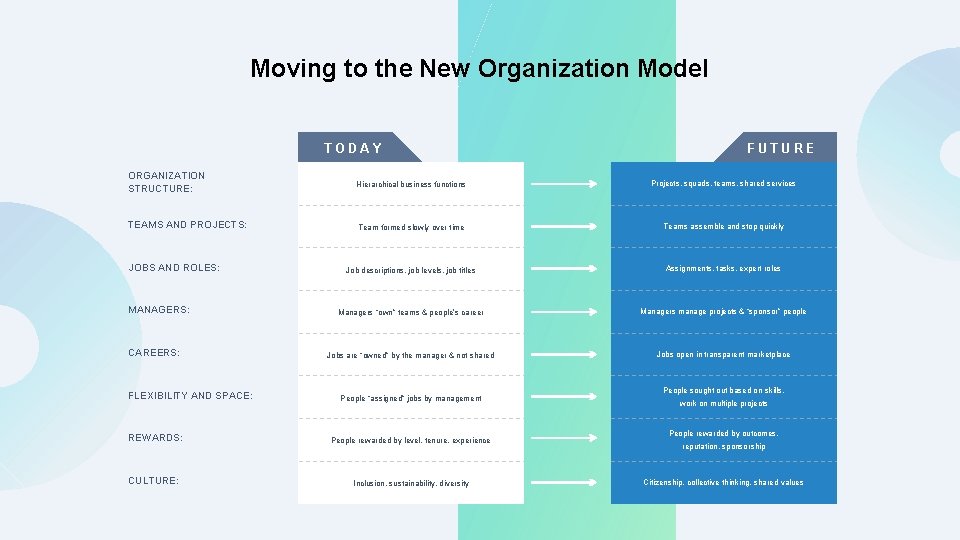
Moving to the New Organization Model TODAY FUTURE ORGANIZATION STRUCTURE: Hierarchical business functions Projects, squads, teams, shared services TEAMS AND PROJECTS: Team formed slowly over time Teams assemble and stop quickly Job descriptions, job levels, job titles Assignments, tasks, expert roles Managers “own” teams & people’s career Managers manage projects & “sponsor” people Jobs are “owned” by the manager & not shared Jobs open in transparent marketplace JOBS AND ROLES: MANAGERS: CAREERS: FLEXIBILITY AND SPACE: People “assigned” jobs by management REWARDS: People rewarded by level, tenure, experience CULTURE: Inclusion, sustainability, diversity People sought out based on skills, work on multiple projects People rewarded by outcomes, reputation, sponsorship Citizenship, collective thinking, shared values
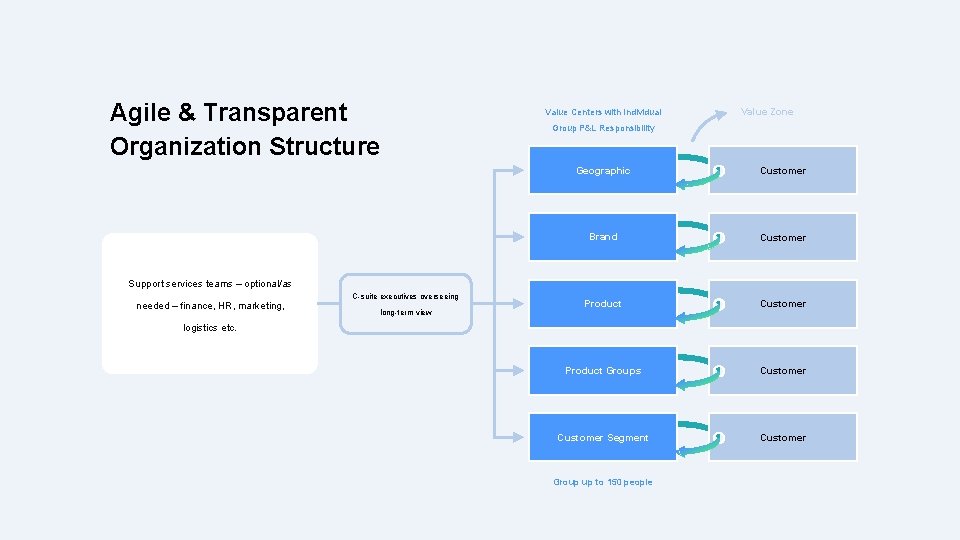
Agile & Transparent Organization Structure Value Centers with Individual Value Zone Group P&L Responsibility Geographic Customer Brand Customer Product Groups Customer Segment Customer Support services teams – optional/as needed – finance, HR, marketing, C-suite executives overseeing long-term view logistics etc. Group up to 150 people
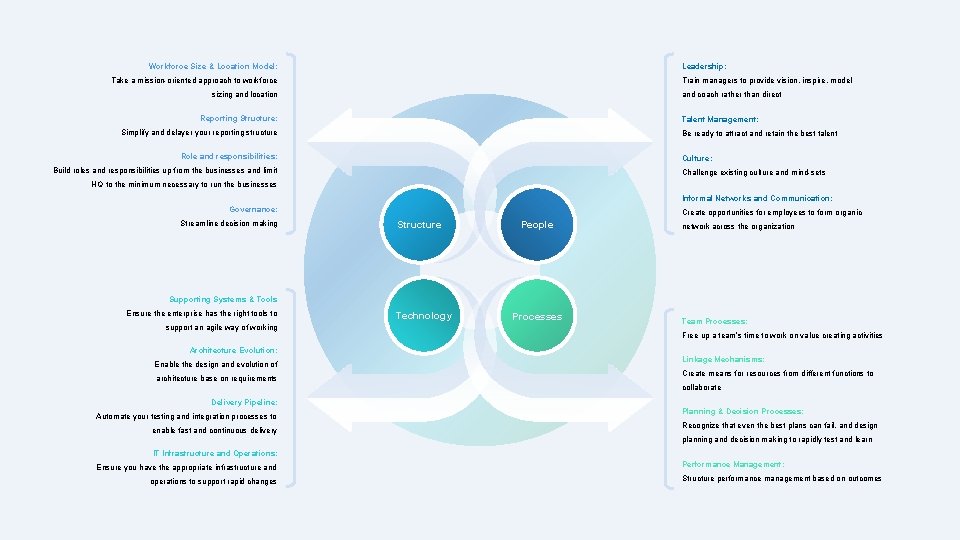
Leadership: Workforce Size & Location Model: Train managers to provide vision, inspire, model Take a mission-oriented approach to workforce and coach rather than direct sizing and location Reporting Structure: Talent Management: Simplify and delayer your reporting structure Be ready to attract and retain the best talent Role and responsibilities: Culture: Build roles and responsibilities up from the businesses and limit Challenge existing culture and mind-sets HQ to the minimum necessary to run the businesses Informal Networks and Communication: Governance: Streamline decision making Create opportunities for employees to form organic Structure People network across the organization Supporting Systems & Tools Ensure the enterprise has the right tools to support an agile way of working Architecture Evolution: Enable the design and evolution of architecture base on requirements Technology Processes Team Processes: Free up a team’s time to work on value creating activities Linkage Mechanisms: Create means for resources from different functions to collaborate Delivery Pipeline: Automate your testing and integration processes to enable fast and continuous delivery Planning & Decision Processes: Recognize that even the best plans can fail, and design planning and decision making to rapidly test and learn IT Infrastructure and Operations: Ensure you have the appropriate infrastructure and operations to support rapid changes Performance Management: Structure performance management based on outcomes
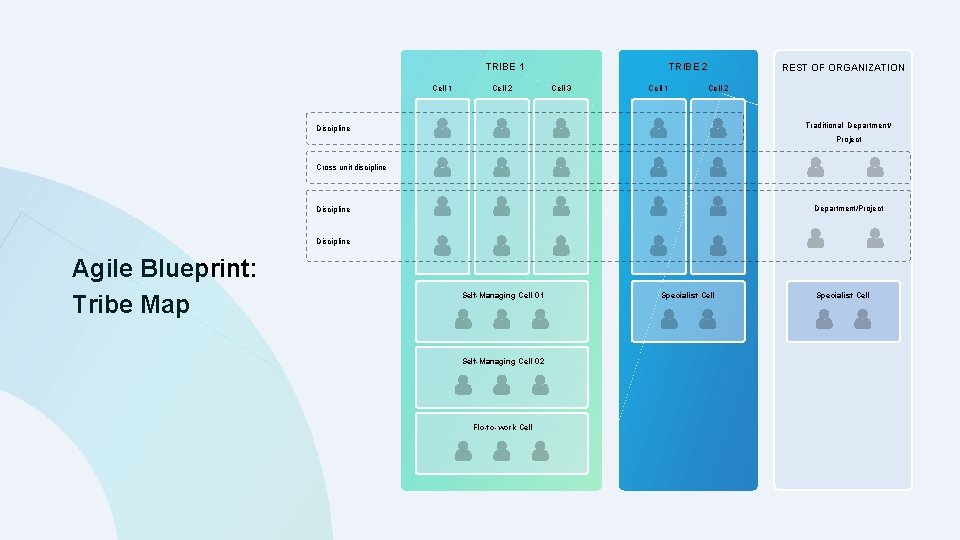
TRIBE 1 Cell 2 TRIBE 2 Cell 3 Cell 1 REST OF ORGANIZATION Cell 2 Traditional Department/ Discipline Project Cross unit discipline Department/Project Discipline Agile Blueprint: Tribe Map Self-Managing Cell 01 Self-Managing Cell 02 Flo-to-work Cell Specialist Cell
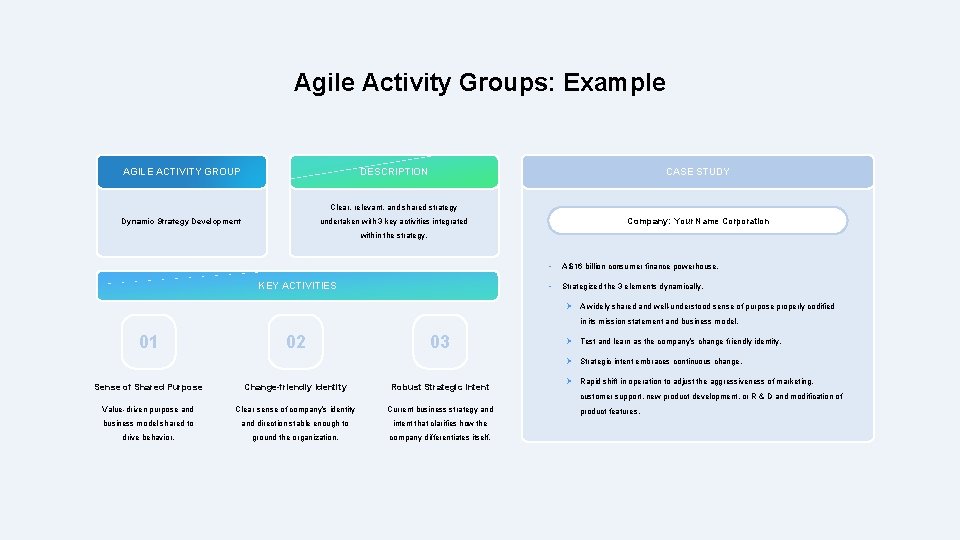
Agile Activity Groups: Example AGILE ACTIVITY GROUP DESCRIPTION Dynamic Strategy Development undertaken with 3 key activities integrated CASE STUDY Clear, relevant, and shared strategy Company: Your Name Corporation within the strategy. KEY ACTIVITIES • A $16 billion consumer finance powerhouse. • Strategized the 3 elements dynamically. Ø A widely shared and well-understood sense of purpose properly codified in its mission statement and business model. 01 02 03 Ø Test and learn as the company’s change friendly identity. Ø Strategic intent embraces continuous change. Sense of Shared Purpose Change-friendly Identity Robust Strategic Intent Value-driven purpose and Clear sense of company’s identity Current business strategy and business model shared to and direction stable enough to intent that clarifies how the drive behavior. ground the organization. company differentiates itself. Ø Rapid shift in operation to adjust the aggressiveness of marketing, customer support, new product development, or R & D and modification of product features.
Get the full version of this presentation and access our library of hundreds of corporate resources Join You Exec Plus today and take your career to new heights. Receive premium corporate resources in your inbox every week. Start today