
MOVING SAFELY FROM HERE TO THERE BASIC GUIDE
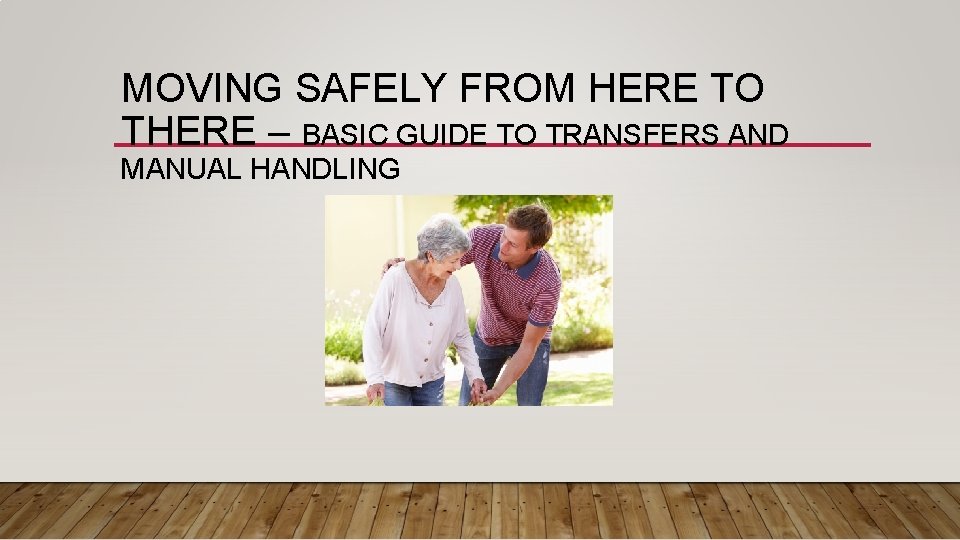
MOVING SAFELY FROM HERE TO THERE – BASIC GUIDE TO TRANSFERS AND MANUAL HANDLING
HOUSEKEEPING • Introduction • Rules for the inservice Please mute your microphone • As this going to be recorded, please remove cameras should you not wish to be famous • If we can please save questions for the end and if you can type these in the question box at the bottom of your screen.
MANUAL HANDLING • Definition • The Occupational Safety and Health Regulation Part 3, Division 1, s 3. 4 1996 states: • (1) In this regulation — • "manual handling" means any activity requiring the use of force exerted by a person to lift, lower, push, pull, carry or otherwise move, hold or restrain a person, animal or thing.
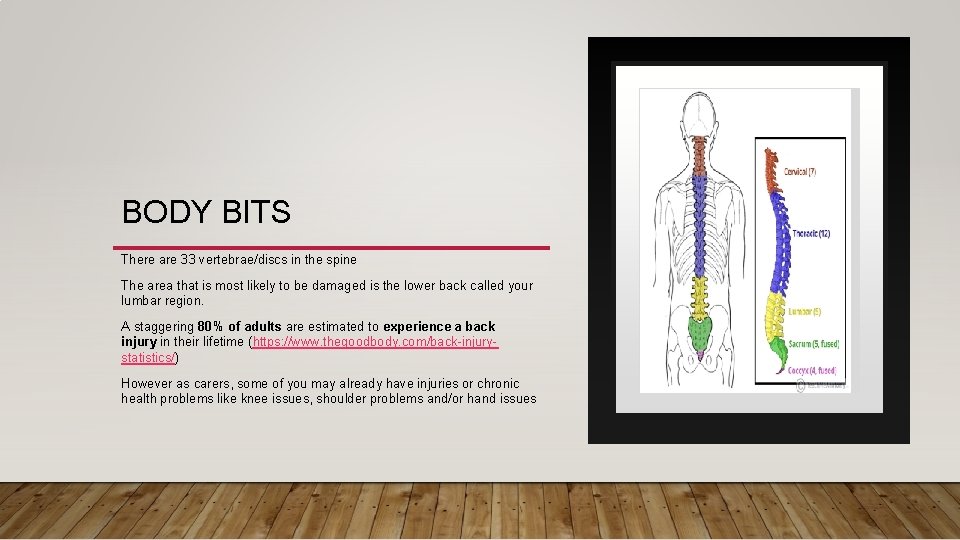
BODY BITS There are 33 vertebrae/discs in the spine The area that is most likely to be damaged is the lower back called your lumbar region. A staggering 80% of adults are estimated to experience a back injury in their lifetime (https: //www. thegoodbody. com/back-injurystatistics/) However as carers, some of you may already have injuries or chronic health problems like knee issues, shoulder problems and/or hand issues
WHAT DOES THIS MEAN FOR US? ? ? • It means that we are lifting, pushing, pulling everyday and we need to protect our body …. have a think of a normal day in your house. • Laundry basket, picking up the newspaper, carrying shopping, lifting up a child/pet, moving a pot plant • Stop and think how we do this now. It’s an unconscious movement.

TRANSFERS • However when we are moving our loved one, we need to make this a conscious movement, one that is consistent each time, well communicated and planned so as to protect ourselves from injury! • The techniques of ‘transferring’ encourage a carer to transfer the bodyweight of the person being moved, rather than lifting the person. These principles ensure the safety of both the person being cared for and the carer.
BASIC PRINCIPALS • Correct manual handling principles • Assess the task. The safest way and the best technique for performing the task is determined by considering: . . . • Plan. . Use equipment where possible and know where you are moving to – clear pathway, set the height • Position the feet. . Make sure the feet are firmly grounded slightly apart with knees over toes • Take a secure grip. . Avoid pulling on limbs or clothing. Look for points of control (shoulders/hips/knees) • Keep the load close to the body. . assume the dance position • Maintain good posture throughout the procedure. . try to avoid twisting • Use the leg muscles. . power from the legs not the back • Use body momentum…. Communicate how you will be moving to your loved one, count it down
RULES TO FOLLOW • Do not go into a position that is uncomfortable for you (e. g. a squat). • Never lift if you are unsure or not confident • Never try to catch a person if they are falling. • Never attempt to take all of a person’s weight when transferring. • Be aware of your own ability and physical limitations and exercise regularly to remain strong. • Utilise every technique possible, such as equipment or other people to reduce the risk of injury to yourself or the person you are caring for. • Never pull on limbs • Where possible avoid transferring over long distances. • Try not to transfer in a small working space, which may cause you to twist or stoop. • Try not to transfer from a poor height (where possible adjust heights of furniture) • Avoid loose-fitting clothes that may interfere with your manual handling tasks. Wear appropriate clothes and footwear. . When in doubt do not attempt the transfer *Try to reduce repetitive transfers
LET’S GET DOWN TO BUSINESS – WHERE’S MY CORE? • Prior to undertaking any transferring, contract your pelvic floor muscles and at the same time gently draw your navel towards your spine. This action of drawing your navel towards your spine causes the deep stomach muscles to contract. As these muscles tighten they will act as a ‘brace’ to support your spine. By performing this action during everyday tasks such as gardening and cleaning the house, you are developing your core stability and reducing your chance of a lower back injury. To transfer the person you care for safely, it is important that you use these muscles. • Lets practice this exercise now
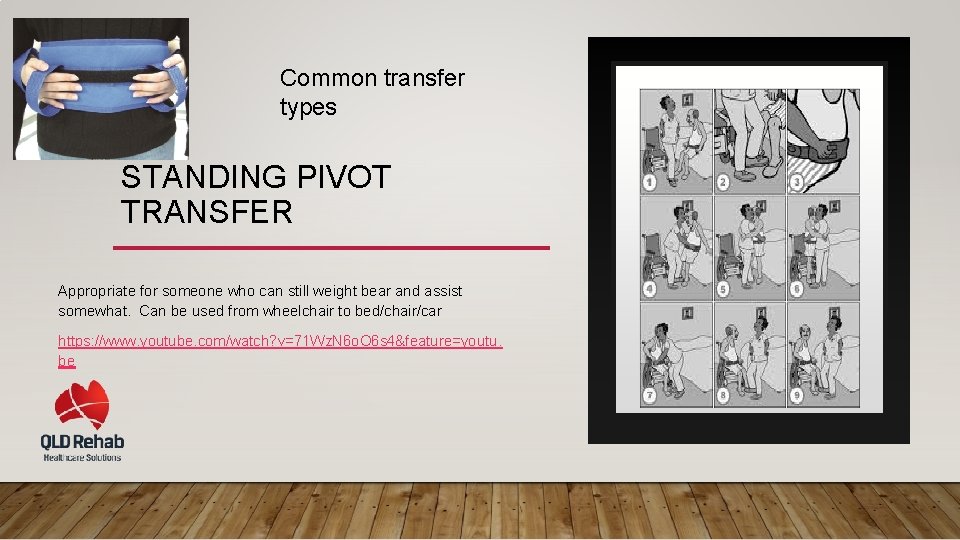
Common transfer types STANDING PIVOT TRANSFER Appropriate for someone who can still weight bear and assist somewhat. Can be used from wheelchair to bed/chair/car https: //www. youtube. com/watch? v=71 Wz. N 6 o. O 6 s 4&feature=youtu. be
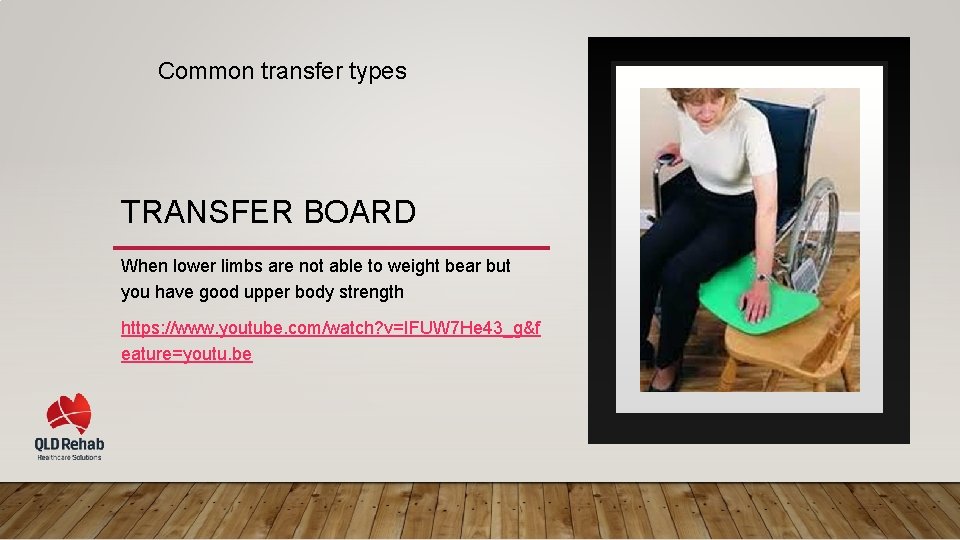
Common transfer types TRANSFER BOARD When lower limbs are not able to weight bear but you have good upper body strength https: //www. youtube. com/watch? v=IFUW 7 He 43_g&f eature=youtu. be
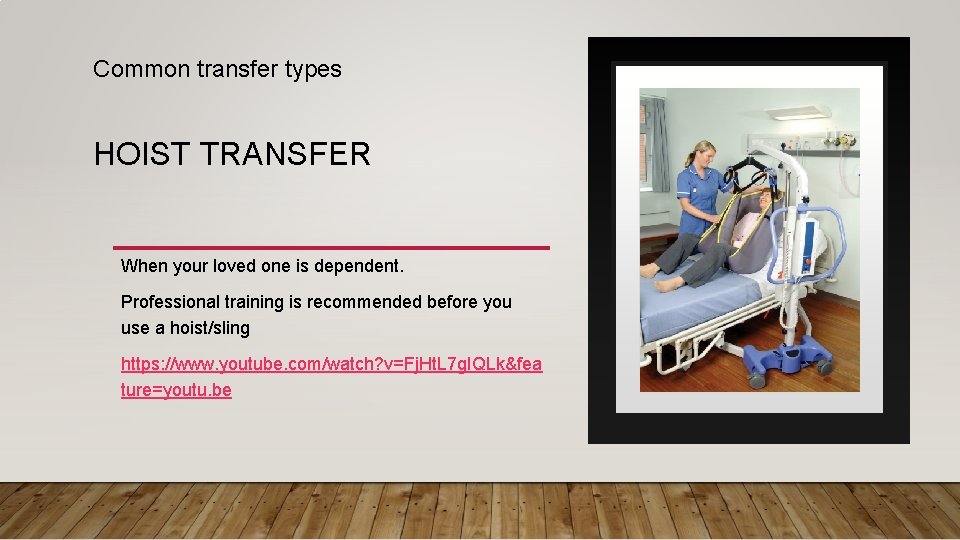
Common transfer types HOIST TRANSFER When your loved one is dependent. Professional training is recommended before you use a hoist/sling https: //www. youtube. com/watch? v=Fj. Ht. L 7 g. IQLk&fea ture=youtu. be
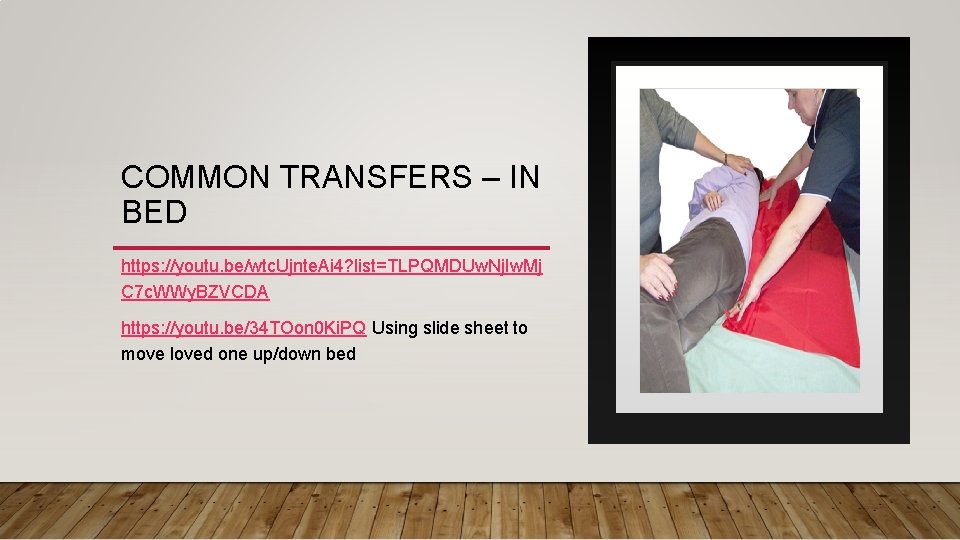
COMMON TRANSFERS – IN BED https: //youtu. be/wtc. Ujnte. Ai 4? list=TLPQMDUw. Nj. Iw. Mj C 7 c. WWy. BZVCDA https: //youtu. be/34 TOon 0 Ki. PQ Using slide sheet to move loved one up/down bed
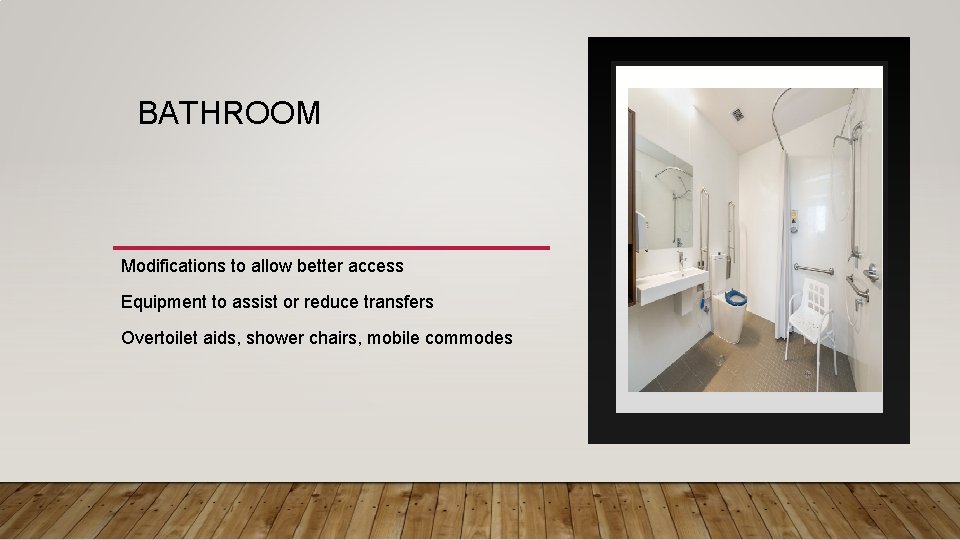
BATHROOM Modifications to allow better access Equipment to assist or reduce transfers Overtoilet aids, shower chairs, mobile commodes
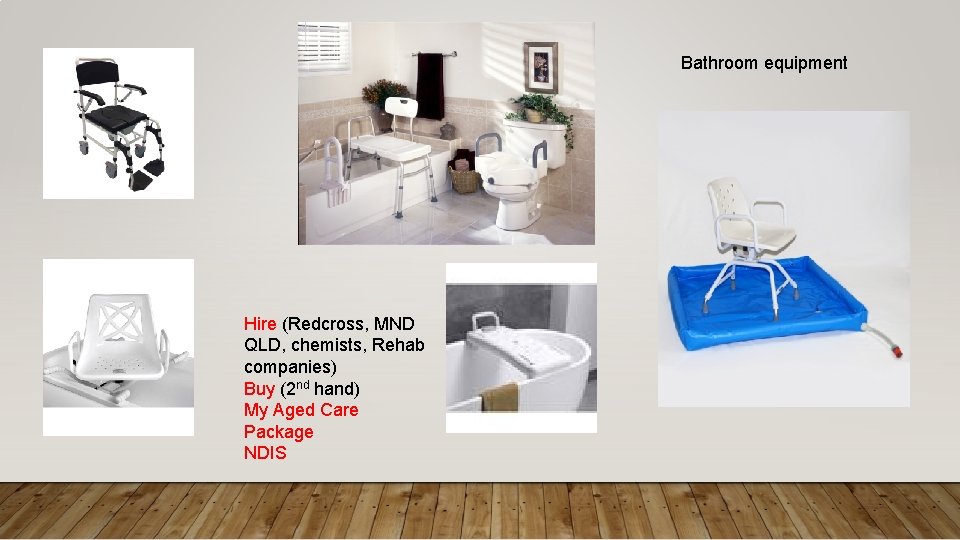
Bathroom equipment Hire (Redcross, MND QLD, chemists, Rehab companies) Buy (2 nd hand) My Aged Care Package NDIS
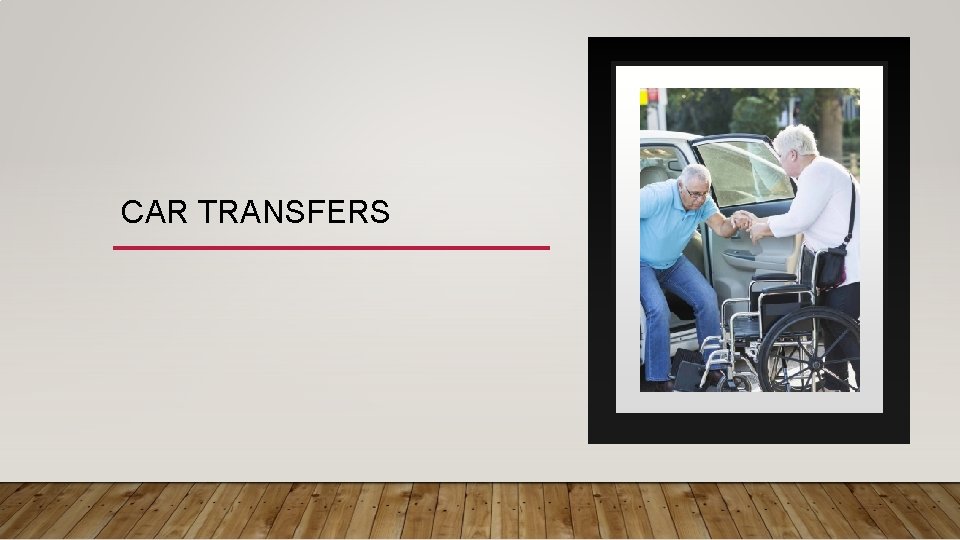
CAR TRANSFERS
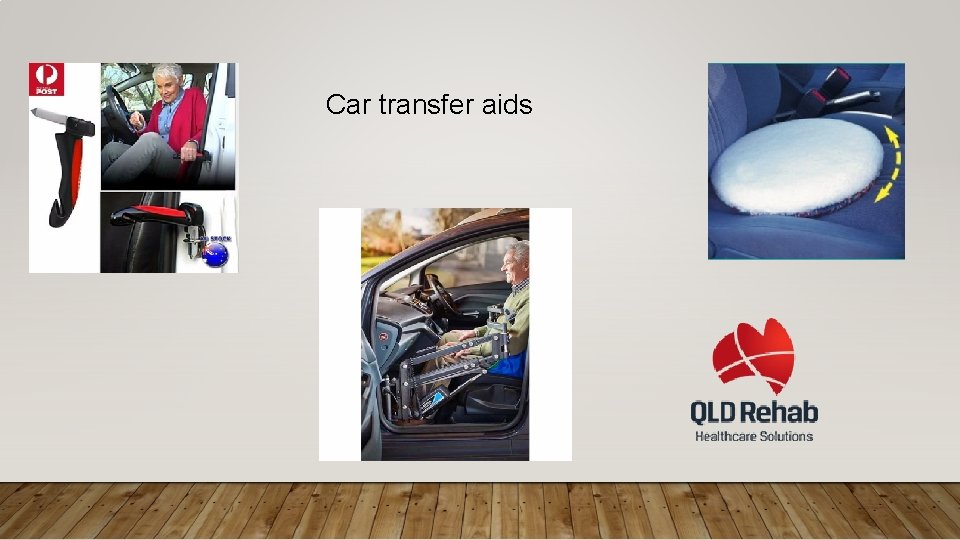
Car transfer aids
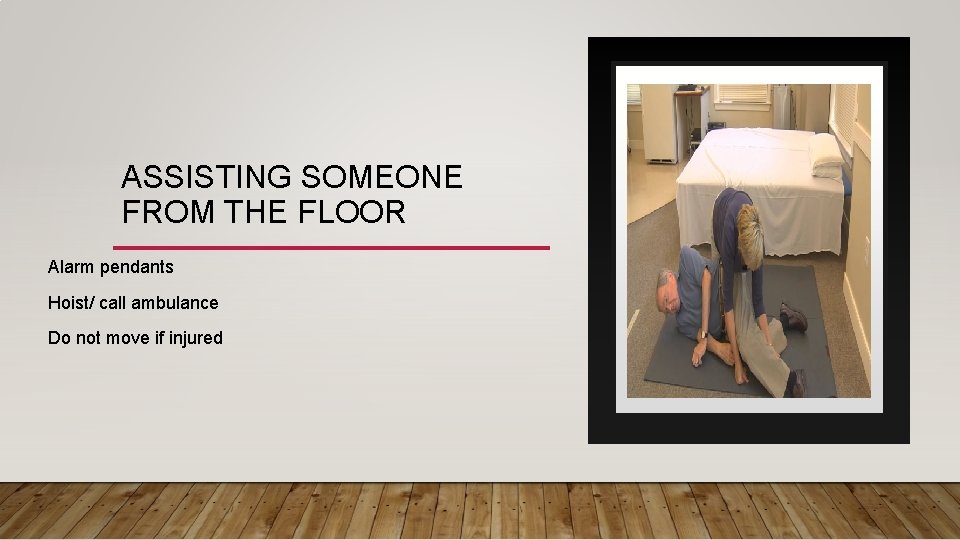
ASSISTING SOMEONE FROM THE FLOOR Alarm pendants Hoist/ call ambulance Do not move if injured
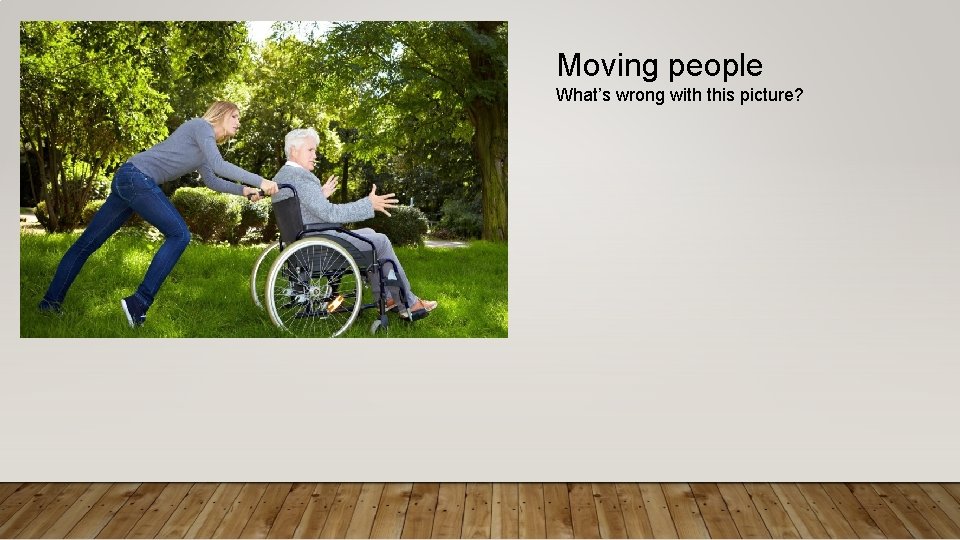
Moving people What’s wrong with this picture? MOVING PEOPLE
WHAT DID WE LEARN TODAY? Your role as a carer is a very important one. It is a constant role that can be physically and mentally demanding and it is important that carers look after themselves to avoid injury or burnout. Your health and physical fitness is important in assisting you to look after the person you care for. • Touch base with your health professionals to support you • Get assistance with caring where possible (informal and formal supports) • Respite
ACKNOWLEDGEMENTS • Back to Basics handy hints for carers to help prevent back injuries (Department of Vet’s Affairs) • Qld Rehab Healthcare Solutions (1300 743 710) or https: //www. qldrehab. com. au/contactqldrehab
DISCLAIMER • No people, children or animals were injured in the production of this webinar • MND QLD shall not be responsible for the results of any actions arising out of the use of any information in this webinar. The authors expressly disclaim all liability to any person in respect of any injury, disease or death occurring as a result of the contents of this webinar. • Professional or paid carers should refer to the Workcover Authority and the Occupational Health and Safety Act, Regulations and Manual Handling Codes of Practice in their State or Territory. • In other words make sure you ask for help if unsure!
YOUR FEEDBACK • We would love to hear back what you thought of our first presentation. Please send your feedback to occupationaltherapy@mndaq. org. au. All comments are confidential. • How useful did you find the information? • What do you think about the layout of the information? • What would you like to see MND QLD present in the future?
- Slides: 23