
Moving Positioning and Falls Management of People Defining

- Slides: 29
Moving, Positioning and Falls Management of People Defining Manual Handling
HOUSEKEEPING
Learned Outcomes By the end of the session participants will be able: § To understand the benefits of moving and positioning training § To understand apply the legal definition to working practice.
Benefits of training HUMANE – To prevent injuries to yourself, your colleagues and the service users you work with ECONOMICS – How much does it cost LEGAL – To explain the law and how it will protect you PREVENTION – To minimise the hazards and risks at work
Definition of Manual Handling Transporting or supporting of a load including: § Lifting § § § Putting down Pushing Pulling Carrying Moving a load by hand or bodily force
Moving, Positioning and Falls Management of People The Importance of ‘Well-Being’
Learned Outcomes By the end of the session delegates will be able to: § Relate moving and positioning to a 24 hour approach to well being and back care.
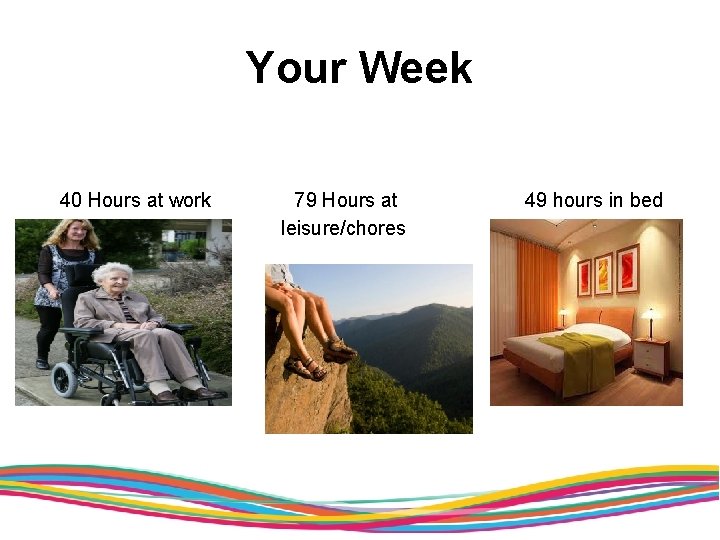
Your Week 40 Hours at work 79 Hours at leisure/chores 49 hours in bed
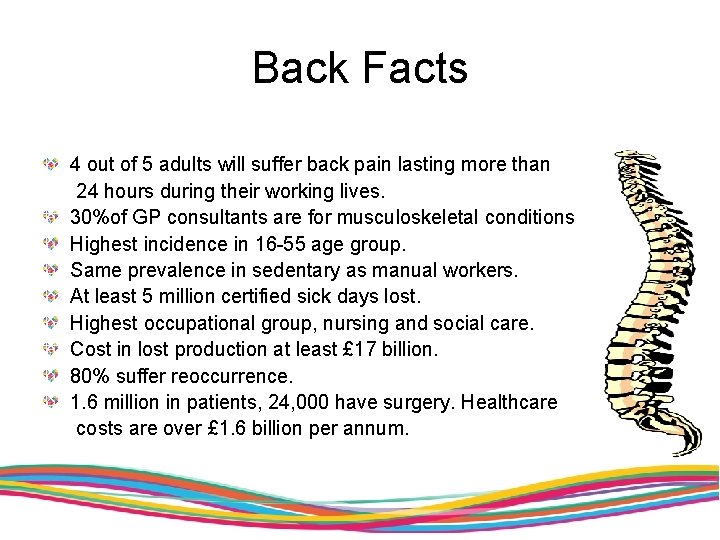
Back Facts 4 out of 5 adults will suffer back pain lasting more than 24 hours during their working lives. 30%of GP consultants are for musculoskeletal conditions Highest incidence in 16 -55 age group. Same prevalence in sedentary as manual workers. At least 5 million certified sick days lost. Highest occupational group, nursing and social care. Cost in lost production at least £ 17 billion. 80% suffer reoccurrence. 1. 6 million in patients, 24, 000 have surgery. Healthcare costs are over £ 1. 6 billion per annum.
Causes of Low Back Pain § Degenerative changes § Traumatic injuries § Cumulative § Psychological
Common Handling Injuries § § § § Muscle and ligament strains Joint sprains Inter vertebral disc prolapse Tennis elbow Frozen shoulder Carpel tunnel syndrome Tendonitis
Moving, Positioning and Falls Management of People The principles of moving and positioning and how it relates to the biomechanics of the spine
Learned Outcomes By the end of the session delegates will be able : § Relate the principles of moving and positioning to the biomechanics of the spine
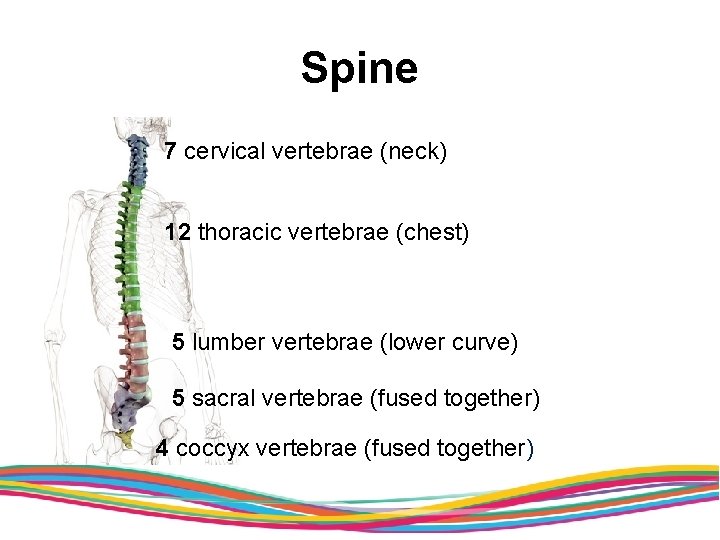
Spine 7 cervical vertebrae (neck) 12 thoracic vertebrae (chest) 5 lumber vertebrae (lower curve) 5 sacral vertebrae (fused together) 4 coccyx vertebrae (fused together)
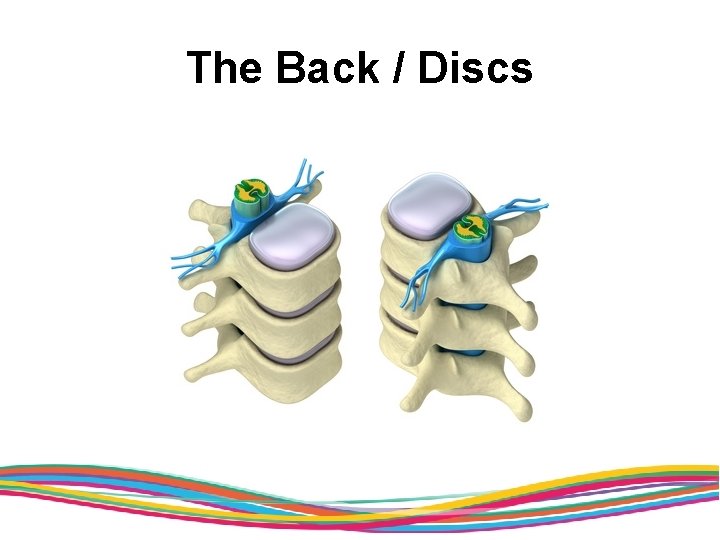
The Back / Discs
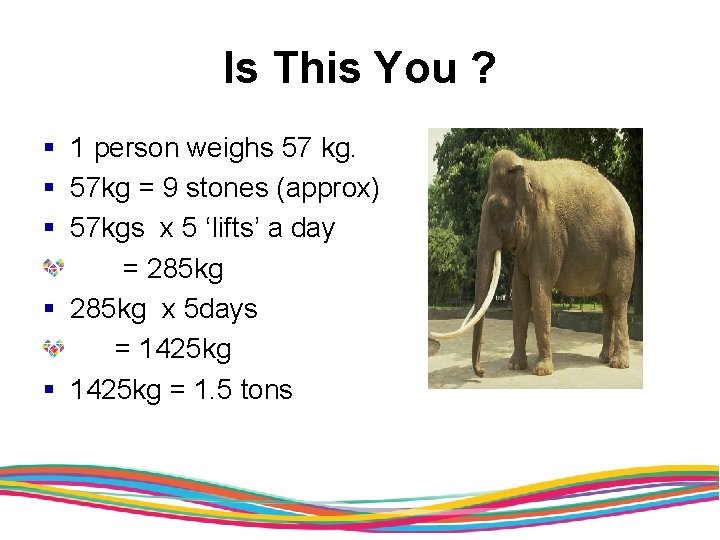
Is This You ? § 1 person weighs 57 kg. § 57 kg = 9 stones (approx) § 57 kgs x 5 ‘lifts’ a day = 285 kg § 285 kg x 5 days = 1425 kg § 1425 kg = 1. 5 tons
Moving, Positioning and Falls Management of People The impact of legislation on the moving and positioning of people
Learned Outcomes By the end of the session delegates will: § Define the responsibilities within current moving and handling legislation § Relate the principles of problem solving to risk assessment
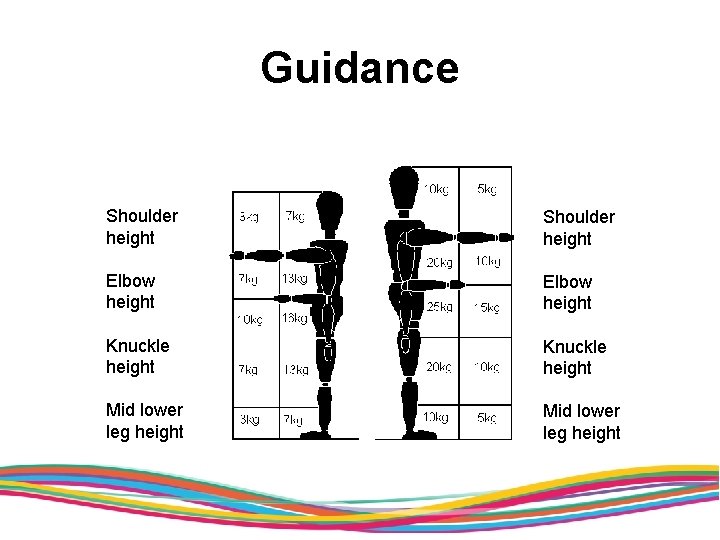
Guidance Shoulder height Elbow height Knuckle height Mid lower leg height
Definitions ACCIDENT An unforeseen occurrence HAZARD The potential to cause harm RISK The likelihood of harm occurring and its severity
Definitions RISK ASSESSMENT A careful examination of what in your work could cause harm to people, so you can weigh up whether you have taken enough precautions or should do more to prevent harm
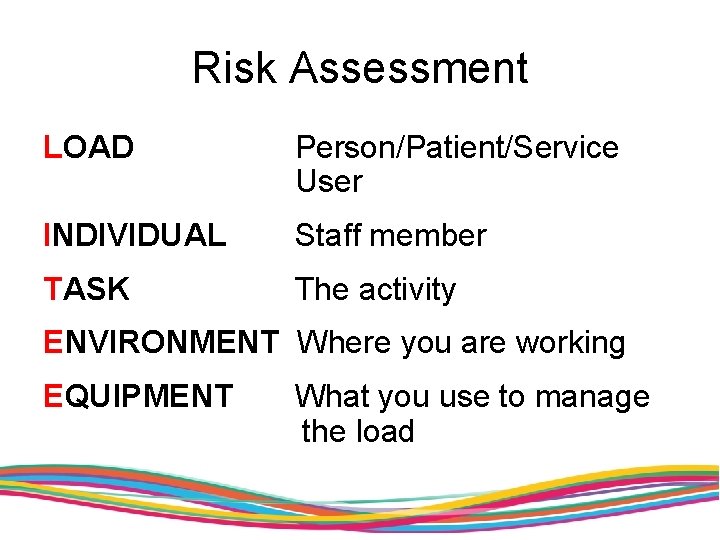
Risk Assessment LOAD Person/Patient/Service User INDIVIDUAL Staff member TASK The activity ENVIRONMENT Where you are working EQUIPMENT What you use to manage the load
Moving, Positioning and Falls Management of People Key principles of moving and positioning and unsafe techniques
Learned Outcomes By the end of the session delegates will be able to : § Perform moving and handling techniques demonstrated § Recognise unsafe or poor handling techniques
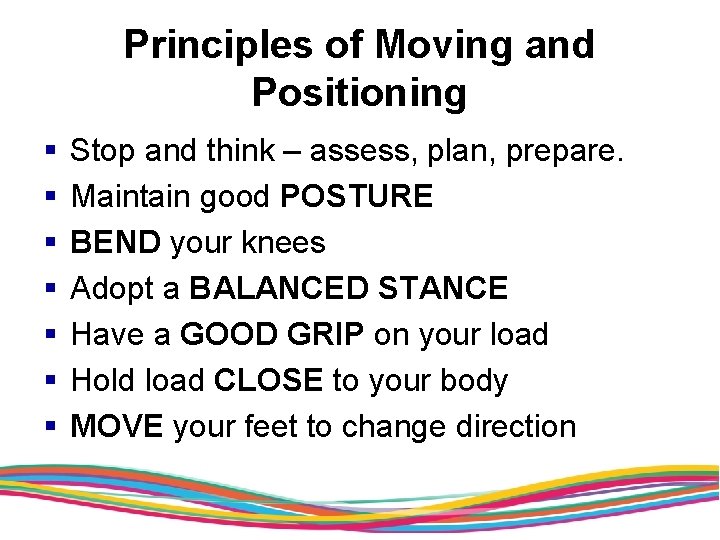
Principles of Moving and Positioning § § § § Stop and think – assess, plan, prepare. Maintain good POSTURE BEND your knees Adopt a BALANCED STANCE Have a GOOD GRIP on your load Hold load CLOSE to your body MOVE your feet to change direction
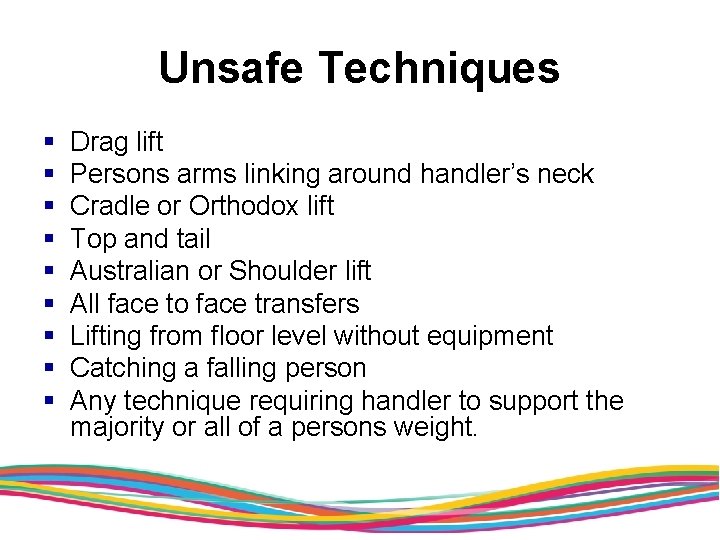
Unsafe Techniques § § § § § Drag lift Persons arms linking around handler’s neck Cradle or Orthodox lift Top and tail Australian or Shoulder lift All face to face transfers Lifting from floor level without equipment Catching a falling person Any technique requiring handler to support the majority or all of a persons weight.
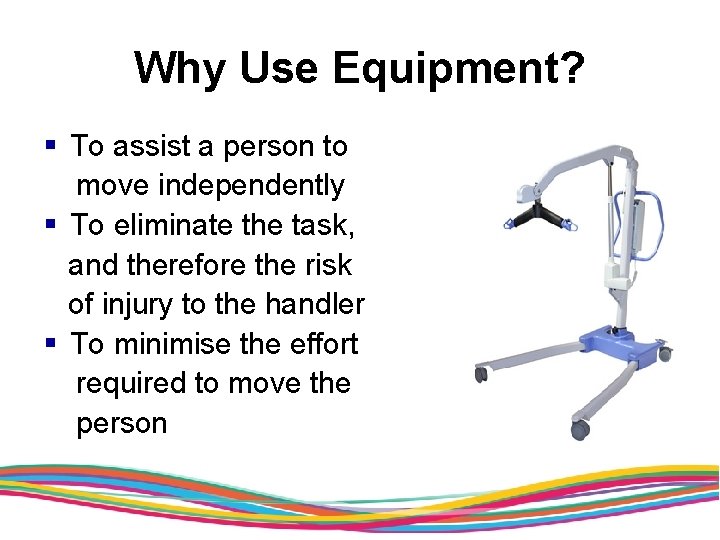
Why Use Equipment? § To assist a person to move independently § To eliminate the task, and therefore the risk of injury to the handler § To minimise the effort required to move the person
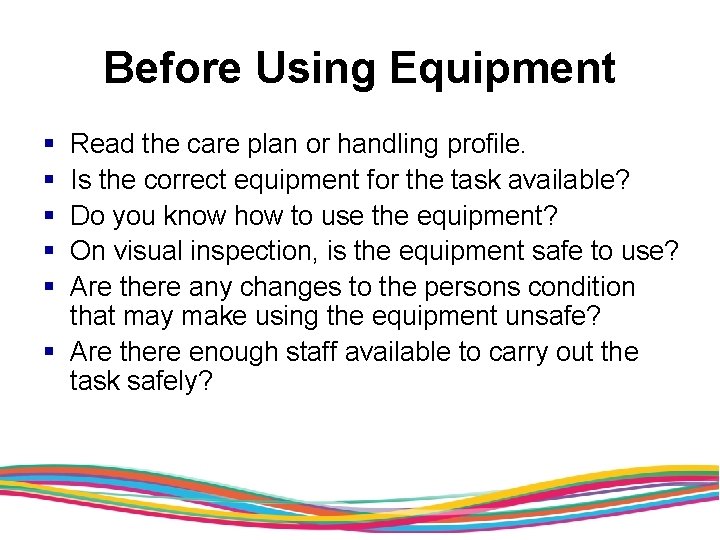
Before Using Equipment § § § Read the care plan or handling profile. Is the correct equipment for the task available? Do you know how to use the equipment? On visual inspection, is the equipment safe to use? Are there any changes to the persons condition that may make using the equipment unsafe? § Are there enough staff available to carry out the task safely?