
Moving Charges Around W 5 D 3 Potential

- Slides: 16
Moving Charges Around W 5 D 3 Potential Calculations September 24, 2010
First Things First
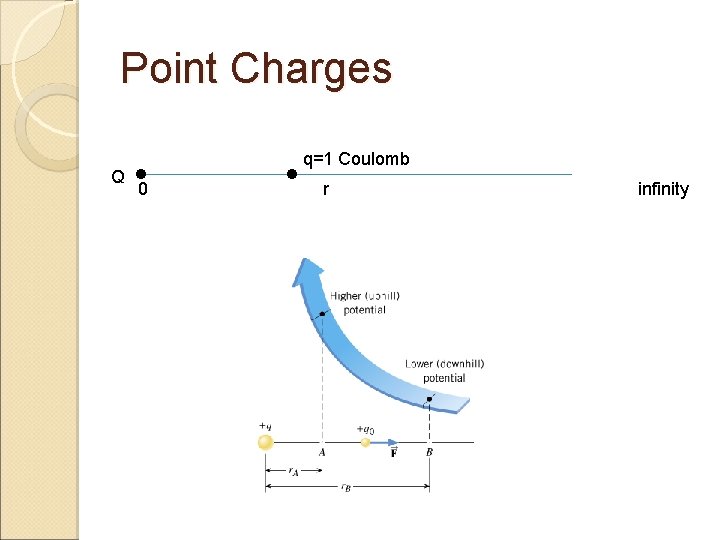
Point Charges Q 0 q=1 Coulomb r infinity
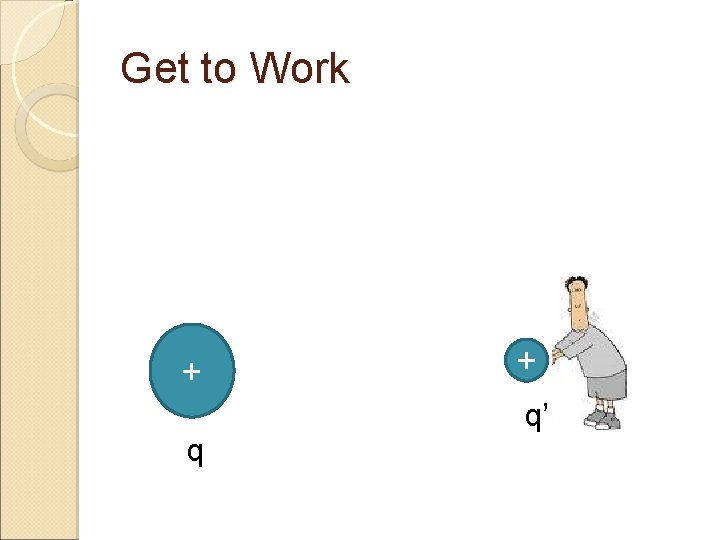
Get to Work + q’
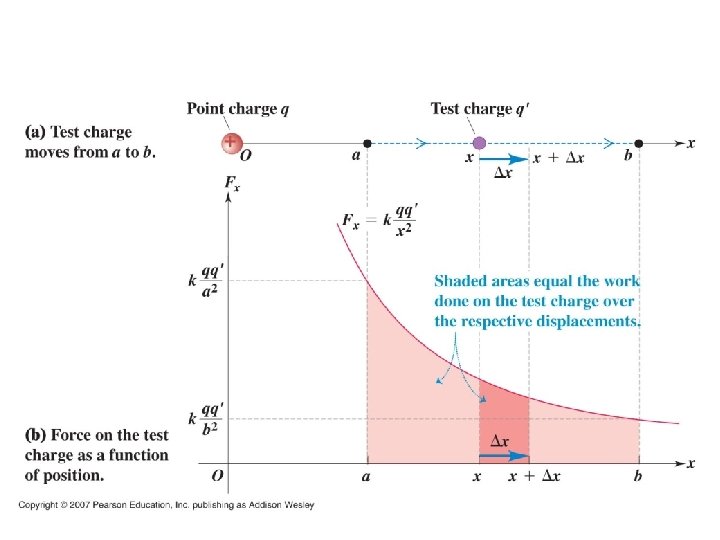
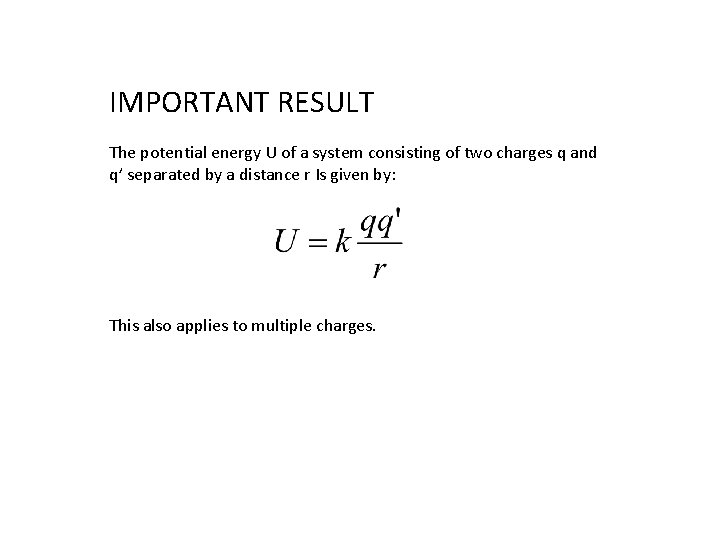
IMPORTANT RESULT The potential energy U of a system consisting of two charges q and q’ separated by a distance r Is given by: This also applies to multiple charges.
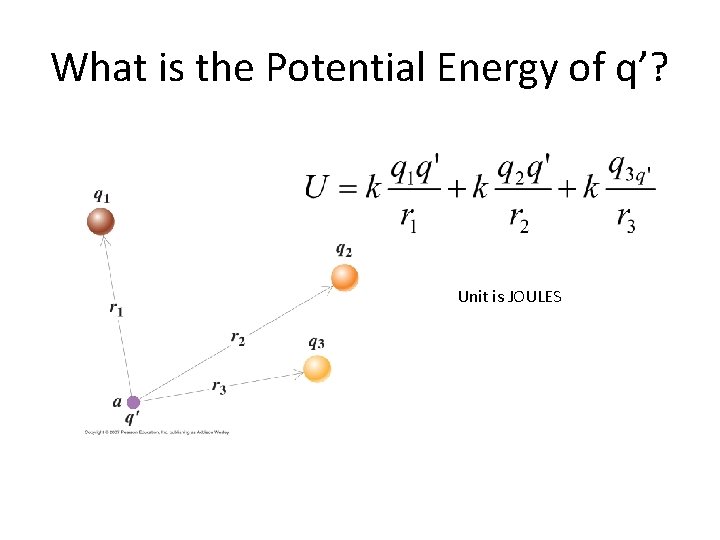
What is the Potential Energy of q’? Unit is JOULES
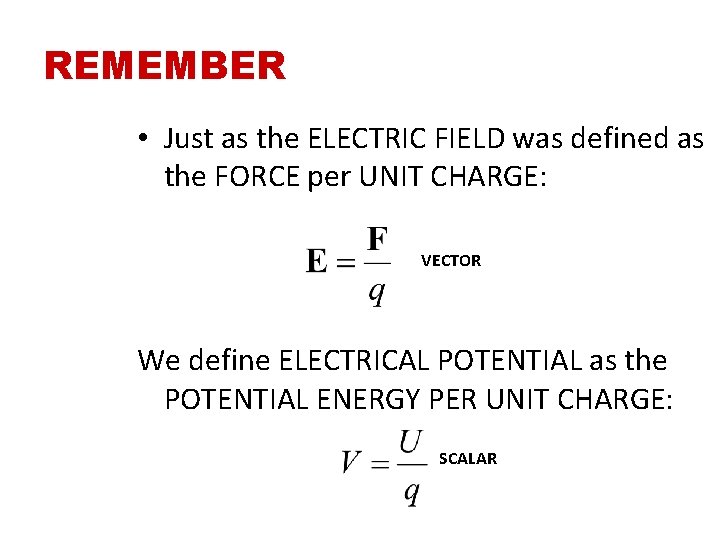
REMEMBER • Just as the ELECTRIC FIELD was defined as the FORCE per UNIT CHARGE: VECTOR We define ELECTRICAL POTENTIAL as the POTENTIAL ENERGY PER UNIT CHARGE: SCALAR
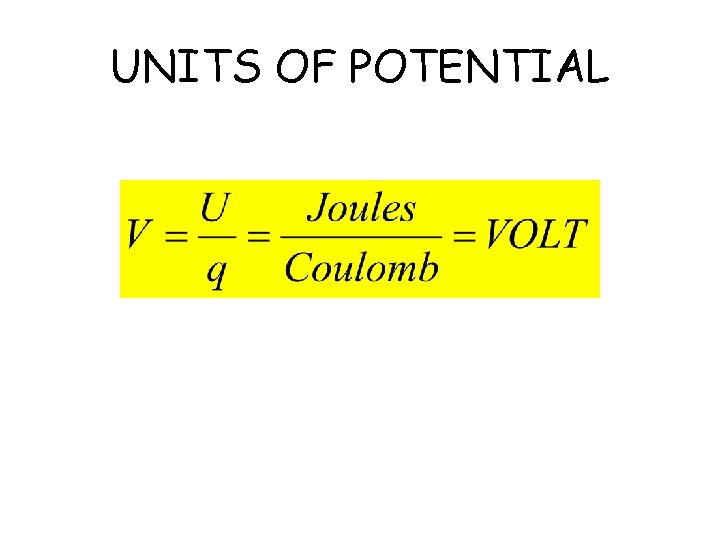
UNITS OF POTENTIAL
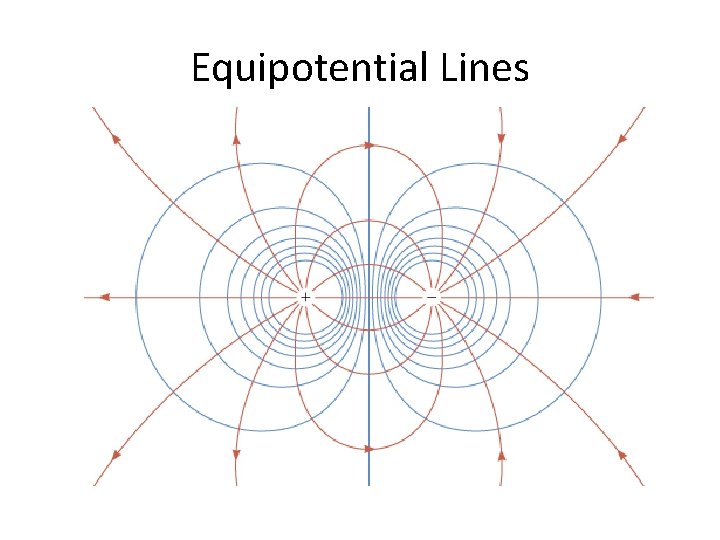
Equipotential Lines
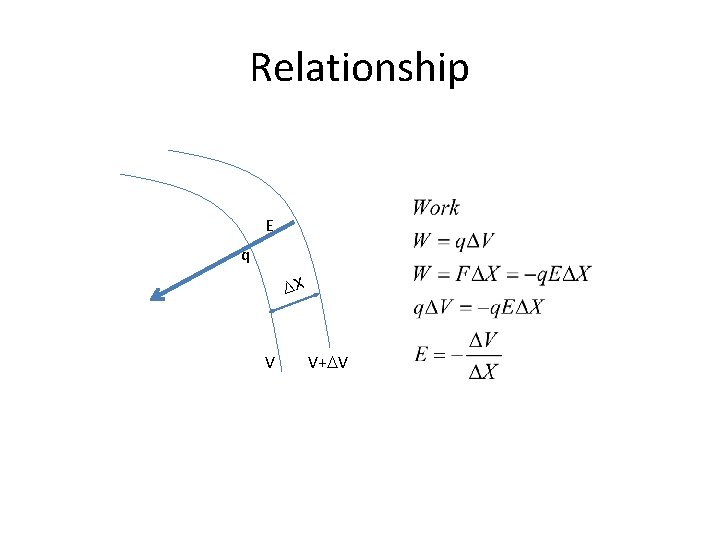
Relationship E q DX V V+DV
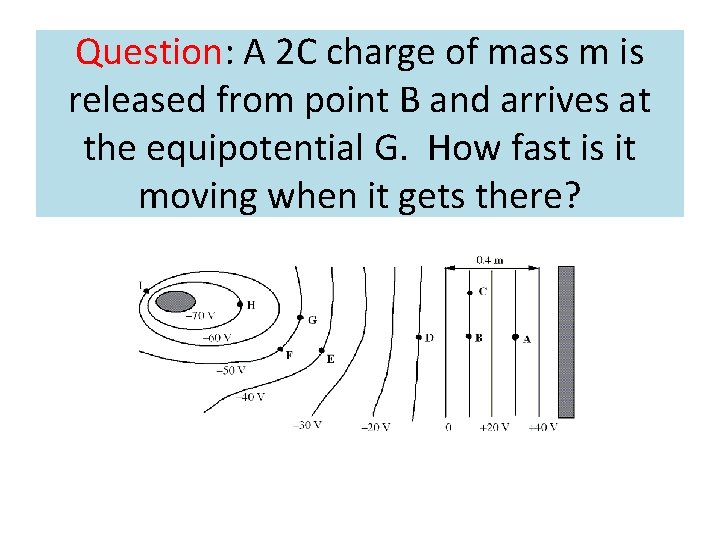
Question: A 2 C charge of mass m is released from point B and arrives at the equipotential G. How fast is it moving when it gets there?
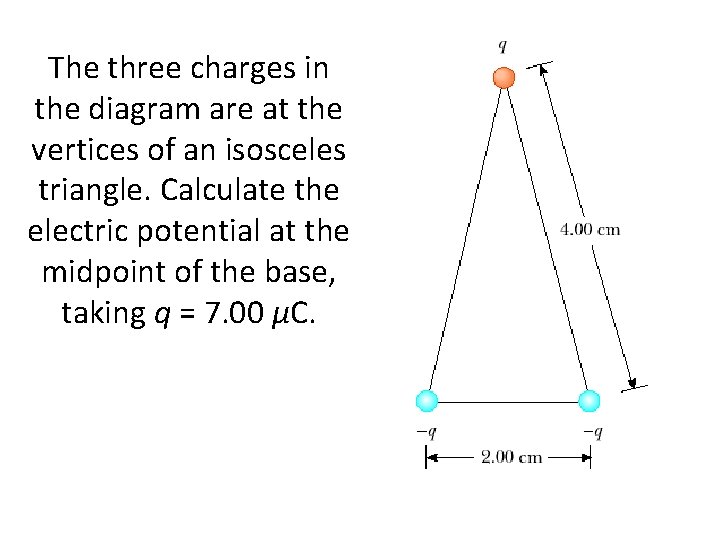
The three charges in the diagram are at the vertices of an isosceles triangle. Calculate the electric potential at the midpoint of the base, taking q = 7. 00 μC.
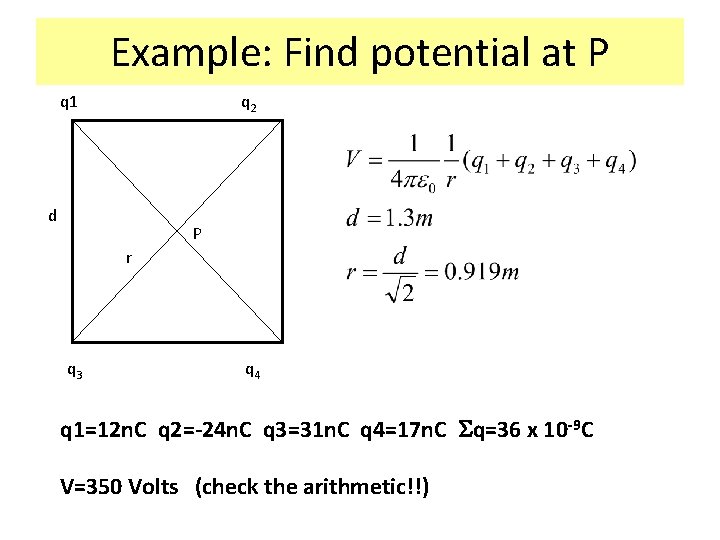
Example: Find potential at P q 1 q 2 d P r q 3 q 4 q 1=12 n. C q 2=-24 n. C q 3=31 n. C q 4=17 n. C Sq=36 x 10 -9 C V=350 Volts (check the arithmetic!!)
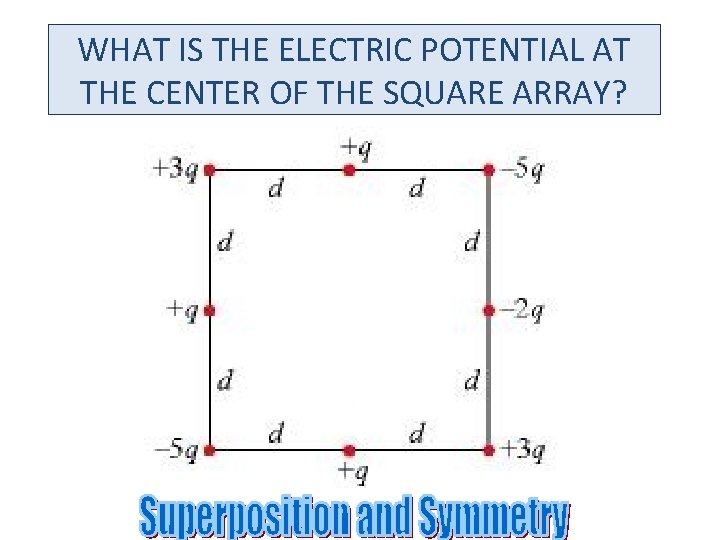
WHAT IS THE ELECTRIC POTENTIAL AT THE CENTER OF THE SQUARE ARRAY?
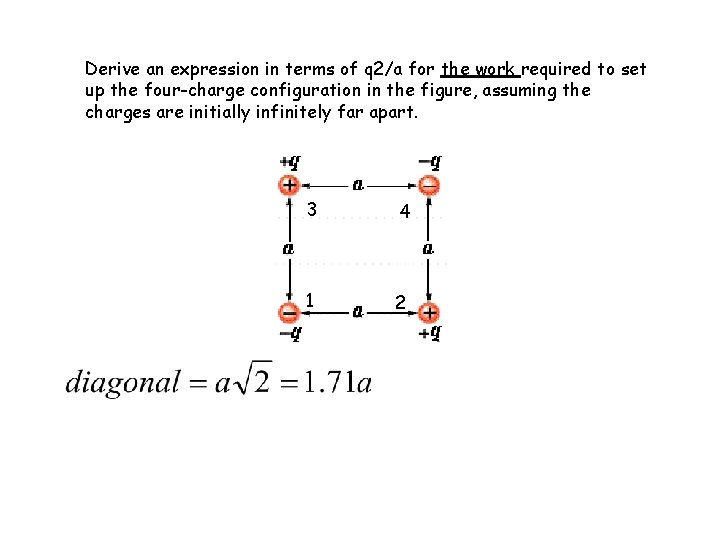
Derive an expression in terms of q 2/a for the work required to set up the four-charge configuration in the figure, assuming the charges are initially infinitely far apart. 3 1 4 2