
Moving Beyond the Lecture Hall A Multidimensional Approach
Moving Beyond the Lecture Hall: A Multidimensional Approach to Engage and Teach Quality Improvement and Patient Safety Melissa Chladek, MD Cara Lye, MD Diana Stewart, MD, MBA Erin Stucky Fisher, MD, MHM Joyee Vachani, MD, Med

NO DISCLOSURES Page 1 xxx 00. #####. ppt 12/16/2021 2: 10: 29 AM
Background • Although a requirement, pediatric residents are rarely exposed to longitudinal Quality Improvement (QI) / Patient Safety (PS) training with practical applications. • Addressing this need, we created the Quality Improvement and Patient Safety Curriculum (QIPSC) for Baylor College of Medicine (BCM) / Texas Children’s Hospital (TCH) pediatric residents. • We received an institutional education grant from TCH to carry out this curriculum, the study was IRB approved, and part of an APA Educational Scholars Program project. Page 2 xxx 00. #####. ppt 12/16/2021 2: 10: 30 AM
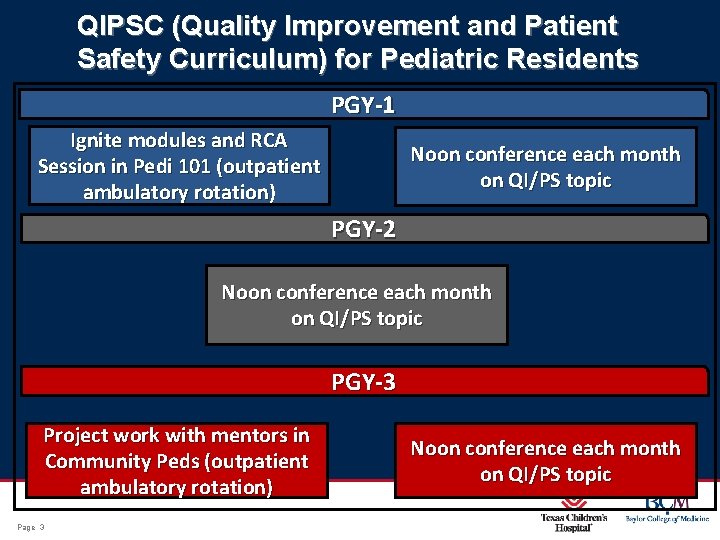
QIPSC (Quality Improvement and Patient Safety Curriculum) for Pediatric Residents PGY-1 Ignite modules and RCA Session in Pedi 101 (outpatient ambulatory rotation) Noon conference each month on QI/PS topic PGY-2 Noon conference each month on QI/PS topic PGY-3 Project work with mentors in Community Peds (outpatient ambulatory rotation) Noon conference each month on QI/PS topic Page 3 xxx 00. #####. ppt 12/16/2021 2: 10: 30 AM
Goal/Objectives • Goal: Incorporating interactive techniques into QI/PS • Objectives: ‐ Apply adult learning theory to QI/PS education ‐ Identify and practice interactive teaching methods suitable for QI/PS education ‐ Recognize barriers to teaching QI/PS and develop action items to address them ‐ Discuss methods on how to translate these techniques to other learners (non-physicians and faculty) Page 4 xxx 00. #####. ppt 12/16/2021 2: 10: 30 AM
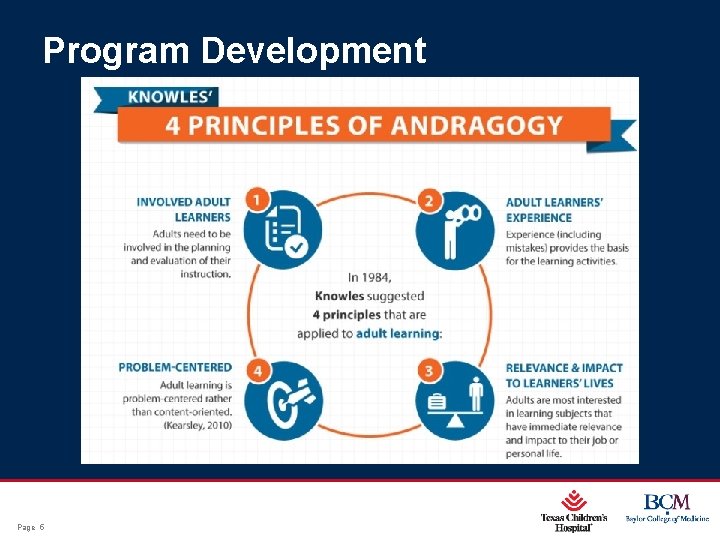
Program Development Adult Learning Theory Program Development Page 5 xxx 00. #####. ppt 12/16/2021 2: 10: 31 AM Quality/ Safety Theory

Program Development • Kern’s six step approach to developing curriculum Page 6 xxx 00. #####. ppt 12/16/2021 2: 10: 33 AM
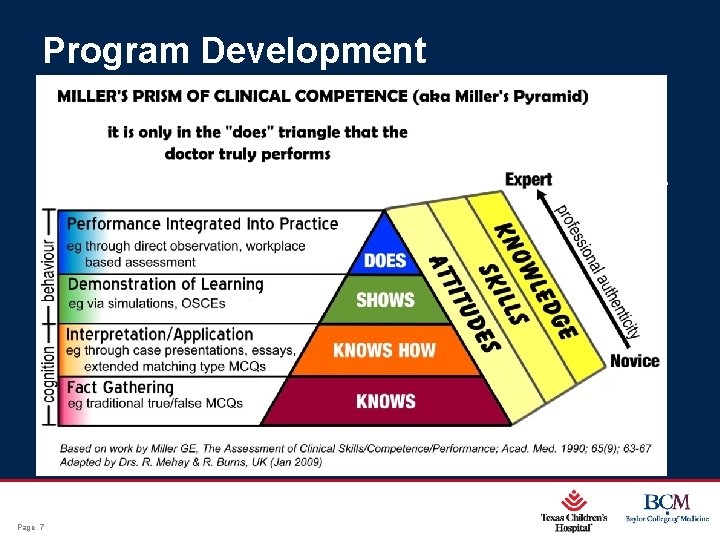
Program Development • Kern’s six step approach to developing curriculum • Content reviewed by QI/Education content experts • Evaluation tools developed using Kirkpatrick’s model and Miller’s pyramid (KSA) Page 7 xxx 00. #####. ppt 12/16/2021 2: 10: 36 AM
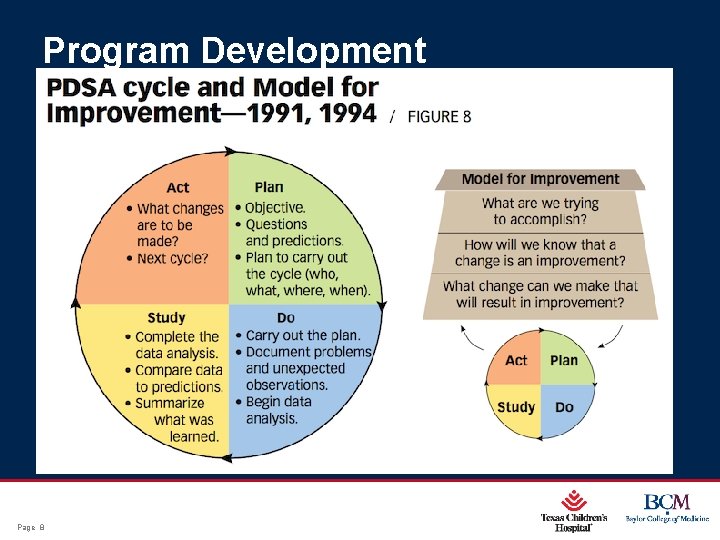
Program Development • Kern’s six step approach to developing curriculum • Content reviewed by QI/Education content experts • Evaluation tools developed using Kirkpatrick’s model and Miller’s pyramid (KSA) • PDSA cycles were run on the curriculum itself Page 8 xxx 00. #####. ppt 12/16/2021 2: 10: 37 AM
Interactive Teaching Methods and Tools • Team Based Learning • Process Mapping • Fishbone Diagrams Page 9 xxx 00. #####. ppt 12/16/2021 2: 10: 39 AM
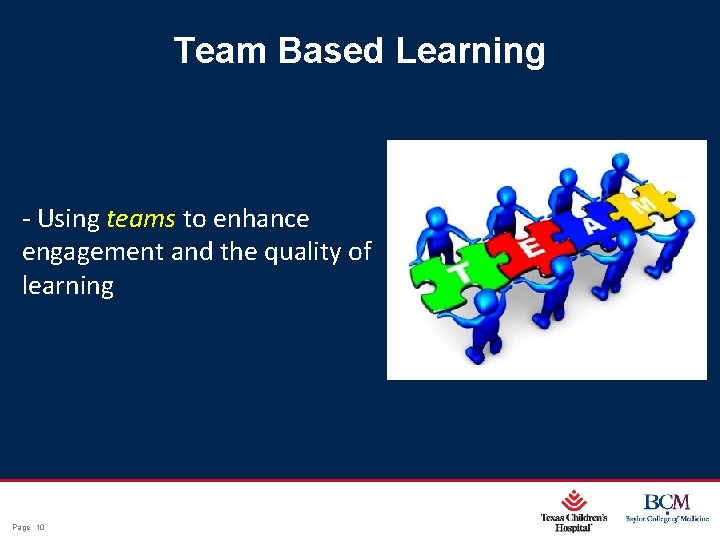
Team Based Learning ‐ Using teams to enhance engagement and the quality of learning Page 10 xxx 00. #####. ppt 12/16/2021 2: 10: 39 AM
Putting this Into Practice • Divide learners into teams • Lay ground rules on activity and pass out materials • Provide questions • Teams work together to choose best answer • Learners report out to group Page 11 xxx 00. #####. ppt 12/16/2021 2: 10: 40 AM
Putting it into Practice an example Page 12 xxx 00. #####. ppt 12/16/2021 2: 10: 40 AM
The Case • You are coming on to your overnight shift and receiving sign out on a direct admission transferred from an OSH. • During sign-out you were told that the patient is a 6 year old male that arrived about 1 hour ago with a diagnosis of pneumonia. • A CXR was done at the OSH but the disk was lost in transport. The read on the CXR came with the paperwork and was read as “consolidation versus atelectasis”. Page 13 xxx 00. #####. ppt 12/16/2021 2: 10: 41 AM
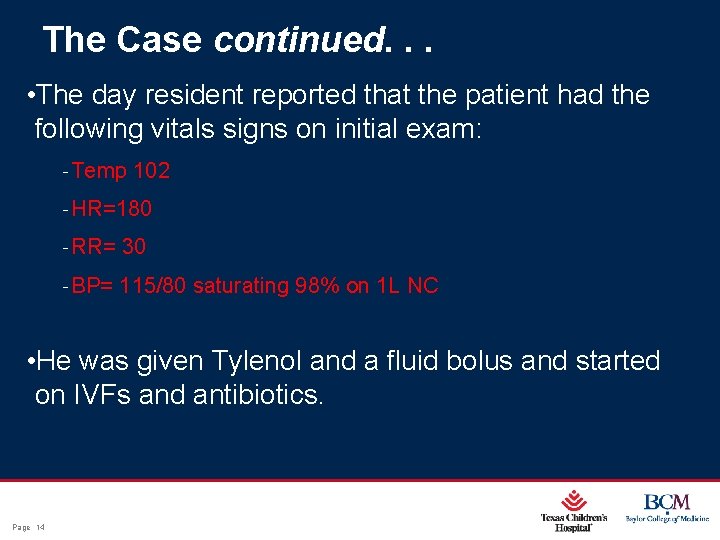
The Case continued. . . • The day resident reported that the patient had the following vitals signs on initial exam: ‐ Temp 102 ‐ HR=180 ‐ RR= 30 ‐ BP= 115/80 saturating 98% on 1 L NC • He was given Tylenol and a fluid bolus and started on IVFs and antibiotics. Page 14 xxx 00. #####. ppt 12/16/2021 2: 10: 42 AM
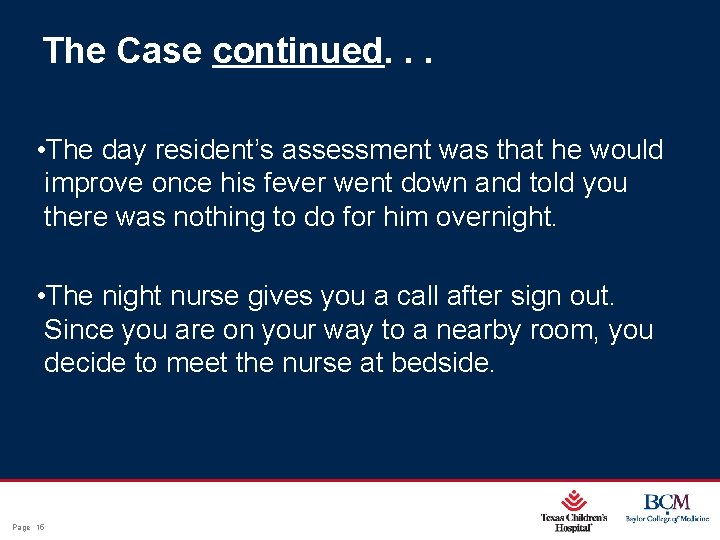
The Case continued. . . • The day resident’s assessment was that he would improve once his fever went down and told you there was nothing to do for him overnight. • The night nurse gives you a call after sign out. Since you are on your way to a nearby room, you decide to meet the nurse at bedside. Page 15 xxx 00. #####. ppt 12/16/2021 2: 10: 43 AM
https: //www. youtube. com/watch? v=Ilab. Rj 028 a. A Page 16 xxx 00. #####. ppt 12/16/2021 2: 10: 43 AM
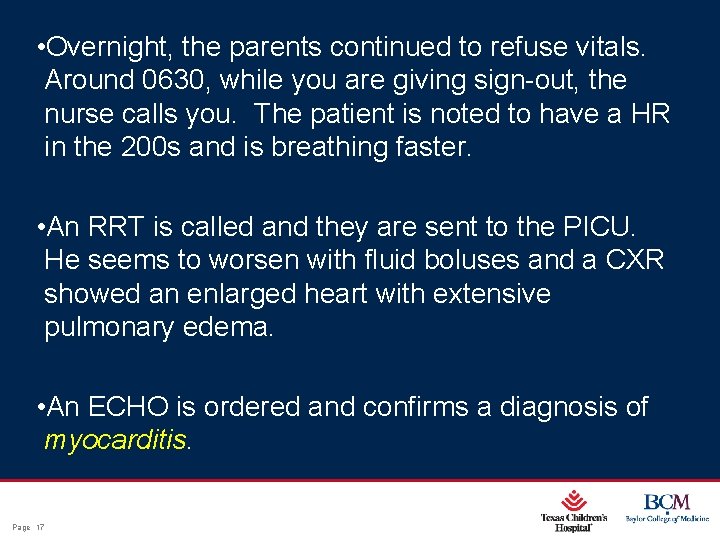
• Overnight, the parents continued to refuse vitals. Around 0630, while you are giving sign-out, the nurse calls you. The patient is noted to have a HR in the 200 s and is breathing faster. • An RRT is called and they are sent to the PICU. He seems to worsen with fluid boluses and a CXR showed an enlarged heart with extensive pulmonary edema. • An ECHO is ordered and confirms a diagnosis of myocarditis. Page 17 xxx 00. #####. ppt 12/16/2021 2: 10: 43 AM
GROUP ACTIVITY #1 Page 18 xxx 00. #####. ppt 12/16/2021 2: 10: 43 AM
Tips to Making It Work- TBL • Pick group sizes that facilitate discussion • May need to assign roles based on group dynamics • Offer ‘incentives’ or prizes to winning team…make it a fun game! • Summarize key teaching points Page 19 xxx 00. #####. ppt 12/16/2021 2: 10: 43 AM
Interactive Teaching Methods and Tools • Team Based Learning • Process Mapping • Fishbone Diagrams Page 20 xxx 00. #####. ppt 12/16/2021 2: 10: 44 AM
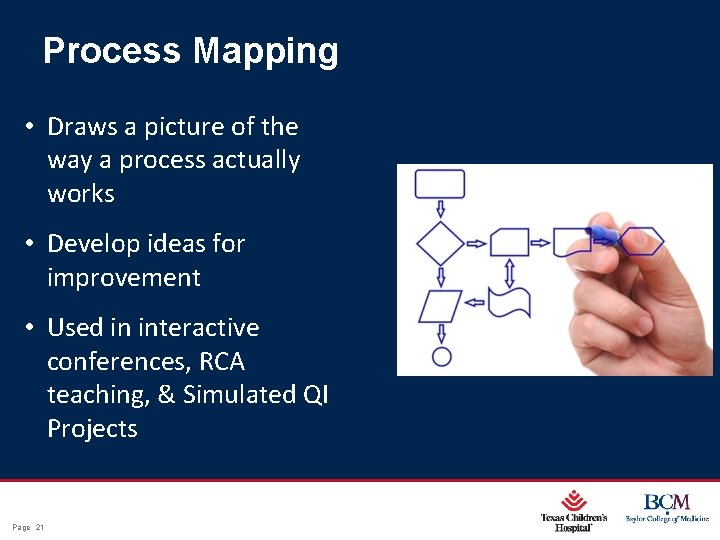
Process Mapping • Draws a picture of the way a process actually works • Develop ideas for improvement • Used in interactive conferences, RCA teaching, & Simulated QI Projects Page 21 xxx 00. #####. ppt 12/16/2021 2: 10: 44 AM
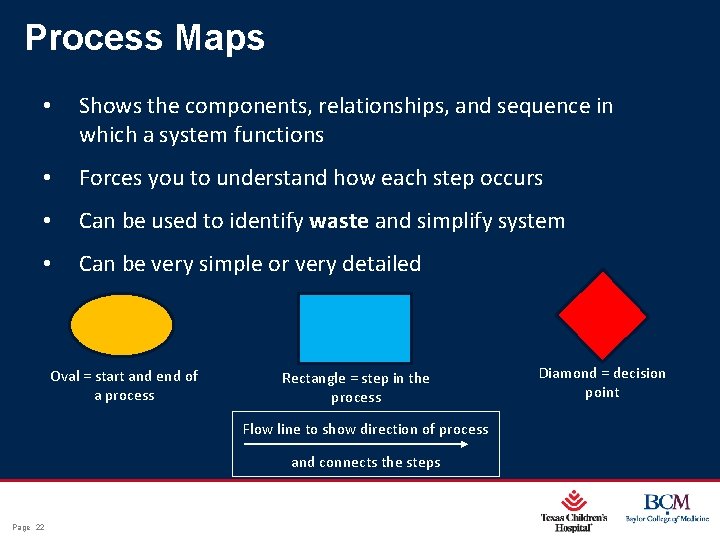
Process Maps • Shows the components, relationships, and sequence in which a system functions • Forces you to understand how each step occurs • Can be used to identify waste and simplify system • Can be very simple or very detailed Oval = start and end of a process Rectangle = step in the process Flow line to show direction of process and connects the steps Page 22 xxx 00. #####. ppt 12/16/2021 2: 10: 45 AM Diamond = decision point
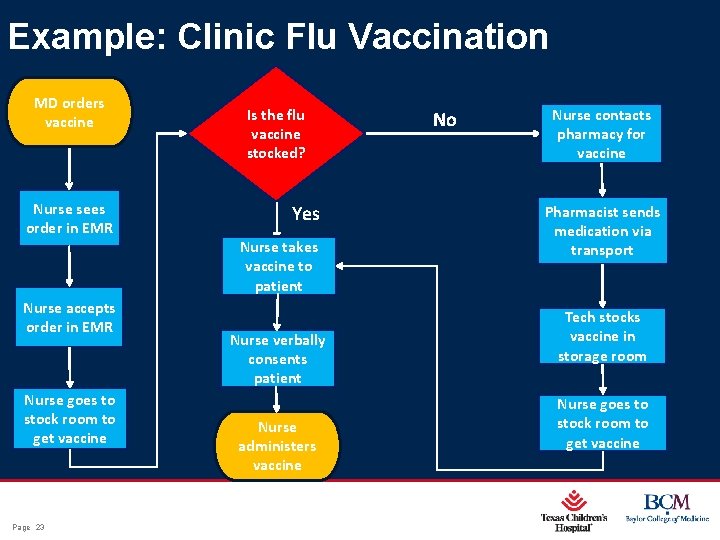
Example: Clinic Flu Vaccination MD orders vaccine Nurse sees order in EMR Nurse accepts order in EMR Nurse goes to stock room to get vaccine Is the flu vaccine stocked? No Yes Pharmacist sends medication via transport Nurse takes vaccine to patient Tech stocks vaccine in storage room Nurse verbally consents patient Nurse goes to stock room to get vaccine Nurse administers vaccine Page 23 Nurse contacts pharmacy for vaccine xxx 00. #####. ppt 12/16/2021 2: 10: 46 AM
GROUP ACTIVITY #2 Page 24 xxx 00. #####. ppt 12/16/2021 2: 10: 47 AM
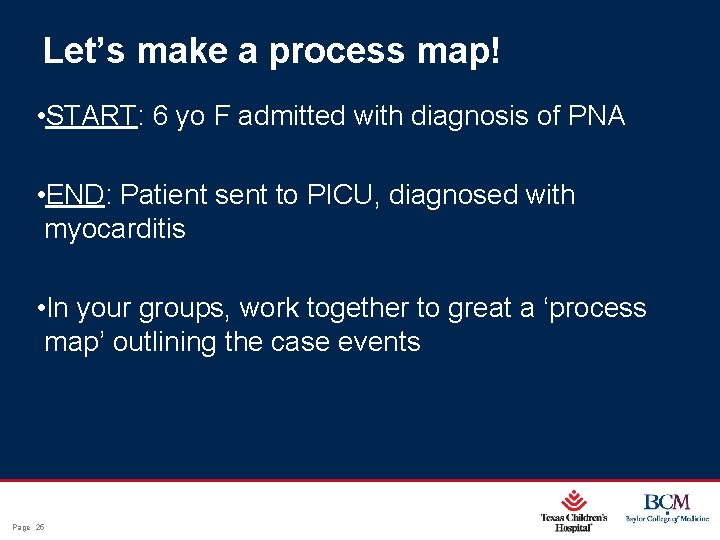
Let’s make a process map! • START: 6 yo F admitted with diagnosis of PNA • END: Patient sent to PICU, diagnosed with myocarditis • In your groups, work together to great a ‘process map’ outlining the case events Page 25 xxx 00. #####. ppt 12/16/2021 2: 10: 47 AM
Process Map Page 26 xxx 00. #####. ppt 12/16/2021 2: 10: 47 AM
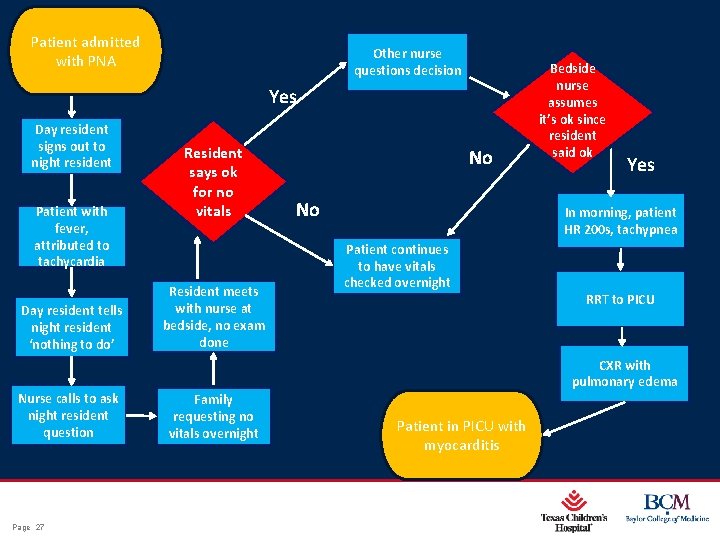
Patient admitted with PNA Other nurse questions decision Yes Day resident signs out to night resident Patient with fever, attributed to tachycardia Day resident tells night resident ‘nothing to do’ Nurse calls to ask night resident question Resident says ok for no vitals Resident meets with nurse at bedside, no exam done No No Yes In morning, patient HR 200 s, tachypnea Patient continues to have vitals checked overnight RRT to PICU CXR with pulmonary edema Family requesting no vitals overnight Patient in PICU with myocarditis Page 27 Bedside nurse assumes it’s ok since resident said ok xxx 00. #####. ppt 12/16/2021 2: 10: 48 AM
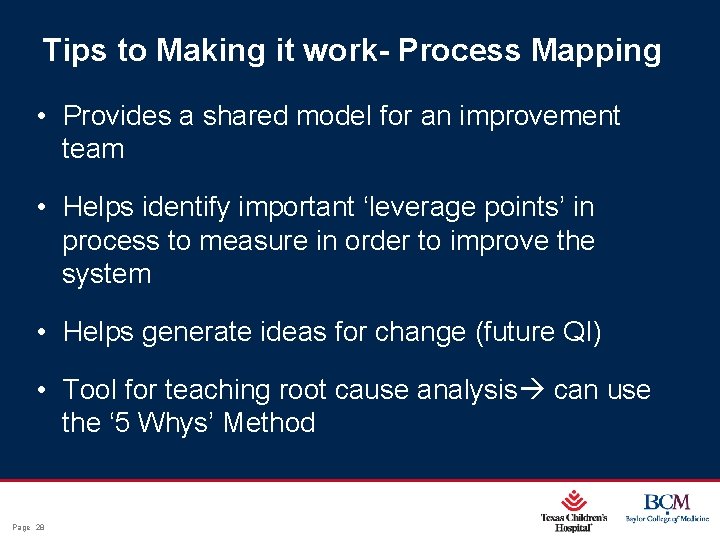
Tips to Making it work- Process Mapping • Provides a shared model for an improvement team • Helps identify important ‘leverage points’ in process to measure in order to improve the system • Helps generate ideas for change (future QI) • Tool for teaching root cause analysis can use the ‘ 5 Whys’ Method Page 28 xxx 00. #####. ppt 12/16/2021 2: 10: 49 AM
Interactive Teaching Methods and Tools • Team Based Learning • Process Mapping • Fishbone Diagrams Page 29 xxx 00. #####. ppt 12/16/2021 2: 10: 49 AM
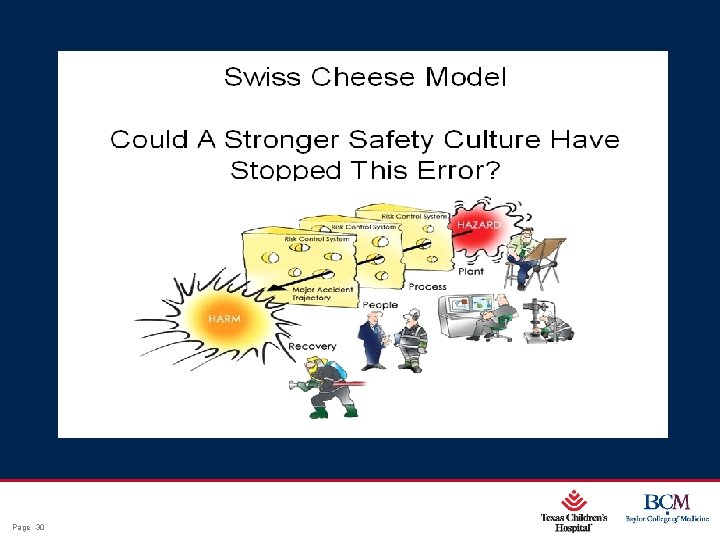
Page 30 xxx 00. #####. ppt 12/16/2021 2: 10: 49 AM
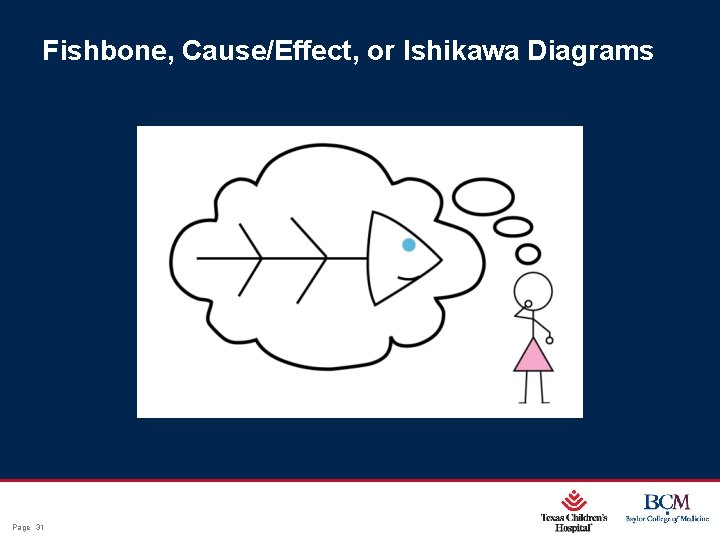
Fishbone, Cause/Effect, or Ishikawa Diagrams Page 31 xxx 00. #####. ppt 12/16/2021 2: 10: 51 AM
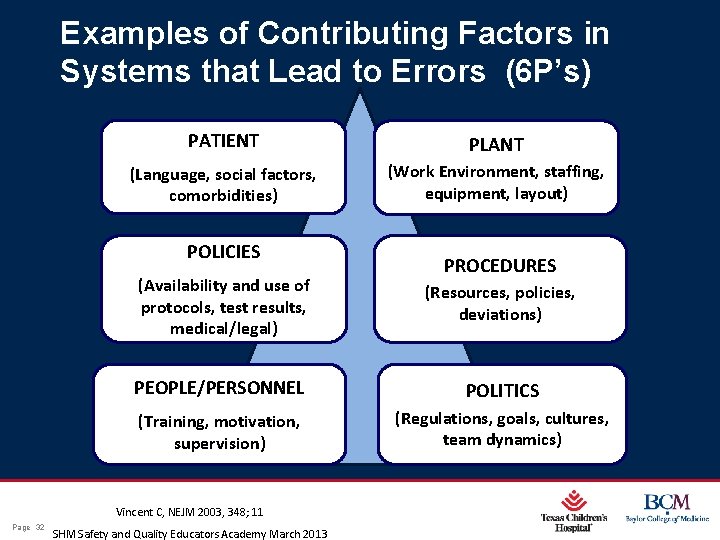
Examples of Contributing Factors in Systems that Lead to Errors (6 P’s) PATIENT PLANT (Language, social factors, comorbidities) (Work Environment, staffing, equipment, layout) POLICIES (Availability and use of protocols, test results, medical/legal) (Resources, policies, deviations) PEOPLE/PERSONNEL POLITICS (Training, motivation, supervision) (Regulations, goals, cultures, team dynamics) Vincent C, NEJM 2003, 348; 11 Page 32 PROCEDURES Page 32 xxx 00. #####. ppt SHM Safety and Quality Educators Academy March 2013 12/16/2021 2: 10: 51 AM
GROUP ACTIVITY #3 Page 33 xxx 00. #####. ppt 12/16/2021 2: 10: 51 AM
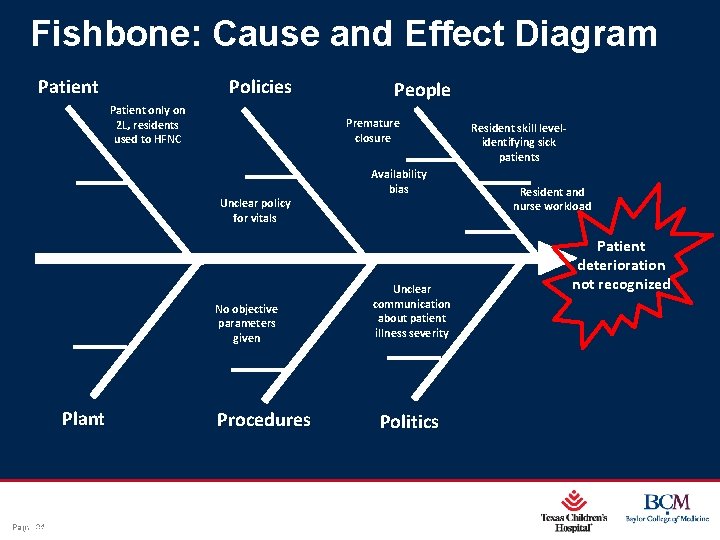
Fishbone: Cause and Effect Diagram Patient Policies Patient only on 2 L, residents used to HFNC People Premature closure Availability bias Unclear policy for vitals Unclear communication about patient illness severity No objective parameters given Plant Procedures Politics Page 34 Myers, Reilly, Ogdie, Von. Feldt, University of Pennsylvania xxx 00. #####. ppt 12/16/2021 2: 10: 51 AM Resident skill levelidentifying sick patients Resident and nurse workload Patient deterioration not recognized
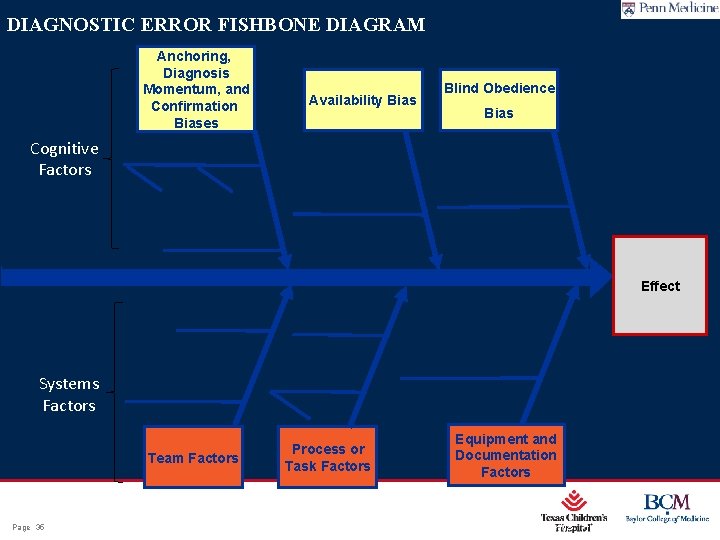
DIAGNOSTIC ERROR FISHBONE DIAGRAM Anchoring, Diagnosis Momentum, and Confirmation Biases Availability Bias Blind Obedience Bias Cognitive Factors Effect Systems Factors Team Factors Process or Task Factors Equipment and Documentation Factors Page 35 Diagnostic Errors Fishbone: University of Pennsylvania: Reilly, Von Feldt, Ogdie, and Myers xxx 00. #####. ppt 12/16/2021 2: 10: 51 AM
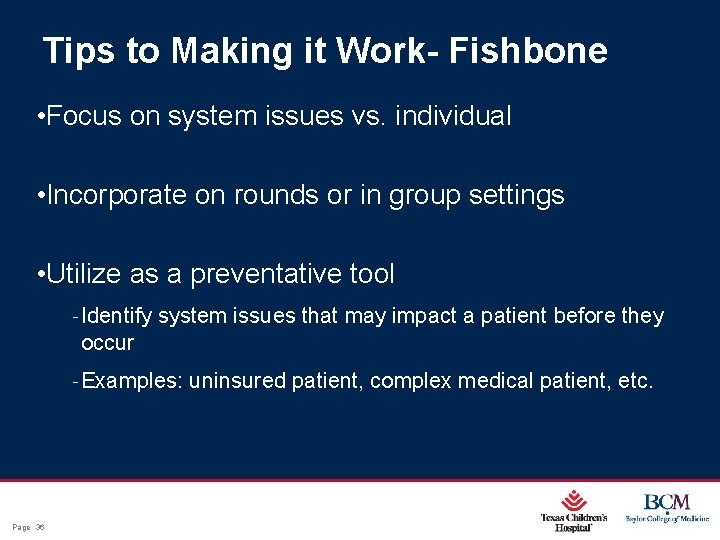
Tips to Making it Work- Fishbone • Focus on system issues vs. individual • Incorporate on rounds or in group settings • Utilize as a preventative tool ‐ Identify system issues that may impact a patient before they occur ‐ Examples: uninsured patient, complex medical patient, etc. Page 36 xxx 00. #####. ppt 12/16/2021 2: 10: 52 AM
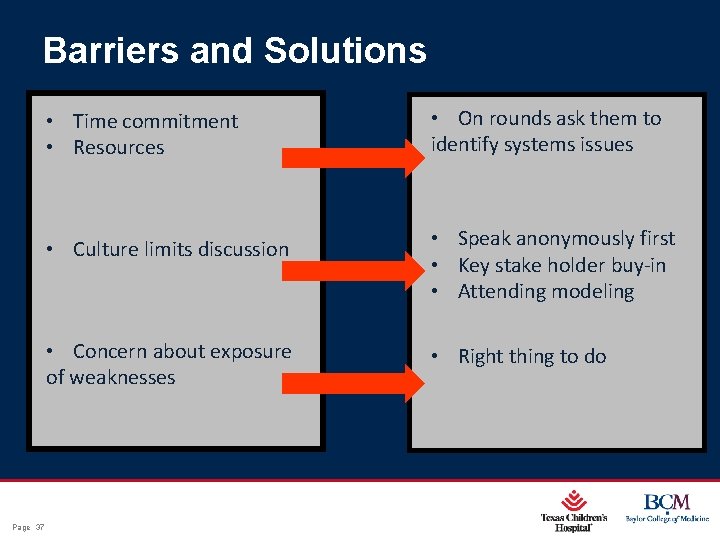
Barriers and Solutions • Time commitment • Resources • On rounds ask them to identify systems issues • Culture limits discussion • Speak anonymously first • Key stake holder buy‐in • Attending modeling • Concern about exposure of weaknesses • Right thing to do Page 37 xxx 00. #####. ppt 12/16/2021 2: 10: 52 AM
Putting it all together • Interactive teaching methods can be a great way to engage learners with QI and PS • Each tool can be adapted to fit the level of learner, learning objectives/goals, and time constraints • Tools help learners focus on systems issues, potentially leading to QI projects • Equipping learners with these tools gives them a framework to work through clinical scenarios and navigate the system Page 38 xxx 00. #####. ppt 12/16/2021 2: 10: 52 AM

Reflection Page 39 xxx 00. #####. ppt 12/16/2021 2: 10: 52 AM

Thank you! Page 40 xxx 00. #####. ppt 12/16/2021 2: 10: 54 AM
- Slides: 41