
Movements Joints Types of Movements Synovial Joints 1



- Slides: 20
Movements @ Joints
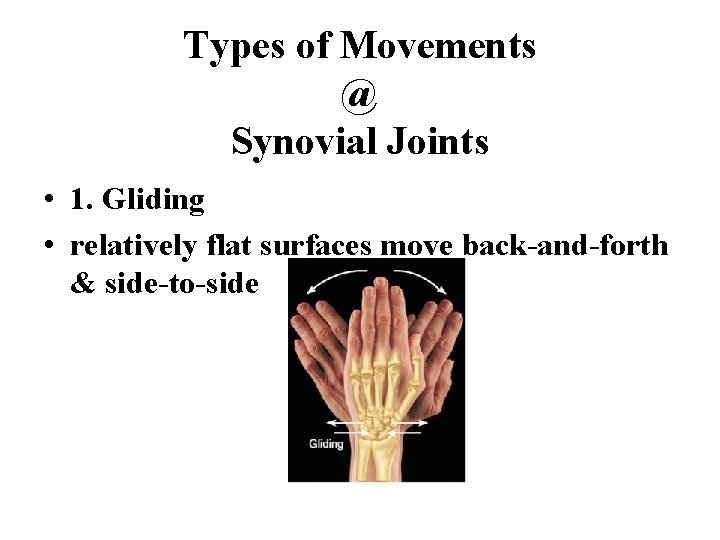
Types of Movements @ Synovial Joints • 1. Gliding • relatively flat surfaces move back-and-forth & side-to-side
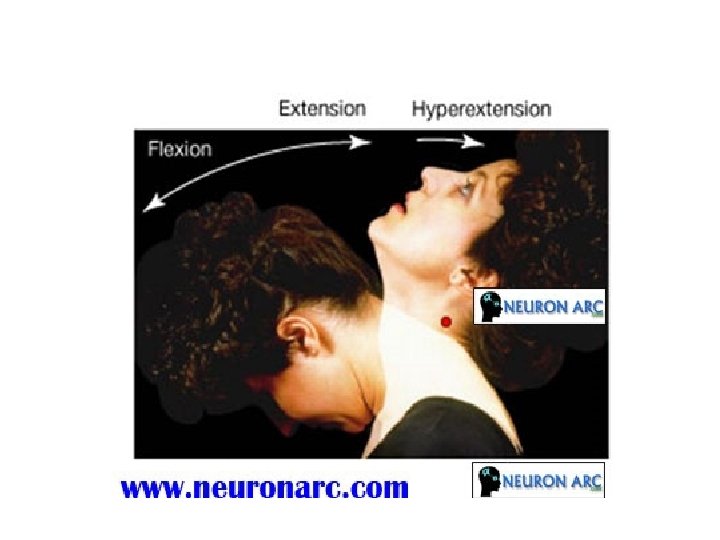
Types of Movements @ Synovial Joints • 2. flexion/extension/ hyperextension: • opposite movements – flexion: decrease in angle between articulating bones – extension: increase in angle between articulating bones – hyperextension: continuation of extension beyond the anatomical position
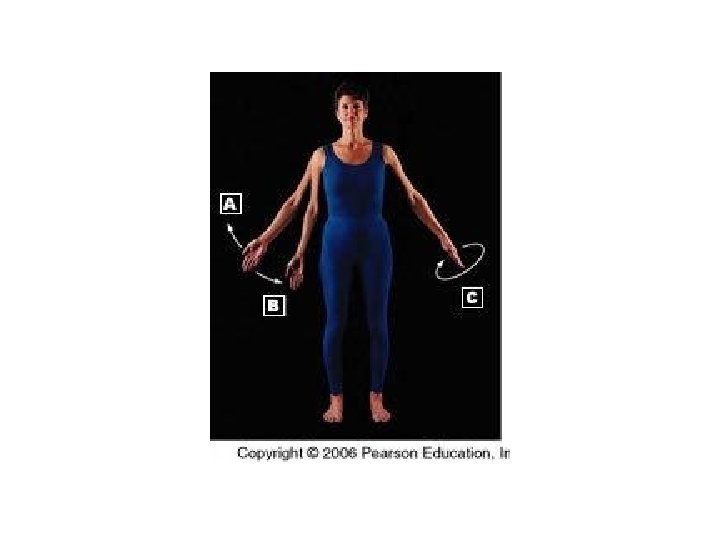
Types of Movements @ Synovial Joints • 3. abduction/adduction/ circumduction – abduction: movement of bone away from midline – adduction: movement of bone toward midline – circumduction: movement of distal end of a body part in a circle
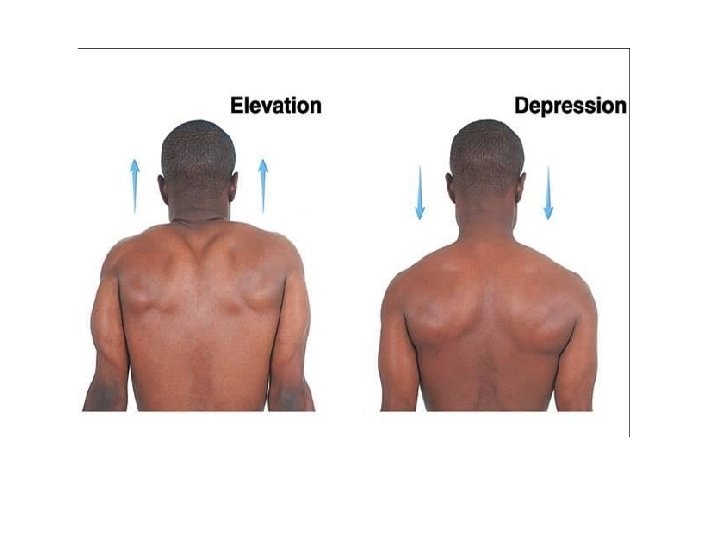
Types of Movements @ Synovial Joints • 4. elevation/depression: • elevation: upward movement of part of body (closing mouth, shrugging shoulders) • depression: downward movement of part of body (opening mouth, returning elevated shrugged shoulders to anatomical position)
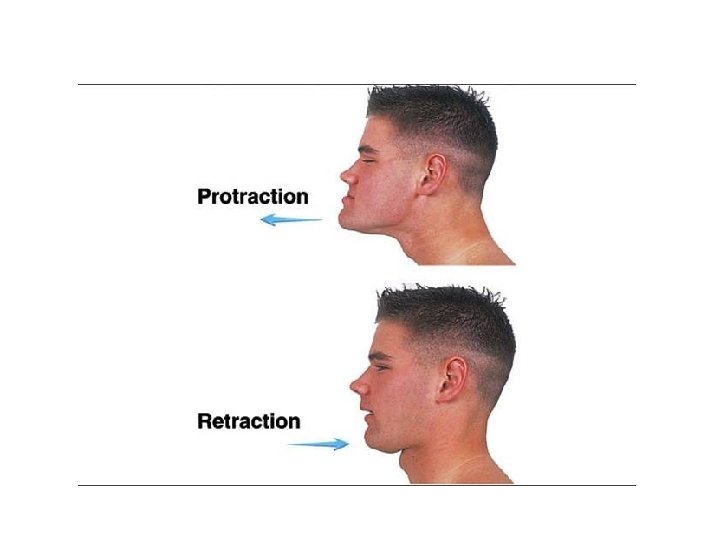
Types of Movements @ Synovial Joints • 5. protraction/retraction • protraction: movement of part of body anteriorly in transverse plane • retraction: returning a protracted part of body to anatomical position
Types of Movements @ Synovial Joints • 6. inversion/ eversion • inversion: movement of soles medially @ intertarsal joints (soles face each other) • eversion: movement of soles laterally @ intertarsal joints
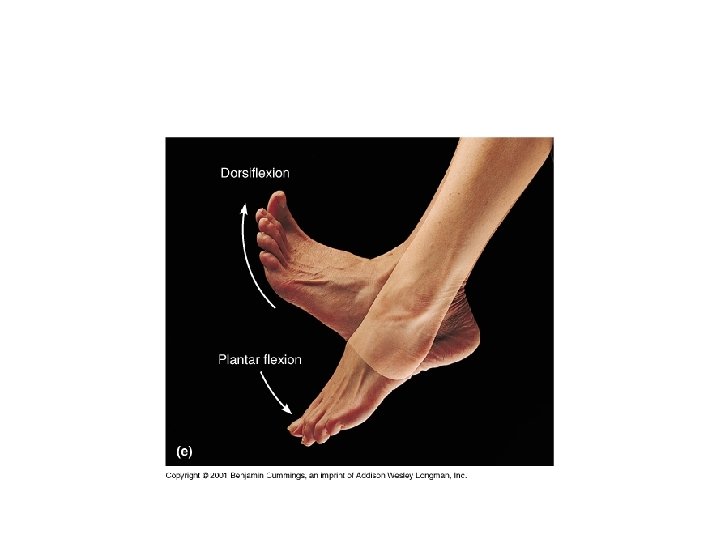
Types of Movements @ Synovial Joints • 7. dorsiflexion/ plantar flexion • dorsiflexion: bending foot @ ankle in direction of dorsum (superior surface) • plantar flexion: bending foot @ ankle in direction of plantar surface
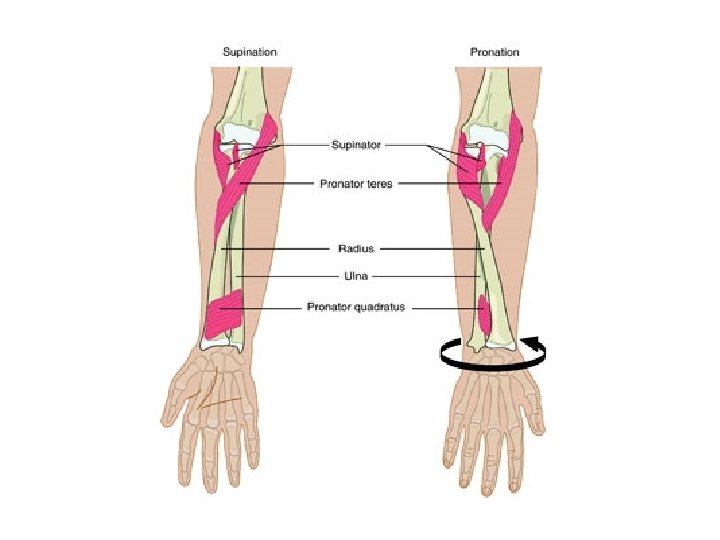
Types of Movements @ Synovial Joints • 8. supination/pronation • supination: movement of forearm in which palm is turned anteriorly • pronation: movement of forearm in which distal end of radius crosses over distal end ulna & palm is turned posteriorly
Types of Movements @ Synovial Joints • 9. opposition • movement of thumb in which thumb moves across palm to touch tips of the fingers on same hand
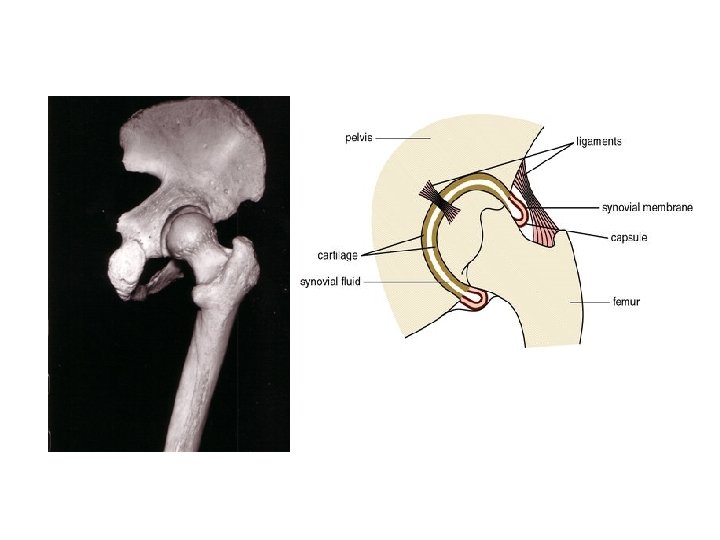
Ball - & - Socket Joint • ball-like surface of one bone fits into a cuplike depression of another bone • permits movement around 3 axis + all directions in between – flexion – extension – abduction – adduction – circumduction – rotation