
Movement through Cell Membranes Gateway to the Cell
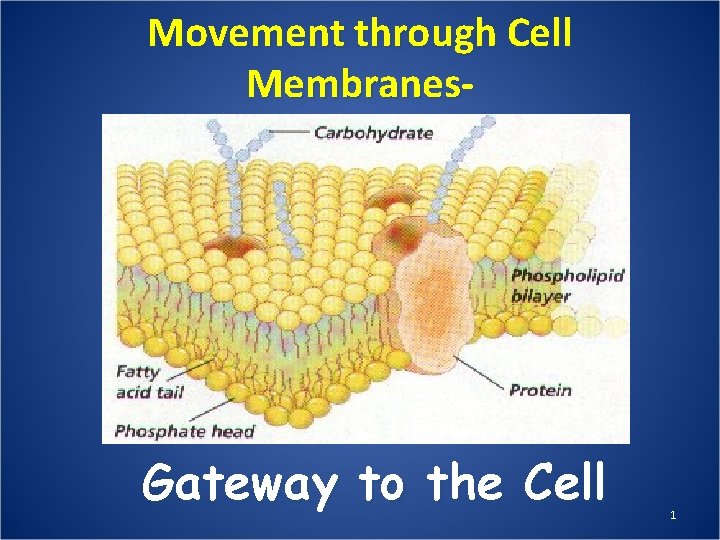
Movement through Cell Membranes Gateway to the Cell 1
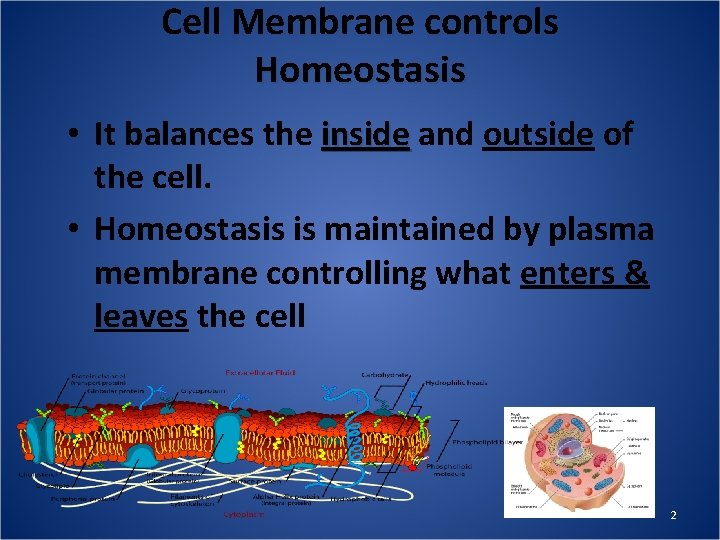
Cell Membrane controls Homeostasis • It balances the inside and outside of the cell. • Homeostasis is maintained by plasma membrane controlling what enters & leaves the cell 2
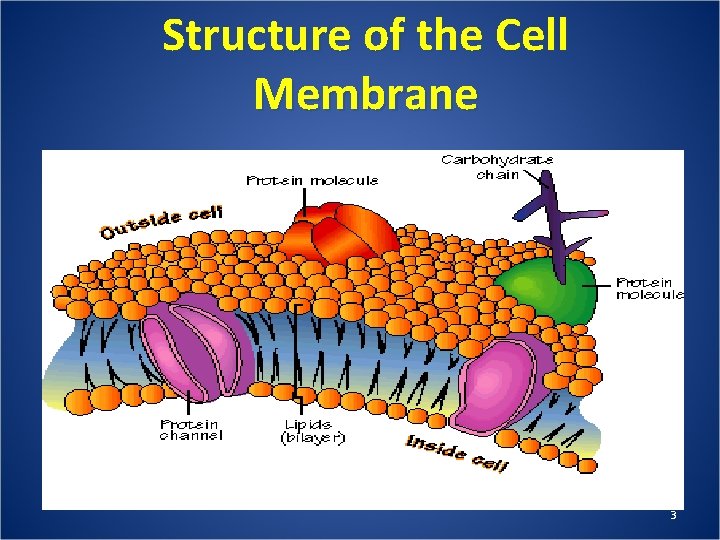
Structure of the Cell Membrane 3
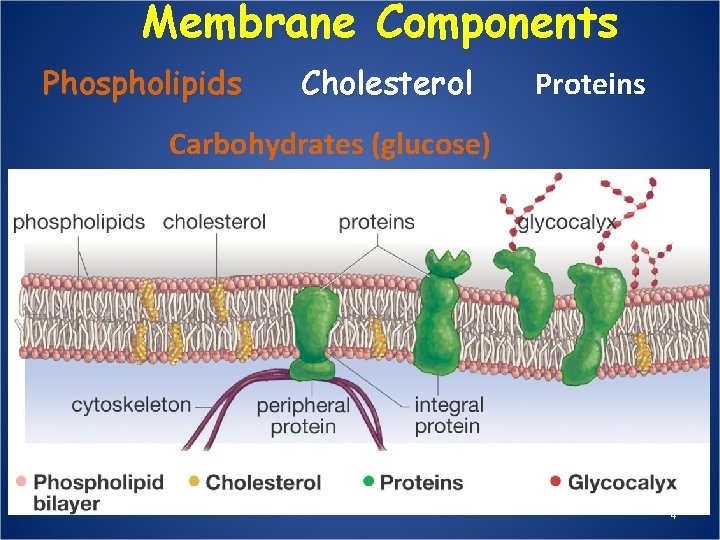
Membrane Components Phospholipids Cholesterol Proteins Carbohydrates (glucose) 4
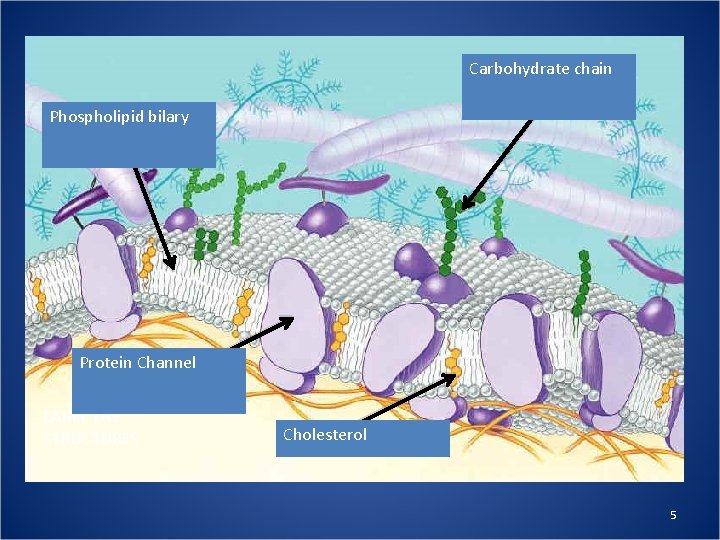
Carbohydrate chain Phospholipid bilary Protein Channel LABEL THE STRUCTURES Cholesterol 5
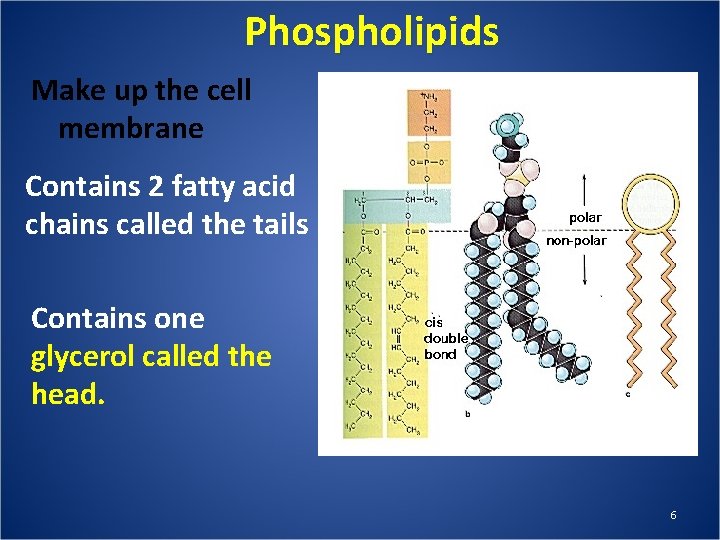
Phospholipids Make up the cell membrane Contains 2 fatty acid chains called the tails Contains one glycerol called the head. 6
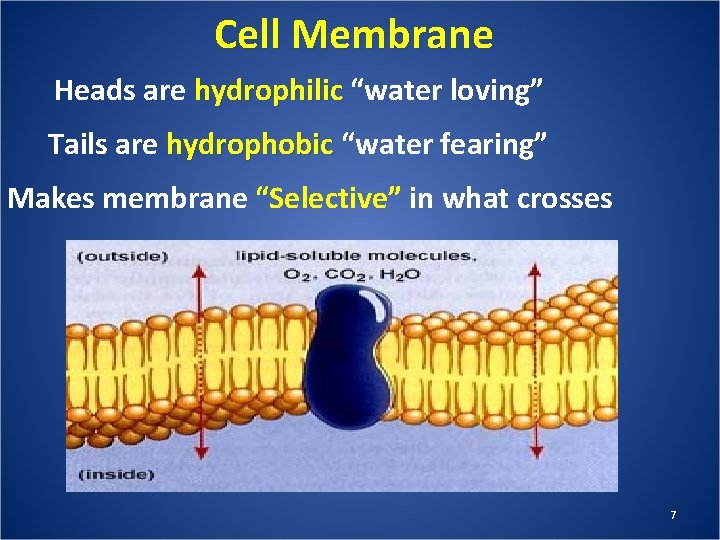
Cell Membrane Heads are hydrophilic “water loving” Tails are hydrophobic “water fearing” Makes membrane “Selective” in what crosses 7
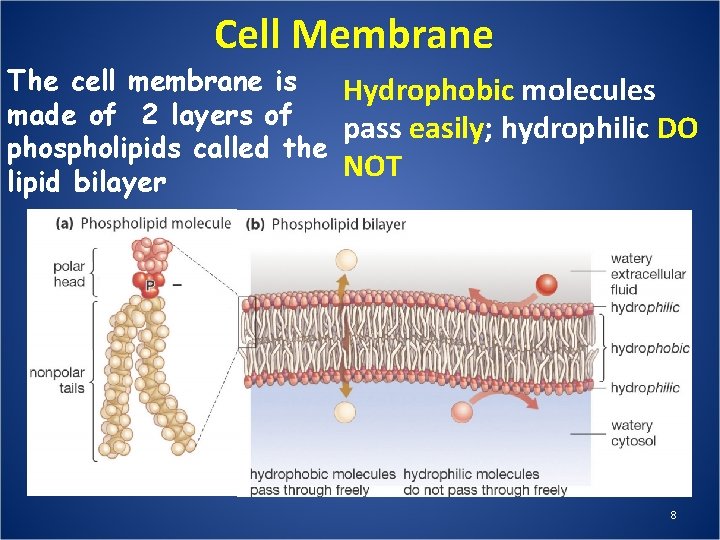
Cell Membrane The cell membrane is Hydrophobic molecules made of 2 layers of pass easily; hydrophilic DO phospholipids called the NOT lipid bilayer 8
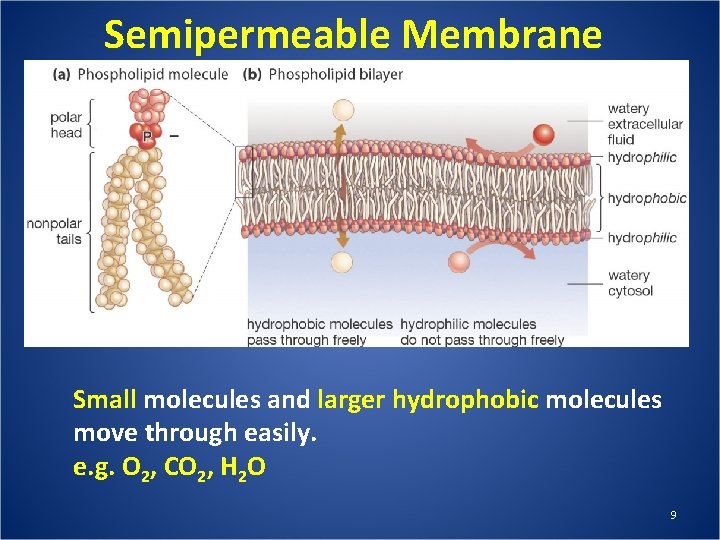
Semipermeable Membrane Small molecules and larger hydrophobic molecules move through easily. e. g. O 2, CO 2, H 2 O 9
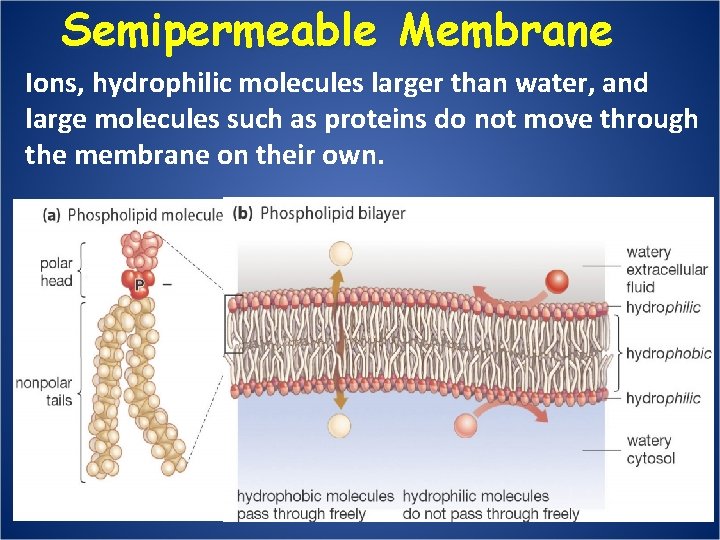
Semipermeable Membrane Ions, hydrophilic molecules larger than water, and large molecules such as proteins do not move through the membrane on their own. 10
Types of Transport Across Cell Membranes 11
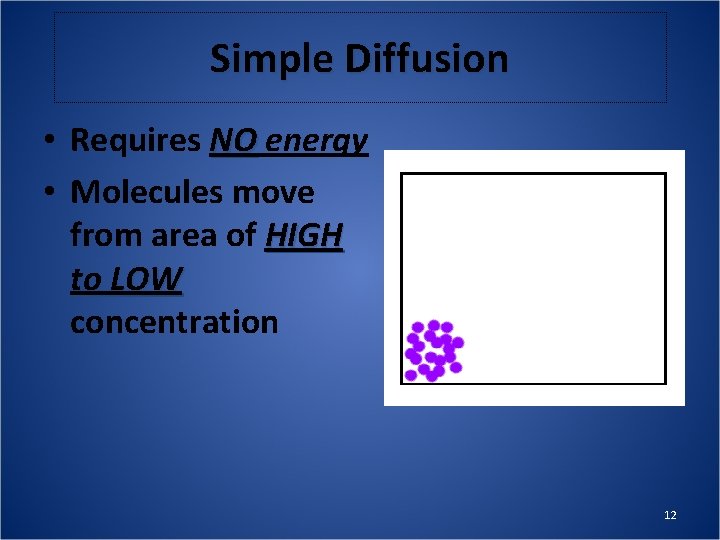
Simple Diffusion • Requires NO energy • Molecules move from area of HIGH to LOW concentration 12
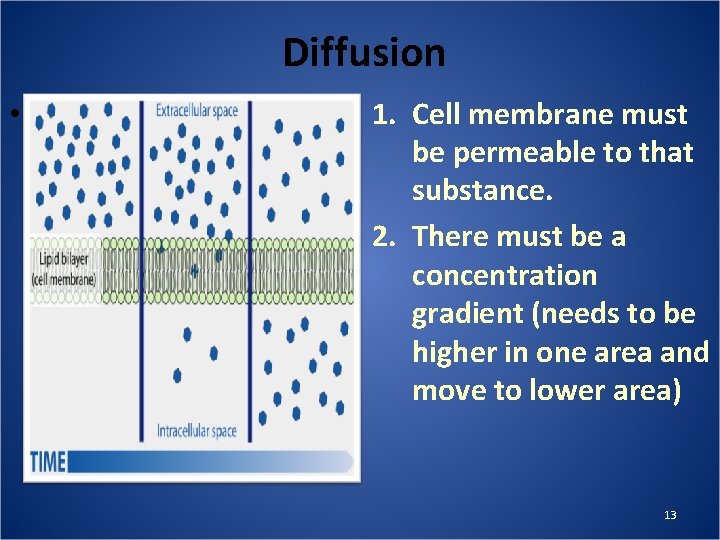
Diffusion • Two things need to happen in a cell in order for diffusion to occur… what are they? 1. Cell membrane must be permeable to that substance. 2. There must be a concentration gradient (needs to be higher in one area and move to lower area) 13
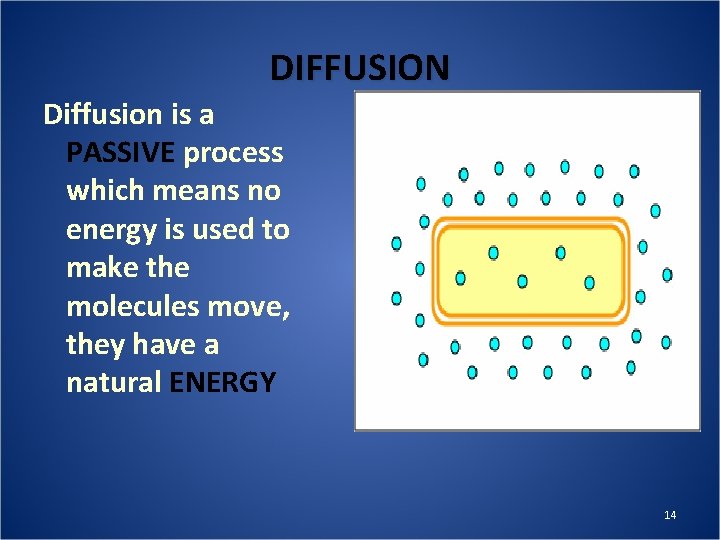
DIFFUSION Diffusion is a PASSIVE process which means no energy is used to make the molecules move, they have a natural ENERGY 14
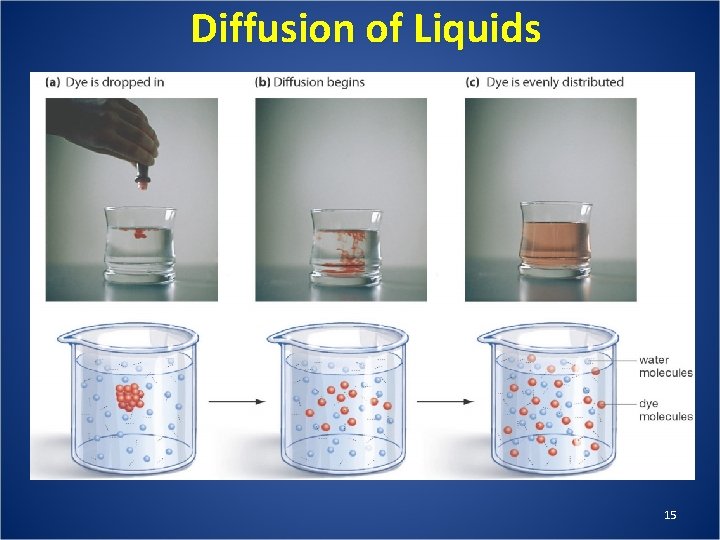
Diffusion of Liquids 15
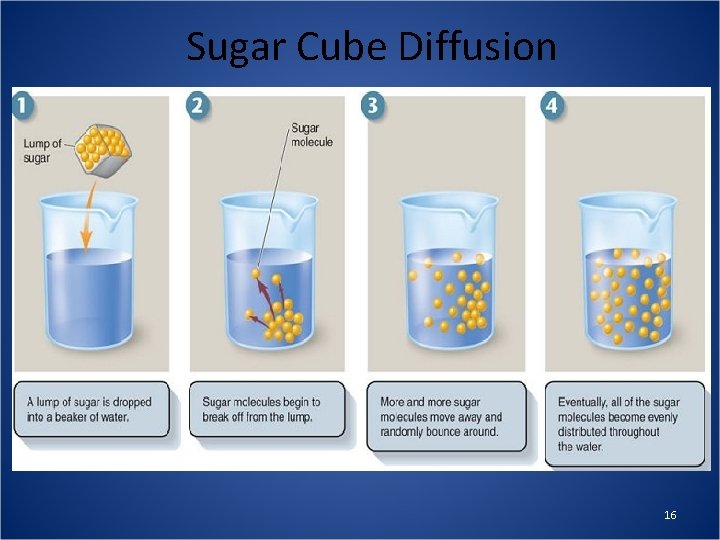
Sugar Cube Diffusion 16
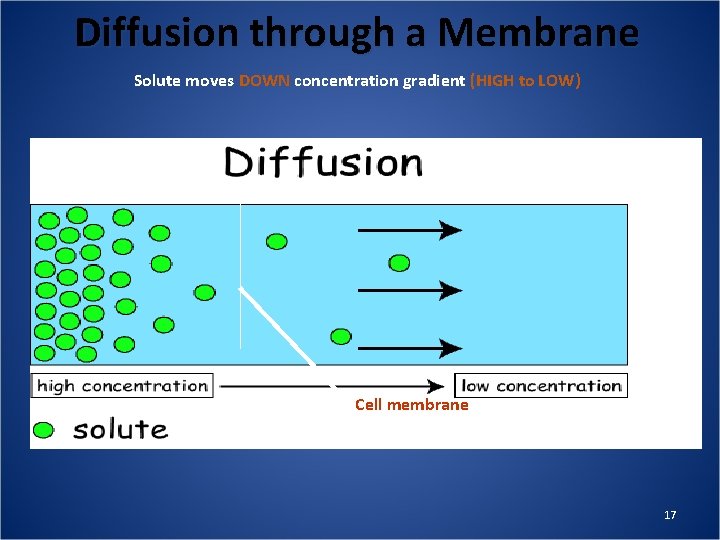
Diffusion through a Membrane Solute moves DOWN concentration gradient (HIGH to LOW) Cell membrane 17
Osmosis • Diffusion of water across a membrane • Moves from HIGH water potential (low solute) to LOW water potential (high solute) 18
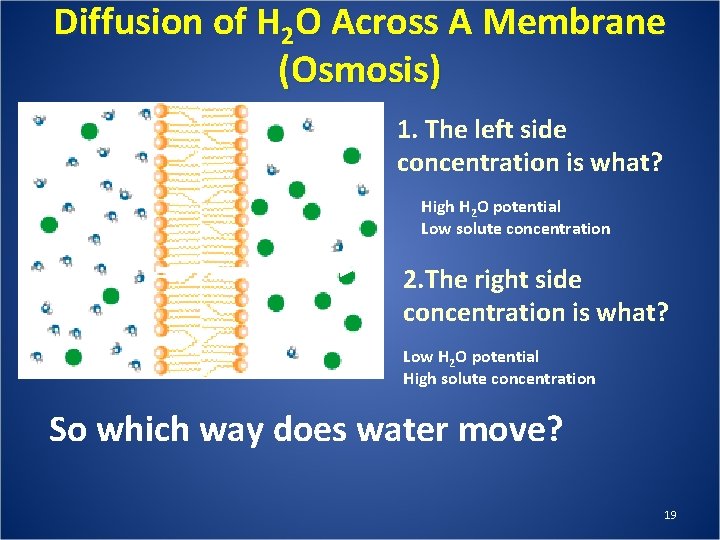
Diffusion of H 2 O Across A Membrane (Osmosis) 1. The left side concentration is what? High H 2 O potential Low solute concentration 2. The right side concentration is what? Low H 2 O potential High solute concentration So which way does water move? 19
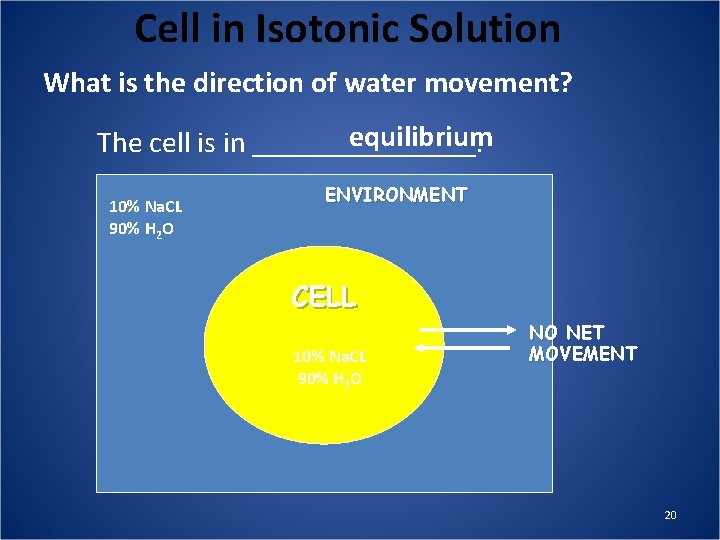
Cell in Isotonic Solution What is the direction of water movement? equilibrium The cell is in ________. 10% Na. CL 90% H 2 O ENVIRONMENT CELL 10% Na. CL 90% H 2 O NO NET MOVEMENT 20
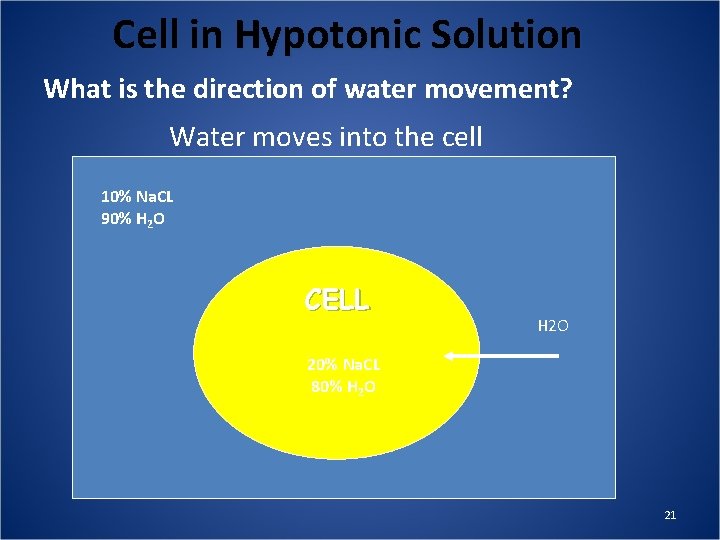
Cell in Hypotonic Solution What is the direction of water movement? Water moves into the cell 10% Na. CL 90% H 2 O CELL H 2 O 20% Na. CL 80% H 2 O 21
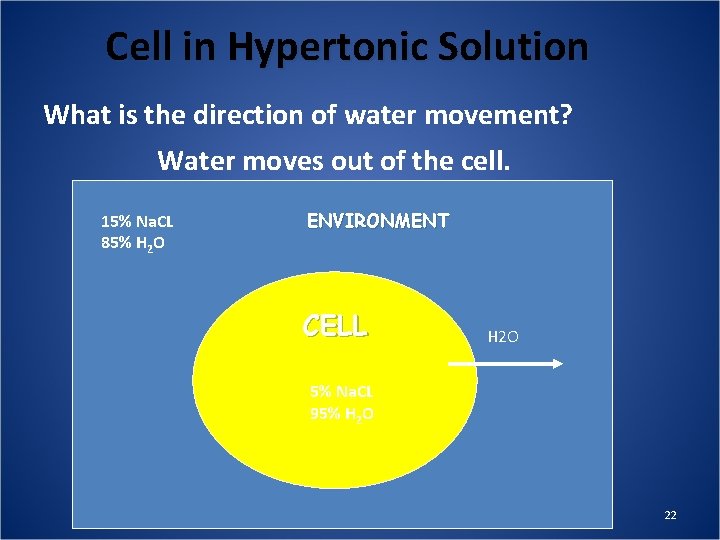
Cell in Hypertonic Solution What is the direction of water movement? Water moves out of the cell. 15% Na. CL 85% H 2 O ENVIRONMENT CELL H 2 O 5% Na. CL 95% H 2 O 22
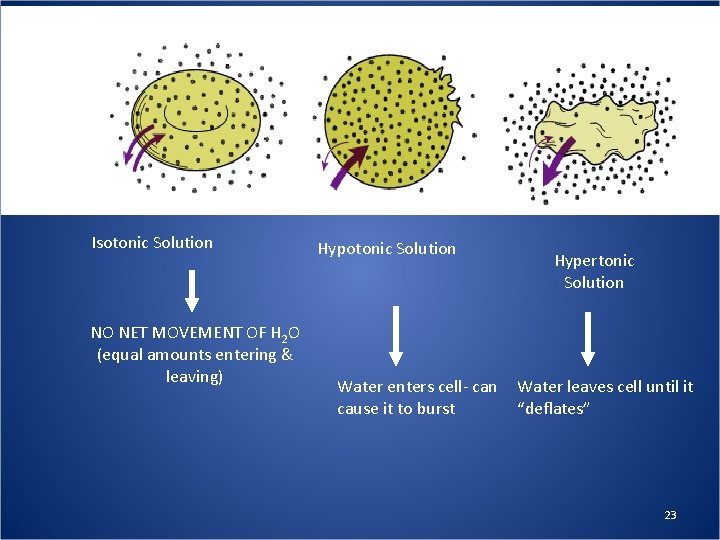
Isotonic Solution NO NET MOVEMENT OF H 2 O (equal amounts entering & leaving) Hypotonic Solution Water enters cell- can cause it to burst Hypertonic Solution Water leaves cell until it “deflates” 23
- Slides: 23