
Movement Through a Membrane The Cell Part II
Movement Through a Membrane The Cell: Part II
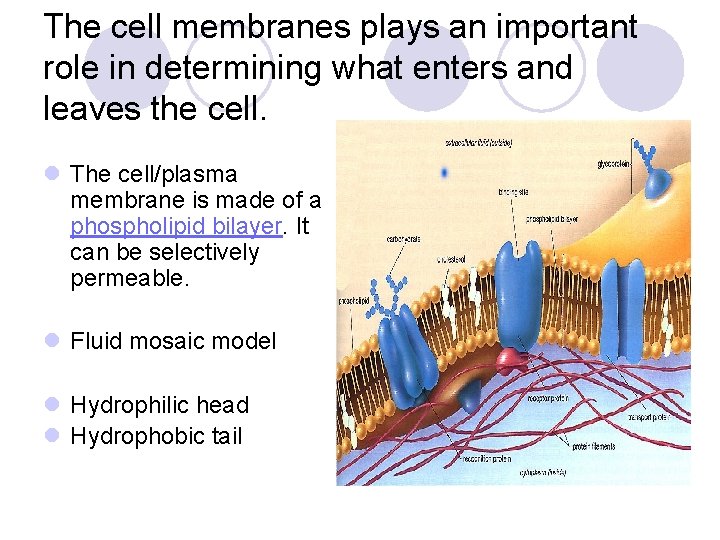
The cell membranes plays an important role in determining what enters and leaves the cell. The cell/plasma membrane is made of a phospholipid bilayer. It can be selectively permeable. Fluid mosaic model Hydrophilic head Hydrophobic tail
Passive Transport Substances are moving from an area of high concentration to an area of low concentration “going with the flow” Does not require cell to use energy Two types of passive transport are: ¡ Diffusion ¡ Osmosis
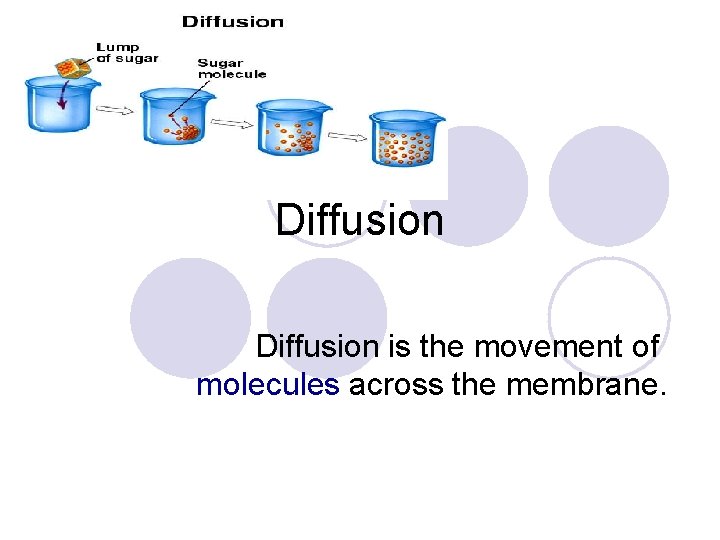
Diffusion is the movement of molecules across the membrane.
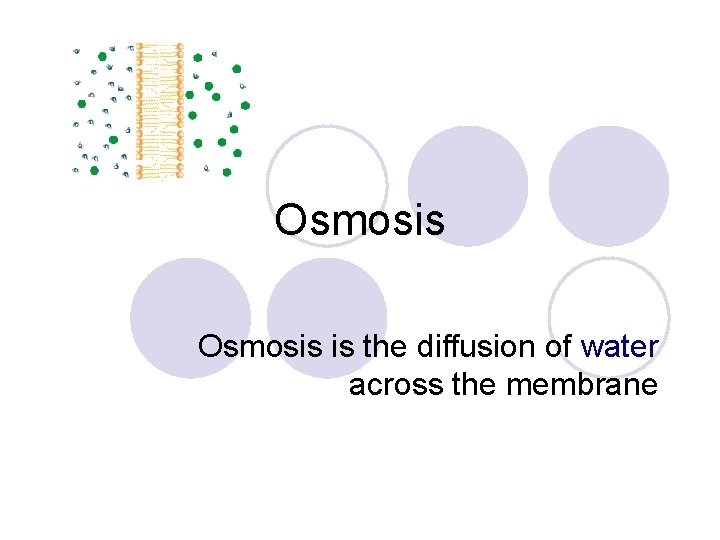
Osmosis is the diffusion of water across the membrane
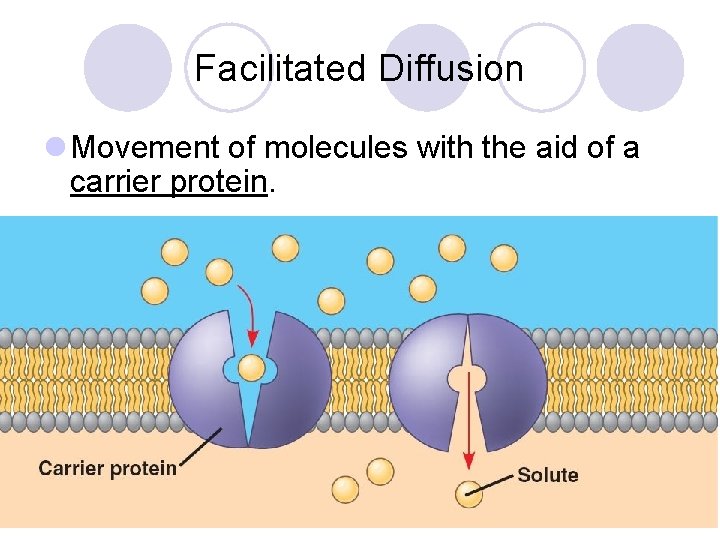
Facilitated Diffusion Movement of molecules with the aid of a carrier protein.
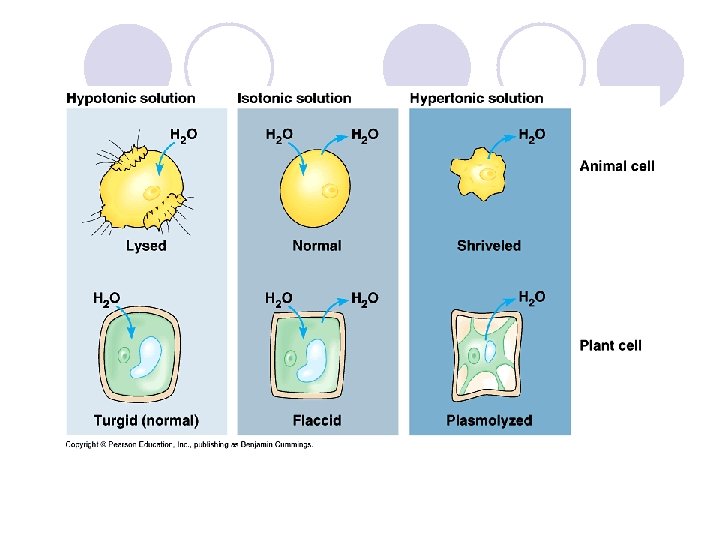
Types of solutions ISOTONIC solution¡ Same amount of water inside and outside of the cell membrane ¡ Cell size remains the same Hyp. Otonic solution¡ More water outside the cell than inside the cell membrane ¡ Cell swells Hypertonic solution¡ More water inside the cell than outside the cell membrane ¡ Cell shrinks
Active Transport Substances are moving from an area of low concentration to an area of higher concentration “going against the flow” Active transport requires the input of energy from the cell
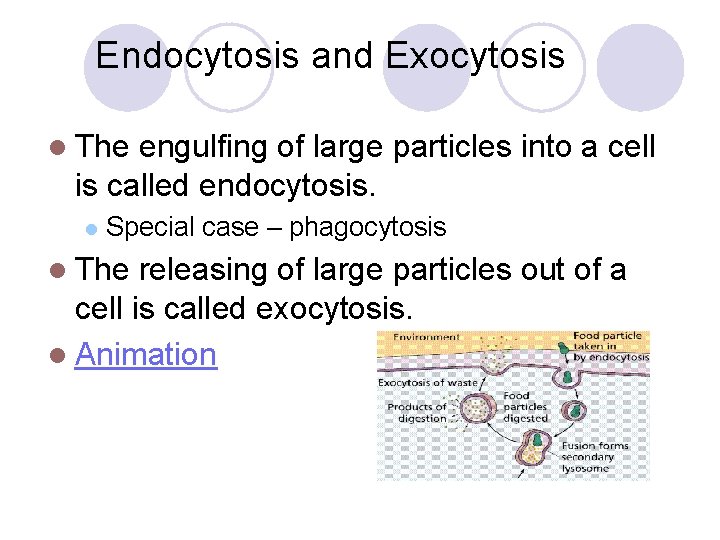
Endocytosis and Exocytosis The engulfing of large particles into a cell is called endocytosis. Special case – phagocytosis The releasing of large particles out of a cell is called exocytosis. Animation
- Slides: 10