
MOVEMENT THROUGH A MEMBRANE Solutions and Transport Solution
MOVEMENT THROUGH A MEMBRANE
Solutions and Transport • Solution – homogeneous mixture of two or more components – Solvent – dissolving medium – Solutes – components in smaller quantities within a solution • Intracellular fluid – nucleoplasm and cytosol • Interstitial fluid – fluid on the exterior of the cell
Selective Permeability • The plasma membrane allows some materials to pass while excluding others • This permeability includes movement into and out of the cell
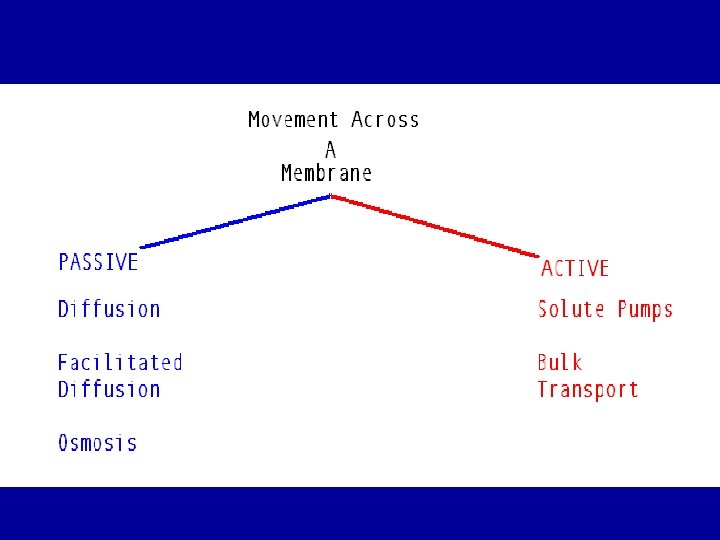
Cellular Physiology: Membrane Transport • Membrane Transport – movement of substance into and out of the cell • Transport is by two basic methods – Passive transport • No energy is required – Active transport • The cell must provide metabolic energy
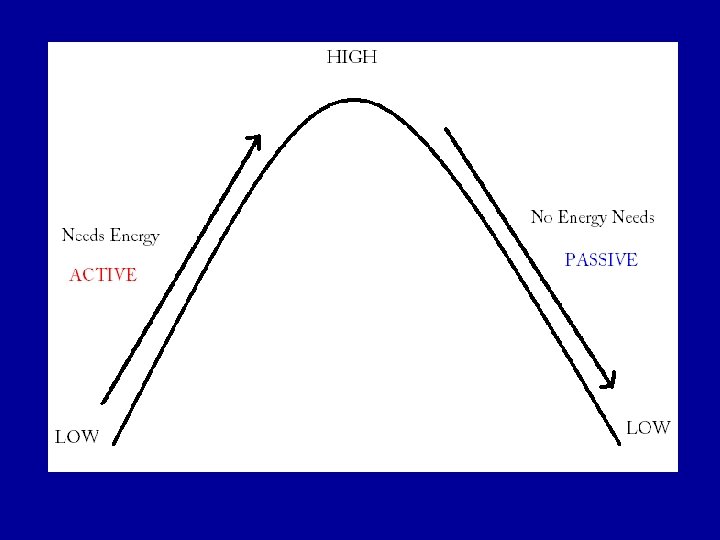
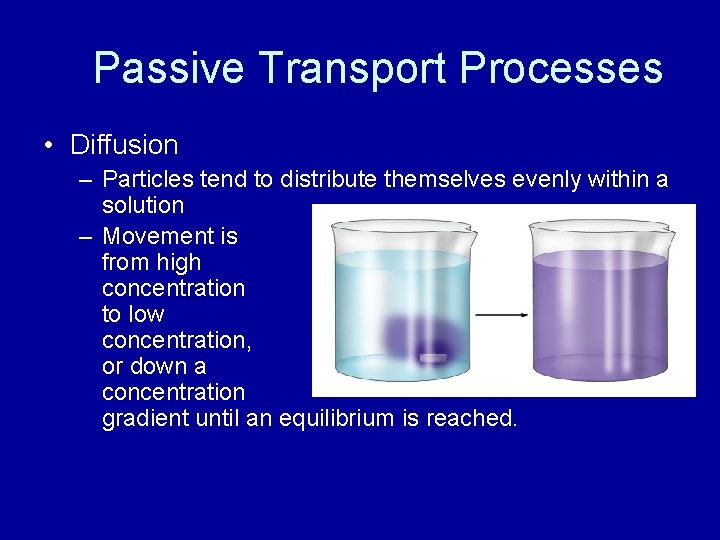
Passive Transport Processes • Diffusion – Particles tend to distribute themselves evenly within a solution – Movement is from high concentration to low concentration, or down a concentration gradient until an equilibrium is reached.
Passive Transport Processes • Types of diffusion – Simple diffusion • Unassisted process • Solutes are lipid-soluble materials or small enough to pass through membrane pores
Passive Transport Processes • Types of diffusion – Osmosis – simple diffusion of water • Highly polar water easily crosses the plasma membrane – Facilitated diffusion • Substances require a protein carrier for passive transport
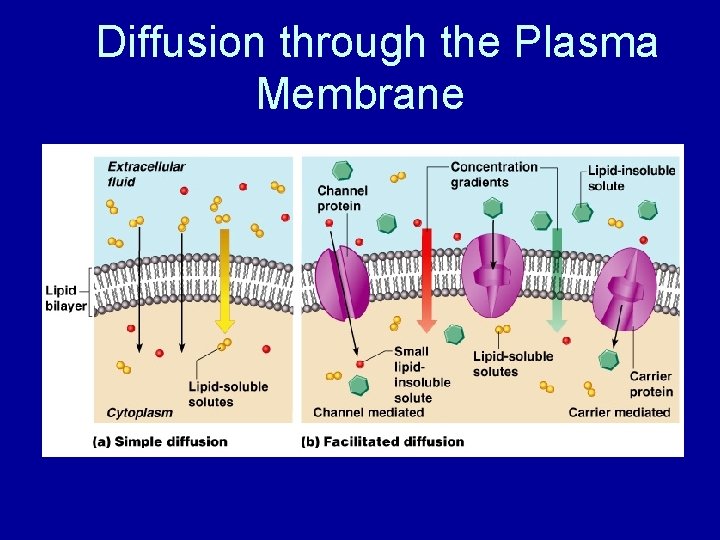
Diffusion through the Plasma Membrane
Osmosis The movement of WATER from a cell with a HIGH WATER POTENTIAL (HWP) to a cell with a LOW WATER POTENTIAL (LWP) until a DYNAMIC EQUILIBRIUM has been reached.
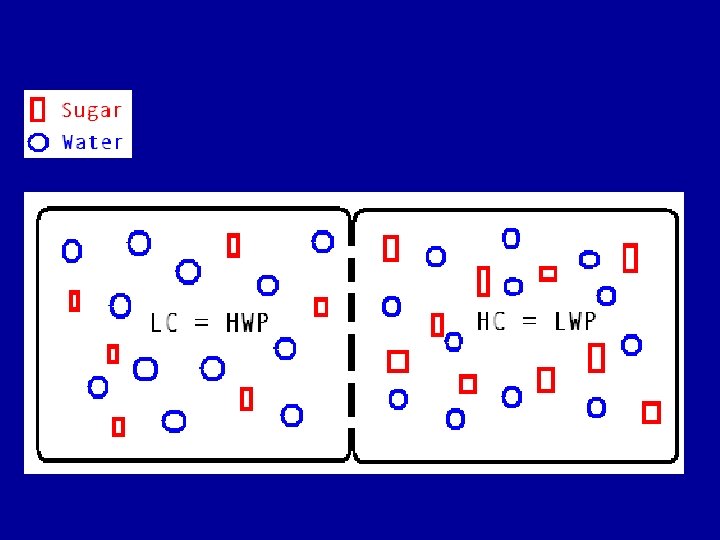
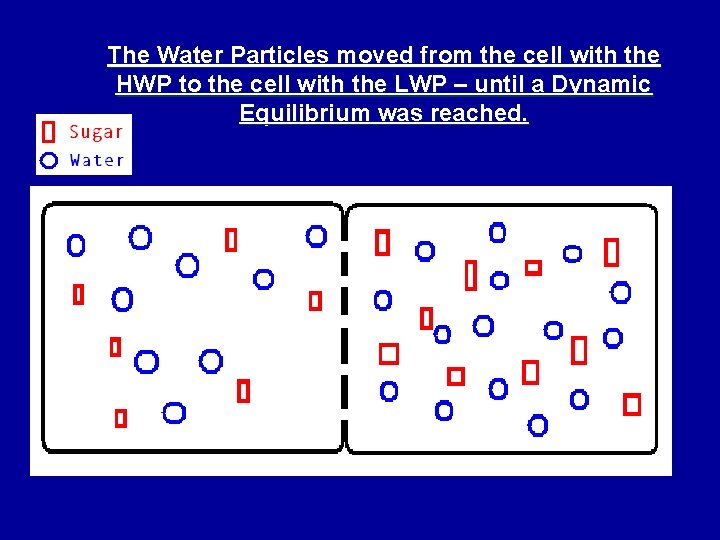
The Water Particles moved from the cell with the HWP to the cell with the LWP – until a Dynamic Equilibrium was reached.
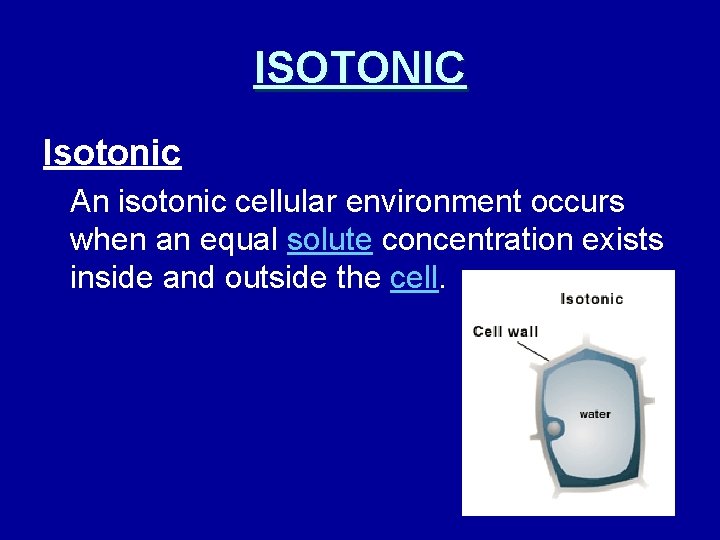
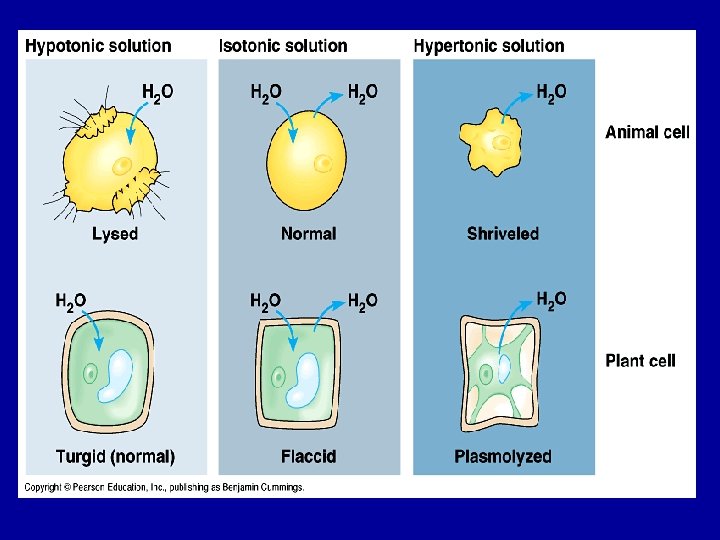
ISOTONIC Isotonic An isotonic cellular environment occurs when an equal solute concentration exists inside and outside the cell.
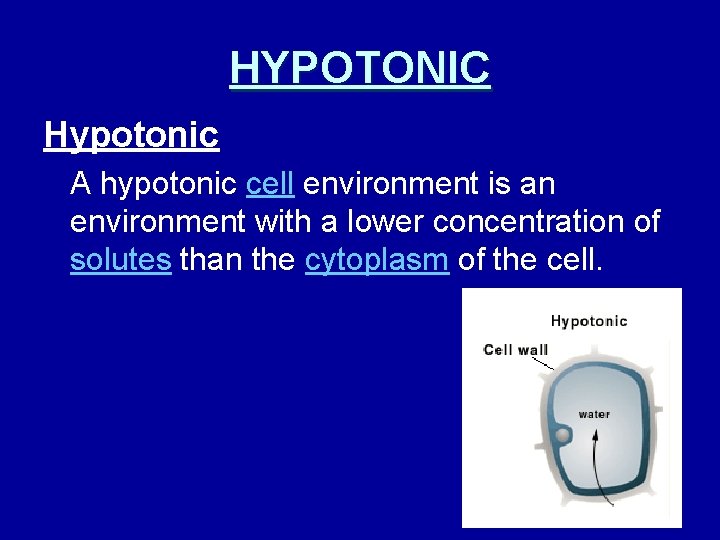
HYPOTONIC Hypotonic A hypotonic cell environment is an environment with a lower concentration of solutes than the cytoplasm of the cell.
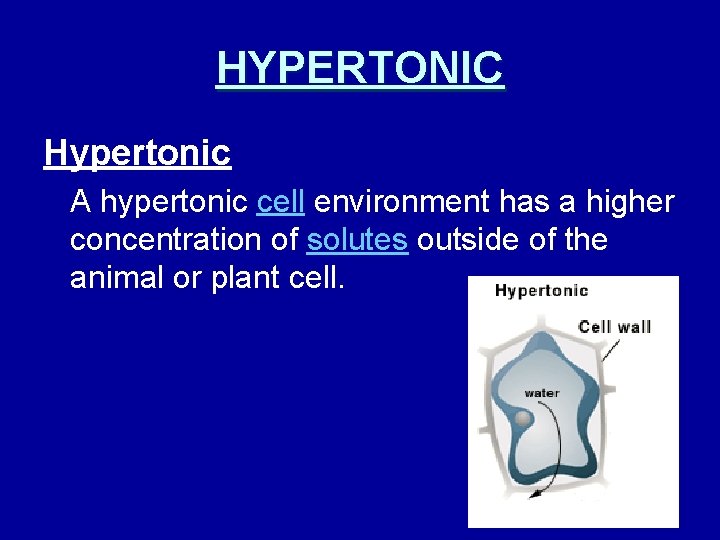
HYPERTONIC Hypertonic A hypertonic cell environment has a higher concentration of solutes outside of the animal or plant cell.
Passive Transport Processes • Filtration – Water and solutes are forced through a membrane by fluid, or hydrostatic pressure – A pressure gradient must exist • Solute-containing fluid is pushed from a high pressure area to a lower pressure area
Active Transport Processes • Transport substances that are unable to pass by diffusion – They may be too large – They may not be able to dissolve in the fat core of the membrane – They may have to move against a concentration gradient • Two common forms of active transport – Solute pumping – Bulk transport
Active Transport Processes • Solute pumping – Amino acids, some sugars and ions are transported by solute pumps – ATP energizes protein carriers, and in most cases, moves substances against concentration gradients
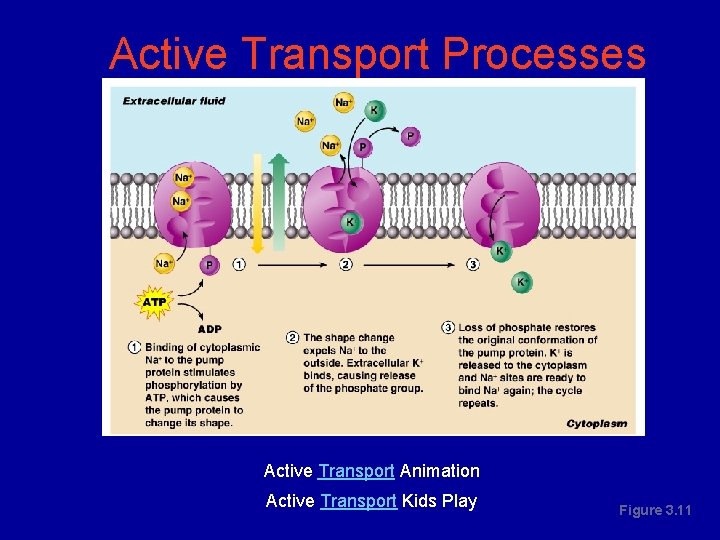
Active Transport Processes Active Transport Animation Active Transport Kids Play Figure 3. 11
Active Transport Processes • Bulk transport – Exocytosis • • • Moves materials out of the cell Material is carried in a membranous vesicle Vesicle migrates to plasma membrane Vesicle combines with plasma membrane Material is emptied to the outside
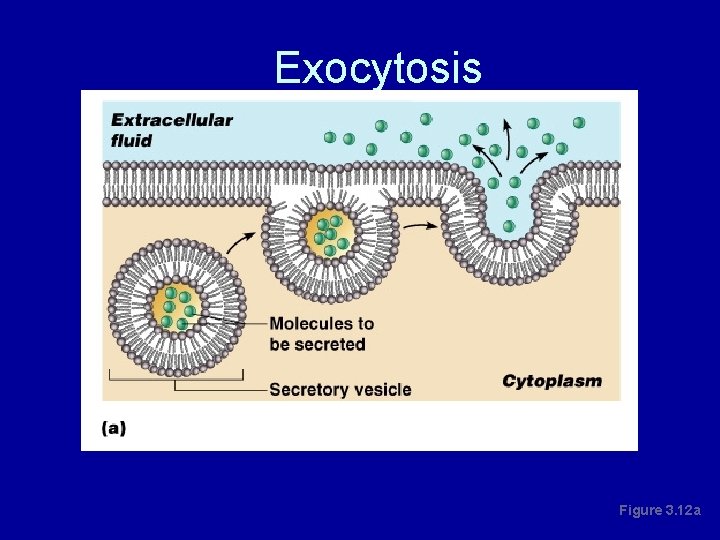
Exocytosis Figure 3. 12 a
Active Transport Processes • Bulk transport – Endocytosis • Extracellular substances are engulfed by being enclosed in a membranous vescicle – Types of endocytosis • Phagocytosis – cell eating • Pinocytosis – cell drinking
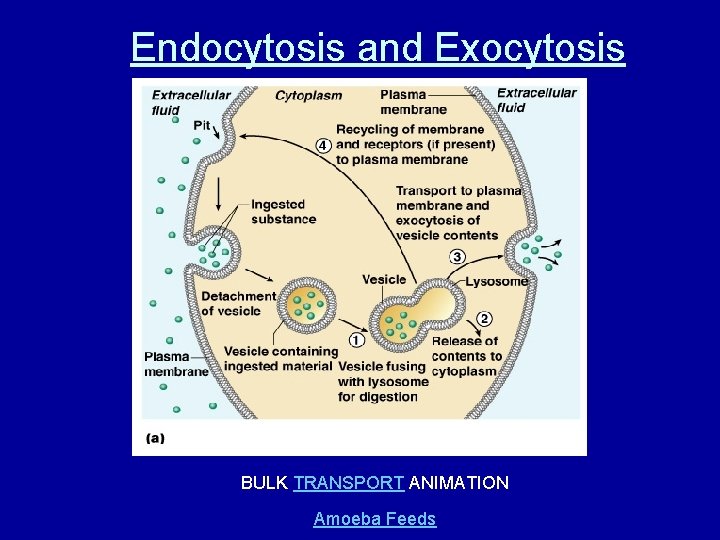
Endocytosis and Exocytosis BULK TRANSPORT ANIMATION Amoeba Feeds
- Slides: 25