
Movement of the Earths Crust Focus The student
- Slides: 19
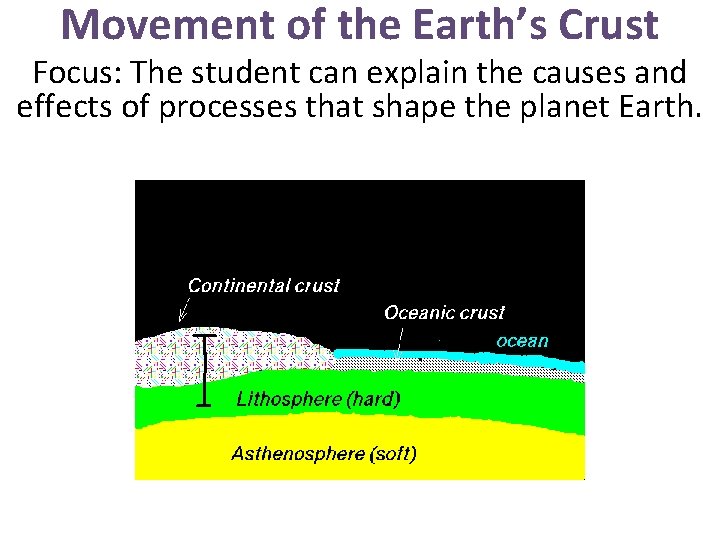
Movement of the Earth’s Crust Focus: The student can explain the causes and effects of processes that shape the planet Earth.
The outer solid part of the Earth. Lithosphere Prior Knowledge
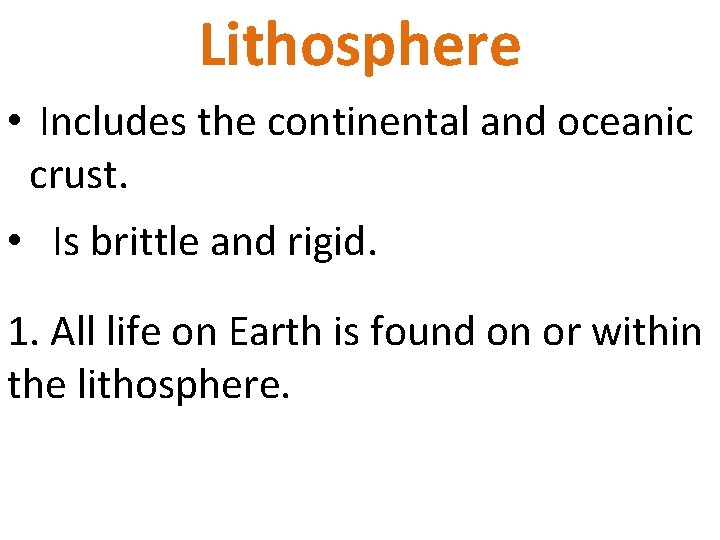
Lithosphere • Includes the continental and oceanic crust. • Is brittle and rigid. 1. All life on Earth is found on or within the lithosphere.
Lithosphere
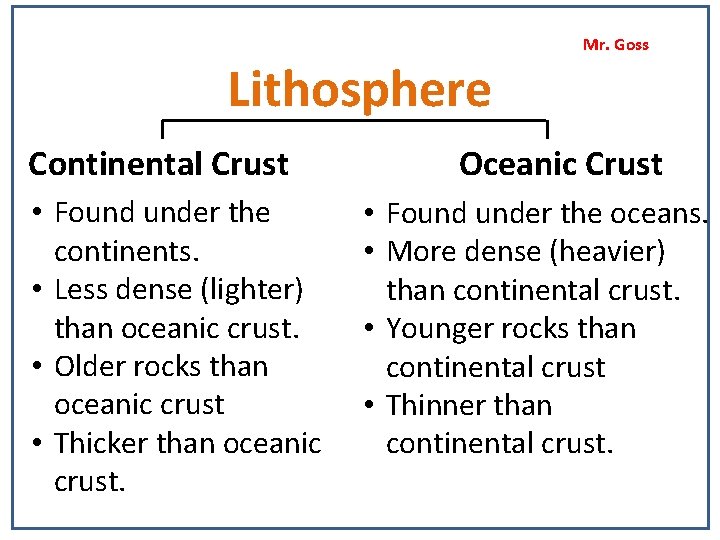
Lithosphere Continental Crust • Found under the continents. • Less dense (lighter) than oceanic crust. • Older rocks than oceanic crust • Thicker than oceanic crust. Mr. Goss Oceanic Crust • Found under the oceans. • More dense (heavier) than continental crust. • Younger rocks than continental crust • Thinner than continental crust.
The ductile(bendable) part of the Earth below the lithosphere. Asthenosphere Prior Knowledge
Asthenosphere • Is plastic like. • Slowly flows beneath the lithosphere. 1. The lithosphere floats on the asthenosphere.
The large areas that the lithosphere is broken up into. Tectonic Plates Prior Knowledge
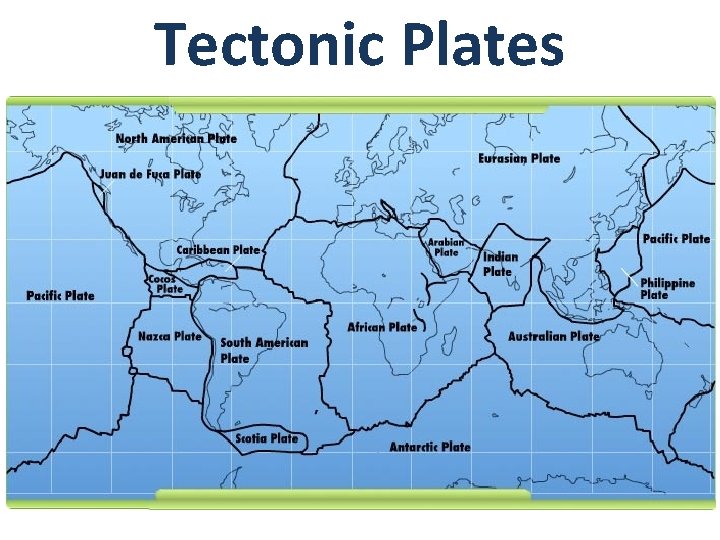
Tectonic Plates 1. There are seven or eight major plates (depending on how they are defined) and many minor plates. 2. Where plates meet and their relative motion determines the type of boundary between the plates.
Tectonic Plates
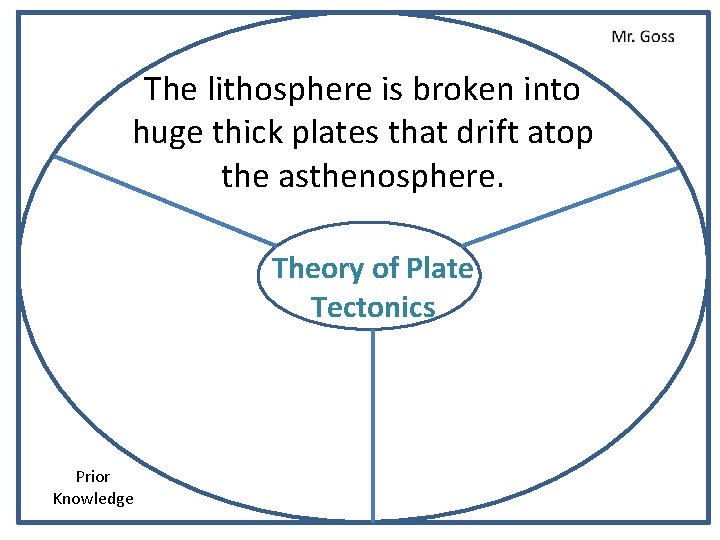
The lithosphere is broken into huge thick plates that drift atop the asthenosphere. Theory of Plate Tectonics Prior Knowledge
Theory of Plate Tectonics • Is caused by The movement of the molten mantle with the hotter material rising and the cooler material falling. This process is called convection.
Theory of Plate Tectonics
The point where two tectonic plates meet. Plate Boundary Prior Knowledge
Plate Boundary • Can be divergent, convergent, or transform boundaries. • Are usually the sites of volcanic and earthquake activity.
Plate Boundary
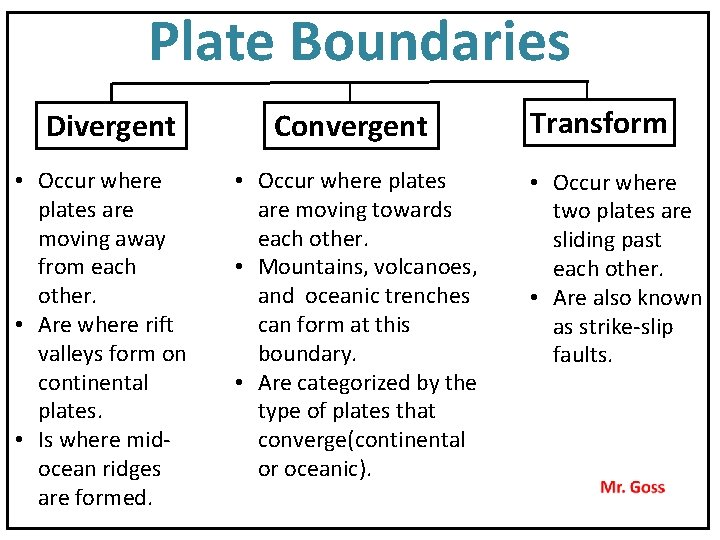
Plate Boundaries Divergent • Occur where plates are moving away from each other. • Are where rift valleys form on continental plates. • Is where midocean ridges are formed. Convergent • Occur where plates are moving towards each other. • Mountains, volcanoes, and oceanic trenches can form at this boundary. • Are categorized by the type of plates that converge(continental or oceanic). Transform • Occur where two plates are sliding past each other. • Are also known as strike-slip faults.
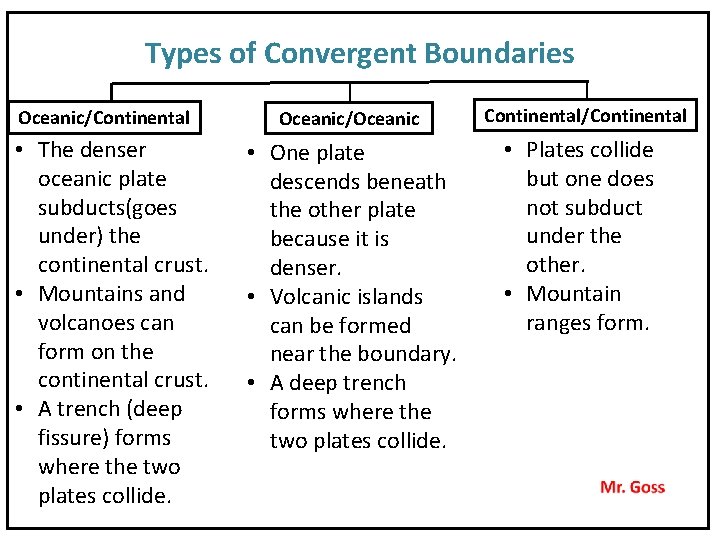
Types of Convergent Boundaries Oceanic/Continental • The denser oceanic plate subducts(goes under) the continental crust. • Mountains and volcanoes can form on the continental crust. • A trench (deep fissure) forms where the two plates collide. Oceanic/Oceanic • One plate descends beneath the other plate because it is denser. • Volcanic islands can be formed near the boundary. • A deep trench forms where the two plates collide. Continental/Continental • Plates collide but one does not subduct under the other. • Mountain ranges form.
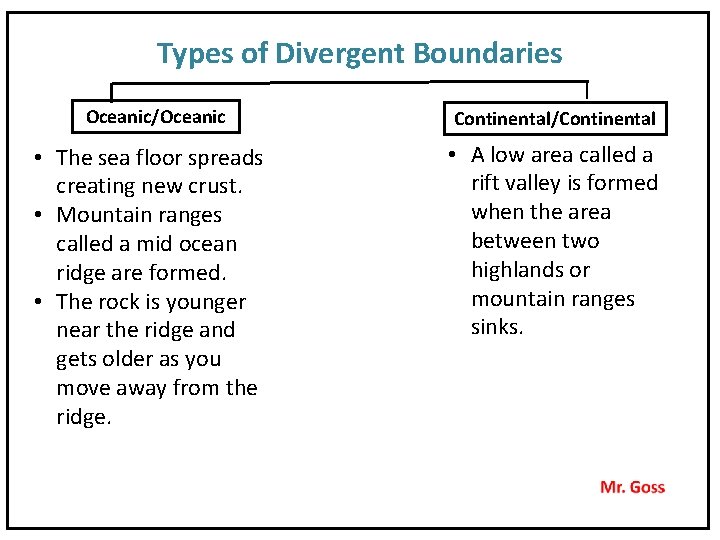
Types of Divergent Boundaries Oceanic/Oceanic • The sea floor spreads creating new crust. • Mountain ranges called a mid ocean ridge are formed. • The rock is younger near the ridge and gets older as you move away from the ridge. Continental/Continental • A low area called a rift valley is formed when the area between two highlands or mountain ranges sinks.