
Movement of Molecules Across a SemiPermeable Membrane Osmosis
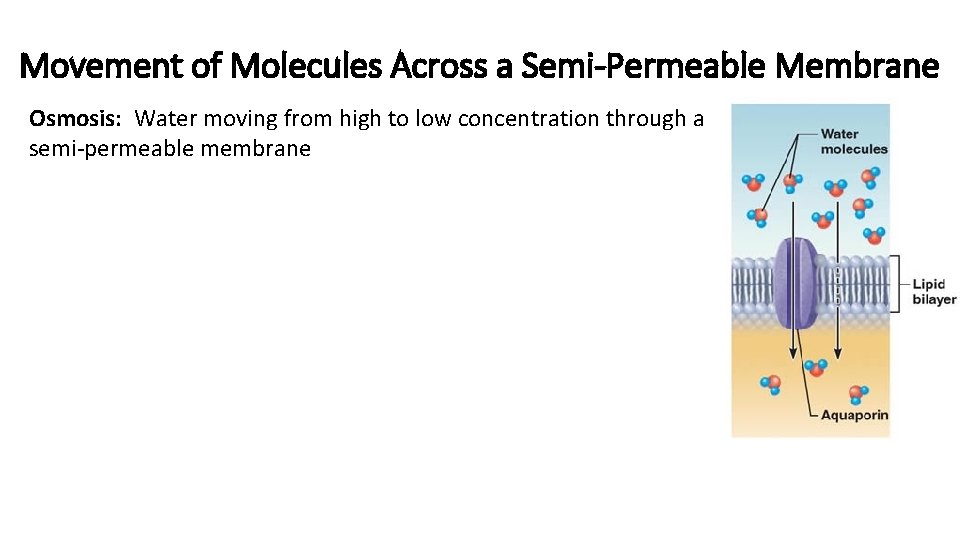
Movement of Molecules Across a Semi-Permeable Membrane Osmosis: Water moving from high to low concentration through a semi-permeable membrane
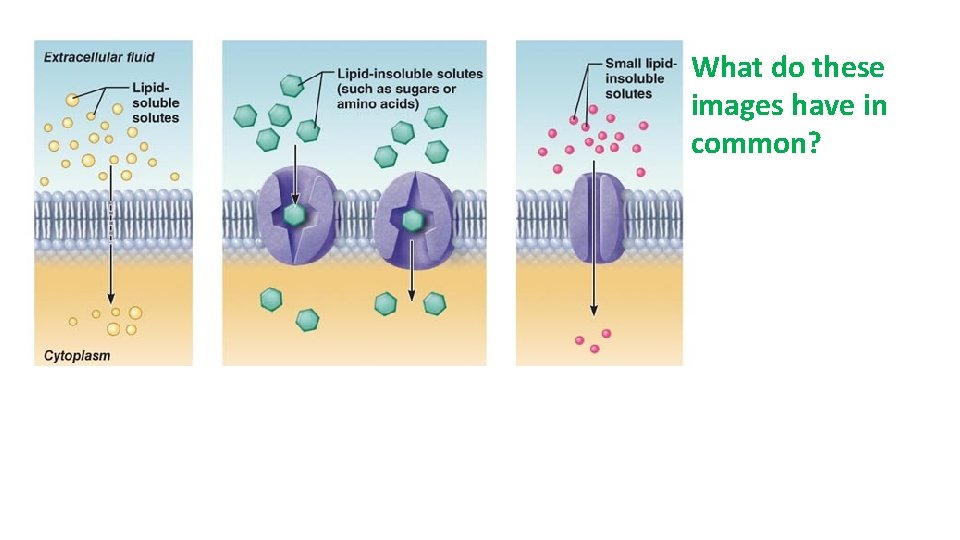
What do these images have in common?
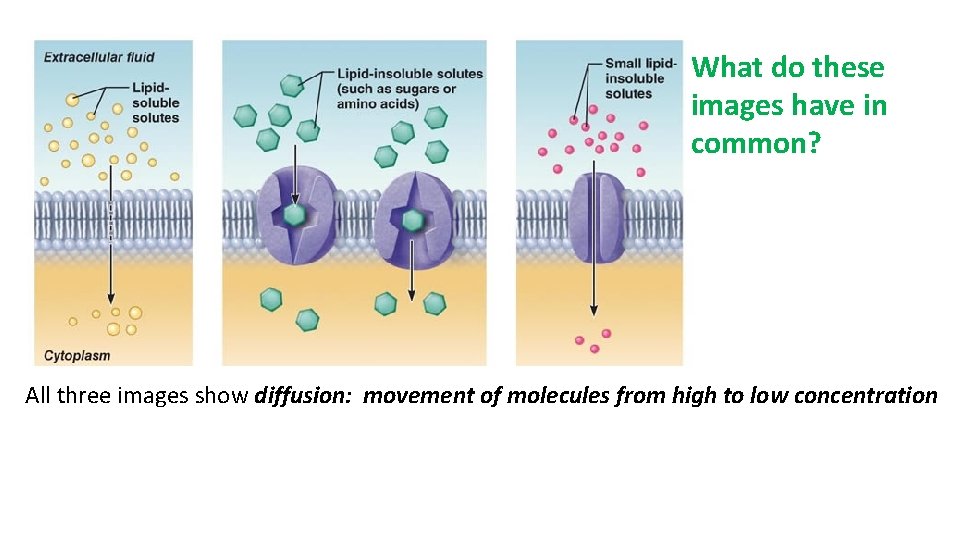
What do these images have in common? All three images show diffusion: movement of molecules from high to low concentration
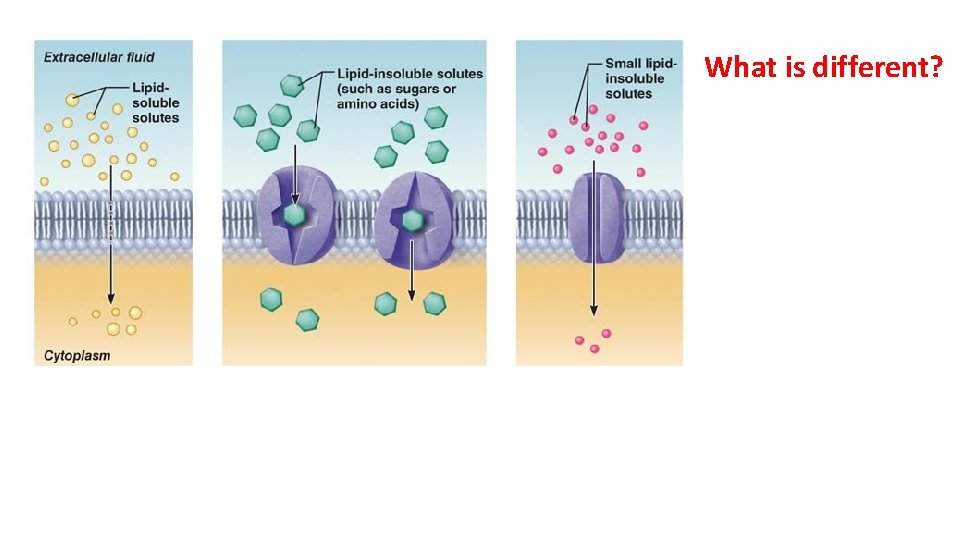
What is different?
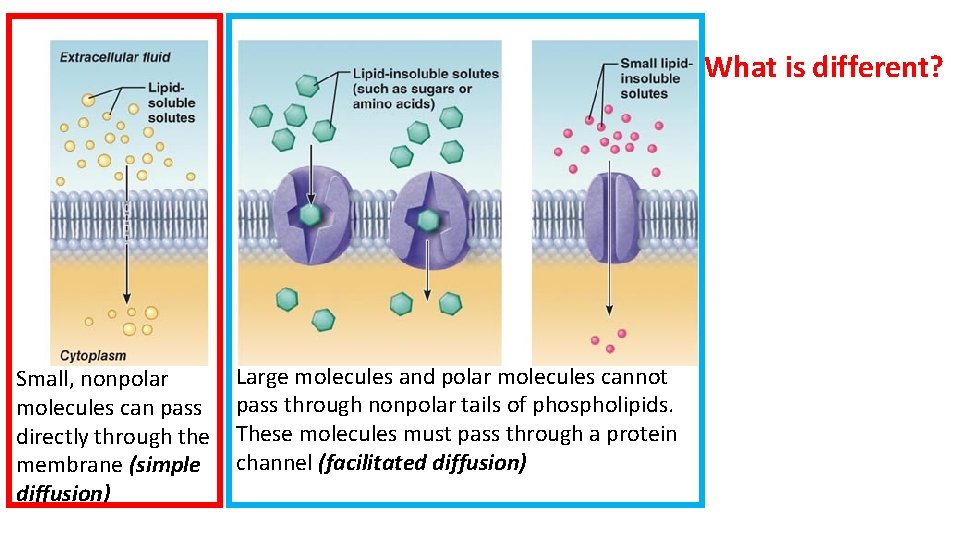
What is different? Small, nonpolar molecules can pass directly through the membrane (simple diffusion) Large molecules and polar molecules cannot pass through nonpolar tails of phospholipids. These molecules must pass through a protein channel (facilitated diffusion)
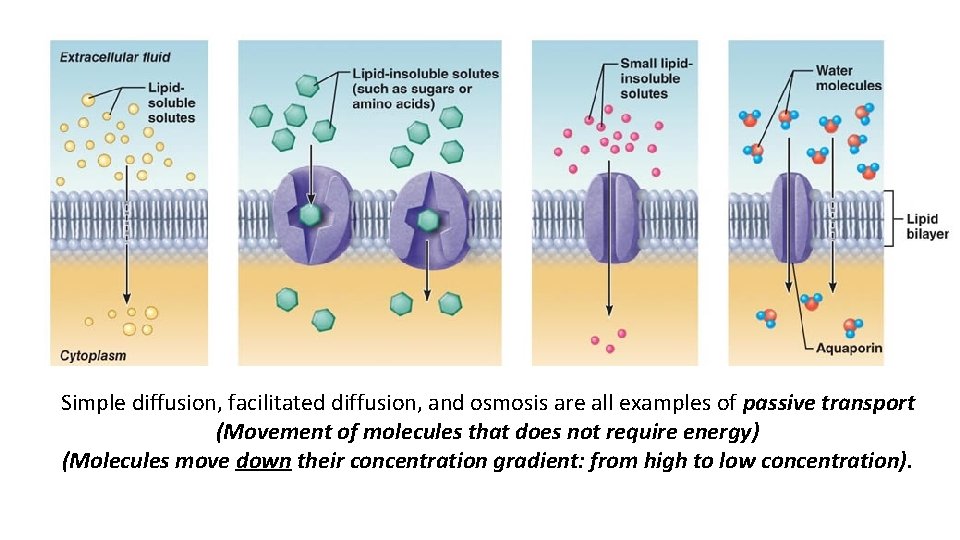
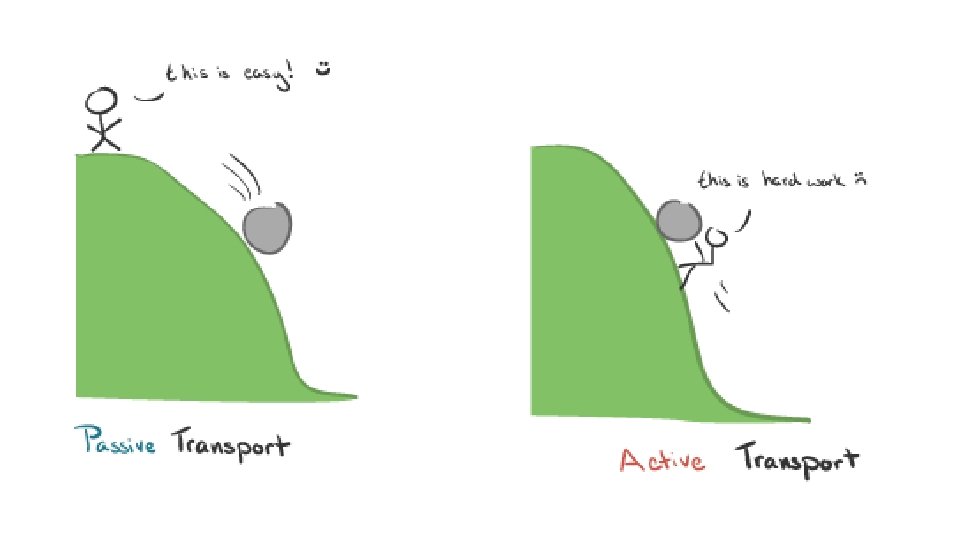
Simple diffusion, facilitated diffusion, and osmosis are all examples of passive transport (Movement of molecules that does not require energy) (Molecules move down their concentration gradient: from high to low concentration).
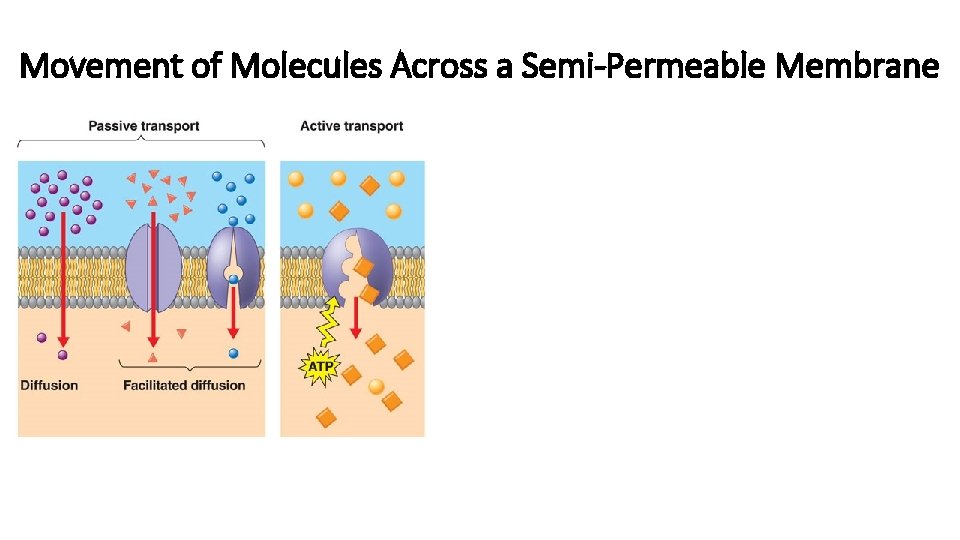
Movement of Molecules Across a Semi-Permeable Membrane
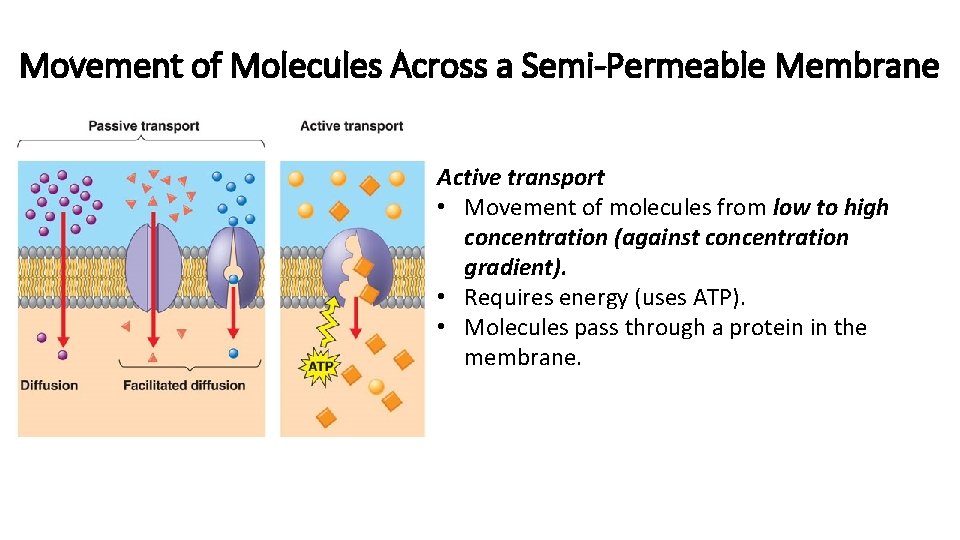
Movement of Molecules Across a Semi-Permeable Membrane Active transport • Movement of molecules from low to high concentration (against concentration gradient). • Requires energy (uses ATP). • Molecules pass through a protein in the membrane.
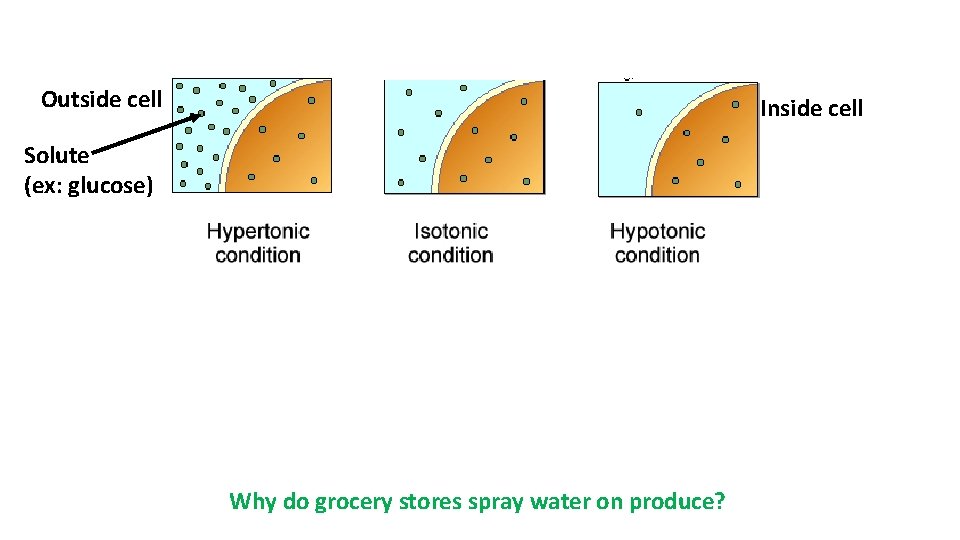
Outside cell Inside cell Solute (ex: glucose) Why do grocery stores spray water on produce?
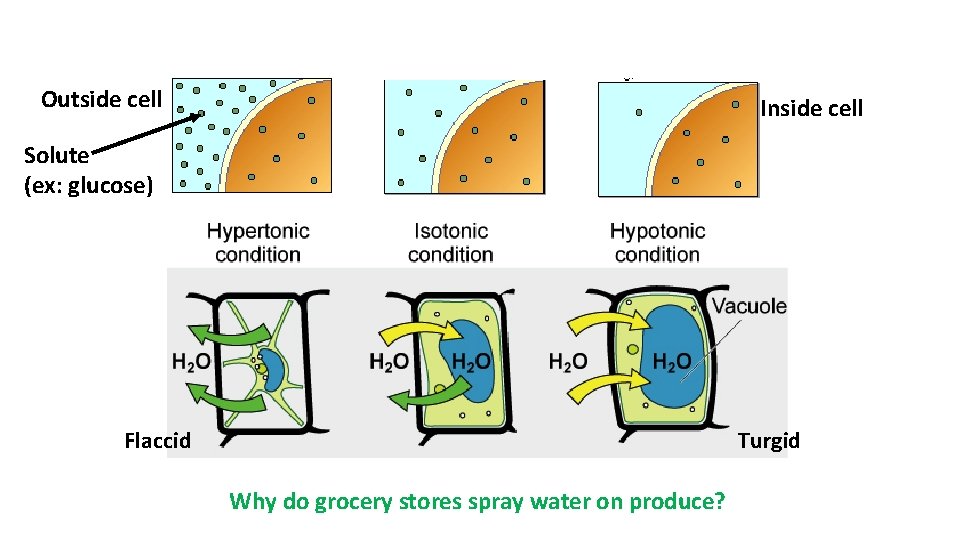
Outside cell Inside cell Solute (ex: glucose) Flaccid Turgid Why do grocery stores spray water on produce?
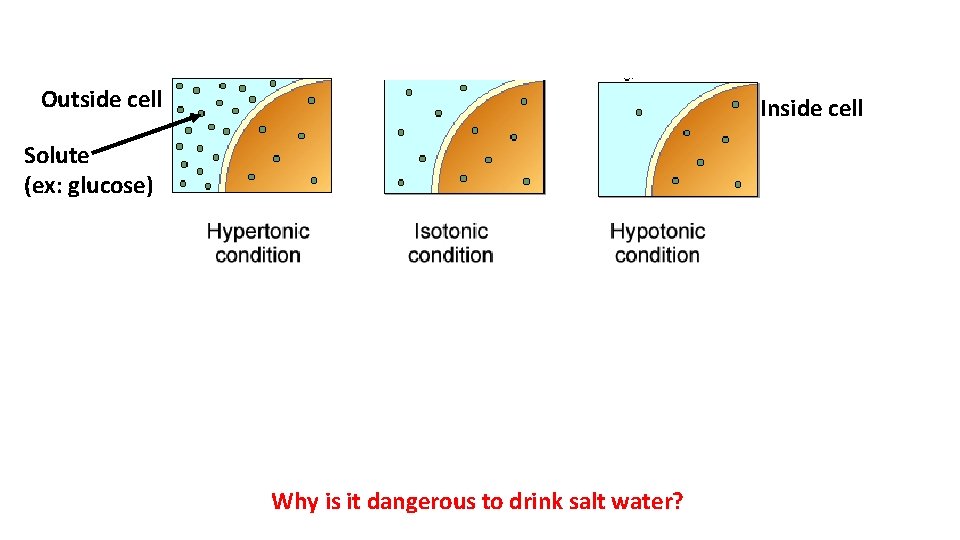
Outside cell Inside cell Solute (ex: glucose) Why is it dangerous to drink salt water?
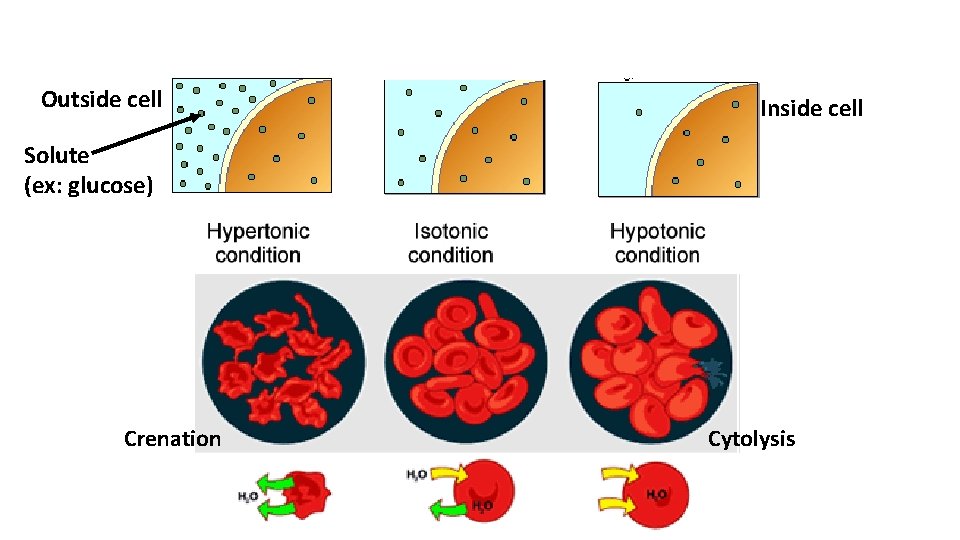
Outside cell Inside cell Solute (ex: glucose) Crenation Cytolysis
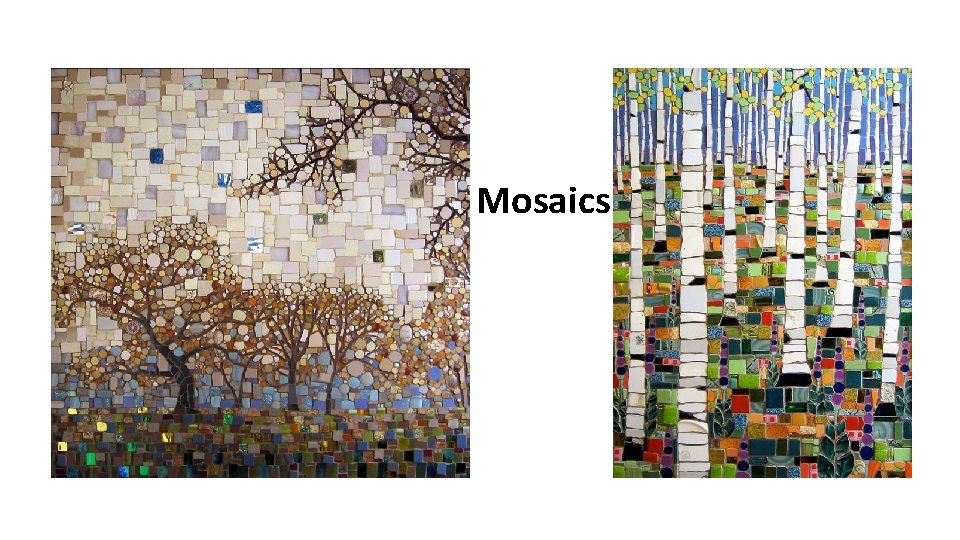
Mosaics
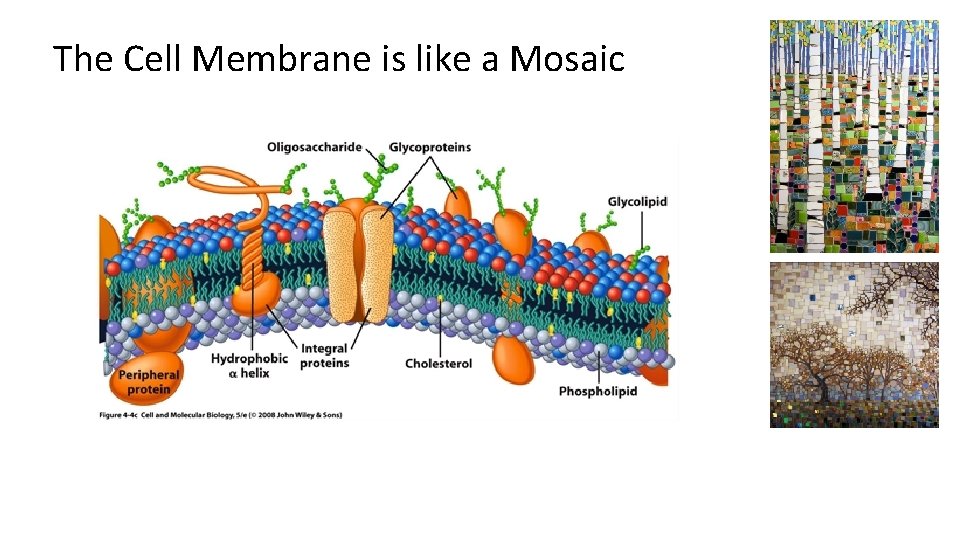
The Cell Membrane is like a Mosaic
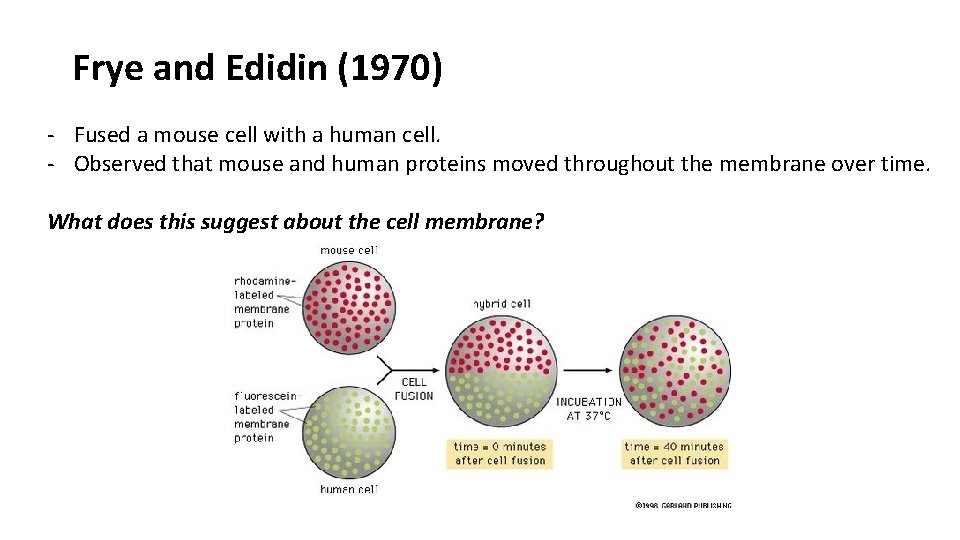
Frye and Edidin (1970) - Fused a mouse cell with a human cell. - Observed that mouse and human proteins moved throughout the membrane over time. What does this suggest about the cell membrane?
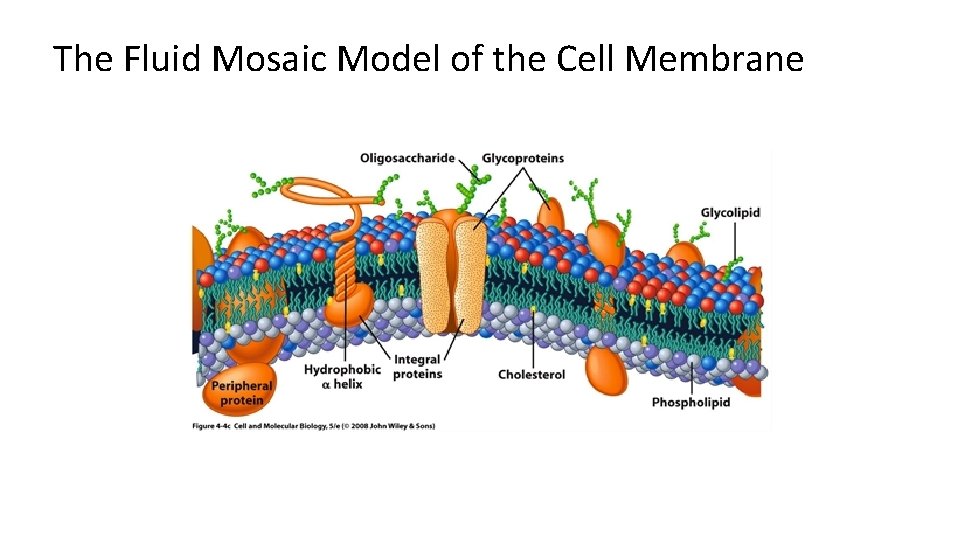
The Fluid Mosaic Model of the Cell Membrane
- Slides: 17