
Movement Across Cell Membranes Selectively Permeable Membrane Types
Movement Across Cell Membranes
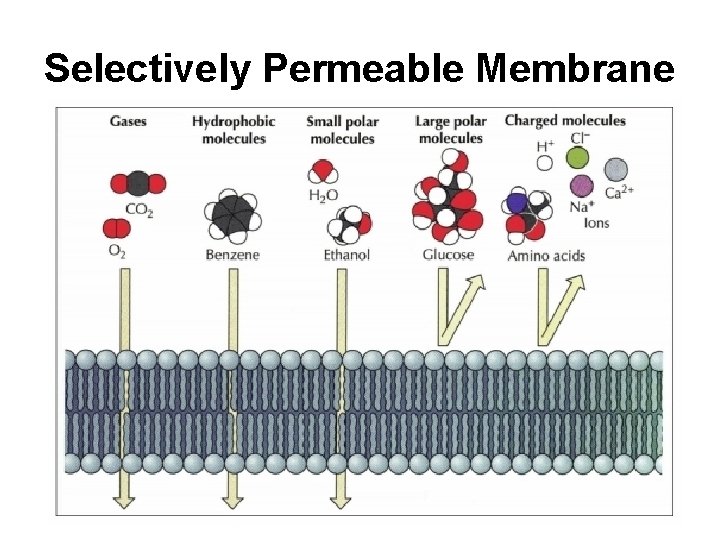
Selectively Permeable Membrane
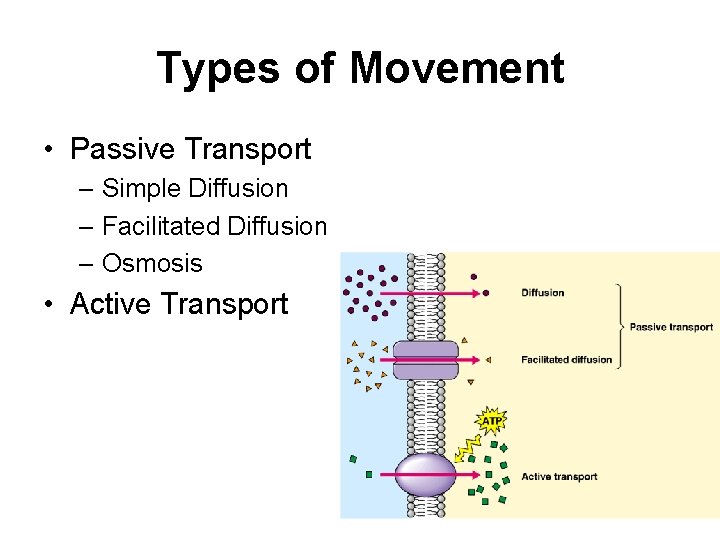
Types of Movement • Passive Transport – Simple Diffusion – Facilitated Diffusion – Osmosis • Active Transport
![Diffusion • The tendency of particles to move from an area of [high] to](http://slidetodoc.com/presentation_image_h2/49fc2872ab779630ea5cf4d7f2af075b/image-4.jpg "Diffusion • The tendency of particles to move from an area of [high] to")
Diffusion • The tendency of particles to move from an area of [high] to an area of [lower].
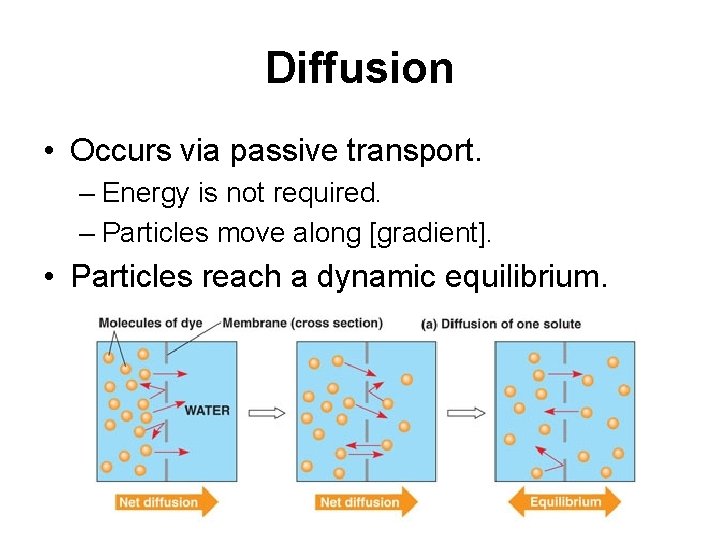
Diffusion • Occurs via passive transport. – Energy is not required. – Particles move along [gradient]. • Particles reach a dynamic equilibrium.
Simple Diffusion • Diffusion of molecules across the membrane: – Small, lipid-soluble molecules. – Oxygen. – Carbon dioxide.
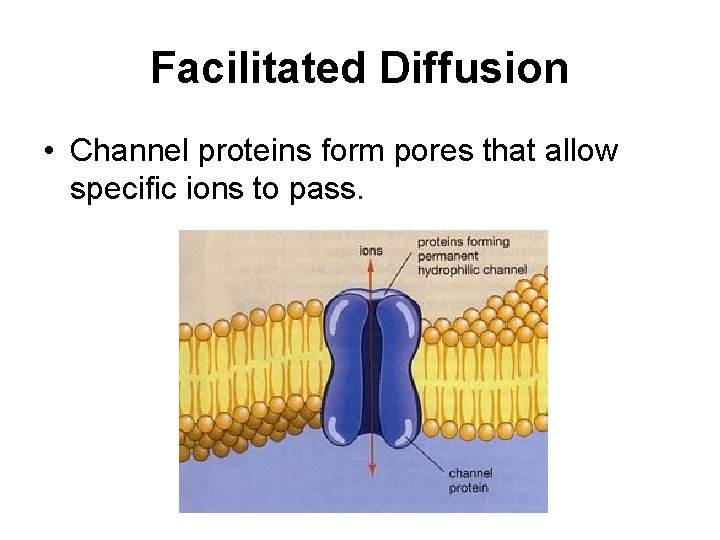
Facilitated Diffusion • Channel proteins form pores that allow specific ions to pass.
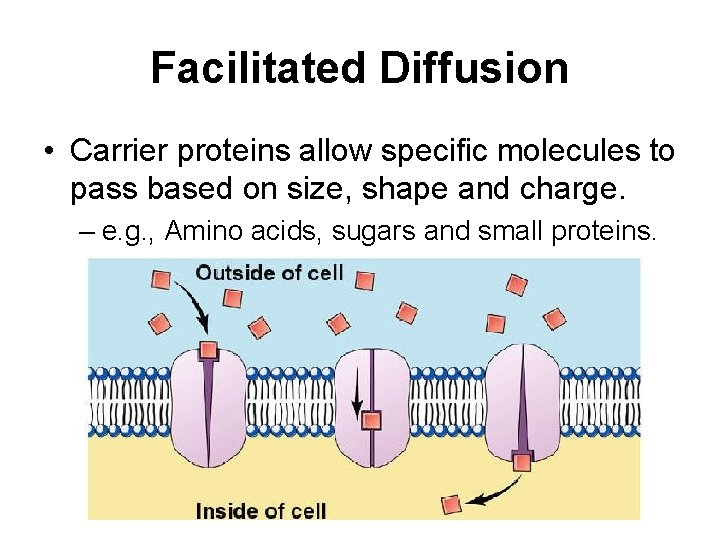
Facilitated Diffusion • Carrier proteins allow specific molecules to pass based on size, shape and charge. – e. g. , Amino acids, sugars and small proteins.
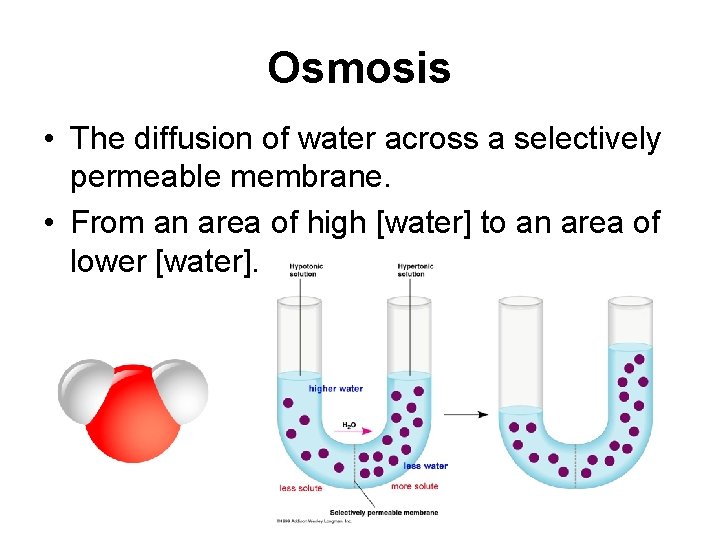
Osmosis • The diffusion of water across a selectively permeable membrane. • From an area of high [water] to an area of lower [water].
Types of Solutions • One solution is always compared to the other solution. • The solution that loses water is hypotonic. • The solution that gains water is hypertonic. • The solutions are isotonic when there is no net movement of water. • e. g. , If a cell shrinks… – The inside is hypotonic relative to the outside. – The outside is hypertonic relative to the inside.
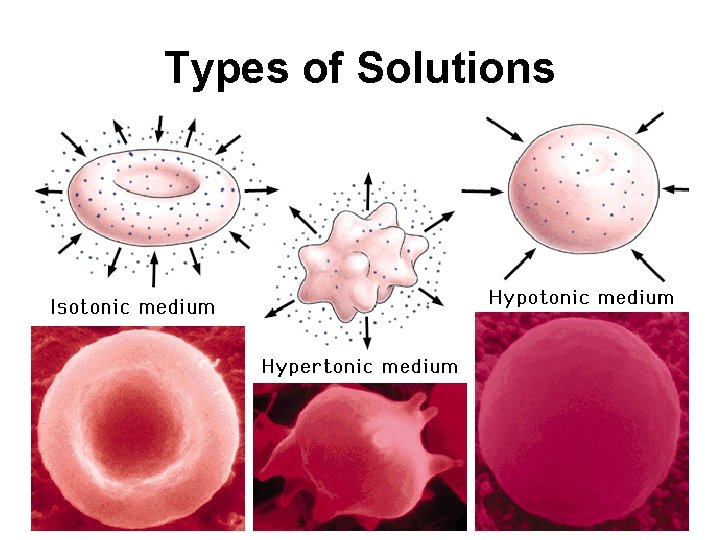
Types of Solutions
![Active Transport • Energy is required. • Particles move against [gradient]. • Movement requires](http://slidetodoc.com/presentation_image_h2/49fc2872ab779630ea5cf4d7f2af075b/image-12.jpg "Active Transport • Energy is required. • Particles move against [gradient]. • Movement requires")
Active Transport • Energy is required. • Particles move against [gradient]. • Movement requires specific carrier proteins.
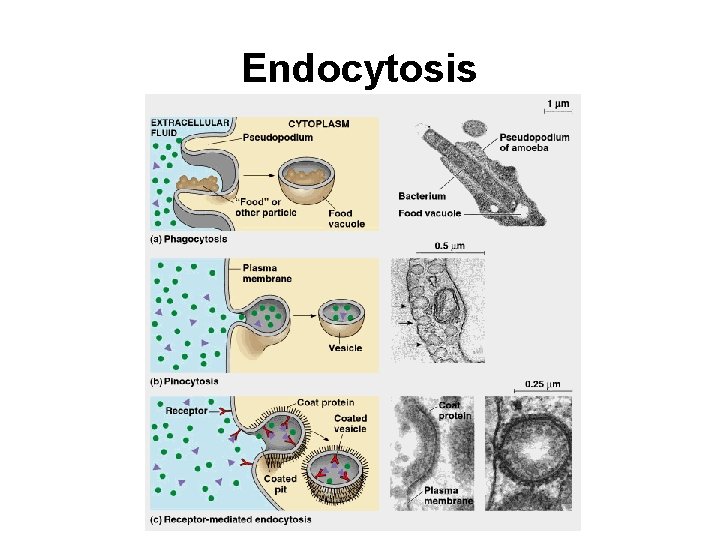
Endocytosis
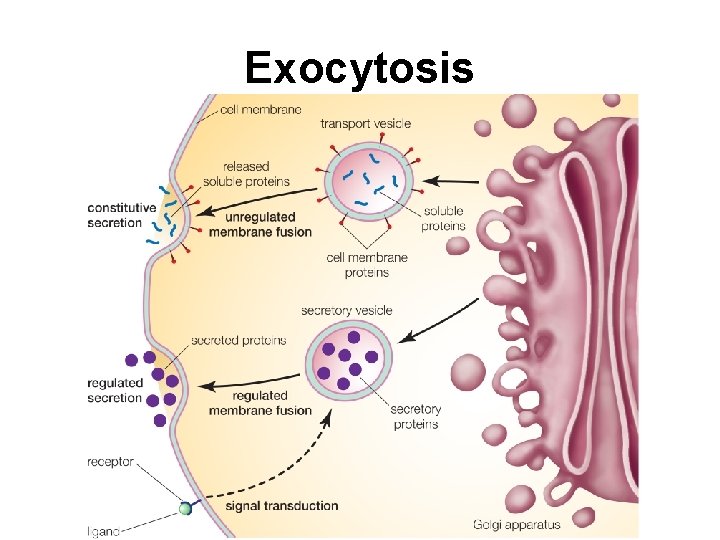
Exocytosis
HW • Pg 86 #1, 2, 3, 7, 9, 10 • Pg 97 # 1, 2, 4, 9
TREATING CANCEROUS CELLS HIV/AIDS HEPATITIS C
What is cancer? http: //www. youtube. com/watch? v=LEp. TTolebqo
Cancer • Cancer is uncontrolled cell growth 7 • Damage or change of genetic material of cells by external or internal factors 7 • Cells do not die but continue to multiple until a concentration of cancer cells develop 7
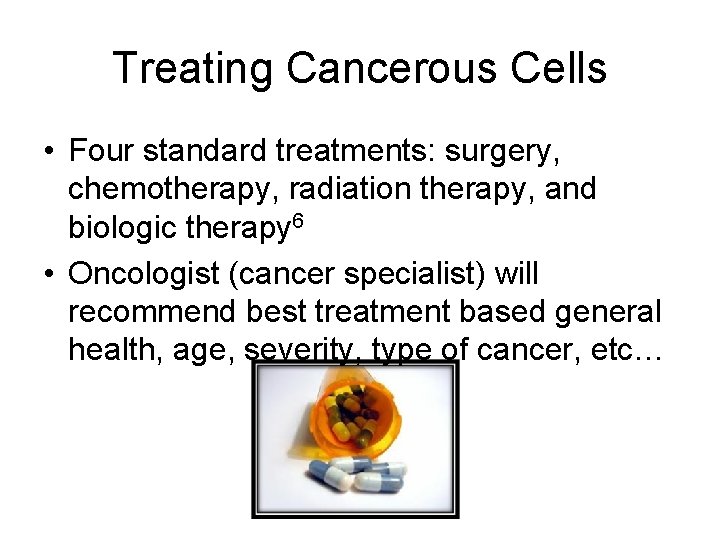
Treating Cancerous Cells • Four standard treatments: surgery, chemotherapy, radiation therapy, and biologic therapy 6 • Oncologist (cancer specialist) will recommend best treatment based general health, age, severity, type of cancer, etc…
• Surgery: remove tumour or cancerous tissue 6 • Chemotherapy: usage of drugs to eliminate rapidly multiplying cells throughout the entire body (including hair follicle cells)6 • Radiation Therapy: Certain forms of energy used to shrink tumours and eliminate cancer cells by damaging cancer cells DNA, withholding it from multiplying 6 • Biologic Therapy: Drugs use to target cancer cells. Varied methods include blocking biological processes of tumours that allow tumours to grow or cut off blood supply to the tumour killing it by means of starvation 6
What is HIV/AIDS?
HIV & AIDS • HIV (Human Immunodeficiency Virus) • AIDS (Acquired Immune Deficiency Syndrome) • HIV virus’ usually zeros in on “T” cells (the brains behind specialized cells that fight off invading germs)8 • Virus uses newly obtained cells to multiply • HIV has four stages 4 • Weakens immune system • Eventually leads to and causes AIDS
Treating HIV/AIDS • No cure 2 • Most common treatment known as antiretroviral treatment 5 • Drug taken daily to hold off HIV at a low level 4 • Stops weakening of immune system • Allows body to recover from any damage HIV may have caused • Prolongs life from illness
Treating HIV/AIDS • Combination therapy • Taking two or more antiretroviral pills • Reduces rate at which HIV can become resistant 8 • Further prolongs life from illness
What is Hepatitis C? http: //www. youtube. com/watch? v=y 6 os. MO 5 xnag
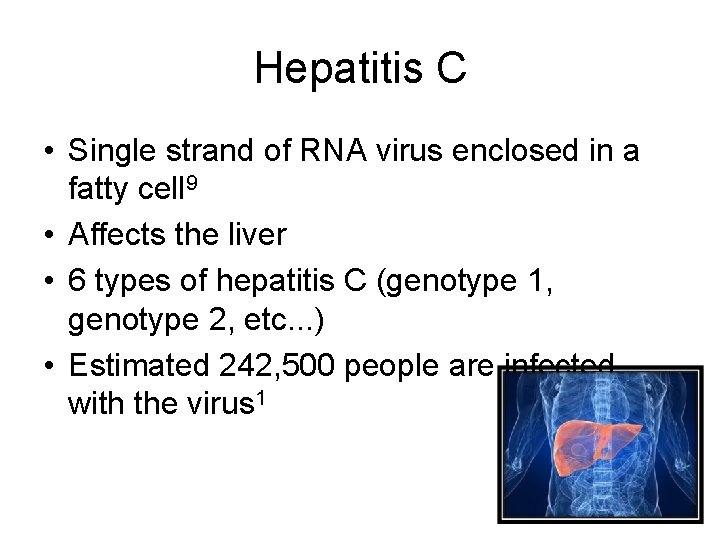
Hepatitis C • Single strand of RNA virus enclosed in a fatty cell 9 • Affects the liver • 6 types of hepatitis C (genotype 1, genotype 2, etc. . . ) • Estimated 242, 500 people are infected with the virus 1
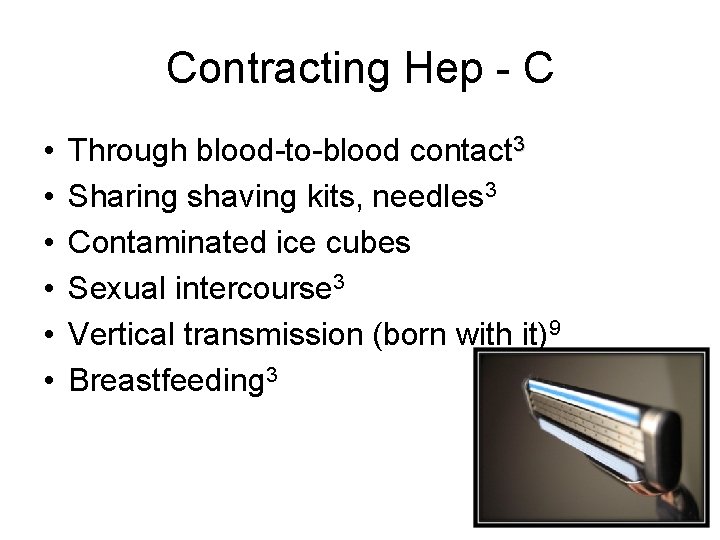
Contracting Hep - C • • • Through blood-to-blood contact 3 Sharing shaving kits, needles 3 Contaminated ice cubes Sexual intercourse 3 Vertical transmission (born with it)9 Breastfeeding 3
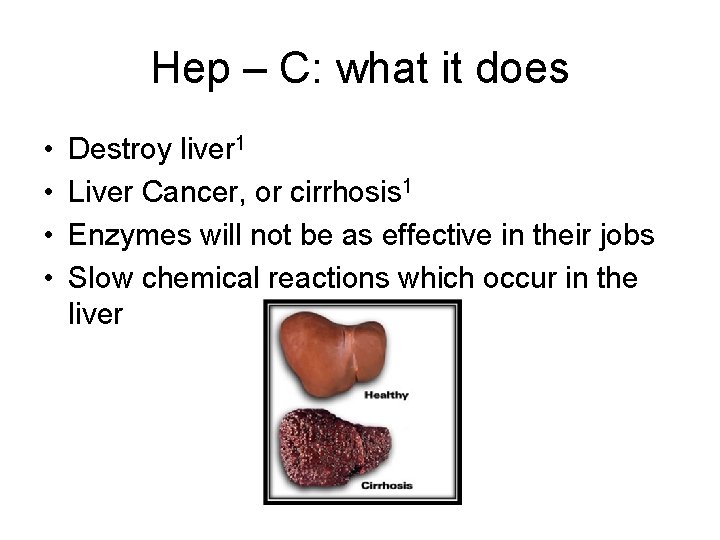
Hep – C: what it does • • Destroy liver 1 Liver Cancer, or cirrhosis 1 Enzymes will not be as effective in their jobs Slow chemical reactions which occur in the liver
Treatment of Hep-C • No cure – go into recession • Medication (injections and pill) • Interferon Alpha - injection • Ribavirin - pill • 24 or 48 weeks • Kills RNA virus, once virus is destroyed, cells repair 1 • Never fully cured, more medication
Non-Medical Treatment • Dealing with depression • Drinking
Liver Enzymes “ aspartate aminotransferase (AST or SGOT) and alanine aminotransferase (ALT or SGPT). Together they are known as transaminases. Alkaline phosphatase (AP) and gamma-glutamyl transferase (GGT) – are known as cholestatic liver enzymes. ” "Liver Enzymes. " Liver Enzymes. Web. 09 Sept. 2010. <http: //liverenzymes. net/>.
- Slides: 31