
MOUNTAINS Mountains have formed over billions of years
MOUNTAINS Mountains have formed over billions of years due to movements in the Earth's crust, known as tectonic activity. Where mountains are found, we also and the tectonic forces of earthquakes, fault zones and volcanic activity.
Mountains; are dominant landforms on Earth. A mountain is a rocky mass that rises more than 600 metres above the Earth’s surface
Clip: Continental plates and tectonics • Watch the clip: https: //www. youtube. com/watch? v=5 ppy. G g 3 v. Rs 8 • Write down 3 interesting points on how mountains are formed
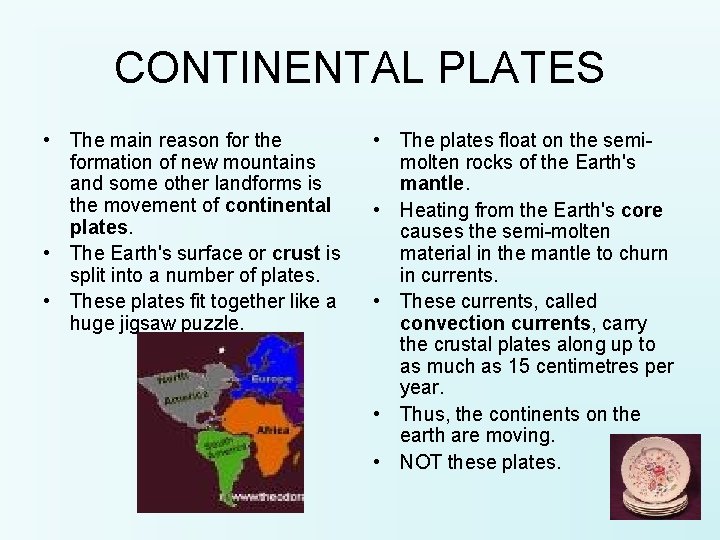
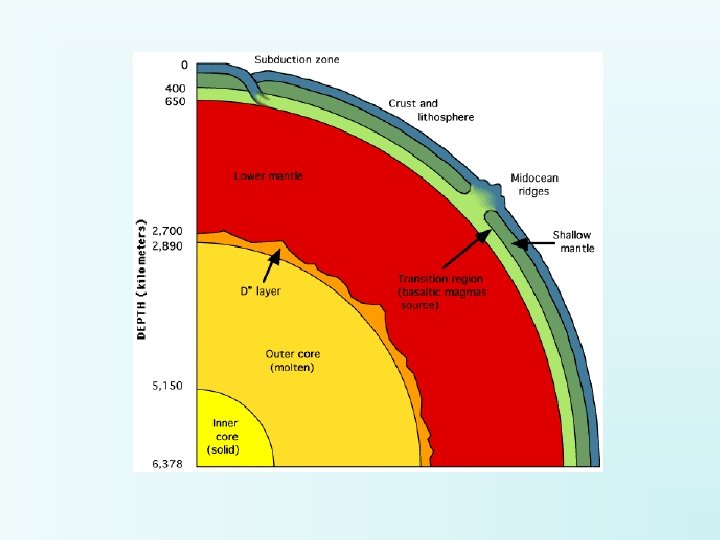
CONTINENTAL PLATES • The main reason for the formation of new mountains and some other landforms is the movement of continental plates. • The Earth's surface or crust is split into a number of plates. • These plates fit together like a huge jigsaw puzzle. • The plates float on the semimolten rocks of the Earth's mantle. • Heating from the Earth's core causes the semi-molten material in the mantle to churn in currents. • These currents, called convection currents, carry the crustal plates along up to as much as 15 centimetres per year. • Thus, the continents on the earth are moving. • NOT these plates.
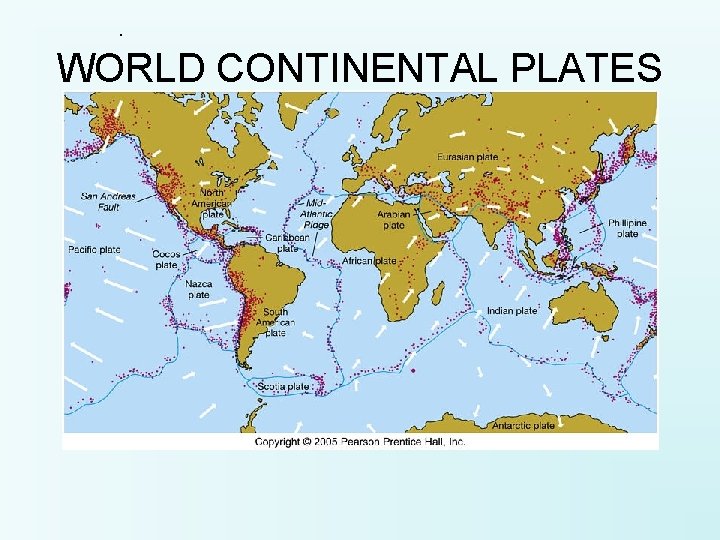
. WORLD CONTINENTAL PLATES
Mountain Building Folding and Faulting Mountains
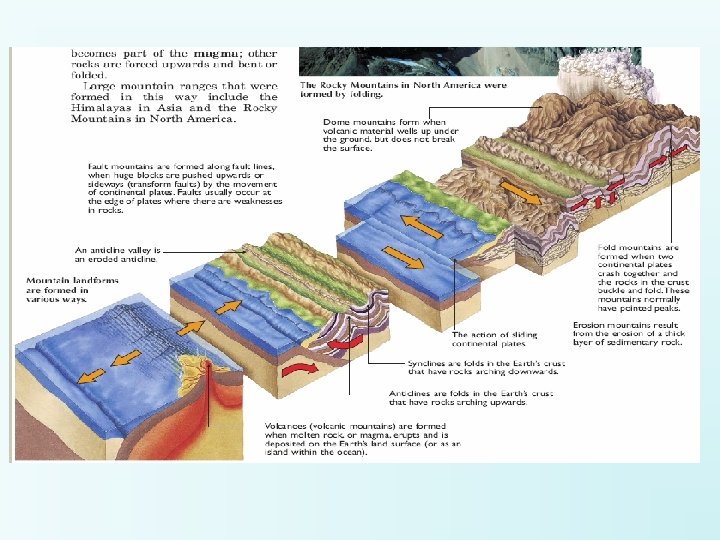
Faulting , Folding Volcanic Activity • The three main forms of mountain building are faulting, folding and volcanic activity. • Most of the world's great mountain regions are formed when crustal rocks are buckled as one plate slides under another (subduction). • Some of the crust is forced down and becomes part of the magma; other rocks are forced upwards and bent or folded. • MOUNTAINS: https: //www. youtube. com/watch? v=o. M_Yj. Wz. QKt. E
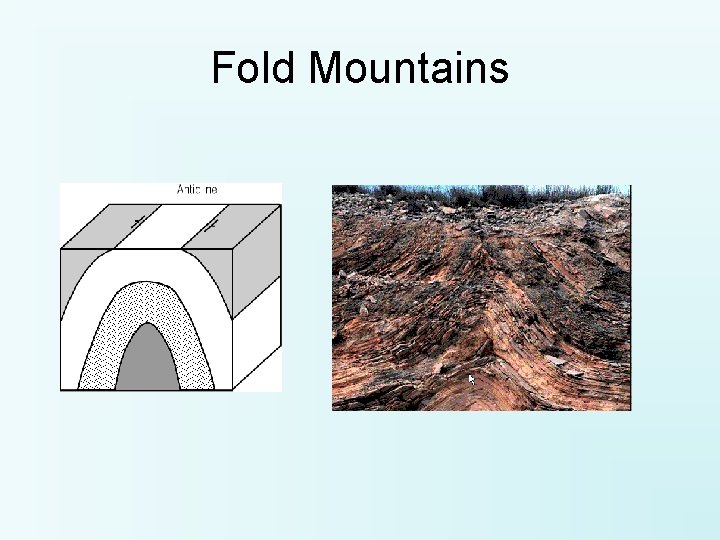
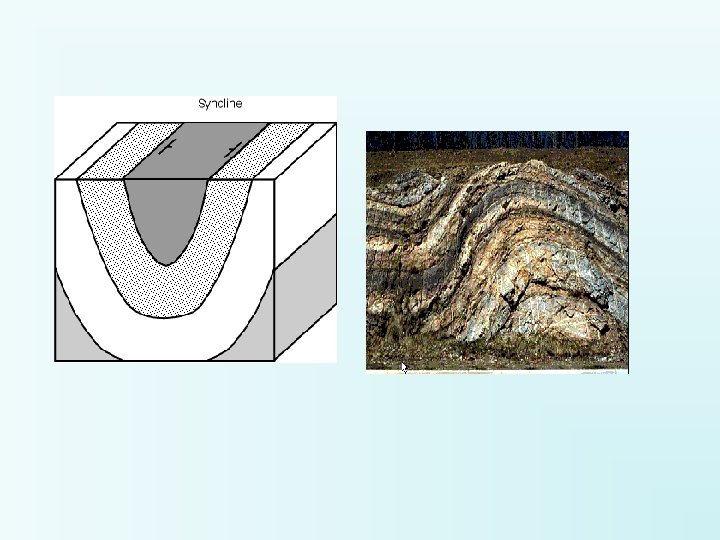
Fold Mountains
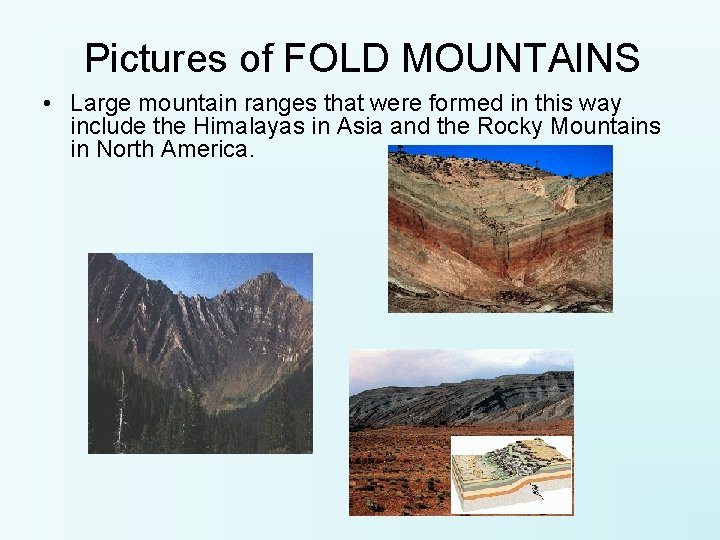
Pictures of FOLD MOUNTAINS • Large mountain ranges that were formed in this way include the Himalayas in Asia and the Rocky Mountains in North America.
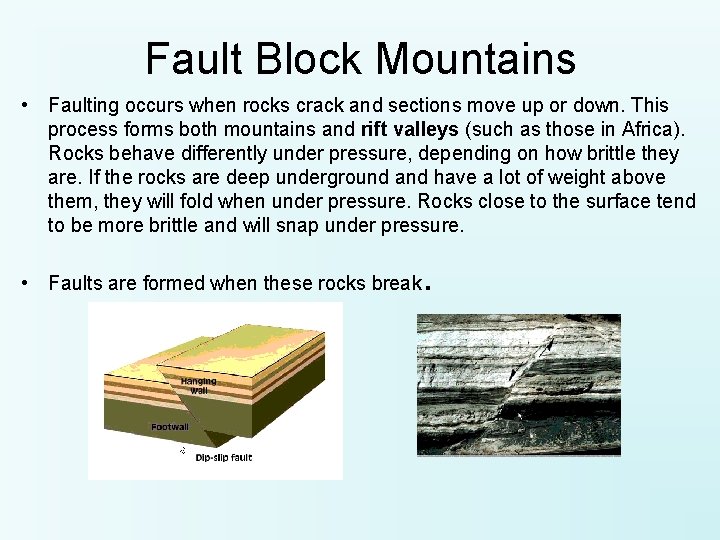
Fault Block Mountains • Faulting occurs when rocks crack and sections move up or down. This process forms both mountains and rift valleys (such as those in Africa). Rocks behave differently under pressure, depending on how brittle they are. If the rocks are deep underground and have a lot of weight above them, they will fold when under pressure. Rocks close to the surface tend to be more brittle and will snap under pressure. • Faults are formed when these rocks break .
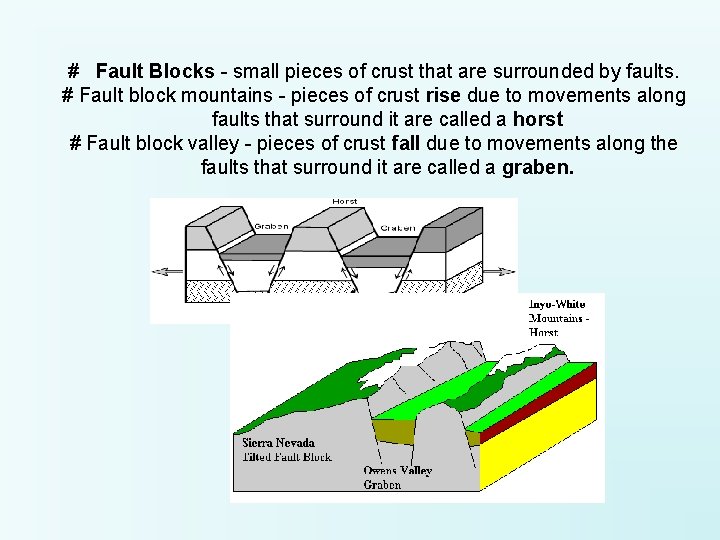
# Fault Blocks - small pieces of crust that are surrounded by faults. # Fault block mountains - pieces of crust rise due to movements along faults that surround it are called a horst # Fault block valley - pieces of crust fall due to movements along the faults that surround it are called a graben.

Looking at Page 110 -111 of your textbooks, attempt Questions 1, 2, 3, 4, 9, and 10
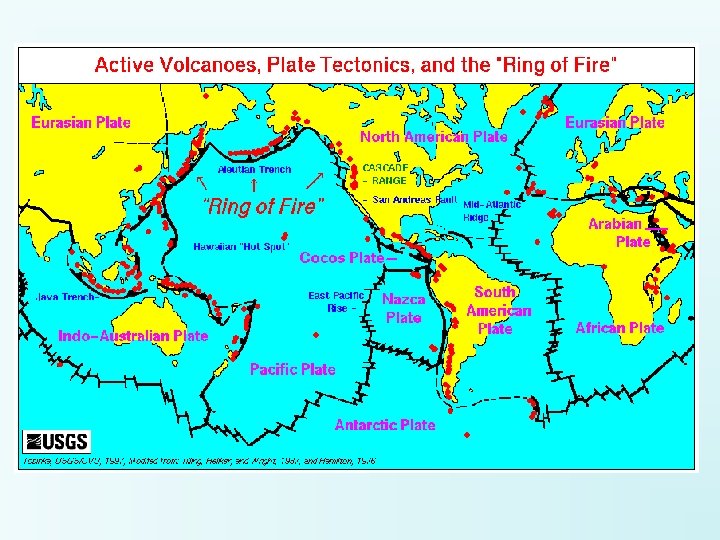
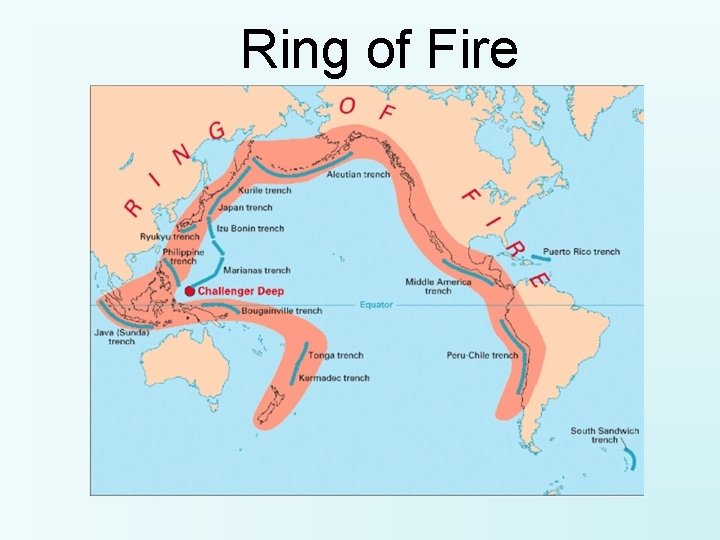
Ring of Fire
Earthquakes • Earthquakes are the shaking of the Earth’s crust that occurs as a result of plate movements or volcanic activity. • Japan, an archipelago (chain of islands) located within the ring of fire, contains 10% of the world’s active volcanoes and is one of the countries most at risk of Earthquakes • Nepal Earthquake film: https: //www. youtube. com/watch? v=r. Adr. OK_P 6 UA
Earthquakes continued • E. g. Kashmir Earthquake. Ø Occurred on the 8 th of October in the Kashmir mountain region between India and Pakistan Ø This area experiences earthquakes frequently as there are two plate tectonics here that also created the Himalaya Mountain range. Ø There was widespread damage to houses and buildings leaving 3. 5 million people homeless, up to 80, 000 dead and 80, 000 wounded Activity: - Complete Q 3 -6 on pg. 115 of the textbook
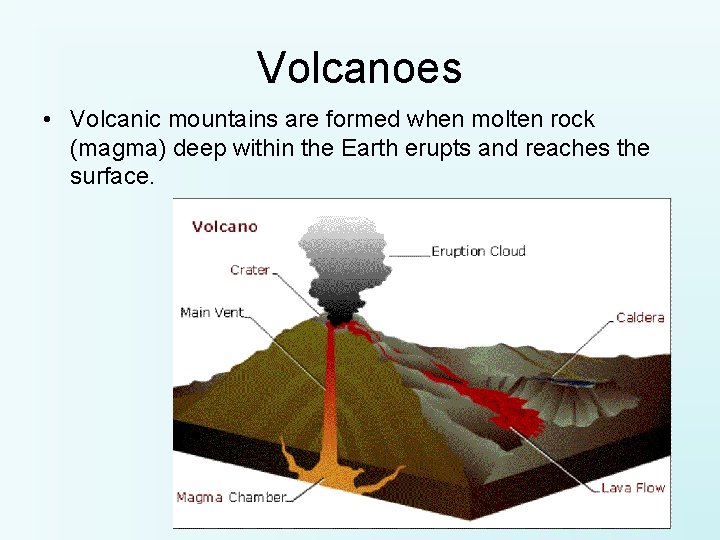
Volcanoes • Volcanic mountains are formed when molten rock (magma) deep within the Earth erupts and reaches the surface.
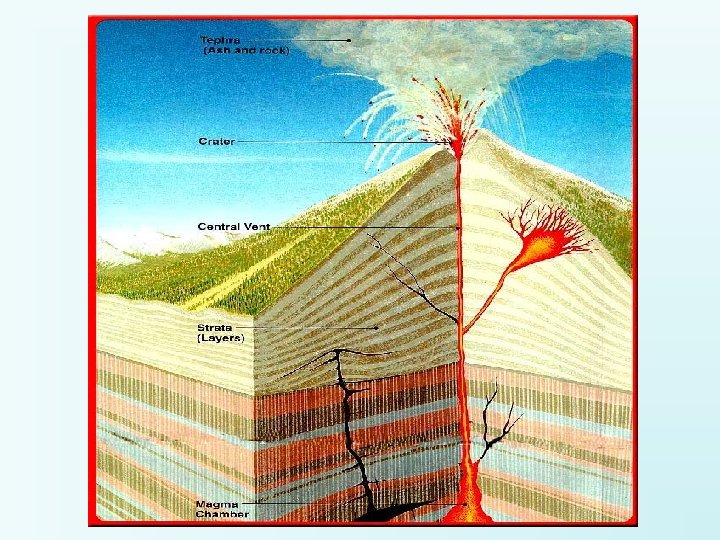
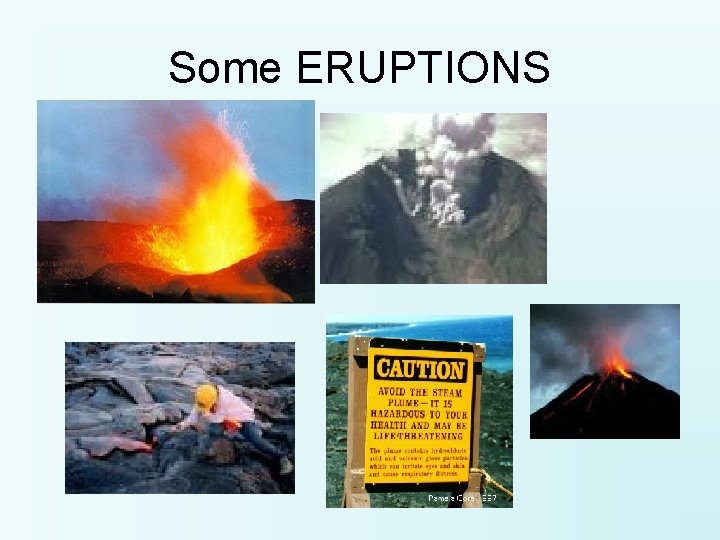
Some ERUPTIONS
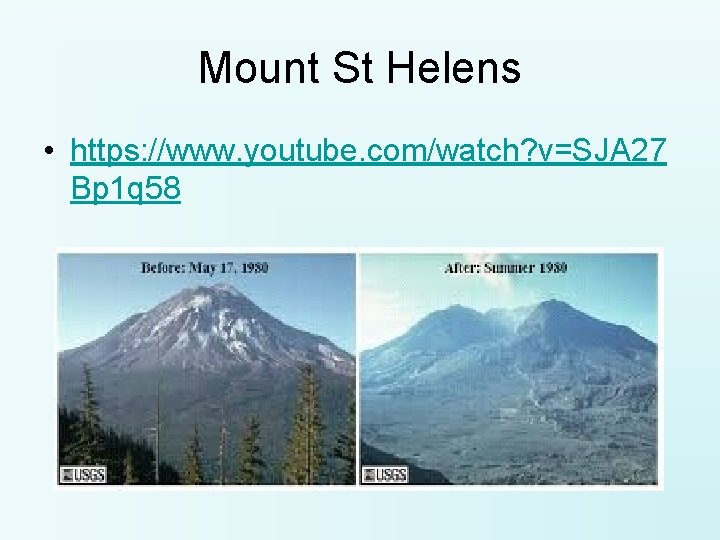
Mount St Helens • https: //www. youtube. com/watch? v=SJA 27 Bp 1 q 58

Video Links • http: //wmv. evtv 1. com/lavalakesandlavapo ols. wmv - lava pools • http: //wmv. evtv 1. com/fireandicelandpart 1. wmv - Fire and Iceland
- Slides: 24