
Mountain runoff vulnerability to increased evapotranspiration with vegetation
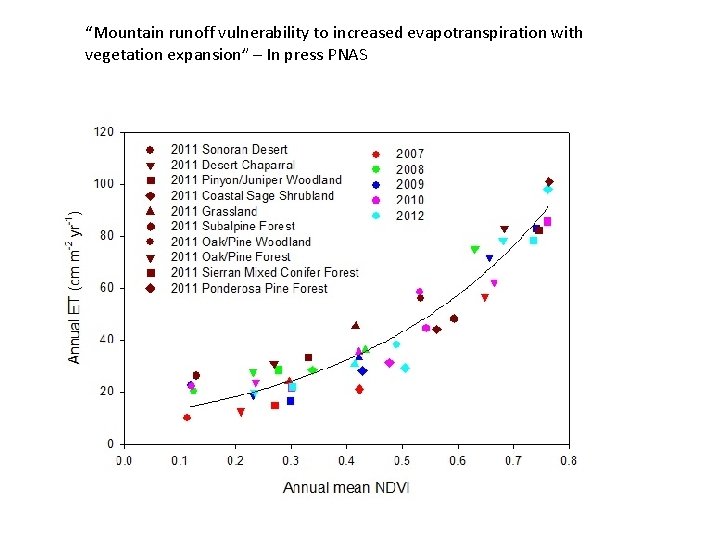
“Mountain runoff vulnerability to increased evapotranspiration with vegetation expansion” – In press PNAS
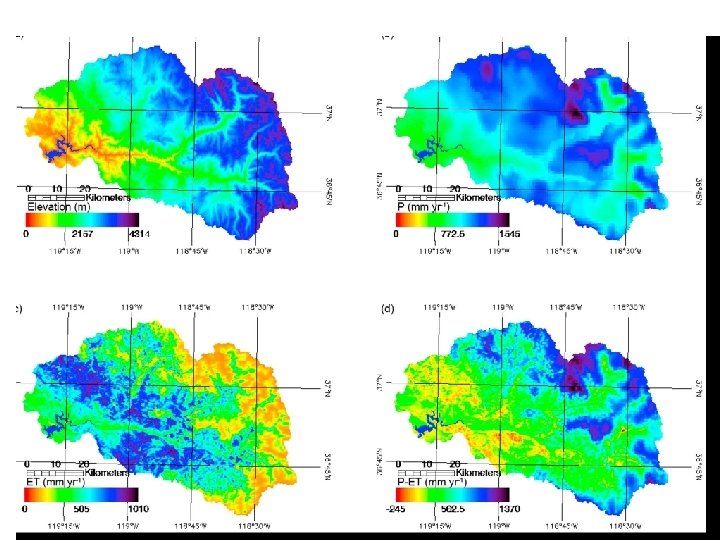
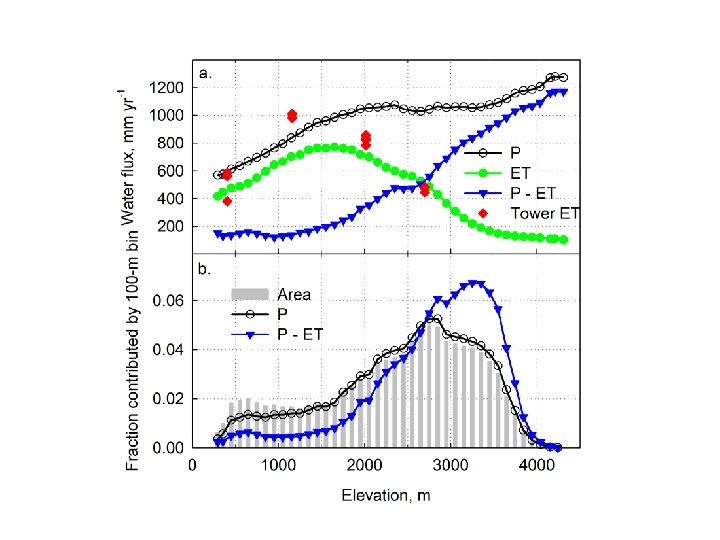
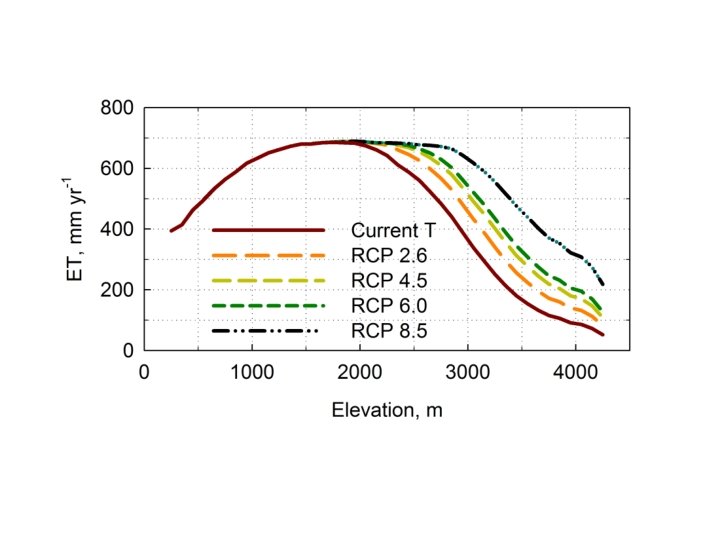
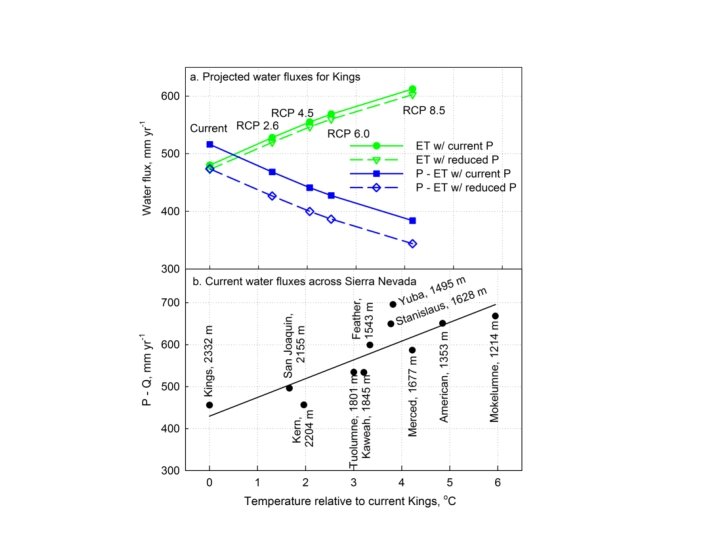
Our study relied on a space-for-time approach, and assumed that climate is the main controller of the current ET distribution. Our analysis will overstate the impact of climate on ET if non-climatic factors that covary with elevation help explain the spatial patterns of ET. Additionally, we did not consider mechanisms that may mitigate vulnerability, including lags in vegetation and ecosystem-type migration, the effect of rising atmospheric CO 2 on hydrology, and the possible use of forest management to suppress ET. For example, upslope vegetation migration may be delayed by dispersal, establishment, or edaphic conditions. The lack of deeply weathered regolith at higher elevations may be especially important, possibly slowing or preventing the upward movement of vegetation with climate change and limiting the impact on river flow. We view our analysis as a first step that establishes the vulnerability of montane ET and PET to upslope vegetation redistribution. The outstanding question is no longer whether warming has the potential to accelerate montane ET and reduce runoff, but how rapidly canopy density, plant species composition, and regolith porosity can redistribute with climate change. Further work is needed to better quantify the risk: prognostic models that couple biogeography, geomorphology, and hydrology will ultimately be needed to forecast the impact of climate change on montane hydrology.
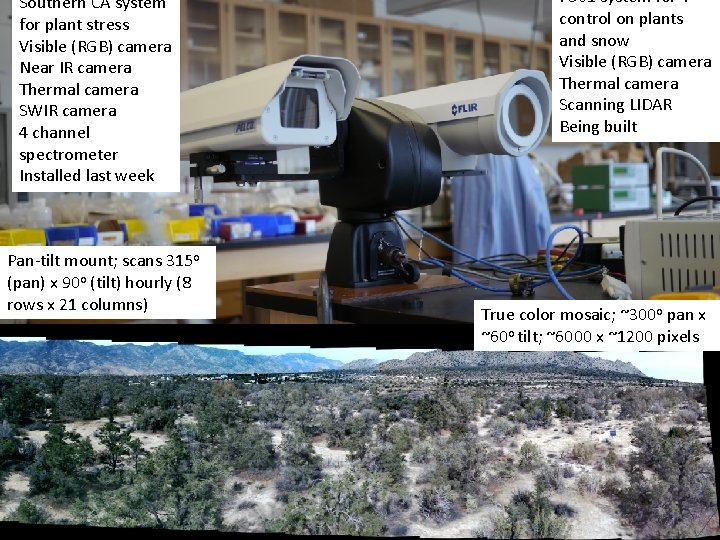
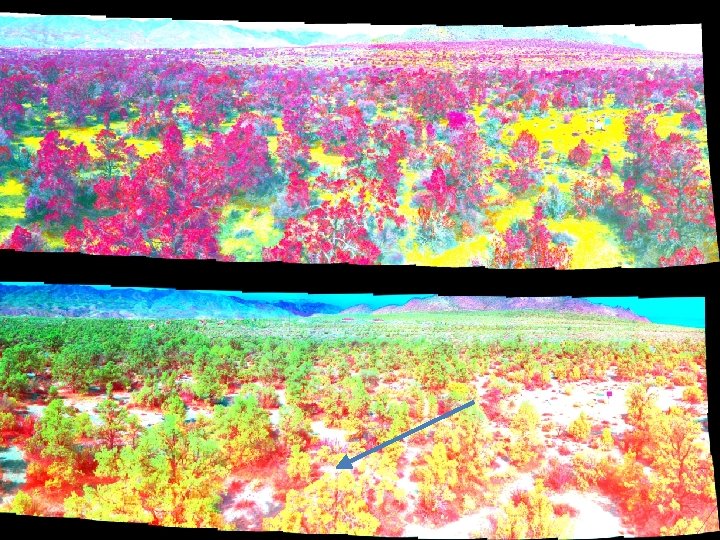
Southern CA system for plant stress Visible (RGB) camera Near IR camera Thermal camera SWIR camera 4 channel spectrometer Installed last week Pan-tilt mount; scans 315 o (pan) x 90 o (tilt) hourly (8 rows x 21 columns) P 301 system for T control on plants and snow Visible (RGB) camera Thermal camera Scanning LIDAR Being built True color mosaic; ~300 o pan x ~60 o tilt; ~6000 x ~1200 pixels
- Slides: 8