
MOTOR VEHICLE INCIDENT INVESTIGATION A KEY COMPONENT OF
- Slides: 21
MOTOR VEHICLE INCIDENT INVESTIGATION A KEY COMPONENT OF A VEHICLE SAFETY MANAGEMENT PROGRAM
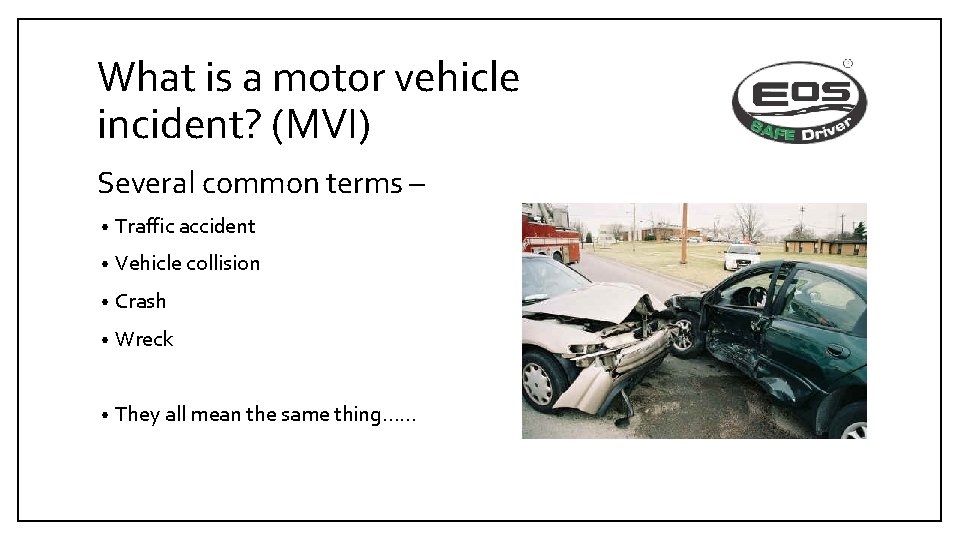
What is a motor vehicle incident? (MVI) Several common terms – • Traffic accident • Vehicle collision • Crash • Wreck • They all mean the same thing……
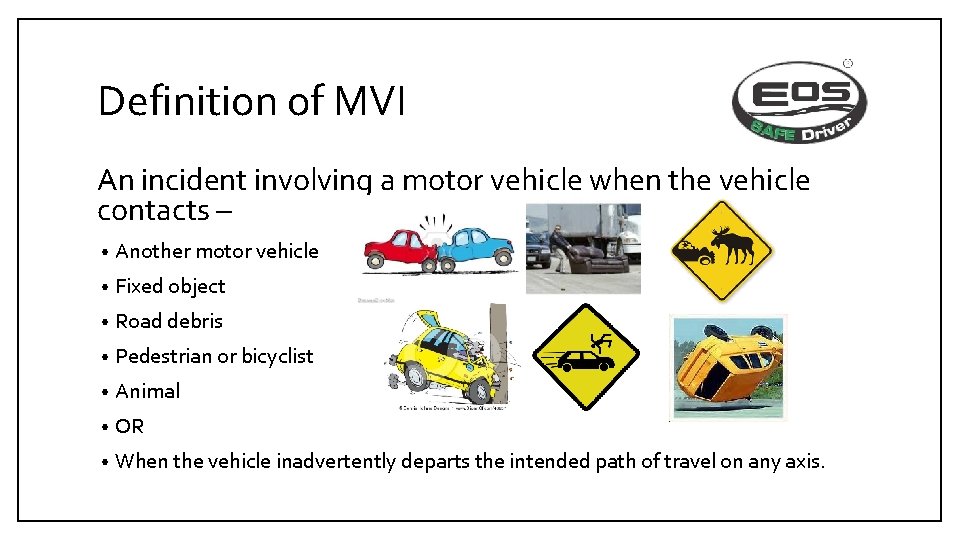
Definition of MVI An incident involving a motor vehicle when the vehicle contacts – • Another motor vehicle • Fixed object • Road debris • Pedestrian or bicyclist • Animal • OR • When the vehicle inadvertently departs the intended path of travel on any axis.
Definition of MVI Typically does not include – • Vehicle is hit by another vehicle while legally parked • Damage when loading or unloading the vehicle • Injuries while entering or exiting the parked vehicle • Weather-related damage, parked or driving • Superficial damage while driving, such as rock chips • Vandalism
Why incident? “Incident” v. “Accident” Accident implies an unexpected event which defies cause identification.
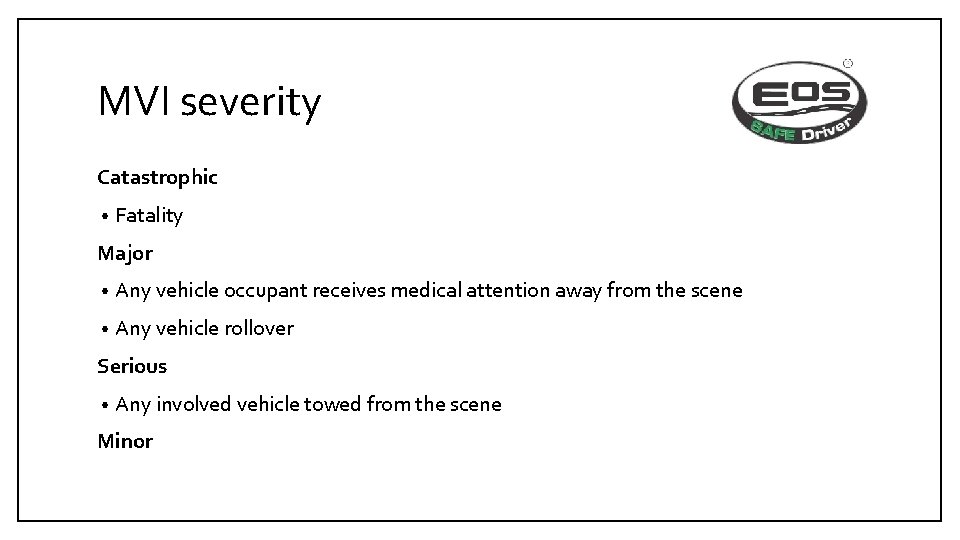
MVI severity Catastrophic • Fatality Major • Any vehicle occupant receives medical attention away from the scene • Any vehicle rollover Serious • Any involved vehicle towed from the scene Minor
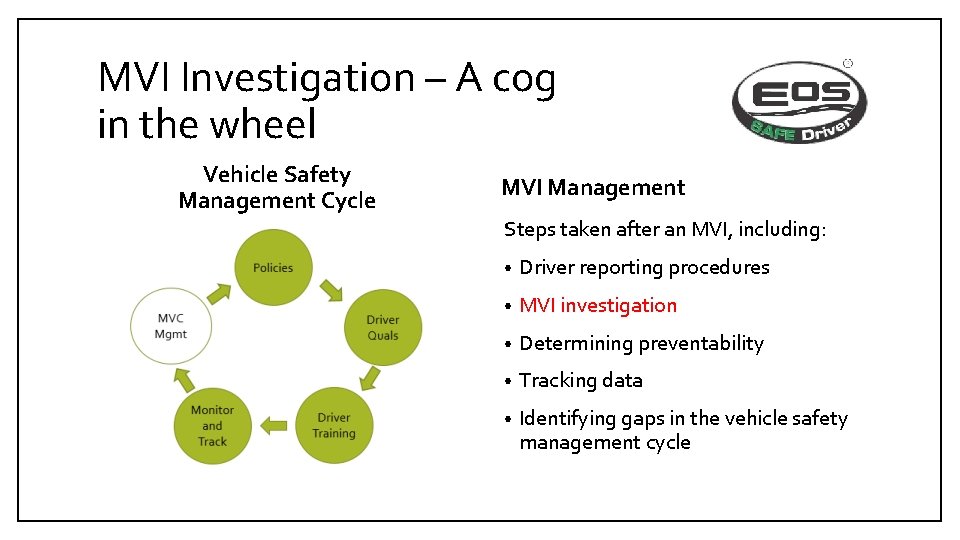
MVI Investigation – A cog in the wheel Vehicle Safety Management Cycle MVI Management Steps taken after an MVI, including: • Driver reporting procedures • MVI investigation • Determining preventability • Tracking data • Identifying gaps in the vehicle safety management cycle
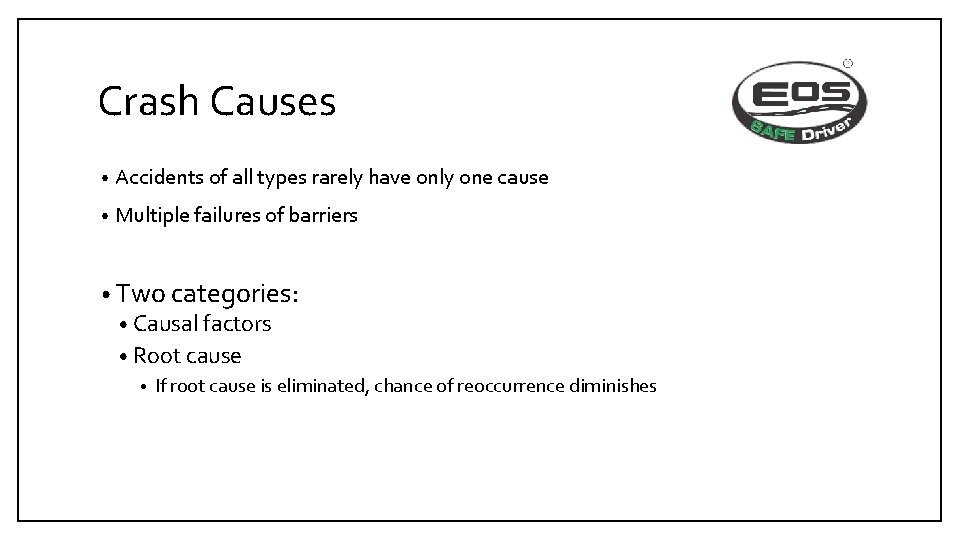
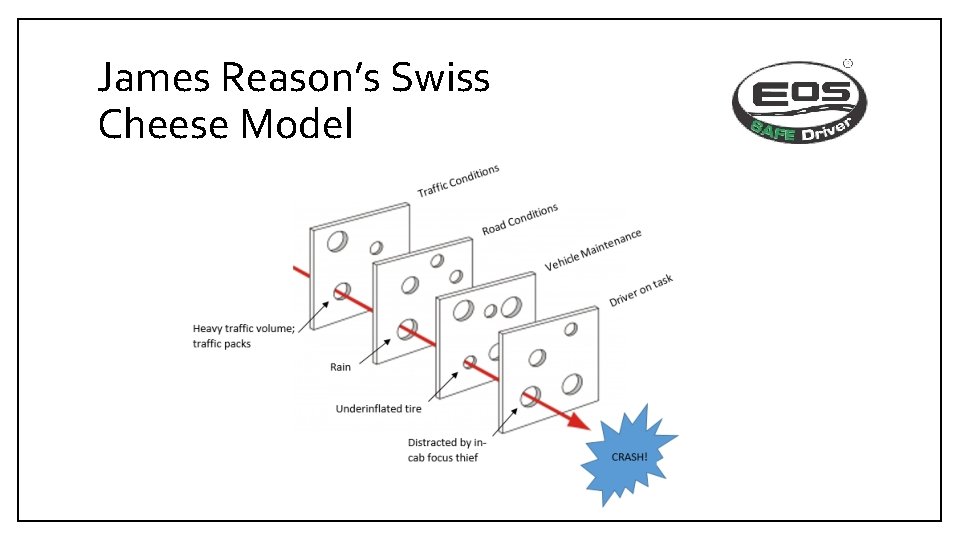
Crash Causes • Accidents of all types rarely have only one cause • Multiple failures of barriers • Two categories: • Causal factors • Root cause • If root cause is eliminated, chance of reoccurrence diminishes
James Reason’s Swiss Cheese Model
Why investigate? • • • Law enforcement Insurance investigators/adjusters Attorneys Traffic engineers National Transportation Safety Board (NTSB) Vehicle designers and safety engineers
Why do we investigate? • To ensure accurate data is collected and retained • To satisfy insurance and/or regulatory requirements But perhaps more importantly – • Uncover the root causes of our MVIs • Determine preventability • Identify and close gaps in the vehicle safety management cycle
Who investigates? Select an investigation team – • Staff safety professional(s) • Supervisor • Manager • Fleet Manager • Legal counsel for catastrophic MVIs
Investigation levels Which MVIs should we investigate? • ALL of them! But to what extent? • Investigate to the extent of existing company polices, driver qualification standards, and driver training programs, and • Decide how far to go depending on severity.
Before the MVI • Find a good MVI reporting form and make sure a blank one is in every vehicle • Find a MVI quick reference card and make sure a copy is in every vehicle Steps to take • What not to say • How to take photos • Who to call • • Insurance carrier requirements • Drivers trained in what to do
During a MVI • Report all MVIs involving third parties to the police regardless of severity • Driver calls supervisor and follows QRC • Insurance requirements are followed
Collecting data • Driver’s MVI report and photos • Vehicle telematics data • Driver’s most recent MVR • Cell phone records • Run a new MVR if needed • Police report • Driver’s training records • Printout of location map • Past MVI reports involving the driver • • Past notifications of traffic violations Google Street photos of area, if available • Vehicle maintenance records • If traffic cameras are used in the area, request footage from the operator
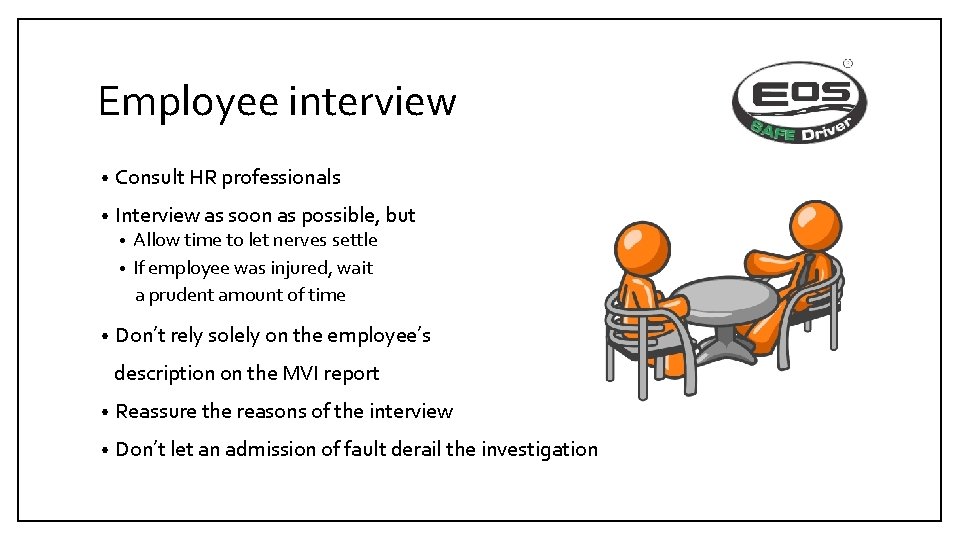
Employee interview • Consult HR professionals • Interview as soon as possible, but Allow time to let nerves settle • If employee was injured, wait a prudent amount of time • • Don’t rely solely on the employee’s description on the MVI report • Reassure the reasons of the interview • Don’t let an admission of fault derail the investigation
Witness interviews • Only if necessary • For catastrophic MVIs, let legal counsel interview them • For others, ask what they remember and take notes • Use statements to narrow down exactly what happened
Investigation findings • What happened? • Why did it happen? • What was the root cause? • What can be changed in the vehicle safety management cycle?
Closing the investigation q Written report with MVI details q Investigation team q Narrative of events q Facts derived from data q Causal factors q Root cause q Preventability q Recommendations of changes to the vehicle safety management cycle q Enter data into a trackable database q Type of MVI – backing, intersection, sideswipe, head-on, rear end, fixed object, etc. q Vehicle type
THANK YOU! Please contact Chris Freedom for more support regarding Incident Investigations or anything Driver Safety related. 1 -844 -4 EOS SAFE