
Motor Skill Development 0 12 Months What to


- Slides: 29
Motor Skill Development 0 – 12 Months – What to Expect Samantha Hardwick Paediatric Physiotherapist Health Services Authority
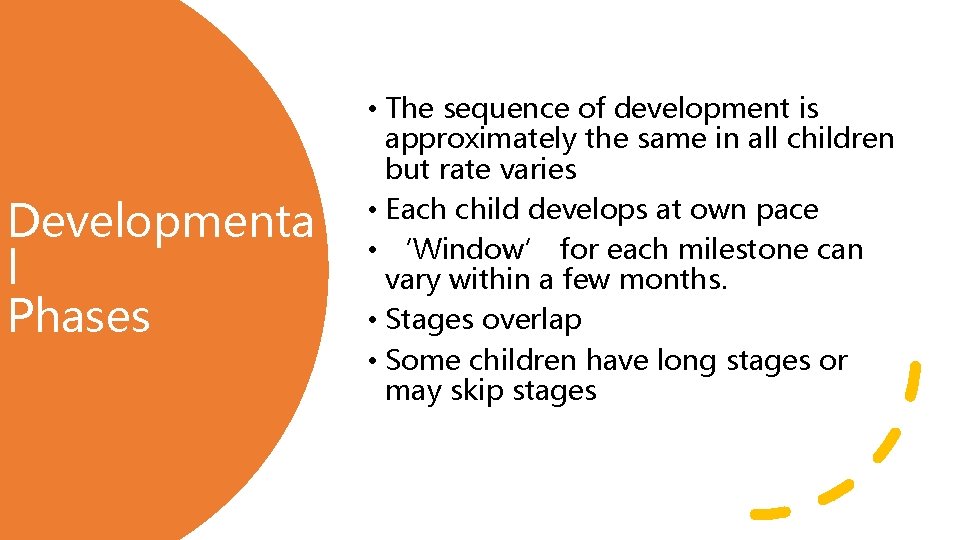
Developmenta l Phases • The sequence of development is approximately the same in all children but rate varies • Each child develops at own pace • ‘Window’ for each milestone can vary within a few months. • Stages overlap • Some children have long stages or may skip stages
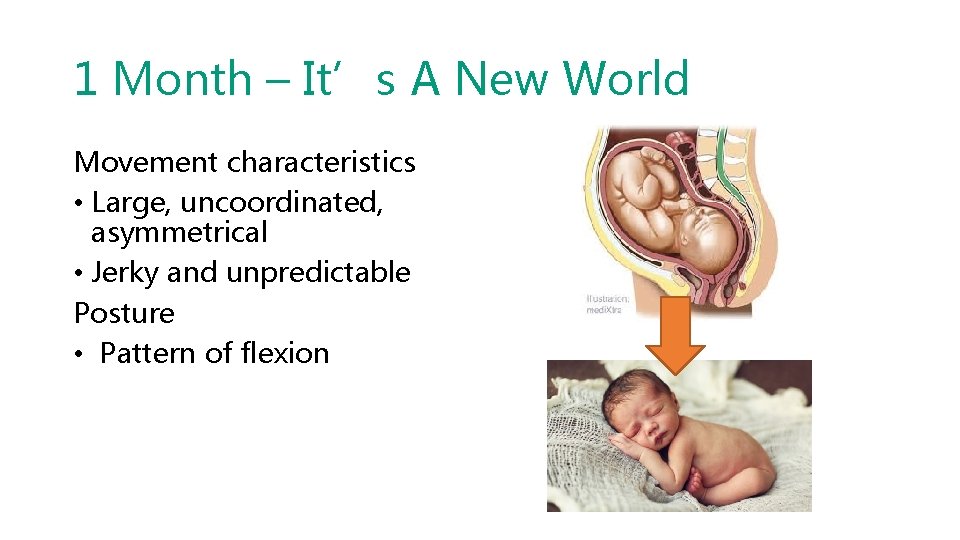
1 Month – It’s A New World Movement characteristics • Large, uncoordinated, asymmetrical • Jerky and unpredictable Posture • Pattern of flexion
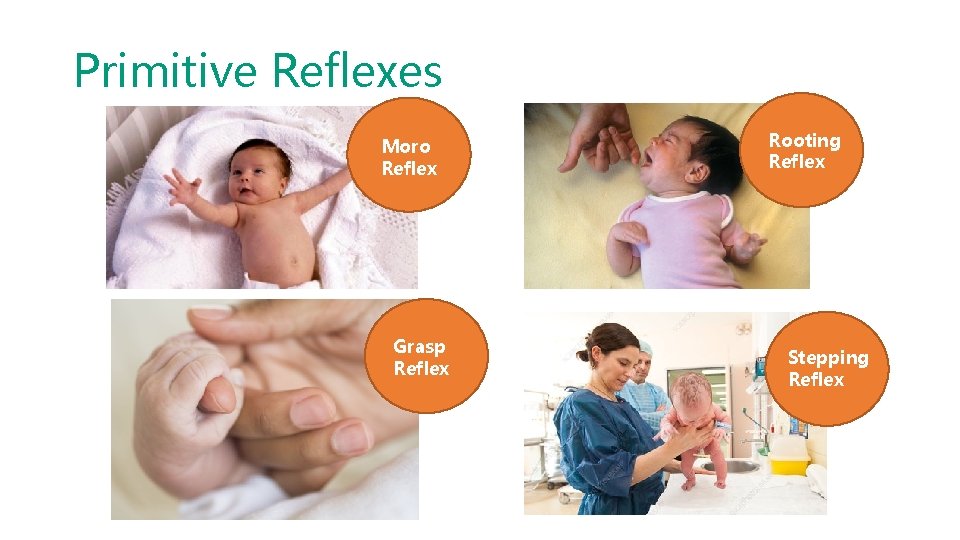
Primitive Reflexes Moro Reflex Grasp Reflex Rooting Reflex Stepping Reflex
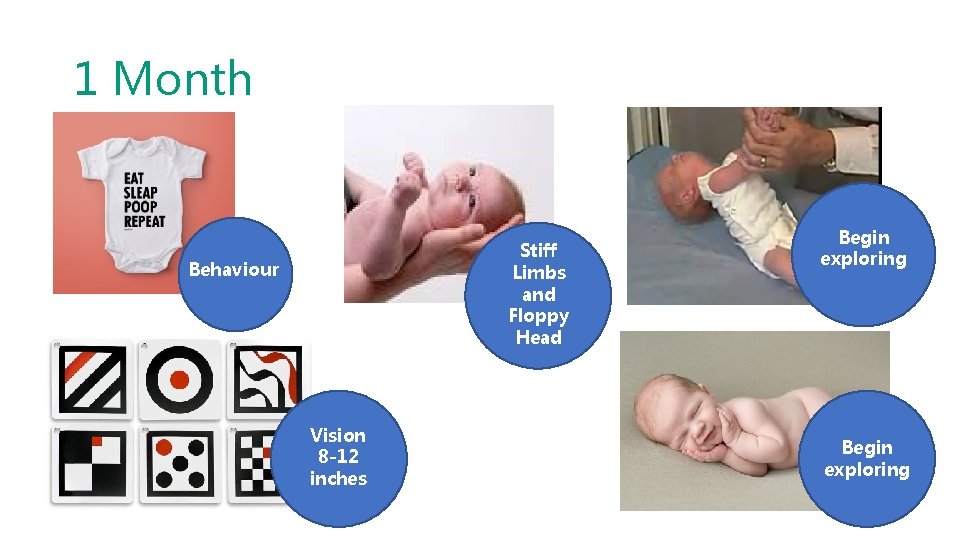
1 Month Stiff Limbs and Floppy Head Behaviour Vision 8 -12 inches Begin exploring
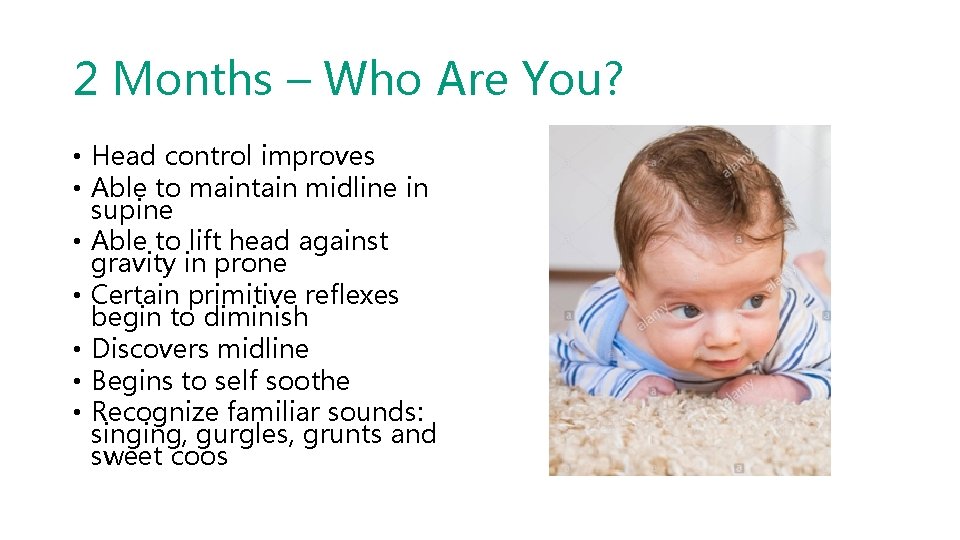
2 Months – Who Are You? • Head control improves • Able to maintain midline in supine • Able to lift head against gravity in prone • Certain primitive reflexes begin to diminish • Discovers midline • Begins to self soothe • Recognize familiar sounds: singing, gurgles, grunts and sweet coos
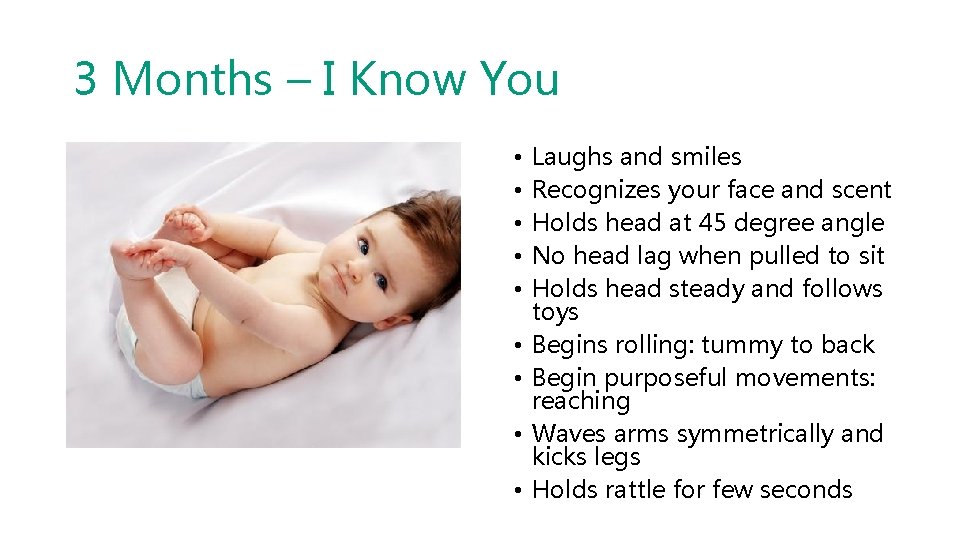
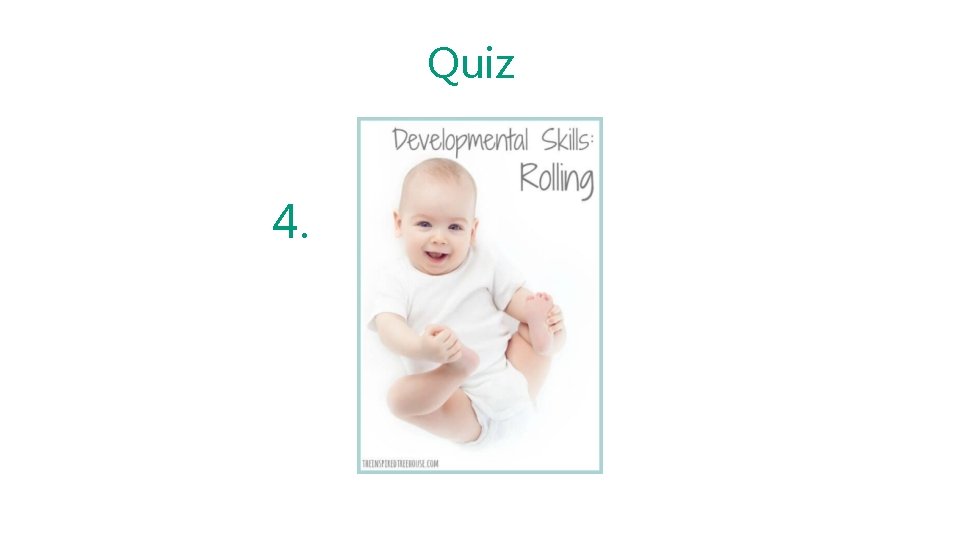
3 Months – I Know You • • • Laughs and smiles Recognizes your face and scent Holds head at 45 degree angle No head lag when pulled to sit Holds head steady and follows toys Begins rolling: tummy to back Begin purposeful movements: reaching Waves arms symmetrically and kicks legs Holds rattle for few seconds
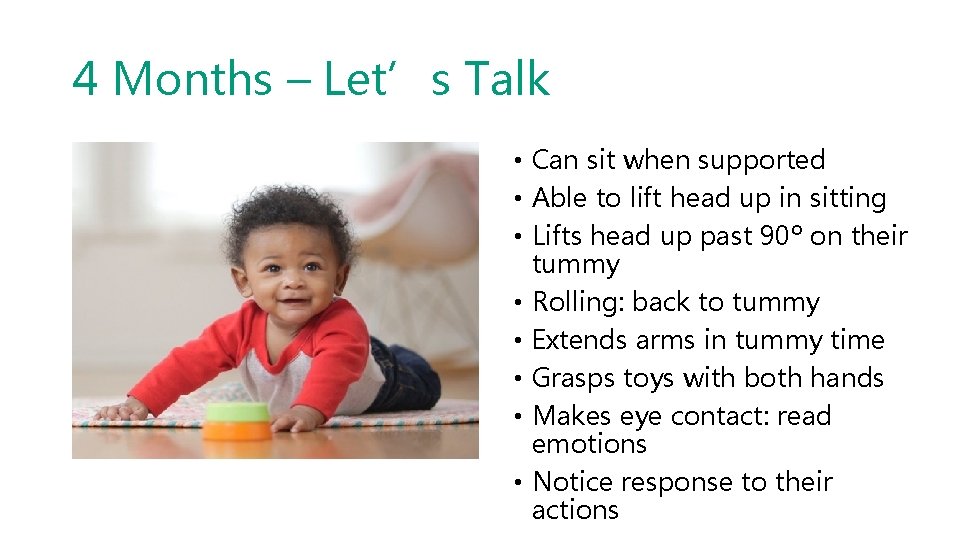
4 Months – Let’s Talk • Can sit when supported • Able to lift head up in sitting • Lifts head up past 90º on their tummy • Rolling: back to tummy • Extends arms in tummy time • Grasps toys with both hands • Makes eye contact: read emotions • Notice response to their actions
4 Months – Let’s Talk • Can sit when supported • Able to lift head up in sitting • Lifts head up past 90º on their tummy • Rolling: back to tummy • Extends arms in tummy time • Grasps toys with both hands • Makes eye contact: read emotions • Notice response to their actions
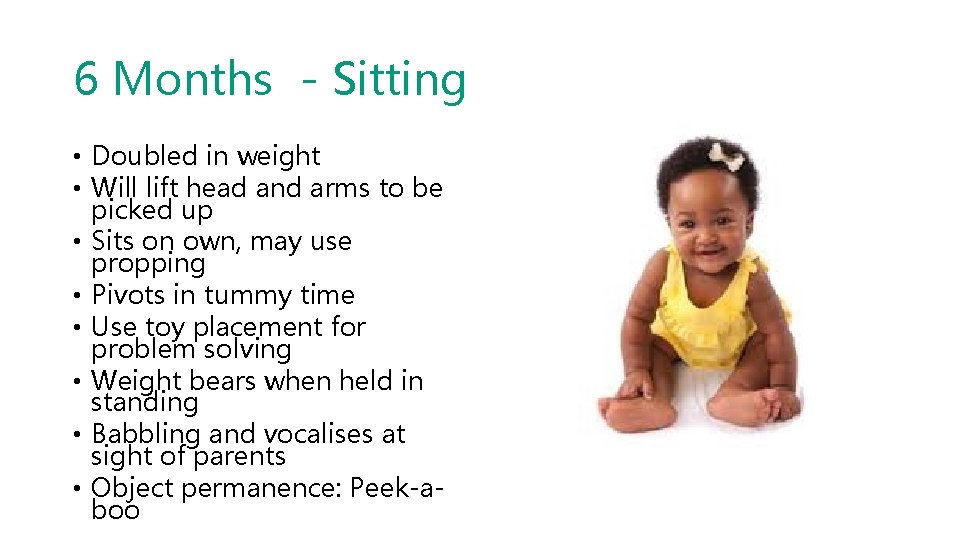
6 Months - Sitting • Doubled in weight • Will lift head and arms to be picked up • Sits on own, may use propping • Pivots in tummy time • Use toy placement for problem solving • Weight bears when held in standing • Babbling and vocalises at sight of parents • Object permanence: Peek-aboo
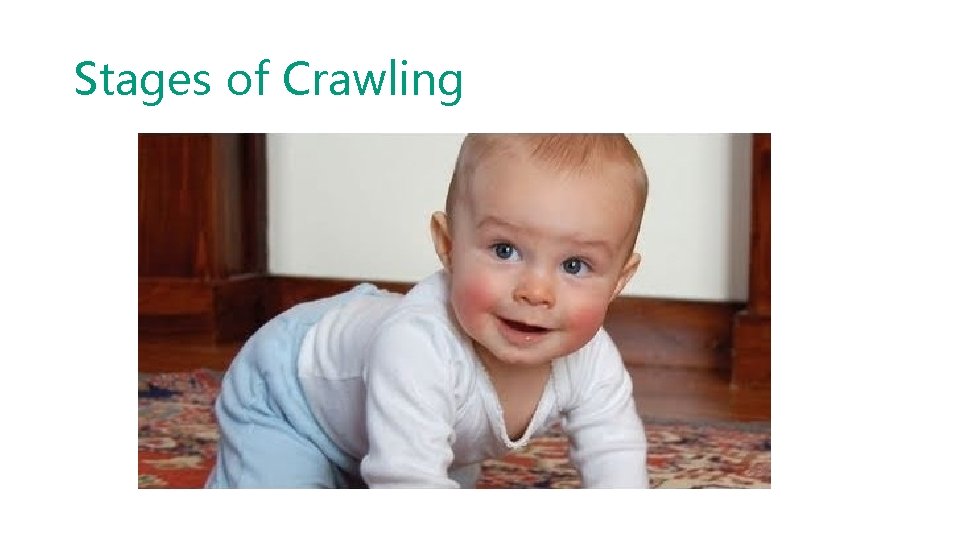
Stages of Crawling
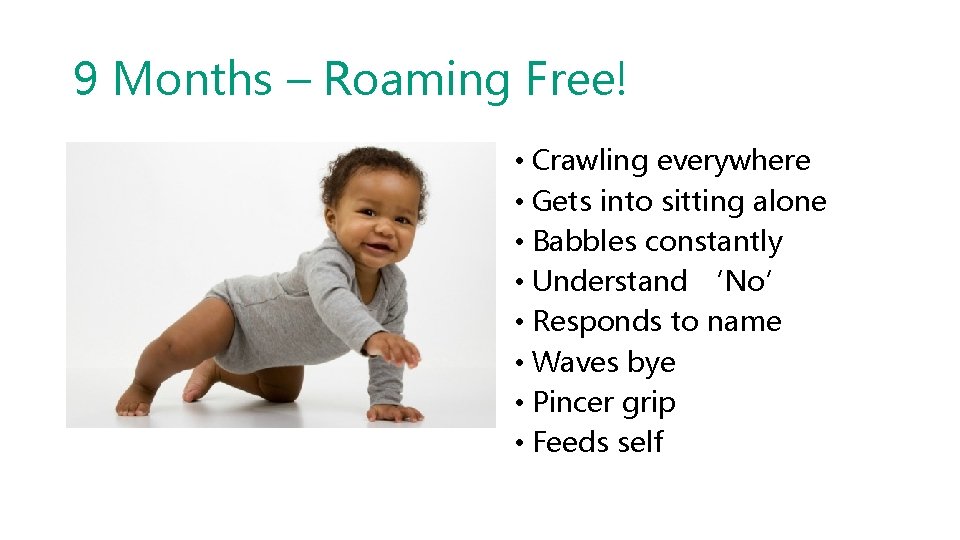
9 Months – Roaming Free! • Crawling everywhere • Gets into sitting alone • Babbles constantly • Understand ‘No’ • Responds to name • Waves bye • Pincer grip • Feeds self
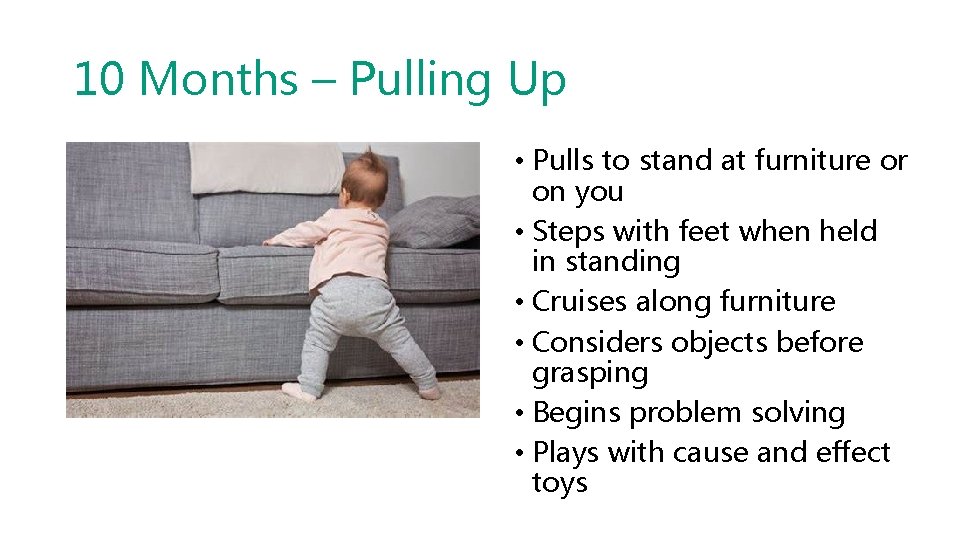
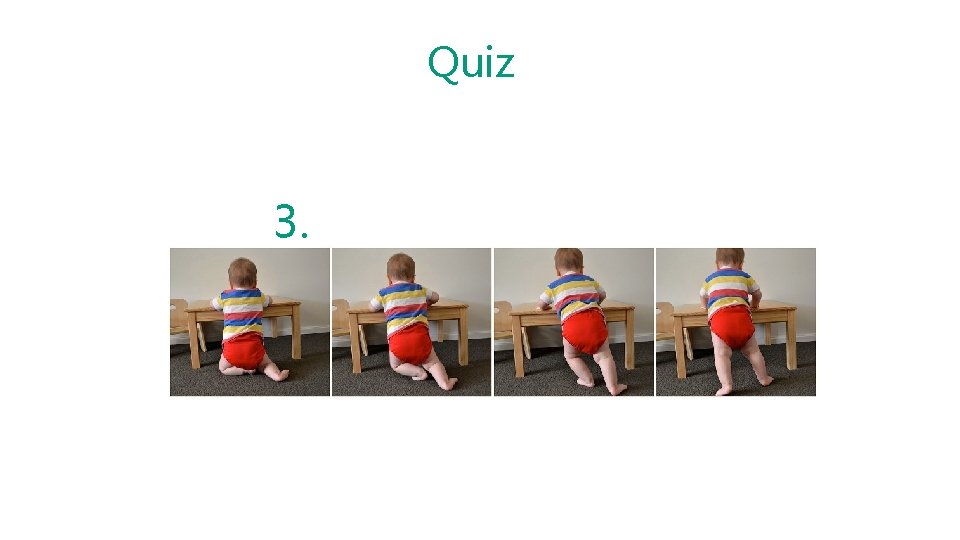
10 Months – Pulling Up • Pulls to stand at furniture or on you • Steps with feet when held in standing • Cruises along furniture • Considers objects before grasping • Begins problem solving • Plays with cause and effect toys
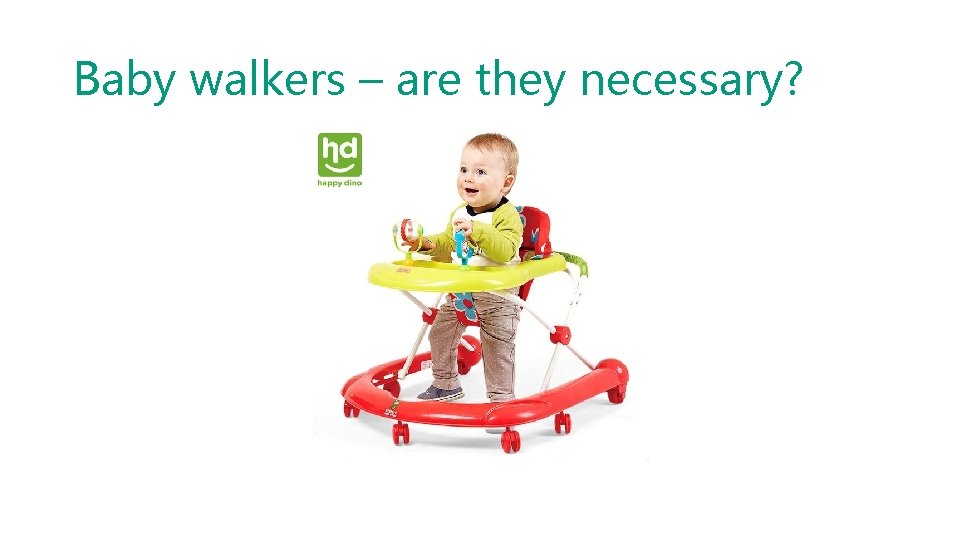
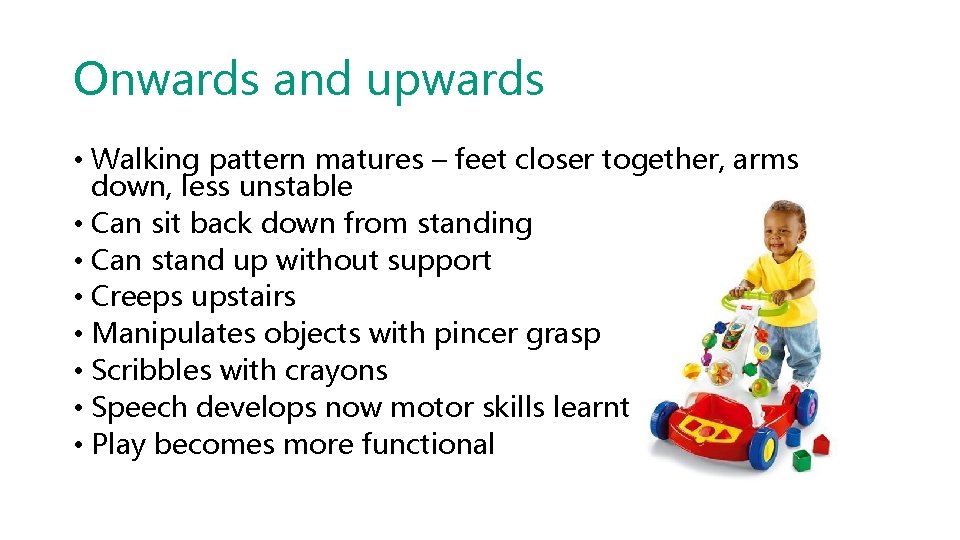
Baby walkers – are they necessary?
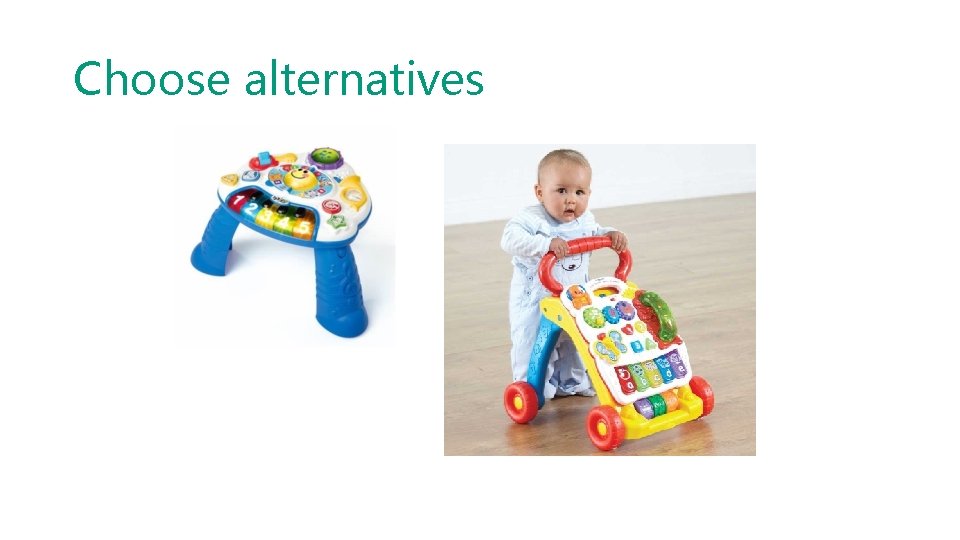
Choose alternatives
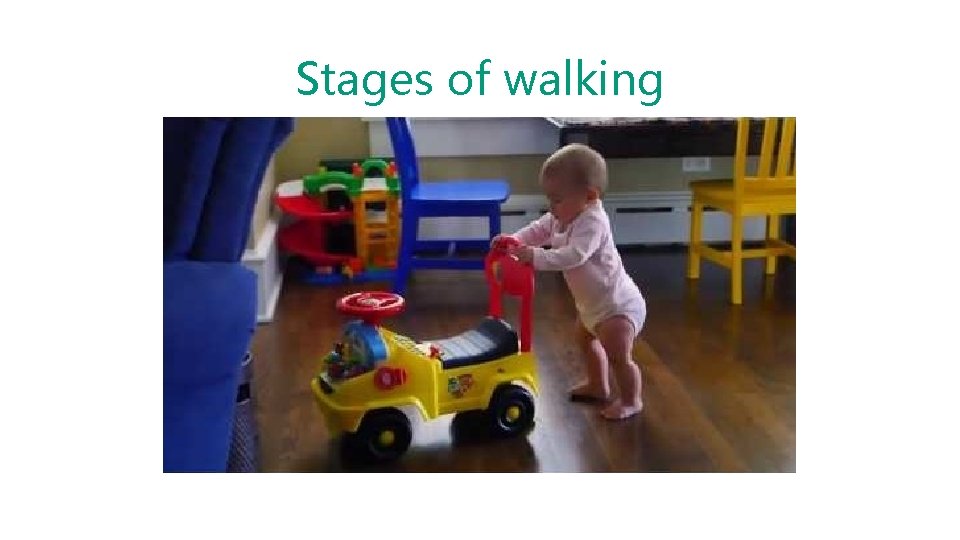
Stages of walking
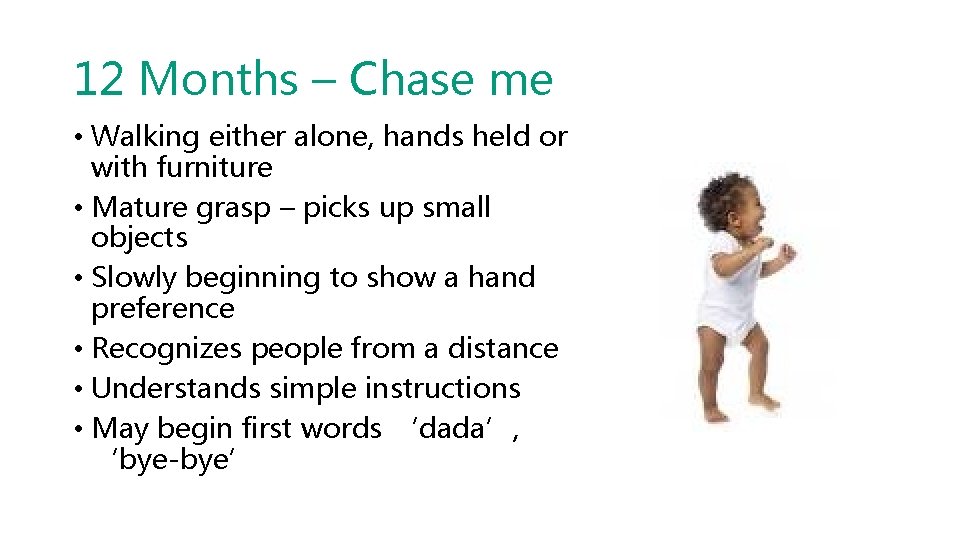
12 Months – Chase me • Walking either alone, hands held or with furniture • Mature grasp – picks up small objects • Slowly beginning to show a hand preference • Recognizes people from a distance • Understands simple instructions • May begin first words ‘dada’, ‘bye-bye’
Onwards and upwards • Walking pattern matures – feet closer together, arms down, less unstable • Can sit back down from standing • Can stand up without support • Creeps upstairs • Manipulates objects with pincer grasp • Scribbles with crayons • Speech develops now motor skills learnt • Play becomes more functional
When to see the Pediatrician • Pain on nappy changing • Maintained tightness in arms or legs after 1 -2 months • Clicking joints • • Doesn’t like being held/picked up Not making eye contact/following toy Doesn’t respond or turn head to noises Doesn’t make sounds • • Head preference around 3 -4 weeks Hand preference before 1 year Unable to hold head up at 3 months Not sitting up by 8 months TRUST YOUR INSTINCTS
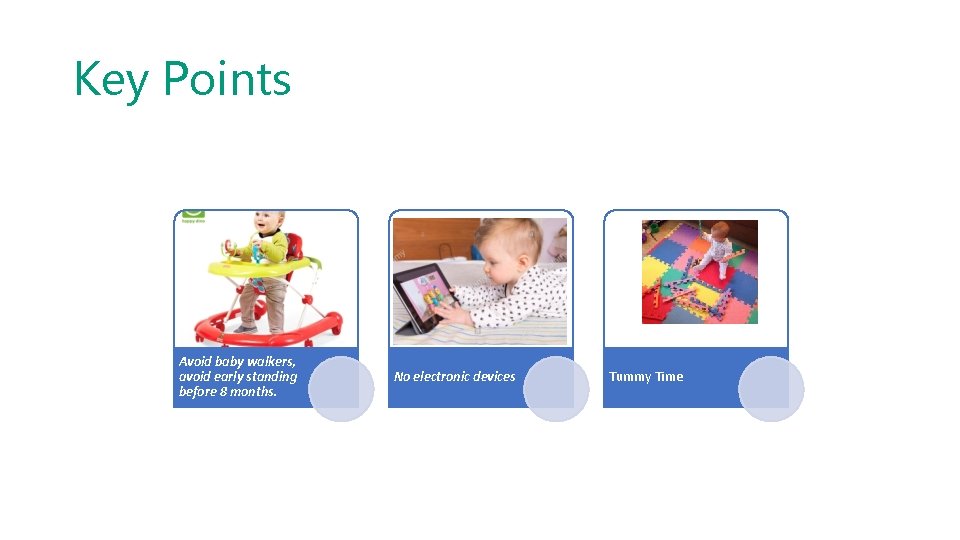
Key Points Avoid baby walkers, avoid early standing before 8 months. No electronic devices Tummy Time
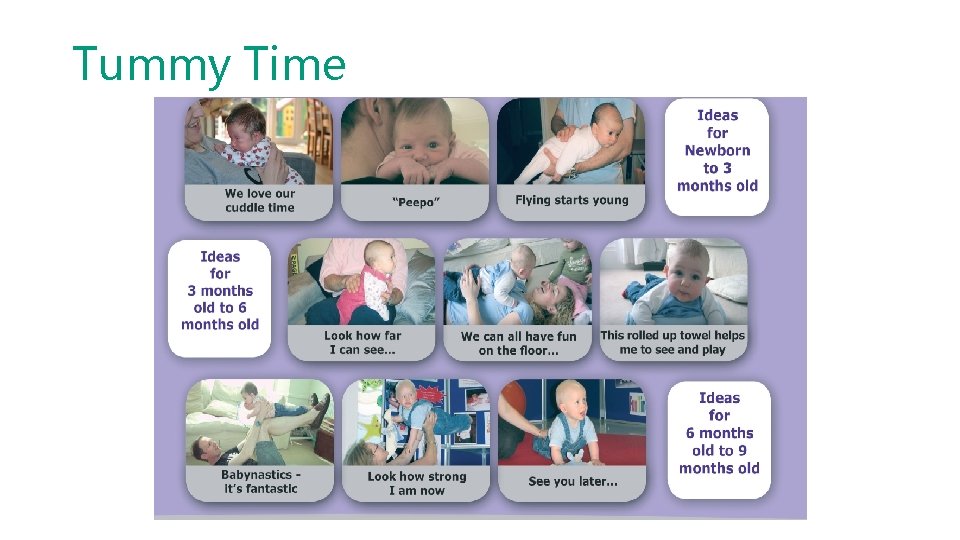
Tummy Time
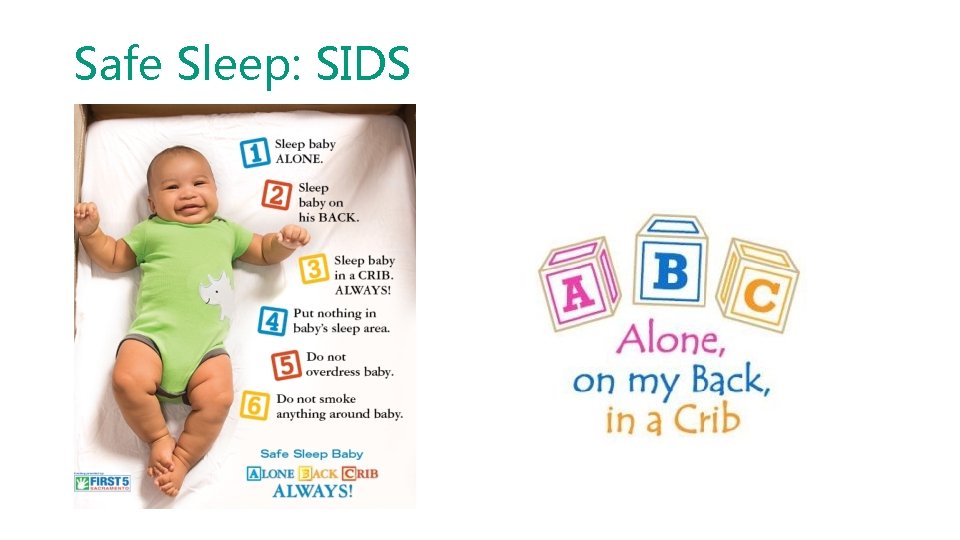
Safe Sleep: SIDS
Quiz
Quiz 1. I smiled for the first time ….
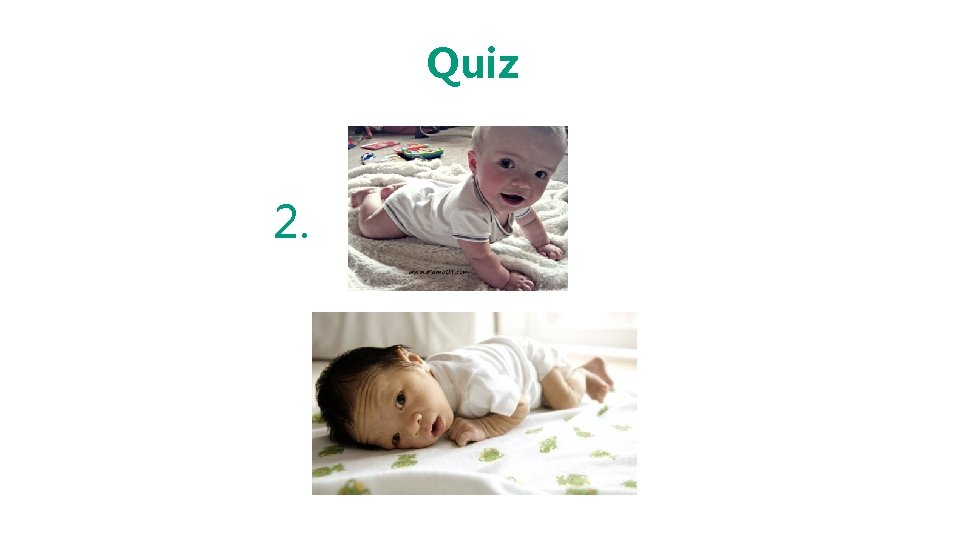
Quiz 2.
Quiz 3.
Quiz 4.
Useful Resources • www. healthychildren. org • www. pathways. org • www. tummytimetips. com • http: //www. mayoclinic. org/healthy-living/infant-andtoddler-health/in-depth/infant-massage/art 20047151? pg=1
Thank you for listening Samantha. sparg@hsa. ky