
MOTOR IMPAIRMENTS ACTIVITY LIMITATIONS AND PARTICIPATION RESTRICTIONS AFFECTING





- Slides: 64
MOTOR IMPAIRMENTS, ACTIVITY LIMITATIONS AND PARTICIPATION RESTRICTIONS AFFECTING CHILDREN WITH DEVELOPMENTAL COORDINATION DISORDER: A SYSTEMATIC REVIEW JULY 23 2009 Paul Conzatti, Lawren De Marchi, Aylee Fox, Jordan Monks & Jonathan Yiu Supervisor: Jill Zwicker
Presentation Outline 1. 2. 3. 4. 5. 6. 7. Introduction Methods Results Discussion Limitations Conclusion and Implications Acknowledgements
Introduction
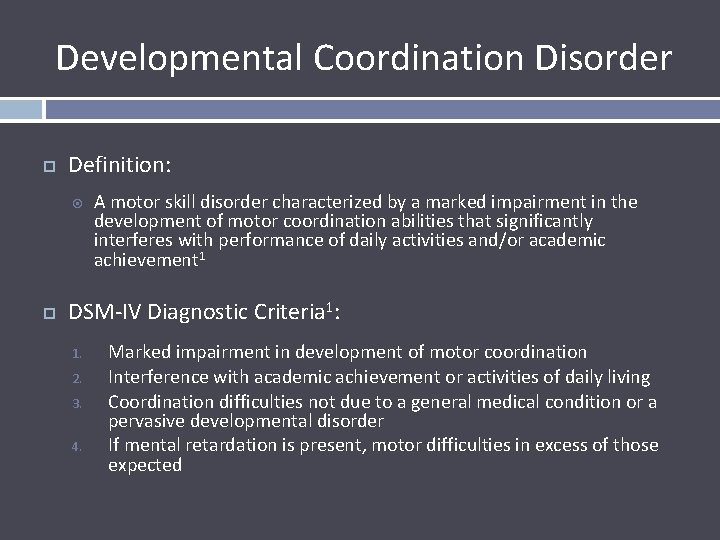
Developmental Coordination Disorder Definition: A motor skill disorder characterized by a marked impairment in the development of motor coordination abilities that significantly interferes with performance of daily activities and/or academic achievement 1 DSM-IV Diagnostic Criteria 1: 1. 2. 3. 4. Marked impairment in development of motor coordination Interference with academic achievement or activities of daily living Coordination difficulties not due to a general medical condition or a pervasive developmental disorder If mental retardation is present, motor difficulties in excess of those expected
Developmental Coordination Disorder Pathophysiology: Unclear No hard neurological signs are present 2 Deficit may lie within the cerebellum 3 Signs and Symptoms: Work at a slower pace, trading speed for accuracy 4 Deficient at processing kinesthetic information but not visual information Rely more on visual cues as opposed to proprioception 5 Difficulty maintaining postural stability 6 Deficits contribute to repeated failures, which can cause avoidance of physical activities and socializing with peers 7
International Classification of Functioning, Disability and Health (ICF)8 Framework for the description of health and health -related states 8 Structures the assessment of children with complex conditions Holistic approach to the individual 9
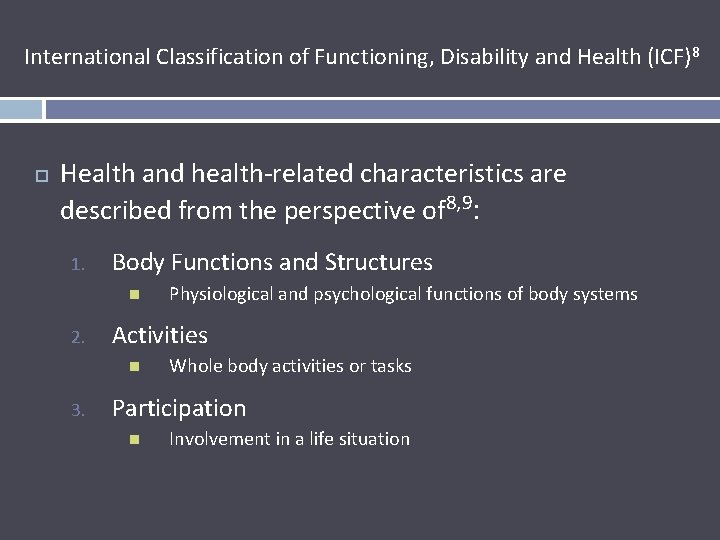
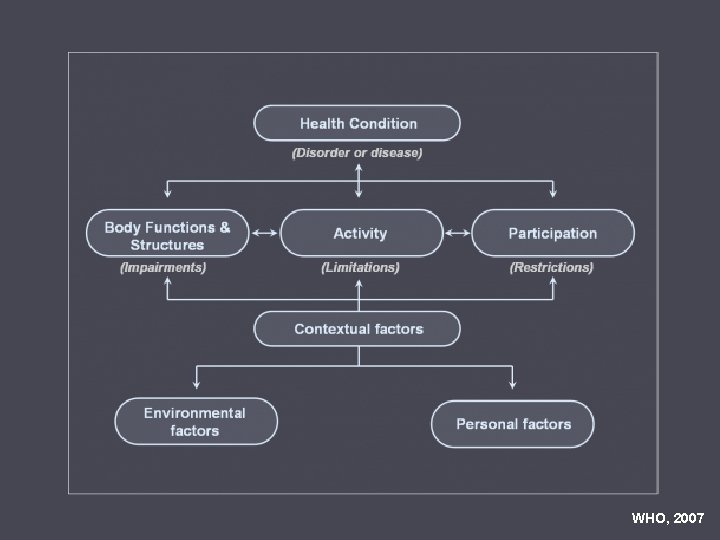
International Classification of Functioning, Disability and Health (ICF)8 Health and health-related characteristics are described from the perspective of 8, 9: 1. Body Functions and Structures 2. Activities 3. Physiological and psychological functions of body systems Whole body activities or tasks Participation Involvement in a life situation
WHO, 2007
Literature Review and Rationale Prevalence: 6 -13% of school aged children display characteristics consistent with DCD children 10 Physiotherapy intervention: Motor impairment changes can occur 7 Focus on impairments at BFS level A more significant role can be played at the activity and participation levels 7 Are the foci of physiotherapy interventions a reflection of current literature? No systematic review exists with the purpose of summarizing available literature regarding the presentation of DCD using a structured framework such as the ICF
Question What motor impairments, activity limitations and participation restrictions are common in children with Developmental Coordination Disorder?
Purpose 1. 2. 3. Summarize the existing literature to produce a comprehensive list of characteristics of children with DCD Classify the motor impairments, activity limitations and participation restrictions affecting children with DCD according to the ICF framework Highlight gaps in the research regarding the presentation of children with DCD in order to direct future investigations
Methods
Search Strategy Comprehensive literature searches: Examples of Primary Me. SH term: MEDLINE, EMBASE, CINAHL, PEDro, Psych. INFO, OTseeker and ERIC “developmental coordination disorder” “motor skills disorder” “motor performance” “motor dysfunction” “developmental disorder” Examples of Secondary terms relating to the ICF: “body functions and structures” “activity” “participation”
Study Selection: Inclusion Study types: Systematic reviews Randomized control trials Clinical controlled trials Cohort comparisons Case studies Pilot studies Intervention and Descriptive studies: If baseline outcome measures could be classified as a characteristic of children with DCD
Study Selection: Inclusion English language Published post 1994 Year which the nomenclature of DCD was standardized 11 Subjects: Both male and female Aged 2 -18 DSM-IV diagnosed for DCD
Study Selection: Exclusion Study types: Books Narrative reviews Theses Dissertations Letters to the editor Commentaries Subjects: Participants with other significant neurological disorders, medical disorders or intellectual disabilities Exception of those diagnosed with Attention Deficit Hyperactivity Disorder (ADHD) or Learning Disability (LD) in conjunction with DCD
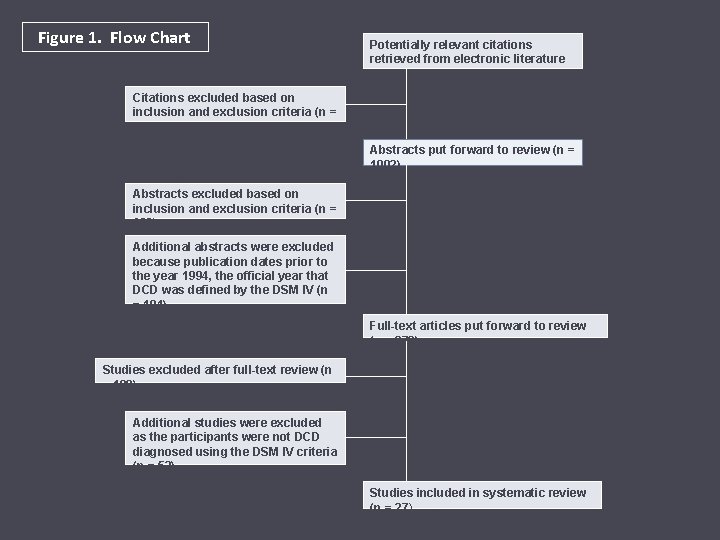
Figure 1. Flow Chart Potentially relevant citations retrieved from electronic literature search (n = 4250) Citations excluded based on inclusion and exclusion criteria (n = 3248) Abstracts put forward to review (n = 1002) Abstracts excluded based on inclusion and exclusion criteria (n = 633) Additional abstracts were excluded because publication dates prior to the year 1994, the official year that DCD was defined by the DSM IV (n = 101) Full-text articles put forward to review (n = 278) Studies excluded after full-text review (n = 199) Additional studies were excluded as the participants were not DCD diagnosed using the DSM IV criteria (n = 52) Studies included in systematic review (n = 27)
Results
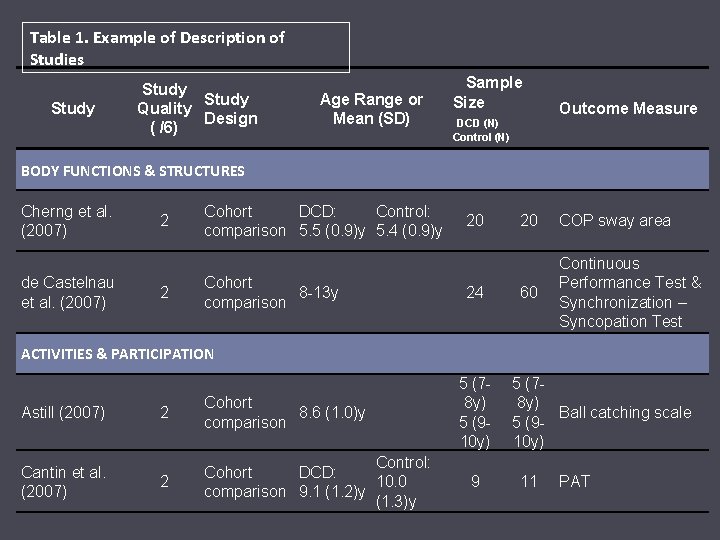
Table 1. Example of Description of Studies Study Quality Design ( /6) Age Range or Mean (SD) Sample Size DCD (N) Control (N) Outcome Measure BODY FUNCTIONS & STRUCTURES Cherng et al. (2007) de Castelnau et al. (2007) 2 2 Cohort DCD: Control: comparison 5. 5 (0. 9)y 5. 4 (0. 9)y Cohort 8 -13 y comparison 20 24 20 COP sway area 60 Continuous Performance Test & Synchronization – Syncopation Test ACTIVITIES & PARTICIPATION Astill (2007) Cantin et al. (2007) 2 Cohort 8. 6 (1. 0)y comparison 2 Control: Cohort DCD: 10. 0 comparison 9. 1 (1. 2)y (1. 3)y 5 (78 y) 5 (910 y) 9 5 (78 y) Ball catching scale 5 (910 y) 11 PAT
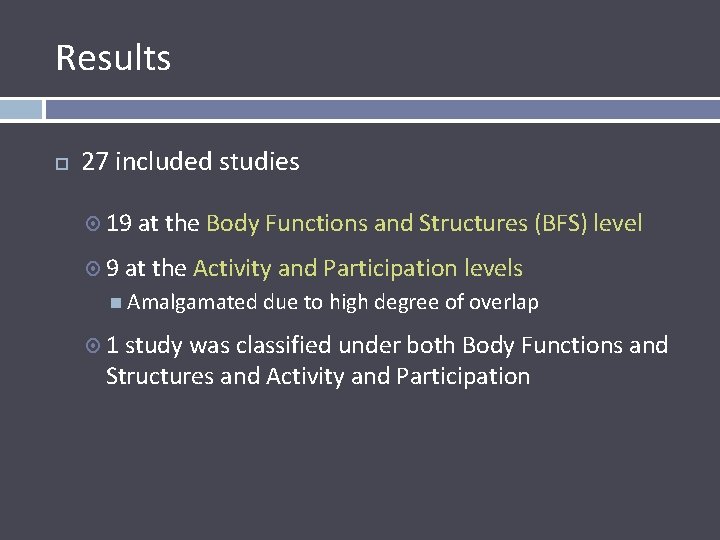
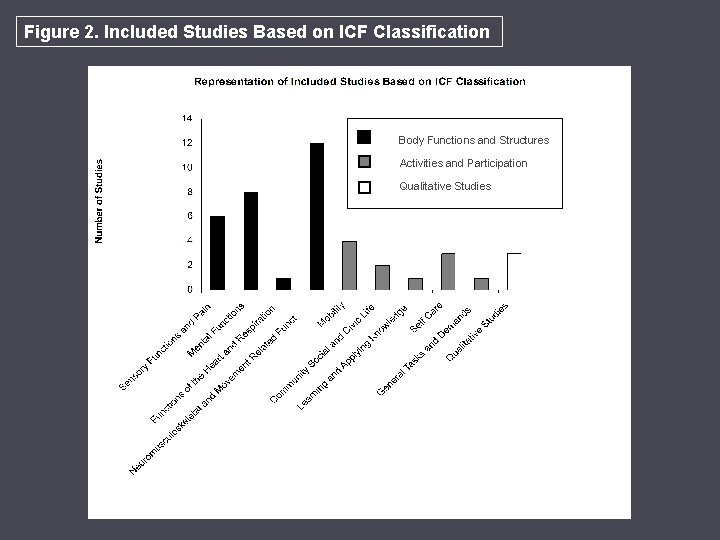
Results 27 included studies 19 9 at the Body Functions and Structures (BFS) level at the Activity and Participation levels Amalgamated due to high degree of overlap 1 study was classified under both Body Functions and Structures and Activity and Participation
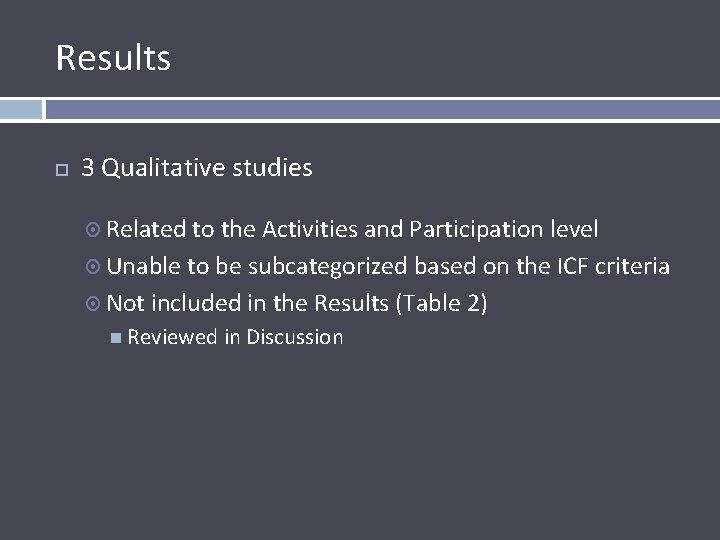
Results 3 Qualitative studies Related to the Activities and Participation level Unable to be subcategorized based on the ICF criteria Not included in the Results (Table 2) Reviewed in Discussion
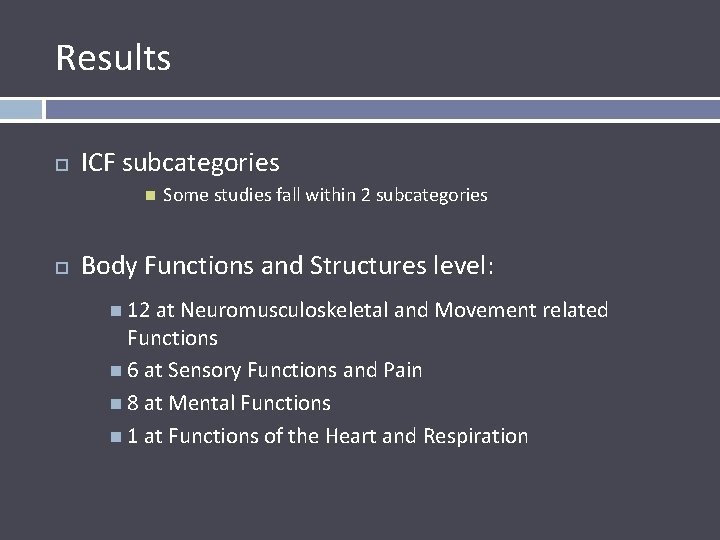
Results ICF subcategories Some studies fall within 2 subcategories Body Functions and Structures level: 12 at Neuromusculoskeletal and Movement related Functions 6 at Sensory Functions and Pain 8 at Mental Functions 1 at Functions of the Heart and Respiration
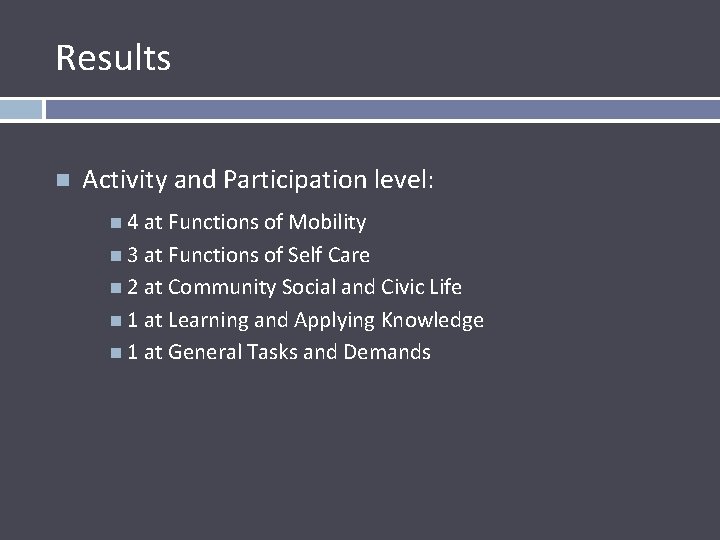
Results Activity and Participation level: 4 at Functions of Mobility 3 at Functions of Self Care 2 at Community Social and Civic Life 1 at Learning and Applying Knowledge 1 at General Tasks and Demands
Figure 2. Included Studies Based on ICF Classification Body Functions and Structures Activities and Participation Qualitative Studies
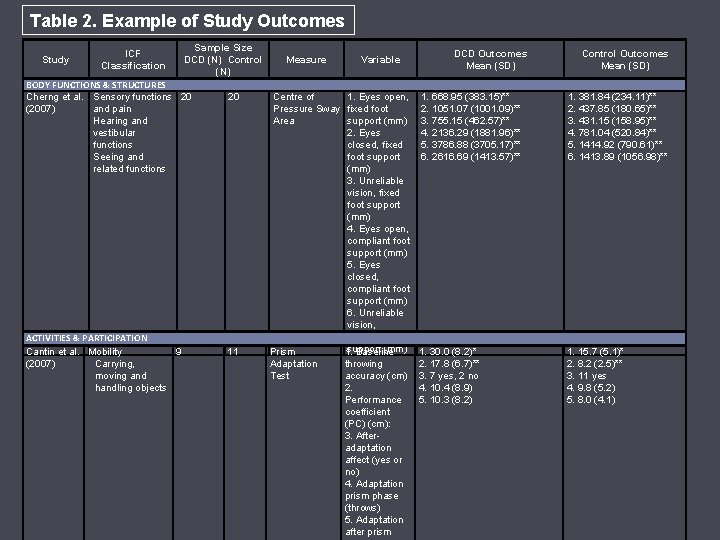
Table 2. Example of Study Outcomes Study ICF Classification Sample Size DCD (N) Control (N) BODY FUNCTIONS & STRUCTURES Cherng et al. Sensory functions 20 (2007) and pain Hearing and vestibular functions Seeing and related functions ACTIVITIES & PARTICIPATION Cantin et al. Mobility 9 (2007) Carrying, moving and handling objects 20 11 Measure Variable Centre of 1. Eyes open, Pressure Sway fixed foot Area support (mm) 2. Eyes closed, fixed foot support (mm) 3. Unreliable vision, fixed foot support (mm) 4. Eyes open, compliant foot support (mm) 5. Eyes closed, compliant foot support (mm) 6. Unreliable vision, compliant foot support (mm) Prism 1. Baseline Adaptation throwing Test accuracy (cm) 2. Performance coefficient (PC) (cm): 3. Afteradaptation affect (yes or no) 4. Adaptation prism phase (throws) 5. Adaptation after prism DCD Outcomes Mean (SD) Control Outcomes Mean (SD) 1. 668. 95 (383. 15)** 2. 1051. 07 (1001. 09)** 3. 755. 15 (462. 57)** 4. 2136. 29 (1881. 96)** 5. 3786. 88 (3705. 17)** 6. 2616. 69 (1413. 57)** 1. 381. 84 (234. 11)** 2. 437. 85 (180. 65)** 3. 431. 15 (158. 95)** 4. 781. 04 (520. 84)** 5. 1414. 92 (790. 61)** 6. 1413. 89 (1056. 98)** 1. 30. 0 (8. 2)* 2. 17. 8 (6. 7)** 3. 7 yes, 2 no 4. 10. 4 (8. 9) 5. 10. 3 (8. 2) 1. 15. 7 (5. 1)* 2. 8. 2 (2. 5)** 3. 11 yes 4. 9. 8 (5. 2) 5. 8. 0 (4. 1)
Discussion
Discussion What motor impairments, activity limitations and participation restrictions are common in children with Developmental Coordination Disorder?
Body Functions and Structures • Neuromusculosketetal and Movement Related Functions • Mental Functions • Sensory Functions and Pain • Functions of the cardiovascular, haematological, immunological and respiratory systems
BFS: Neuromusculosketelal and Movements Related Functions Ball catching tasks 12, 13 2 studies Results: Video analysis of ball catching strategy Positions of the fingers and wrist Trajectory of the ball and velocity Acceleration values of limbs during catch Different and unstable catching profile compared to controls 13 Slower moment of completion, smaller max hand aperture, slower max closing velocity 12 Analysis: Children with DCD have multiple deficits that contribute to problems with purposeful motor tasks
BFS: Neuromusculosketelal and Movements Related Functions Movement Duration during Motor Tasks 3 studies 14 -16 Results: Measured time to complete pointing tasks 2 out of 3 studies showed significantly slower movement duration in DCD children compared to controls All 3 showed significantly slower imagined movement times (discussed in mental functions) Analysis: Suggests that children with DCD have slower movement duration
BFS: Neuromusculosketelal and Movements Related Functions Involuntary Movement Functions 3, 17 2 studies Timing and amplitude of postural activity using a force plate EMG activity of postural muscles Results: Significant slower onset of postural muscles 17 Prolonged onset of postural activity with varied weight lifting 3 Analysis: Confirmed deficits in involuntary movement functions (postural control)
BFS: Neuromusculosketelal and Movements Related Functions Coordination Task 18 1 study Results: Clapping and marching task to a metronome beat: timing deviation between limbs Significant difference in variability of relative phasing between DCD and controls Analysis: Children with DCD have difficulties with both the coordination and control of the perception-action coupling of this task
BFS: Neuromusculosketelal and Movements Related Functions Standardized Assessment Tools 19, 20 2 studies Measures of motor performance Results: Neurodevelopmental Physiotherapy Assessment (NDPA) Movement Assessment Battery for Children (MABC) Children with DCD scored significantly poorer than control children in both measures Deficits listed in the analysis were found in 95% of subjects Analysis: DCD children displayed deficits in gross and fine motor skills, proprioception, stability, balance, postural control, tactile sense and motor planning 20
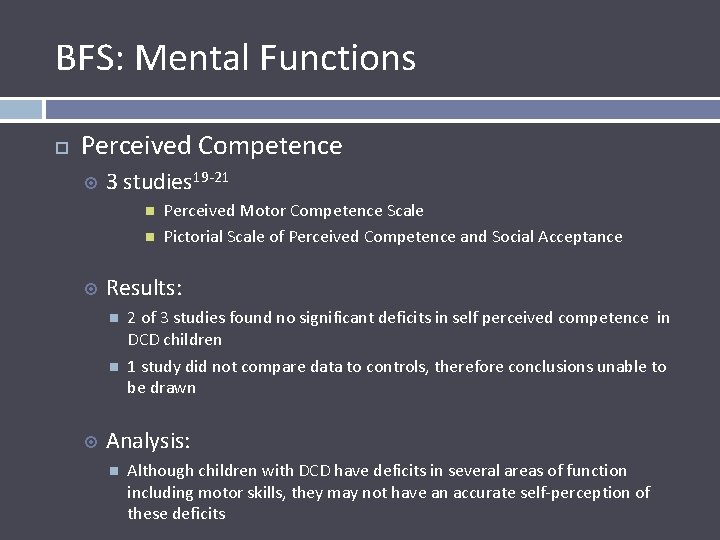
BFS: Mental Functions Perceived Competence 3 studies 19 -21 Results: Perceived Motor Competence Scale Pictorial Scale of Perceived Competence and Social Acceptance 2 of 3 studies found no significant deficits in self perceived competence in DCD children 1 study did not compare data to controls, therefore conclusions unable to be drawn Analysis: Although children with DCD have deficits in several areas of function including motor skills, they may not have an accurate self-perception of these deficits
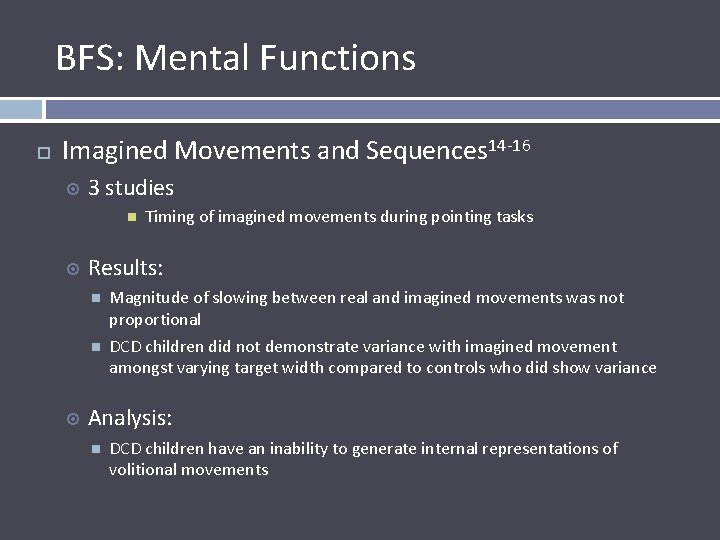
BFS: Mental Functions Imagined Movements and Sequences 14 -16 3 studies Results: Timing of imagined movements during pointing tasks Magnitude of slowing between real and imagined movements was not proportional DCD children did not demonstrate variance with imagined movement amongst varying target width compared to controls who did show variance Analysis: DCD children have an inability to generate internal representations of volitional movements
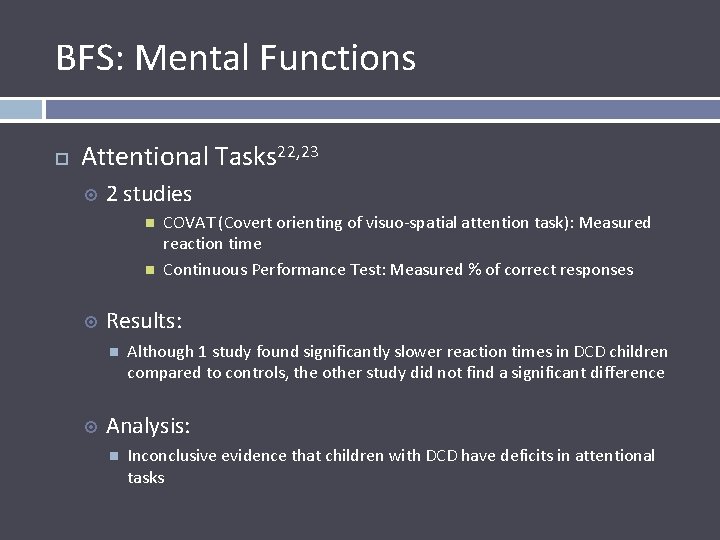
BFS: Mental Functions Attentional Tasks 22, 23 2 studies Results: COVAT (Covert orienting of visuo-spatial attention task): Measured reaction time Continuous Performance Test: Measured % of correct responses Although 1 study found significantly slower reaction times in DCD children compared to controls, the other study did not find a significant difference Analysis: Inconclusive evidence that children with DCD have deficits in attentional tasks
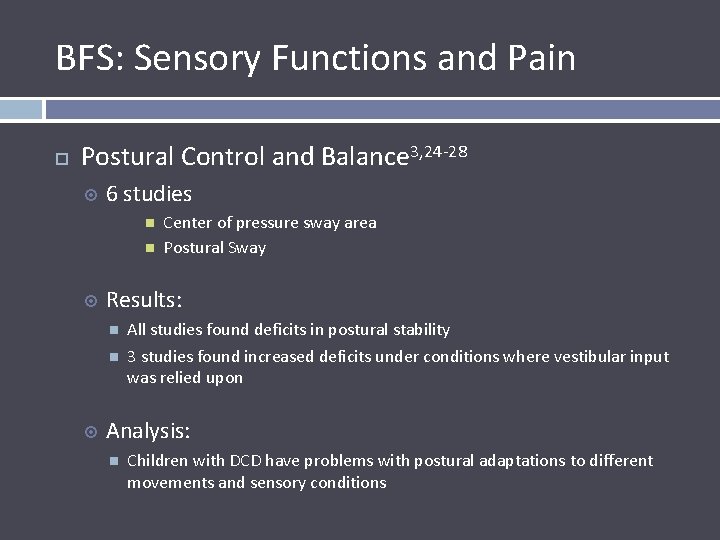
BFS: Sensory Functions and Pain Postural Control and Balance 3, 24 -28 6 studies Results: Center of pressure sway area Postural Sway All studies found deficits in postural stability 3 studies found increased deficits under conditions where vestibular input was relied upon Analysis: Children with DCD have problems with postural adaptations to different movements and sensory conditions
BFS: Functions of the Cardiovascular, Haematological, Immunological and Respiratory systems Ventilatory Function 19 1 study Results: Forced Vital Capacity (FVC) Found DCD children to have a mean FVC at the lower end of normal range for their age and height Analysis: No clear conclusions can be made about the cardiovascular fitness of DCD children from this single study
Activity and Participation • • • Mobility Community Social and Civic Life Self Care Learning and Applying Knowledge General Tasks and Demands
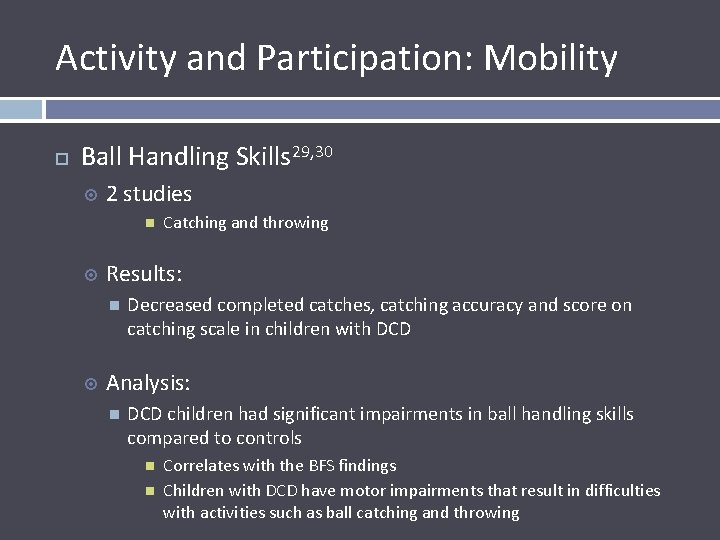
Activity and Participation: Mobility Ball Handling Skills 29, 30 2 studies Results: Catching and throwing Decreased completed catches, catching accuracy and score on catching scale in children with DCD Analysis: DCD children had significant impairments in ball handling skills compared to controls Correlates with the BFS findings Children with DCD have motor impairments that result in difficulties with activities such as ball catching and throwing
Activity and Participation: Mobility Perceived Efficacy and Goal Setting 31, 32 2 studies PEGS (Perceived Efficacy and Goal Setting) Perceived efficacy in different activities related to mobility 31 COPM (Canadian Occupational Performance Measure) Identification of client-centered goals 32
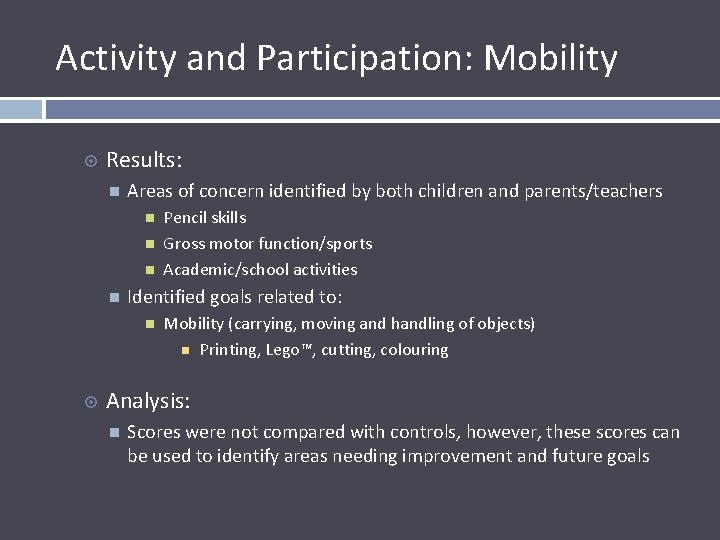
Activity and Participation: Mobility Results: Areas of concern identified by both children and parents/teachers Identified goals related to: Pencil skills Gross motor function/sports Academic/school activities Mobility (carrying, moving and handling of objects) Printing, Lego™, cutting, colouring Analysis: Scores were not compared with controls, however, these scores can be used to identify areas needing improvement and future goals
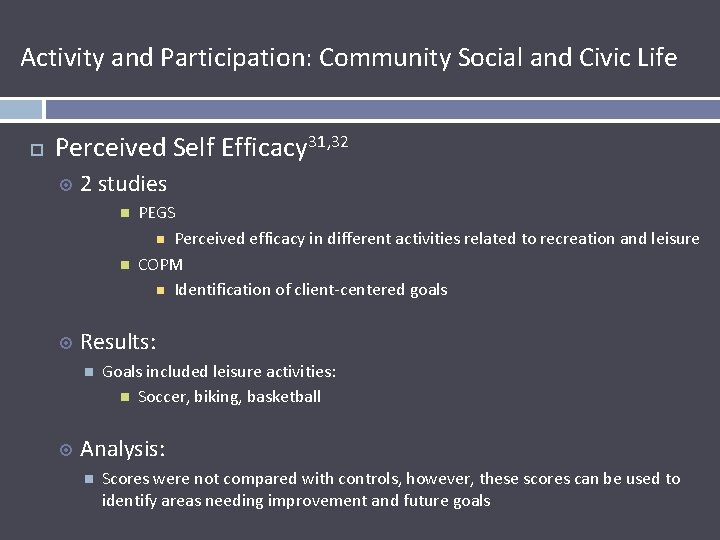
Activity and Participation: Community Social and Civic Life Perceived Self Efficacy 31, 32 2 studies Results: PEGS Perceived efficacy in different activities related to recreation and leisure COPM Identification of client-centered goals Goals included leisure activities: Soccer, biking, basketball Analysis: Scores were not compared with controls, however, these scores can be used to identify areas needing improvement and future goals
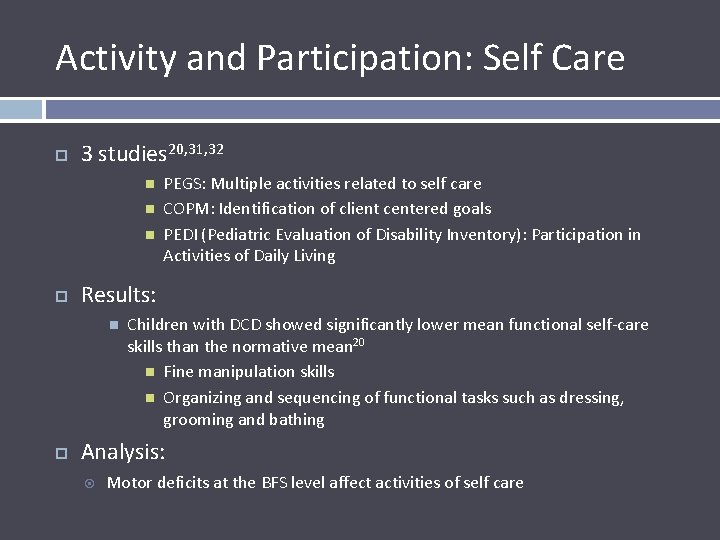
Activity and Participation: Self Care 3 studies 20, 31, 32 Results: PEGS: Multiple activities related to self care COPM: Identification of client centered goals PEDI (Pediatric Evaluation of Disability Inventory): Participation in Activities of Daily Living Children with DCD showed significantly lower mean functional self-care skills than the normative mean 20 Fine manipulation skills Organizing and sequencing of functional tasks such as dressing, grooming and bathing Analysis: Motor deficits at the BFS level affect activities of self care
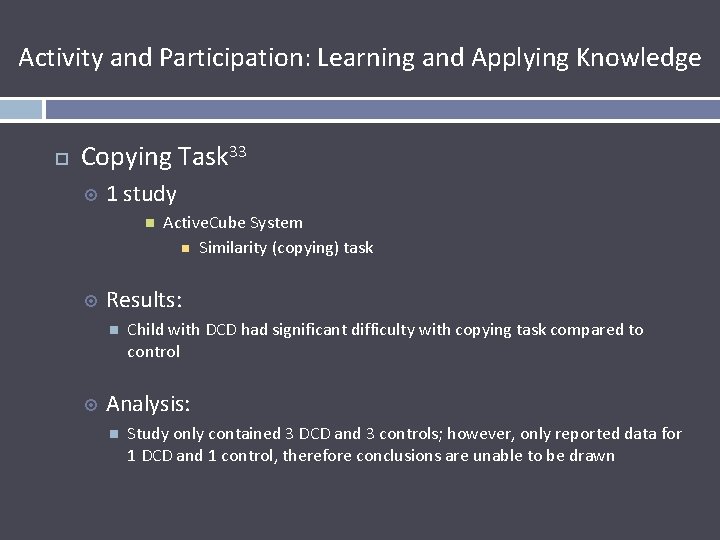
Activity and Participation: Learning and Applying Knowledge Copying Task 33 1 study Results: Active. Cube System Similarity (copying) task Child with DCD had significant difficulty with copying task compared to control Analysis: Study only contained 3 DCD and 3 controls; however, only reported data for 1 DCD and 1 control, therefore conclusions are unable to be drawn
Activity and Participation: General Tasks and Demands Time to Complete Copying Task 33 1 study Results: DCD child took less time than the control child Active. Cube System Time to complete task However, the DCD child only completed 3 of the 6 steps required to fully complete the task Analysis: Few conclusions can be drawn regarding this study due to the lack of available data, small sample size and lack of related studies
Qualitative Studies
Qualitative Studies 3 studies 34 -36 1 Not subcategorized according to the levels of the ICF study Qualitative interviews with parents of children with DCD Results: Aimed at studying the importance of participation DCD children experience motor-based activity restrictions Analysis: Far-reaching negative consequences on the children’s Activity and Participation Parents felt that treatments aimed at Activity and Participation were necessary for the management of their child’s disorder
Qualitative Studies 2 multiple case studies Investigated effectiveness of specific interventions for treatment of DCD Results: Baseline evaluations demonstrated problems with gross and fine motor skills, low self-esteem and decreased confidence in their own abilities Analysis: Gross motor skills: Ball skills Balance Hopping Skipping Running Biking Fine motor skills: Writing Drawing Dressing and tying shoelaces Motor deficits at the Body Functions and Structures level affect Activities and Participation
Limitations
Limitations 1. Heterogeneity of DCD population and studies 2. Wide variety of deficits well documented in the literature Numerous outcome measures used in application of assessing children with DCD Diversity challenges ability to compare individual studies Articles published prior to 1994 excluded Earlier articles may still provide valuable data despite the differing terminology
Limitations 3. Studies excluded if diagnostic criteria did not indicate DSM-IV diagnosis 4. Absence of a grey literature search 5. Other valid forms of diagnosing DCD children Appropriate studies may have been overlooked ICF amalgamates the Activity and Participation categories due to high degree of association Presents a limitation when assessing children with DCD Generalizes their deficits
Conclusion and Implications
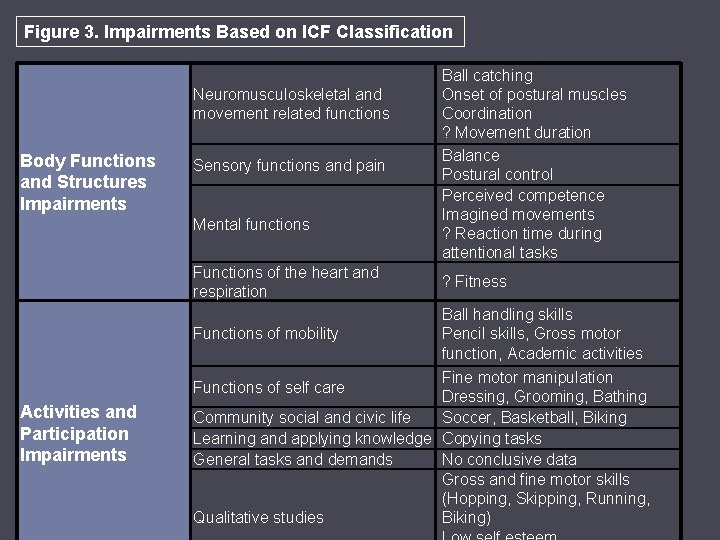
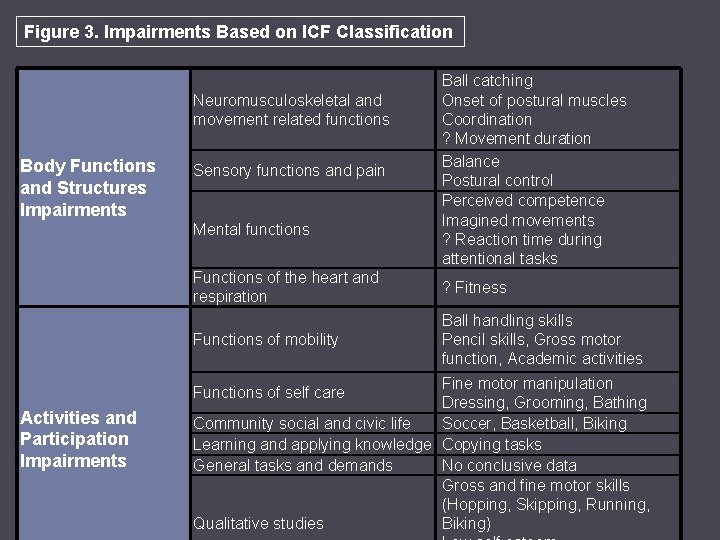
Figure 3. Impairments Based on ICF Classification Neuromusculoskeletal and movement related functions Body Functions and Structures Impairments Sensory functions and pain Mental functions Functions of the heart and respiration ? Fitness Functions of mobility Ball handling skills Pencil skills, Gross motor function, Academic activities Fine motor manipulation Dressing, Grooming, Bathing Community social and civic life Soccer, Basketball, Biking Learning and applying knowledge Copying tasks General tasks and demands No conclusive data Gross and fine motor skills (Hopping, Skipping, Running, Biking) Qualitative studies Functions of self care Activities and Participation Impairments Ball catching Onset of postural muscles Coordination ? Movement duration Balance Postural control Perceived competence Imagined movements ? Reaction time during attentional tasks
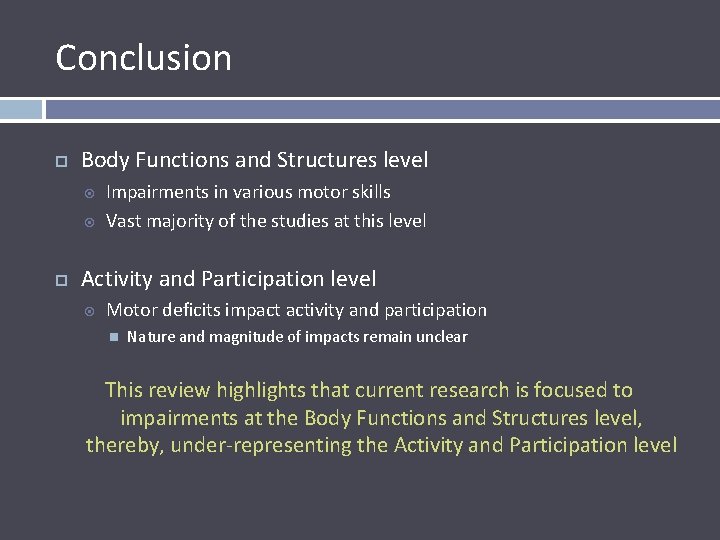
Conclusion Body Functions and Structures level Impairments in various motor skills Vast majority of the studies at this level Activity and Participation level Motor deficits impact activity and participation Nature and magnitude of impacts remain unclear This review highlights that current research is focused to impairments at the Body Functions and Structures level, thereby, under-representing the Activity and Participation level
Implications Vital for physiotherapists to consider all levels of the ICF Improve function and health related quality of life when activity and participation are the foci of treatment 7 This Systematic Review can help inform assessments and treatments of children with DCD Provides a more structured, holistic picture of the DCD child Future research needed using ICF model to guide physiotherapy practice
Acknowledgments • Supervisor • • • Ms. Jill Zwicker UBC Faculty Members • Dr. Darlene Reid • Dr. Elizabeth Dean UBC Librarian • Ms. Charlotte Beck
References 1. 2. 3. 4. 5. 6. 7. 8. 9. American Psychiatric Association. Diagnostic and statistical manual of mental disorders. 4 th ed. Washington: American Psychiatric Association; 1994. Hillier S. Intervention for children with developmental coordination disorder: a systematic review. INTERNET J ALLIED HEALTH SCI PRACT 2007 07; 5(3): 1 -11. Jucaite A, Fernell E, Forssberg H, Hadders-Algra M. Deficient coordination of associated postural adjustments during a lifting task in children with neurodevelopmental disorders. Developmental Medicine & Child Neurology 2003 Nov; 45(11): 731 -742. Missiuna C, Pollock N. Beyond the norms: Need for multiple sources of data in the assessment of children. Physical and Occupational Therapy in Pediatrics 1995; 15(4): 57 -71. Smyth TR GD. Information processing deficits in clumsy children. Aust. J. Psychol. 1986; 38: 13 -22. Volman MJM GR. Relative phase stability of bimanual and visuomanual rhythmic coordination patterns in children with a developmental coordination disorder. Hum Movement Sci 1998; 17: 541 -572. Missiuna C, Rivard L, Bartlett D. Early identification and risk management of children with developmental coordination disorder. Pediatric Physical Therapy 2003 Mar; 15(1): 32 -38. World Health Organization. International classification of functioning, disability and health: children & youth version: ICFCY. Geneva: World Health Organization; 2007. Watter P, Rodger S, Marinac J, Woodyatt G, Ziviani J, Ozanne A. Multidisciplinary assessment of children with developmental coordination disorder: using the ICF framework to inform assessment. Phys. Occup. Ther. Pediatr. 2008; 28(4): 329 -350.
References 10. 11. 12. 13. 14. 15. 16. 17. 18. Hadders-Algra M. The neuronal group selection theory: promising principles for understanding and treating developmental motor disorders. Developmental Medicine & Child Neurology 2000 Oct; 42(10): 707 -715. Polatajko HJ, Cantin N. Developmental coordination disorder (dyspraxia): an overview of the state of the art. Semin. Pediatr. Neurol. 2005 Dec; 12(4): 250 -258. Deconinck FJA, De Clercq D, Savelsbergh GJP, Van Coster R, Oostra A, Dewitte G, et al. Adaptations to task constraints in catching by boys with DCD. Adapted Physical Activity Quarterly 2006 Jan; 23(1): 14 -30. Utley A, Astill SL. Developmental sequences of two-handed catching: how do children with and without developmental coordination disorder differ? . Physiotherapy Theory & Practice 2007 Mar-Apr; 23(2): 65 -82. Lewis M, Vance A, Maruff P, Wilson P, Cairney S. Differences in motor imagery between children with developmental coordination disorder with and without the combined type of ADHD. Dev. Med. Child Neurol. 2008; 50(8): 608 -612. Maruff P, Wilson P, Trebilcock M, Currie J. Abnormalities of imaged motor sequences in children with developmental coordination disorder. Neuropsychologia 1999 Oct; 37(11): 1317 -1324. Wilson PH, Maruff P, Ives S, Currie J. Abnormalities of motor and praxis imagery in children with DCD. Human Movement Science 2001 Mar; 20(1 -2): 135 -159. Johnston LM, Burns YR, Brauer SG, Richardson CA. Differences in postural control and movement performance during goal directed reaching in children with developmental coordination disorder. Human Movement Science 2002 Dec; 21(56): 583 -601. Whitall J, Getchell N, Mc. Menamin S, Horn C, Wilms-Floet A, Clark JE. Perception-action coupling in children with and without DCD: Frequency locking between task-relevant auditory signals and motor responses in a dual-motor task. Child: Care, Health & Development 2006 Nov; 32(6): 679 -692.
References 19. 20. 21. 22. 23. 24. 25. 26. 27. Peters JM, Wright AM. Development and evaluation of a group physical activity programme for children with developmental co-ordination disorder: An interdisciplinary approach. Physiotherapy Theory and Practice 1999; 15(4): 203216. Rodger S, Watter P, Marinac J, Woodyatt G, Ziviani J, Ozanne A. Assessment of children with Developmental Coordination Disorder (DCD): motor, functional, self-efficacy and communication abilities. NZ J PHYSIOTHER 2007 11; 35(3): 99 -109. Pless M, Carlsson M, Sundelin C, Persson K. Pre-school children with developmental co-ordination disorder: Self-perceived competence and group motor skill intervention. Acta Paediatrica, International Journal of Paediatrics 2001; 90(5): 532 -538. Wilson PH, Maruff P, Mc. Kenzie BE. Covert orienting of visuospatial attention in children with developmental coordination disorder. Developmental Medicine & Child Neurology 1997 Nov; 39(11): 736 -745. de Castelnau P, Albaret JM, Chaix Y, Zanone PG. Developmental coordination disorder pertains to a deficit in perceptuomotor synchronization independent of attentional capacities. Human Movement Science 2007 Jun; 26(3): 477 -490. Cherng RJ, Hsu YW, Chen YJ, Chen JY. Standing balance of children with developmental coordination disorder under altered sensory conditions. Human Movement Science 2007 Dec; 26(6): 913 -926. Grove CR, Lazarus JA. Impaired re-weighting of sensory feedback for maintenance of postural control in children with developmental coordination disorder. Human Movement Science 2007 Jun; 26(3): 457 -476. Inder JM, Sullivan SJ. Does an educational kinesiology intervention alter postural control in children with a developmental coordination disorder? CLIN KINESIOL 2004 12; 58(4): 9 -26. Inder JM, Sullivan SJ. Motor and postural response profiles of four children with developmental coordination disorder. Pediatric Physical Therapy 2005; 17(1): 18 -29.
References 28. 29. 30. 31. 32. 33. 34. 35. 36. Laufer Y, Ashkenazi T, Josman N. The effects of a concurrent cognitive task on the postural control of young children with and without developmental coordination disorder. Gait Posture 2008 Feb; 27(2): 347 -351. Astill S. Can children with developmental coordination disorder adapt to task constraints when catching two-handed? . Disability & Rehabilitation 2007 Jan 15; 29(1): 57 -67. Cantin N, Polatajko HJ, Thach WT, Jaglal S. Developmental coordination disorder: exploration of a cerebellar hypothesis. Human Movement Science 2007 Jun; 26(3): 491 -509. Dunford C, Missiuna C, Street E, Sibert J. Children's perceptions of the impact of developmental coordination disorder on activities of daily living. British Journal of Occupational Therapy 2005 May; 68(5): 207 -214. Taylor S, Fayed N, Mandich A. CO-OP intervention for young children with developmental coordination disorder. OTJR Occupation, Participation and Health 2007 Sep; 27(4): 124 -130. Jacoby S, Josman N, Jacoby D, Koike M, Itoh Y, Kawai N, et al. Tangible user interfaces: Tools to examine, assess, and treat dynamic constructional processes in children with developmental coordination disorders. International Journal on Disability and Human Development 2006 Jul; 5(3): 257 -263. Mandich AD, Polatajko HJ, Rodger S. Rites of passage: understanding participation of children with developmental coordination disorder. Human Movement Science 2003 Nov; 22(4 -5): 583 -595. Miyahara M, Wafer A. Clinical intervention for children with developmental coordination disorder: A multiple case study. Adapted Physical Activity Quarterly 2004 Jul; 21(3): 281 -300. Miyahara M, Leeder T, Francis G, Inghelbrecht A. Does an instruction of a verbal labeling strategy for hand movements improve general motor coordination as well as the gestural performance? A test of the relationship between developmental coordination disorder and dyspraxia. Clinical Case Studies 2008 Jun; 7(3): 191 -207.
Questions
Figure 3. Impairments Based on ICF Classification Neuromusculoskeletal and movement related functions Body Functions and Structures Impairments Sensory functions and pain Mental functions Functions of the heart and respiration ? Fitness Functions of mobility Ball handling skills Pencil skills, Gross motor function, Academic activities Fine motor manipulation Dressing, Grooming, Bathing Community social and civic life Soccer, Basketball, Biking Learning and applying knowledge Copying tasks General tasks and demands No conclusive data Gross and fine motor skills (Hopping, Skipping, Running, Biking) Qualitative studies Functions of self care Activities and Participation Impairments Ball catching Onset of postural muscles Coordination ? Movement duration Balance Postural control Perceived competence Imagined movements ? Reaction time during attentional tasks
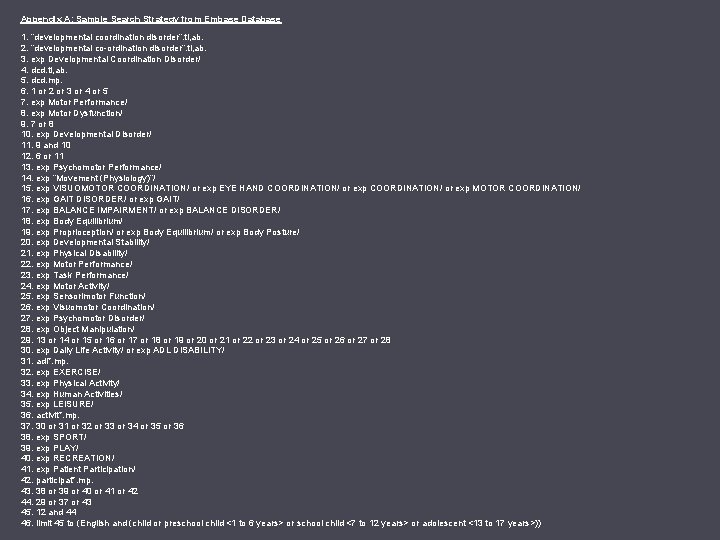
Appendix A: Sample Search Strategy from Embase Database 1. “developmental coordination disorder”. ti, ab. 2. “developmental co-ordination disorder”. ti, ab. 3. exp Developmental Coordination Disorder/ 4. dcd. ti, ab. 5. dcd. mp. 6. 1 or 2 or 3 or 4 or 5 7. exp Motor Performance/ 8. exp Motor Dysfunction/ 9. 7 or 8 10. exp Developmental Disorder/ 11. 9 and 10 12. 6 or 11 13. exp Psychomotor Performance/ 14. exp “Movement (Physiology)”/ 15. exp VISUOMOTOR COORDINATION/ or exp EYE HAND COORDINATION/ or exp MOTOR COORDINATION/ 16. exp GAIT DISORDER/ or exp GAIT/ 17. exp BALANCE IMPAIRMENT/ or exp BALANCE DISORDER/ 18. exp Body Equilibrium/ 19. exp Proprioception/ or exp Body Equilibrium/ or exp Body Posture/ 20. exp Developmental Stability/ 21. exp Physical Disability/ 22. exp Motor Performance/ 23. exp Task Performance/ 24. exp Motor Activity/ 25. exp Sensorimotor Function/ 26. exp Visuomotor Coordination/ 27. exp Psychomotor Disorder/ 28. exp Object Manipulation/ 29. 13 or 14 or 15 or 16 or 17 or 18 or 19 or 20 or 21 or 22 or 23 or 24 or 25 or 26 or 27 or 28 30. exp Daily Life Activity/ or exp ADL DISABILITY/ 31. adl*. mp. 32. exp EXERCISE/ 33. exp Physical Activity/ 34. exp Human Activities/ 35. exp LEISURE/ 36. activit*. mp. 37. 30 or 31 or 32 or 33 or 34 or 35 or 36 38. exp SPORT/ 39. exp PLAY/ 40. exp RECREATION/ 41. exp Patient Participation/ 42. participat*. mp. 43. 38 or 39 or 40 or 41 or 42 44. 29 or 37 or 43 45. 12 and 44 46. limit 45 to (English and (child or preschool child <1 to 6 years> or school child <7 to 12 years> or adolescent <13 to 17 years>))