
Motor Designs A B C D ECE 441
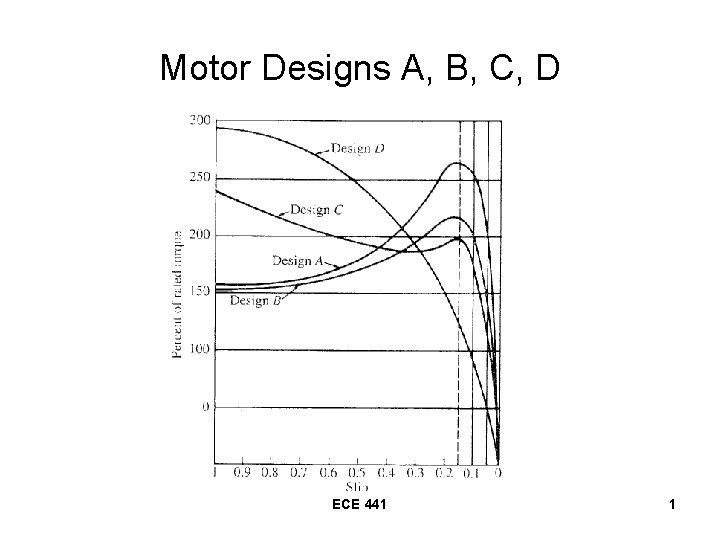
Motor Designs A, B, C, D ECE 441 1
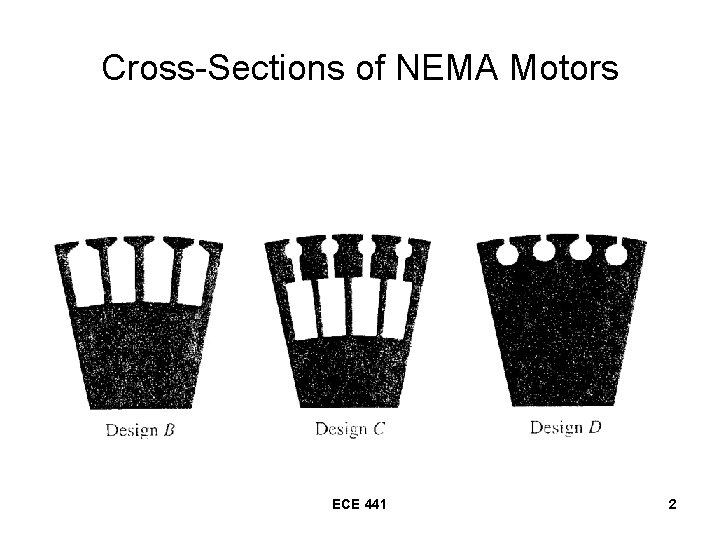
Cross-Sections of NEMA Motors ECE 441 2
Induction Motor Applications • Design B – Broadest field of applications – Centrifugal pumps, fans, blowers, machine tools • Design A – Same characteristics as Design B, but with higher breakdown torque – Higher starting current limits applications ECE 441 3
Induction Motor Applications continued • Design C – Higher locked-rotor torque but lower breakdown torque than Design B – Use to drive plunger pumps, vibrating screens, and compressors • Design D – Very high locked-rotor torque and high slip – Used for high-inertia loads such as elevators and hoists ECE 441 4
Induction Motor Applications continued • Design E – High-efficiency – Drive loads similar to Design B, but with lower locked-rotor, breakdown, and pull-up torque ECE 441 5
NEMA Tables • Tables 5. 1 – 5. 7 give values of lockedrotor torque, breakdown torque, and pullup torque for specific horsepower, frequency, and synchronous speed ratings. ECE 441 6
Example 5. 1 • Determine the values of locked-rotor torque, breakdown torque, and pull-up torque that can be expected from a 3 phase, 10 -hp, 460 -V, six-pole, NEMA design C motor whose rated speed is 1150 r/m. ECE 441 7
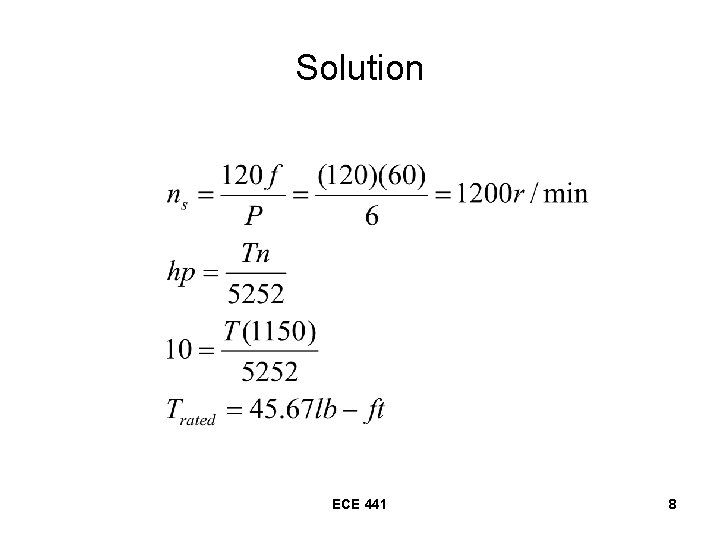
Solution ECE 441 8
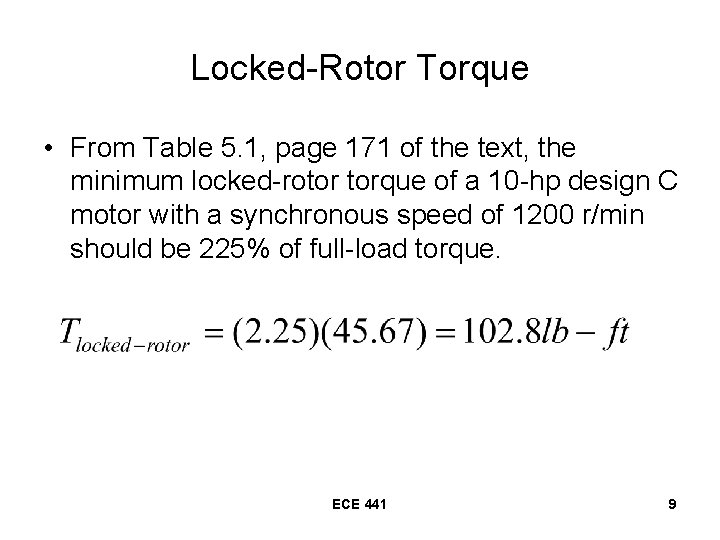
Locked-Rotor Torque • From Table 5. 1, page 171 of the text, the minimum locked-rotor torque of a 10 -hp design C motor with a synchronous speed of 1200 r/min should be 225% of full-load torque. ECE 441 9
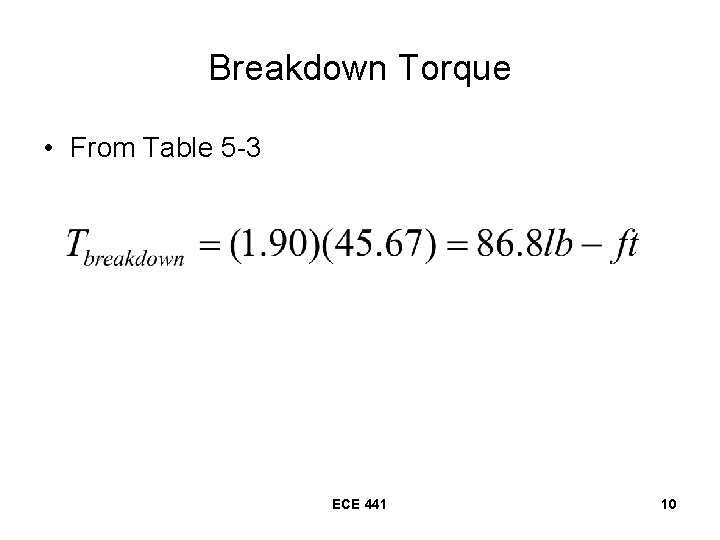
Breakdown Torque • From Table 5 -3 ECE 441 10
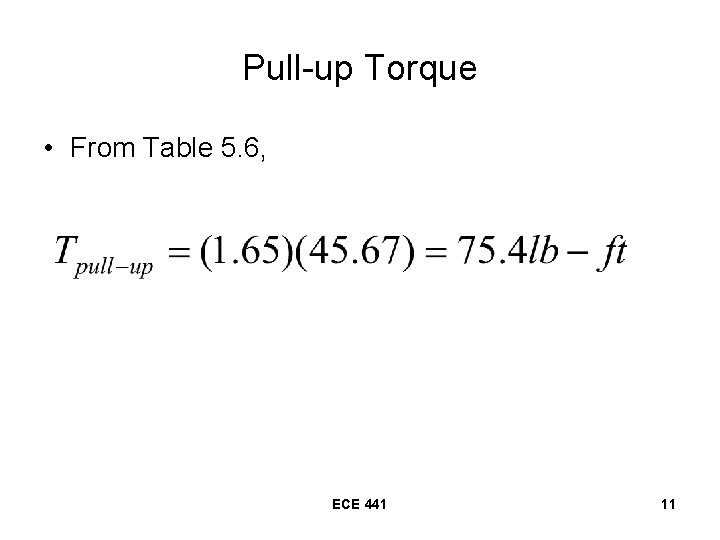
Pull-up Torque • From Table 5. 6, ECE 441 11
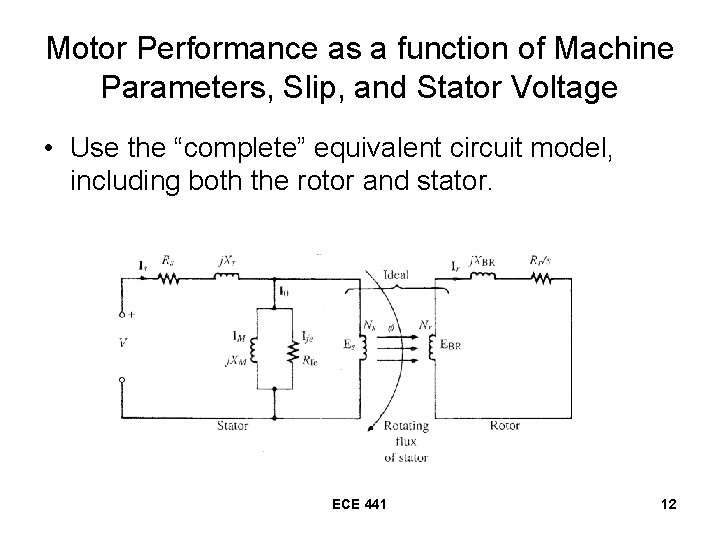
Motor Performance as a function of Machine Parameters, Slip, and Stator Voltage • Use the “complete” equivalent circuit model, including both the rotor and stator. ECE 441 12
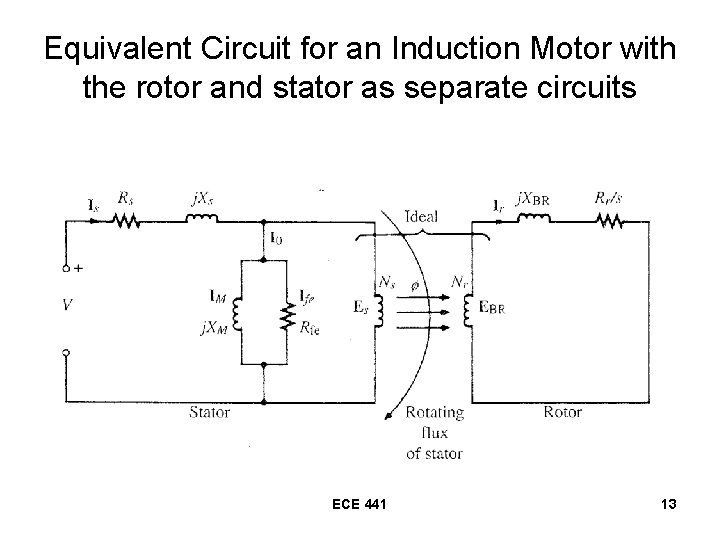
Equivalent Circuit for an Induction Motor with the rotor and stator as separate circuits ECE 441 13
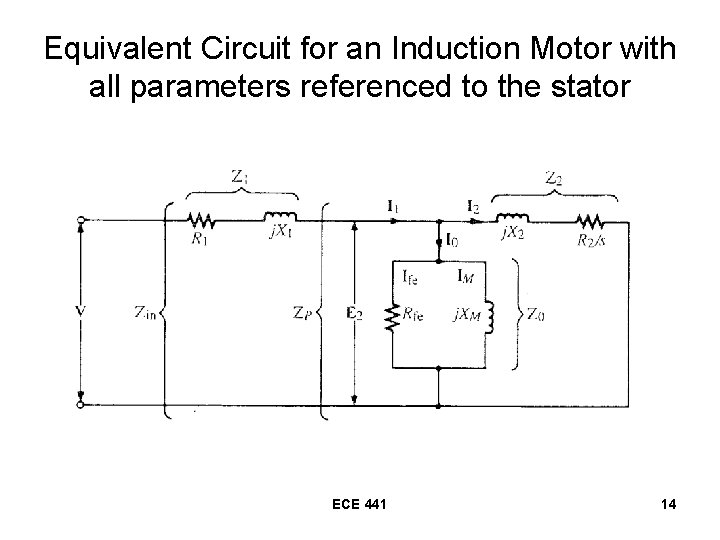
Equivalent Circuit for an Induction Motor with all parameters referenced to the stator ECE 441 14
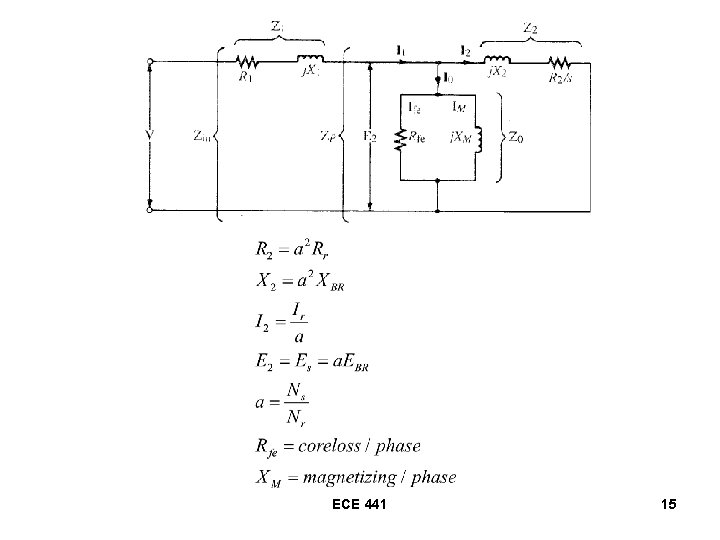
ECE 441 15
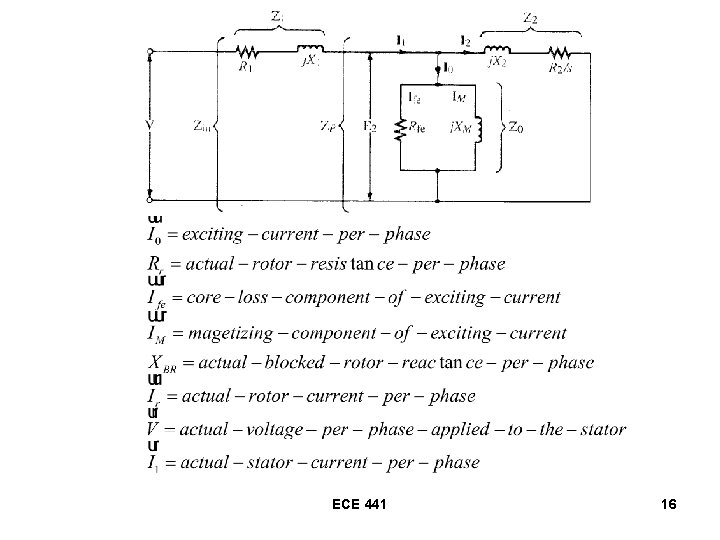
ECE 441 16
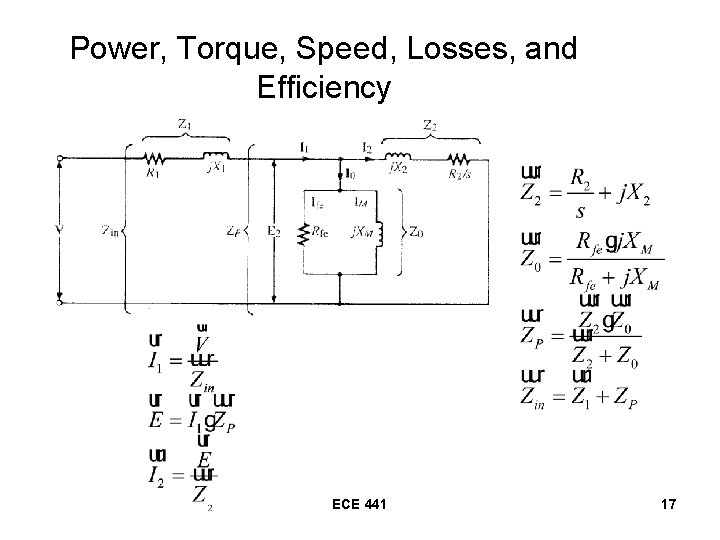
Power, Torque, Speed, Losses, and Efficiency ECE 441 17
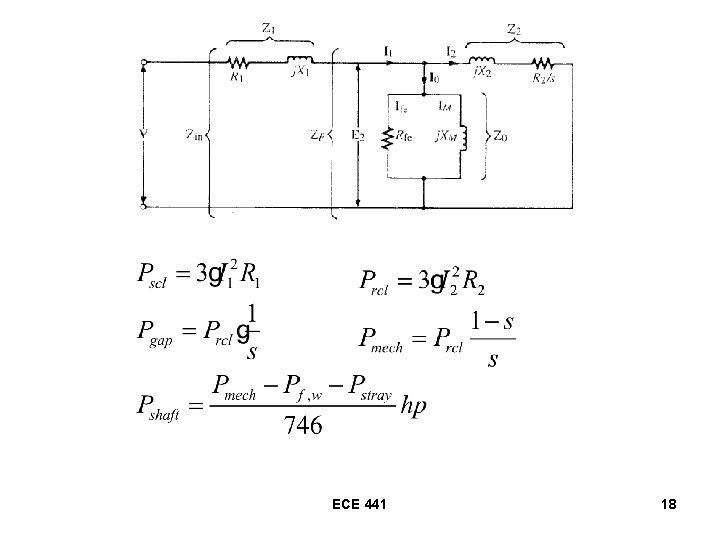
ECE 441 18
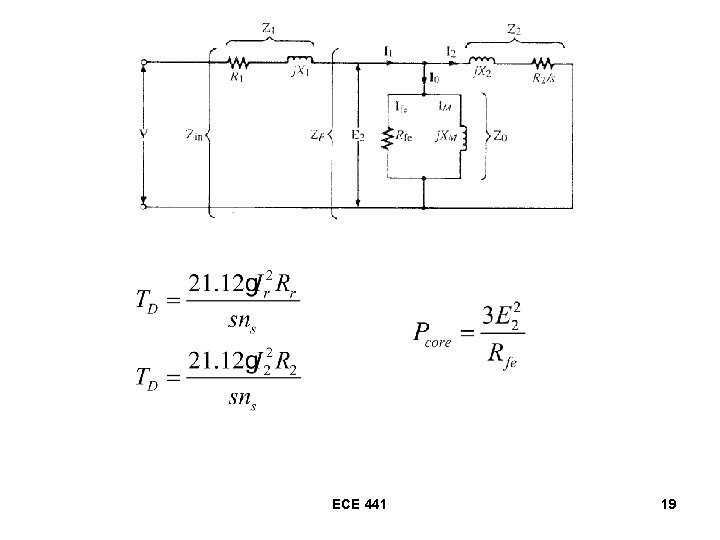
ECE 441 19
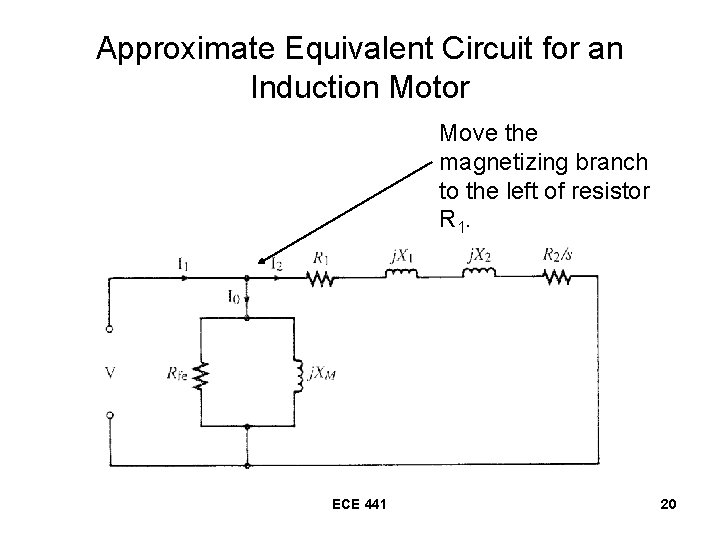
Approximate Equivalent Circuit for an Induction Motor Move the magnetizing branch to the left of resistor R 1. ECE 441 20
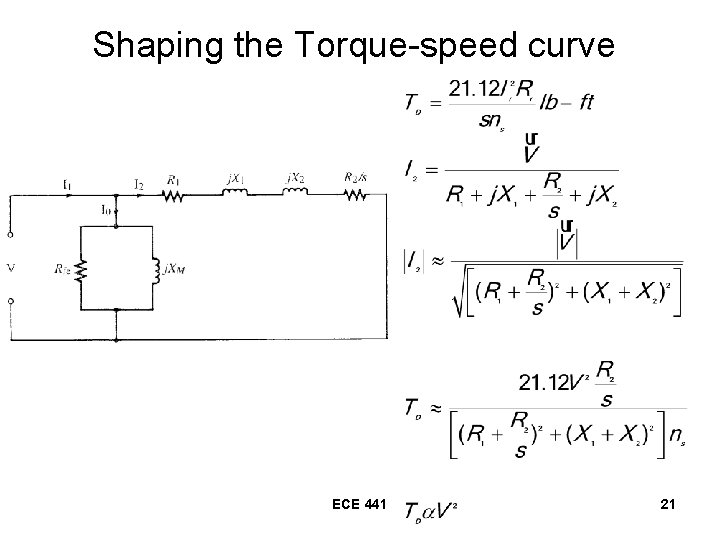
Shaping the Torque-speed curve ECE 441 21
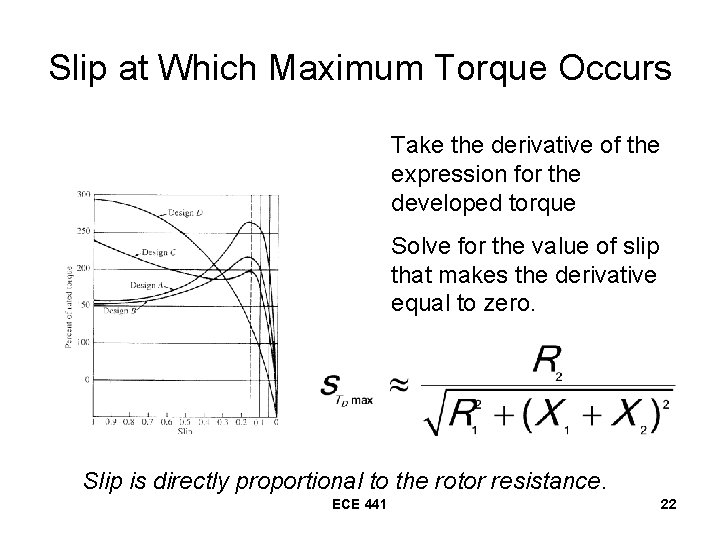
Slip at Which Maximum Torque Occurs Take the derivative of the expression for the developed torque Solve for the value of slip that makes the derivative equal to zero. Slip is directly proportional to the rotor resistance. ECE 441 22
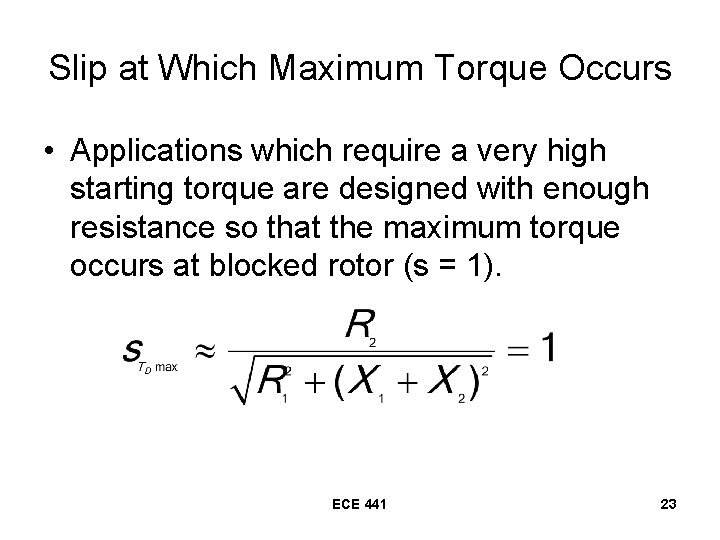
Slip at Which Maximum Torque Occurs • Applications which require a very high starting torque are designed with enough resistance so that the maximum torque occurs at blocked rotor (s = 1). ECE 441 23
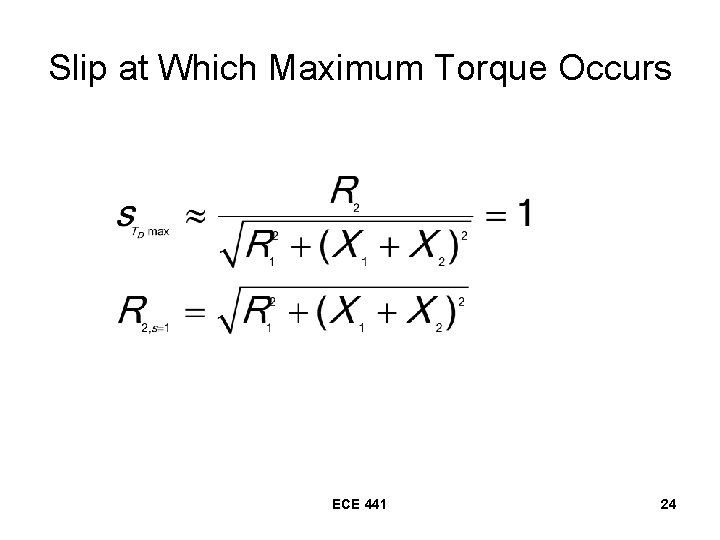
Slip at Which Maximum Torque Occurs ECE 441 24
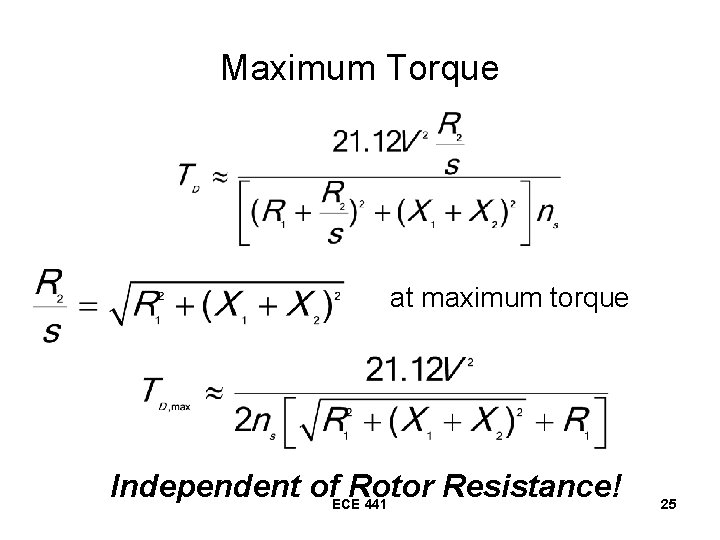
Maximum Torque at maximum torque Independent of. ECERotor Resistance! 441 25
- Slides: 25