
Motivational Interviewing In The Treatment Of Substance Abuse
Motivational Interviewing In The Treatment Of Substance Abuse By: Dr. A. A. Parvizi Associate Professor Of KUMS Department Of Clinical Psychology
Motivational Interviewing In The Treatment Of Substance Abuse
LEARNING GOALS Motivational Interviewing Overview: Configuration denial in addicts. The Stages of Change Introduction of MI. Foundational Concepts and Skills of MI. The Four Processes of MI
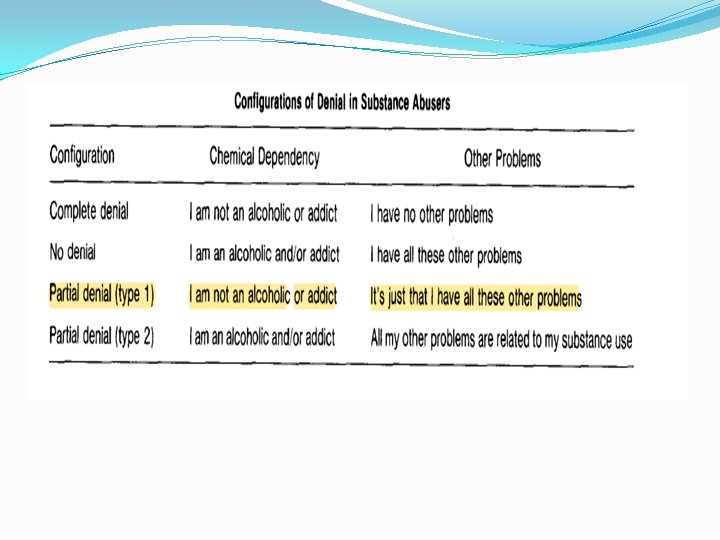
Implications Of Denial Mechanism Complete denial (Addiction& other Problems). Personality disorders(Ego-syntonic). No seeking treatment (refers by others). Projection mechanism. Treatment is difficult (break down denial). No denial (Addiction& other Problems). All problems due to their Addiction. Suicidal patients(Full- Insight Loss of All things). Cooperative patients.
Implications Of Denial Mechanism Partial Denial (Type. I): (No Addiction/ Ok Other Problems). The Greatest Challenge To Treatment. Seeking Treatment, But Not For Addiction, For Other Problems (Depression). Therapist Focuses on the Other Problems. Key Points: Unconsciously Covert Agreement Between The Patient And Therapist. Exclude The Addiction As An Important Focus Of Treatment. Finally, The Substance Abuse Continues.
Implications Of Denial Mechanism Partial Denial (Type II): I Am Addict(ok) All My Other Problems Are Related To My Substance Use. Key Points: Highlight Of Substance Use. Minimize Of Other Comorbid Problems. Therapist Must Emphasizes First The Treatment Of Drug Use. After That Focuses On Other Problems. This Is The Best Approach For Drug Addicts.

What is Motivation?
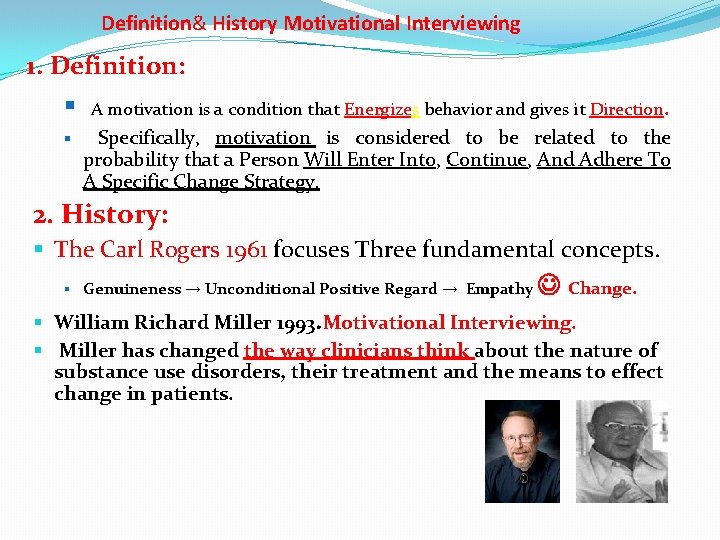
Definition& History Motivational Interviewing 1. Definition: A motivation is a condition that Energizes behavior and gives it Direction. Specifically, motivation is considered to be related to the probability that a Person Will Enter Into, Continue, And Adhere To A Specific Change Strategy. 2. History: The Carl Rogers 1961 focuses Three fundamental concepts. Genuineness → Unconditional Positive Regard → Empathy Change. William Richard Miller 1993. Motivational Interviewing. Miller has changed the way clinicians think about the nature of substance use disorders, their treatment and the means to effect change in patients.
What Can You Do?
The Results of studies?
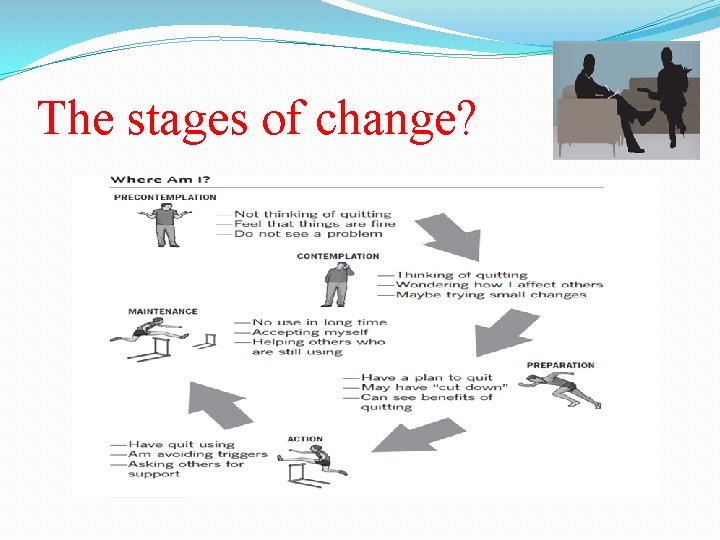
The stages of change?
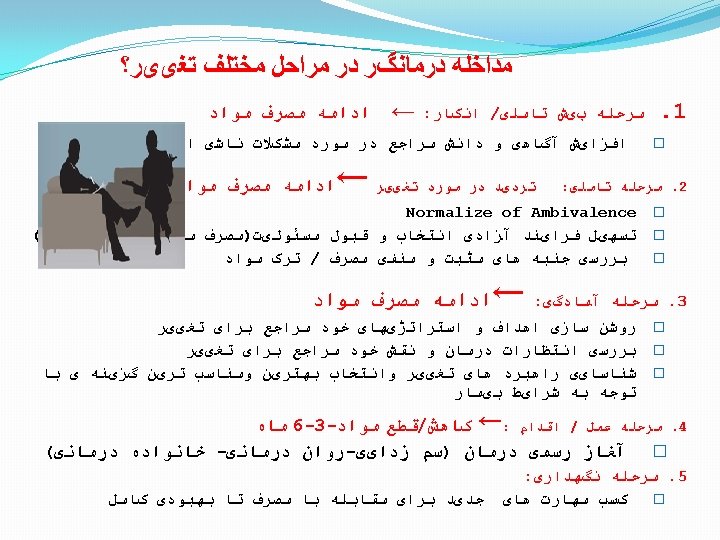
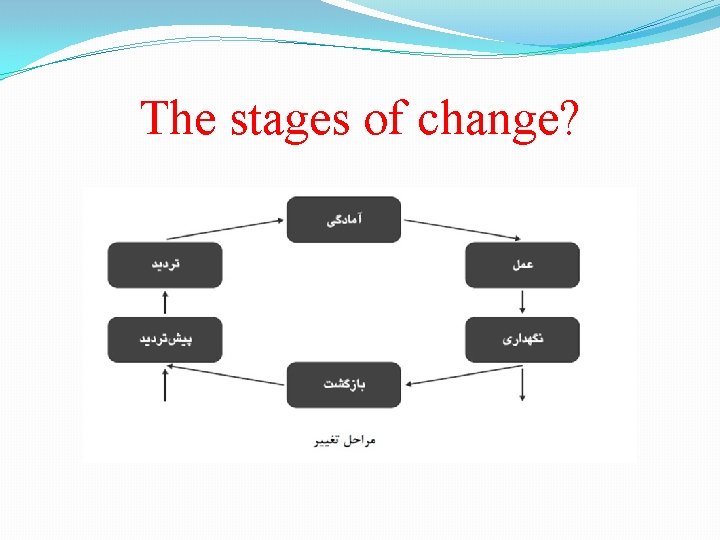
The stages of change?
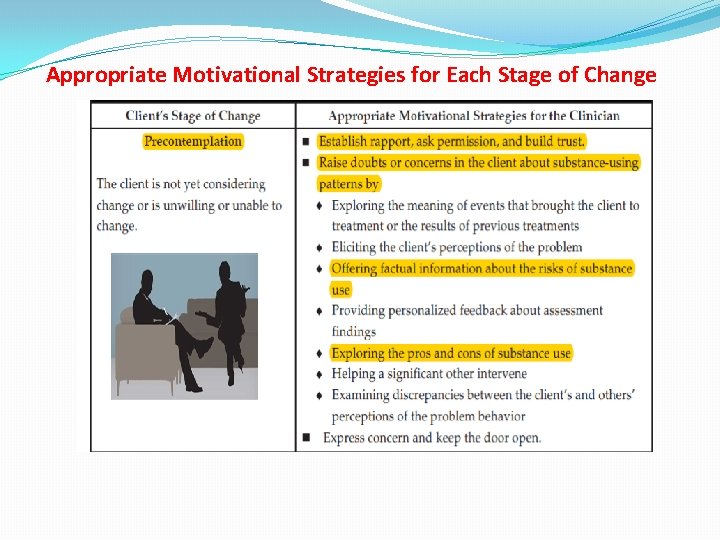
Appropriate Motivational Strategies for Each Stage of Change
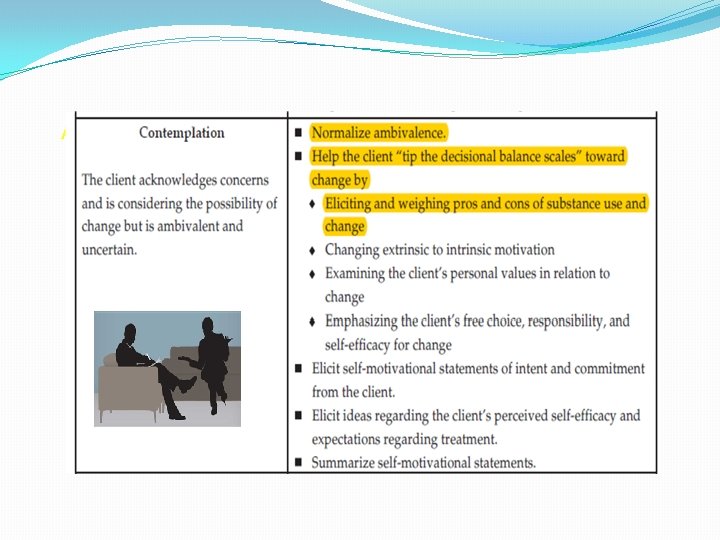
Appropriate Motivational Strategies for Each Stage of Change
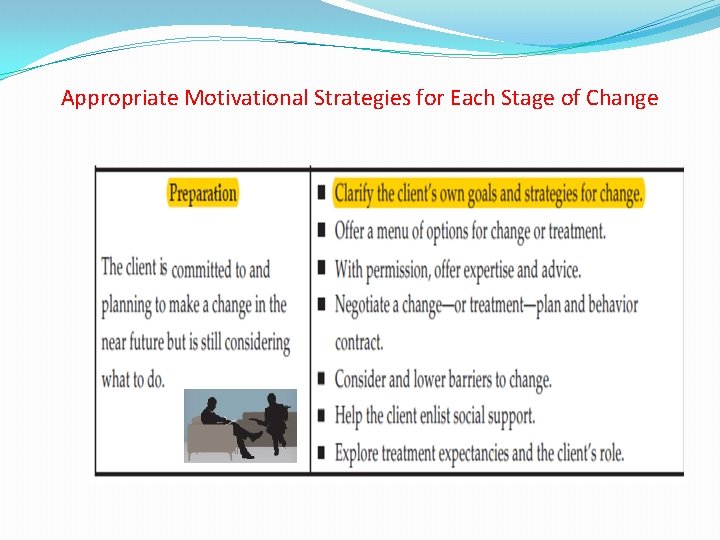
Appropriate Motivational Strategies for Each Stage of Change
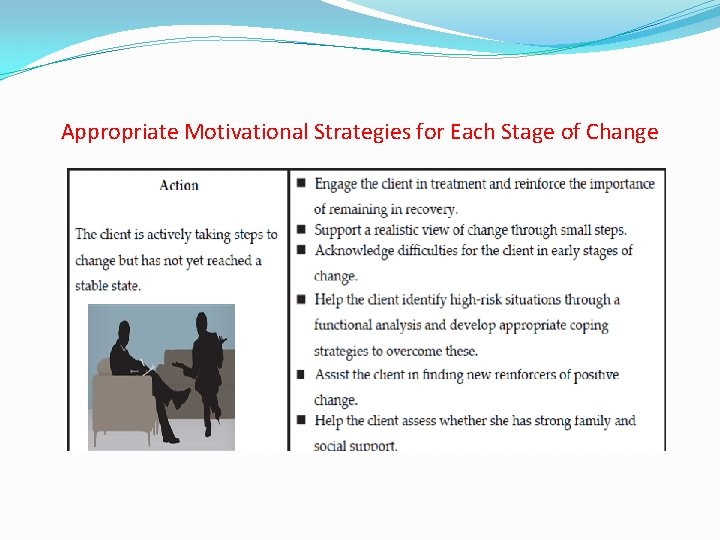
Appropriate Motivational Strategies for Each Stage of Change
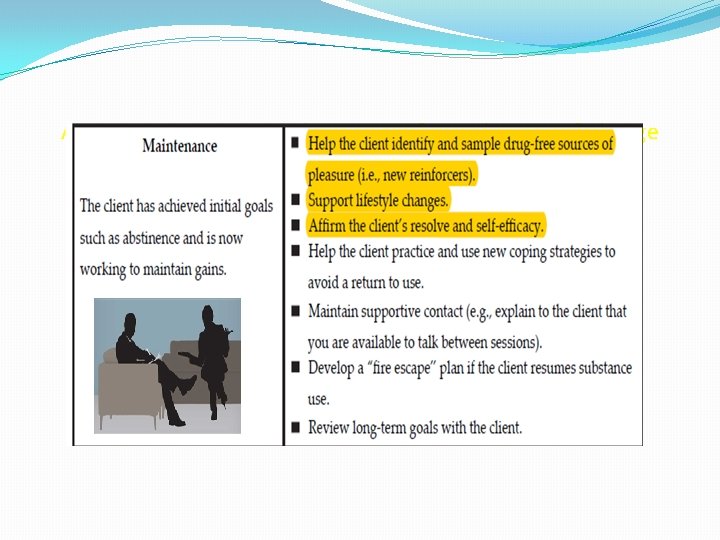
Appropriate Motivational Strategies for Each Stage of Change
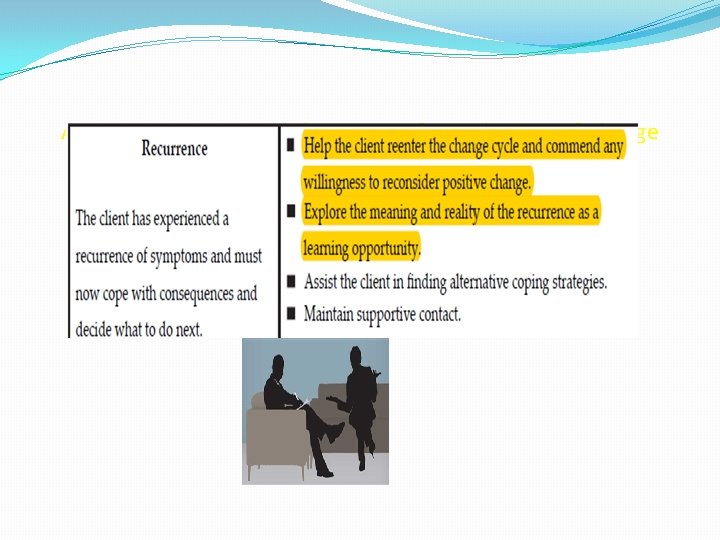
Appropriate Motivational Strategies for Each Stage of Change
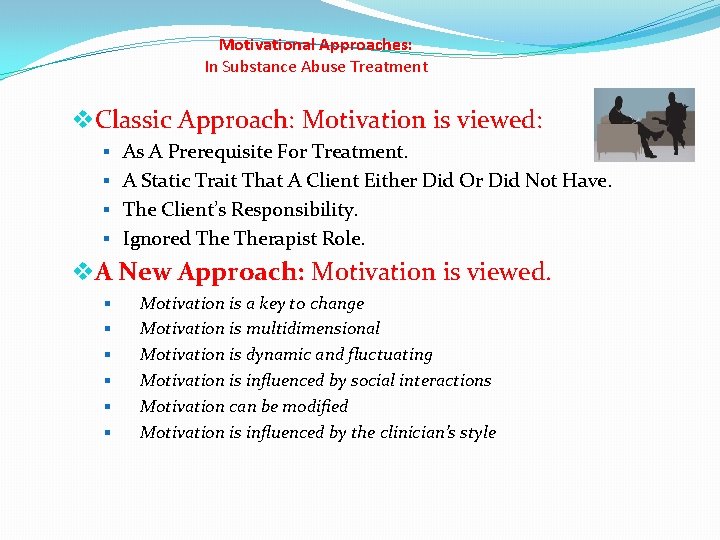
Motivational Approaches: In Substance Abuse Treatment Classic Approach: Motivation is viewed: As A Prerequisite For Treatment. A Static Trait That A Client Either Did Or Did Not Have. The Client’s Responsibility. Ignored Therapist Role. A New Approach: Motivation is viewed. Motivation is a key to change Motivation is multidimensional Motivation is dynamic and fluctuating Motivation is influenced by social interactions Motivation can be modified Motivation is influenced by the clinician’s style
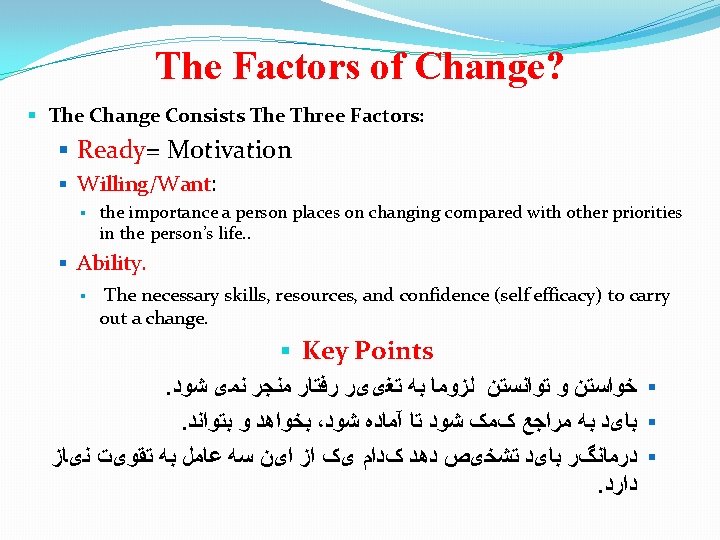
The Factors of Change? The Change Consists The Three Factors: Ready= Motivation Willing/Want: the importance a person places on changing compared with other priorities in the person’s life. . Ability. The necessary skills, resources, and confidence (self efficacy) to carry out a change. Key Points. ﺧﻮﺍﺳﺘﻦ ﻭ ﺗﻮﺍﻧﺴﺘﻦ ﻟﺰﻭﻣﺎ ﺑﻪ ﺗﻐییﺮ ﺭﻓﺘﺎﺭ ﻣﻨﺠﺮ ﻧﻤی ﺷﻮﺩ . ﺑﺨﻮﺍﻫﺪ ﻭ ﺑﺘﻮﺍﻧﺪ ، ﺑﺎیﺪ ﺑﻪ ﻣﺮﺍﺟﻊ کﻤک ﺷﻮﺩ ﺗﺎ آﻤﺎﺩﻩ ﺷﻮﺩ ﺩﺭﻣﺎﻧگﺮ ﺑﺎیﺪ ﺗﺸﺨیﺺ ﺩﻫﺪ کﺪﺍﻡ یک ﺍﺯ ﺍیﻦ ﺳﻪ ﻋﺎﻣﻞ ﺑﻪ ﺗﻘﻮیﺖ ﻧیﺎﺯ . ﺩﺍﺭﺩ
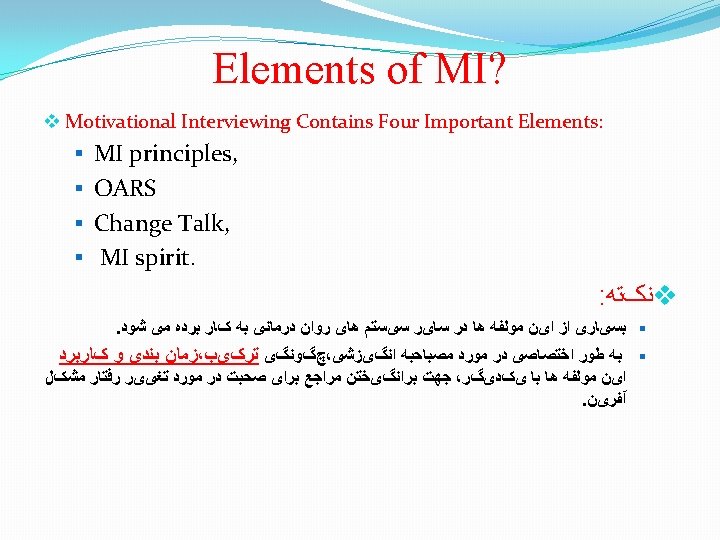
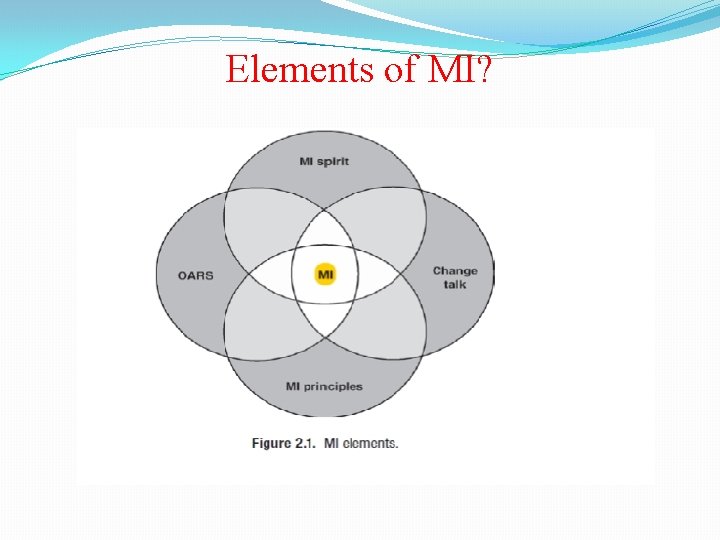
Elements of MI?
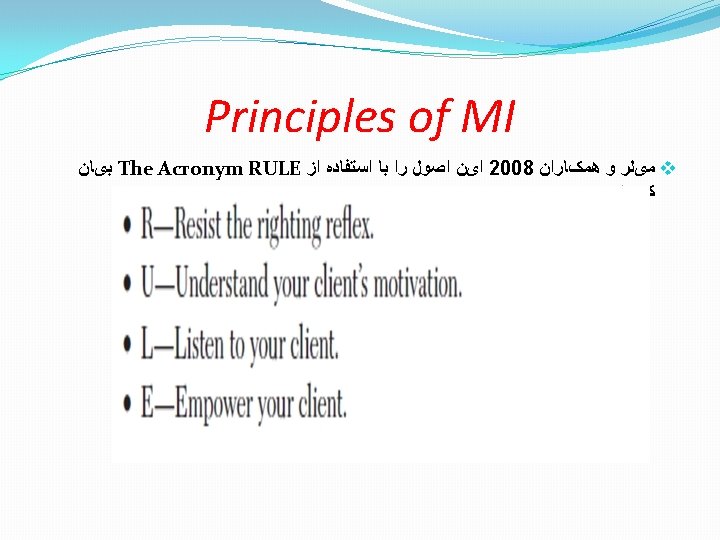
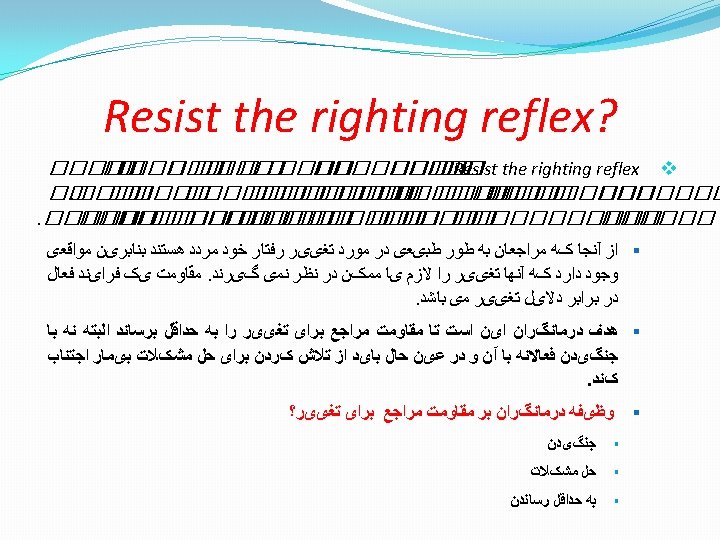
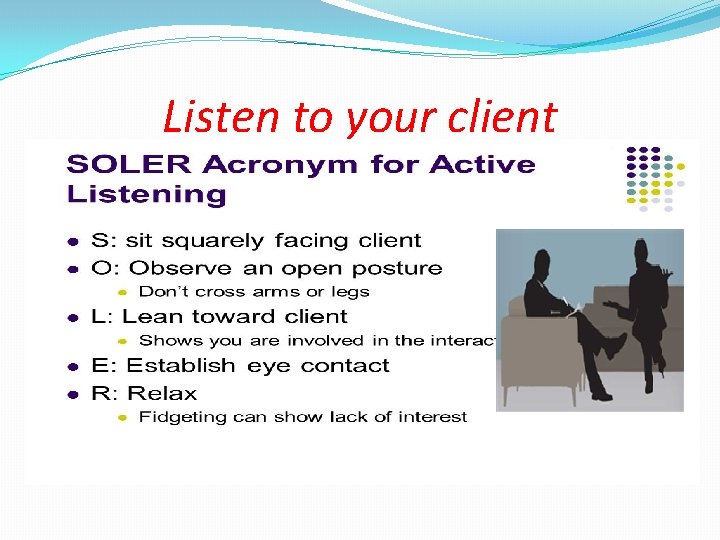
Listen to your client
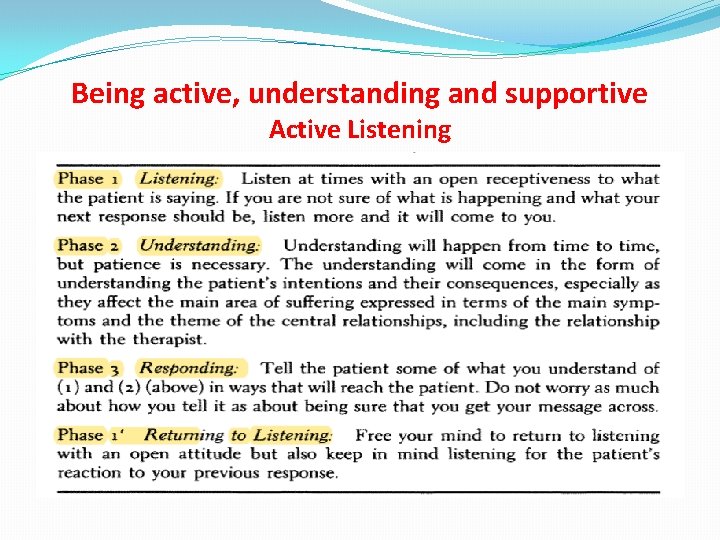
Being active, understanding and supportive Active Listening
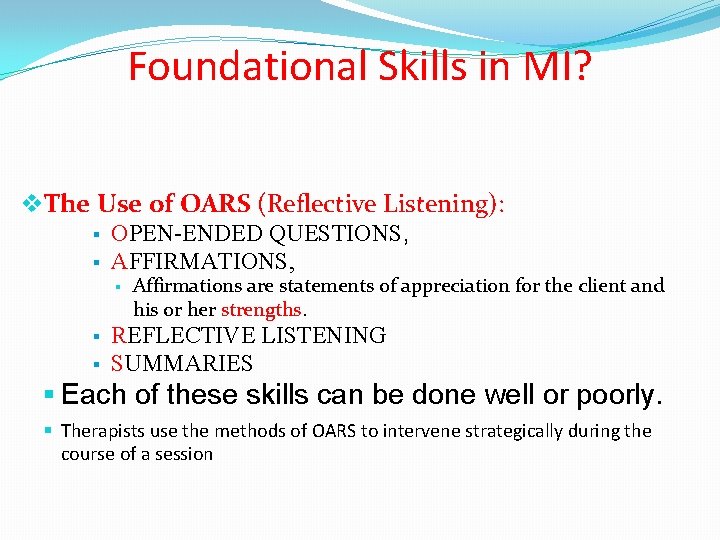
Foundational Skills in MI? The Use of OARS (Reflective Listening): OPEN-ENDED QUESTIONS, AFFIRMATIONS, Affirmations are statements of appreciation for the client and his or her strengths. REFLECTIVE LISTENING SUMMARIES Each of these skills can be done well or poorly. Therapists use the methods of OARS to intervene strategically during the course of a session
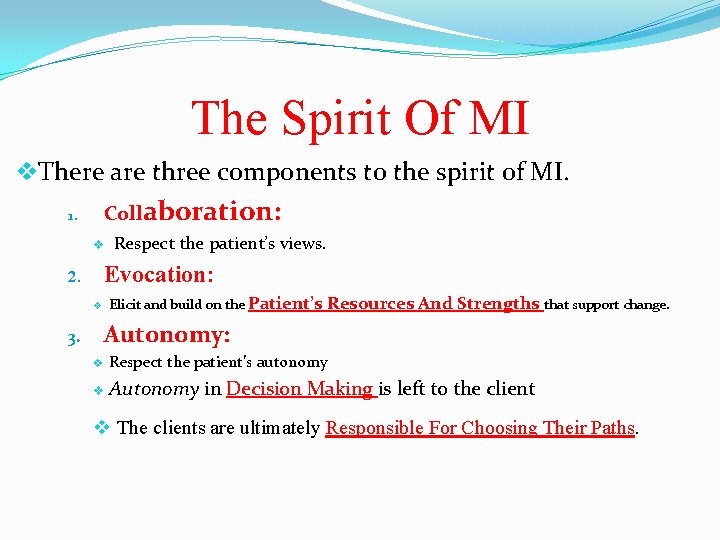
The Spirit Of MI There are three components to the spirit of MI. Collaboration: 1. Respect the patient’s views. Evocation: 2. Elicit and build on the Patient’s Resources And Strengths that support change. Autonomy: 3. Respect the patient’s autonomy Autonomy in Decision Making is left to the client The clients are ultimately Responsible For Choosing Their Paths.
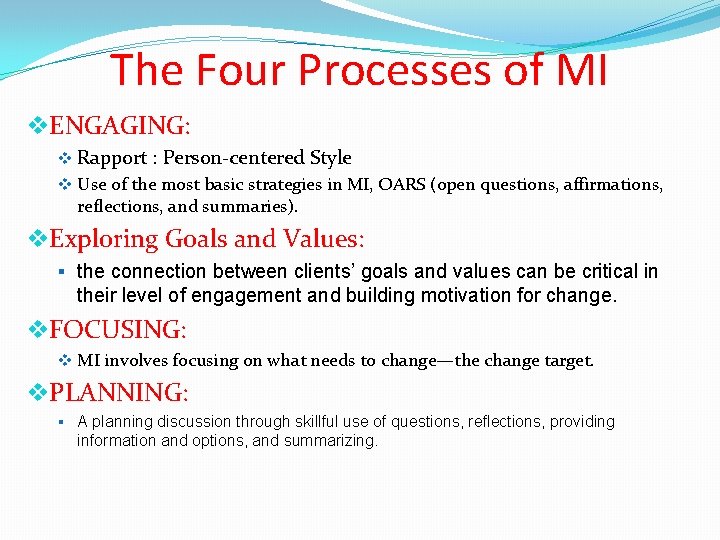
The Four Processes of MI ENGAGING: Rapport : Person-centered Style Use of the most basic strategies in MI, OARS (open questions, affirmations, reflections, and summaries). Exploring Goals and Values: the connection between clients’ goals and values can be critical in their level of engagement and building motivation for change. FOCUSING: MI involves focusing on what needs to change—the change target. PLANNING: A planning discussion through skillful use of questions, reflections, providing information and options, and summarizing.
How Does Therapy Work? � Research: Quality Of Therapist/Client Relationship Effects outcome more than Specific Therapy. � Researches Show Behavioral Changes Of The Clients: 40% Due To Motivation Or Severity Of Problem. 30% To Quality Of Therapeutic Relationship; 15% To Expectancy (Placebo) Effects, 15% To Specific Techniques.
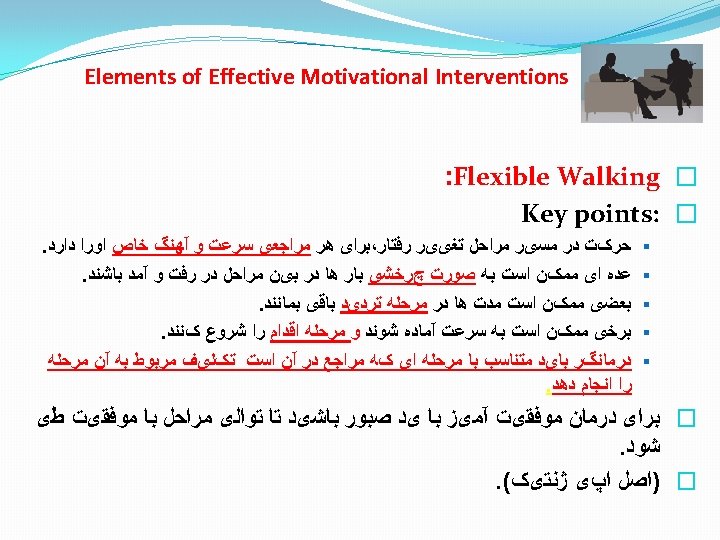
Elements of Effective Motivational Interventions (To Reduce Or Eliminate Substance Use) The FRAMES Approach Decisional Balance Exercises Discrepancies Between Personal Goals And Current Behavior Flexible Walking Personal Contact With Clients Not In Treatment
The FRAMES Approach Feedback Responsibility Advice Menus of Options Empathic counseling Self-efficacy
The FRAMES Approach �Feedback: is given to the client following Assessment Of Substance Use Patterns And Associated Problems. �Active Listening → Understanding → Empathic Style → help the client understand the feedback
The FRAMES Approach �Empathic counseling: � (Rogers, 1957): CLIENT-CENTER THERAPY. � 1. The therapist must relate in a Genuine manner. � 2. The therapist must relate with Unconditional Positive Regard. � 3. The therapist must relate with Accurate Empathy. . Two Components Of Empathy “Empathic Rapport” - Accurately Sensing And Being Able To See The Client’s World The Way They Do. “Communicative Adjustment” - Verbally Sharing Your Understanding With The Client. . 1. 2
Elements of Effective Motivational Interventions (To Reduce Or Eliminate Substance Use) The FRAMES Approach. 1 Decisional Balance Exercises. 2
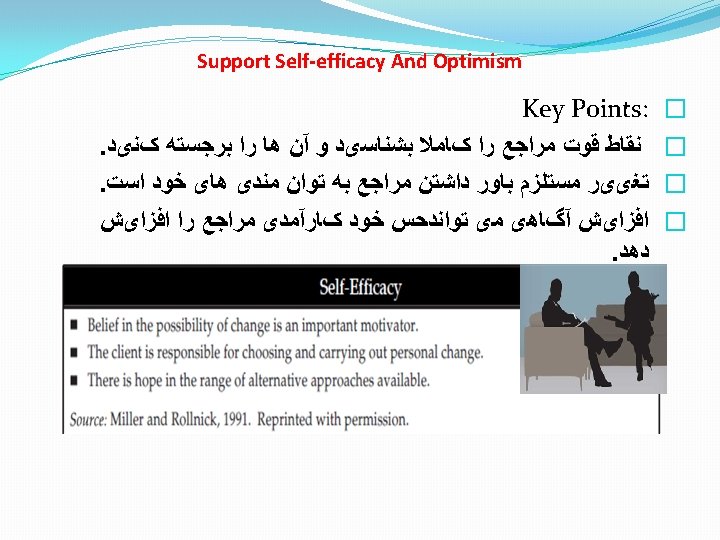
Five Principles of Motivational Interviewing 1. 2. 3. 4. 5. Express Empathy. Develop inconsistency between clients’ goals or values and their current behavior. Avoid Argument And Direct Confrontation. Adjust To Client Resistance. Support Self-efficacy And Optimism
Acquiring Understanding: The Four Phases Establishing a Relationship of Trust and Rapport �An Empathic Style Is : 1. 2. 3. Active Listening: Listen to what the patient is saying. Understanding: to evaluate the main symptoms of suffering expressed by the patient. Responding: Tell the patient some of what you understand of (1) and (2) (above). → 4. Empathic Style Returning to Listening. Active listening→ Understanding→ Empathic Responding→ Returning to Listening→ Trust→ Hope→ Motivation 4 Change
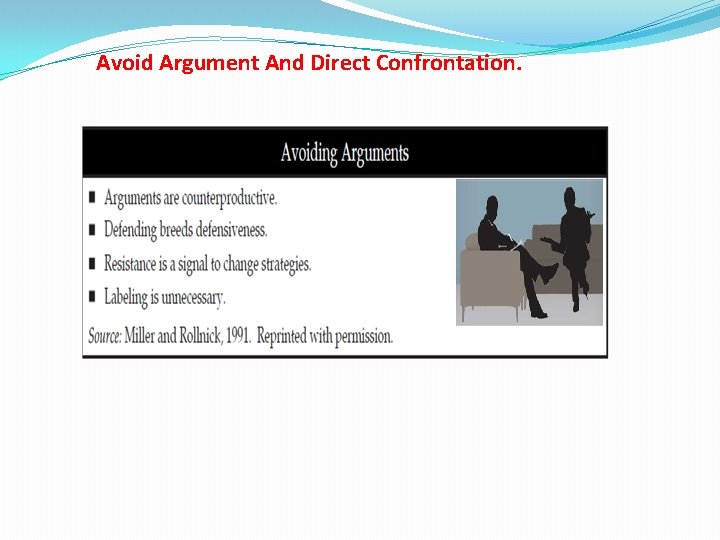
Avoid Argument And Direct Confrontation.
Correct To Client Resistance. � Four Types of Client Resistance: 1. Arguing � The client challenges the accuracy, expertise, or integrity of the clinician. 2. Interrupting: � The client breaks in and interrupts the clinician in a defensive manner. 3. Denying: � The client denies her/his problems 4. Ignoring � The client ignoring or not following the clinician.
Five Opening Strategies For Early Sessions 1. 2. 3. 4. 5. Ask Open-Ended Questions: Listen Reflectively Summarize Elicit Self-Motivational Statements. Confirm
Four Types Of Motivational Statements 1. Cognitive recognition of the problem: � Client: “I guess this is more serious than I thought. ”. 2. Affective expression of concern about the problem. � Client: “I’m really worried about what is happening to me. ” 3. A direct or implicit intention to change behavior: � Client: "I've got to do something about this. ” 4. Optimism about one’s ability to change. � Client: “I know that if I try, I can really do it. ”

Thank You For Your Attention

Any Question?
- Slides: 60