
Motivational Interviewing for the Health Care Professionals How
![Clinician: "Jackie, tell me a little about what you know about antidepressants. “[Explore] Patient:](https://slidetodoc.com/presentation_image_h2/8b41a430e3d95adccc2565dc84caa191/image-36.jpg "Clinician: \"Jackie, tell me a little about what you know about antidepressants. “[Explore] Patient:")
- Slides: 48
Motivational Interviewing for the Health Care Professionals How to engage your patients, overcome resistance and promote behavior change Amy Walters, Ph. D Licensed Clinical Psychologist Director of Behavioral Health Services St. Luke’s Humphreys Diabetes Center
Objectives Attendees will be able to do the following: �Define Motivational Interviewing �Identify at least 3 core elements to MI style �List the 3 guiding principles of MI �Identify ways to address patient resistance �Practice the basic elements of an MI intervention
Definition (Miller & Rollnick) �Motivational Interviewing is. . “ A client-centered, directive method for enhancing intrinsic motivation for change by exploring and resolving ambivalence”
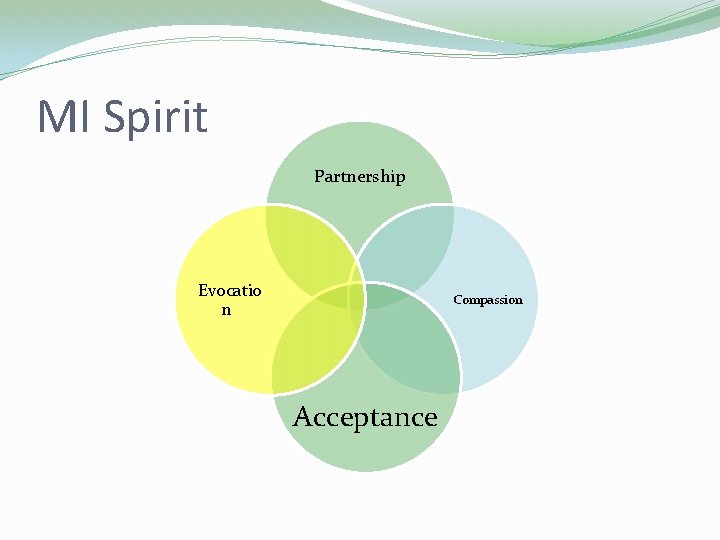
MI is. . . • A collaborative, evocative, conversation about change � Accepting � Compassionate � Directional � A Partnership. . . promotes the interest of other person
Motivational Interviewing �Roots are in substance abuse intervention �First published in early 90 s by Miller & Rollnick �Expanded to other health conditions �Hundreds of randomized clinical trials and publications �Activate patient’s motivation for change
Developments in MI: 2003 - 2011 �Over 200 randomized trials �Total publications tripled to >1200 > 40 books � 2011 over 30, 000 Google Scholar articles �Meta-analyses of MI research �New research on MI processes theory �Rapid diffusion into health care, corrections �Newer diffusion into mental health, education, dentistry, social work �Areas of study : alcohol, drugs, dual dx, gambling, offenders, eating, smoking, HIV, cardiac, diabetes, psychiatric, health promotion, family violence, asthma, dental, cancer – (listed by freq) (Miller, 2013)
Motivational Interviewing �Basic premise: How we speak with people about behavior change matters �Shift from expert role: “I know what is best” to guide role : �“You tell me what is best and let me guide you” �“Tour guide in the land of health behavior change” �MI is not a method, it is a style
Key Elements of MI �Collaboration �Person Centered �Guidance – encourages self-based problem solving �Empathy – relationship is the foundation �Elicit and strengthen motivation for change
MI Spirit Partnership Evocatio n Compassion Acceptance
“Developing proficiency in MI is like learning to play a musical instrument. Some initial instruction is helpful, but real skill develops over time with practice, ideally with feedback and consultation from knowledgeable others. As with other complex skills, gaining proficiency in MI is a lifelong process. ”William Miller, 2008
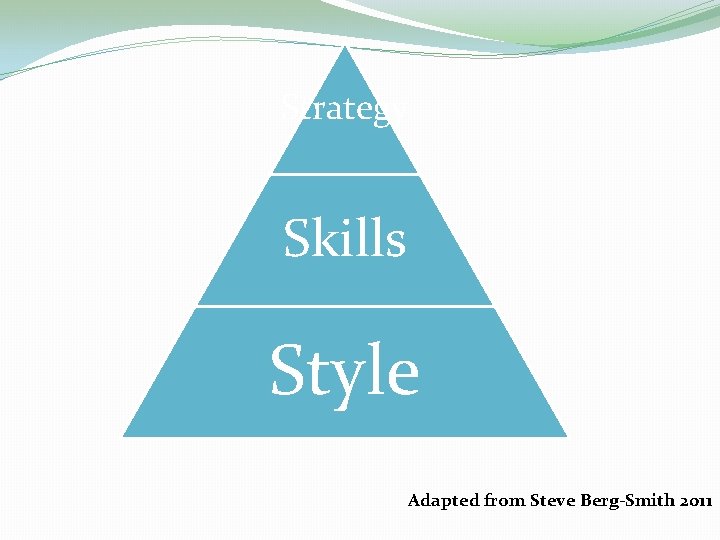
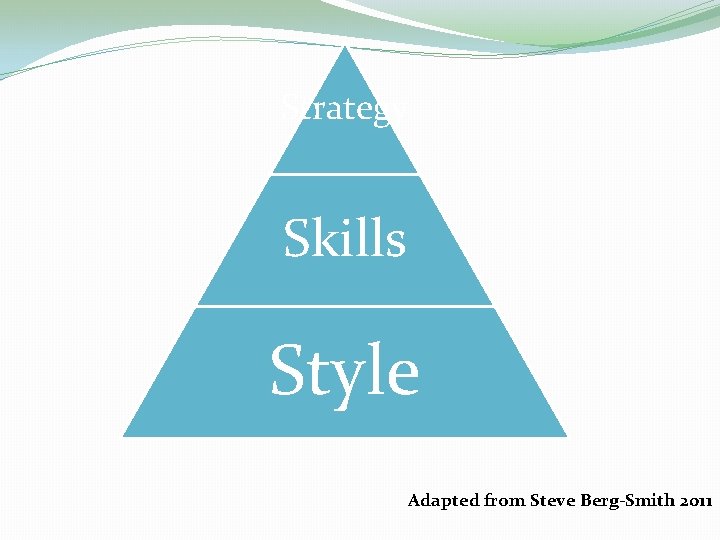
Strategy Skills Style Adapted from Steve Berg-Smith 2011
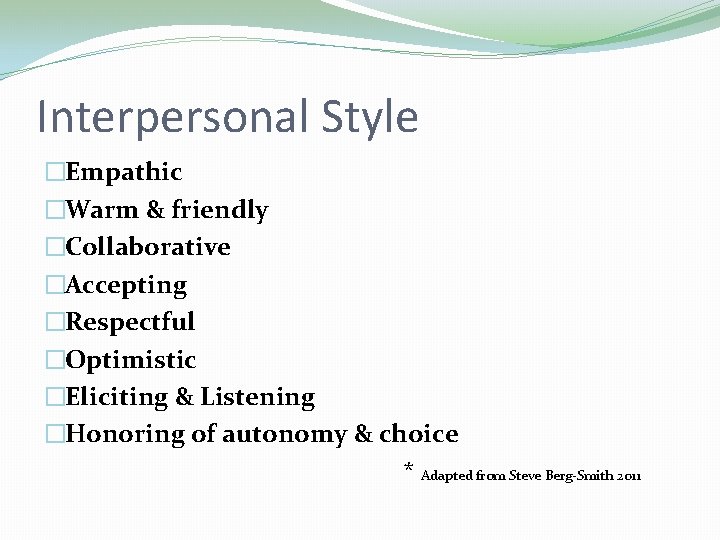
Interpersonal Style �Empathic �Warm & friendly �Collaborative �Accepting �Respectful �Optimistic �Eliciting & Listening �Honoring of autonomy & choice * Adapted from Steve Berg-Smith 2011
Common Communication Styles � 3 common styles of communication for practitioners �Directing – advice giving �Guiding – empathetic listening and encouraging ideas �Following – listening only �Guiding style provides the best outcome and most likely to lead to behavior change
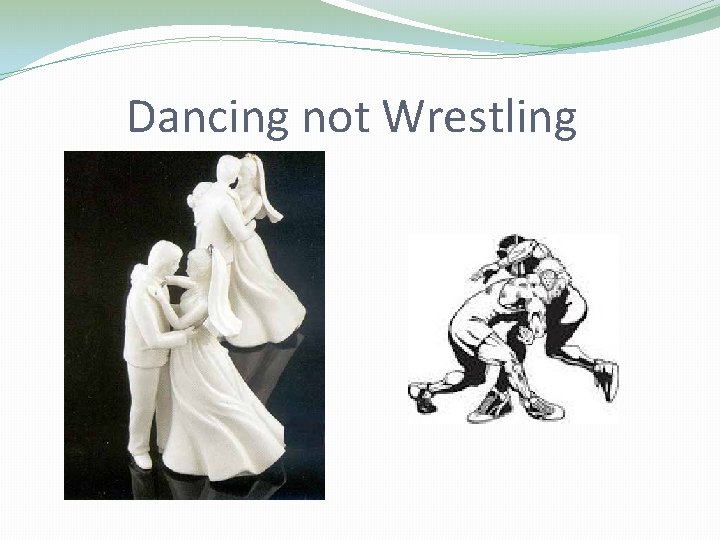
Dancing not Wrestling
3 Guiding Principles of MI �Collaboration/partnership �“Guiding rather than directing and dancing rather than wrestling” �Collaborative conversations and joint decisions �Evocation: elicit hows and whys from the patient �Rather than giving advice, we evoke motivation and resources for change �Autonomy � Respect and support patient autonomy for decisions – directing and coercing leads to resistance
Paradox of change “ when people feel accepted for who they are and what they do (regardless of how unhealthy) it allows them the freedom to consider change, rather than needing to defend against it” (Miller and Rollinick, 2010) Studies suggest empathy is the best predictor of patient behavior change
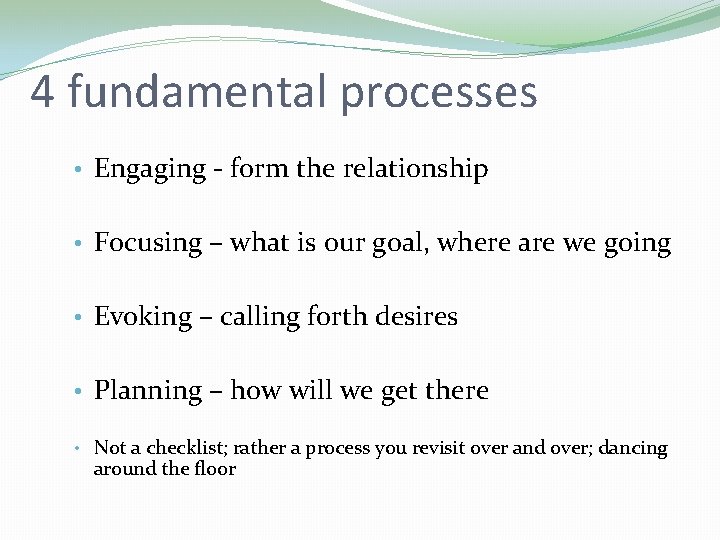
4 fundamental processes • Engaging - form the relationship • Focusing – what is our goal, where are we going • Evoking – calling forth desires • Planning – how will we get there • Not a checklist; rather a process you revisit over and over; dancing around the floor
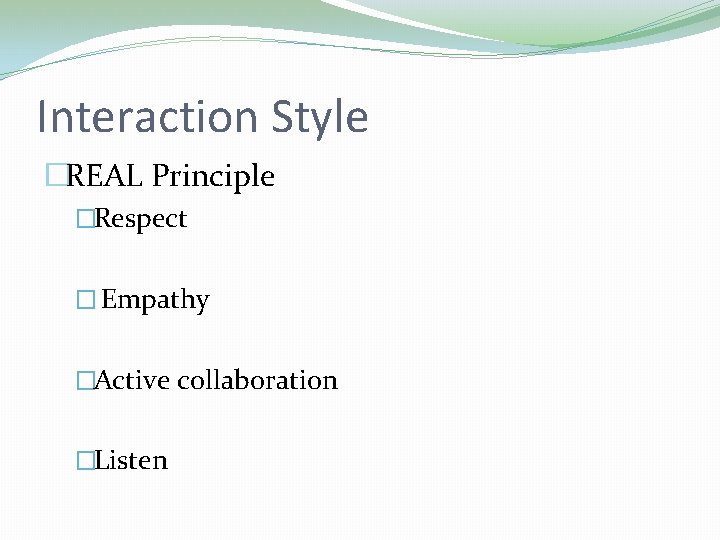
Interaction Style �REAL Principle �Respect � Empathy �Active collaboration �Listen
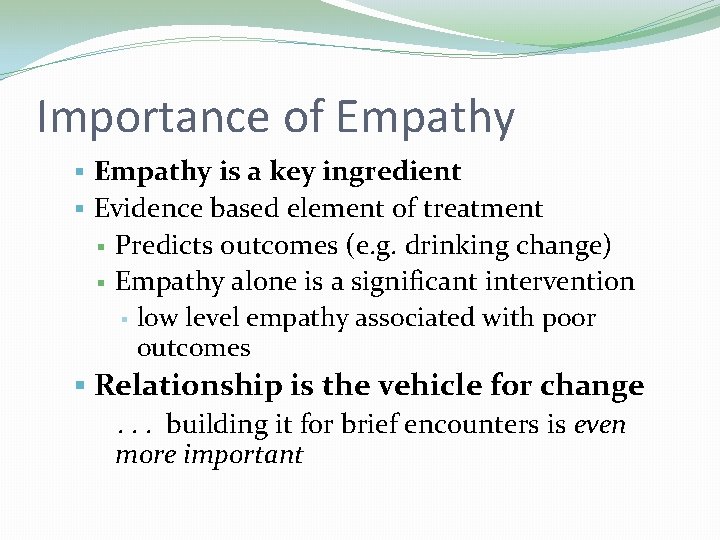
Importance of Empathy § Empathy is a key ingredient § Evidence based element of treatment § § Predicts outcomes (e. g. drinking change) Empathy alone is a significant intervention § low level empathy associated with poor outcomes § Relationship is the vehicle for change. . . building it for brief encounters is even more important
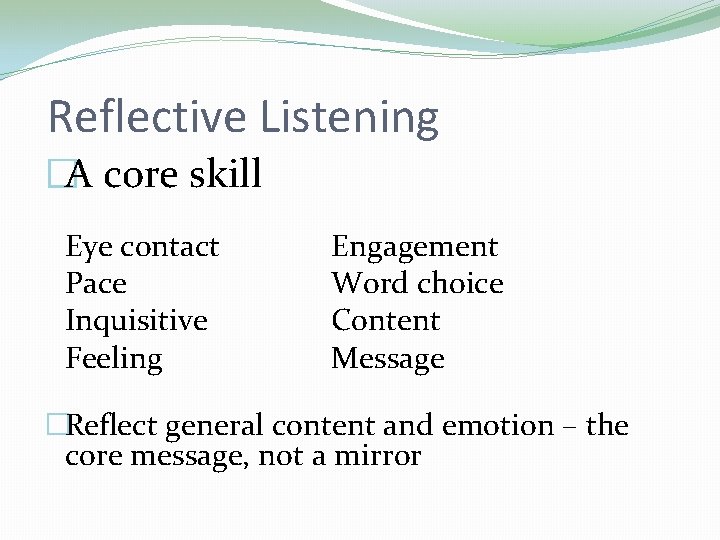
Reflective Listening �A core skill Eye contact Pace Inquisitive Feeling Engagement Word choice Content Message �Reflect general content and emotion – the core message, not a mirror
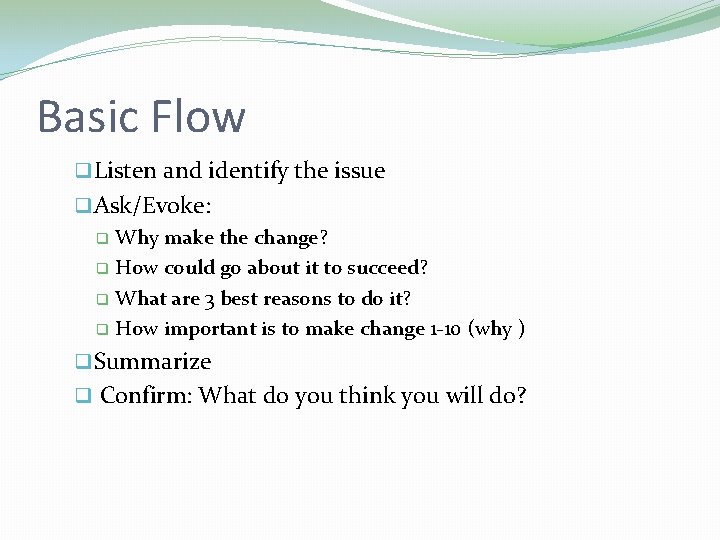
Basic Flow q Listen and identify the issue q Ask/Evoke: q Why make the change? q How could go about it to succeed? q What are 3 best reasons to do it? q How important is to make change 1 -10 (why ) q Summarize q Confirm: What do you think you will do?
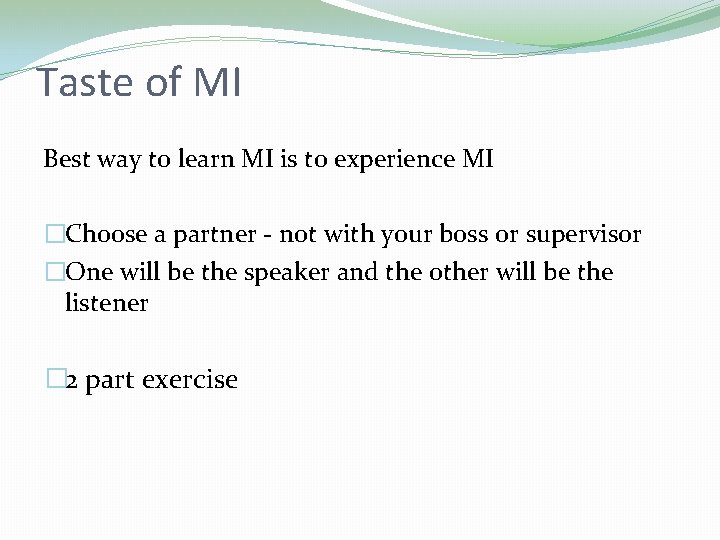
Taste of MI Best way to learn MI is to experience MI �Choose a partner - not with your boss or supervisor �One will be the speaker and the other will be the listener � 2 part exercise
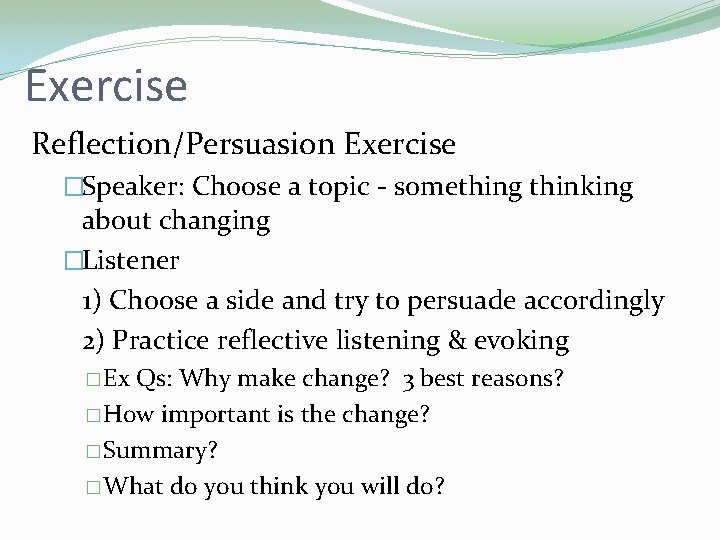
Exercise Reflection/Persuasion Exercise �Speaker: Choose a topic - something thinking about changing �Listener 1) Choose a side and try to persuade accordingly 2) Practice reflective listening & evoking � Ex Qs: Why make change? 3 best reasons? � How important is the change? � Summary? � What do you think you will do?
You Tube Video Effective Physician �http: //www. youtube. com/watch? v=URi. KA 7 CKtfc Diabetes Educator �http: //www. youtube. com/watch? v=5 h 0 i-b 0 xrn. I
Strategy Skills Style Adapted from Steve Berg-Smith 2011
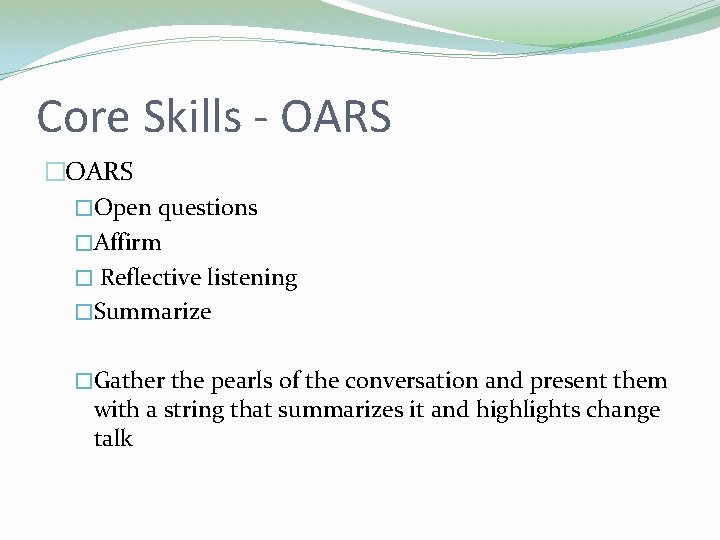
Core Skills - OARS �Open questions �Affirm � Reflective listening �Summarize �Gather the pearls of the conversation and present them with a string that summarizes it and highlights change talk
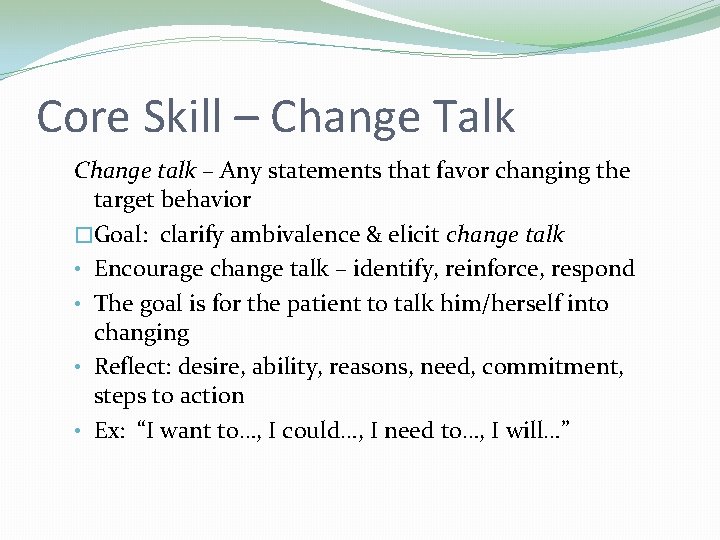
Core Skill – Change Talk Change talk – Any statements that favor changing the target behavior �Goal: clarify ambivalence & elicit change talk • Encourage change talk – identify, reinforce, respond • The goal is for the patient to talk him/herself into changing • Reflect: desire, ability, reasons, need, commitment, steps to action • Ex: “I want to…, I could…, I need to…, I will…”
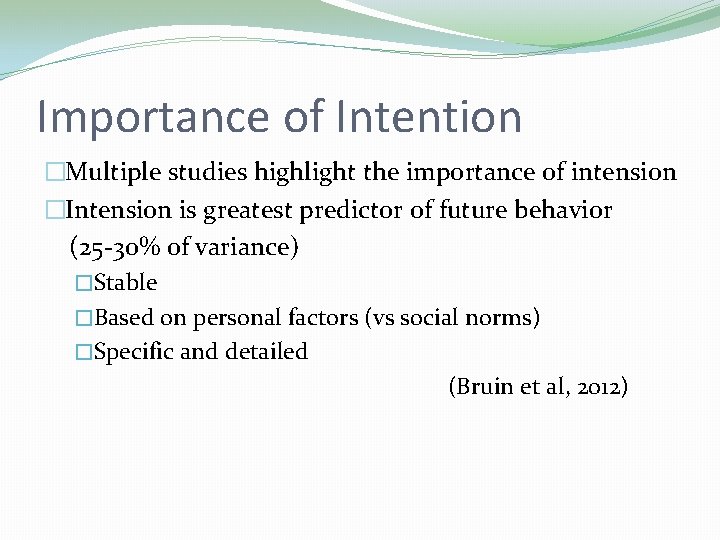
Importance of Intention �Multiple studies highlight the importance of intension �Intension is greatest predictor of future behavior (25 -30% of variance) �Stable �Based on personal factors (vs social norms) �Specific and detailed (Bruin et al, 2012)
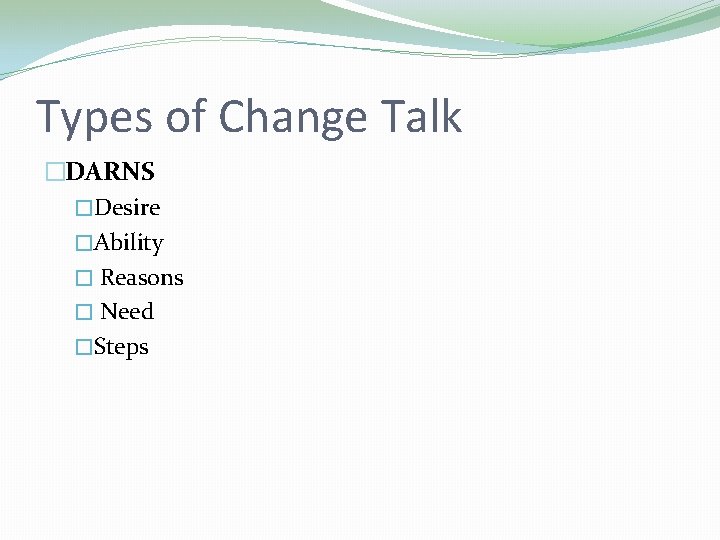
Types of Change Talk �DARNS �Desire �Ability � Reasons � Need �Steps
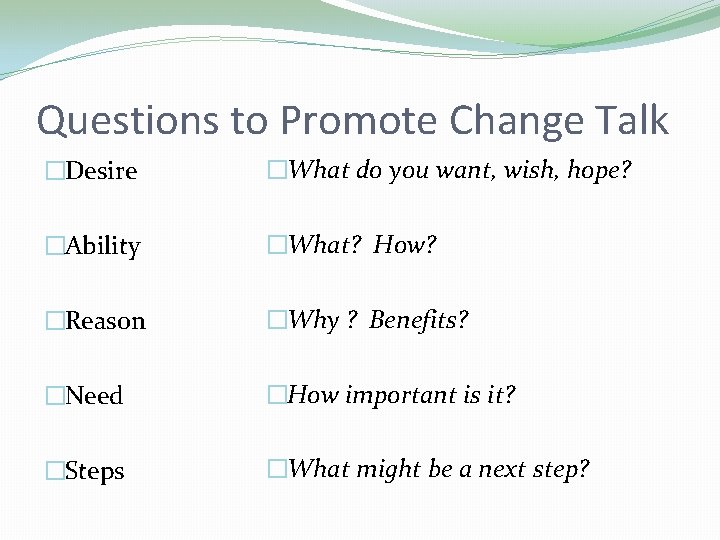
Questions to Promote Change Talk �Desire �What do you want, wish, hope? �Ability �What? How? �Reason �Why ? Benefits? �Need �How important is it? �Steps �What might be a next step?
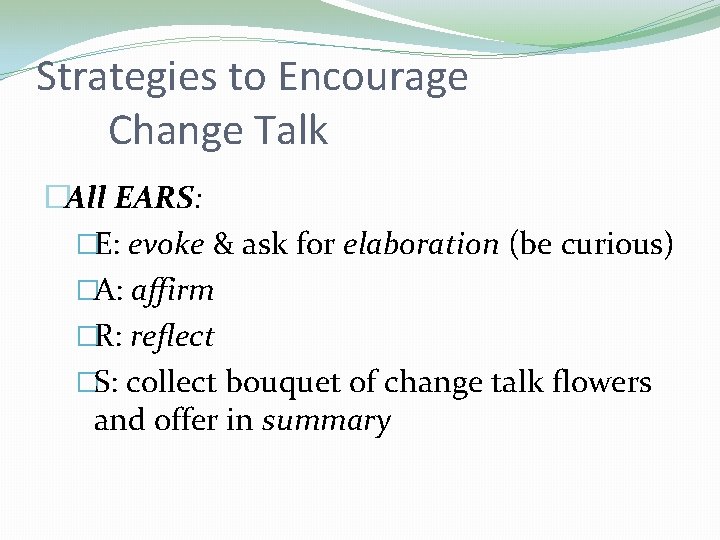
Strategies to Encourage Change Talk �All EARS: �E: evoke & ask for elaboration (be curious) �A: affirm �R: reflect �S: collect bouquet of change talk flowers and offer in summary
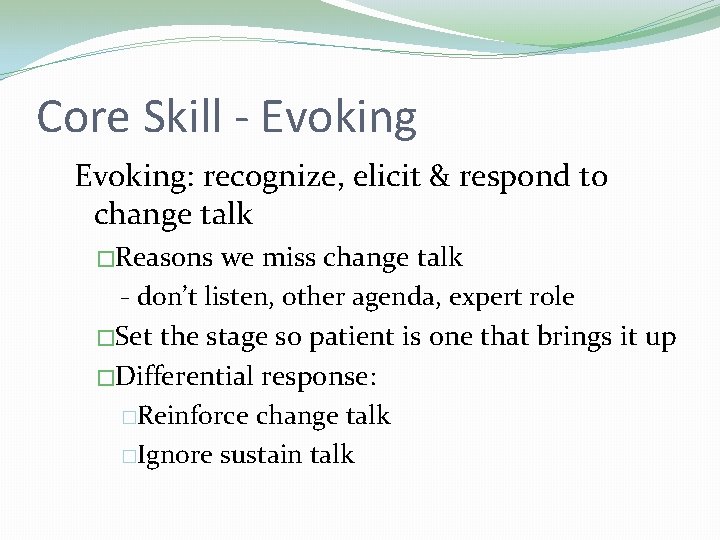
Core Skill - Evoking: recognize, elicit & respond to change talk �Reasons we miss change talk - don’t listen, other agenda, expert role �Set the stage so patient is one that brings it up �Differential response: �Reinforce change talk �Ignore sustain talk
Evoking Questions �Ask evocative, open ended Qs �Use importance ruler & confidence ruler �Query extremes – best thing, worst thing �Look back and forward �Explore goals and values- what matters to you, care about most, guides decisions �Qs: How will that happen for you; what would help you be successful
Core Skills – EOE Rhythm �Explore �Offer �Explore �Painter analogy – good outcomes are all about the prep work
Sharing Information �Ask permission �Slow down �Be clear and concise: Small nuggets! �Avoid information overload: Less is more! �Use visual support �Avoid technical terms and jargon �Offer choices �Explore –Offer –Explore �Education, feedback, skills, referrals *Adapted from Steve Berg 2011
Clinician: "Jackie, tell me a little about what you know about antidepressants. “[Explore] Patient: "Well, I know that lots of women are told they have depression and then take these pills that lowers their sex drive and makes them fatter. How can that be helpful? “ Clinician: "You're absolutely right! These side effects can and do happen for many women. Could I tell you some other things about anti-depressants that we know as well? “[Ask permission to Offer] Patient: "Well, I suppose. " Clinician: "Great; thanks! There are many newer anti-depressants that don't seem to have the same side effects for most women; they seem to lessen the depression only and not the sex drive. And your sex life sounds important to you. [Offer] What do you think about that? “[Explore] Patient: "Well, I guess I could try one of those other ones if you really think it might help -and that I won't gain more weight!"
Resistance “Resistance is a by-product of communicative style and approach “ It’s a sign we are dancing to a different song � STOP � listen to the beat � try to join the patient’s rhythm �Being heard can be the most healing response Resistance signals ambivalence and a need to step back, listen and help the patient explore the options
Resistance Traps �The question-answer trap �The taking sides trap �The expert trap �The scare tactics trap �The cheerleading trap �The pouncing trap �The information over-load trap �The premature action planning trap
Dealing with Resistance/Discord �Signs: interrupting, arguing, challenging, discounting, hostility, withdrawal, ignoring, changing the topic �Responsive to style �Not dancing together well �Step back, listen and evoke concerns
Addressing Ambivalence and Resistance �Back away from the problem �Move to exploration and guidance �Explore why and how change might occur �Ambivalence is a normal phenomenon when considering change – resist the righting response (advice)
The RULE Principle �Resist the righting response � Roll with resistance, invite perceptions, listen and reflect �Understand motivation � Explore values for change, listen for core values & motivation �Listen with empathy � Warmth & acceptance, reflection, safe connection �Empower ability to change � Affirmation, evidence of ability to solve problems
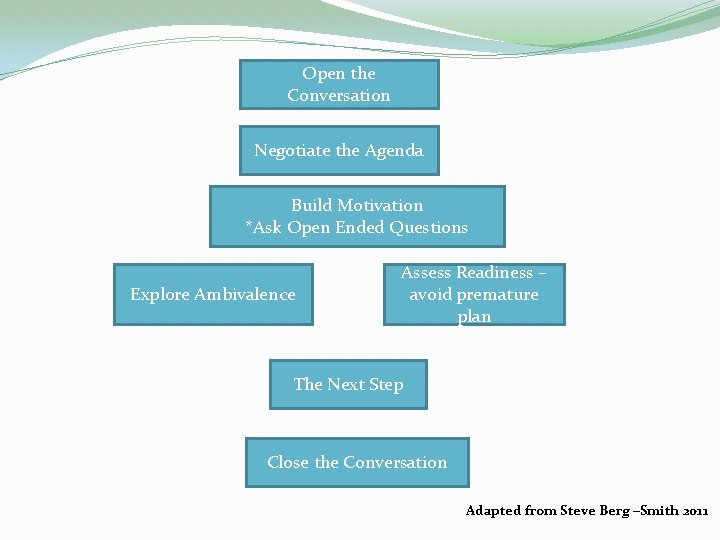
Open the Conversation Negotiate the Agenda Build Motivation *Ask Open Ended Questions Explore Ambivalence Assess Readiness – avoid premature plan The Next Step Close the Conversation Adapted from Steve Berg –Smith 2011
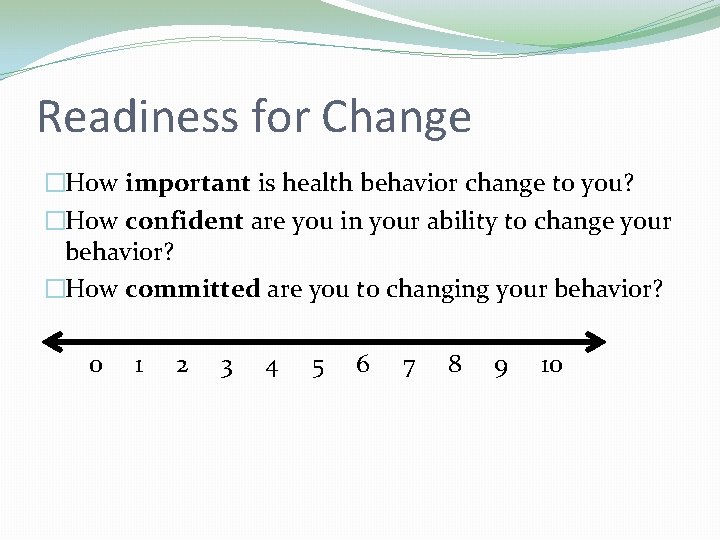
Readiness for Change �How important is health behavior change to you? �How confident are you in your ability to change your behavior? �How committed are you to changing your behavior? 0 1 2 3 4 5 6 7 8 9 10
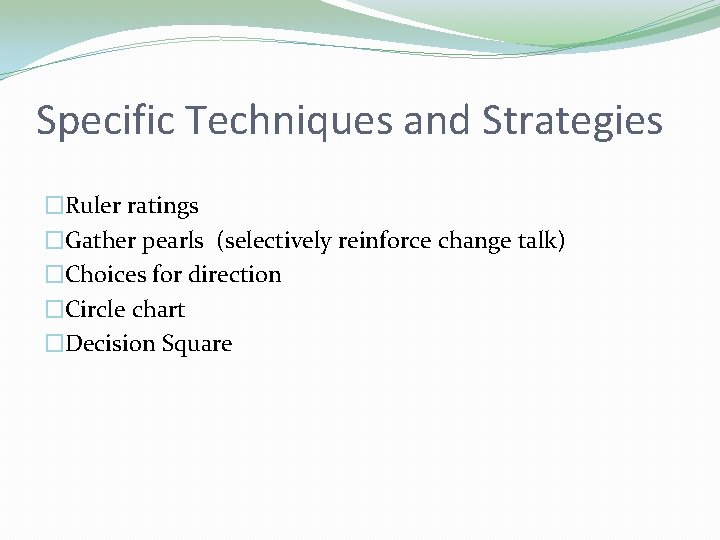
Specific Techniques and Strategies �Ruler ratings �Gather pearls (selectively reinforce change talk) �Choices for direction �Circle chart �Decision Square
Final Points �Behavior change is a key element of healthy living and wellness �Many patients struggle to achieve behavior change, despite good intentions �Traditional methods of “advice giving” may increase resistance to change �MI is a research-based technique that may assist health care professionals to support patients in their behavior change efforts
Final Points Health behavior change is not a byproduct of education, medication or provider instruction - behavior change is always the result of patient motivation � �Release the responsibility to fix - Patients hold responsibility for their own health choices and behaviors
Research indicates the most effective providers: • Focus on patient goals and priorities • Follow the patient’s pace • Communicate high levels of empathy • Provide guidance to reach health goals
References � Miller, W & Rollnick (2013) Motivational Interviewing: Helping People Change (3 rd Edition). Guilford Press, New York � Miller, W & Moyers, T (2013) Advanced Workshop in Motivational Interviewing, Albuquerque, NM September 2013 � Rollnick, S. , Miller, W. , & Butler, C. (2008). Motivational Interviewing in Health Care: Helping Patients Change Behavior. Guilford Press, London. � Arkowitz et al. (2008). Motivational Interviewing in the Treatment of Psychological Problems. Guildford Press, London. � Berg – Smith, S. (2011). Intensive Introduction to Motivational Interviewing : 3 day training, San Fransisco, CA, December 2011. � Bruin et al. (2012) Self regulatory processes mediate the intention behavior relation of adherence and exercise behavior; Health Psychology, 31 (6), 695 -703. � Groot et al. Depression Among Adults with Diabetes: Prevalence, Impact and Treatment. (2010) Diabetes Spectrum 23: 15 -18. � Welch, G. , et. al. (2006). Motivational Interviewing and Diabetes: What is it? How is it used? Does it work? Diabetes Spectrum 19: 5 -11. � www. motivationalinterview. org