
Motivation Thriving in Language Learning Using SelfDetermination Theory





- Slides: 30
Motivation & Thriving in Language Learning: Using Self-Determination Theory to Create an Optimal Environment for Learners Dr Abigail Parrish Bishop Grosseteste University, Lincoln, UK abigail. parrish@bishopg. ac. uk
Lincoln
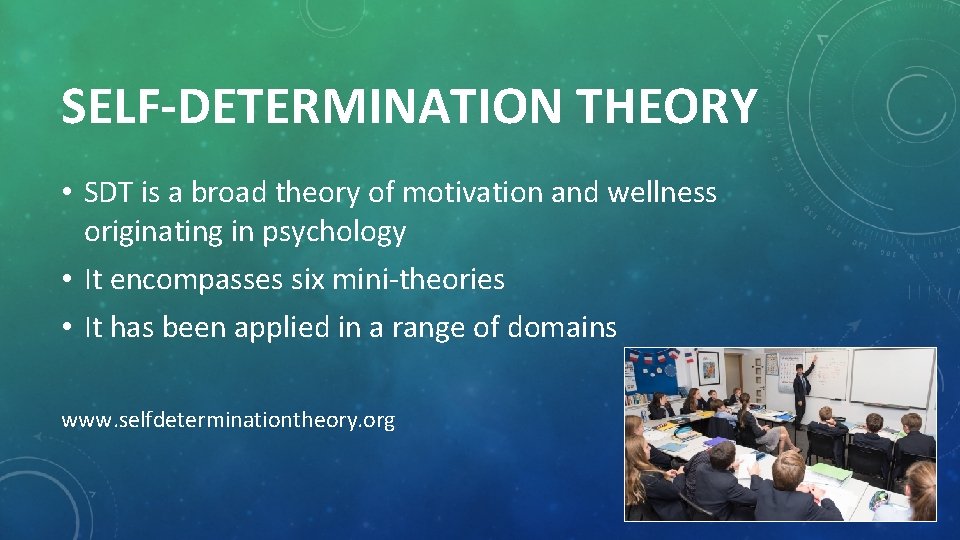
SELF-DETERMINATION THEORY • SDT is a broad theory of motivation and wellness originating in psychology • It encompasses six mini-theories • It has been applied in a range of domains www. selfdeterminationtheory. org
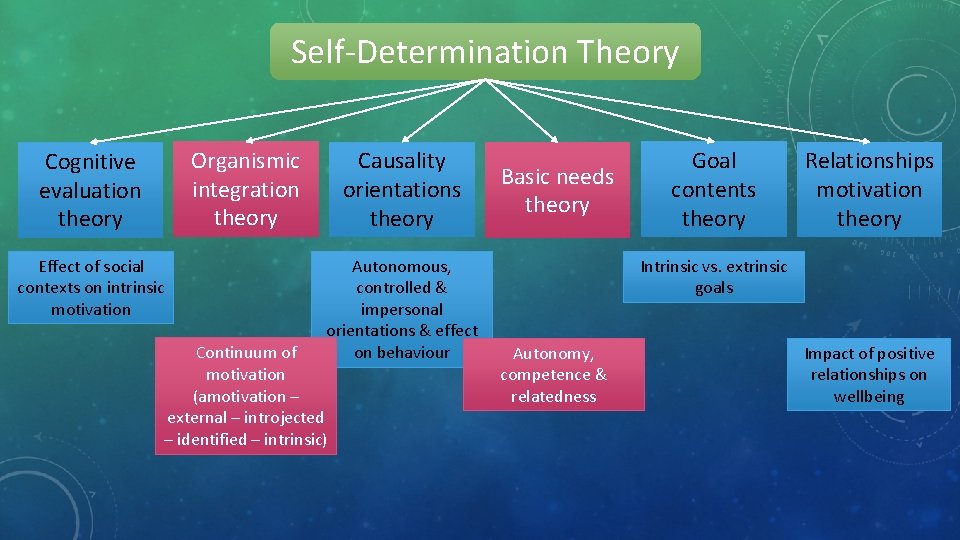
Self-Determination Theory Organismic integration theory Cognitive evaluation theory Effect of social contexts on intrinsic motivation Causality orientations theory Autonomous, controlled & impersonal orientations & effect on behaviour Continuum of motivation (amotivation – external – introjected – identified – intrinsic) Basic needs theory Goal contents theory Relationships motivation theory Intrinsic vs. extrinsic goals Autonomy, competence & relatedness Impact of positive relationships on wellbeing
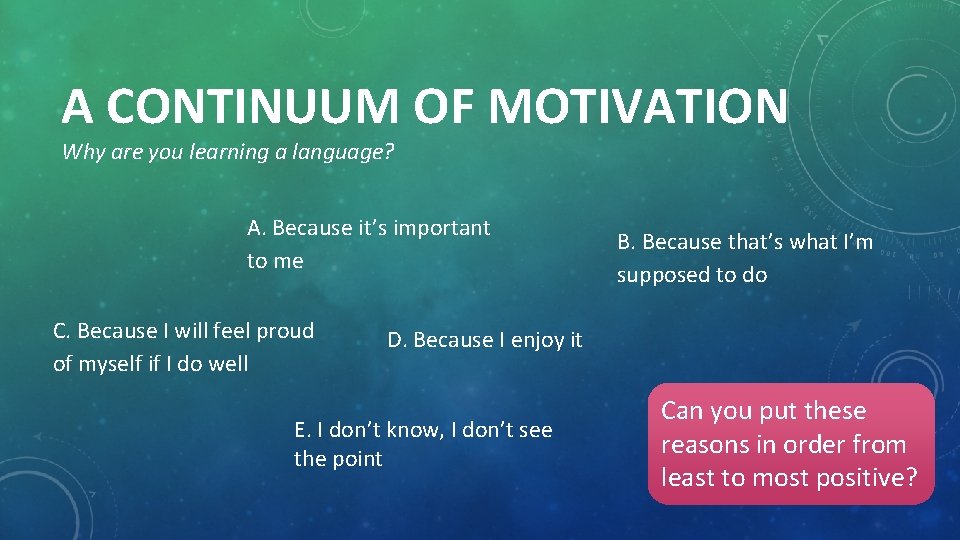
A CONTINUUM OF MOTIVATION Why are you learning a language? A. Because it’s important to me C. Because I will feel proud of myself if I do well B. Because that’s what I’m supposed to do D. Because I enjoy it E. I don’t know, I don’t see the point Can you put these reasons in order from least to most positive?
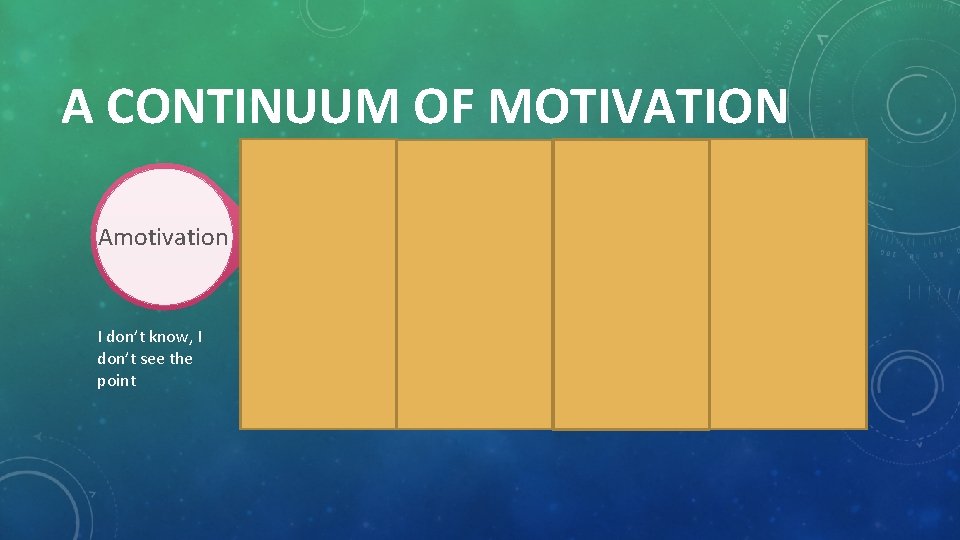
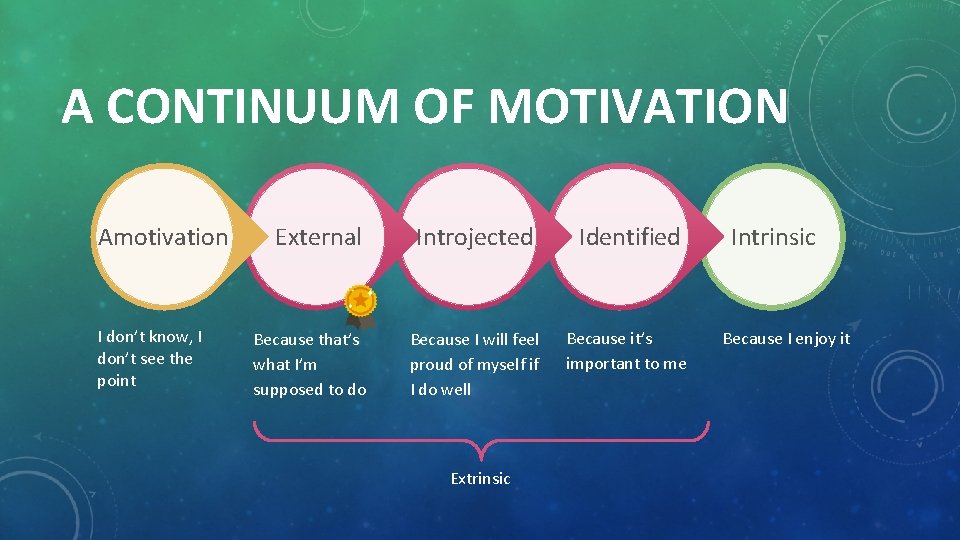
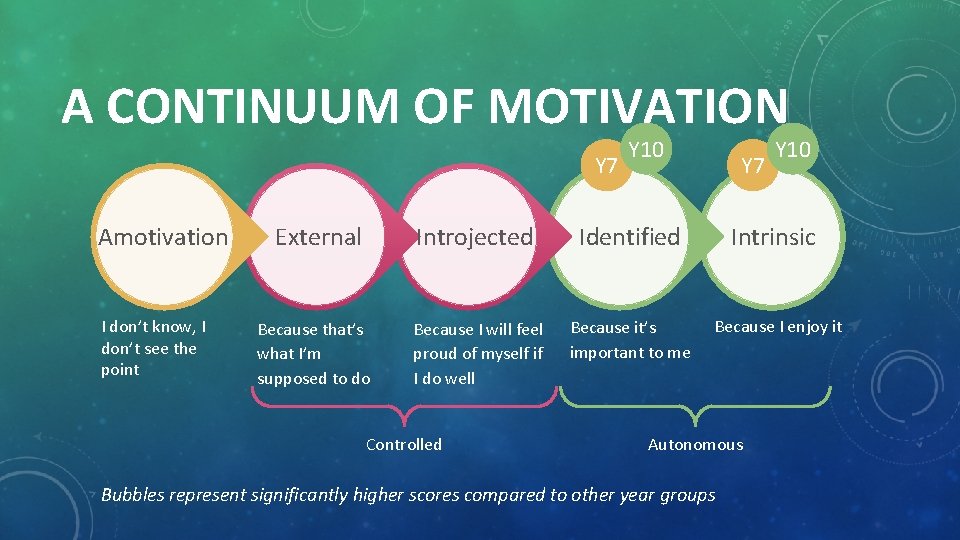
A CONTINUUM OF MOTIVATION Amotivation I don’t know, I don’t see the point External Because that’s what I’m supposed to do Introjected Identified Because I will feel proud of myself if I do well Because it’s important to me Intrinsic Because I enjoy it
A CONTINUUM OF MOTIVATION Amotivation I don’t know, I don’t see the point External Because that’s what I’m supposed to do Introjected Identified Because I will feel proud of myself if I do well Because it’s important to me Extrinsic Intrinsic Because I enjoy it
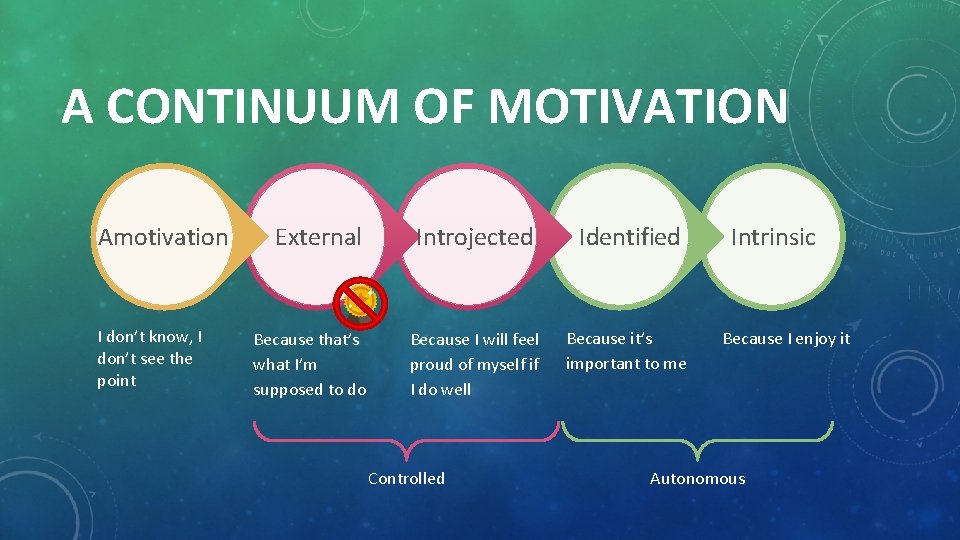
A CONTINUUM OF MOTIVATION Amotivation I don’t know, I don’t see the point External Because that’s what I’m supposed to do Introjected Identified Because I will feel proud of myself if I do well Because it’s important to me Controlled Intrinsic Because I enjoy it Autonomous
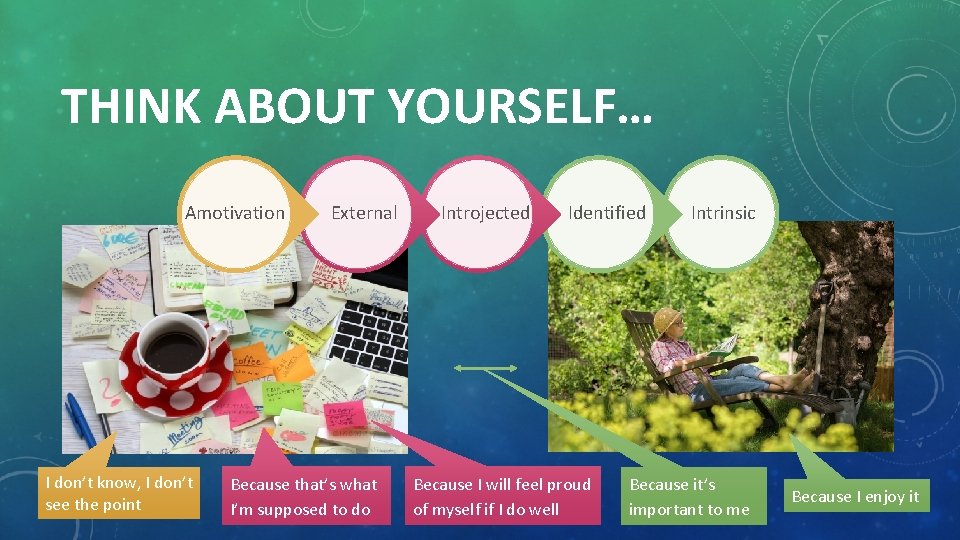
THINK ABOUT YOURSELF… Amotivation I don’t know, I don’t see the point External Because that’s what I’m supposed to do Introjected Identified Because I will feel proud of myself if I do well Intrinsic Because it’s important to me Because I enjoy it
FOR LANGUAGE LEARNERS: FOSTERING AUTONOMOUS MOTIVATION The best kind of motivation is the kind that comes from the student: something that is, or becomes, their personal belief
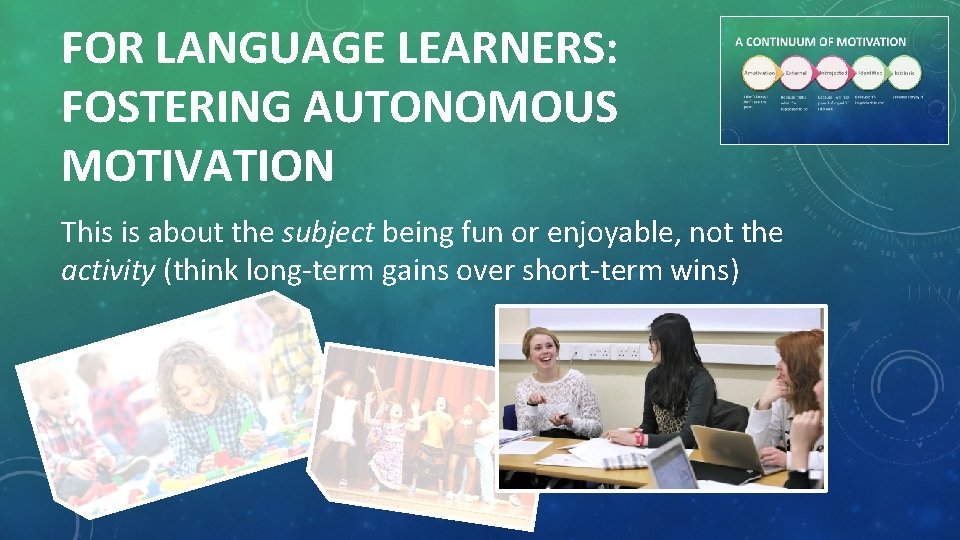
FOR LANGUAGE LEARNERS: FOSTERING AUTONOMOUS MOTIVATION This is about the subject being fun or enjoyable, not the activity (think long-term gains over short-term wins)
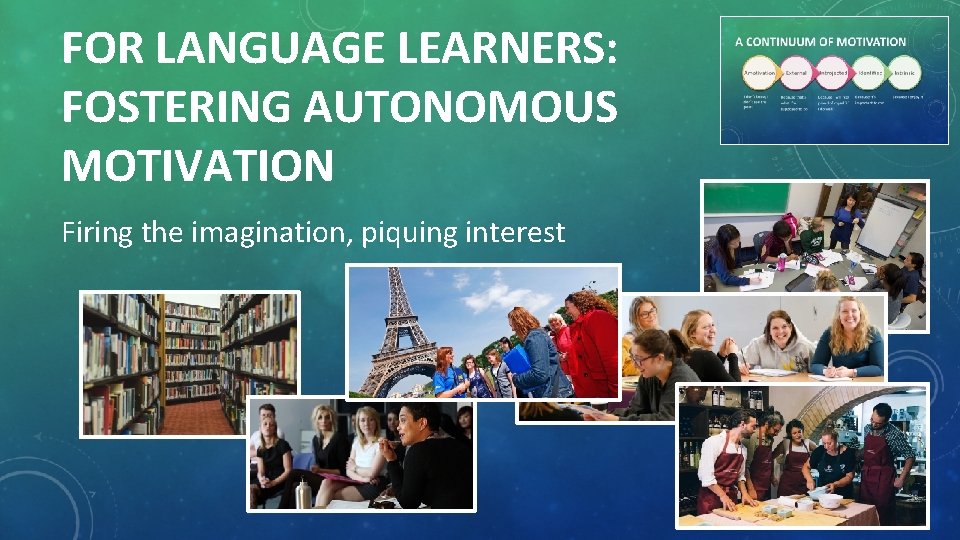
FOR LANGUAGE LEARNERS: FOSTERING AUTONOMOUS MOTIVATION Firing the imagination, piquing interest
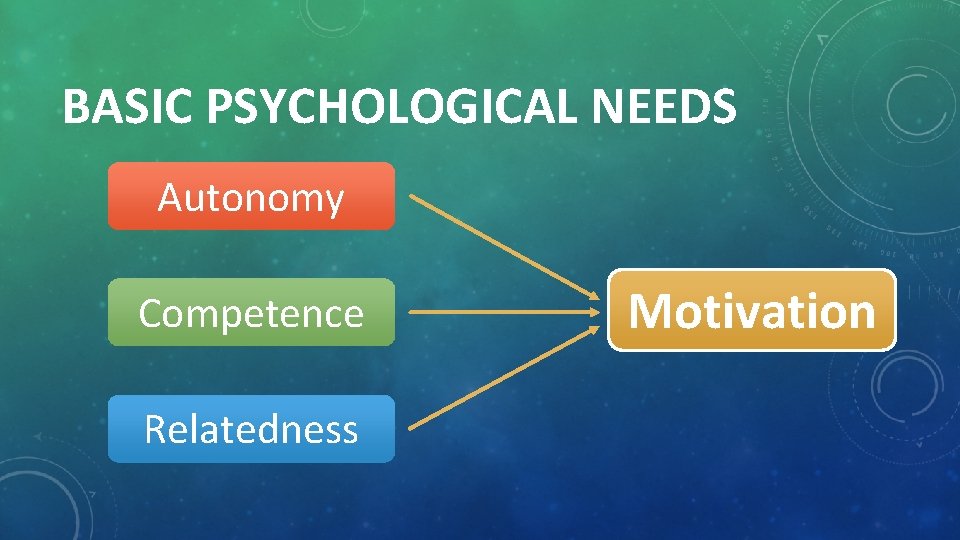
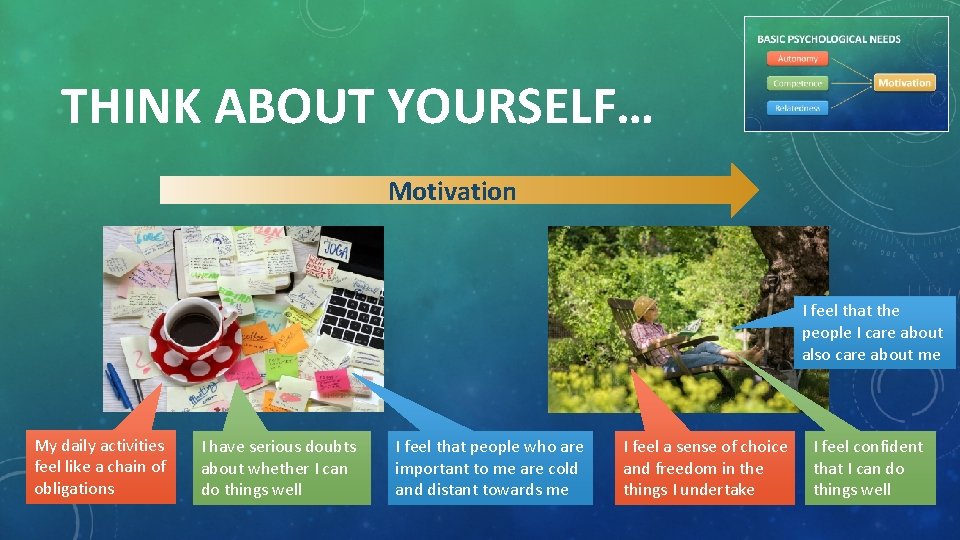
BASIC PSYCHOLOGICAL NEEDS Autonomy Competence Relatedness Motivation
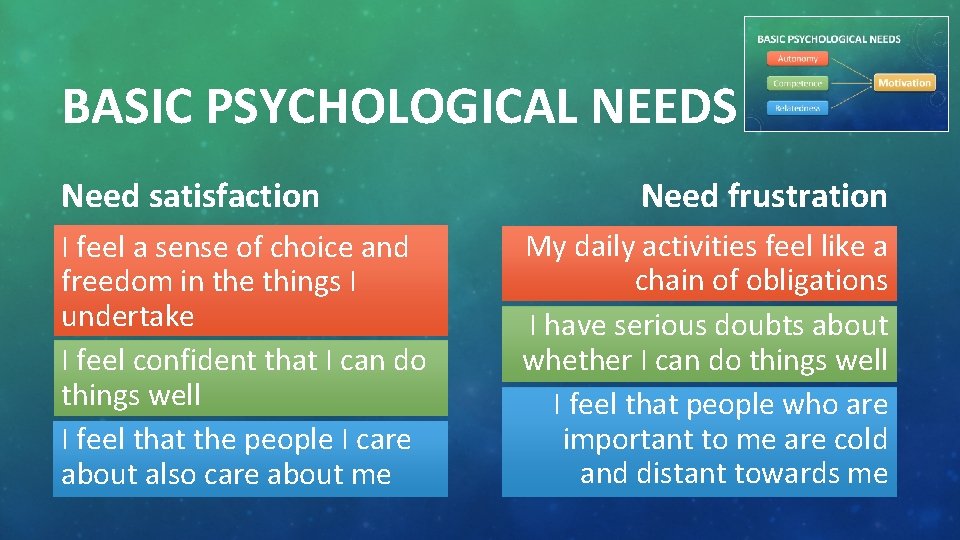
BASIC PSYCHOLOGICAL NEEDS Need satisfaction I feel a sense of choice and freedom in the things I undertake I feel confident that I can do things well I feel that the people I care about also care about me Need frustration My daily activities feel like a chain of obligations I have serious doubts about whether I can do things well I feel that people who are important to me are cold and distant towards me
THINK ABOUT YOURSELF… Motivation I feel that the people I care about also care about me My daily activities feel like a chain of obligations I have serious doubts about whether I can do things well I feel that people who are important to me are cold and distant towards me I feel a sense of choice and freedom in the things I undertake I feel confident that I can do things well
THE IMPACT OF THE CLASSROOM • The teacher and the learning environment are key in supporting or frustrating student motivation and engagement • Every student’s classroom engagement is a combination of their motivation and the way the classroom and teacher support or frustrate their basic psychological needs
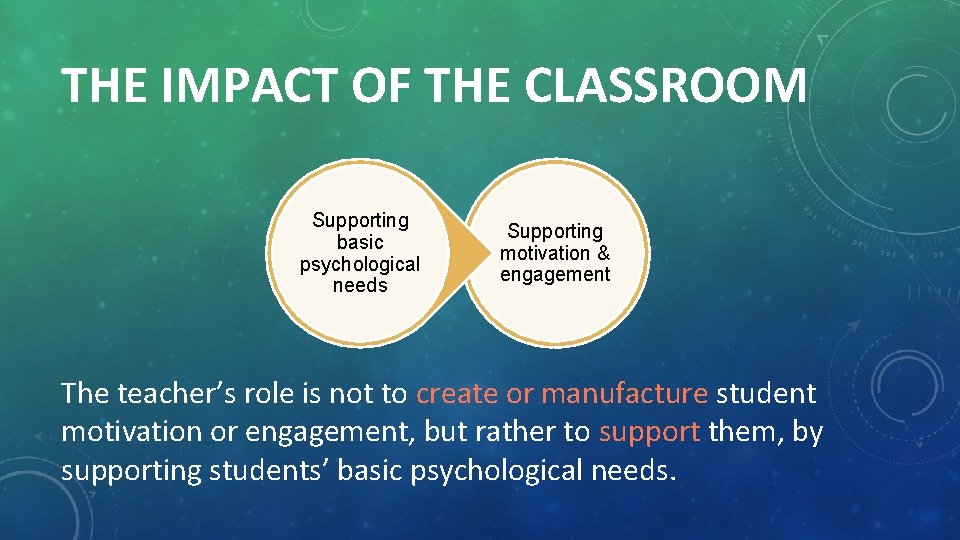
THE IMPACT OF THE CLASSROOM Supporting basic psychological needs Supporting motivation & engagement The teacher’s role is not to create or manufacture student motivation or engagement, but rather to support them, by supporting students’ basic psychological needs.
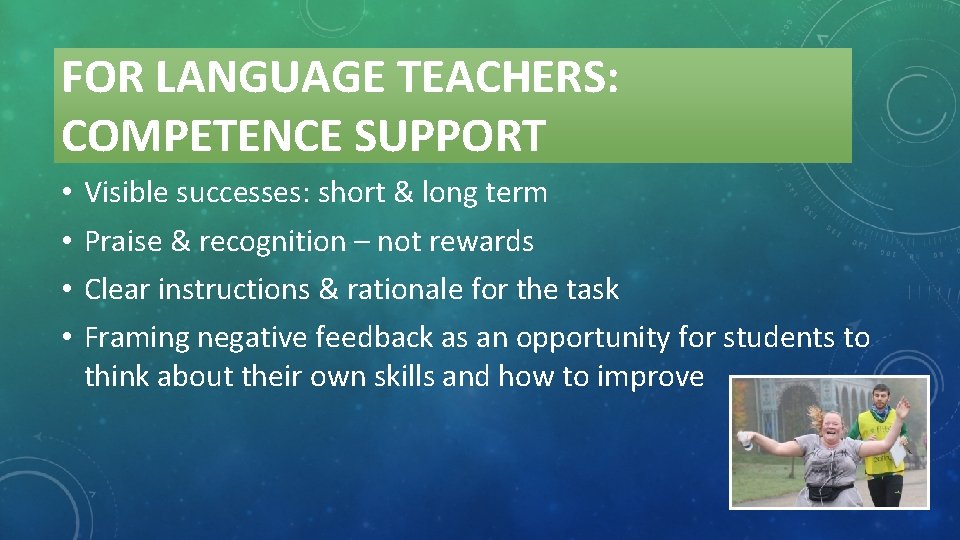
FOR LANGUAGE TEACHERS: COMPETENCE SUPPORT • • Visible successes: short & long term Praise & recognition – not rewards Clear instructions & rationale for the task Framing negative feedback as an opportunity for students to think about their own skills and how to improve
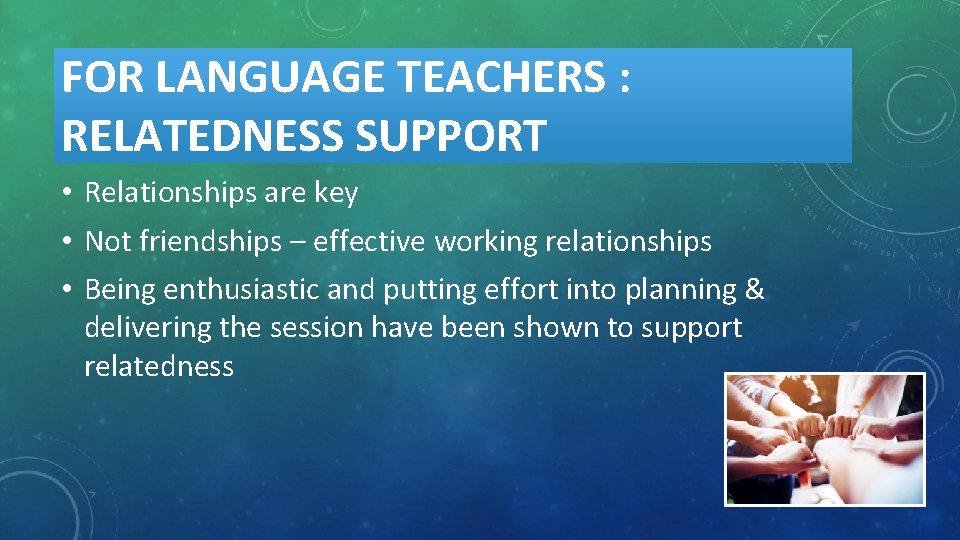
FOR LANGUAGE TEACHERS : RELATEDNESS SUPPORT • Relationships are key • Not friendships – effective working relationships • Being enthusiastic and putting effort into planning & delivering the session have been shown to support relatedness
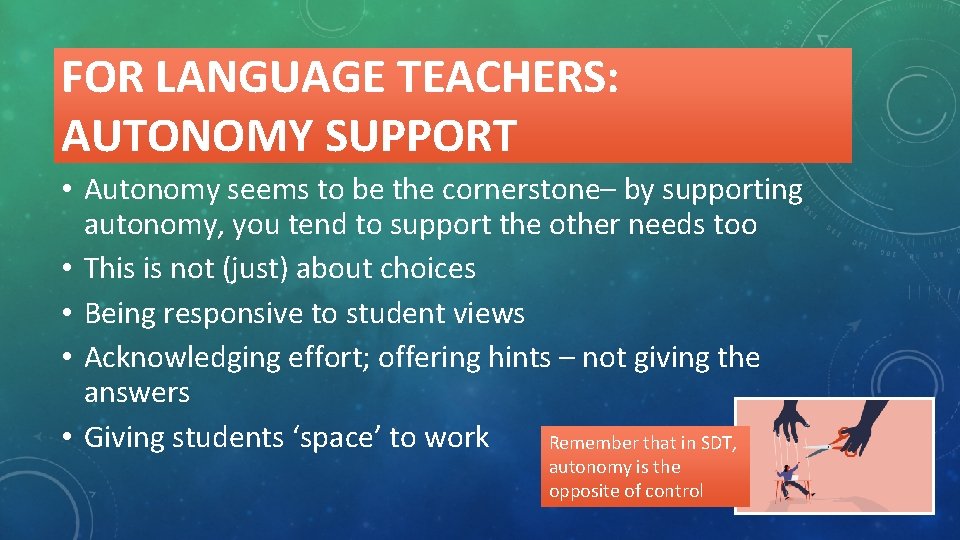
FOR LANGUAGE TEACHERS: AUTONOMY SUPPORT • Autonomy seems to be the cornerstone– by supporting autonomy, you tend to support the other needs too • This is not (just) about choices • Being responsive to student views • Acknowledging effort; offering hints – not giving the answers • Giving students ‘space’ to work Remember that in SDT, autonomy is the opposite of control
SOME DATA
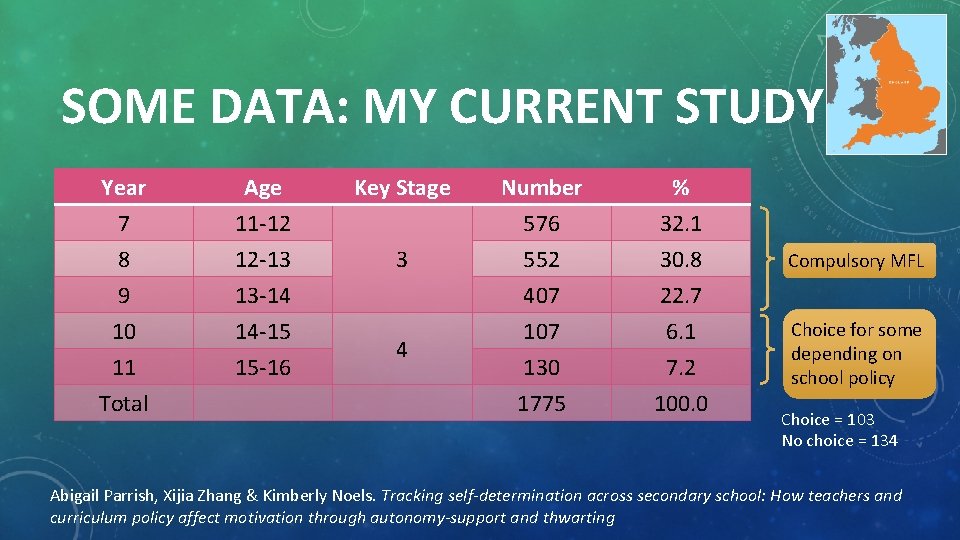
SOME DATA: MY CURRENT STUDY Year 7 8 9 Age 11 -12 12 -13 13 -14 10 11 Total 14 -15 15 -16 Key Stage 3 4 Number 576 552 407 % 32. 1 30. 8 22. 7 107 130 1775 6. 1 7. 2 100. 0 Compulsory MFL Choice for some depending on school policy Choice = 103 No choice = 134 Abigail Parrish, Xijia Zhang & Kimberly Noels. Tracking self-determination across secondary school: How teachers and curriculum policy affect motivation through autonomy-support and thwarting
A CONTINUUM OF MOTIVATION Y 7 Amotivation I don’t know, I don’t see the point Y 10 Y 7 Y 10 External Introjected Identified Intrinsic Because that’s what I’m supposed to do Because I will feel proud of myself if I do well Because it’s important to me Because I enjoy it Controlled Autonomous Bubbles represent significantly higher scores compared to other year groups
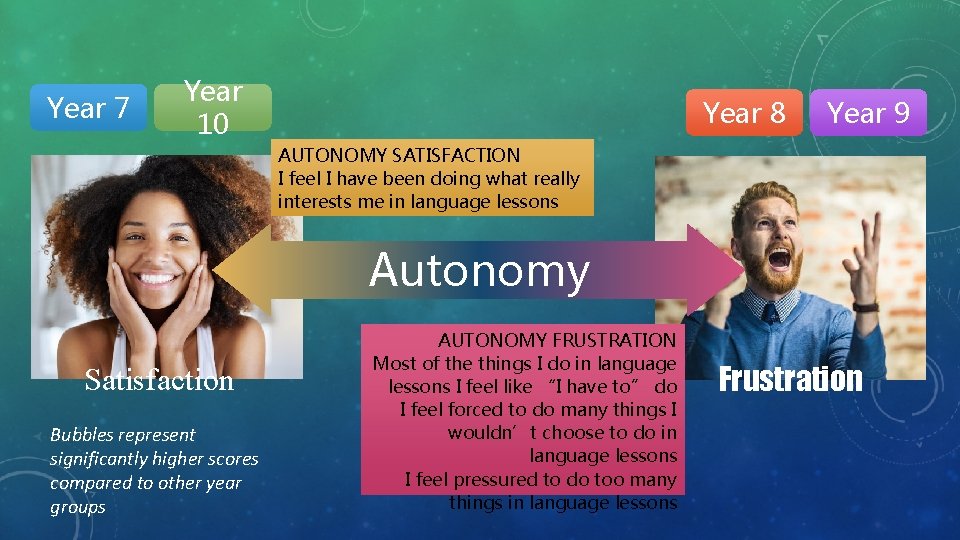
Year 7 Year 10 Year 8 Year 9 AUTONOMY SATISFACTION I feel I have been doing what really interests me in language lessons Autonomy Satisfaction Bubbles represent significantly higher scores compared to other year groups AUTONOMY FRUSTRATION Most of the things I do in language lessons I feel like “I have to” do I feel forced to do many things I wouldn’t choose to do in language lessons I feel pressured to do too many things in language lessons Frustration
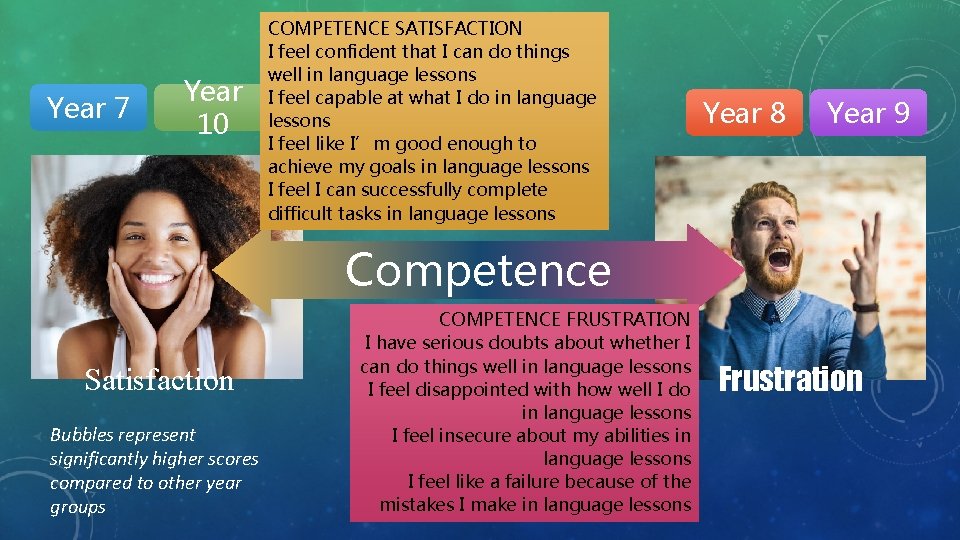
Year 7 Year 10 COMPETENCE SATISFACTION I feel confident that I can do things well in language lessons I feel capable at what I do in language lessons I feel like I’m good enough to achieve my goals in language lessons I feel I can successfully complete difficult tasks in language lessons Year 8 Year 9 Competence Satisfaction Bubbles represent significantly higher scores compared to other year groups COMPETENCE FRUSTRATION I have serious doubts about whether I can do things well in language lessons I feel disappointed with how well I do in language lessons I feel insecure about my abilities in language lessons I feel like a failure because of the mistakes I make in language lessons Frustration
WHAT DOES IT MEAN? Students at the beginning of courses seem to be more motivated and to feel more satisfied Important to note that the Year 10 & 11 students include both those who had a choice and those who did not – unpicking this will give more information
KEY TAKEAWAYS
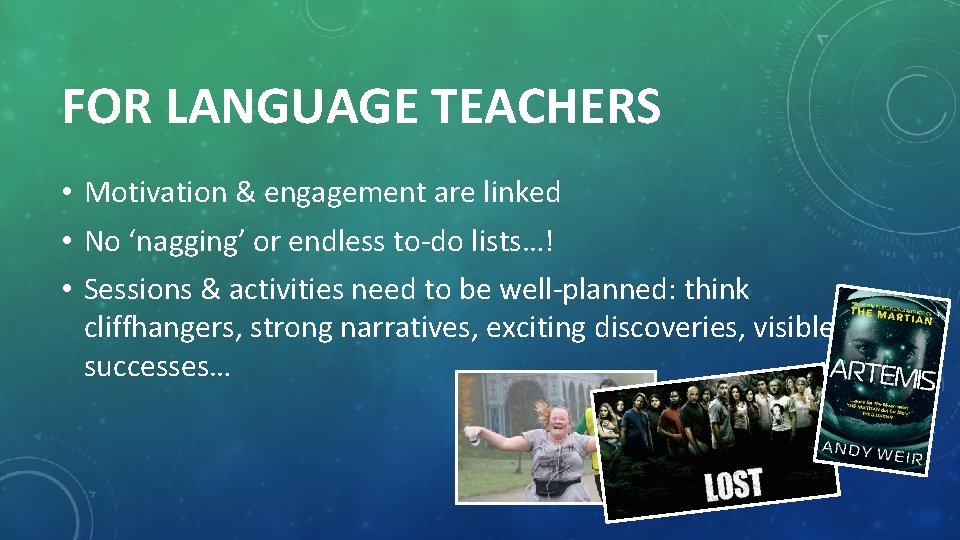
FOR LANGUAGE TEACHERS • Motivation & engagement are linked • No ‘nagging’ or endless to-do lists…! • Sessions & activities need to be well-planned: think cliffhangers, strong narratives, exciting discoveries, visible successes…
FOR LANGUAGE TEACHERS • Clear instructions, clear rationale • Constructive, supportive feedback • Carrying positive relationships into online spaces • Responsive to student needs & views Students need to feel that they are engaged in something meaningful, achievable, with a clear purpose and which is valued by their teachers.
FIND OUT MORE SDT is a massive community of researchers working in many fields including education & language learning https: //selfdeterminationtheory. org/research/language_learning/ https: //www. coursera. org/learn/self-determination-theory Facebook: SDT and Language Learning group https: //www. facebook. com/groups/2041325242662480