
Motivation Theories of Adaptive Sports and the Benefits

Motivation Theories of Adaptive Sports and the Benefits For Athletes Presented By: Nickolas Pryor
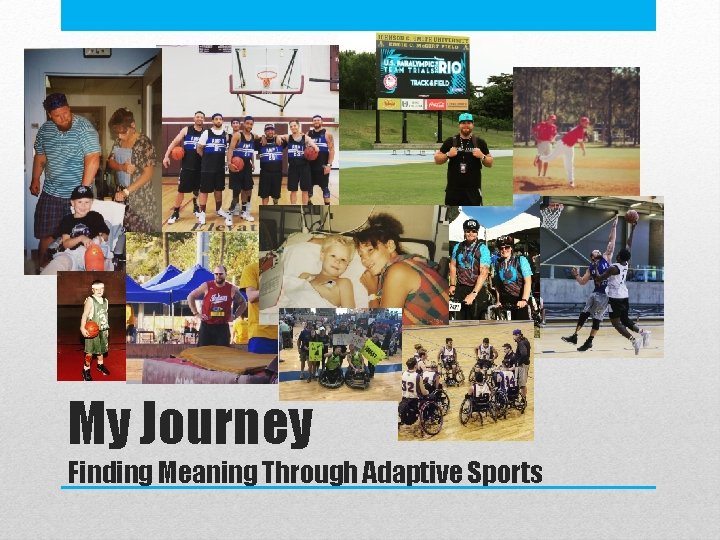
My Journey Finding Meaning Through Adaptive Sports

• There are many stigmas surrounded with being a person with a disability and the personal battles that can be associated with having a disability– of being perceived and perceiving oneself as unable to “do” in a society which an individual is virtually defined by what he or she does and the efficacy with which he or she does it (Page, O’Connor, and Peterson, 2001).
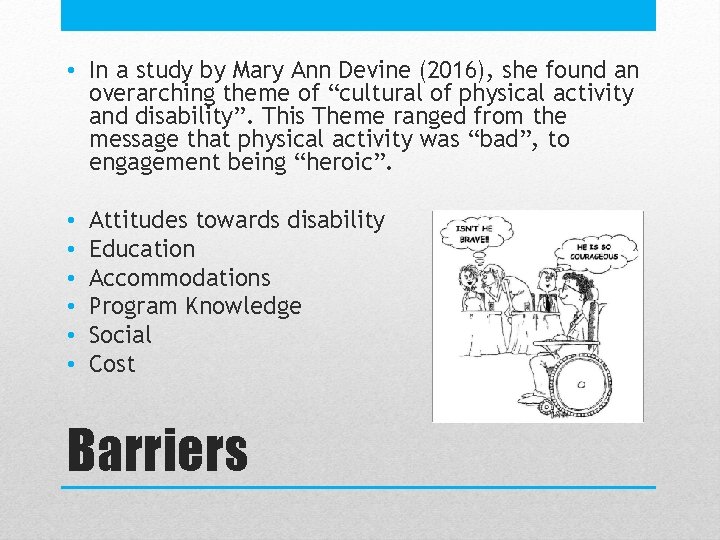
• In a study by Mary Ann Devine (2016), she found an overarching theme of “cultural of physical activity and disability”. This Theme ranged from the message that physical activity was “bad”, to engagement being “heroic”. • • • Attitudes towards disability Education Accommodations Program Knowledge Social Cost Barriers
• 12% of adults aged 18 -64 have a disability and nearly half are inactive • This contributes to lower quality of life, limits functional independence, and increases possibility of secondary conditions By the Numbers
• According to the National Organization on Disability (NOD), there are eight key areas of life where persons with disabilities lag or are somewhat very far behind of peers without disabilities. • • • These areas are: Education Employment Income Health care Transportation Entertainment Socializing, Political participation Life Satisfaction.
Referring to Weinberg and Gould (2007), among the dominant motives for involvement in sports are physical fitness, fun and friendship. 5 Factors of influencing participation • Fun • Support • Fitness • Reward • Reduce Stress (Omar-Fauzee, Mohd-Ali, Geok, and Ibrahim, 2010) Benefits • Better health, mentally and physically • Higher self-esteem • Feeling of group belongingness • Social skills and self-discipline • Independence
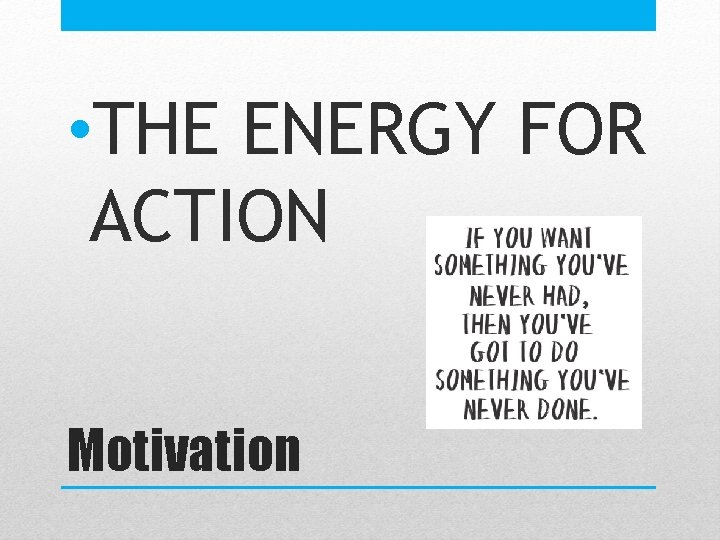
• THE ENERGY FOR ACTION Motivation
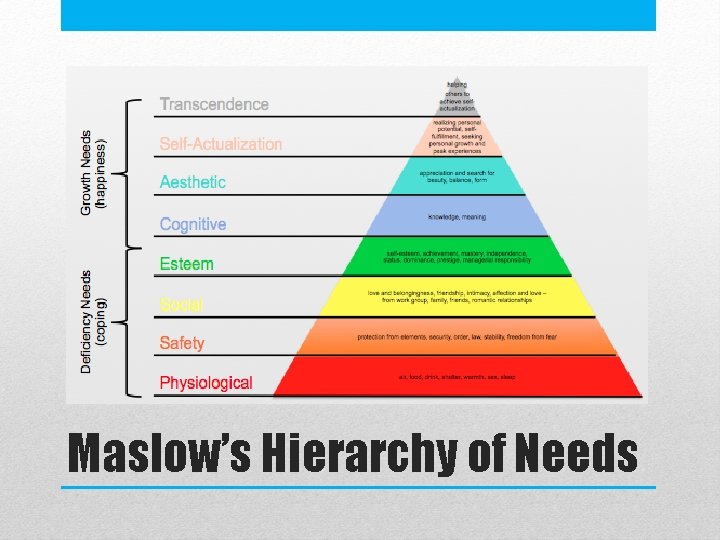
Maslow’s Hierarchy of Needs
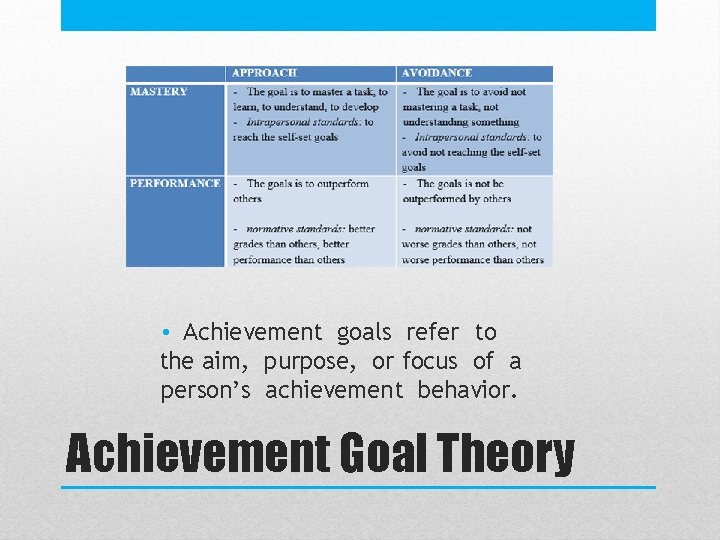
• Achievement goals refer to the aim, purpose, or focus of a person’s achievement behavior. Achievement Goal Theory
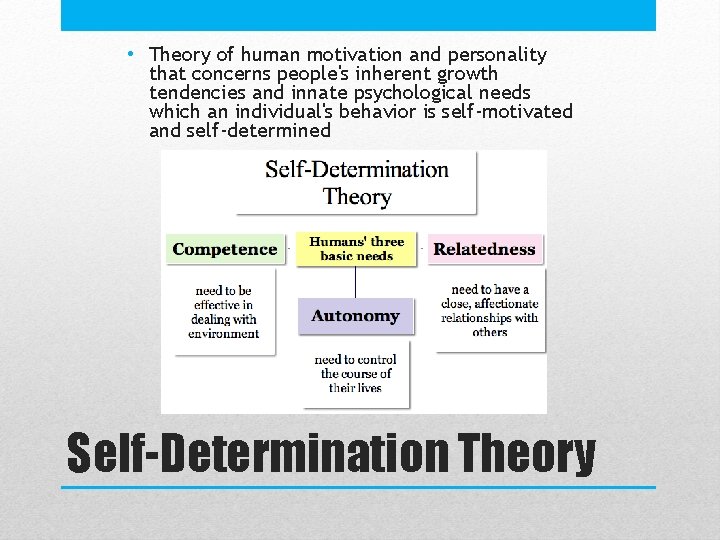
• Theory of human motivation and personality that concerns people's inherent growth tendencies and innate psychological needs which an individual's behavior is self-motivated and self-determined Self-Determination Theory
Questions & Discussion • “Dis” and the negative connotation • Bridging gap between disability community and sport • How to gain participation • Professional Development
- Slides: 12