
MOTIVATION Team Coconut Motivation The INTERNAL andor EXTERNAL
- Slides: 39
MOTIVATION Team Coconut
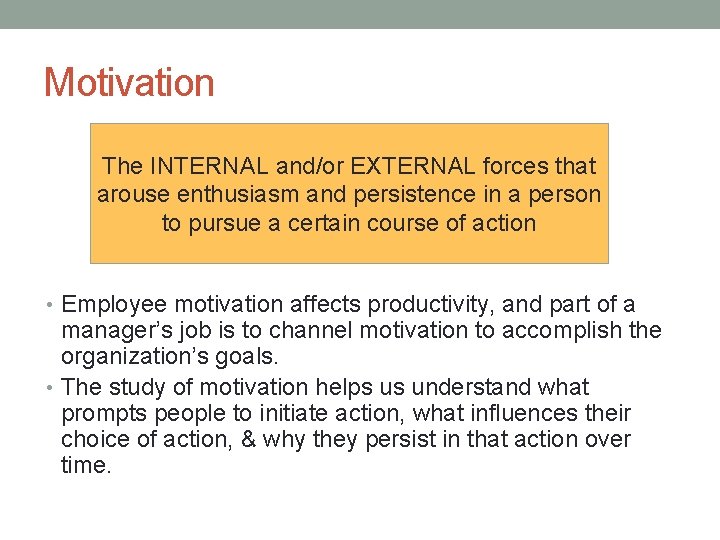
Motivation The INTERNAL and/or EXTERNAL forces that arouse enthusiasm and persistence in a person to pursue a certain course of action • Employee motivation affects productivity, and part of a manager’s job is to channel motivation to accomplish the organization’s goals. • The study of motivation helps us understand what prompts people to initiate action, what influences their choice of action, & why they persist in that action over time.
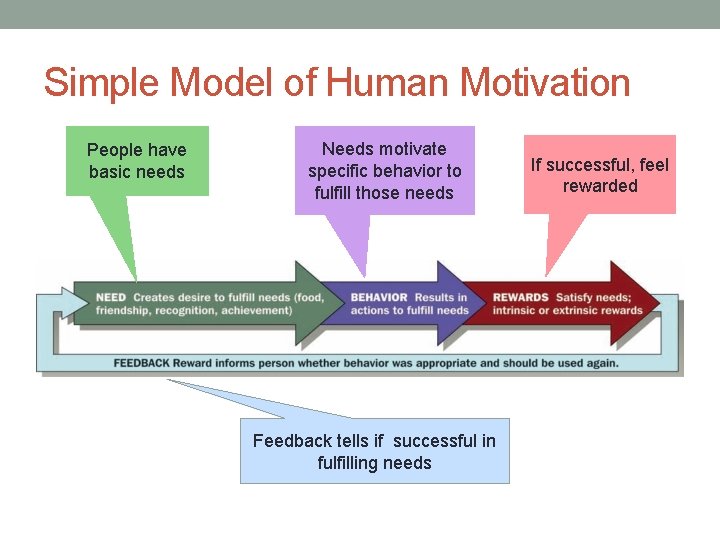
Simple Model of Human Motivation People have basic needs Needs motivate specific behavior to fulfill those needs Feedback tells if successful in fulfilling needs If successful, feel rewarded
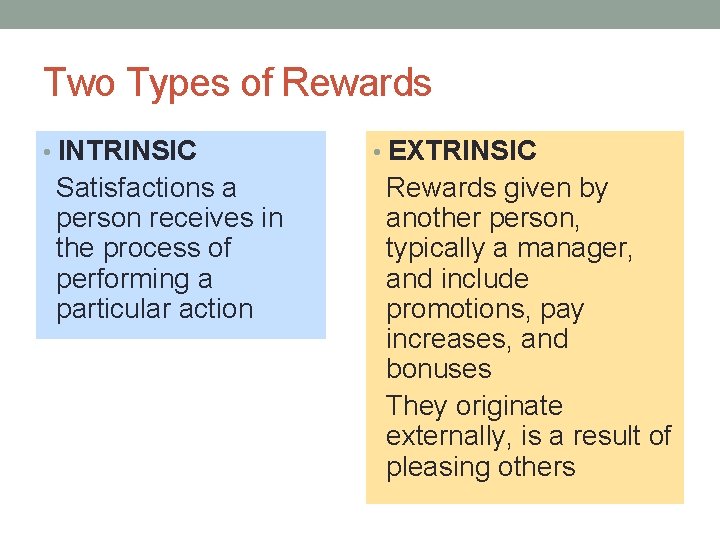
Two Types of Rewards • INTRINSIC Satisfactions a person receives in the process of performing a particular action • EXTRINSIC Rewards given by another person, typically a manager, and include promotions, pay increases, and bonuses They originate externally, is a result of pleasing others
FOUNDATIONS OF MOTIVATION • Traditional Approach • Human Relations Approach • Human Resource Approach • Contemporary Approach
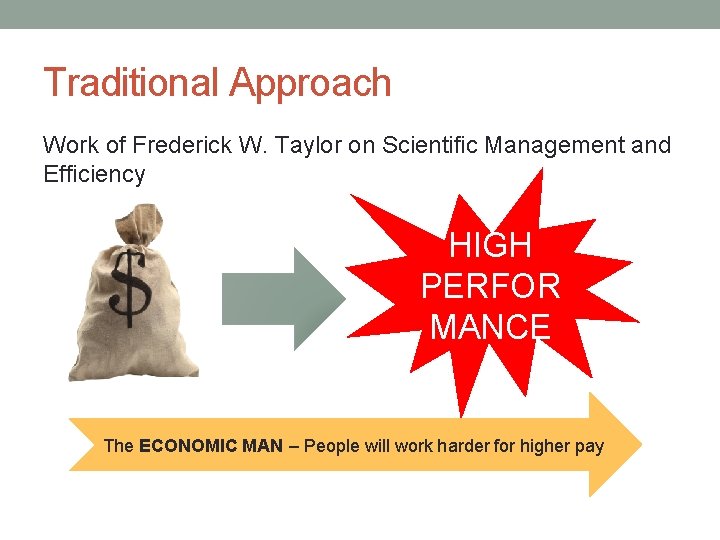
Traditional Approach Work of Frederick W. Taylor on Scientific Management and Efficiency HIGH PERFOR MANCE The ECONOMIC MAN – People will work harder for higher pay
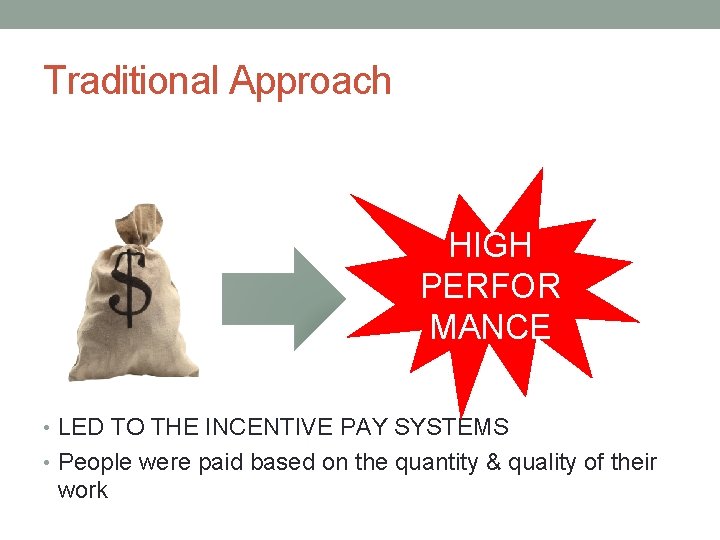
Traditional Approach HIGH PERFOR MANCE • LED TO THE INCENTIVE PAY SYSTEMS • People were paid based on the quantity & quality of their work
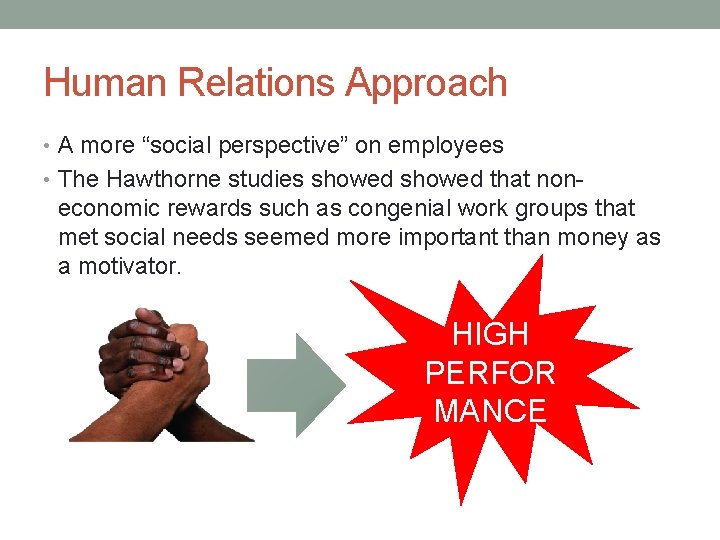
Human Relations Approach • A more “social perspective” on employees • The Hawthorne studies showed that non- economic rewards such as congenial work groups that met social needs seemed more important than money as a motivator. HIGH PERFOR MANCE
Human Relations Approach Workers were studied as people and the concept of the “Social Man” emerged
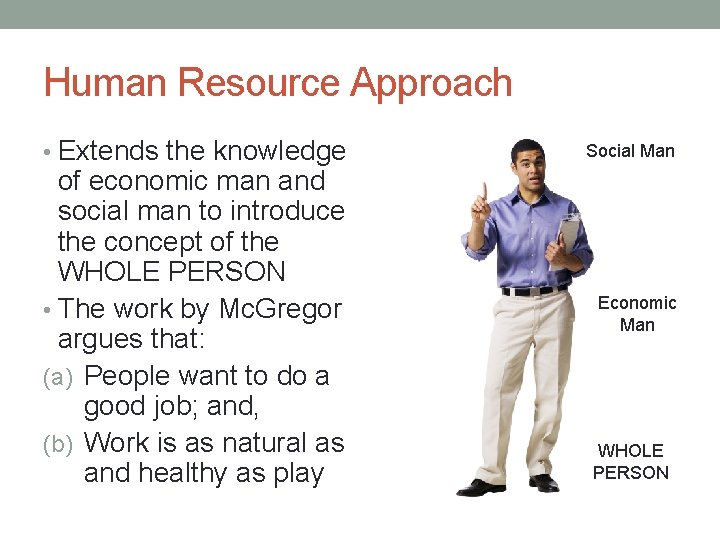
Human Resource Approach • Extends the knowledge of economic man and social man to introduce the concept of the WHOLE PERSON • The work by Mc. Gregor argues that: (a) People want to do a good job; and, (b) Work is as natural as and healthy as play Social Man Economic Man WHOLE PERSON
Human Resource Approach • Assumes EMPLOYEES ARE COMPETENT and can MAKE MAJOR CONTRIBUTIONS HIGH PERFOR MANCE Basis for contemporary perspective on employee motivation.
Contemporary Approach Consists of 3 Types of Theories 1. Content Theories • Provide insights into the needs of people in organizations and help managers understand how needs can be satisfied in the workplace
Contemporary Approach Consists of 3 Types of Theories 1. Content Theories 2. Process Theories • Content with the thought processes that influence behavior and focus on how employees seek rewards in work circumstances
Contemporary Approach Consists of 3 Types of Theories 1. Content Theories 2. Process Theories 3. Reinforcement Theories • Focus on teaching employees desired work behaviors.
Content Perspectives on Motivation • Hierarchy of Needs Theory • ERG Theory • Two Factor Theory • Acquired Needs Theory
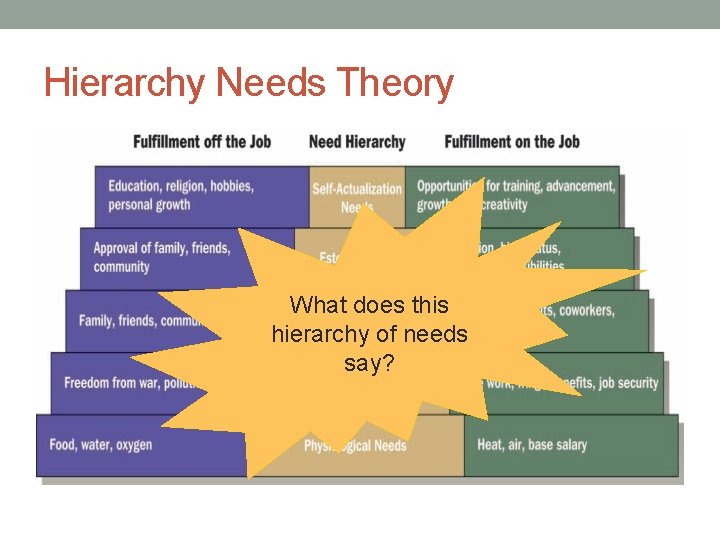
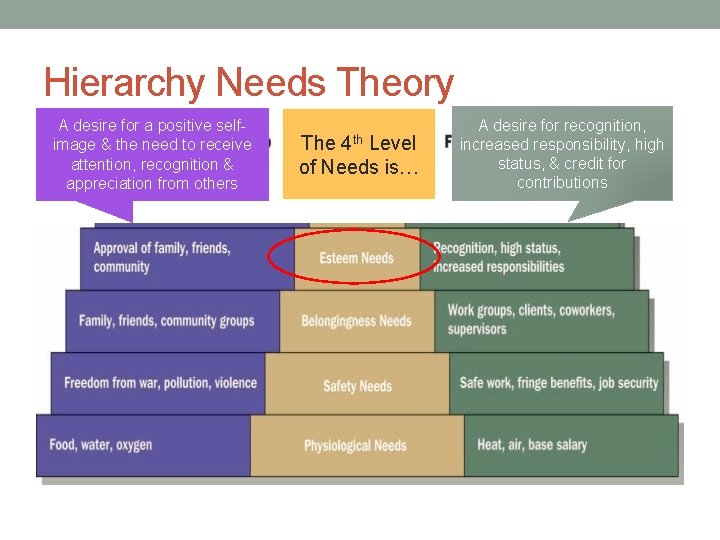
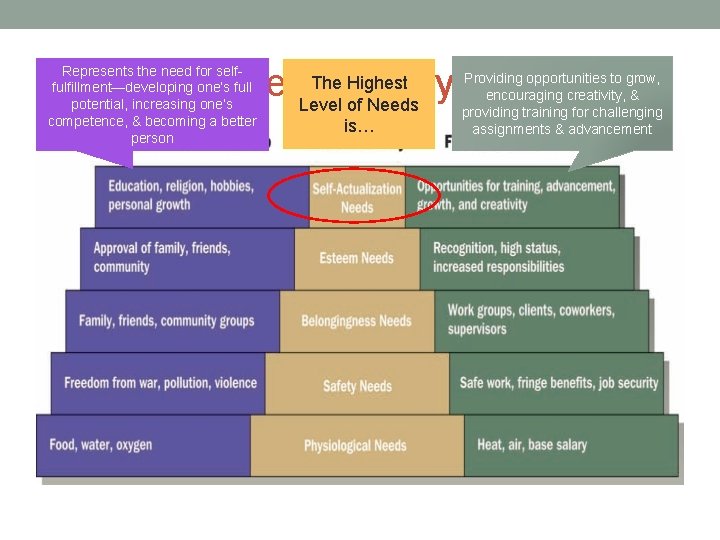
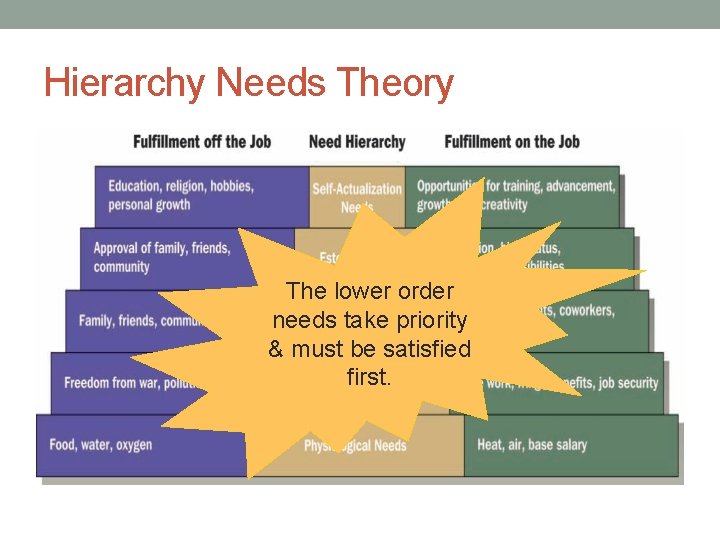
Hierarchy Needs Theory Abraham Maslow’s hierarchy of needs theory proposes that humans are motivated by multiple needs, existing in a hierarchical order.
Hierarchy Needs Theory What does this hierarchy of needs say?
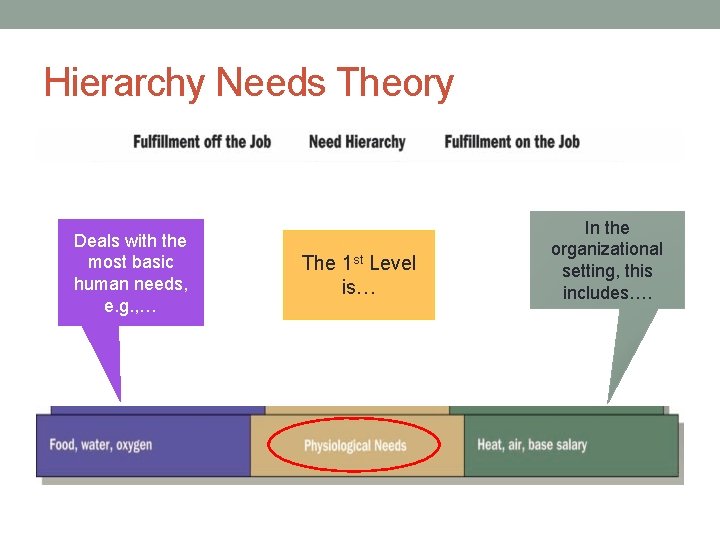
Hierarchy Needs Theory Deals with the most basic human needs, e. g. , … The 1 st Level is… In the organizational setting, this includes….
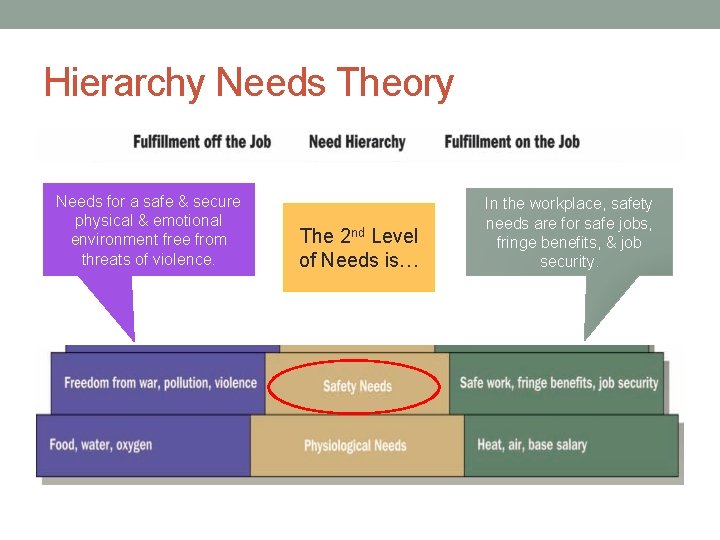
Hierarchy Needs Theory Needs for a safe & secure physical & emotional environment free from threats of violence. The 2 nd Level of Needs is… In the workplace, safety needs are for safe jobs, fringe benefits, & job security.
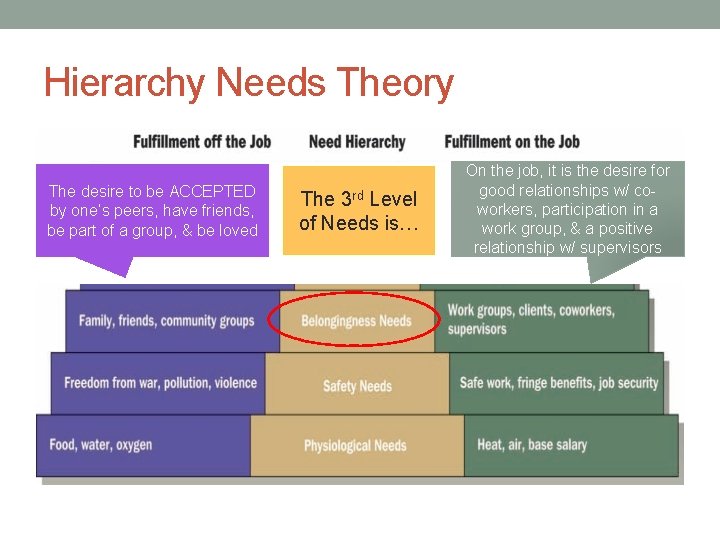
Hierarchy Needs Theory The desire to be ACCEPTED by one’s peers, have friends, be part of a group, & be loved The 3 rd Level of Needs is… On the job, it is the desire for good relationships w/ coworkers, participation in a work group, & a positive relationship w/ supervisors
Hierarchy Needs Theory A desire for a positive selfimage & the need to receive attention, recognition & appreciation from others 4 th The Level of Needs is… A desire for recognition, increased responsibility, high status, & credit for contributions
The. Theory Highest Hierarchy Needs Level of Needs Represents the need for selffulfillment—developing one’s full potential, increasing one’s competence, & becoming a better person is… Providing opportunities to grow, encouraging creativity, & providing training for challenging assignments & advancement
Hierarchy Needs Theory The lower order needs take priority & must be satisfied first.
Hierarchy Needs Theory Once a need is satisfied, it declines in importance and the next higher need is activated. If a lower-level need ceases to be satisfied, however, it will re-emerge and take precedence over higher order needs until it is satisfied.
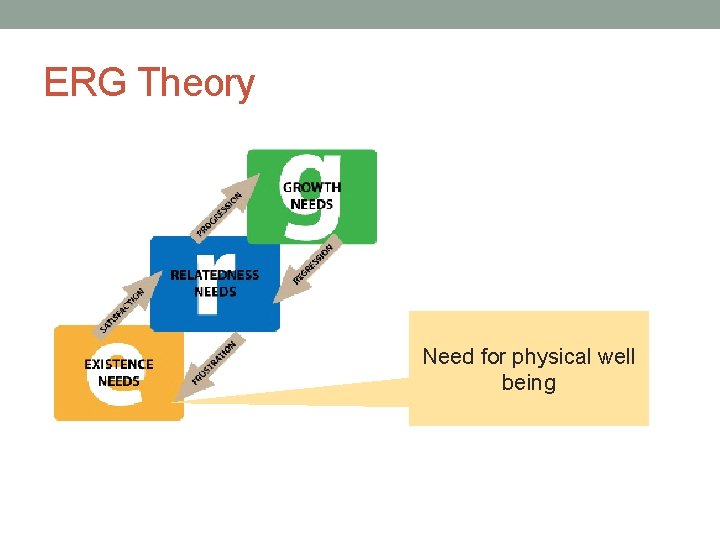
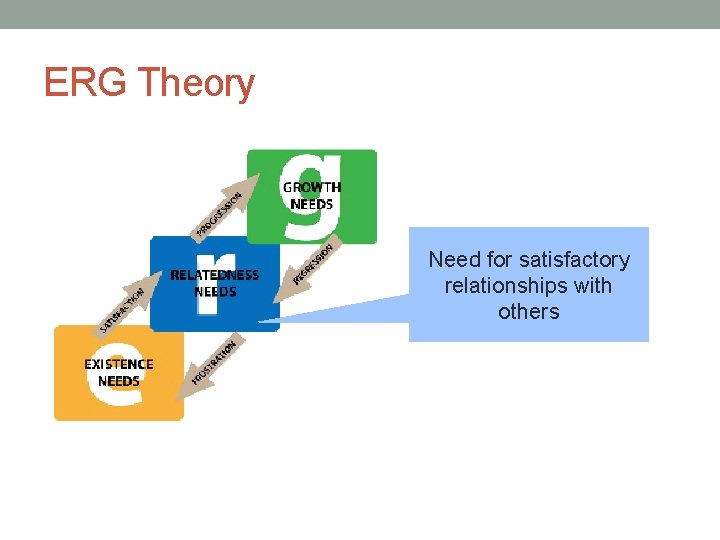
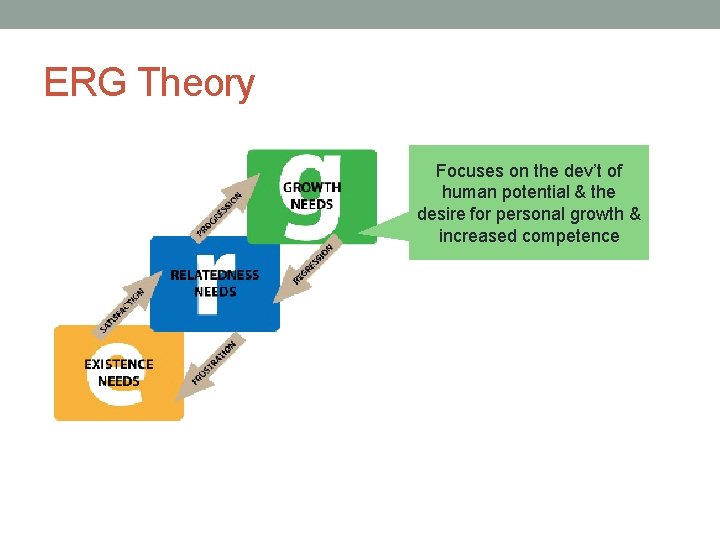
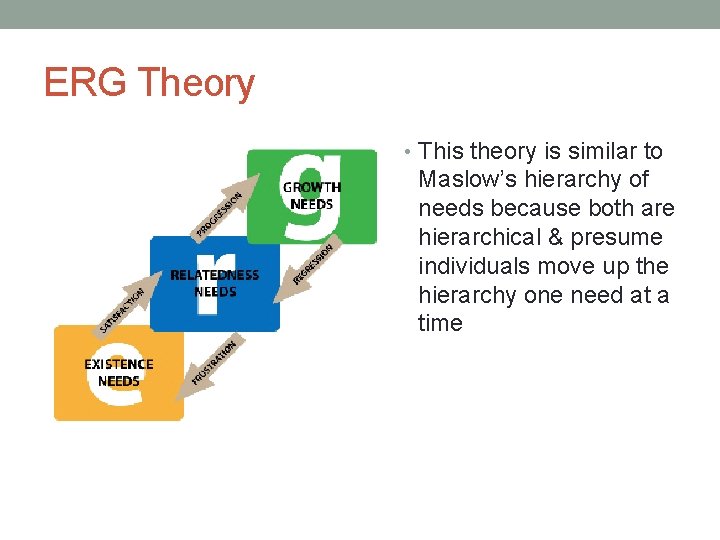
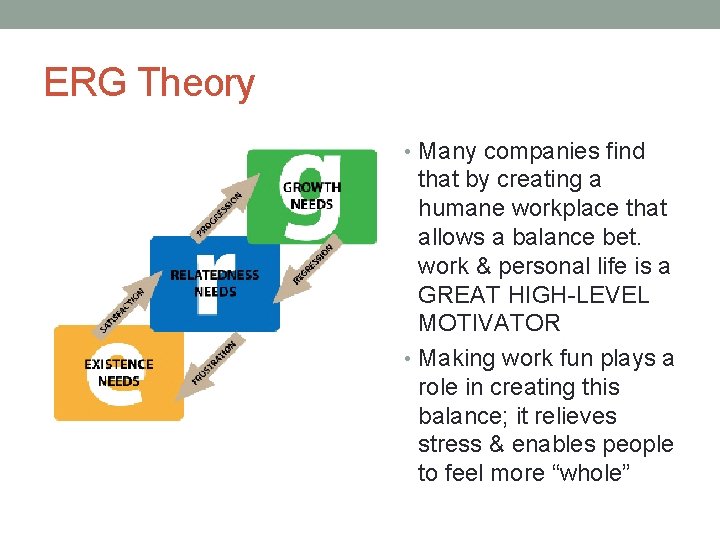
ERG Theory The ERG theory was developed by Clayton Alderfer. It simplifies Maslow’s hierarchy of needs & responds to criticisms of its lack of empirical verification.
ERG Theory Need for physical well being
ERG Theory Need for satisfactory relationships with others
ERG Theory Focuses on the dev’t of human potential & the desire for personal growth & increased competence
ERG Theory • This theory is similar to Maslow’s hierarchy of needs because both are hierarchical & presume individuals move up the hierarchy one need at a time
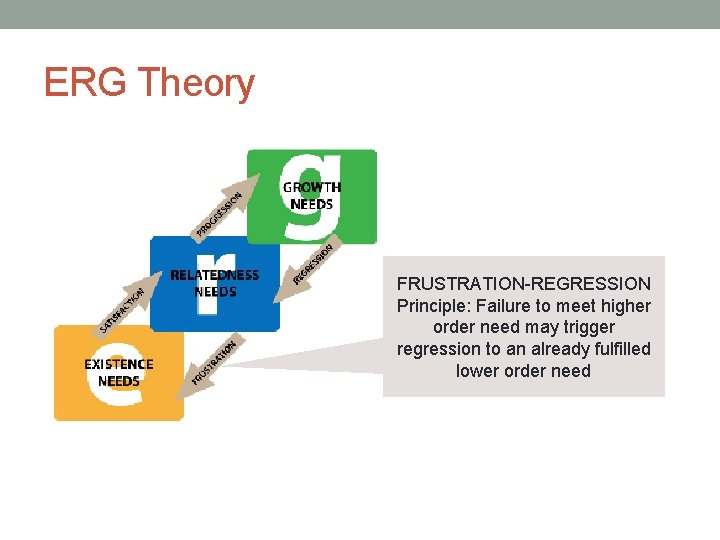
ERG Theory FRUSTRATION-REGRESSION Principle: Failure to meet higher order need may trigger regression to an already fulfilled lower order need
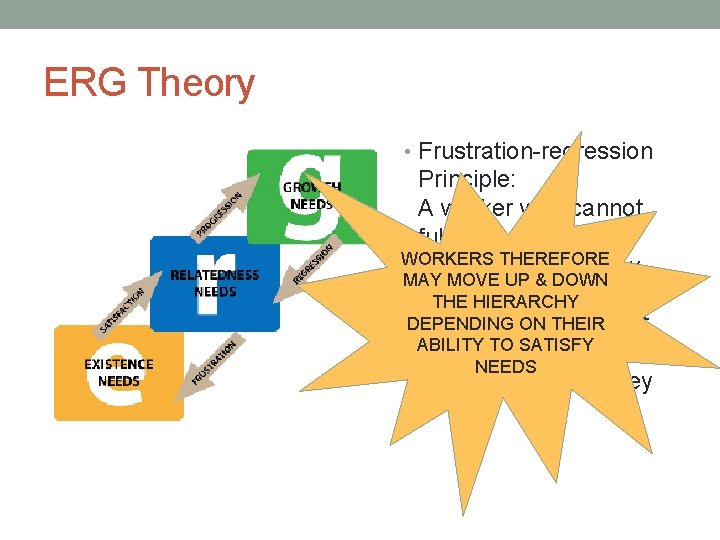
ERG Theory • Frustration-regression Principle: A worker who cannot fulfill a need for WORKERS THEREFORE personal growth may MAY MOVE UP & DOWN revert to a lower order THE HIERARCHY DEPENDING ON & THEIR social need redirect ABILITY TO SATISFY his/her efforts toward NEEDS making a lot of money
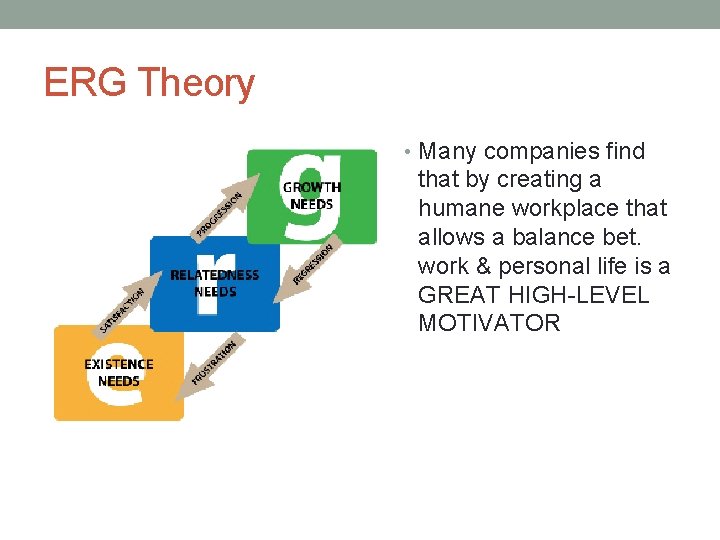
ERG Theory • Many companies find that by creating a humane workplace that allows a balance bet. work & personal life is a GREAT HIGH-LEVEL MOTIVATOR
ERG Theory • Many companies find that by creating a humane workplace that allows a balance bet. work & personal life is a GREAT HIGH-LEVEL MOTIVATOR • Making work fun plays a role in creating this balance; it relieves stress & enables people to feel more “whole”
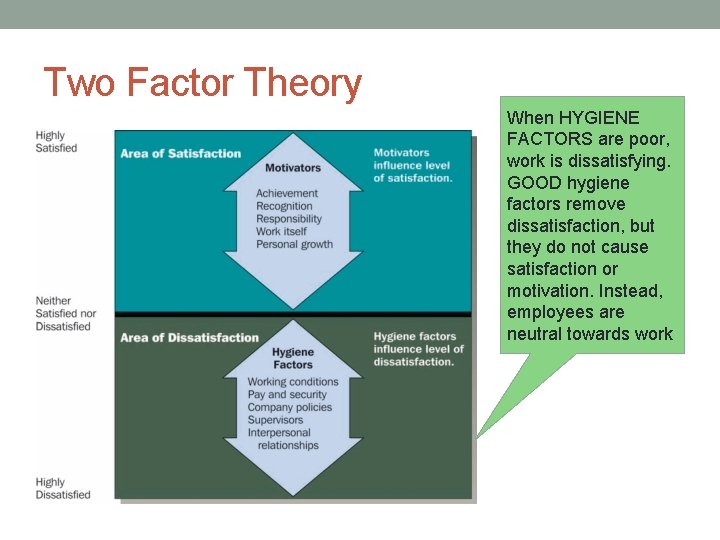
Two Factor Theory Frederick Herzberg asserted that work characteristics associated with DISSATISFACTION were different from those connected with SATISFACTION. This prompted the idea that TWO different FACTORS influenced work motivation and an employee’s behavior at work.
Two Factor Theory When HYGIENE FACTORS are poor, work is dissatisfying. GOOD hygiene factors remove dissatisfaction, but they do not cause satisfaction or motivation. Instead, employees are neutral towards work
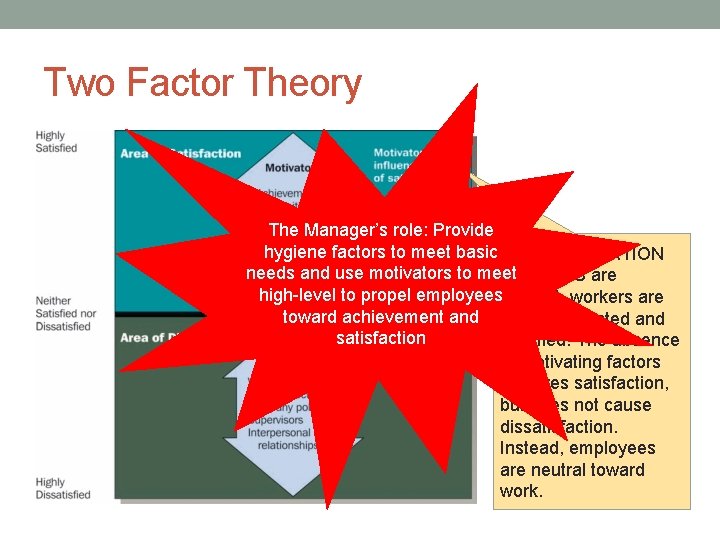
Two Factor Theory The Manager’s role: Provide hygiene factors to meet basic When MOTIVATION needs and use motivators to meet FACTORS are high-level to propel employeespresent, workers are toward achievement and highly motivated and satisfaction satisfied. The absence of motivating factors removes satisfaction, but does not cause dissatisfaction. Instead, employees are neutral toward work.
Applied Needs Theory David Mc. Clelland proposes in this theory that certain types of needs are ACQUIRED or LEARNED during an individuals lifetime. People are not born with these needs, but may learn them through their life experiences.
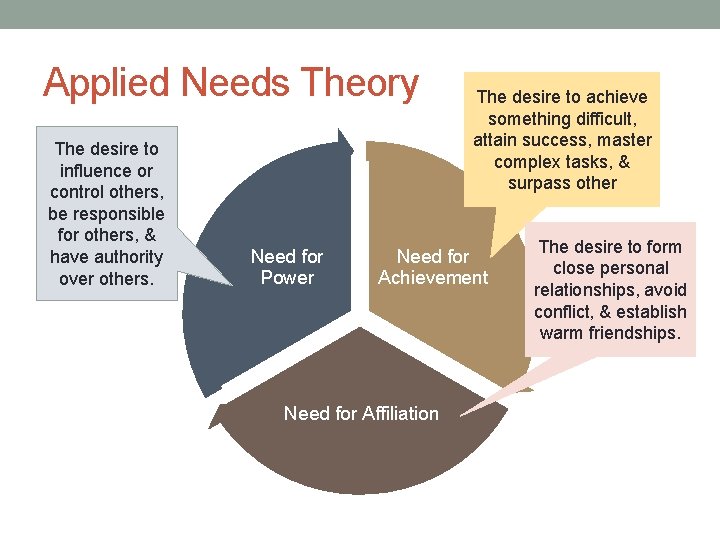
Applied Needs Theory The desire to influence or control others, be responsible for others, & have authority over others. Need for Power The desire to achieve something difficult, attain success, master complex tasks, & surpass other Need for Achievement Need for Affiliation The desire to form close personal relationships, avoid conflict, & establish warm friendships.
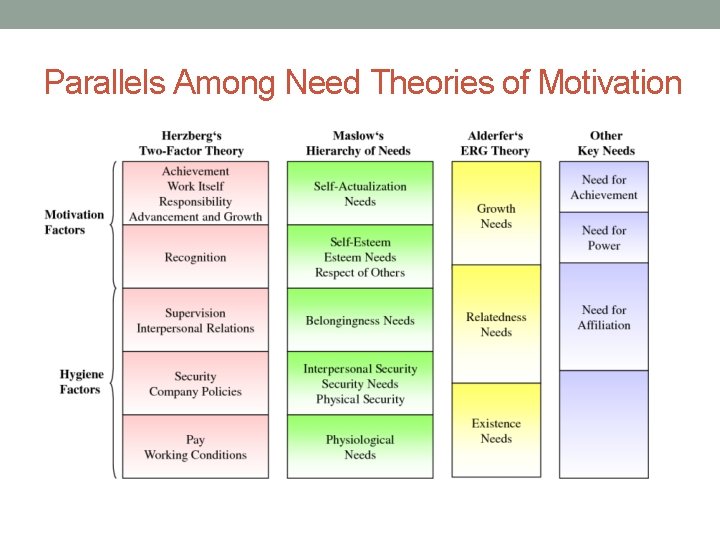
Parallels Among Need Theories of Motivation