
Motivation Foxtrot Comic Strip Today Climate Change Review
- Slides: 30
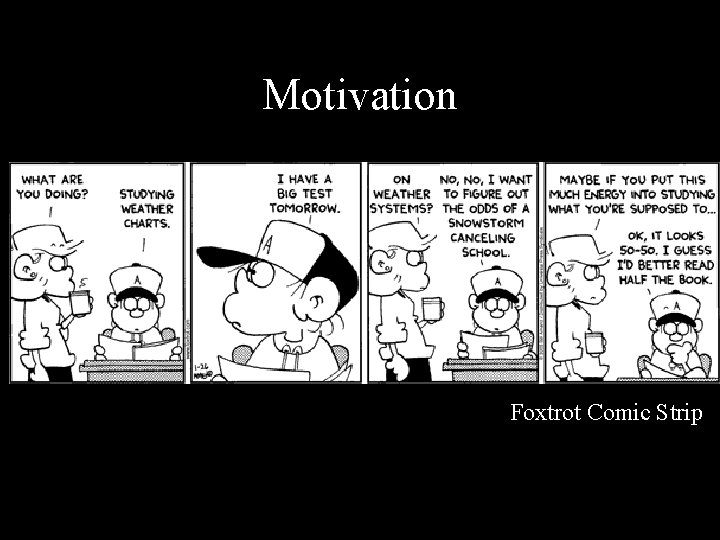
Motivation Foxtrot Comic Strip
Today: Climate Change Review and Lab Reminders: Quiz Wed Extra credit due Mon. Hw 1&2 due now
Today’s review • What is Science and how is it tested • Statistics – Mean, Median, Mode, Variability • Our atmosphere – temp, pressure, layers • Weather and Climate- Highs, Lows, Clouds • Lab- Infrared and Visible Imagery
Science • What is the most important idea? – Be skeptical!
What is a hypothesis vs. a theory? • What is a hypothesis? – is a suggested explanation of a phenomenon or reasoned proposal suggesting a possible correlation between multiple phenomena based on observations • What is a theory? – a proposed description, explanation, … and capable of being tested through experiment or otherwise falsified through empirical observation. – Modified from Wikipedia
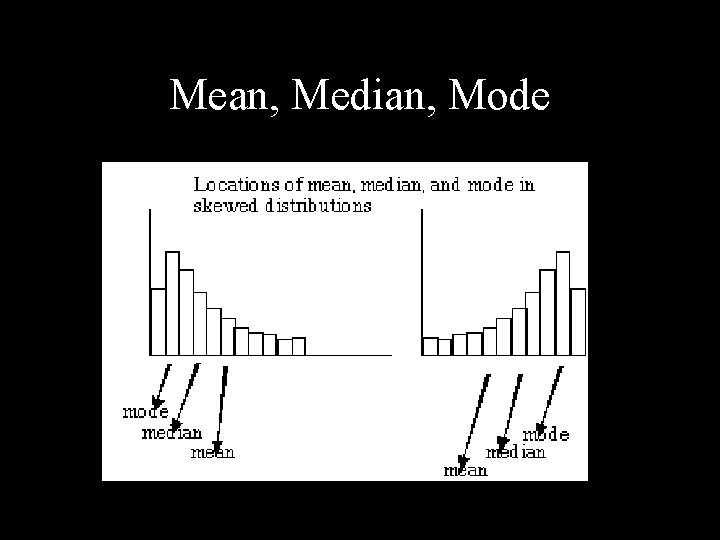
Mean, Median, Mode and Variability • Mean- arithmetic average • Median- middle number when sorted • Mode- most frequent value http: //herdingcats. typepad. com/photos/uncategorized/statistics. jpg
Mean, Median, Mode
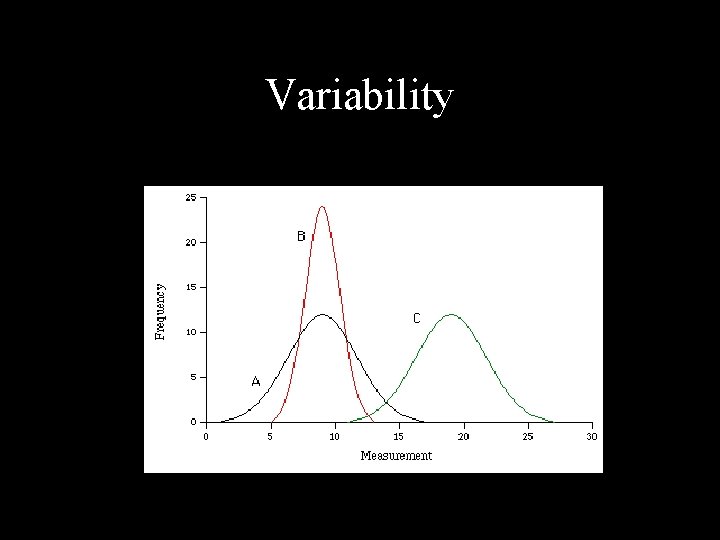
Variability
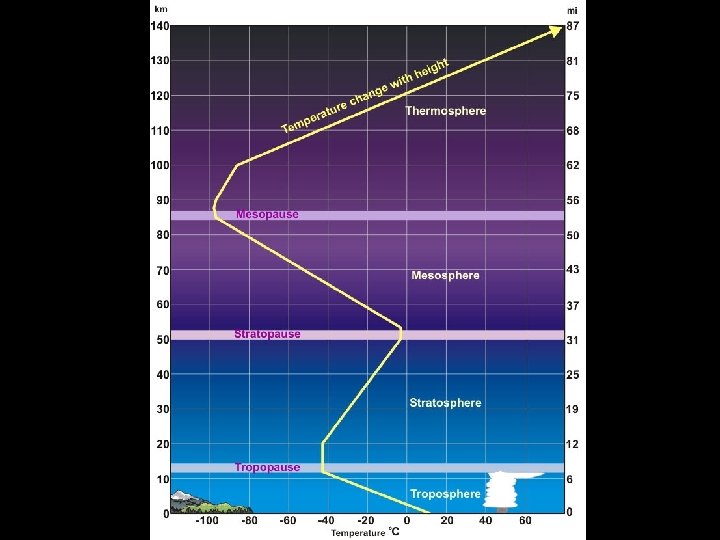
What are the names of the levels of the atmosphere? What does the temperature of the atmosphere look like as we go up in altitude?
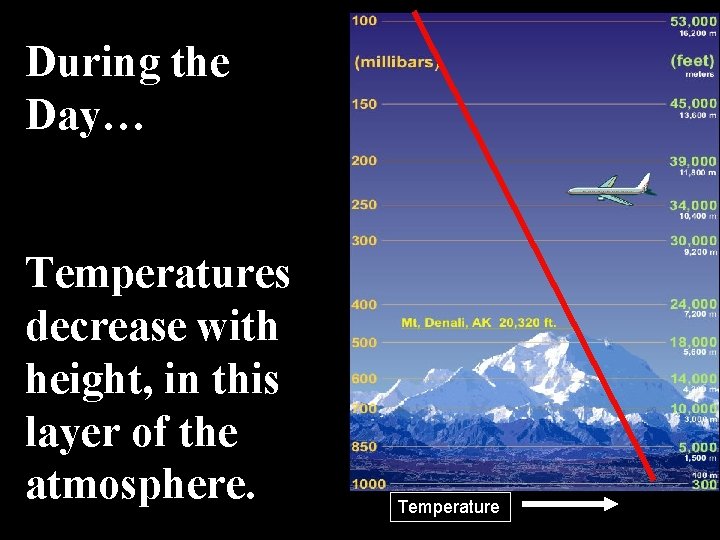
During the Day… Temperatures decrease with height, in this layer of the atmosphere. Temperature
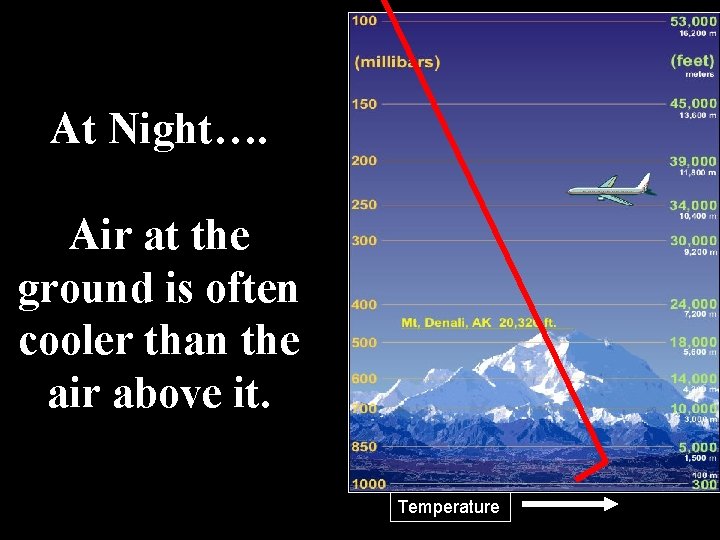
At Night…. Air at the ground is often cooler than the air above it. Temperature
Why focus on clouds? • • Rain/Snow producers Heating and Cooling Indicator of weather Come in interesting shapes
Ingredients for Cloud Formation 1. Condensation Nuclei 2. Moisture 3. Cooling / Lift
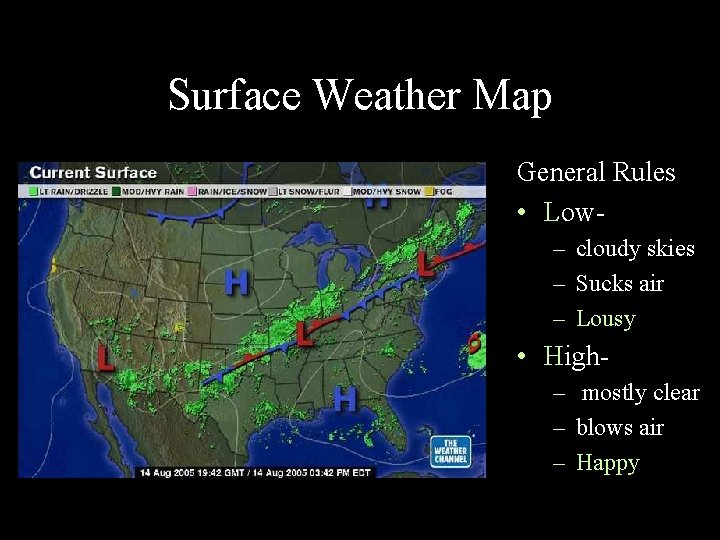
Surface Weather Map General Rules • Low– cloudy skies – Sucks air – Lousy • High– mostly clear – blows air – Happy
Click here to see the: United States Surface Weather Map Where are the highs and the lows? Are their lows close by that might be associated with clouds?
Local Observations • Past and Current – Wind Speed – Wind Direction – Temperature – Humidity
Click here for: Surface Observations in Denver (Mesowest data) find your city on the map
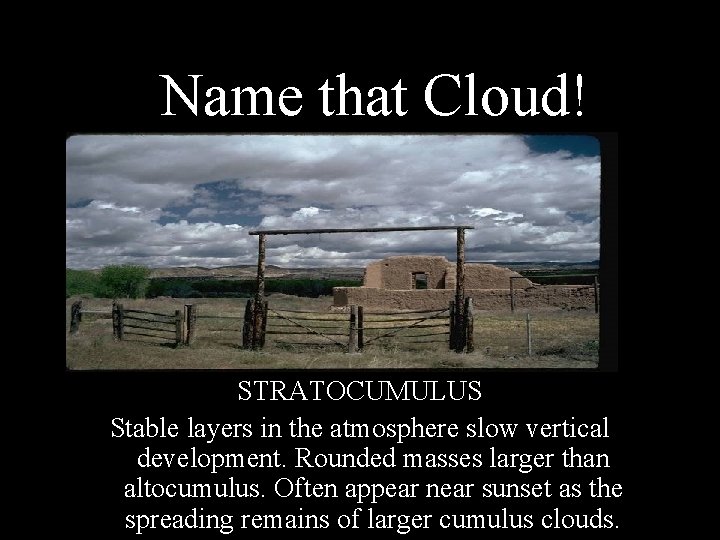
Name that Cloud! STRATOCUMULUS Stable layers in the atmosphere slow vertical development. Rounded masses larger than altocumulus. Often appear near sunset as the spreading remains of larger cumulus clouds.
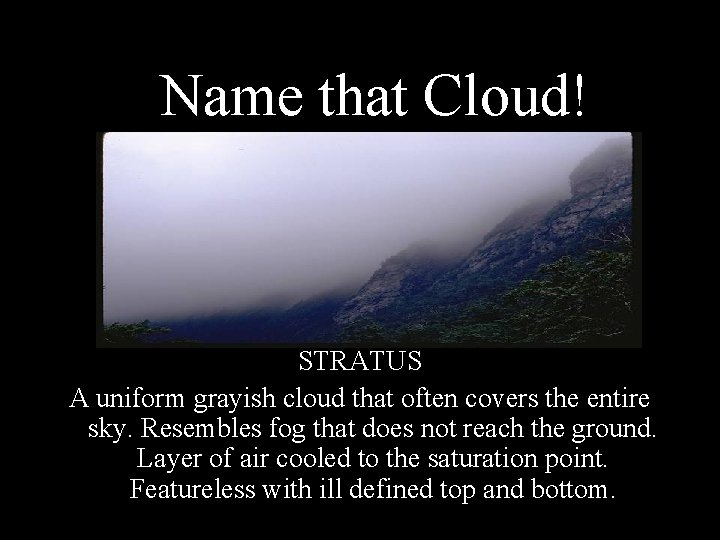
Name that Cloud! STRATUS A uniform grayish cloud that often covers the entire sky. Resembles fog that does not reach the ground. Layer of air cooled to the saturation point. Featureless with ill defined top and bottom.
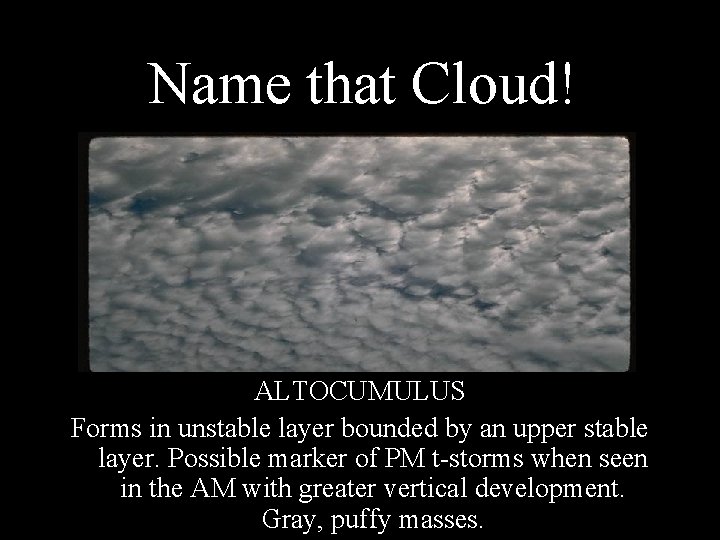
Name that Cloud! ALTOCUMULUS Forms in unstable layer bounded by an upper stable layer. Possible marker of PM t-storms when seen in the AM with greater vertical development. Gray, puffy masses.
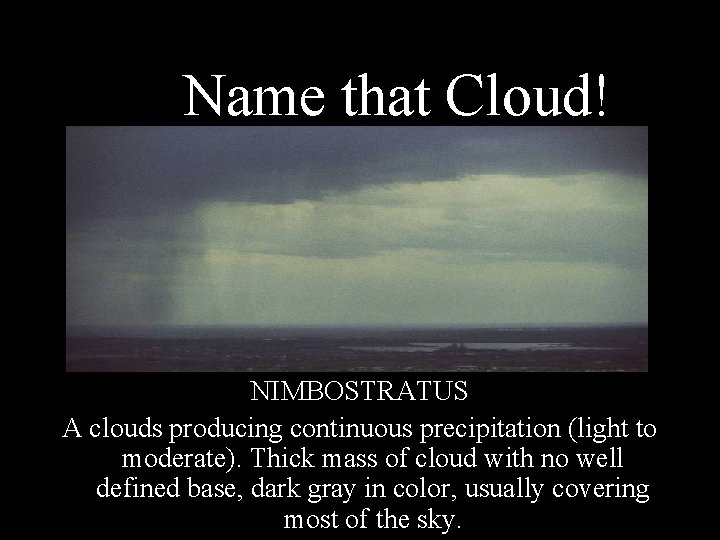
Name that Cloud! NIMBOSTRATUS A clouds producing continuous precipitation (light to moderate). Thick mass of cloud with no well defined base, dark gray in color, usually covering most of the sky.
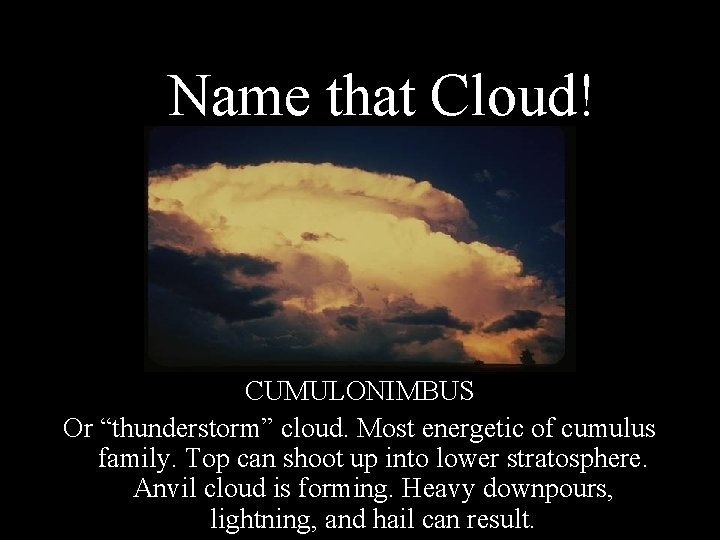
Name that Cloud! CUMULONIMBUS Or “thunderstorm” cloud. Most energetic of cumulus family. Top can shoot up into lower stratosphere. Anvil cloud is forming. Heavy downpours, lightning, and hail can result.
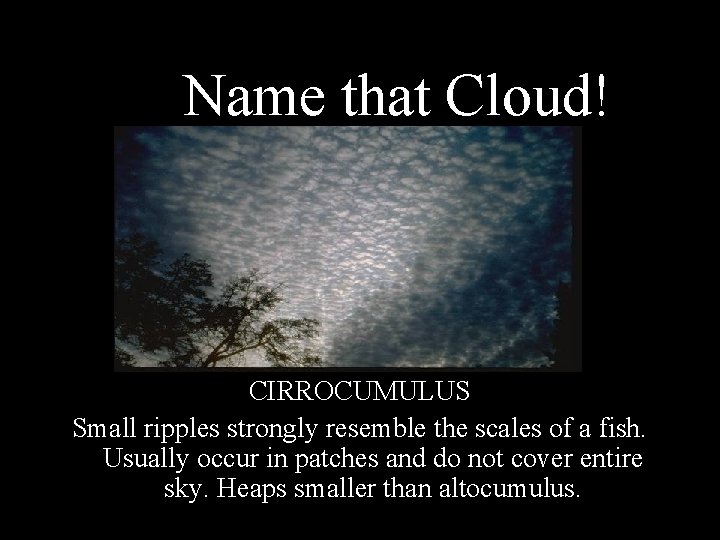
Name that Cloud! CIRROCUMULUS Small ripples strongly resemble the scales of a fish. Usually occur in patches and do not cover entire sky. Heaps smaller than altocumulus.
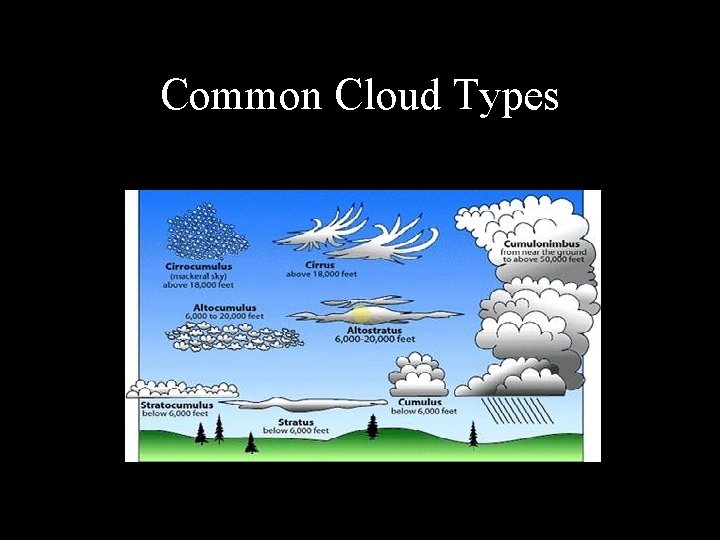
Common Cloud Types
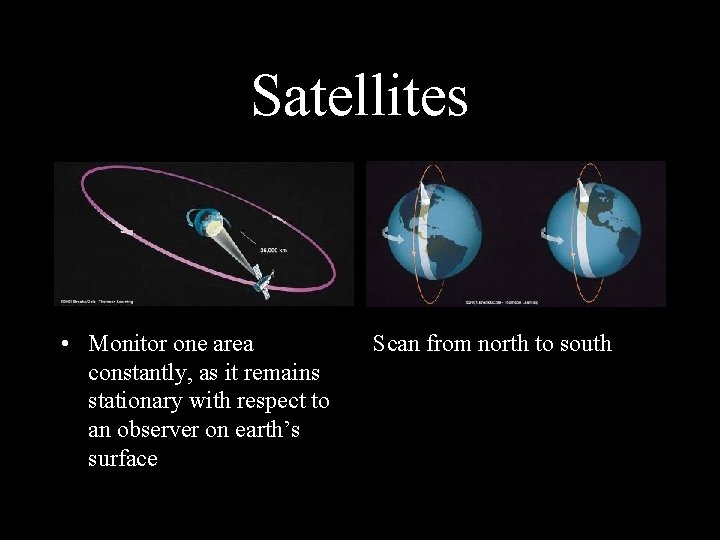
Satellites • Monitor one area constantly, as it remains stationary with respect to an observer on earth’s surface Scan from north to south
Click here for: Satellite loop of the United States Are the clouds moving in your direction? When will they reach you?
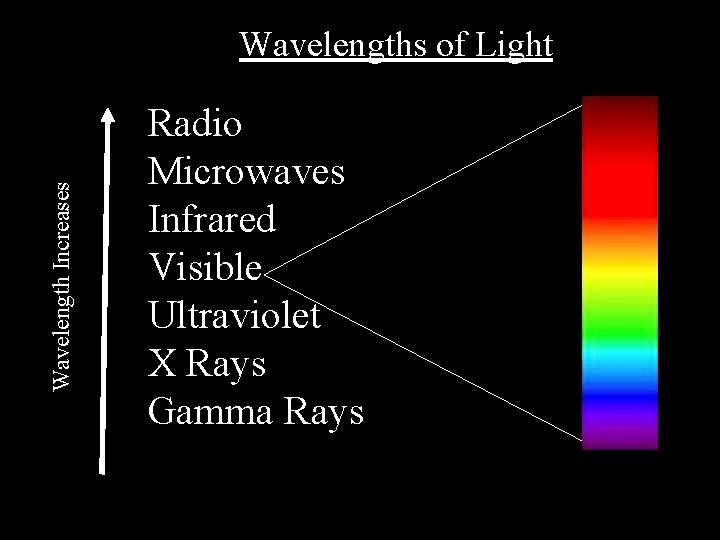
Wavelength Increases Wavelengths of Light Radio Microwaves Infrared Visible Ultraviolet X Rays Gamma Rays
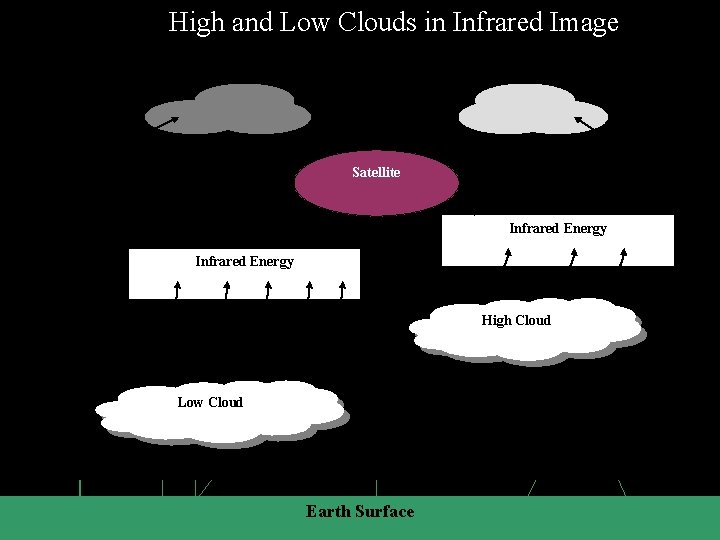
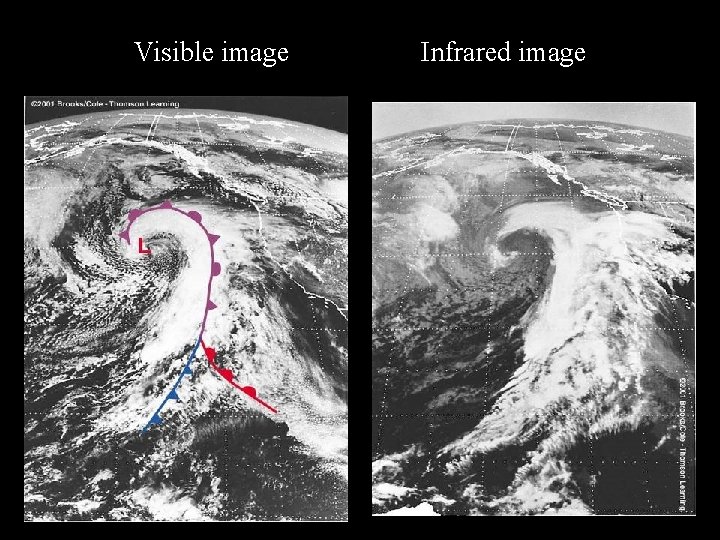
High and Low Clouds in Infrared Image Appears Gray Appears White Satellite Infrared Energy High Cloud Cold Warm Low Cloud Earth Surface
Visible image Infrared image
Click here for: Infrared Satellite loop of the United States Are the clouds moving in your direction? When will they reach you?